
8 Essential Steps To Build A Janitorial Staff Training Programme In Canada
A janitorial staff training programme is the difference between a building that merely looks clean and one that stays clean, safe, and healthy week after week. In Canada, that programme also has to respect real obligations around workplace safety, chemical handling, and your duty of care as an employer. This guide walks through the eight essential steps for building a training programme that produces confident, capable cleaning professionals and keeps your facility in good hands, whatever the season.
Quick Summary
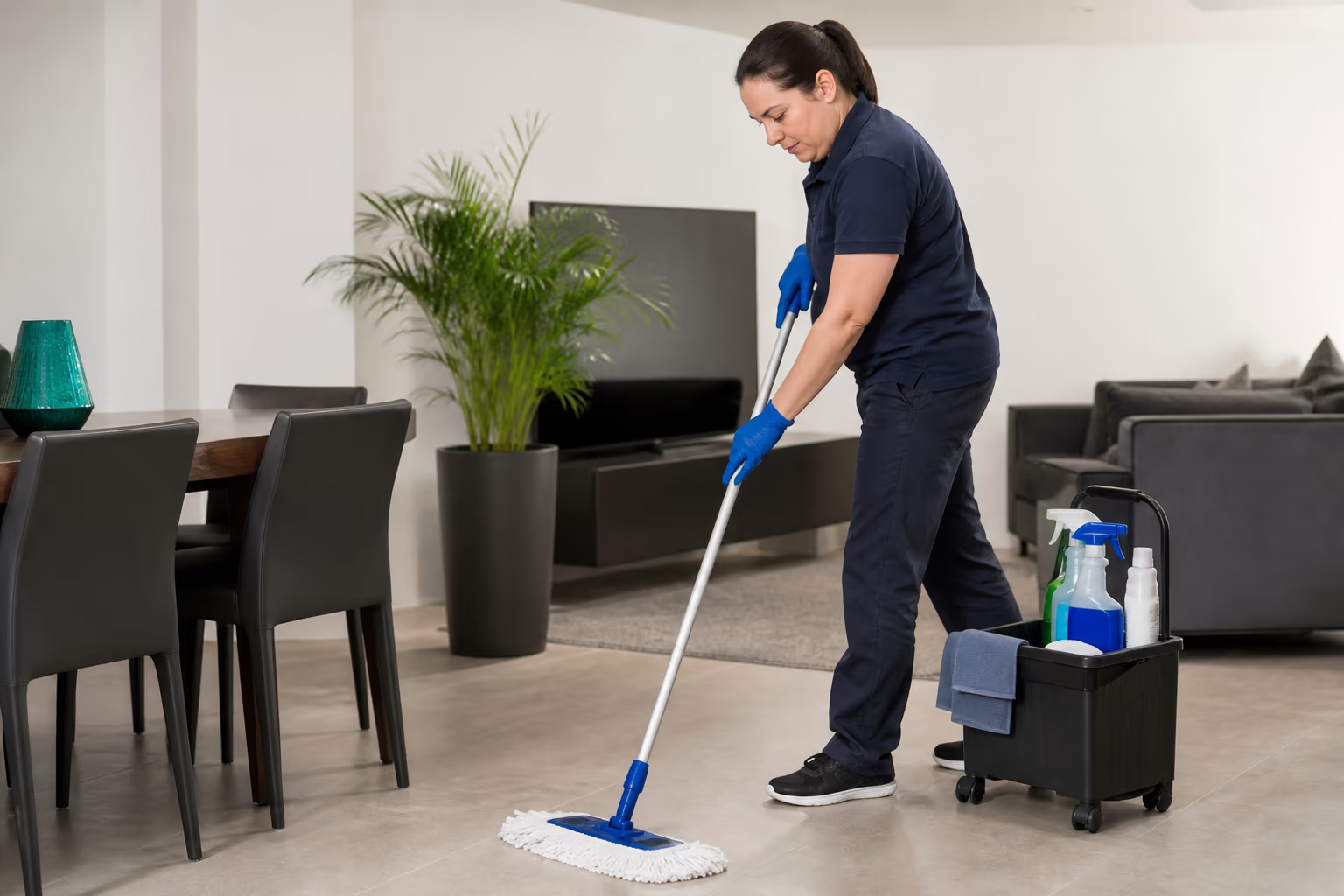
A structured janitorial staff training programme in Canada teaches safe chemical handling, equipment use and consistent methods, replacing shortcuts and standards that drift between shifts. Eight essential steps build confident cleaning professionals, protect employer duty of care and reduce liability, turnover and safety incidents.
In this guide
Why Janitorial Staff Training Programmes Matter
Cleaning looks simple from the outside, but the people who do it professionally handle chemicals, heavy equipment, biohazards, and busy public spaces every day. A structured training programme turns a well-meaning new hire into a professional who works safely, thoroughly, and consistently.
Training is also a legal obligation rather than a nice-to-have. Under Ontario's Occupational Health and Safety Act an employer must instruct, inform and supervise workers to protect their health and safety, and must appoint competent supervisors, which the Act defines as people qualified by knowledge, training and experience to organize the work. A training programme is how an employer actually meets clause 25(2)(a) and clause 25(2)(c). The province lists the duty in one line: “Instruct, inform and supervise workers to protect their health and safety”.
Without a programme, training is left to chance. Every cleaner develops their own shortcuts, standards drift between shifts, and the mistakes get expensive: damaged surfaces, missed details, safety incidents, and high turnover as good staff leave a job that never quite made sense to them.
A documented programme protects everyone involved.
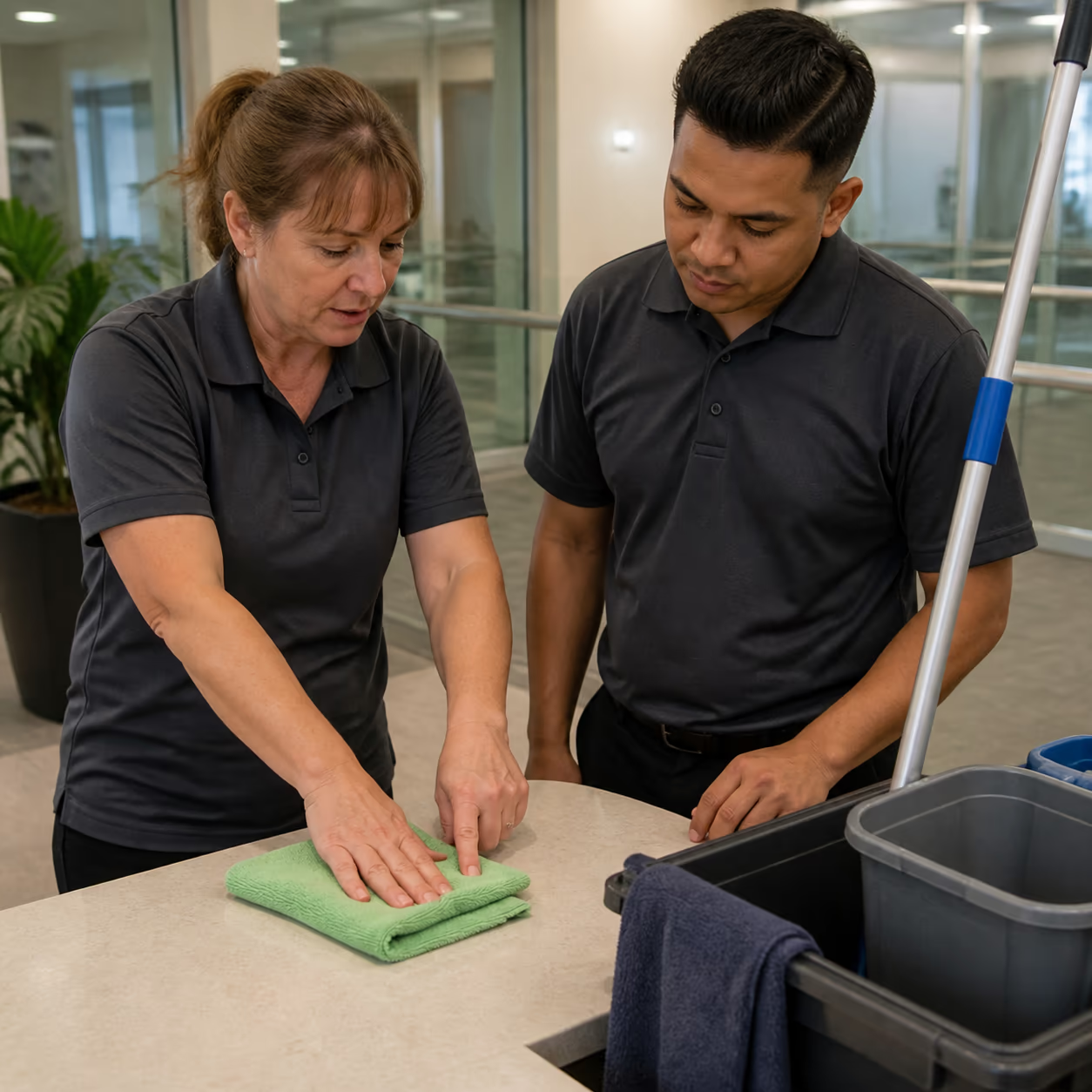
- New staff learn the correct method the first time instead of unlearning bad habits.
- Supervisors can check completed work against a written standard instead of personal memory.
- Clients receive consistent results because every shift follows the same process.
- Owners reduce their liability because training, supervision, and chemical handling are all on record.
Training also affects how long staff stay. Cleaning is physically demanding work, and a worker who has been taught correctly, given the right tools, and supported by a supervisor is far more likely to stay than one who is handed a mop and left to figure things out. In an industry where turnover is a constant worry, a good programme is one of the most effective retention tools a facility has.
In Ontario, where employment standards and workplace safety rules are enforced seriously, a written training record is more than good practice; it is the evidence you need if an incident or an inspection ever happens.
The Eight Steps in Brief
The eight essential steps build on each other, so do not be tempted to skip ahead. Each step creates the foundation for the one that follows, and together they form a system rather than a scattered list of tasks.
- Step 1.Write clear job descriptions and cleaning standards.
- Step 2.Screen and hire for reliability and attention to detail.
- Step 3.Deliver structured onboarding and orientation.
- Step 4.Train on chemicals, equipment, and safe handling.
- Step 5.Teach the specific cleaning procedures for your building.
- Step 6.Supervise closely and correct as you go.
- Step 7.Document everything and keep records current.
- Step 8.Review, refresh, and retrain on a regular schedule.
Working Through the Eight Steps
The real value lives in how each step is executed, so let us look at them one at a time.
- Step 1.begins with job descriptions and cleaning standards. Write down what a cleaner is responsible for, which surfaces and rooms are included, and what "clean" means in measurable terms. A written standard removes arguments later, because everyone is working from the same definition.
- Step 2.is screening and hiring. Reliability and attention to detail matter more than prior experience, because a careful worker can learn any method. A background check, reference check, and a short practical task during the interview reveal more than a résumé ever will.
- Step 3.is onboarding and orientation. The first week should cover the building itself, the people who use it, emergency procedures, and the expectations of the job, not just how to hold a mop. Orientation is where a new hire decides whether they feel safe, supported, and informed.
- Step 4.covers chemicals, equipment, and safe handling. Under WHMIS 2015, employers must train workers on the hazardous products they use, keep safety data sheets available, and make sure containers are labelled correctly. Practical training on dilution, mixing rules, personal protective equipment, and spill response belongs here.
- Step 5.teaches the specific cleaning procedures for your building. Residential, office, healthcare, and industrial spaces all have different standards, and the training should reflect the actual tasks your team performs, from the entrance mats in winter to the fine dust on reception shelving. Training for a multi-tenant site should mirror how building and condo cleaning services structure their own procedures, since common areas, amenity rooms and resident expectations add a layer beyond a single-tenant office.
- Step 6.is supervision and correction. New cleaners need close oversight in their first weeks, with a supervisor who walks the completed work, gives feedback, and answers questions. Supervision is how written standards become real behaviour.
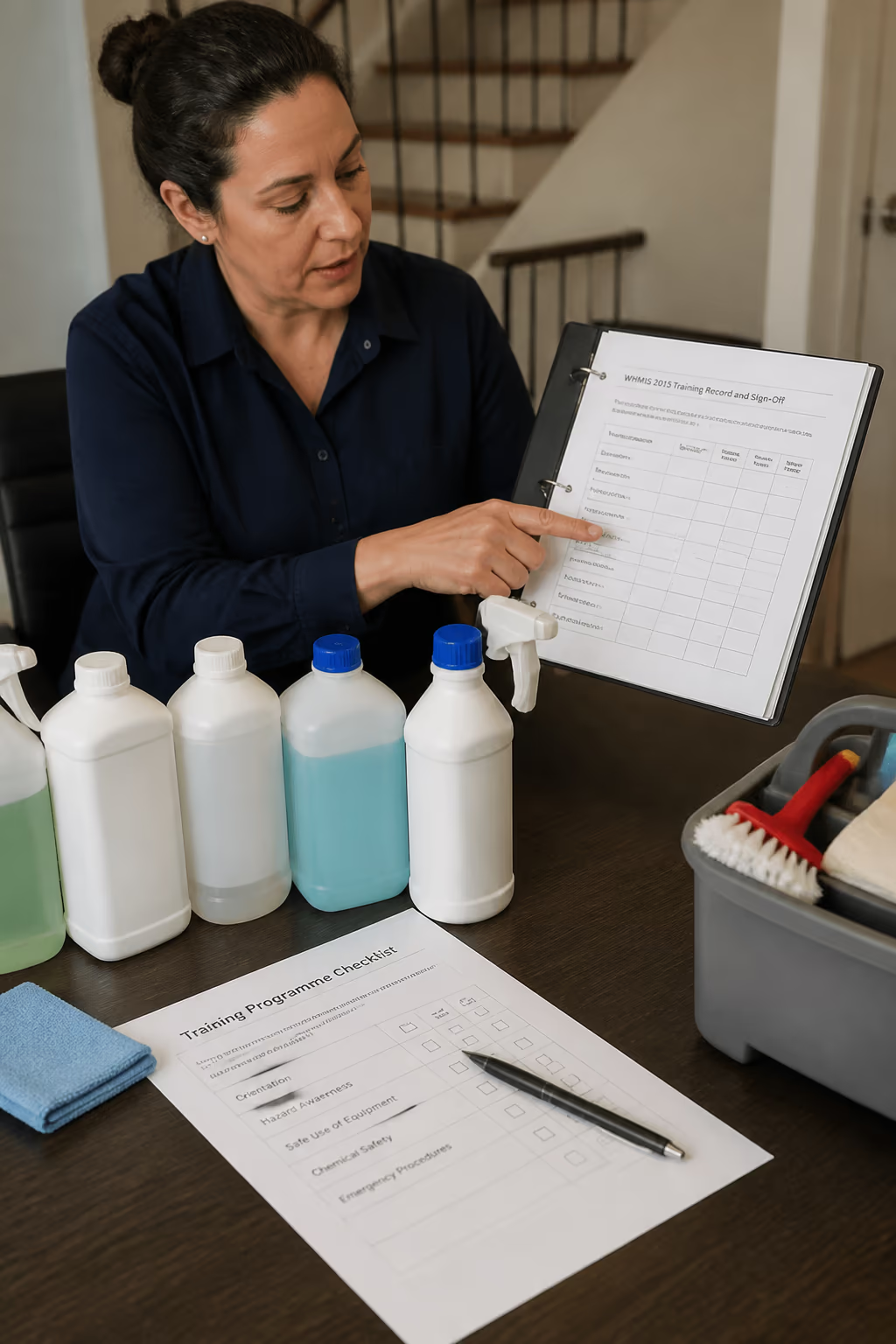
- Step 7.is documentation. Keep training records, sign-off sheets, and safety data sheets organised and current, because a programme that cannot be proven is a programme that never really happened.
- Step 8.is review and refresh. Standards change, products change, and people forget. A short refresher every few months and a full review at least yearly keeps the programme alive instead of a binder that gathers dust.
Taken together, the steps produce a cleaner who can walk into any room, assess what it needs, and complete the work to a consistent standard. That is the real goal: not a set of isolated skills, but a dependable professional.
What a Documented Programme Looks Like
A written programme turns the eight steps into something a supervisor can follow, a new hire can study, and an auditor can trust.
The core document is a training manual that brings the steps together. It should name the job expectations, the cleaning procedures, the chemicals and equipment in use, and the safety rules that apply, with a sign-off sheet after each module so completion is on record.
A practical programme also names who is responsible for each piece of it. The lead cleaner may own onboarding, the supervisor owns sign-offs, and the manager owns the review cycle, but everyone should know where they fit.
A written programme should also stay connected to the real world of the building. The manual works best when it is updated after a change of product, a new piece of equipment, or a shift in the type of occupants, so the document remains a living tool rather than a history lesson.
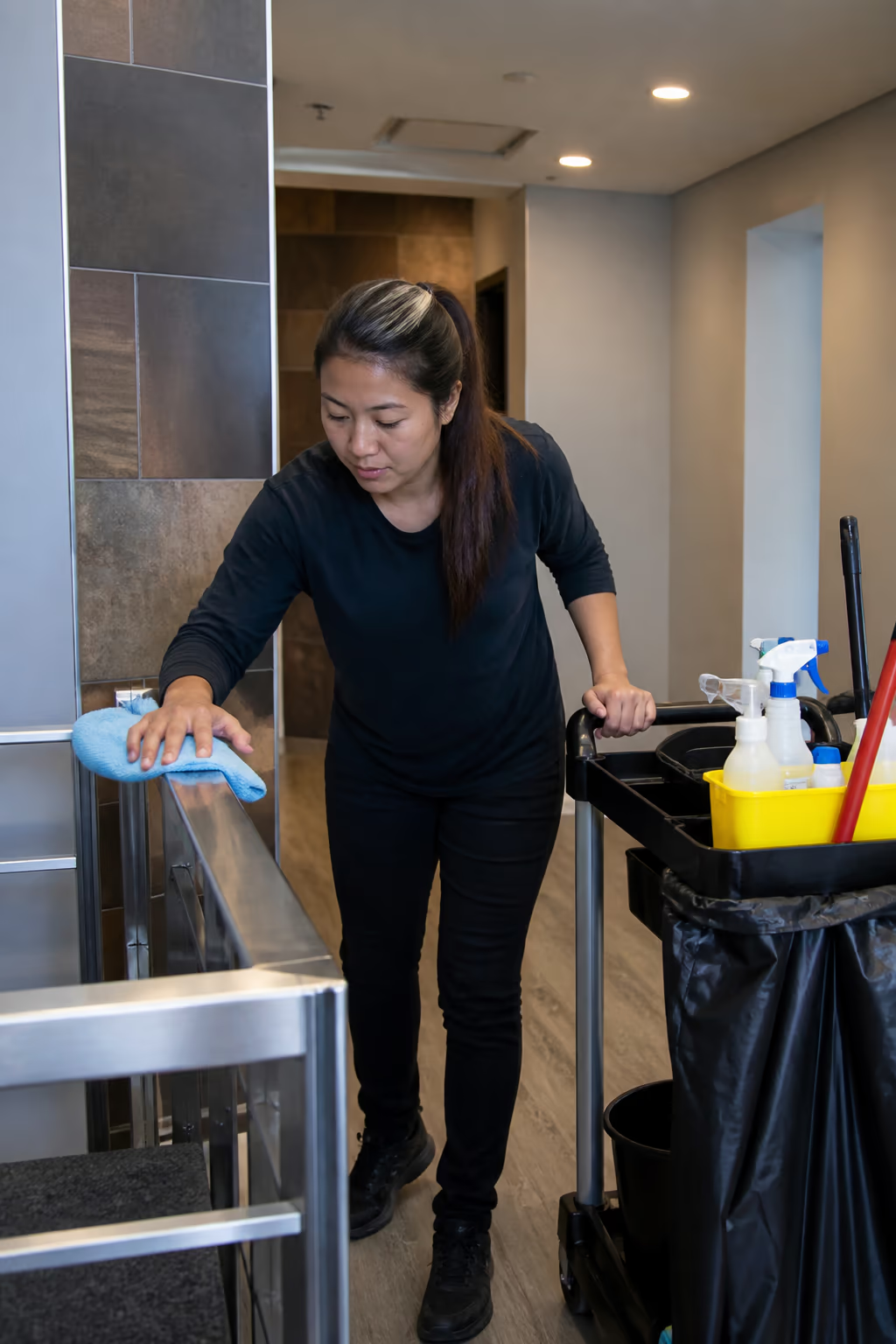
- A training manual that covers standards, procedures, chemicals, and safety.
- Sign-off sheets that record when each module was completed and by whom.
- A supervision schedule that names who checks new cleaners and when.
- A review calendar that schedules refreshers before skills have time to fade.
Canadian Compliance and Local Context
A Canadian training programme has to live inside the rules that govern the workplace, and those rules are the backbone of the chemical and safety steps above.
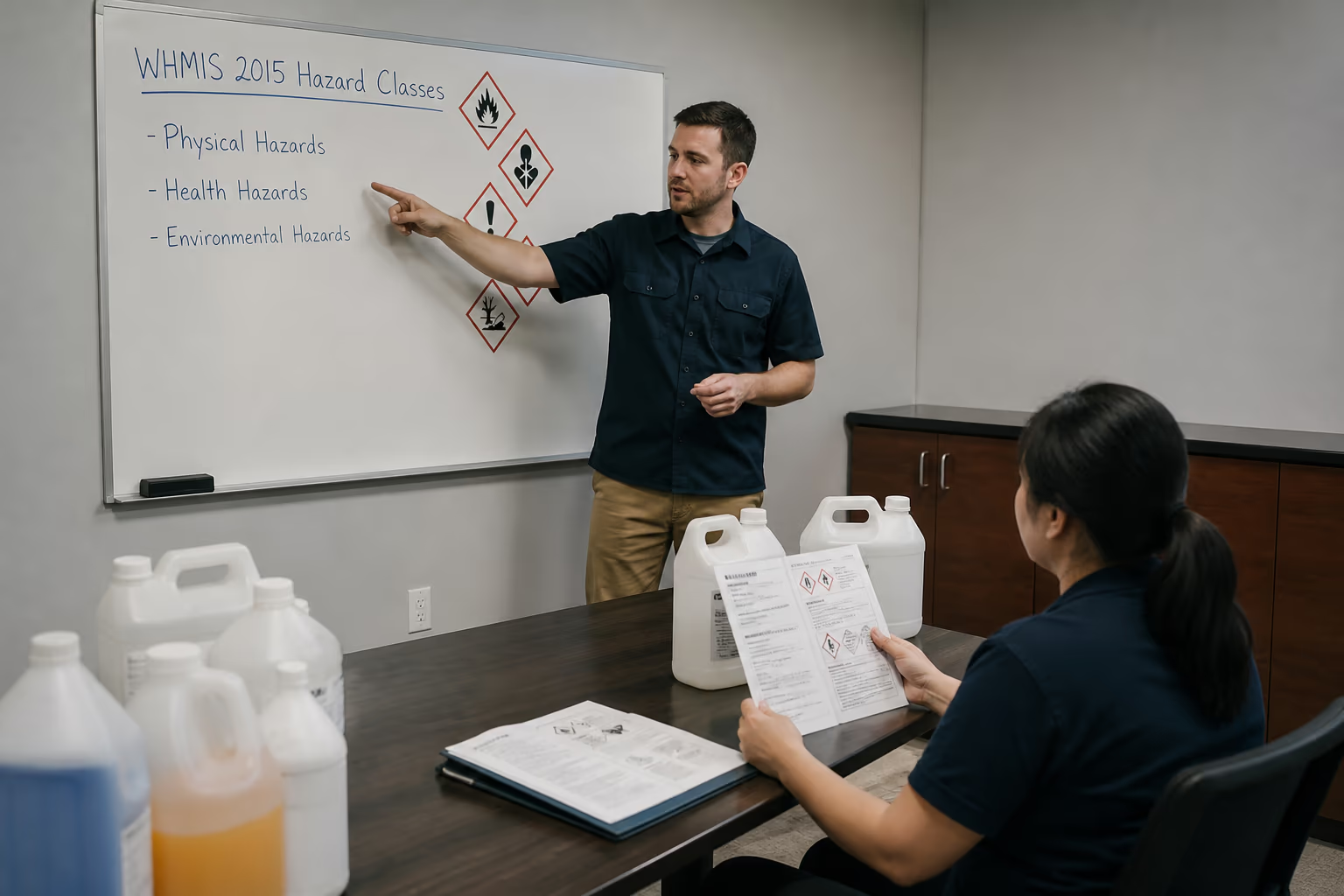
WHMIS 2015 is the national system for communicating workplace chemical hazards. It requires labels, safety data sheets, and worker education, and every cleaner should be able to read a label, find the SDS, and use a product the way the manufacturer intended.
Ontario's occupational health and safety rules add a layer of employer responsibility, from hazard reporting to personal protective equipment. Training that covers these obligations protects your staff and your business at the same time.
The seasons shape the training too. Ottawa winters mean salt and slush in every entryway, icy walkways, and floors that need more frequent attention. A winter module on mats, ice melters, slip prevention, and cold-weather safety is a practical part of any janitorial programme in this part of Canada.
Where the products allow it, choose certified, lower-impact chemistry. Recognised certifications such as EcoLogo point to products that do the job with a smaller environmental load, which is easier on cleaners, occupants, and the building itself.
Compliance is not just a paper exercise. When a cleaner can confidently explain what a product does, why the dilution matters, and what to do if something goes wrong, the building is safer for everyone in it. That confidence comes from training that is repeated, practical, and tied to the actual products on the shelf.
How Good Cleaner Co. Trains Its Teams
At Good Cleaner Co., training is not an afterthought; it is how we keep standards high across every site we serve.
- Background checks and reference checks before hiring.
- Structured onboarding that covers the building, the occupants, and the expectations.
- WHMIS 2015 training on every chemical the team uses.
- Practical, on-site training on each procedure, with supervision until it is mastered.
- Regular refreshers and a documented record of every session.
New staff work under close supervision until they can complete a shift to our documented standard, and our supervisors verify the work against that standard before the site is signed off.
The result is a team that arrives knowing how to protect your property, your people, and itself. Our commercial janitorial services in Ottawa are built on exactly this kind of training.
How to Measure Whether Training Is Working
A programme is only worth the paper it is written on if it changes how the building is cleaned, and that change needs to be visible.
- Consistent results across different cleaners and shifts.
- Fewer call-backs, incidents, and complaints from occupants.
- Lower staff turnover among trained team members.
- Cleaners who can explain why they clean the way they do.
Start with the work itself. Completed shifts should look the same no matter who cleaned them, and a supervisor's walk-through should find few call-backs. If standards vary between shifts, the training has not yet done its job.
Watch the quieter signs too. Absenteeism, turnover, and repeated incidents all point to a team that is not properly prepared, while a well-trained team stays longer and reports fewer problems.
Ask the cleaners themselves as well. A team that can describe its own standards, point to the safety data sheets, and explain what to do in an emergency is demonstrating that the training landed. If staff cannot answer the basics, the refresher schedule is the first thing to fix.
Common Mistakes to Avoid
Even well-intentioned programmes stumble in predictable places, and knowing the mistakes is half of avoiding them.
- Do not cut the first-week supervision short; that is where habits form.
- Do not let a cleaner use a product they have not been trained on, even in a hurry.
- Do not assume a trained employee stays trained; refreshers matter.
- Do not keep records only in one person's memory; write them down.
The first is treating training as a one-time event. A single session at hiring does not make a professional; the programme needs onboarding, supervision, and refreshers to stick.
The second is training in theory instead of practice. A new cleaner who has watched a video but never used your floor machine still needs hands-on time under supervision before working alone.
The third is skipping the documentation. If a training record does not exist, regulators and clients alike will assume it did not happen, and your team will drift from the standard you thought you set.
One more mistake is worth naming: training the wrong people first. It is tempting to train the most experienced cleaner and assume the habits will spread, but skills do not transfer by osmosis. Every member of the team needs the programme, from the newest hire to the most senior, because a single untrained cleaner can undo a building's standards in a week.
Costs, Timing and When to Call a Professional
Building an in-house training programme takes time and money, and the honest answer is that costs vary with the size of your team and the scope of your facility.
A small building with one or two cleaners may manage with written checklists, WHMIS training, and the supervision of an experienced lead. Larger facilities, sensitive environments, and teams of many people benefit from a more formal programme with documented modules, assessments, and records.
The real cost of weak training is hidden. Turnover, rework, damaged materials, and safety incidents all trace back to people who were never properly prepared, and those costs typically outweigh the price of doing training properly the first time.
Timing matters as much as cost. A programme is cheapest to build when a facility is stable and staff are in place, while the most expensive moment to discover a training gap is during a busy season or right after a key employee leaves. Building the programme before you need it, rather than after an incident, is the more economical path.
For many businesses, the practical answer is a professional provider. A janitorial company already carries the training and the supervision that an in-house programme would take months to build.
If you are comparing providers, our guide to comparing commercial cleaners is a useful starting point for the questions that matter. Ask about their training records, their supervision practices, and how they keep safety data sheets and chemical handling current.
Formatted Step-by-Step Training Programme Checklist
Use this checklist to keep your own training programme on track:
- Step 1.Write clear job descriptions, cleaning standards, and a measurable definition of clean for your building.
- Step 2.Screen and hire for reliability and attention to detail, with background and reference checks.
- Step 3.Deliver structured onboarding covering the building, emergency procedures, and job expectations.
- Step 4.Train on WHMIS 2015 chemical safety, equipment use, and personal protective equipment before anyone works alone.
- Step 5.Supervise closely in the first weeks, document every session, and schedule regular refreshers.
- Step 6.Engaging janitorial support teams in Ottawa gives you a trained, supervised team that already follows a documented training programme.
FAQ
Do janitorial staff need formal training in Canada?
Yes. Beyond basic skills, employers must train workers on the hazardous products they use under WHMIS 2015, and documented training protects both the worker and the business.
How long does it take to train a new janitorial hire?
Most facilities plan on a few days of structured onboarding followed by several weeks of close supervision before a new cleaner works alone with confidence.
What should be in a janitorial training manual?
Job descriptions, cleaning standards, step-by-step procedures, chemical and equipment instructions, safety data sheets, and a sign-off sheet for each completed module.
How often should training be refreshed?
A short refresher every few months and a full review at least once a year keeps standards current as products, buildings, and best practices change.
Is WHMIS training the same across Canada?
WHMIS 2015 is a national system, so the hazard classes and labelling rules are consistent across the country, while provincial workplace safety rules add their own employer duties.
Should I train my own cleaners or hire a professional company?
Both can work. A professional provider brings ready-made training and supervision, which is often faster and more reliable than building a programme from scratch.
What is the first step in building a training programme?
Start with written job descriptions and a measurable definition of clean, because every later step, from hiring to supervision, depends on knowing what the job actually is.
How do I prove my team is trained if asked?
Keep sign-off sheets, training records, and safety data sheets organised by employee and by module, so you can show exactly who was trained, on what, and when.
Wrapping Up
A janitorial staff training programme is one of the best investments a facility can make. It produces cleaners who work safely, teams that stay consistent, and a building that is genuinely clean rather than just superficially tidy. If you would rather leave the training to a team that has already built it, contact Good Cleaner Co. for a free quote and a janitorial plan built around your facility.
Whichever route you choose, the principles in this guide apply: write the standards, train to them, supervise the work, and document what happens. Do that consistently and you will have a cleaning team you can rely on.
Keep reading
More from Good Cleaner
- Janitorial Staff Training Programs: Complete Guide To Developing Cleaning Professionals
- How to Choose the Best Commercial Cleaning Company in Ottawa: Vendor Selection Guide
- Janitorial Service Contract Template: 15 Essential Terms Every Agreement Needs
- 7 Key Differences Between Janitorial Services And Cleaning Services In Canada
Services that fit
- Janitorial Services in OttawaRecurring janitorial services in Ottawa for offices, warehouses, retail, dealerships and schools. Eco-friendly commercial cleaning, customized plans, free quote.
- Professional Office Cleaning Services in OttawaOffice cleaning services in Ottawa for corporate offices, clinics and professional suites. After-hours scheduling, eco-friendly products and a free quote.
About the author
Service areas
- Ottawa
- Kanata
- Nepean
- Orleans
- Barrhaven