
Church Janitorial Services: Reverent & Detailed House of Worship Maintenance
This guide explains what professional church janitorial services actually include and why the word reverent matters. We cover the core maintenance standards for sanctuaries, offices, nurseries, and fellowship halls, plus the scheduling flexibility a house of worship needs. The honest version: a church janitorial team must combine the discipline of a commercial operation with the care of someone who understands what the building means to its community. When both are present, the building stays beautiful, healthy, and ready for worship every week.
Quick Summary
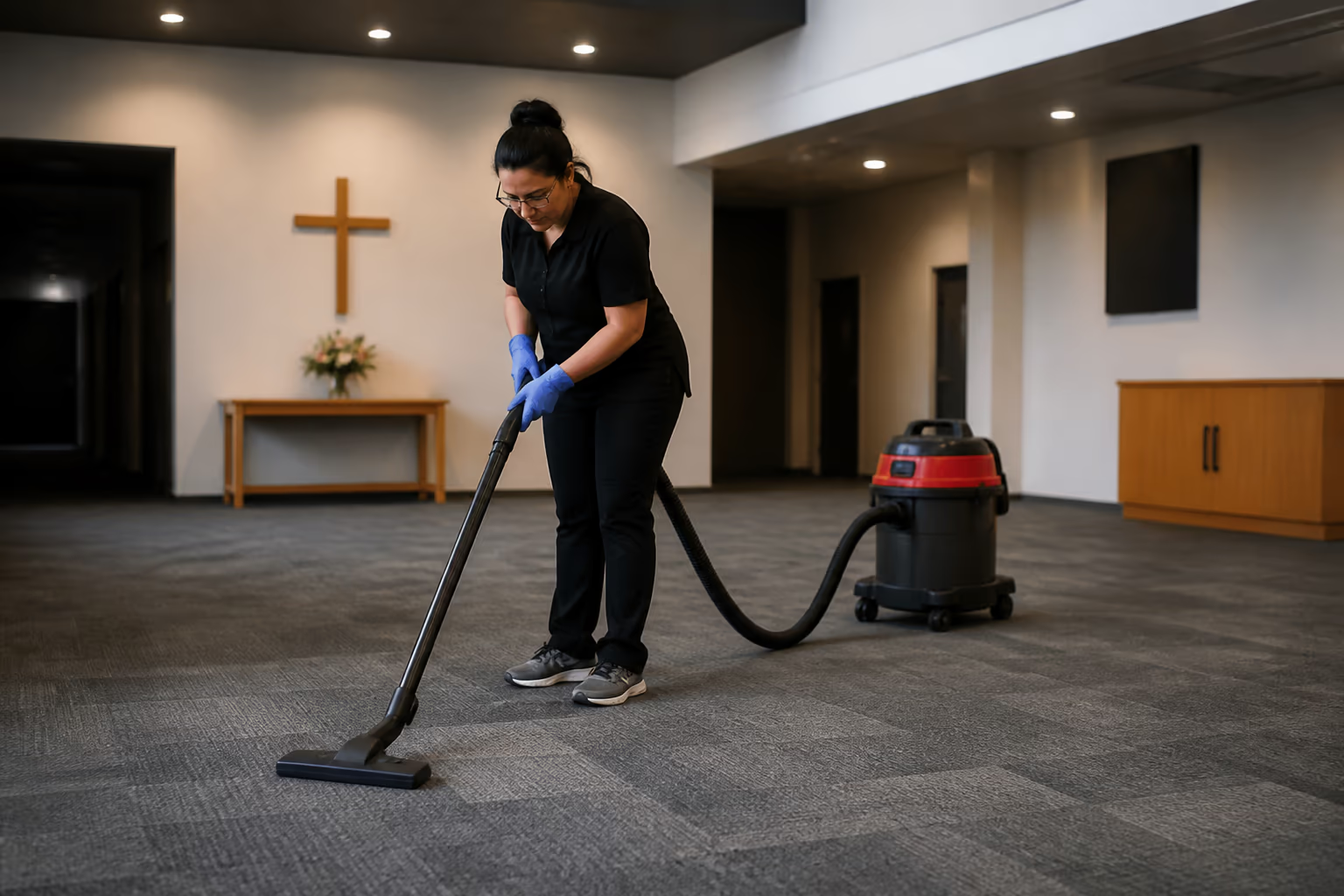
A church janitorial program is different from a standard commercial cleaning contract. It covers sanctuaries, community halls, administrative offices, and nurseries, and it has to be scheduled around worship services rather than against them. The right janitorial partner brings reverent cleaning protocols, non-toxic EcoLogo products, and flexible scheduling that respects the building and the people who use it. This guide explains what those services actually include and how to choose a team for your house of worship in Ottawa.
In this guide
The Reverent Approach to Religious Facility Janitorial Care
Churches, synagogues, mosques, and temples across Ottawa require janitorial maintenance that balances high cleanliness standards with deep respect for sacred architecture.
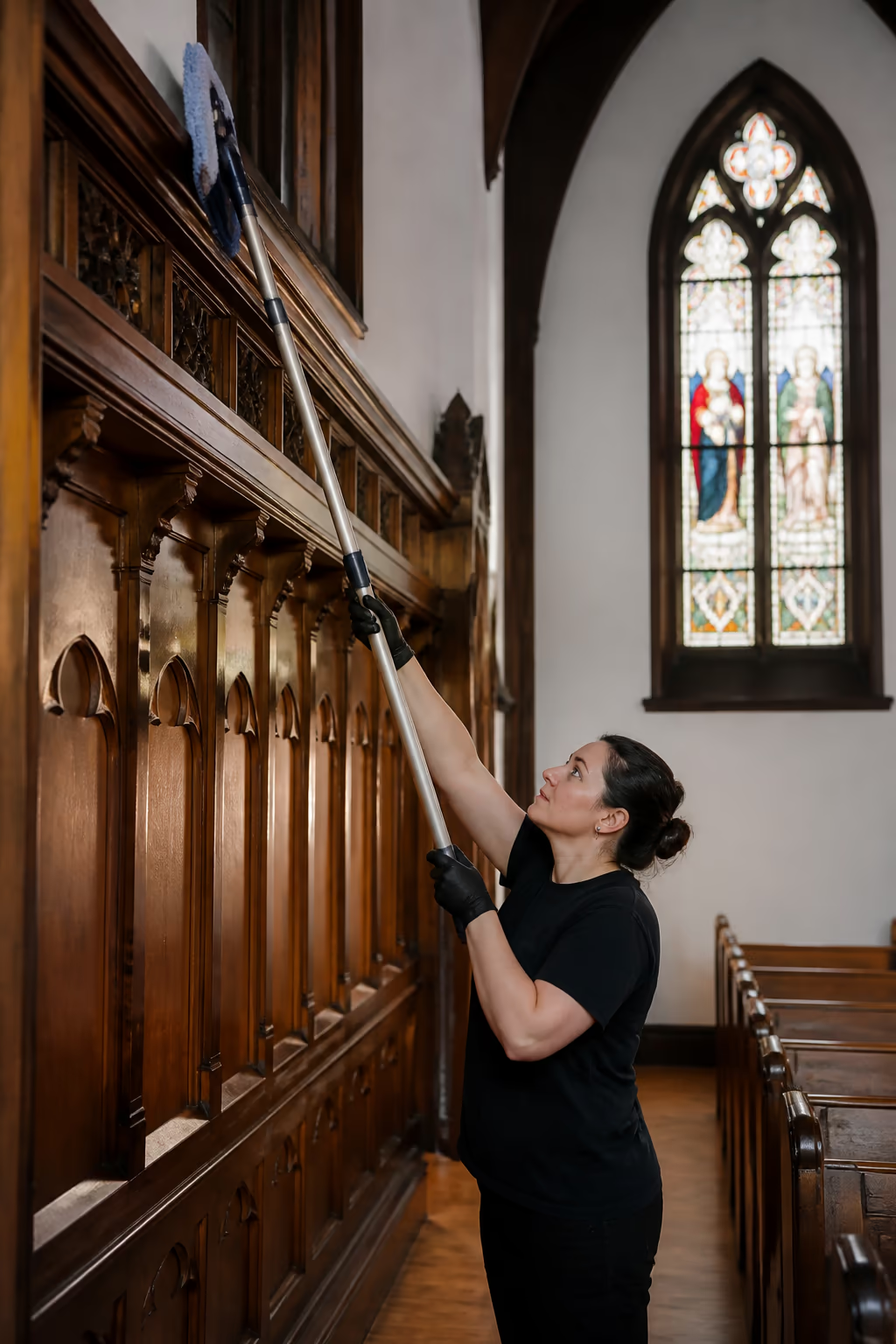
Volunteers often struggle to maintain large worship sanctuaries, high ceilings, stained glass windows, and heavy foot traffic corridors.
Partnering with a professional janitorial company guarantees structured cleaning routines, WHMIS-certified staff, and commercial HEPA equipment that protects sacred spaces.
The reverent approach shows up in the small details. We schedule our work so that nothing is moved without care, nothing is polished with the wrong product, and nothing is left half-finished before a service begins.
It also shows up in training. Every technician is briefed on the house rules of the facility before the first visit, including how to handle sacred furnishings, where the quiet zones are, and how to respond if a service is still in progress. Respect is not a slogan; it is a procedure.
For many congregations, the janitorial team becomes a trusted part of the community. The same faces arrive week after week, learn the rhythm of the building, and notice when something is out of place before anyone has to ask.
Core Maintenance Standards for Houses of Worship
Discover 4 core janitorial priorities for religious facilities:
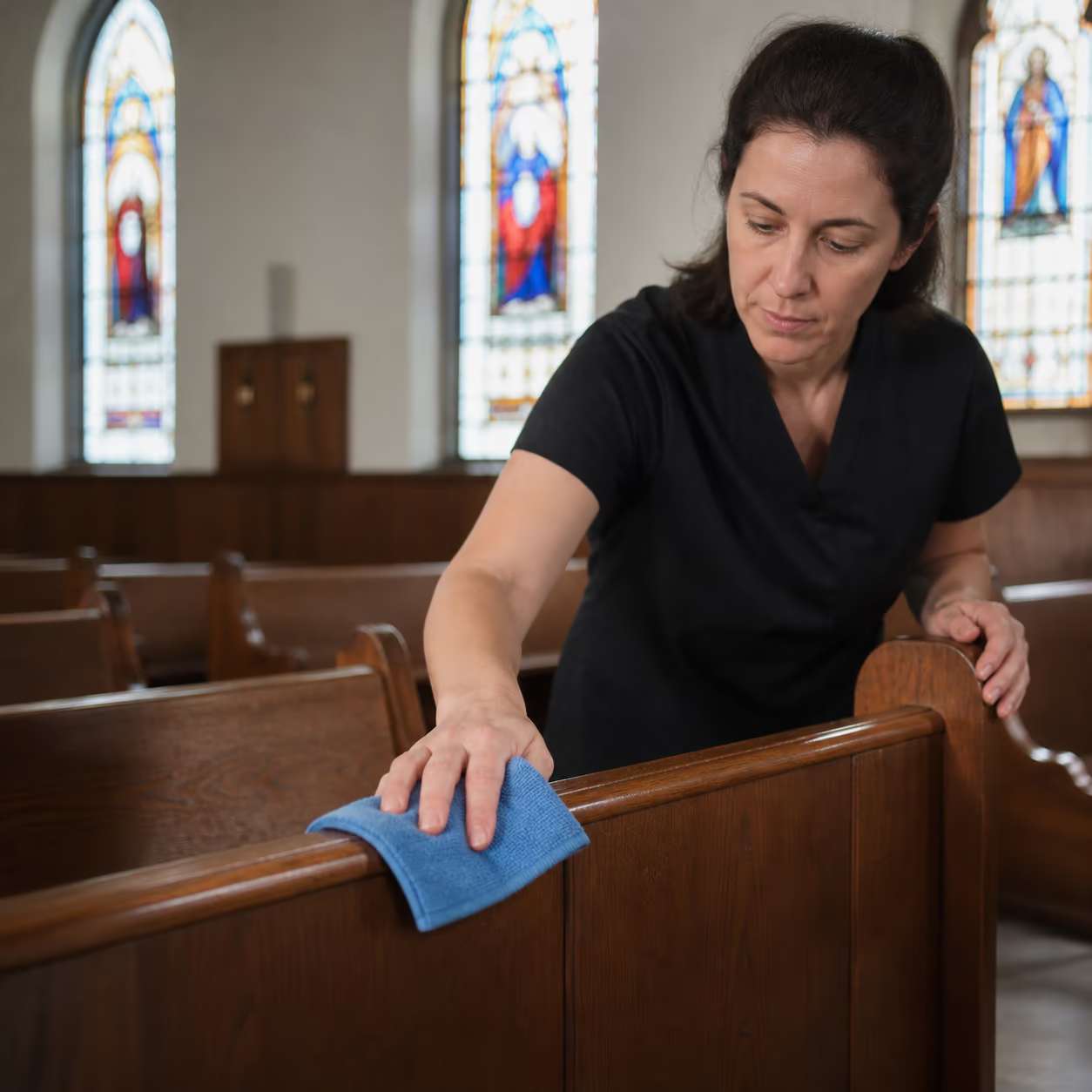
- 1. Sanctuary & Pew Conditioning: Microfibre dusting and pH-neutral wood care keep wooden pews and altar elements pristine.
- 2. High-Traffic HEPA Vacuuming: HEPA filtration units extract trapped winter salt grit and pollen from sanctuary carpets.
- 3. Washroom & Nursery Disinfection: Health Canada DIN-registered disinfectants ensure hygienic, germ-free washrooms and childcare rooms.
- 4. Reviewing our DIY citrus all-purpose cleaner guide provides natural surface cleaning recipe ideas.
These four priorities form the backbone of every worship facility program we run. The exact balance shifts from church to church, but the standard does not: clean surfaces, healthy air, protected woodwork, and safe spaces for children. For a fuller look at sanctuary, nursery, and fellowship-hall care, our church cleaning services guide walks through each area in more depth.
Building a Weekly Janitorial Program for a House of Worship
A church janitorial program works best when it is broken into clear weekly, monthly, and seasonal tasks rather than left to whatever needs doing on the day. A predictable schedule also makes budgeting easier for the facility committee.
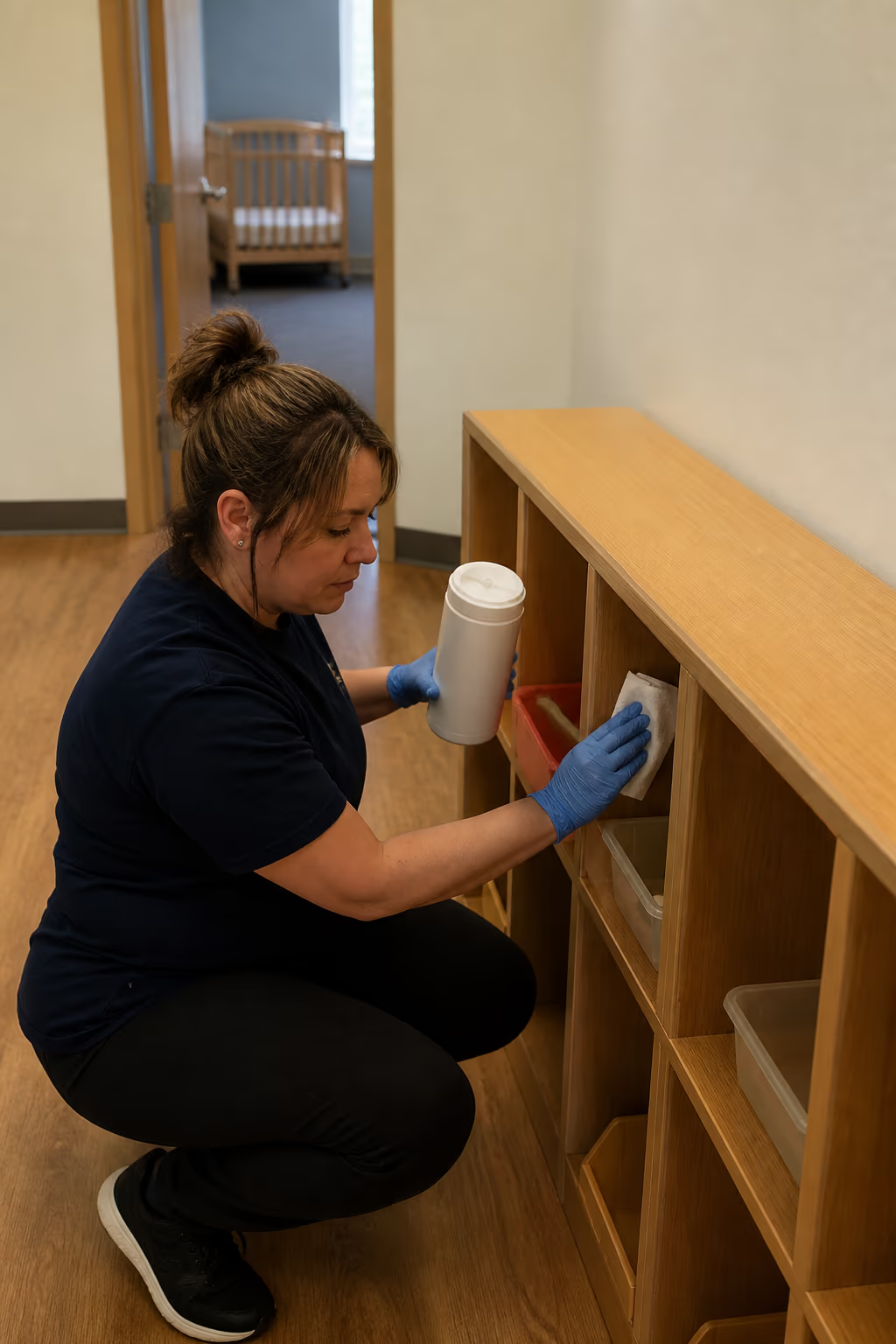
Weekly tasks cover the essentials: vacuuming sanctuary aisles, dusting pews and altar elements, cleaning and restocking washrooms, wiping down offices and phone touchpoints, and sanitizing the nursery. These are the tasks that keep the building show-ready for the weekend.
Monthly tasks go deeper. Window sills and ledges get detailed, baseboards are wiped, glass doors and partitions are polished, and kitchen shelves are pulled out for a proper cleaning. This is where a trained eye catches the build-up that weekly rounds miss.
Seasonal work is where the schedule really pays off. Before winter, entryways get extra attention to handle salt. In spring, pollen is vacuumed out of every corner. In summer, dehumidifiers and mould-prone bathrooms are checked. A janitorial program that plans for the seasons protects the building all year.
The program also needs a clear point of contact. Most churches assign one staff member or committee chair to work with us, review the monthly report, and flag anything that needs attention. That single line of communication keeps the program running smoothly.
A structured program leaves an inspection trail as well. After each visit, the lead technician records what was completed and anything that needs attention, from a burnt-out light in the hallway to a slow drain in the kitchen. That record gives the facility committee a simple way to track quality and plan the next month's work.
Formatted Step-by-Step House of Worship Janitorial Checklist
Follow this checklist for religious facility maintenance:
- Step 1.Dust Sanctuary Pews, Lecterns, and Altar Elements with Non-Abrasive Conditioners:Protect fine wooden finishes.
- Step 2.Vacuum High-Traffic Carpet Aisles with Sealed Commercial HEPA Blowers:Remove salt slurry and dust particles.
- Step 3.Disinfect Church Offices, Conference Desks, and Telephone Touchpoints:Keep administrative work areas germ-free.
- Step 4.Sanitize Fellowship Kitchen Countertops and Community Dining Tables:Clean food preparation and dining spaces.
- Step 5.Restock Washroom Amenities and Mop Tile Floors with EcoLogo Microbicides:Maintain clean, stocked washrooms.
- Step 6.If you need a team or a recurring schedule, use commercial janitorial services in Ottawa to discuss scope, access, and timing before deciding whether it fits.
Serving Ottawa's Faith Communities
Good Cleaner Co. provides reverent church janitorial coverage across Ottawa, from historic parishes in downtown and the Glebe to family congregations in Kanata, Nepean, and Orleans. Every program is built on the same standards: protected woodwork, disinfected nurseries, stocked washrooms, and a schedule that never interrupts worship.
Working Alongside Volunteers and Staff
Many churches run a mix of paid staff, volunteer teams, and professional cleaners. When the roles are clear, the arrangement works well.
Where paid staff work alongside volunteers, the legal line still holds. Ontario's employer duty under subsection 25(1) of the Occupational Health and Safety Act requires prescribed equipment, materials and protective devices to be provided and kept in good condition, and prescribed measures and procedures to be carried out. The province lists the duty in one line: “Take every precaution reasonable in the circumstances for the protection of a worker”.
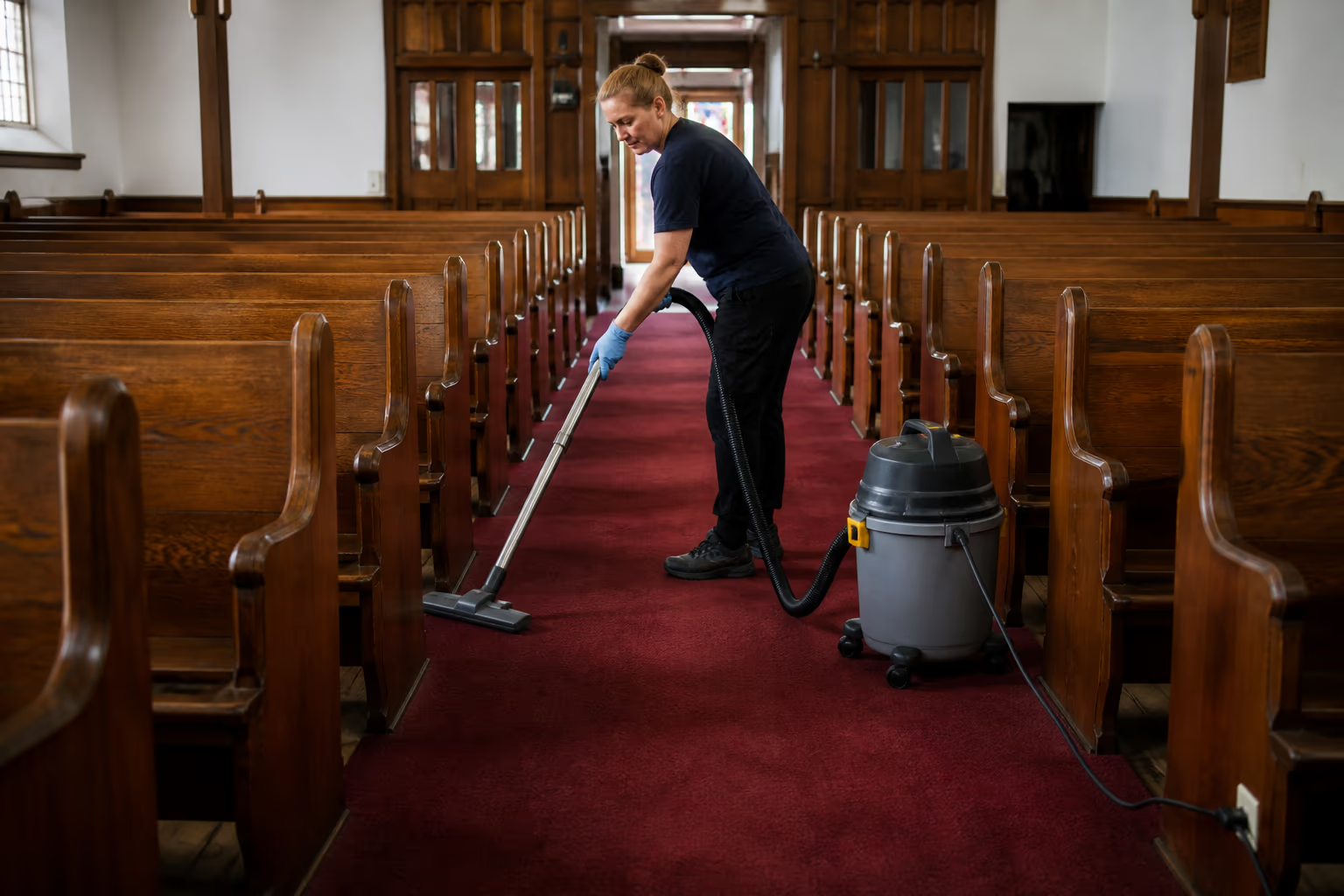
Professional teams handle the tasks that need commercial equipment and training: carpet extraction, high-reach dusting, heritage wood care, and thorough disinfection of nurseries and kitchens. Volunteers can focus on the lighter, more social work, such as tidying after coffee hour or arranging flowers for a service.
Clear boundaries prevent friction. If the professional team is responsible for washrooms and floors, the volunteer schedule should not overlap those tasks. A simple written scope of work, shared with everyone, keeps the division clean.
We also train the people who work alongside us when asked. A short orientation for volunteers on which products to use and which surfaces to avoid reduces accidents and protects the building between professional visits.
What to Look for When Hiring a Church Janitorial Company
Choosing a janitorial partner for a house of worship is about more than comparing hourly rates. A few checks separate a reliable partner from a company that treats a church like any other office.
Start with references. Ask how the company has handled other heritage buildings, schools, or places of worship. Then look at their product list. If they cannot show you EcoLogo-certified chemistry and Health Canada DIN-registered disinfectants, keep looking. A provider that treats green janitorial services as a genuine standard rather than a marketing label will be able to explain their product choices in plain terms.
Ask about background checks. The people cleaning a nursery need to be screened, and the company needs to carry proper coverage. These are not optional extras for a facility that serves children and vulnerable adults.
Finally, ask about communication. Who will be your single point of contact? How do you request an extra clean before a wedding? What happens if something is missed? A company that answers these questions clearly is likely to serve the congregation well.
A written scope of work is the last piece of protection. It lists every task, how often it happens, and who is responsible. That document prevents disputes, keeps volunteers informed, and gives the facility committee a clear record of what is being paid for. For general questions about how visits, access, and billing typically work, our cleaning services FAQ page covers most first-time concerns before you request a quote.
Practical planning for this situation
For a facility committee, the sensible starting point is a church janitorial routine. Begin with a walk-through and write down sanctuary boundaries, washrooms, fellowship areas, volunteers' responsibilities, and the log used after gatherings. That gives the work a real boundary and avoids treating a generic package as if it already understood the space.
Use the written notes to decide what belongs in a regular routine and what needs separate time, access, or approval. The useful test is whether another person could read the scope and understand the task without being told to rely on a promise.
Seasonal considerations in Ottawa
Local conditions matter, but they do not require a script. In this topic, weather at the entrance and the calendar of services and events should guide the routine. Review the condition of the actual space before changing the products, equipment, or frequency.
A short seasonal review is usually enough: notice what has changed, name the affected area, and agree on the practical response. That keeps maintenance connected to the property rather than a broad list of place names.
Safe, responsible cleaning
Choose methods that suit the material and follow the product or equipment instructions. Keep people away from a wet or actively cleaned area, and stop when a surface reacts unexpectedly.
When a task involves an unfamiliar finish, access issue, or safety concern, ask before continuing. A careful pause is more useful than a confident shortcut and protects the people using the space.
Considering professional help
A service conversation should stay anchored in the space and the requested work. For a church janitorial routine, explain sanctuary boundaries, washrooms, fellowship areas, volunteers' responsibilities, and the log used after gatherings. Ask for the proposed tasks, timing, and any limits in writing.
If you want to explore help, use janitorial cleaning teams in Ottawa to describe the scope and decide whether it suits the situation. This is a request for information, not a promise about a result.
How to review the routine
Before changing the routine, take a few minutes to describe the present condition in plain language. Start with sanctuary boundaries, washrooms, fellowship areas, volunteers' responsibilities, and the log used after gatherings. This makes it possible to decide what is necessary without inflating a small issue into a large project.
Ask the people who use the space what causes the most friction. Their answer may be a difficult entry, a storage gap, a time when work cannot happen, or a surface that needs a gentler method. Those details are the basis for a useful plan.
Try one visible adjustment at a time. Record why it was made, what area it affects, and what a satisfactory result looks like. That approach is easier to review than changing a whole routine at once.
Keep feedback specific: name the room, surface, timing, and expected result. Clear notes help a household, volunteer group, or service team work through a problem without blame or vague expectations.
Revisit the plan after a genuine change in use, condition, or season. A routine should be steady enough to follow and flexible enough to stay useful.
FAQ
Can janitorial visits be scheduled on Friday afternoons or Saturday nights?
Yes. We tailor cleaning shifts around your worship service schedule, weddings, funerals, and community events.
What areas does a church janitorial service cover?
We cover the sanctuary, nursery, offices, fellowship hall, kitchen, washrooms, entryways, and common areas as part of one coordinated program.
How is church janitorial different from regular commercial cleaning?
It adds heritage surface care, nursery-grade disinfection, and scheduling that respects worship times and special events.
Do you handle carpet cleaning in the sanctuary aisles?
Yes. Commercial HEPA vacuuming is part of weekly rounds, and hot water extraction removes deep-set salt and allergens on a seasonal cycle.
Will the same cleaning team come every week?
We aim for consistency. The same trained technicians are assigned to your facility so they learn the building, the finishes, and your expectations.
What happens if a wedding or funeral needs extra cleaning?
We coordinate with the facility committee to schedule pre-event and post-event cleanings so the building is ready for every gathering.
How do I request a church janitorial quote in Ottawa?
Send a request through the booking form and we will come back to you with the scope and the price. Nothing is charged online. You can also call or text 613-664-5678, or email info@goodcleaner.ca, and the office answers between 8 AM and 8 PM every day.
Do you provide washroom supplies and paper products?
We can restock washroom amenities as part of the janitorial program, using the supplies your facility already buys or sourcing them for you.
How far in advance should a congregation book janitorial services?
Most congregations start two to four weeks before their first desired service date, which gives us time for a walkthrough, a scope of work, and scheduling. During busy periods, booking earlier secures the preferred cleaning nights.
How soon can a church janitorial program start?
Most programs begin within two weeks of the walkthrough. We agree on the scope, schedule the regular visits, and brief the team before the first night so everything is in place before you hand over the keys.
Wrapping Up
Good church janitorial work depends on predictable communication as much as a task list. Keep a simple log for consumables, washroom checks, spills, locked rooms, and maintenance observations. Review it with the person responsible for the building, especially after large services or community events. Arrange access so cleaners do not interrupt pastoral care, rehearsals, or youth programs, and clarify which supplies volunteers may use. This approach gives a congregation a reliable routine while leaving sensitive decisions about furnishings, sacred objects, and event setup with the people who know the space best.
Keep reading
More from Good Cleaner
About the author
Service areas
- Ottawa
- Kanata
- Nepean
- Orleans
- Barrhaven