
How to Politely Tell Your Coworkers to Clean Up After Themselves?
Unwashed mugs in the sink, a splattered microwave, and an overflowing fridge are among the most common frustrations in any Canadian workplace. The good news is that you can fix most of it without confrontation. This guide walks through the polite approaches that actually work, from humorous signs to official kitchen policies, and explains when a professional cleaning team is the better answer. If the mess has moved beyond daily habits, Good Cleaner Co. offers commercial office cleaning that resets the whole space.
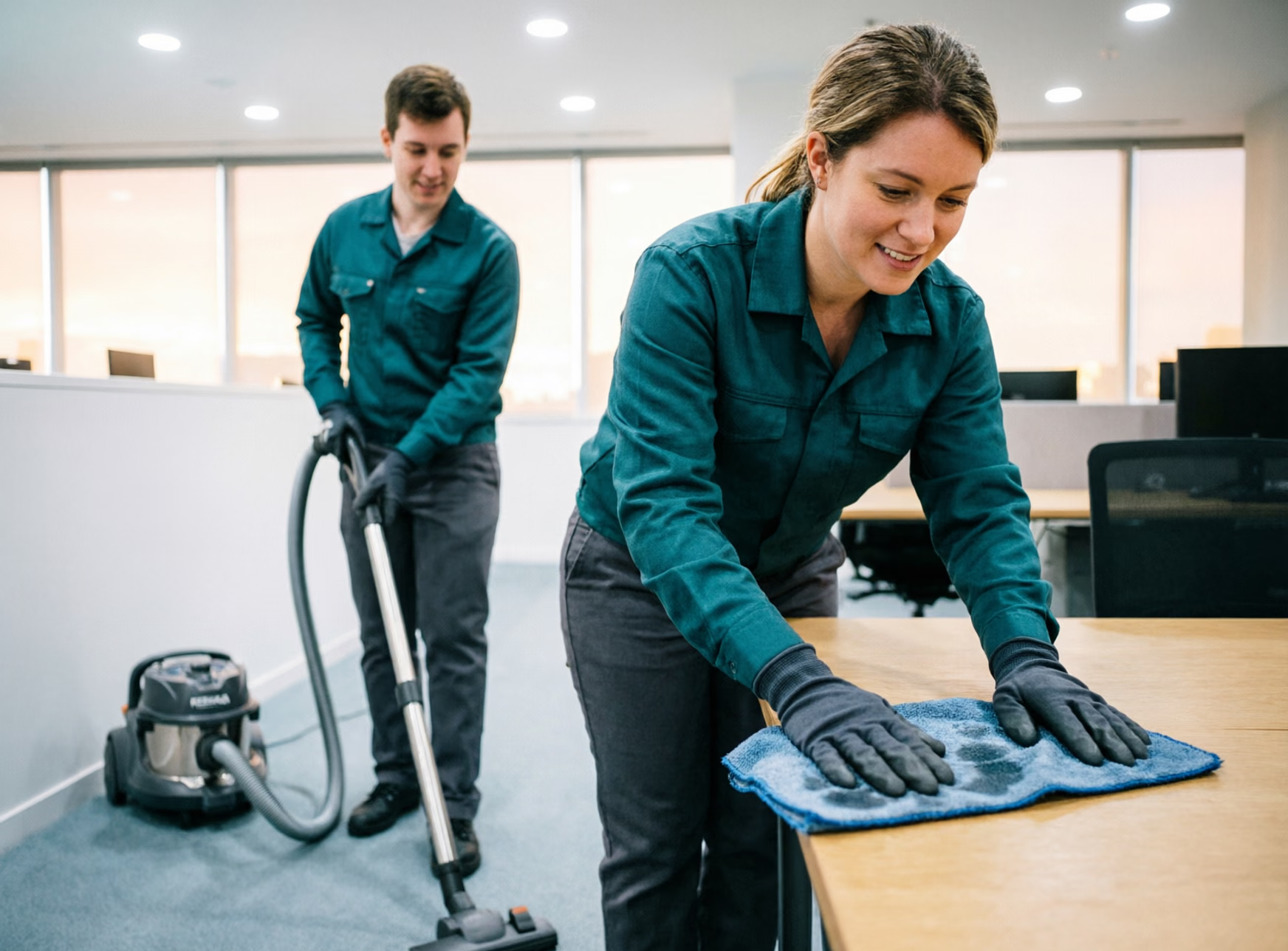
Quick Summary: The best way to ask coworkers to clean up is to make it a shared expectation rather than a personal complaint. This guide covers friendly signs, ready-to-use Slack templates, one-on-one scripts, team clean-up events, and when it is time to bring in professional office cleaning services in Ottawa.
Understanding Office Kitchen Dynamics
Unwashed coffee mugs stacked in the sink, splattered microwave walls, and forgotten lunch containers left to decompose in the office fridge are among the most frustrating micro-irritants in modern Canadian workplaces. While a cluttered desk is a personal choice, a messy shared breakroom directly impacts team morale, workplace hygiene, and the impression your office makes.
A shared kitchen has published standards to point at, which takes the personal edge off the conversation. Health Canada's safe food storage guidance recommends sanitizing countertops and utensils before and after preparing food, changing dishcloths daily, and keeping the refrigerator at 4 degrees Celsius or lower. Health Canada gives the scale of the problem: “Every year, thousands of Canadians get food poisoning.”
Addressing a messy colleague without causing awkwardness or damaging team dynamics requires tact, empathy, and clear communication. This guide outlines proven verbal scripts, pre-written Slack templates, gamified team events, and HR policy frameworks to maintain a clean workplace, and explains when bringing in professional janitorial support is the stress-free solution for your business.
Why Office Mess Causes Workplace Friction & Lost Productivity
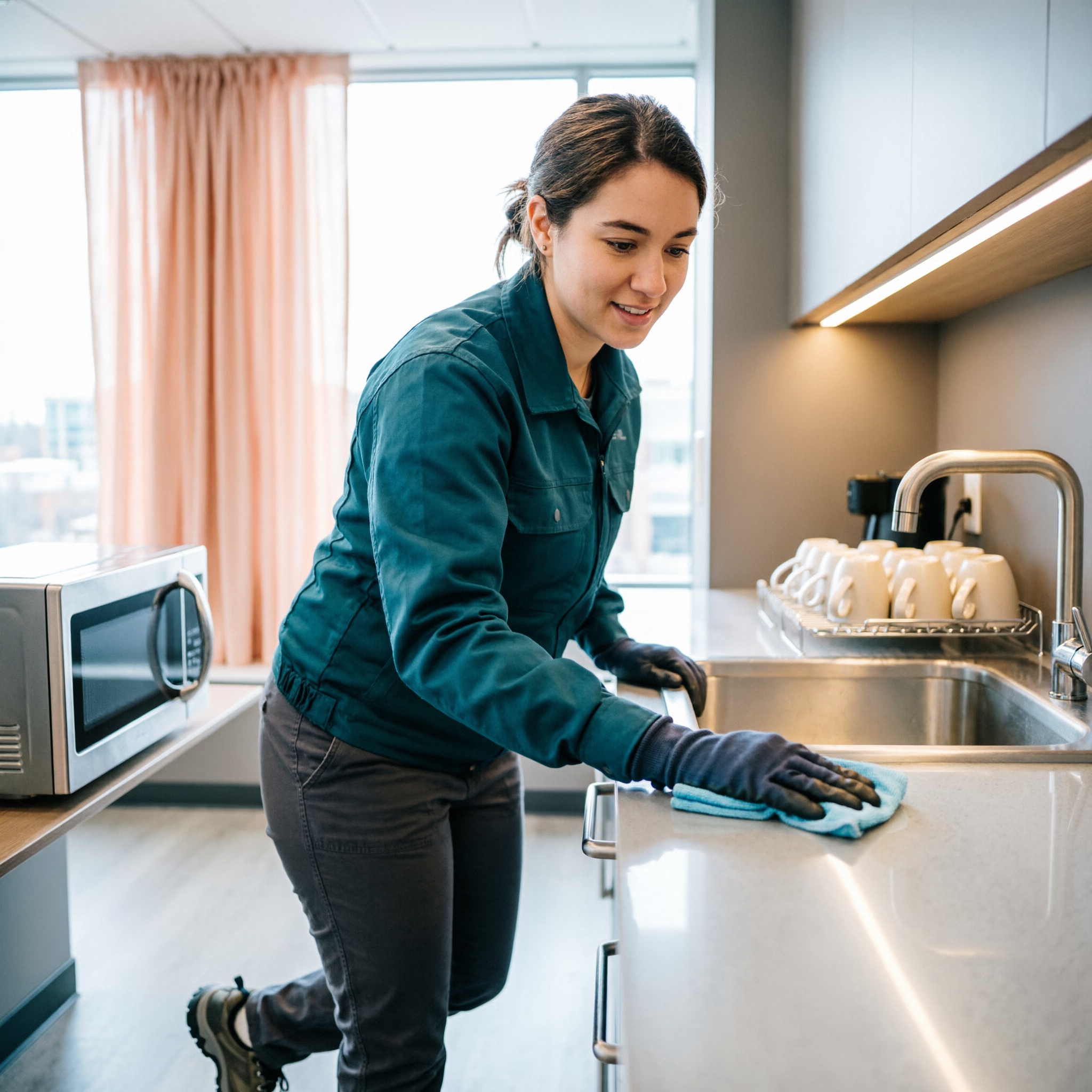
Office mess causes workplace friction and lost productivity through four measurable channels: cluttered breakrooms elevate stress and reduce focus, unclean high-touch surfaces such as microwave and coffee machine buttons speed the spread of seasonal illness, employees lose break time hunting for clean utensils or wiping up after others, and a messy kitchen or reception area leaves a poor impression on clients, job applicants, and auditors. Workplace cleanliness is therefore more than an aesthetic preference: it directly shapes employee satisfaction, mental clarity, and physical health.
1. The Power of Gentle Suggestion and Humorous Signs
Instead of an aggressive confrontation, start with a gentle, humorous nudge. A well-placed sign above the kitchen sink or coffee station can work wonders.
“Life is too short for dirty dishes. Please wash up after yourself and make the office a happier place!”
Humour acts as a great icebreaker. A witty note communicates the expectation clearly without singling anyone out. Here are a few light-hearted examples to rotate:
“Dirty dishes make the morning coffee taste sad. Let's keep our mugs happy!”
“Your mother doesn't work here. Please rinse and load your dishes after use!”
“Cleanliness is next to godliness—let's aim for divine breakroom standards today!”
To keep signs effective, rotate the message every few weeks so colleagues do not develop sign blindness. Bright colours and simple graphics also make reminders approachable rather than preachy.
2. The Praise and Request Technique
People respond best to positive reinforcement. Before making a request about shared spaces, open with a genuine compliment about their professional work.
“Hey Sarah, I noticed how organized your project files always are—it's amazing! Do you think we could bring that same magic to the coffee station? A clean breakroom makes such a difference for everyone.”
This approach acknowledges their positive traits before steering them toward better habits. Other effective examples include:
“John, your attention to detail on that last client presentation was fantastic. Do you think we could channel some of that precision into keeping our microwave clean after lunch?”
By linking the request to their professional strengths, you frame cleanliness as an extension of their high standards. Always follow up with a quick thank-you when someone tidies up:
“Thanks, Sarah, for wiping down the counter yesterday! It looked great and really helped the team.”
3. Collaborative Clean-Up Events and Team Gamification
Turn office maintenance into a 10-minute team activity rather than an individual burden. Adding music, coffee treats, or friendly competition makes tidying up a bonding exercise.
“Let's do a 10-minute clean-up sprint every Friday afternoon! The fastest team gets bragging rights and Friday coffees from the café downstairs.”
Fun themes keep morale high while tackling shared clutter:
- Monday Motivation:Start the work week with a clean, organized fridge.
- Clean-Up Karaoke:Belt out tunes while wiping counters and sorting recyclables.
- Thursday Tidy-Up:Clear out expired items before the weekend.
Implementing a fair rotating schedule ensures that kitchen responsibilities are shared equally across departments. When the rotation is written down and everyone can see it, the work feels fair rather than like a favour.
4. The Direct Approach (Delivered With a Smile)
When passive reminders are not enough, a direct, friendly conversation is the most effective route. Keep your tone light, focus on shared courtesy, and frame it as a minor favour:
“Hey Mark, could you please give your coffee mug a quick rinse when you're finished? We're all trying to keep the breakroom tidy, and it really helps the whole team.”
Presenting the request as a shared effort prevents defensiveness:
“Mark, I know you're swamped with back-to-back calls today, but could you spare a minute to pop your plate into the dishwasher? It means a lot to everyone sharing the kitchen.”
Always close with a brief thank-you to reinforce positive workplace rapport. A small acknowledgment goes a long way toward making the request feel like collaboration rather than criticism.
5. Ready-to-Use Email and Slack Templates
If you need to address the whole department without singling out individuals, use these polite, pre-written templates:
Template A: Friendly Slack / Teams Announcement
“Hi team! Quick reminder to please rinse your dishes and wipe down the microwave after heating lunch. Keeping our kitchen clean makes the workday brighter for everyone. Thanks for your help!”
Template B: Gentle Email for Shared Fridge Cleanout
“Hi everyone! We are doing a routine fridge refresh this Friday at 4:00 PM. Please label any food you want to save. Any unlabelled containers or expired items will be cleared out so we have fresh space for next week. Appreciate your cooperation!”
Template C: Professional Management Reminder
“Good morning team. A clean, hygienic workspace is essential for everyone's health and comfort. Please take a moment after lunch to ensure counters are wiped and dishes are placed in the dishwasher. Thank you for maintaining our shared office standards.”
6. Official Workplace Kitchen Etiquette Policy Framework
For office managers, HR directors, and business owners, creating an official workplace kitchen policy sets clear boundaries so employees do not have to police one another:
Immediate Clean-Up Rule:
All personal plates, cutlery, and mugs must be washed or placed in the dishwasher immediately after use. Leaving items in the sink overnight is prohibited.
Microwave Cover Requirement:
Always use a splatter guard when heating food in the microwave. Any accidental splatters must be wiped down immediately with available disinfectant wipes.
Weekly Fridge Purge Protocol:
Expired food or unlabelled containers left in the refrigerator will be discarded every Friday at 4:30 PM.
Countertop Hygiene:
Keep food prep counters clear of personal paperwork, bags, or non-kitchen items.
Shared Responsibility for Coffee Machines:
Refill the water reservoir and dump used coffee grounds when you finish the last cup.
A written policy takes the personal edge off the conversation. When the rule is on the wall, no one is being asked to do a favour; everyone is simply following the standard the team agreed to.
7. Comparing Workplace Cleanup Strategies
Choosing the right workplace cleanup strategy depends on your office culture and the specific situation: humorous signs work best for general daily reminders since they are non-confrontational and low effort, the praise-and-request technique works best for specific colleagues by building rapport, Slack and email templates work best for department-wide resets with clear documentation, team clean-up events work best for weekly or monthly resets that build camaraderie, and a professional cleaning contract works best for deep hygiene and daily maintenance because it removes the burden from staff entirely.
Best for general daily reminders. Non-confrontational and low effort.
Best for specific colleagues. Builds rapport and is highly effective.
Best for department-wide resets. Clear documentation that reaches everyone.
Best for weekly or monthly resets. Fun and builds team camaraderie.
Best for deep hygiene and daily maintenance. Reliable and removes the burden from staff entirely.
8. When Daily Clutter Becomes an Operational Hygiene Risk: Why Hire Professional Cleaners?
While team agreements handle daily coffee cups, asking valuable employees to scrub washrooms, vacuum carpets, or deep-clean greasy appliances is inefficient and damaging to morale. Employees are hired for their professional skills, not for commercial facility maintenance.
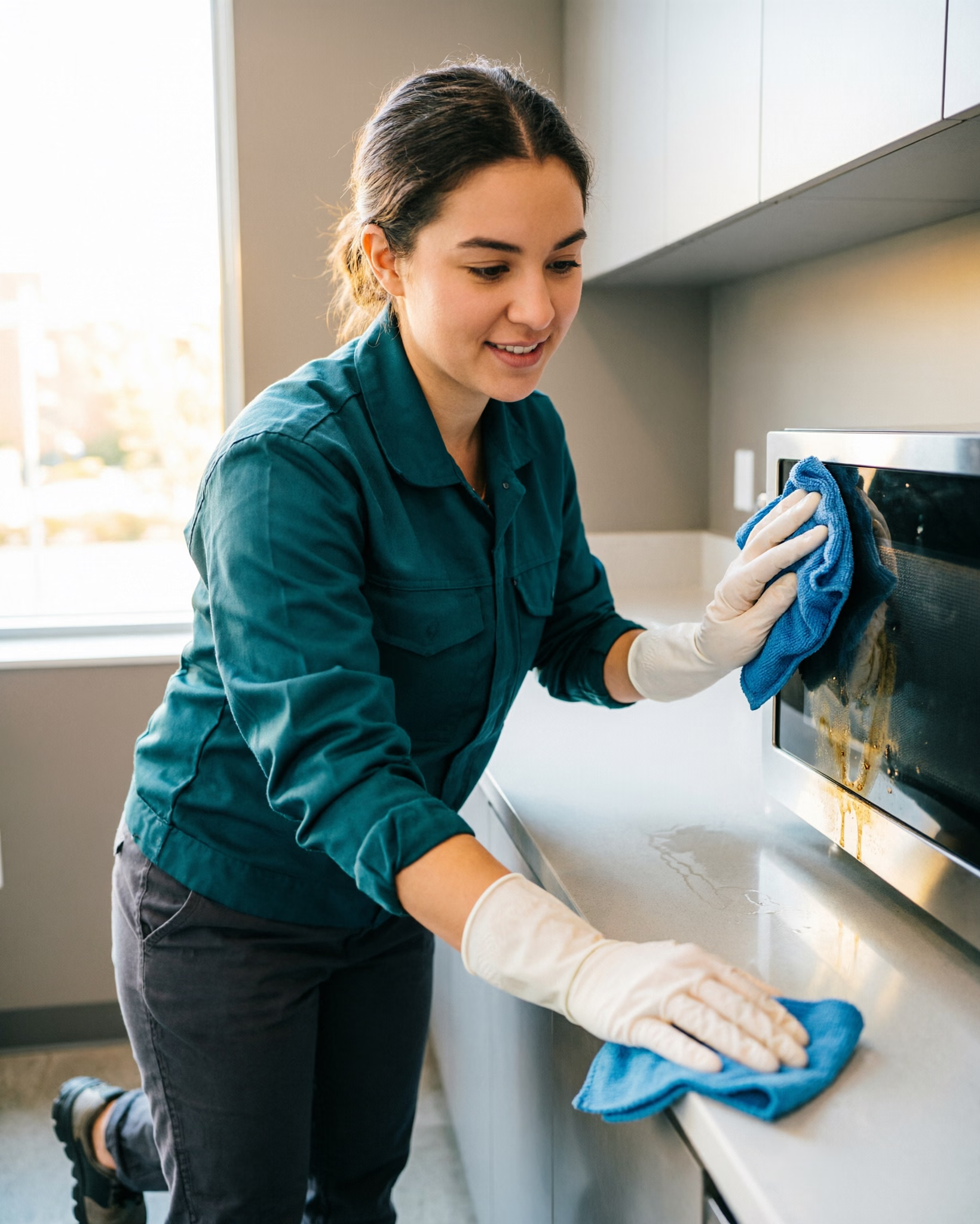
Food crumbs, spilled milk, and unwashed appliances attract pests and spread seasonal viruses across high-touch surfaces. When daily clutter escalates into deep grime, engaging professional janitorial services is the smartest business decision. Reviewing current office cleaning rates in Ontario helps evaluate the options, and partnering with Good Cleaner Co. ensures your breakrooms, washrooms, workstations, and reception areas remain spotless, disinfected, and welcoming every single day.
Formatted Step-by-Step Office Cleanup Checklist
Use this checklist to move your office from messy to consistent without singling anyone out:
- Step 1.Start with a Friendly Announcement:Send a positive Slack or email reminder that frames cleanup as a shared courtesy, not an accusation.
- Step 2.Add a Rotating Sign and Clear Labels:Place a short, light-hearted sign by the sink and label fridge shelves so expectations are visible to everyone.
- Step 3.Run a Friday Clean-Up Sprint:Set aside 10 minutes each Friday for the whole team to clear the fridge and wipe down surfaces together.
- Step 4.Establish a Written Kitchen Policy:Post the clean-up rules and a fridge purge schedule so no one has to police another person.
- Step 5.Follow Up One-on-One When Needed:Use the praise-and-request technique for the few colleagues who still need a gentle nudge.
- Step 6.Scheduling an office cleaning provider in Ottawa through Good Cleaner Co. provides the deep clean and daily maintenance that keeps the office healthy.
Keeping Your Ottawa Office Consistently Clean
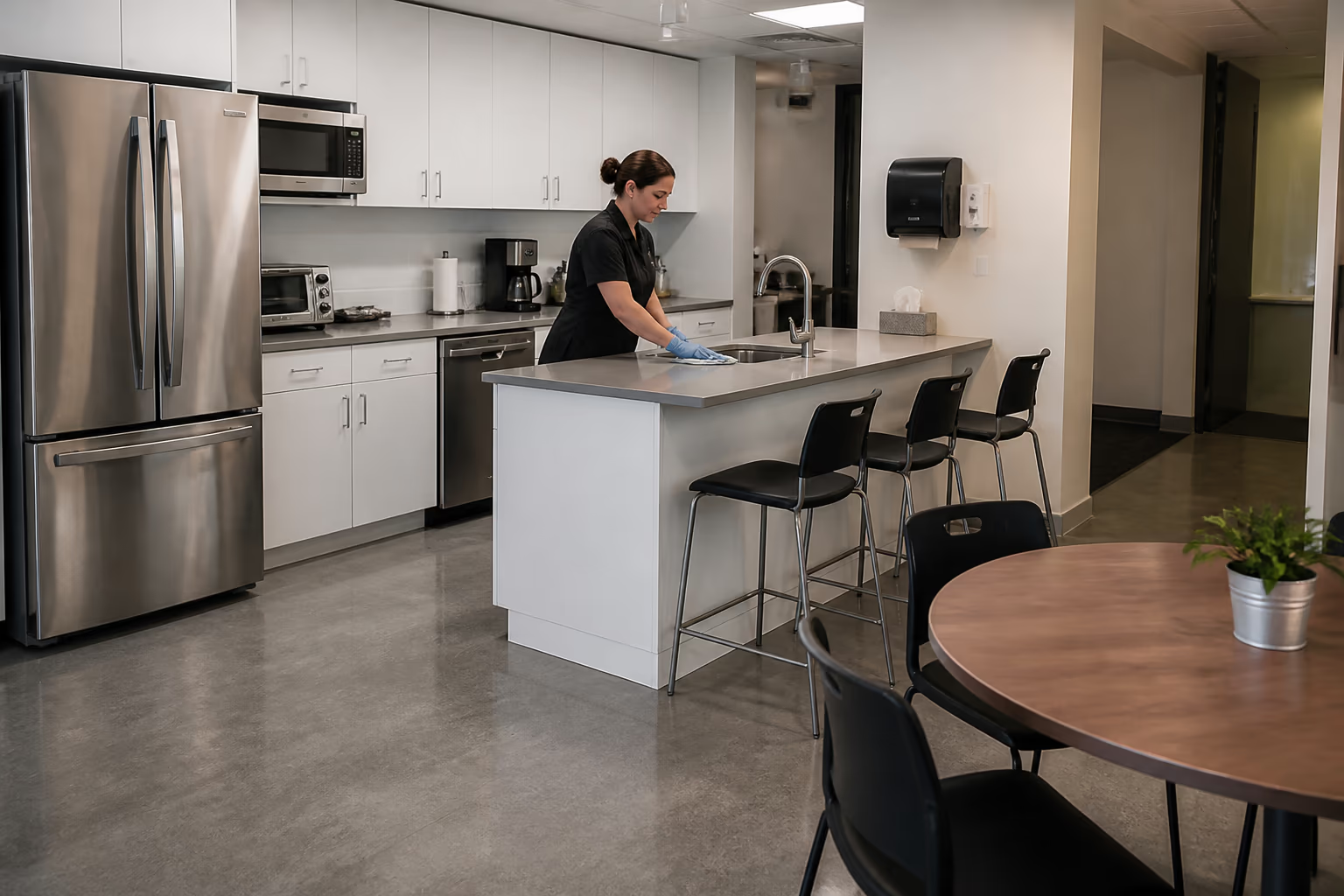
Good Cleaner Co. serves offices across Ottawa, from downtown and Centretown to Kanata, Nepean, and Orleans. Whether you run a small agency in a shared building or a larger office with its own floor, a professional cleaning schedule handles the deep cleaning that no etiquette policy can: sanitizing washrooms, vacuuming carpets, wiping down kitchen surfaces, and emptying the trash every evening. That leaves your team to focus on work, not on who left the milk out.
Start With the Actual Situation
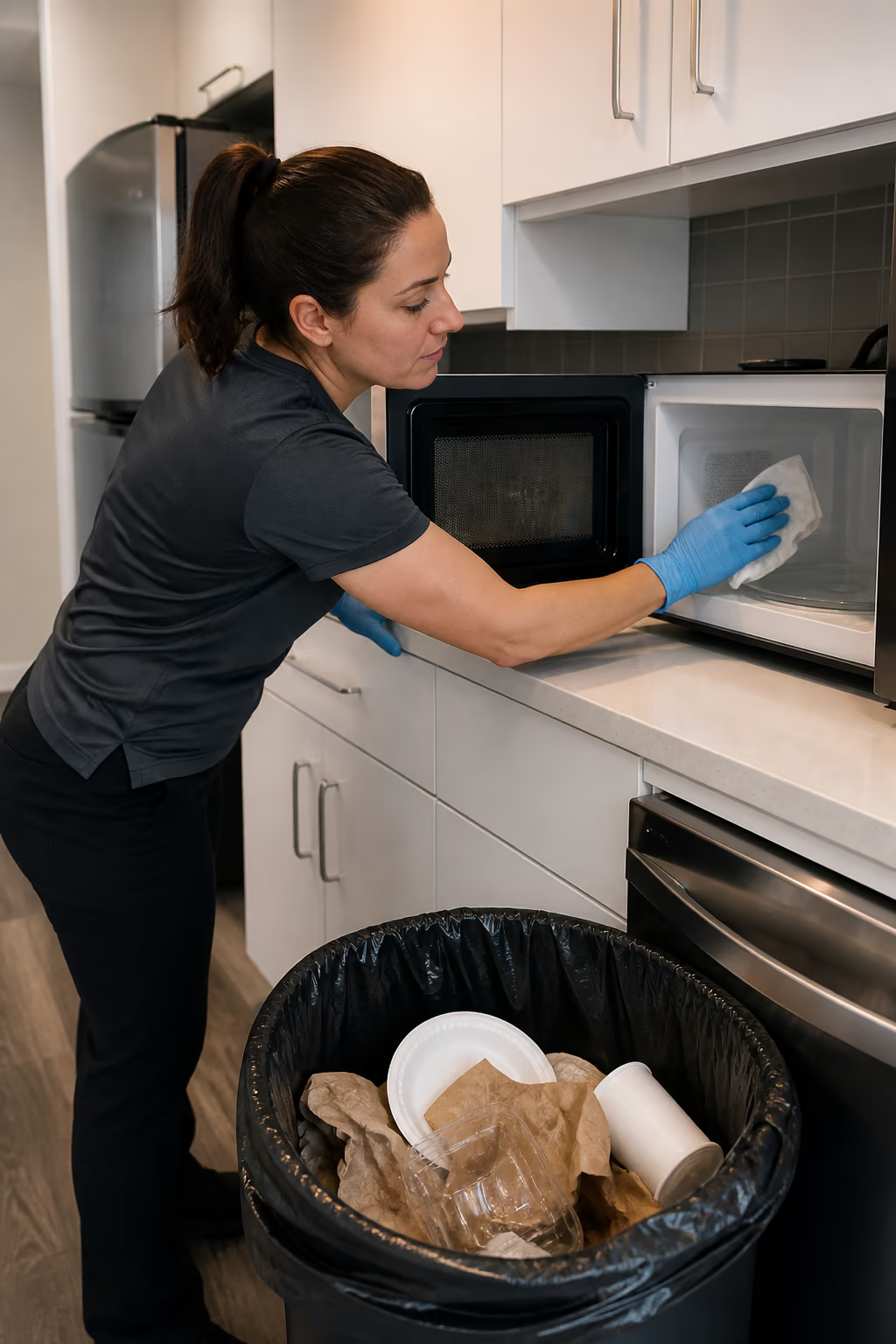
Before setting expectations for a shared-office clean-up conversation, look at the specific behaviour, the moment it happens, and the effect on the group. A plan copied from another workplace can miss the issue that people deal with every day, such as access at closing time, a crowded kitchenette, or a fragile finish.
Focus on a few concrete outcomes. A sink, microwave, fridge shelf, meeting room, or desk cluster may need its own timing, tool, or care instruction. A useful routine makes the next person’s work easier and avoids asking anyone to guess what “clean enough” means.
Put the agreed tasks, timing, and limits in plain language. A short list can be checked and improved; a sweeping promise about quality, safety, or service cannot.
- Identify the surface or behaviour that needs attention before choosing a response.
- Set a clear order so routine work does not create extra work later.
- Keep tools, messages, and handover notes where the right person can find them.
Use a Deliberate, Low-Drama Process
The best way to solve the recurring mess without turning it into a personal accusation is usually preparation, not more force. Read labels and care instructions, use the mildest compatible method, and give the task the time it needs. If the condition is unclear, test a small inconspicuous area or ask the responsible contact before continuing.
Separate ordinary upkeep from problems that require another decision. A leak, damaged surface, missing access card, unsafe spill, or conflict between coworkers is not fixed by working faster. Record what you observed and route it to the person who can act on it.
In Ottawa, the details often change through the year: wet entryways, salt, pollen, and dry indoor air can alter the workload. Adjust the task list to the condition of the space rather than relying on a generic seasonal script.
- Use a small, labelled set of suitable supplies or agreed communication channels.
- Change a cloth, pad, or approach when it is no longer appropriate for the job.
- Stop and escalate when a surface, safety issue, or workplace concern falls outside the agreed scope.
Review What Happened and Update the Next Step
After the first few attempts, check whether the shared agreement is actually workable. Ask what helped, what was missed, and whether the timing created a new problem. Specific feedback such as a missed handle, unclear job duty, or crowded area at lunch is more useful than an abstract complaint.
Keep the review factual and brief. Notes, photographs where appropriate, or a simple checklist can show whether a concern repeats. They also help distinguish routine work from a maintenance issue, a staffing problem, or a conversation that needs a manager or qualified professional.
When the process changes, update the written scope or shared expectation before the next visit or shift. That makes the improvement repeatable and fair, and it is more trustworthy than claiming a guaranteed result.
- Check the outcome at the time the room or task is normally used.
- Escalate damage, persistent moisture, hazards, or unresolved conduct concerns promptly.
- Keep the revised instruction short enough that a new person can follow it without guessing.
FAQ
How do I tell my boss politely to clean up after themselves?
Frame the request around office standards or health guidelines during a routine check-in, or implement a department-wide fridge and kitchen policy that applies equally to management and staff.
Should employees be required to clean office washrooms or deep-clean appliances?
No. Daily personal tidiness such as rinsing dishes and wiping personal spills is reasonable for staff, but sanitizing washrooms, vacuuming carpets, and deep-cleaning appliances should be handled by a dedicated commercial office cleaning team.
How do we handle recurring office fridge clutter?
Establish a fixed weekly fridge clear-out time, such as Friday at 4 PM, and post a clear rule that unlabelled containers left past the deadline will be disposed of.
What are the benefits of outsourcing office cleaning in Ottawa?
Outsourcing eliminates employee friction, ensures proper disinfection of high-touch surfaces, protects indoor air quality, and presents a professional image to visiting clients.
Is a humorous sign a good way to ask coworkers to clean up?
Yes, for general reminders. Humour lowers the tension and communicates the expectation without singling anyone out, which is why it is usually the best first step.
What if a coworker ignores the signs and reminders?
Escalate gently. Use the praise-and-request technique in person, then refer to the written kitchen policy, and finally raise the pattern with a manager if the shared space remains neglected.
How often should an office kitchen be professionally cleaned?
A commercial cleaner should service the kitchen and washrooms daily or a few times a week, with a deep clean of the fridge, microwave, and floors scheduled weekly.
Does Good Cleaner Co. provide one-time office deep cleaning?
Yes. We offer both scheduled nightly maintenance and one-time deep cleans that reset a workspace that has been neglected for a while.
Can a clean office really improve employee morale?
Most people notice. A clean breakroom and washroom remove a constant source of resentment, and employees report feeling more respected when the shared spaces are maintained.
How do I get a quote for commercial office cleaning in Ottawa?
Contact Good Cleaner Co. by phone or online form with your square footage, office hours, and cleaning frequency to receive a customized quote.
Wrapping Up
Navigating office cleanliness does not have to create tension. By blending humour, direct communication, clear Slack templates, and shared accountability, you can foster a respectful, clean workplace culture. And when your Ottawa office needs a comprehensive deep clean or reliable evening maintenance, contact Good Cleaner Co. for a free commercial quote.
Keep reading
More from Good Cleaner
Services that fit
- Professional Office Cleaning Services in OttawaNightly and after-hours office cleaning for corporate offices, clinics and professional suites, with after-hours scheduling and eco-friendly products.
- Janitorial Services in OttawaRecurring janitorial services in Ottawa for offices, warehouses, retail, dealerships and schools, with customized plans and eco-friendly chemistry.
About the author
Service areas
- Ottawa
- Downtown Ottawa
- Centretown
- Kanata
- Nepean
- Orleans