
What Type Of Cleaning Services Make The Most Money?
If you are thinking about starting a cleaning business or growing the one you have, what type of cleaning services make the most money? is a fair question to ask. The honest answer is that profitability comes from the mix of services, the business model and the way the work is delivered, not from any single task on its own. This guide looks at the segments that tend to reward a provider well and the practical habits that turn cleaning work into a dependable business.
Quick Summary
Profitability in a cleaning business comes from the mix of services, the business model and how work is delivered, not from any single task on its own. This guide looks at which segments tend to reward providers well, recurring revenue versus one-time jobs, and the habits that turn cleaning work into a dependable business.
In this guide
Why the Business Model Matters More Than the Rate
Cleaning businesses earn from a mix of services, and the most profitable ones are rarely the ones charging the highest hourly rate. What matters is how consistently the work comes in, how efficiently the team completes it and how much each customer is worth over time. A modest rate with loyal customers who book every week can be a better business than a high rate with a one-off customer you never see again.
Margin has a hard floor underneath it. Ontario's general minimum wage is $17.60 an hour from 1 October 2025 to 30 September 2026, rising to $17.95 on 1 October 2026, so a service line is only profitable when its price covers that wage plus supplies, travel, equipment and unbilled time. Revenue per job matters less than revenue per paid hour. The provincial guide states how it is measured: “Compliance with the minimum wage requirements is determined on a pay period basis.”
For that reason, what type of cleaning services make the most money? is best answered by looking at the shape of the business rather than a single service. Recurring work, a clear scope and a team that works efficiently are what move the needle. The services themselves matter, but only as part of a business that keeps its calendars full and its customers coming back.
It is also worth separating profit from revenue. A service that brings in a high rate is not automatically a service that keeps more of what it earns. The cost of supplies, travel, training and the time between jobs all eat into the number on the invoice. A busy calendar full of the wrong kind of work can still leave a provider stretched thin, which is why the model matters as much as the rate.
Which Cleaning Segments Tend to Be More Profitable
Some cleaning segments have characteristics that tend to support a healthier business. They are not guaranteed winners, and every market is different, but the patterns are useful to understand before you commit your time and money.
- 01Recurring commercial cleaning:offices and businesses book on a fixed schedule, which gives you predictable income week after week.
- 02Janitorial contracts:longer agreements with a defined scope tend to smooth out the ups and downs of one-off work.
- 03Post-construction and move-out cleaning:higher-detail work that is often priced higher because the scope is bigger.
- 04Specialty floor care:stripping, waxing and deep carpet care require equipment and skill that fewer providers offer.
- 05Regular residential maintenance:weekly or biweekly home cleaning builds repeat customers who refer their neighbours.
Each of these has trade-offs. Commercial work can mean evenings and nights, while residential work is more daytime and weekend friendly. Specialty work pays well but needs training and equipment, and post-construction work asks for patience and attention to detail. The best answer for most people is a mix that matches their strengths, their schedule and the demand in their local market, rather than chasing the segment that sounds most impressive. In many cities, building and condo cleaning services round out this mix by adding steady multi-unit contracts alongside single-family homes.
Recurring Revenue vs One-Time Jobs
The single biggest difference between a profitable cleaning business and a struggling one is usually recurring revenue. A customer who books every week is worth far more than a customer who books once, because you stop spending time and money finding new work and start spending it on the work itself. Recurring customers also become easier over time, since the team learns the space and the expectations.
One-time jobs still matter. Move-out cleans, post-renovation cleans and deep cleans bring in customers who may later become regulars, and they often command a higher rate because the scope is bigger. The trick is to treat every one-off as a chance to earn a repeat booking, through a great result and a clear follow-up rather than a one-and-done transaction.
Recurring commercial and janitorial contracts sit at the heart of this model. A fixed schedule and a defined scope mean the team knows what to expect, the customer knows what to expect and the calendar is full weeks in advance. That predictability is what makes it easier to plan staffing, supplies and growth, and it is why so many providers build their business around commercial accounts first and residential maintenance as a second stream.
What You Need to Build a Profitable Cleaning Business
Profitability is built long before the first job. A few foundations make the difference between a side hustle and a dependable business, and they cost less than the mistakes they prevent.
- 01A clear scope and documented process for every job, so quality is consistent.
- 02Reliable, background-checked staff who are trained to follow the process.
- 03Proper equipment and certified products, including safe handling under WHMIS 2015.
- 04A clear contract that protects you and your customer.
- 05A schedule and pricing model that keeps the calendar full without burning out the team.
- 06A simple system for quotes, scheduling and follow-up, so nothing falls through the cracks.
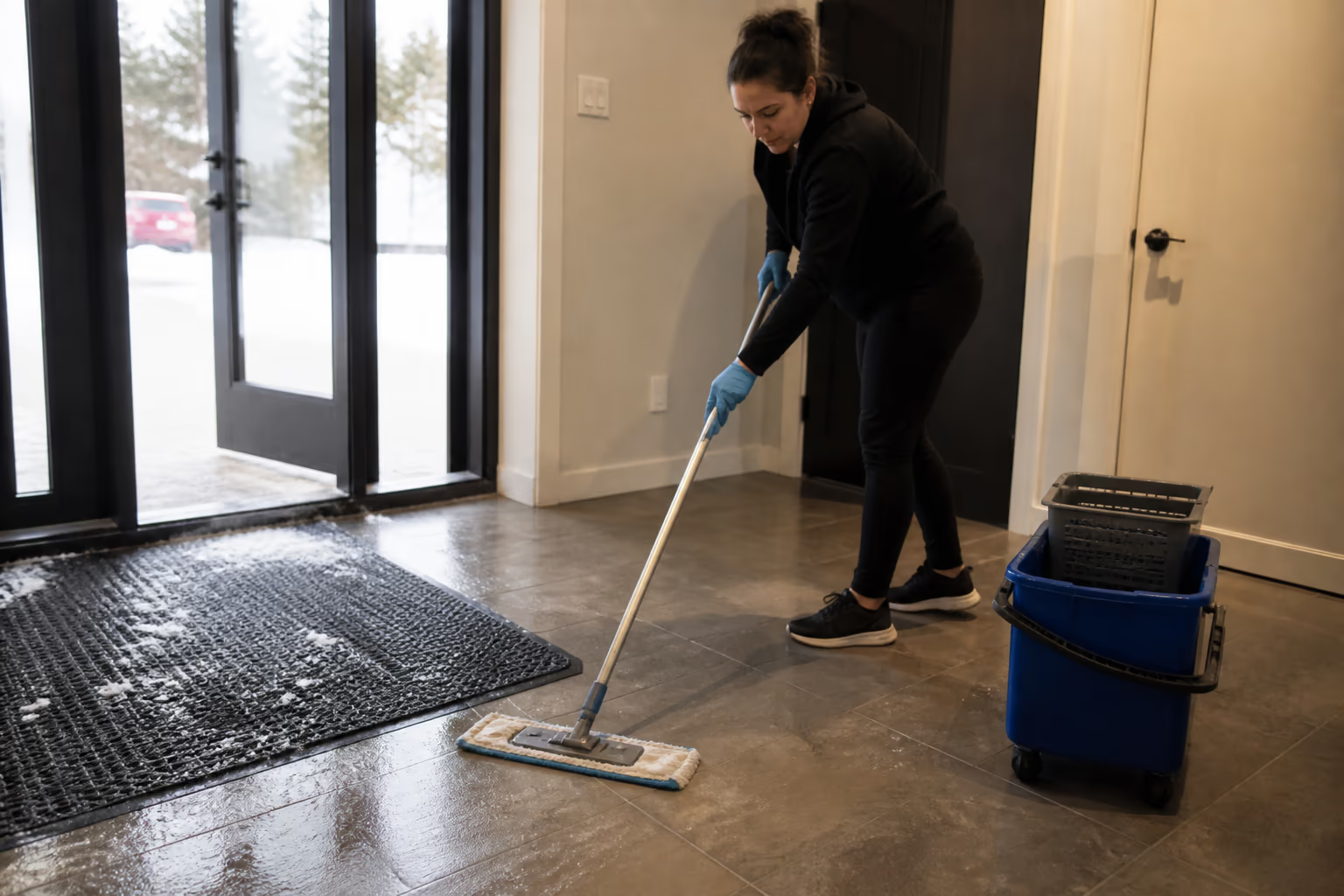
In Ontario, the practical side matters as much as the strategy. Winter means salt and sand on entryways, which adds time to floor care. Spring and fall bring pollen and dust that call for more attention to vents and windows. A business that plans for the seasons delivers a steadier service and keeps its promises, which is how customers stay. Products also matter: certified and EcoLogo-labelled cleaners are better for people and the environment, and disinfecting claims should always match products registered with Health Canada.
Planning Staffing, Supplies and Schedules
A profitable business is planned before the week begins. Staffing, supplies and schedules need to line up, or every job becomes a scramble that eats the profit you hoped to keep.
- 01Build a weekly schedule that groups jobs by area, so travel time stays low.
- 02Keep a clear inventory of supplies and equipment so the team never runs out mid-job.
- 03Match the team to the job, so experience goes where the detail work is.
- 04Leave realistic time between visits so one late job does not push the whole day.
- 05Review the week and adjust what is not working, whether that is a scope, a price or a team member.
When the plan is tight, the work feels easier and the result is more consistent. Customers notice the difference between a provider that is organised and one that is always catching up, and that impression is part of what keeps them booking.
Finally, keep an eye on the numbers that matter. A simple weekly review of hours booked, hours worked and supplies used shows where the profit actually comes from, and it catches problems while they are still small. The providers who track their own numbers are the ones who can make confident decisions about pricing, staff and growth, because the numbers tell them what is working and what is quietly leaking.
How to Raise the Value of Each Job
Once you have a base of recurring work, the next lever is the value of each visit. Providers who lift the value of a job without adding hours are usually the ones who grow, and a few habits do most of the work.
- 01Offer add-ons that fit the visit, such as interior windows, baseboards or appliance exteriors.
- 02Sell the level of service that matches the home, moving routine customers to periodic deep cleans.
- 03Keep the scope tight so the team can finish on time and delight the customer.
- 04Collect feedback and fix issues quickly, so customers stay and refer.
- 05Track your time honestly, so your pricing reflects the real cost of the work.
A commercial cleaning company evaluation guide can help you think about this from the customer's side, because the questions customers ask are the same ones that protect a provider. What is included, who does the work, what happens if it is not up to standard. A provider who answers those questions well earns trust, and trust is what keeps a customer paying steadily rather than shopping on price alone. Providers who consistently rank among the best cleaning services tend to share the same habits: clear communication, a tight scope and reliable follow-through.
Common Mistakes and How to Avoid Them
The mistakes that sink cleaning businesses are usually quiet ones. They rarely show up as a single big failure, but they compound over time and turn a promising start into a struggle.
- 01Underpricing to win a job and then rushing to make it profitable.
- 02Taking on every type of work and mastering none.
- 03Hiring staff without background checks or training.
- 04Chasing one-off jobs instead of building recurring revenue.
- 05Skipping the process and quality checks that keep results consistent.
- 06Ignoring the real cost of supplies, travel and time.
Underpricing deserves special mention. A rate that does not cover your real costs leaves no room for training, equipment or the unexpected, and it attracts the customers who value price above everything. The providers who thrive tend to price honestly, deliver a consistent result and let the quality do the selling. It feels risky at first, but it is the difference between a full schedule that barely breaks even and a smaller one that actually earns. Customers researching affordable cleaning services are usually comparing value rather than hunting for the rock-bottom price, which is why honest quality tends to win their repeat business.
The Ontario and Canadian Context
Cleaning businesses in Canada operate in a specific context that shapes what works. Product choices matter, because the market rewards certified and EcoLogo-labelled products that are safer for people and the environment. Chemicals are handled under WHMIS 2015, and any disinfecting claims should match products registered with Health Canada, so the label is the truth rather than a promise.
The seasons in Ottawa also shape demand. Snow and salt put extra wear on entryways in winter, which makes floor care and mat care a year-round conversation rather than an occasional one. Properties that are maintained through the seasons are easier to keep clean, which means steadier scope for the provider and a better result for the customer. A provider who plans for winter salt and spring pollen can offer a more useful service than one who treats every season the same.
None of this is about a single secret service that prints money. It is about building a business that delivers consistently, prices honestly and plans for the local reality. That combination is what makes a cleaning business profitable enough to keep doing well, and it is available to any provider willing to put the work into the system behind the cleaning.
How Good Cleaner Co. Approaches the Business of Cleaning
At Good Cleaner Co., we build our work around the same principles that make a cleaning business dependable.
For homes and businesses in Ottawa, residential home cleaning services in Ottawa are a core part of what we do, and the same discipline runs through our commercial work.
We also believe in transparency, because trust is what keeps a schedule full. If you are comparing providers, our commercial cleaning provider checklist is a useful starting point for the questions that matter, and it applies to any provider you are considering.

Formatted Step-by-Step Profitability Checklist
Use this checklist to shape a cleaning business that earns steadily:
- 1.Choose a mix of services that matches your strengths and your local demand.
- 2.Prioritise recurring work, whether residential maintenance or commercial contracts.
- 3.Build a documented process and quality checks so results stay consistent.
- 4.Price honestly, covering your real costs and the value of a dependable result.
- 5.Add value on each visit through well-priced extras and periodic deep cleans.
- 6.If you want a model built on recurring home service, Ottawa residential cleaning teams bring background-checked staff and a documented process to every visit.

FAQ
Which cleaning services make the most money?
There is no single service that guarantees profit. Recurring commercial work, janitorial contracts and specialty tasks such as floor care tend to support a steadier business, but the mix and the model matter more than any one task.
Is commercial cleaning more profitable than residential cleaning?
It depends on the market and the model. Commercial work often brings recurring contracts and predictable income, while residential work is more daytime friendly and can build a loyal base of referrals. Many successful providers do both and let the two balance each other.
What makes a cleaning business profitable?
Consistency, efficiency and repeat customers. Recurring revenue, a tight scope and a team that works efficiently are what allow a business to keep its costs down and its calendar full.
How do I price my cleaning services?
Price honestly, based on your real costs and the value you deliver. A modest rate with loyal customers who book every week is often a better business than a high rate with one-off customers you never see again.
Should I focus on one type of cleaning or offer many?
Start with what you do well and what your market needs, then expand from there. Mastering a few services beats spreading yourself thin across many, and a strong reputation in one niche attracts the right customers.
What should a new cleaning business buy first?
Focus on the essentials: reliable equipment, certified products and proper training. A clear contract protects you and your customers from day one, and it is cheaper than the alternative.
How do I keep cleaning customers coming back?
Deliver a consistent result, communicate clearly and fix issues quickly. Customers stay when they can rely on the result, and they refer when they feel cared for.
How much can a cleaning business earn?
There is no honest single answer, because earnings depend on the market, the mix of services and how the business is run. The useful focus is not a magic number but the levers that build profit: recurring revenue, honest pricing and consistent delivery.
What role do referrals play in a cleaning business?
A big one. A customer who refers a neighbour costs nothing to find and tends to trust the recommendation, which makes the first booking easier and the relationship steadier. Delivering a consistent result is the most reliable way to keep that channel flowing.
Wrapping Up
What type of cleaning services make the most money? is answered by the business behind the service, not by a single task. Recurring work, a clear scope, honest pricing and a team that delivers consistently are what build a profitable cleaning business. The services matter, but the model matters more.
If you are in the Ottawa area and would like a dependable cleaning partner, contact Good Cleaner Co. for a free estimate.
Keep reading
More from Good Cleaner
Services that fit
- House Cleaning Services in OttawaHouse cleaning services in Ottawa for one-time, weekly, biweekly, and monthly home care, with customizable cleaning and eco-friendly options.
- Janitorial Services in OttawaRecurring janitorial services in Ottawa for offices, warehouses, retail, dealerships and schools, including floor care and stripping and waxing on a schedule.
About the author
Service areas
- Ottawa
- Kanata
- Nepean
- Orléans
- Barrhaven