
Finding the Perfect Cleaning Jobs on Indeed: Qualifications & Living Wages
If you are searching for cleaning work in Ottawa and across Ontario, Indeed is usually the first place people start, and with good reason. It lists residential house cleaner, commercial janitor, office cleaner, and specialty roles in one place, and it lets you filter by distance, pay, and job type. The hard part is not finding cleaning jobs; it is finding the ones worth taking. This guide explains what employers like Good Cleaner Co. look for, what the pay actually works out to, and how to build a cleaning career instead of a string of one-off gigs.
Quick Summary
Most cleaning jobs in Canada are posted on Indeed, and the good ones share a few telltale signs: a clear scope of work, a stated hourly rate, and an employer registered for WSIB. This guide walks through the qualifications you actually need, how to read a posting honestly, how to spot a cash job you should probably avoid, and what a living wage really looks like in Ontario.
In this guide
What Kinds of Cleaning Jobs Are Actually on Indeed
Cleaning is not one job; it is a family of jobs with different hours, different pay, and different physical demands. Knowing which one fits you is the first filter you should apply before you even open a posting. Here are the roles you will see most often on Indeed in Ottawa and across Eastern Ontario:
Deep-clean technicians who specialize in carpets benefit from understanding typical carpet cleaning prices in Ottawa, since that context helps you evaluate whether a per-job rate is fair.
The Qualifications Employers Actually Look For
You do not need a diploma to clean professionally, but you do need a handful of practical qualifications, and most of them are learned on the job. When a serious employer like Good Cleaner Co. reviews an application, these are the things we are actually checking:
How to Read a Cleaning Job Posting on Indeed
A well-written posting tells you more than a poorly written one, and the differences matter. When you scan a posting, look for these green flags and red flags before you decide to apply:
Green Flag: A stated hourly wage or a realistic pay range. If the pay is hidden, ask early.
Green Flag: WSIB coverage and an employer name you can verify online.
Green Flag: A defined scope of work and a list of duties rather than vague promises.
Green Flag: Training, equipment, and cleaning supplies provided by the employer.
Red Flag: "Paid in cash" or "paid under the table," because it usually means no WSIB, no employment record, and no protection.
Red Flag: Vague duties such as "help around the house" with no employer details or address.
Red Flag: A wage far below minimum, a demand that you supply your own products, or an application fee of any kind.
Why Living Wage Employer Certification Matters
A living wage is not the same as minimum wage. Minimum wage is the legal floor set by the province, while a living wage is the hourly rate a household actually needs to cover basic costs, and it is calculated region by region in Ontario. The Ontario Living Wage Network publishes updated rates every year, and for Ottawa the figure has been cited around $20 per hour in recent tables. That number moves each year, so it is worth checking the current rate rather than memorizing an old one.
That distinction has a published figure on one side of it. Ontario's general minimum wage is $17.60 an hour from 1 October 2025 to 30 September 2026, rising to $17.95 on 1 October 2026. An employer advertising above that is making a choice, and it is a reasonable thing to ask about directly when you compare postings. The provincial guide defines it in one sentence: “Minimum wage is the lowest wage rate an employer can pay an employee.”
For a cleaning employer, living wage certification is a public commitment that every employee earns a rate that clears that bar. It signals a business that treats cleaning as skilled work rather than a disposable gig. When you see it on a posting, it is usually a sign the employer intends to keep you, invest in your training, and treat you as part of the team.

How to Apply and Stand Out
Most cleaning applications look the same, which means a little effort makes you memorable. You do not need a fancy resume, but you do need one that answers the employer's real questions. Here is what works:
- 01Tailor the Resume:List any cleaning, kitchen, caregiving, or trades experience, and say it plainly rather than burying it in a long job history.
- 02Mention Safety Training:If you have WHMIS, first aid, or food safety training, put it near the top of the page.
- 03Name Your Schedule:Postings often need specific shifts. Saying exactly when you are available removes friction and saves the employer a phone call.
- 04Write a Short Cover Letter:Three or four honest sentences about why you are reliable and what you like about the work is enough.
- 05Ask Good Questions:At the interview, ask about the client area, the chemicals used, the equipment provided, and how training works in the first week.
Cash Jobs vs. Legitimate Employment
Cash-in-hand cleaning sounds simple, but it usually costs you more than it pays. When you are paid under the table, you miss WSIB coverage if you are hurt, CPP contributions, EI eligibility, and a clean employment record. A legitimate employer issues a payslip, deducts properly, and registers you for WSIB.
The honest trade-off is that legitimate jobs report your income, and that is a feature, not a bug, because it protects you and builds the record you need for a mortgage, a rental application, or a future employer. If a posting is cagey about the employment side, treat that as the warning it is.

Career Growth: From Cleaner to Team Lead and Beyond
Cleaning has a real ladder, and most people never see it because they treat the first job as a stopgap. In a company with routes and supervisors, a dependable cleaner can move to team lead, then site supervisor, then account manager, and some eventually run their own cleaning business.
The skills that get you promoted are not glamorous: showing up, following the checklist, catching the details, and helping new staff. If you are comparing employers on career potential, our commercial cleaning company evaluation guide walks through the same standards we apply to our own hiring and training.
Formatted Step-by-Step Indeed Job Search Checklist
Work through this checklist each time you search, and you will skip most of the dead ends and time wasters:
- Step 1.Set Up Indeed Alerts With the Right Terms:Search "cleaner," "housekeeping," "janitor," and "commercial cleaning" so you catch postings the day they appear.
- Step 2.Read the Full Posting Before Applying:Confirm the wage, the hours, the location, and whether WSIB and supplies are covered.
- Step 3.Verify the Employer:Look up the company name, check the website, and read reviews from current or past staff.
- Step 4.Tailor Your Application:Lead with reliability, your available schedule, and any safety or cleaning training you already have.
- Step 5.Ask the Interview Questions That Matter:Hours, physical demands, chemicals used, equipment provided, and how raises and promotions work.
- Step 6.Reviewing our residential home cleaning services in Ottawa shows the standard a professional cleaning employer expects from its team.
Finding Cleaning Work Across Ottawa's Neighbourhoods
Cleaning work in Ottawa is spread unevenly across the city, and where you live shapes the jobs you can realistically take. Family homes in Barrhaven and Kanata need recurring house cleaners, offices in the Glebe and Centretown book nightly janitorial, and short-term rentals in ByWard Market and Westboro turn over every week. Set your Indeed search radius honestly, and apply for jobs you can actually reach in bad weather, because Ottawa winters do not care about your interview schedule.
Start With the Actual Situation
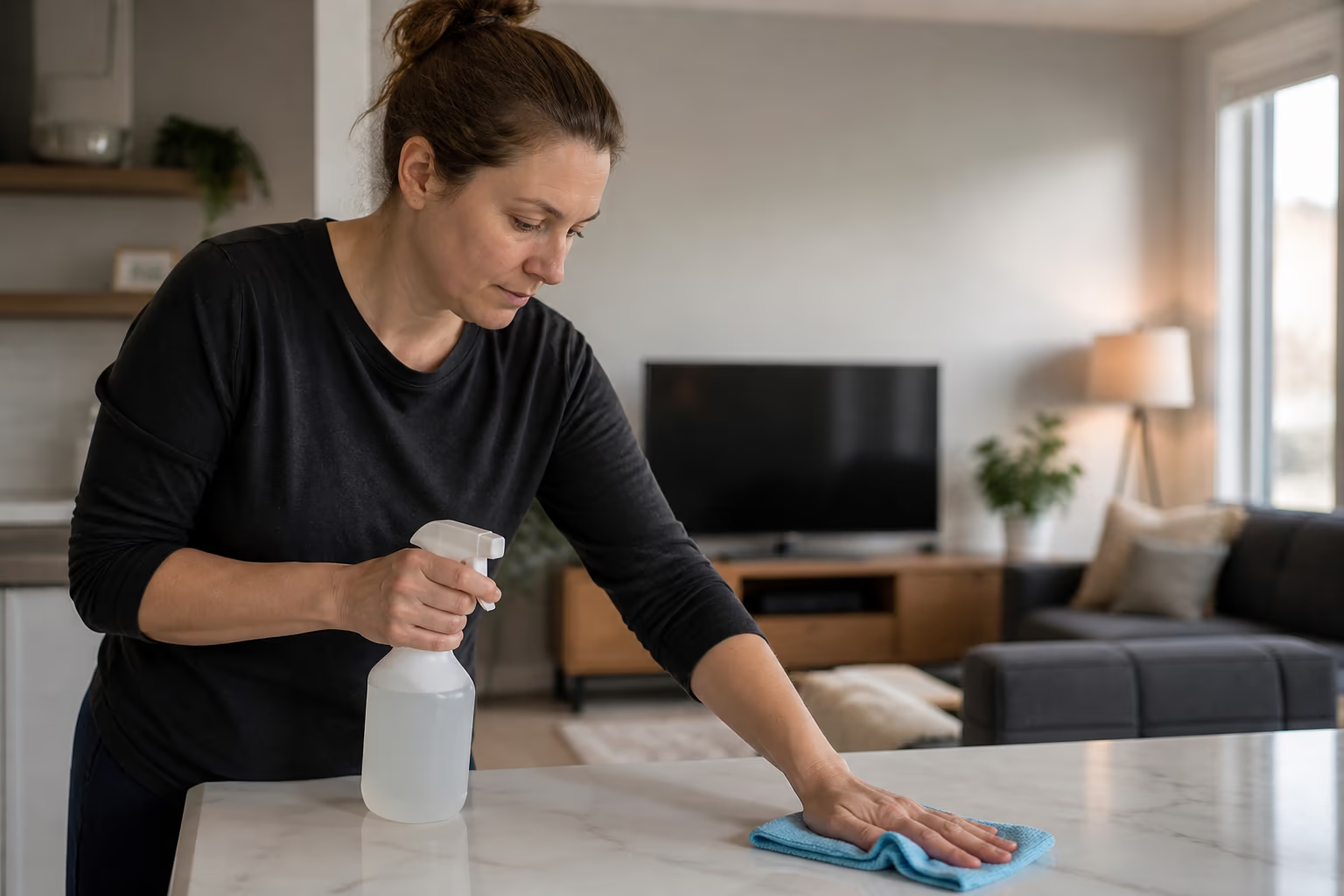
Before setting expectations for a cleaning job search, look at the listed tasks, shift, location, pay arrangement, and supervision. A plan copied from another workplace can miss the issue that people deal with every day, such as access at closing time, a crowded kitchenette, or a fragile finish.
- Identify the surface or behaviour that needs attention before choosing a response.
- Set a clear order so routine work does not create extra work later.
- Keep tools, messages, and handover notes where the right person can find them.
Focus on a few concrete outcomes. A residential route, office contract, hotel floor, or evening shift may need its own timing, tool, or care instruction. A useful routine makes the next person’s work easier and avoids asking anyone to guess what “clean enough” means.
Put the agreed tasks, timing, and limits in plain language. A short list can be checked and improved; a sweeping promise about quality, safety, or service cannot.
Use a Deliberate, Low-Drama Process
The best way to compare real job conditions instead of relying on a polished job title is usually preparation, not more force. Read labels and care instructions, use the mildest compatible method, and give the task the time it needs. If the condition is unclear, test a small inconspicuous area or ask the responsible contact before continuing.
- Use a small, labelled set of suitable supplies or agreed communication channels.
- Change a cloth, pad, or approach when it is no longer appropriate for the job.
- Stop and escalate when a surface, safety issue, or workplace concern falls outside the agreed scope.
Separate ordinary upkeep from problems that require another decision. A leak, damaged surface, missing access card, unsafe spill, or conflict between coworkers is not fixed by working faster. Record what you observed and route it to the person who can act on it.
In Ottawa, the details often change through the year: wet entryways, salt, pollen, and dry indoor air can alter the workload. Adjust the task list to the condition of the space rather than relying on a generic seasonal script.
Review What Happened and Update the Next Step
After the first few attempts, keep notes from each posting and interview. Ask what helped, what was missed, and whether the timing created a new problem. Specific feedback such as a missed handle, unclear job duty, or crowded area at lunch is more useful than an abstract complaint.
- Check the outcome at the time the room or task is normally used.
- Escalate damage, persistent moisture, hazards, or unresolved conduct concerns promptly.
- Keep the revised instruction short enough that a new person can follow it without guessing.
Keep the review factual and brief. Notes, photographs where appropriate, or a simple checklist can show whether a concern repeats. They also help distinguish routine work from a maintenance issue, a staffing problem, or a conversation that needs a manager or qualified professional.
When the process changes, update the written scope or shared expectation before the next visit or shift. That makes the improvement repeatable and fair, and it is more trustworthy than claiming a guaranteed result.

FAQ
Do I need experience to get a cleaning job?
No, most employers are happy to train the right person. Reliable attendance, a clean background check, and a willingness to learn matter more than experience, so say so plainly in your application.
What is the difference between a house cleaner and a janitor?
A house cleaner works in private homes, usually during the day and often for the same clients on a recurring schedule. A janitor or commercial cleaner works in offices, schools, and buildings, often in the evening, following a route with set standards.
Are cleaning jobs physically demanding?
Yes, more than most people expect. You are on your feet, lifting, bending, and repeating motions for the whole shift, so wear supportive shoes, pace yourself, and tell the employer about any physical limits in advance.
Do I need my own supplies and equipment?
In a legitimate cleaning job, no. A professional employer provides the chemicals, microfibre, vacuums, and equipment, and trains you in how to use them. A supply-your-own arrangement is a red flag.
Is a background check always required?
For residential cleaning, yes in most cases. You are entering people's homes, so a criminal record check is standard.
What is WSIB and why should I care?
WSIB is Ontario's workplace safety program. If you are hurt on the job, WSIB covers your treatment and lost wages. Cash jobs leave you uncovered, which is one of the biggest reasons to avoid them.
How much can a cleaner earn per hour in Ontario?
It depends on the role and the region. Minimum wage is the legal floor, and living wage employers in Ottawa have been cited around $20 per hour. Specialized deep cleaning and team-lead roles pay more.
Can cleaning be a long-term career?
Absolutely. Cleaners move into team lead, supervisor, account manager, and owner roles, and the demand is steady because every home and business needs cleaning year round.
How do I avoid cleaning job scams on Indeed?
Never pay a fee to apply, never give banking details up front, and be suspicious of "cash paid daily" postings with no employer name. Verify the company and read the full posting before you apply.
How quickly can I start a cleaning career with Good Cleaner Co.?
Contact Good Cleaner Co. online or by phone with your availability and experience.
Wrapping Up
Finding the perfect cleaning job on Indeed comes down to reading postings honestly, verifying the employer, and putting your reliability first. The right job pays a living wage, protects you with WSIB, and gives you room to grow. Contact Good Cleaner Co. today to ask about open positions, or review our Ottawa residential cleaning teams to see the standard we hold our team to.
Keep reading
More from Good Cleaner
Services that fit
- Home Cleaning Services in OttawaRecurring weekly, bi-weekly and monthly house cleaning built around your family's routine, with non-toxic chemistry and background-checked staff.
- Professional Office Cleaning Services in OttawaNightly and after-hours office cleaning for corporate offices, clinics and professional suites, with after-hours scheduling and eco-friendly products.
About the author
Service areas
- Ottawa
- Kanata
- Nepean
- Orleans
- Barrhaven