
7 Essential Healthcare Facility Cleaning Guidelines For Infection Control In Canada
Infection control in a healthcare facility starts with the surfaces people touch. The guidelines that hospitals and clinics follow are not obscure technical rules; they are a practical way to break the chain of transmission from one person to the next. In this guide we cover the seven essential healthcare facility cleaning guidelines for infection control in Canada, and we explain how the same discipline protects offices and other shared spaces.
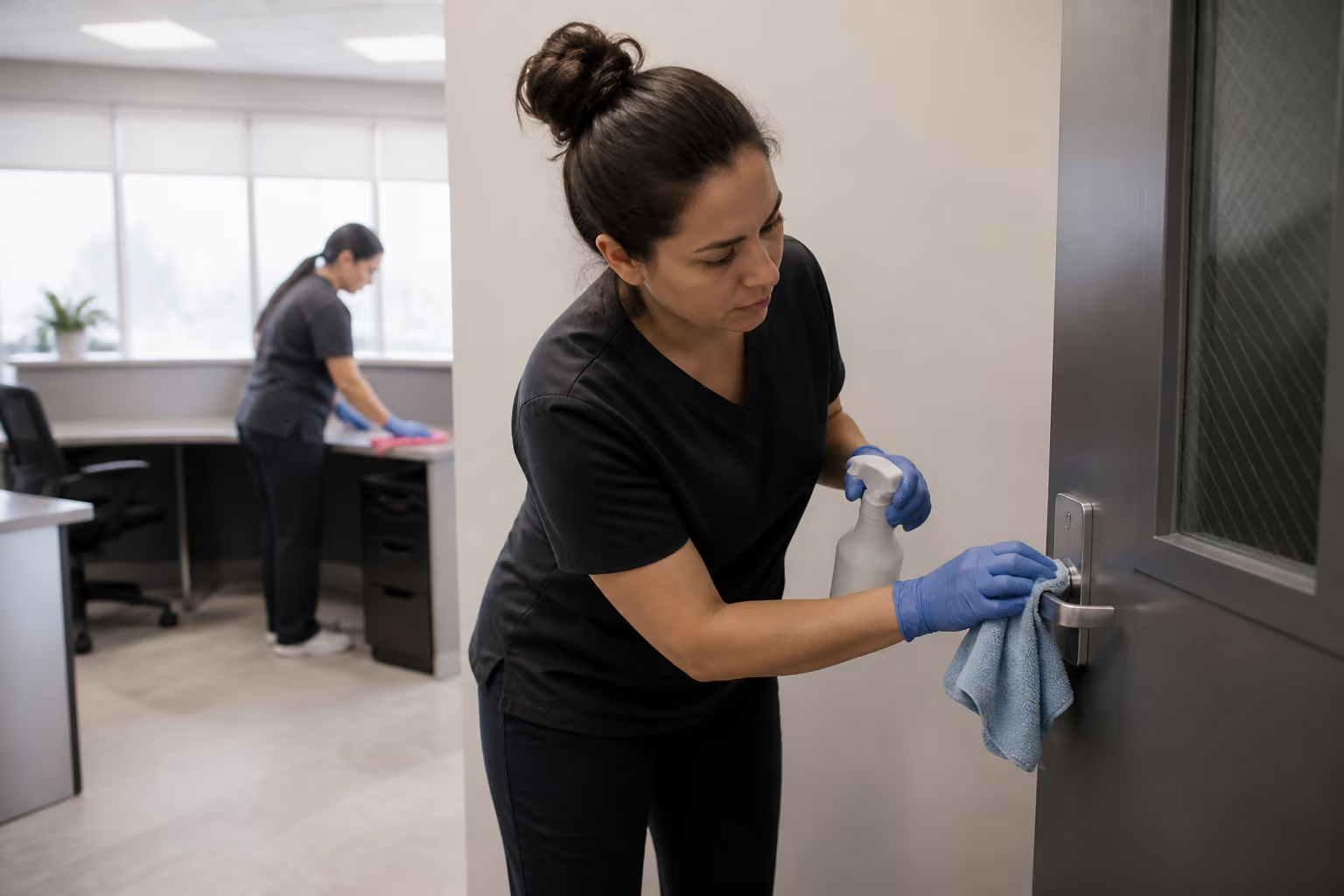
Quick Summary
Infection control in a healthcare facility starts with the surfaces people touch, and the guidelines hospitals and clinics follow are practical steps to break the chain of transmission between people. This guide covers seven essential healthcare facility cleaning guidelines for infection control in Canada and how the same discipline protects offices and shared spaces.
In this guide
Why Healthcare Facility Cleaning Is Infection Control
Master healthcare facility cleaning and infection control guidelines for Canadian hospitals and clinics. The two ideas are inseparable, because cleaning is the first line of defence against infections that spread through shared surfaces.
When people in a building fall ill, the route is usually the same: a germ travels from one surface to a hand, and from that hand to a face or another surface. Cleaning and disinfection interrupt that route at the point where it can be controlled.
That is why healthcare cleaning is planned, documented, and verified rather than improvised. A hospital does not hope the floors are clean; it follows a standard and checks the work.
- Infection spreads through shared, high-touch surfaces as much as through direct contact.
- Cleaning physically removes the soil and germs that a disinfectant then inactivates.
- A documented standard makes good hygiene repeatable rather than accidental.
- The same risk-based discipline protects offices, schools, and public buildings.
The cost of getting it wrong is real. An outbreak in a healthcare setting disrupts care, affects vulnerable people, and can close wards or clinics. The effort that prevents it is small compared with the cost of responding to it.
The Seven Essential Guidelines at a Glance
Seven guidelines capture the essentials of healthcare facility cleaning. They work as a sequence and as a checklist.
- 01Use a risk-based cleaning plan that prioritises high-risk areas.
- 02Always clean before you disinfect.
- 03Respect the contact time printed on every disinfectant label.
- 04Choose disinfectants with a valid Health Canada DIN.
- 05Segregate cloths and equipment so soil never moves between areas.
- 06Perform terminal cleaning thoroughly after discharge or illness.
- 07Document, verify, and train so the standard holds over time.
Each guideline is described in its own section below. Together they form the backbone of infection control cleaning in Canadian healthcare facilities.
Guideline 1: Use a Risk-Based Cleaning Plan
The first guideline is to plan cleaning around risk rather than a flat list of rooms. High-risk areas, such as patient rooms, treatment areas, and washrooms, receive more frequent and more rigorous attention than spaces that see little traffic.
The risk-based approach appears throughout CSA Z317.12, the Canadian standard for cleaning and disinfection of healthcare facilities. It answers the question of how often each area is cleaned by asking how much risk each surface carries.
The practical effect is a schedule that matches the building. A surgical area is cleaned more often and more rigorously than a storage closet, and the plan says so explicitly, which removes the guesswork for everyone.
- Identify the areas where people are most vulnerable and most active.
- Assign a cleaning frequency to each area based on its risk.
- Allocate the right product and method to each zone.
- Review the plan when a use, a patient group, or a season changes.
Guideline 2: Follow the Cleaning-Disinfection Sequence
The second guideline is the order of operations. Cleaning and disinfection are separate jobs, and the sequence is never reversed.
Cleaning removes soil and organic matter with detergent, water, and friction. Disinfection then inactivates pathogens on a clean, hard surface. A disinfectant applied over dirt cannot reach the surface, so the clean always comes first.
- Clean every surface before you disinfect it.
- Use a detergent or general cleaner matched to the surface.
- Allow the disinfectant to do its own job after the soil is gone.
- Never skip the cleaning pass on high-risk areas.
Guideline 3: Respect Contact Time
The third guideline is the one most often skipped. Disinfectants need a stated contact time, also called dwell time, to inactivate pathogens.
The label tells you how long the surface must stay visibly wet. Wiping the surface dry early, or spraying and immediately wiping, cleans the surface without actually disinfecting it.
- Read the contact time on every label and follow it exactly.
- Keep the surface visibly wet for the full stated period.
- Reapply if the surface dries before the time has passed.
- Train staff to treat contact time as part of the task, not an extra.
Guideline 4: Choose Health Canada DIN-Registered Disinfectants
The fourth guideline is product selection. In Canada, a disinfectant that claims to inactivate germs must carry a valid Health Canada Drug Identification Number, or DIN.
That guideline rests on a specific legal fact. Health Canada's drug identification number appears on the label of authorized products, and a product in this class sold in Canada without one is not in compliance with Canadian law. Health Canada defines the number this way: “A Drug Identification Number (DIN) is a computer-generated eight digit number assigned by Health Canada to a drug product prior to being marketed in Canada.”
We are not quoting specific numbers here, because the label on the product you buy is the authority. The DIN is the signal that Health Canada has reviewed the product's safety and its claim, and it is the first thing to check.
- Verify the DIN before purchasing or using a disinfectant.
- Read the label for the surfaces the product is approved for.
- Match the product to the claim you need in each area.
- Store products properly and follow WHMIS 2015 labelling and safety data sheets.
Guideline 5: Segregate Cloths and Equipment by Area
The fifth guideline keeps soil where it belongs. Cloths, mop heads, and equipment are assigned to specific areas so a cloth that touched a washroom never reaches a patient room or a kitchen.
Colour-coding is the practical tool. One colour stays in the washroom, another in patient or general areas, and a third in food areas, and each cloth is laundered or replaced after use.
- Use a colour-coded cloth system that everyone understands.
- Change cloths and mop heads between areas, never between nothing.
- Launder reusable cloths on a hot cycle and store them dry.
- Use single-use items for high-risk or isolation areas.
Guideline 6: Perform Terminal Cleaning Correctly
The sixth guideline applies to the moment a patient leaves a room. Terminal cleaning is a systematic, top-to-bottom clean and disinfection of the entire space before the next person arrives.
It covers every surface the previous patient may have touched, from bed rails and call buttons to light switches and floors. The room is then checked and documented before it is reopened.
- Work from high to low so falling soil is not redistributed.
- Clean and disinfect every horizontal and high-touch surface.
- Launder or replace linens, towels, and soft furnishings.
- Allow products their full contact time before the room is used again.
- Log the clean and have it verified before the room is reopened.
Guideline 7: Document, Verify, and Train
The seventh guideline is what makes the other six hold up over time. A standard is only real when it is documented, verified, and taught.
Documentation records what was cleaned, when, and by whom. Verification checks the work, whether by inspection, a supervisor's review, or a scheduled audit. Training ensures the people doing the work know the products, the sequence, and the contact times.
Training is where standards live or die. A cleaner who understands why the sequence matters is far more likely to follow it, so time spent on training is time spent protecting the building. Our overview of commercial cleaning quality control methods goes deeper into how a QA programme keeps verification consistent across a whole team.
- Keep a checklist that names each task, surface, and frequency.
- Have a supervisor or trained lead verify the work.
- Train every cleaner on the products and procedures they will use.
- Review the plan when a product, a room, or a season changes.
How These Guidelines Transfer to Offices and Shared Spaces
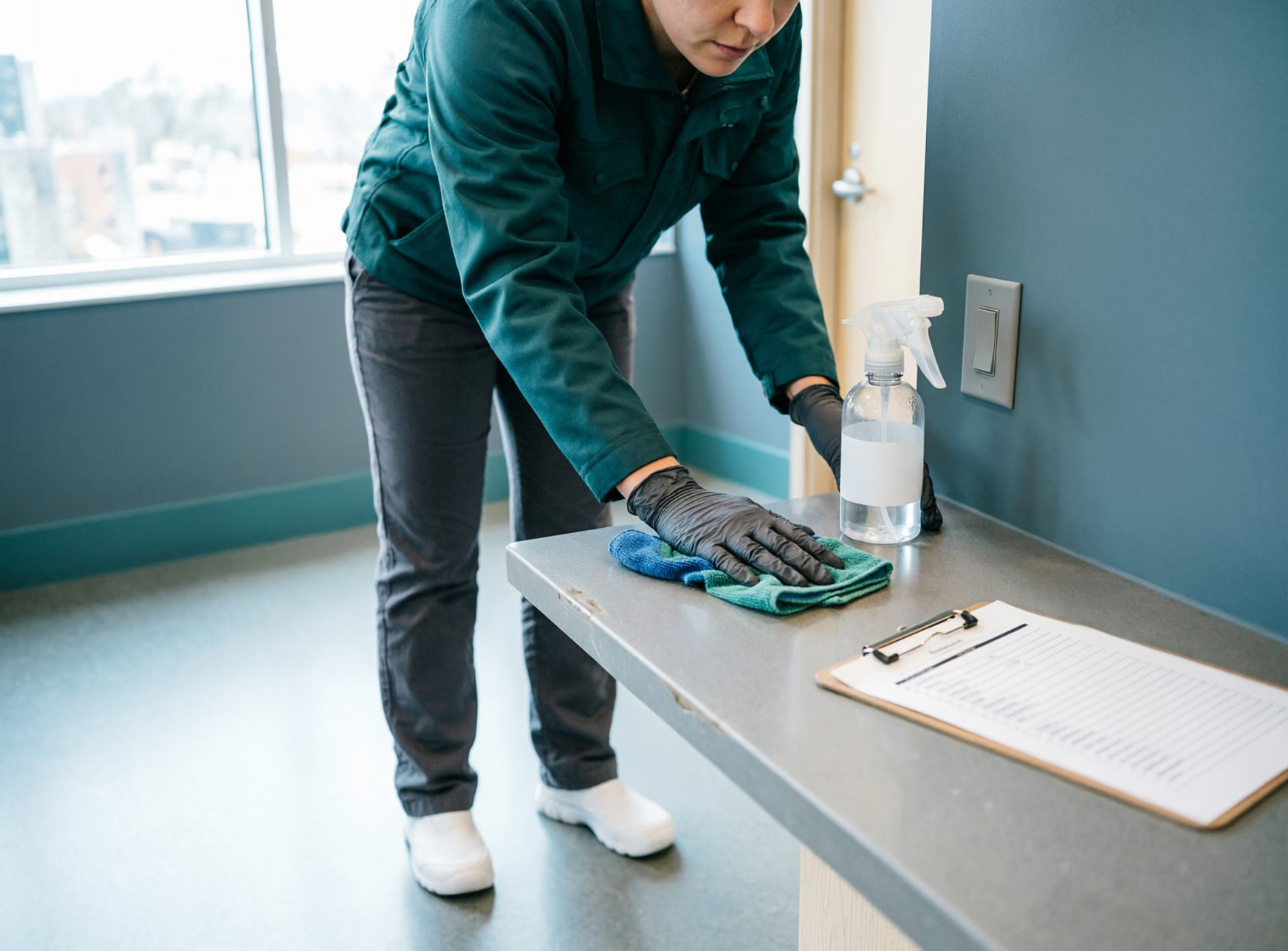
The value of these seven guidelines is that they transfer to almost any shared building. Offices, clinics, schools, and gyms all depend on the same chain of transmission and the same methods to break it.
A doctor's office or dental clinic should follow the healthcare guidelines closely, because patients are there because they are unwell. An office or school can adopt the same principles more lightly: a risk-based plan, clean before you disinfect, respect contact time, and separate cloths by area. Our companion guide to healthcare cleaning standards for everyday life walks through applying that same discipline at home.
The discipline scales down without losing its point. A waiting room, lunchroom, or front desk handled by hundreds of people benefits from the same risk-based attention a hospital gives its corridors.
CSA Z317.12 and the Canadian Context
In Canada, these guidelines sit on top of a formal standard. CSA Z317.12 sets out the cleaning and disinfection requirements for healthcare facilities, including the risk-based approach and the roles and responsibilities of staff.
Following a recognised standard is how a facility demonstrates that its cleaning is not guesswork. It also gives a business a language for talking about hygiene with staff and visitors.
- CSA Z317.12 is the national reference for healthcare facility cleaning.
- It codifies the risk-based approach described in these guidelines.
- It requires trained, accountable staff and documented procedures.
- Its principles translate directly to offices, clinics, and shared spaces.
Common Infection Control Mistakes and How to Avoid Them
Even a serious cleaning programme can slip, and the common mistakes are the same ones that appear in any facility.
Rushing the sequence is the most common. A team that wipes everything in one pass cleans the visible surfaces but rarely disinfects them, because the disinfectant is wiped away before its contact time has passed.
Reusing a cloth across areas is the second. A single cloth moved from washroom to desk carries soil and germs with it, undoing the work the cleaner just finished.
- Wiping disinfectant away before the contact time has passed.
- Reusing one cloth across different areas.
- Cleaning without disinfecting the high-risk points.
- Trusting a product without reading the label.
- Forgetting to document, so the standard drifts.
Trusting a product without reading the label is the third. A general cleaner, a sanitizer, and a disinfectant do different jobs, and using the wrong one for the claim you need is a quiet way to fall short.
Building a Healthcare-Style Cleaning Frequency
How often each surface is cleaned is the practical question behind every infection control plan. A sensible frequency follows the traffic and the risk.
High-touch surfaces in patient and treatment areas are cleaned and disinfected daily, and more often when the day is busy. Floors, washrooms, and waiting areas follow their own rhythm, and deeper cleaning is scheduled weekly or monthly.
The value of writing the frequency down is that it turns a good intention into a standard. When the schedule is visible, the team can be held to it, and a visitor or inspector can see that hygiene is managed.
Daily
clean and disinfect high-touch surfaces in patient and treatment areas.
Per use
spot-clean surfaces that are touched constantly between patients.
Weekly
deep-clean washrooms, waiting areas, and floors.
Monthly
wash down walls and doors, and review the plan for the season.
Winter and Seasonal Considerations in Canada
Canadian winters add a seasonal layer to infection control. Salt and slush are tracked into every entrance, and cold-and-flu season increases the load on shared surfaces.
Entry mats, frequent mopping of entryways, and extra disinfecting of high-touch points carry a facility through the season without changing the underlying plan.
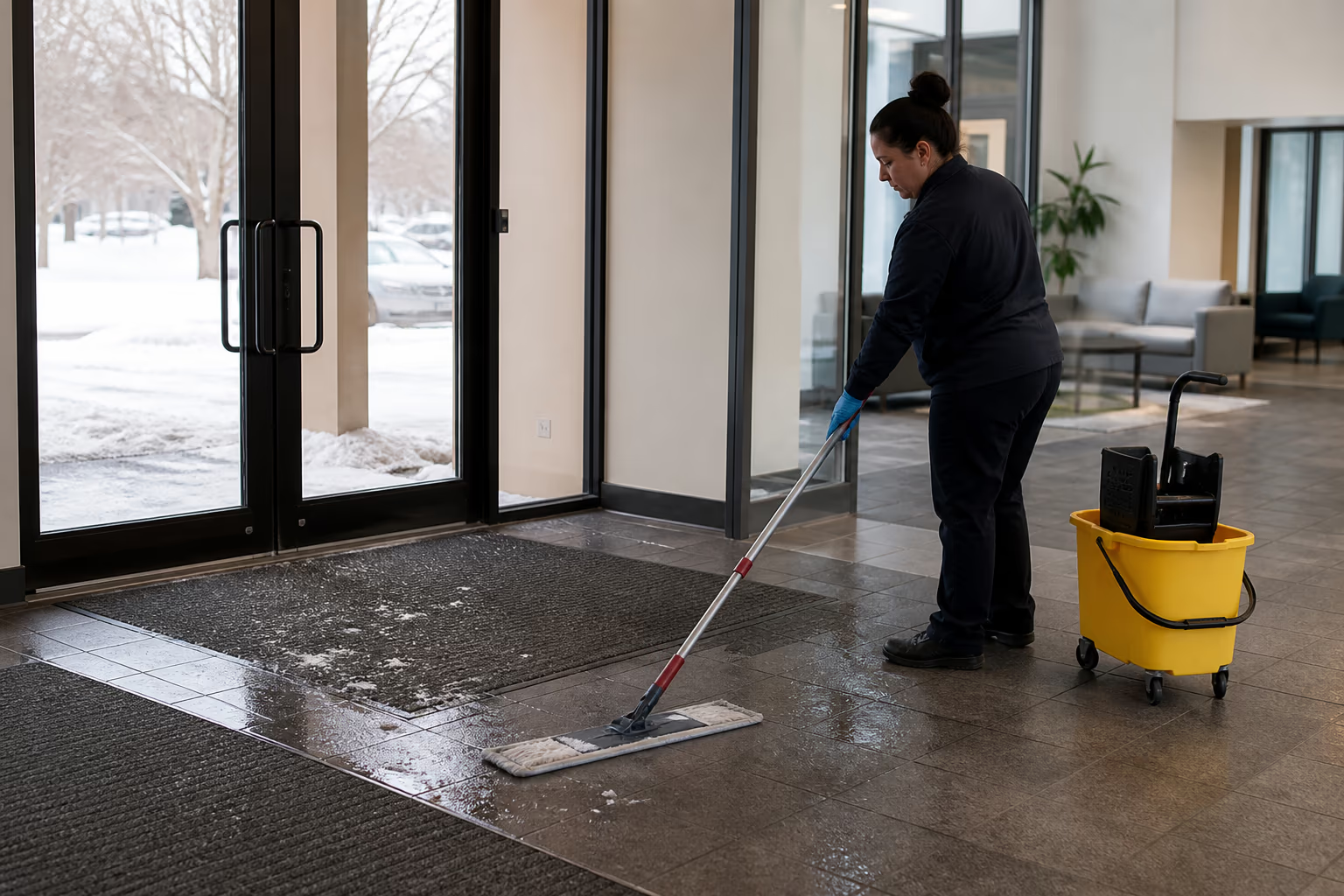
- Vacuum and clean entry mats daily during winter.
- Mop entry floors more often when salt and slush are being tracked in.
- Add disinfecting passes to shared surfaces during cold-and-flu season.
- Keep washrooms and change rooms ventilated and dry all year.
How Good Cleaner Co. Applies These Guidelines
At Good Cleaner Co., we build our commercial cleaning around the same discipline that makes healthcare cleaning work. Every facility starts with a risk-based walk-through that identifies high-touch surfaces and the right method for each one.
Staff are trained on the products they use and on the WHMIS 2015 rules that keep chemical handling safe, and every job is checked.
For buildings that do not need full healthcare accreditation, we apply the same thinking at the right depth. The point is not to look clinical; it is to make infection control a habit rather than a hope.
The result is a commercial cleaning team that brings healthcare-style infection control to offices, clinics, and shared buildings across Ottawa.
When to Bring in a Professional
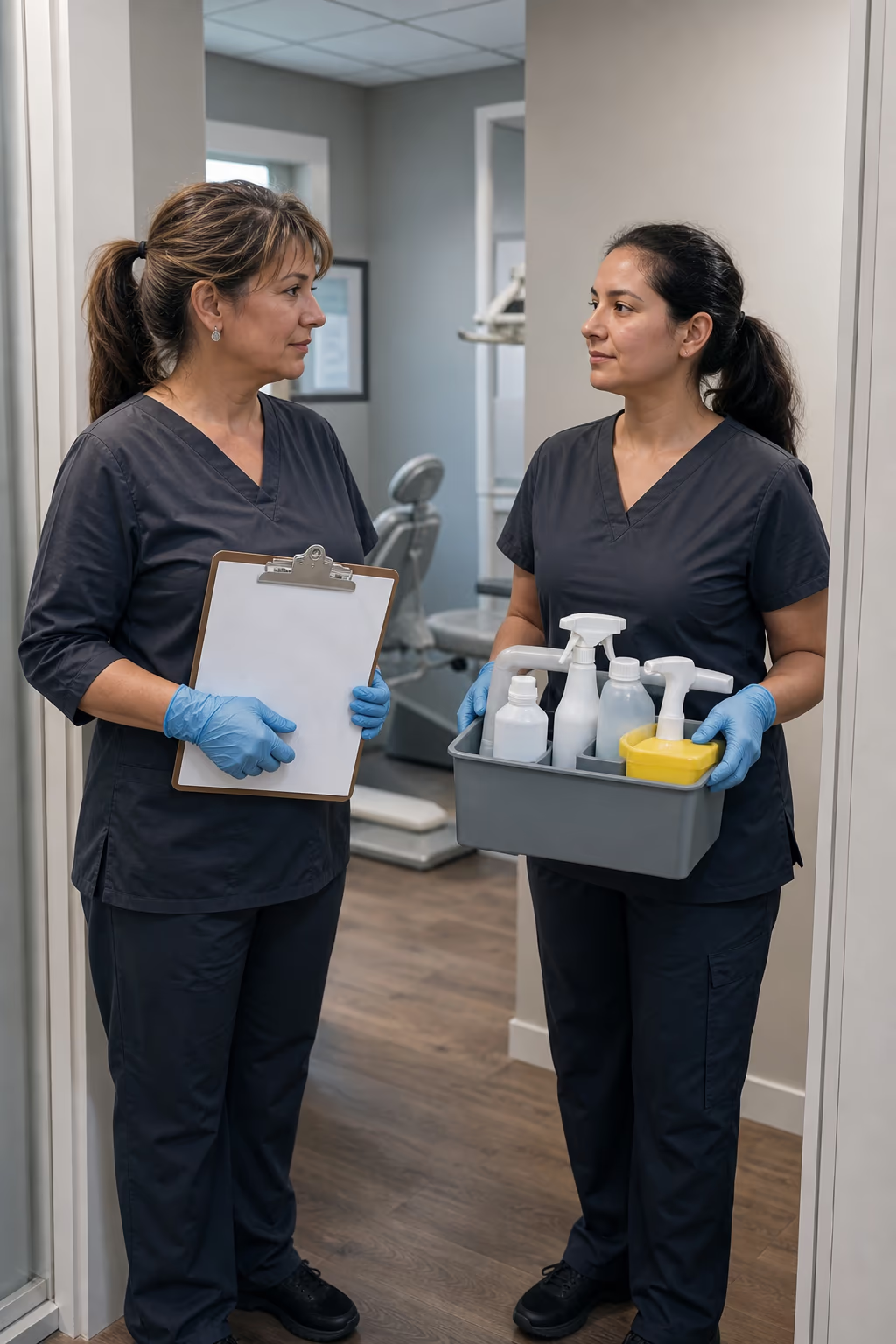
Some facilities need the rigour of these guidelines but do not have the staff to deliver it. Clinics, medical offices, and buildings that care for people are the clearest cases for a professional provider with documented standards.
A professional brings training, equipment, and verification, so infection control is not a promise but a documented process. For a business, that is easier to demonstrate to patients, staff, and visitors.
If you are comparing providers, our commercial cleaning company evaluation guide is a useful starting point for the questions that matter. Ask about training, documentation, and how they verify the work.
Whatever you decide, put the expectations in writing. A scope of work that names the areas, the frequencies, and the verification process protects your facility and makes the working relationship easy to judge. For a general sense of typical cleaning service costs in Ottawa before you request quotes, our pricing guide breaks down what drives the rate.
Formatted Step-by-Step Infection Control Cleaning Checklist
Use this checklist to apply the seven guidelines in a single, repeatable cleaning pass:
- Step 1.Survey the space and identify high-risk, high-touch surfaces, and assign each one a cleaning frequency.
- Step 2.Clean every surface first with detergent, water, and a clean cloth to remove soil and organic matter.
- Step 3.Apply a Health Canada DIN-registered disinfectant to high-risk surfaces and keep them visibly wet for the full contact time.
- Step 4.Change cloths and mop heads between areas, working from clean to dirty and high to low.
- Step 5.Inspect and log the completed work, and launder reusable cloths and mop heads.
- Step 6.Reviewing our commercial office cleaning services in Ottawa provides a trained team that follows these infection control guidelines.
FAQ
What is the most important step in healthcare cleaning?
Cleaning before disinfecting. A disinfectant cannot inactivate pathogens through a layer of soil, so the cleaning pass is the foundation of everything else.
How long should a disinfectant stay on a surface?
Exactly as long as the label states. Most disinfectants require a stated contact or dwell time, and the surface must stay visibly wet for the whole period to be effective.
Why does CSA Z317.12 matter for cleaning?
It is the Canadian standard for cleaning and disinfection of healthcare facilities. It codifies a risk-based approach, staff roles, and documentation, which is how a facility proves its cleaning meets a recognised bar.
Do I need hospital-grade products in a clinic or office?
No. A Health Canada DIN-registered disinfectant, colour-coded cloths, and a documented routine capture most of the benefit without medical-grade products.
How can a cleaning company prove it follows infection control guidelines?
Ask for documented checklists, training records, and how it verifies the work. Our guide to comparing commercial cleaners lists the questions worth asking.
What role does documentation play in infection control cleaning?
Documentation is what makes a standard real. A checklist that names each task, surface, and frequency, with a signature or log, lets a supervisor verify the work and lets a client see that hygiene is managed rather than assumed.
How often should high-touch surfaces be cleaned in a healthcare facility?
High-touch surfaces in patient and treatment areas are cleaned and disinfected daily, and more often during busy periods or between patients. The frequency follows the traffic and the risk, which is the heart of the risk-based approach.
Wrapping Up
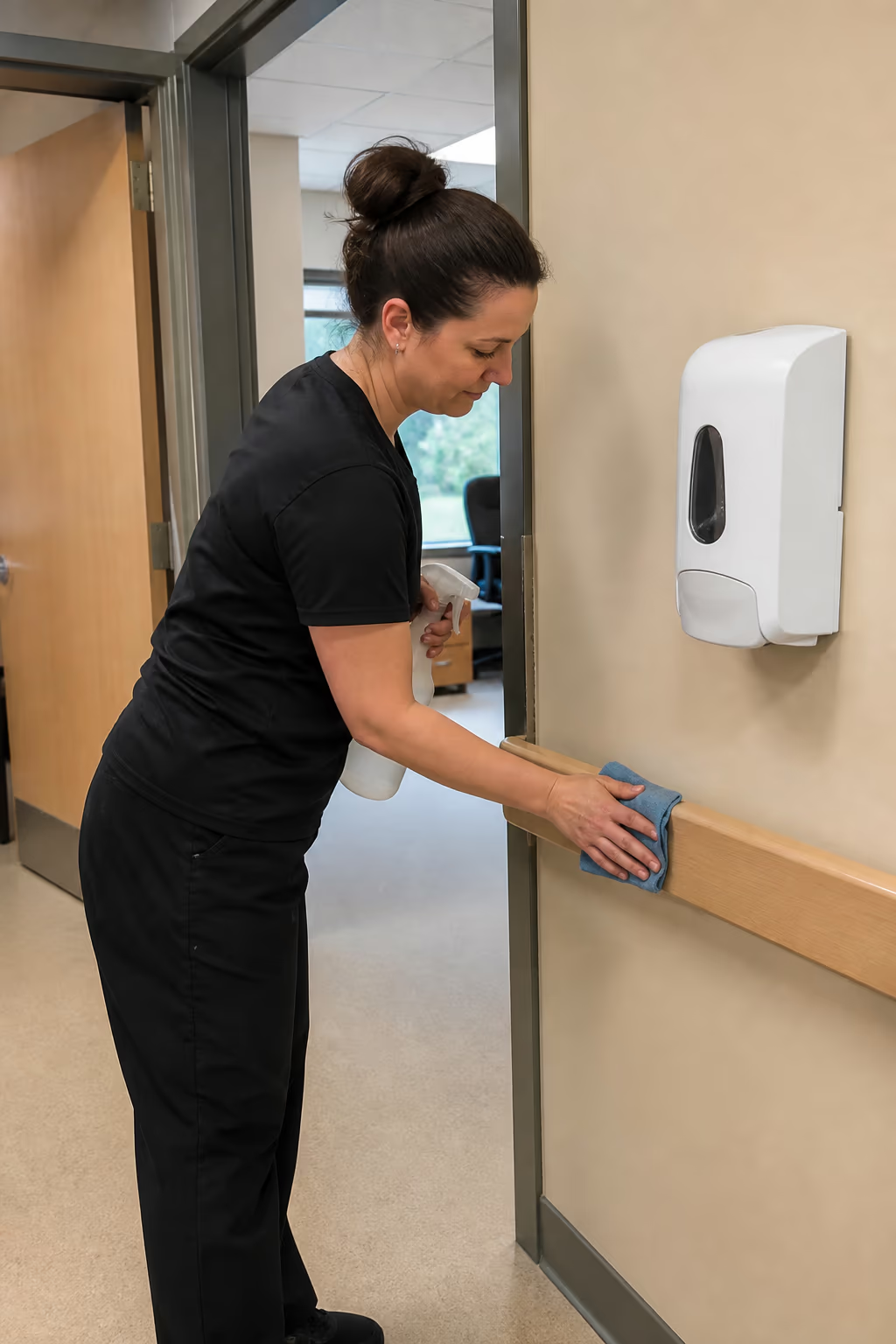
Infection control in healthcare facilities is a system, and these seven guidelines are the spine of it: plan by risk, clean first, respect contact time, choose approved products, segregate cloths, do terminal cleaning well, and document the work. The same discipline protects offices, clinics, and shared spaces. When your facility needs that level of care, contact Good Cleaner Co. for a free quote and a cleaning plan built around these guidelines.
Keep reading
More from Good Cleaner
Services that fit
- Medical and Dental Office Cleaning in OttawaWaiting rooms, exam rooms and washrooms in Ottawa clinics cleaned and disinfected around patient hours, scoped after a walkthrough of the practice.
- Professional Office Cleaning Services in OttawaOffice cleaning services in Ottawa for corporate offices, clinics and professional suites. After-hours scheduling, eco-friendly products and a free quote.
- Janitorial Services in OttawaRecurring janitorial services for offices, warehouses, retail, dealerships and schools, with eco-friendly commercial cleaning and customized plans.
About the author
Service areas
- Ottawa
- Kanata
- Nepean
- Orléans
- Barrhaven