
Law Office Cleaning: Maintaining Professional Environments
A law office is more than a place to work; it is a professional environment where clients form their first impression and where sensitive work happens every day. This guide explains what a law office cleaning service should include, from the daily routine to the confidentiality practices that protect your firm and your clients.
Quick Summary
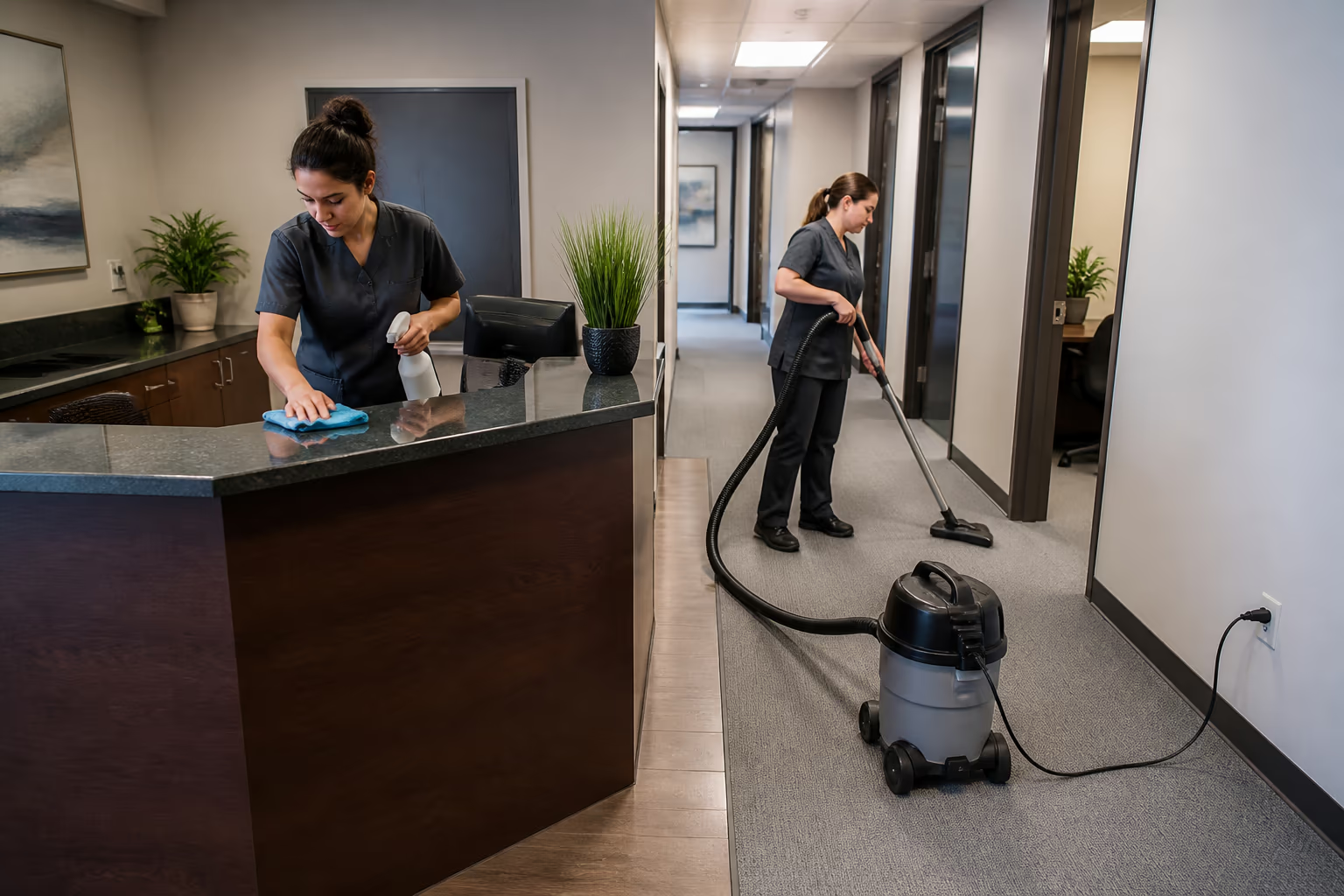
A complete law office cleaning service covers daily cleaning of washrooms, kitchens and shared spaces, floors, dusting and high-touch points, plus secure handling of shredded documents, tuned to client-facing hours and confidentiality needs, with periodic deep cleaning for carpets, upholstery and windows.
In this guide
Why a Law Office Has Its Own Cleaning Standards
A law office presents special cleaning demands: a formal professional image, long client-facing hours, sensitive documents and private meeting rooms. A cleaning routine that respects those constraints keeps the practice looking sharp without disrupting confidential work.
Clients often judge a firm by its reception area, meeting rooms and washrooms before they ever read a brief. A clean, orderly environment signals competence and care, and it is part of the professional experience you offer. At the same time, cleaning has to fit around real work: hearings, calls, late client meetings and the constant flow of documents.
Good Cleaner Co. treats a law office as its own kind of building. The scope of work is planned around client-facing hours, and the crew follows protocols that protect confidentiality and minimise disruption.
What Should a Law Office Cleaning Service Include?
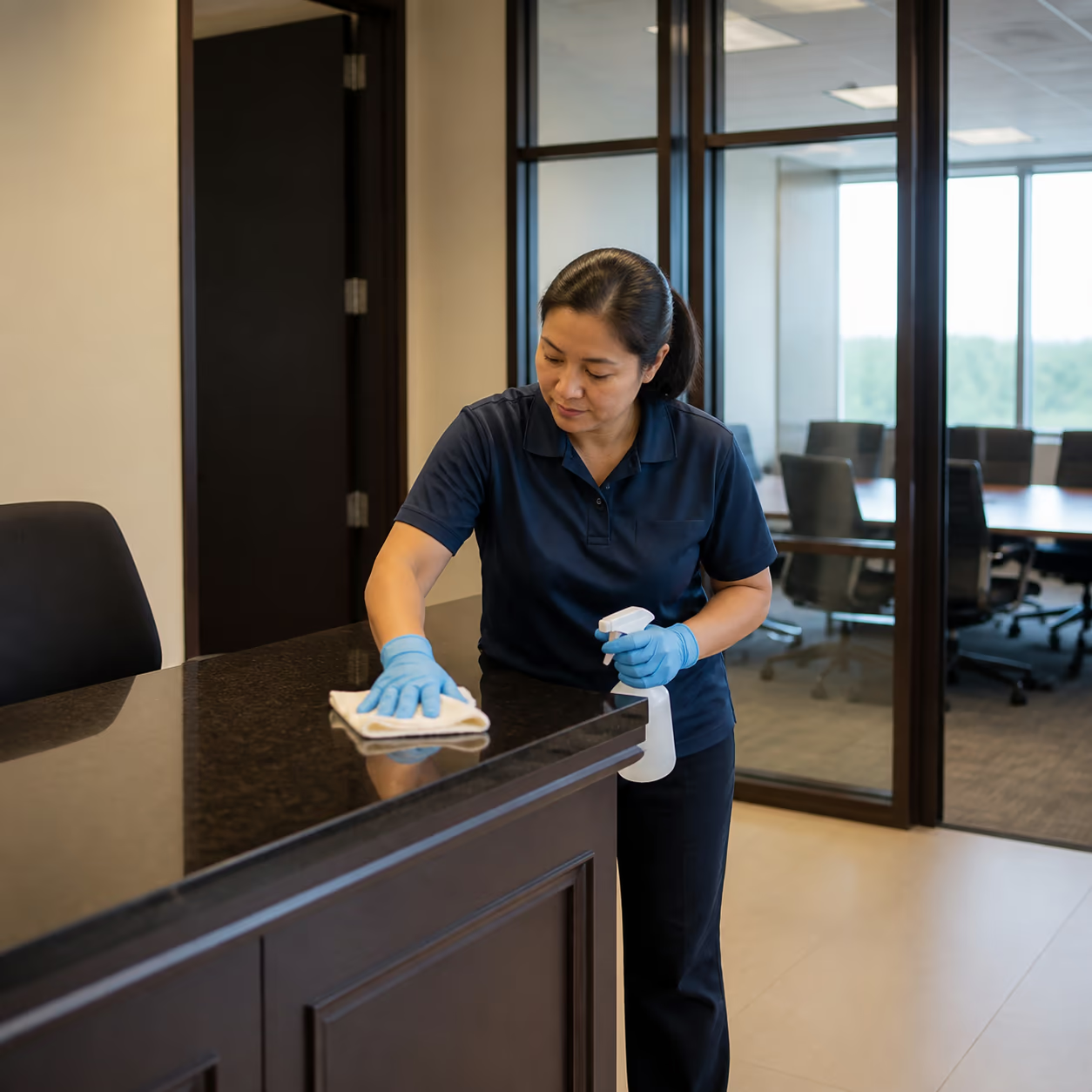
A complete law office cleaning program covers the same fundamentals as any commercial office, tuned to the way a legal practice actually runs. Here is what a service should include:
- Daily cleaning of washrooms, kitchens and shared spaces
- Vacuuming and floor care across offices, corridors and reception
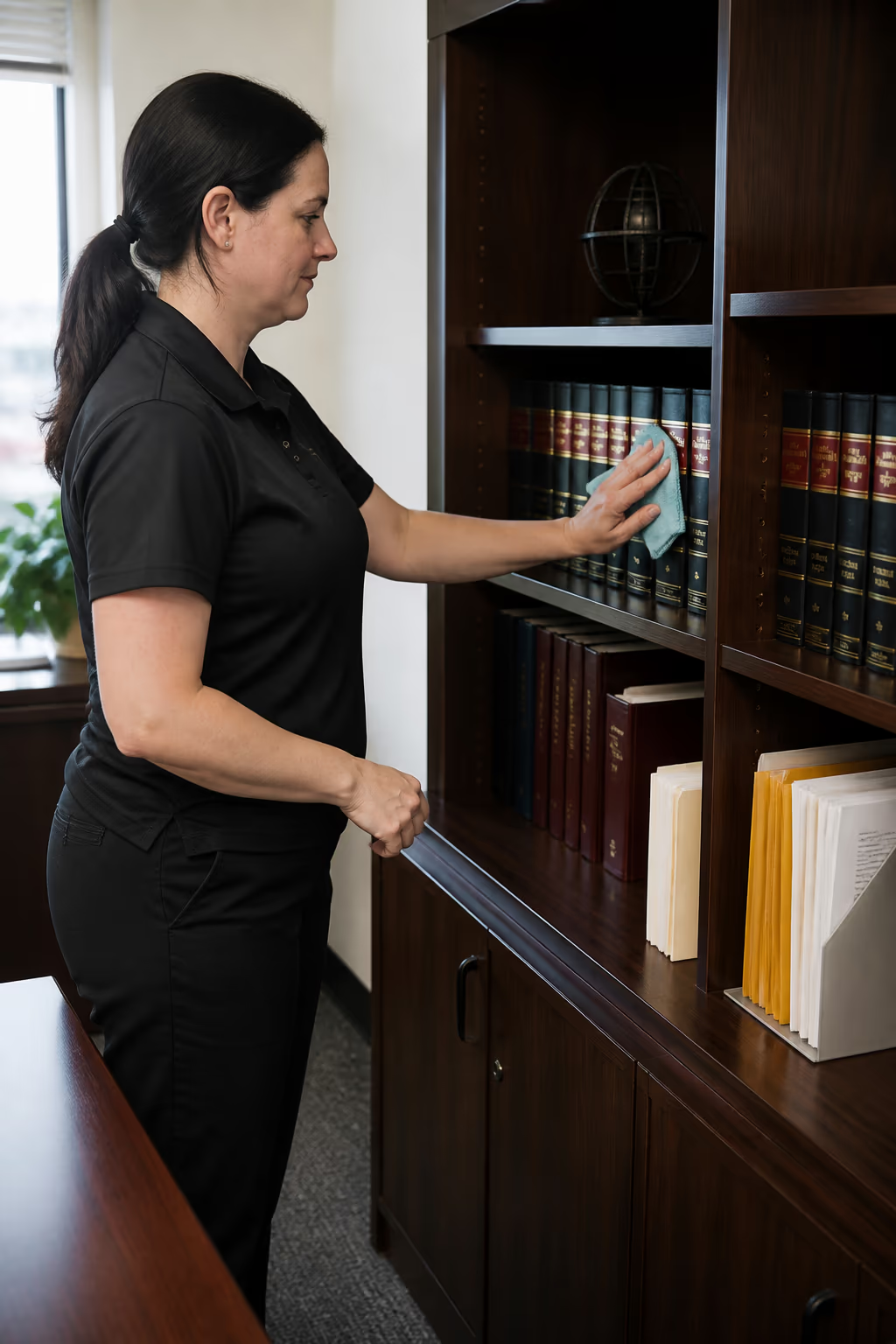
- Dusting and wiping desks, tables, shelves and fixtures
- High-touch point cleaning for door handles, switches and taps
- Waste removal and recycling with secure handling of shredded material
- Restocking of paper, soap and hand sanitiser
Beyond the everyday list, a law office often needs periodic deep cleaning for carpets, upholstery, windows and hard floors, plus a schedule that keeps meeting rooms and client areas presentation-ready. The exact mix depends on the size of the firm and how busy each zone is. Firms weighing office carpet cleaning DIY vs professional approaches for these periodic jobs should factor in the confidentiality and scheduling constraints that make a trained crew the safer choice in a law office.
Reception, Meeting Rooms and Client Areas
The reception area is the first thing a client sees and often the last. Desks, seating, coffee tables and the front counter should be dust-free and tidy before the first appointment of the day, which is why client-facing zones are usually cleaned daily rather than left to a weekly pass.
Meeting rooms and boardrooms carry the same weight. Tables, chairs, screens and window ledges get a regular wipe-down, and the room is reset so it is ready for the next meeting. A small detail like a clean conference table or a streak-free glass door contributes to the impression of a firm that runs well.
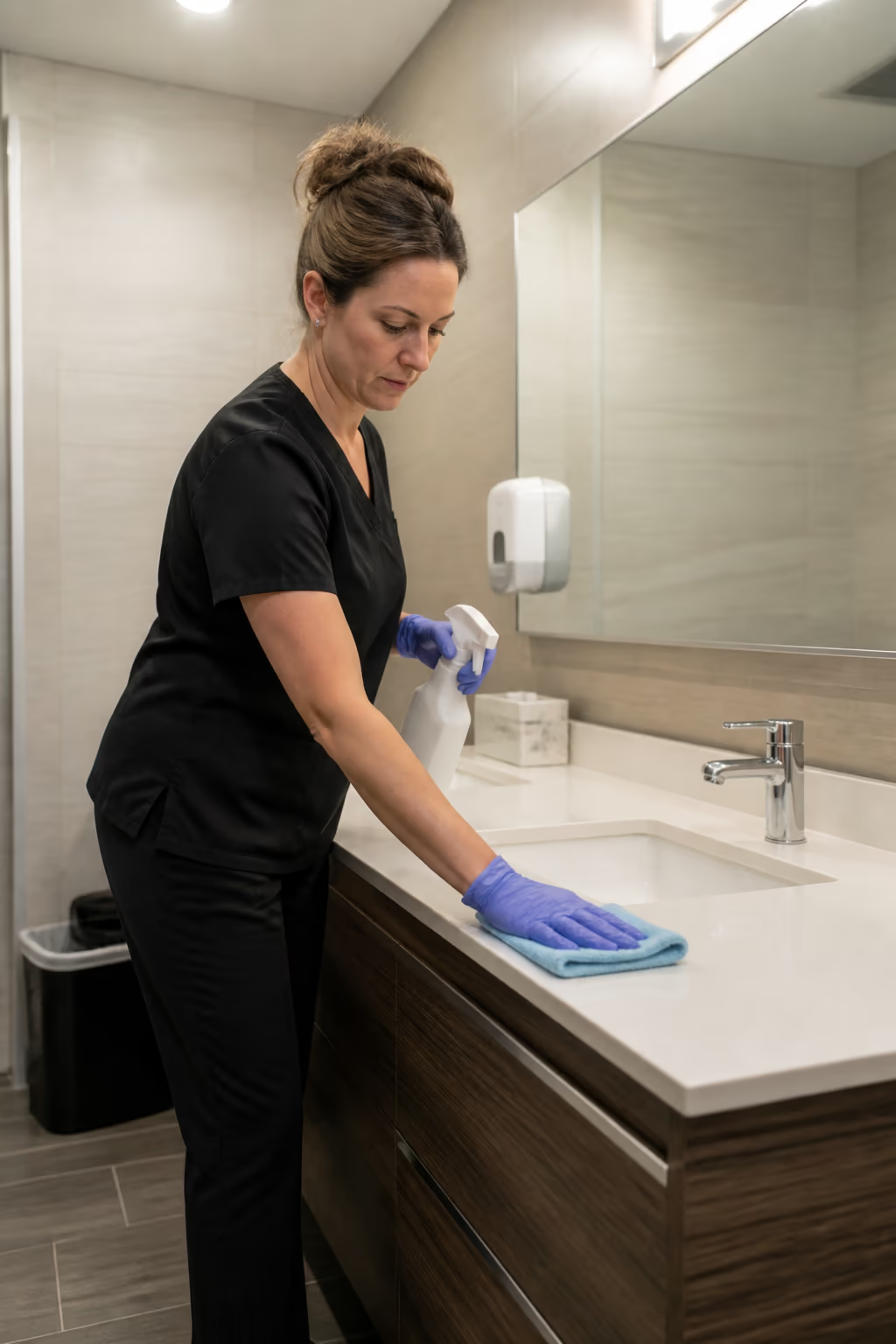
Shared spaces such as kitchens and washrooms are cleaned to the same standard, because clients and staff use them too. The goal is a consistent level across the whole office, not a sparkling lobby and tired back rooms.
The Daily, Weekly and Monthly Law Office Checklist
A reliable rhythm keeps the practice presentable and protects the building over time. Daily tasks handle the visible standard, weekly tasks hold it, and monthly or seasonal tasks care for the fabric of the office.
Daily responsibilities cover the parts clients and staff see most:
- Clean and disinfect washrooms
- Empty bins and replace liners
- Vacuum reception, corridors and common areas
- Wipe high-touch points and shared surfaces
- Tidy and wipe kitchen and lunchroom counters
Weekly responsibilities catch the details daily cleaning leaves behind:
- Dust desks, shelves, ledges and fixtures
- Clean meeting room tables and chairs
- Vacuum under desks and in less-used offices
- Clean glass partitions, mirrors and entry doors
- Deep-clean washroom fixtures and touchpoints
Monthly and seasonal responsibilities protect the office itself:
- Extract or deep-clean carpets in high-traffic zones
- Wash hard floors and apply protective care as needed
- Clean windows, blinds and light fixtures
- Wipe walls and door frames in busy areas
A written checklist makes the standard visible and consistent. When the same zones are covered on the same rhythm every week, nothing slips, and it is easier to see exactly what the service includes.
Reviewing the checklist with the office manager every few months keeps it honest. As the firm grows, moves offices or changes how space is used, the list should change too. A checklist that is treated as a living document serves the firm far better than one that never gets a second look.
Handling Confidentiality and Sensitive Documents
Confidentiality is the part of law office cleaning that most other industries never think about. Documents, case files and client information sit in the open, and the cleaning crew sees all of it. That places a real responsibility on the service you hire.
A professional cleaning company handles this with training and procedure. Cleaners are instructed not to read, move or handle paperwork, not to discuss anything they see, and to leave files exactly where they are. Anything that must be moved for a surface to be cleaned is returned to its exact spot.
Reputable providers back this up with background-checked staff and confidentiality expectations that are part of the working agreement. Private offices and meeting rooms are cleaned the same way as shared spaces: efficiently, discreetly and without interruption to confidential work.
Discretion extends beyond documents. Cleaning staff may be in the building during or after hours, and a professional team respects the firm's privacy in everything they see and hear. Staff are trained to work quietly, avoid interruption and treat every part of the office with the same care they would want in their own workplace.
- Cleaners are trained not to read or handle documents and files
- Anything moved for cleaning is returned to its exact position
- Private offices are cleaned to the same standard as shared spaces
- Background-checked staff are standard with reputable providers
- Confidentiality expectations are part of the working agreement
Scheduling Around Client-Facing Hours
Timing matters in a law office. Cleaning during client hours can disturb meetings and look unprofessional, while cleaning after hours keeps the practice presentation-ready without interrupting work.
Many firms schedule cleaning in the evening, after staff have left, so the office is fresh for the next morning. Others prefer a daytime top-up in shared areas and a deeper clean after hours. A good provider matches the schedule to how the firm works and adjusts it as needs change.
High-traffic periods such as court seasons or year-end closings can change the workload. A flexible cleaning partner adapts the schedule rather than forcing a one-size-fits-all routine, and communicates changes clearly so the practice always knows when cleaning happens.
Communicating the schedule clearly also matters. A firm should know when cleaning happens, whether anyone needs to be present and how the provider handles access. Predictability is a form of professionalism in itself, and it lets the firm plan its own work without guessing.
Products and Methods That Suit a Professional Office
The products and methods used in a law office should protect both the people and the finishes. Certified, low-fume chemistry keeps the air comfortable for clients and staff, and surface-appropriate products protect furniture, woodwork and electronics.
Product choice in a professional office still answers to provincial law. Ontario's WHMIS legislation requires hazardous-product information to be delivered through labels, safety data sheets and worker education programs, whatever the setting looks like. The province states the employer duty: “Employers must pass the information about workplace hazardous products on to their employees and provide worker education programs.”
Under WHMIS 2015, commercial cleaning chemicals carry hazard labels and Safety Data Sheets that a trained crew reads and follows. Disinfectants on hard surfaces carry a Health Canada Drug Identification Number, which verifies their claims, and certified products such as EcoLogo cleaners meet independent environmental standards for lower emissions.
Colour-coded microfibre and proper technique matter as much as the chemistry. Separate cloths keep washroom work from touching desks and kitchen surfaces, and the right tools prevent scratches, streaks and residue on the surfaces clients see.
The choice of chemistry matters for another reason in a professional office: odour. Strong, perfumed products can linger in corridors and meeting rooms long after the cleaning is done. Professional teams favour low-odour or unscented certified products that do the job without announcing themselves, so the office smells neutral and fresh rather than chemical.
- Certified, low-fume cleaning chemistry for occupied professional spaces
- Surface-appropriate products for furniture, woodwork and electronics
- Colour-coded microfibre to prevent cross-contamination between zones
- WHMIS 2015 training and label compliance for every product
- Environmentally certified options such as EcoLogo where you prefer them
Seasonal and Local Considerations for Ontario Law Offices
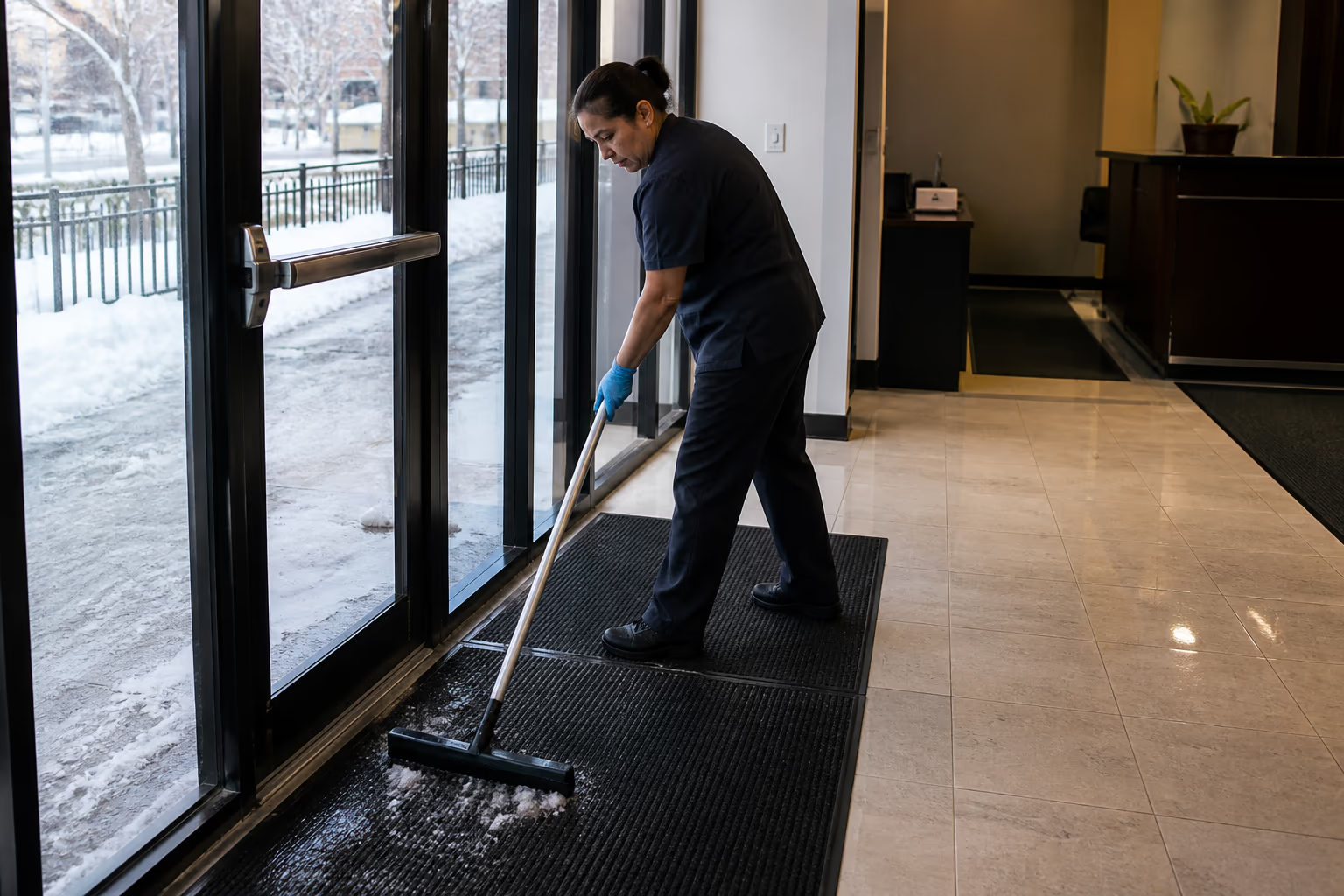
Ontario seasons affect a law office cleaning routine in practical ways. Winter salt and grit get tracked into lobbies and can stain carpets and dull hard floors, so entry mats and prompt entryway care are important from late autumn through spring.
Winter weather also changes how the building is used. Clients come in with boots and coats, so foyers and entry corridors see extra traffic, and keeping those zones clean and dry matters for both appearance and safety. In summer, higher humidity can speed up mould in washrooms and kitchens, so ventilation and regular cleaning matter more.
Winter also brings a safety angle. Melted snow on entry floors becomes a slip hazard, so prompt drying and well-placed mats are part of a responsible routine, not a nice-to-have. A professional crew keeps walkways dry and is quick to respond to the extra traffic that cold weather brings.
A responsive cleaning program adjusts for the season, and a provider that plans for it up front helps the firm budget and stay presentable all year. It is one more reason the relationship with a cleaning partner matters, not just the price. Reviewing the average cost of cleaning services in Ottawa is a useful starting point for budgeting before you request a firm-specific quote.
Why Experience With Professional Firms Matters
Cleaning a law office well is about more than technique; it is about understanding how the practice works. A provider that has served professional firms knows to work quietly, to respect closed doors, to avoid moving anything on a desk and to schedule deep work around the firm's calendar. Recognising the signs your office needs professional cleaning early, such as a reception area that no longer looks sharp between visits, is the simplest way to catch a schedule that has fallen behind.
That experience shows up in small ways that matter: asking before entering a private office, coordinating with the office manager before a major clean and knowing that a boardroom may be in use for hours at a time. These are not dramatic skills, but they are the difference between a service that fits a law office and one that treats it like any other space.
When you interview providers, asking how they handle professional or sensitive environments is a useful test. The answer tells you whether confidentiality and discretion are built into their process or left to chance.
How Good Cleaner Co. Approaches Law Office Cleaning
Good Cleaner Co. builds a law office cleaning program around the practice's schedule, standards and confidentiality needs.
Our commercial office cleaning services in Ottawa are built around your schedule and standards, whether the firm needs nightly cleaning, a daytime top-up or a mix of both. If you are comparing providers, our guide to vetting commercial cleaners walks through the questions that matter, from training to how quality is checked and reported.
Formatted Step-by-Step Law Office Cleaning Checklist
Use this five-step approach to keep a law office presentable, professional and secure:
- Prepare the space:clear surfaces, note anything that should not be moved and gather the right tools and products for the zones you are cleaning.
- Work from high to low:dust and clean upper surfaces first so loose material does not settle on freshly cleaned areas.
- Clean and disinfect high-touch points:apply the right product and let it sit for the contact time on the label.
- Finish floors and tidy:vacuum, mop or spot-clean floors, empty bins and restock supplies.
- Inspect and leave nothing disturbed:walk the space, confirm files and paperwork are untouched and report anything unusual to the office contact.
- Booking our office cleaning programs in Ottawa provides a trained, discreet team that keeps the practice sharp without disturbing confidential work.
FAQ
How often should a law office be professionally cleaned?
Most firms do well with nightly cleaning so the office is fresh for clients each morning, plus a periodic deep clean. High-traffic areas such as washrooms and kitchens may need daily attention, while private offices can often be covered on a lighter schedule.
Is it safe to have cleaners in offices with confidential documents?
Yes, when you work with a reputable company. Cleaners are trained not to read or handle paperwork, anything moved is returned exactly where it was, and background-checked staff are standard. Confidentiality expectations are part of the working agreement.
Can cleaning be done without disrupting client meetings?
Yes. Most firms schedule cleaning after hours or outside peak client times, and the provider can adjust around hearings, closings and busy periods. A flexible schedule keeps the office clean without interrupting work.
What should a law office cleaning service include?
A complete service covers washrooms, kitchens, floors, dusting, high-touch points, waste removal and restocking, plus periodic deep cleaning for carpets, hard floors, windows and fixtures. A written scope lists exactly what is included.
Are the cleaning products used in a law office safe for staff and clients?
Professional companies use certified, low-fume chemistry, train staff under WHMIS 2015 and follow label instructions for contact time and ventilation. You can ask to see the Safety Data Sheets before service starts.
How do you handle sensitive spaces such as boardrooms and private offices?
The same way as every other zone, but with extra care. Crews follow confidentiality protocols, do not touch documents and clean private offices to the same standard as shared areas so the whole practice looks professional.
Do I need to provide access or keys for the cleaning crew?
Yes, arrangements are agreed before service starts. The provider works with the firm on access, keyholder and alarm procedures so cleaning happens securely and the office is safe when the crew leaves.
What happens if a cleaner damages something in my office?
Report any damage promptly with a photo, and a reputable provider will make it right through its claims process.
How quickly can I get a cleaning quote for my law office?
Contact Good Cleaner Co. online or by phone. We do an onsite assessment of the office, agree the scope and schedule, and deliver a written proposal, usually within a day or two.
Can the cleaning service cover multiple offices or locations for one firm?
Yes. Commercial providers can cover multi-site accounts with one consistent standard, one chemical line and one reporting system, so a firm with several offices gets the same quality everywhere.
Wrapping Up
A law office needs more than a clean floor; it needs a professional environment that reflects the firm, protects confidential work and stays presentable around real hours. A cleaning service that understands those needs keeps the practice sharp without getting in the way. Contact Good Cleaner Co. for a free quote and a cleaning plan tailored to your office.
Keep reading
More from Good Cleaner
Services that fit
- Professional Office Cleaning Services in OttawaOffice cleaning services in Ottawa for corporate offices, clinics and professional suites. After-hours scheduling, eco-friendly products and a free quote.
- Janitorial Services in OttawaRecurring janitorial services for offices, warehouses, retail, dealerships and schools, with eco-friendly commercial cleaning and customized plans.
About the author
Service areas
- Ottawa
- Kanata
- Nepean
- Orléans
- Barrhaven