


Restaurant Cleaning Checklist: Kitchen and Dining Area Guide
Restaurant cleaning checklist kitchen and dining area guide is essential for food safety, Health Canada compliance, and customer confidence. A restaurant can serve great food, but if tables feel sticky, floors are greasy, or kitchen equipment is dirty, customers notice immediately.
This guide gives Canadian restaurants a complete cleaning system: daily, weekly, and monthly checklists for kitchens and dining rooms, surface-specific methods, best products available in Canada, cost ranges in CAD, and professional tips that pass inspections. It also explains when to DIY and when to hire professionals for deep cleans like hoods and grease traps.
For the basics of cleaning vs sanitising, see cleaning vs sanitising vs disinfecting.
Why Restaurant Cleaning Checklists Matter
Restaurants are high-risk environments because they combine food handling, heat, grease, and high foot traffic. A clear checklist prevents missed spots and helps staff stay consistent across shifts. It also reduces liability by aligning with Health Canada and CCOHS hygiene guidance.
Common restaurant risks include grease buildup (fire hazard), cross-contamination from raw foods, and slip hazards caused by winter salt or greasy floors. A checklist is the simplest way to control these risks.
Cleanliness also affects reviews. Customers notice sticky menus, smudged windows, and washrooms that are not stocked. A checklist ensures the front-of-house stays consistent, even on busy nights.
Food Safety and Inspection Readiness
Restaurant cleaning is inseparable from food safety. Health Canada and local inspectors look for evidence of sanitised prep areas, clean equipment, and safe storage conditions. A strong checklist helps your team prepare for inspections without last-minute panic.
Cleaning should follow this sequence:
- Clean first to remove grease and visible soil.
- Sanitise second using food-safe, approved products.
- Dry fully before food contact surfaces are used again.
Documenting cleaning tasks, even with a simple log, provides proof of compliance. It also helps identify recurring issues such as grease buildup behind equipment or slip hazards near dish stations.
Kitchen Cleaning Checklist (Daily, Weekly, Monthly)
Kitchen cleaning is the most critical part of any restaurant checklist. This kitchen cleaning checklist focuses on food safety, grease control, and compliance.
Daily kitchen tasks (30 to 60 minutes, easy to moderate)
- Sanitise prep surfaces after raw meat handling using Health Canada-approved disinfectants.
- Clean grills, fryers, and ovens: scrape grease, degrease, and rinse; ventilate to avoid fumes.
- Empty drip trays, filter fryer oil, and clean sinks and utensils.
- Sweep and mop floors, clean mats, and remove garbage.
Weekly kitchen tasks (45 minutes to 2 hours, moderate)
- Deep clean under and behind appliances including fridges and prep tables.
- Clean ventilation hoods and splash guards.
- Sanitise slicers, mixers, and ice machines according to manufacturer guidelines.
Monthly kitchen tasks (1 to 2 hours, hard)
- Descale appliances and inspect grease traps.
- Inspect exhaust systems and schedule professional hood cleaning if needed.
Hood and grease trap cleaning often requires professional service to meet fire code and insurance requirements.
Kitchen Zone-by-Zone Cleaning Guide
A kitchen checklist works best when it is broken into zones. This makes the work faster and ensures no area is missed.
Prep stations
Sanitise cutting boards after each use, especially after raw meat. Keep separate colour-coded boards to reduce cross-contamination. Wipe prep counters with food-safe disinfectants and allow proper contact time before reuse.
Cooking line (grills, fryers, ovens)
Scrape grease daily and empty drip trays. Degrease fryer exteriors and handles. Ventilate well during degreasing because fumes can build quickly in small kitchens.
Dishwashing station and sinks
Clean sinks and drains daily. Remove food debris from strainers and sanitise faucet handles. Dishwashing areas are high-risk for bacteria if standing water is left overnight.
Cold storage and walk-ins
Wipe shelves weekly, discard expired items daily, and clean door gaskets to prevent mould. Dehumidifiers can help during humid summers.
Ventilation hoods and grease traps
Wipe hoods weekly and schedule professional cleaning quarterly or as required by local fire codes. Grease traps should be inspected monthly to prevent backups and odours.
Kitchen floors and drains
Sweep and mop daily with degreasers. Clean drains weekly to prevent odours and pests. In winter, neutralise salt tracked in from deliveries to reduce slip risks.
Equipment Deep Cleaning Details
Some equipment needs more than a daily wipe. A full checklist should include deep cleaning of high-use appliances.
Fryers
Filter oil daily and schedule full oil changes weekly or bi-weekly depending on volume. Clean fryer exteriors and handles daily to prevent grease buildup.
Grills and griddles
Scrape after each service and use degreasers at close. Weekly deep cleans remove carbonised buildup that can affect food flavour.
Ovens
Wipe spills daily and schedule monthly deep cleaning for interior surfaces. Ventilate well when using oven degreasers.
Ice machines and beverage lines
Sanitise monthly to prevent mould and mineral buildup. Follow manufacturer instructions and schedule professional servicing if required.
Dishwashers
Clean filters daily, wipe door seals weekly, and descale monthly to maintain performance.
Small appliances
Toasters, mixers, and blenders should be wiped daily and disassembled weekly for sanitation.
Storage Rooms and Walk-In Coolers
Storage zones are often overlooked in restaurant cleaning. Dust and moisture in storage areas can cause mould, pests, and food spoilage.
- Wipe shelves weekly and discard expired items daily.
- Clean walk-in floors with food-safe cleaners and dry immediately.
- Sanitise door gaskets to prevent mould buildup.
- Check for condensation and use dehumidifiers in humid months.
Dining Area Cleaning Checklist (Daily, Weekly)
Dining area cleanliness directly affects customer perception. This dining area cleaning routine focuses on visible surfaces, high-touch points, and floor safety.
Daily dining tasks (20 to 40 minutes, easy)
- Wipe and sanitise tables, chairs, and menus after each shift.
- Clean bathrooms, door handles, railings, and windows.
- Sweep, vacuum, or mop floors; spot-clean spills immediately.
Weekly dining tasks (30 to 60 minutes, moderate)
- Deep clean upholstery and booths.
- Dust light fixtures and baseboards.
- Wash windows and glass partitions.
Dining Area Zone Guide
Tables and chairs
Sanitise tables between seatings and wipe chair backs and arms daily. Food-safe cleaners reduce residue and keep finishes from dulling. For wood tables, use a damp microfibre cloth and dry immediately.
Booths and upholstery
Vacuum crumbs daily and deep clean weekly. Use enzyme cleaners for spills and schedule monthly hot water extraction to prevent odours.
Bar and service counters
Sanitise bar tops and POS terminals after each shift. Clean under bar mats daily to prevent sticky buildup.
Washrooms
Clean and sanitise washrooms daily with extra focus on handles, faucets, and mirrors. Wet-floor signage prevents slip claims.
Host stand and entryway
Wipe down menus, POS screens, and door handles. Entry mats should be shaken daily and replaced seasonally to manage winter salt.
Patios and outdoor seating
In summer, clean patio tables daily and check for mould or bird droppings. Power wash patios monthly if needed.
Allergen Control and Cross-Contamination Prevention
Restaurants must manage allergens carefully. Cleaning plays a direct role in preventing cross-contact between allergens and non-allergen foods. Wipe prep surfaces thoroughly between menu items, and store allergen-free equipment separately.
- Sanitise cutting boards after allergen-related prep.
- Label cloths and tools for different kitchen zones.
- Clean condiment stations to prevent cross-contact from shared utensils.
Between-Seating Reset Checklist
Quick resets between seatings keep dining areas consistent during busy service.
- Wipe tables and chair backs with food-safe sanitiser.
- Replace condiments and wipe bottles.
- Spot clean floors around tables to remove crumbs.
- Check menus for smudges or stains.
Weekly Dining Deep Clean
A weekly deep clean keeps the front-of-house looking professional and prevents buildup that daily wipes miss.
- Dust lighting fixtures and air vents.
- Clean baseboards and corners where crumbs collect.
- Wash windows and glass to remove streaks and fingerprints.
- Vacuum under booths and around chair legs.
- Sanitise POS terminals and host stand surfaces.
Cleaning Frequency Guide for Canadian Restaurants
- After each shift: kitchen prep surfaces, dining tables, washrooms.
- Daily: floors, garbage removal, equipment wipe-downs.
- Weekly: under-equipment cleaning, hood wipe-down, upholstery care.
- Monthly: deep equipment cleaning, carpet extraction, grease trap checks.
In Canadian winters, add weekly salt-neutralising rinses for entryways. In humid summers, focus on ventilation and dehumidification to prevent mould.
Staffing and Time Estimates
Staffing needs vary by size and service volume. A smaller 2,000 sq ft restaurant can usually complete daily cleaning with one to two staff in under two hours. A 5,000 sq ft restaurant often needs two to three staff, especially during closing routines.
- Kitchen deep clean: 2 to 3 hours for 1,000 sq ft.
- Dining reset: 1 to 2 hours for 50 seats.
- Full restaurant close: 1 to 3 hours depending on volume.
Tracking time spent on cleaning helps managers decide when professional support is more cost-effective.
Time-of-Day Cleaning Plan
Restaurants run on tight schedules, so cleaning should be divided into opening, mid-shift, and closing routines.
Opening routine (15 to 30 minutes)
- Wipe prep counters and sanitise cutting boards.
- Check washrooms and restock soap and paper supplies.
- Spot-clean dining floors and wipe tables.
During service (as needed)
- Wipe spills immediately to prevent slips.
- Sanitise high-touch points like door handles and POS screens.
- Swap out dirty floor mats in the kitchen.
Closing routine (30 to 60 minutes)
- Degrease cooking line and clean fryers and grills.
- Empty garbage and recycling and sanitise bins.
- Mop floors with degreasers and post wet-floor signs.
Assign one person to the kitchen line and one to dining areas so tasks run in parallel. For larger restaurants, break closing into stations (prep, line, dish, dining) to reduce missed steps.
Step-by-Step Closing Routine (Kitchen + Dining)
A consistent closing routine prevents overnight buildup and makes morning prep faster.
- Step 1: Clear food and waste from prep areas, dispose of garbage, and seal bins.
- Step 2: Degrease and sanitise cooking line surfaces, grills, and fryers.
- Step 3: Wash and sanitise sinks, cutting boards, and utensils.
- Step 4: Wipe dining tables and chairs and reset condiments.
- Step 5: Mop floors with slip-resistant cleaners; post wet-floor signs until dry.
This routine takes 30 to 60 minutes for smaller kitchens and 1 to 2 hours for larger operations. It prevents grease and residue from hardening overnight.
Monthly and Quarterly Deep Cleans
Deep cleaning prevents long-term buildup that daily tasks cannot remove. These tasks should be scheduled monthly or quarterly depending on volume.
- Exhaust hoods and ducts – quarterly or per fire code requirements.
- Grease traps – monthly inspection and cleaning.
- HVAC filters – replace quarterly to maintain air quality.
- Full carpet extraction – monthly for dining areas with heavy traffic.
Floor Safety and Slip Prevention
Slip risks are one of the most common restaurant safety issues. Grease, water, and winter salt all increase the chance of falls.
- Use slip-resistant cleaners in kitchens and entryways.
- Dry floors quickly after mopping.
- Post wet-floor signs until surfaces are completely dry.
Surface-Specific Cleaning Methods
Wood surfaces (tables, cabinets)
Use a damp microfibre cloth with mild soap. Dry immediately to prevent warping. Weekly food-safe polish keeps finishes looking clean and professional.
Tile surfaces (kitchen floors, backsplashes)
Use pH-neutral cleaners to avoid grout erosion. Scrub grout weekly to prevent grease buildup. Steam cleaners work well for grease in kitchens.
Concrete surfaces (walk-ins, patios, entrances)
Degrease with products such as Krud Kutter, neutralise winter salt with baking soda solutions, and seal surfaces annually.
Carpeted surfaces (dining booths)
Vacuum daily and use enzyme cleaners for spills. Hot water extraction monthly prevents odours and stains.
Seasonal Challenges in Canadian Restaurants
Canadian restaurants face strong seasonal shifts. Winter brings salt and slush, which makes entryways slippery and can stain floors. Summer humidity can cause mould in storage rooms and make booths feel damp.
- Winter: Increase entry mat cleaning, neutralise salt weekly, and mop more often.
- Spring: Deep clean vents and windows to handle pollen.
- Summer: Use dehumidifiers and ensure walk-ins are clean and dry.
- Fall: Schedule pre-winter deep cleans before busy holiday season.
Common Restaurant Cleaning Mistakes to Avoid
- Skipping grease trap checks, which creates fire hazards and odours.
- Over-wetting wood tables, leading to warping and dull finishes.
- Ignoring salt buildup at entrances in winter, creating slip risks.
- Using non-food-safe chemicals on prep surfaces.
- Neglecting ventilation during heavy degreasing.
Most compliance issues come from missed details, not missed effort. Clear checklists and staff training reduce these risks quickly.
Grease Management and Fire Safety
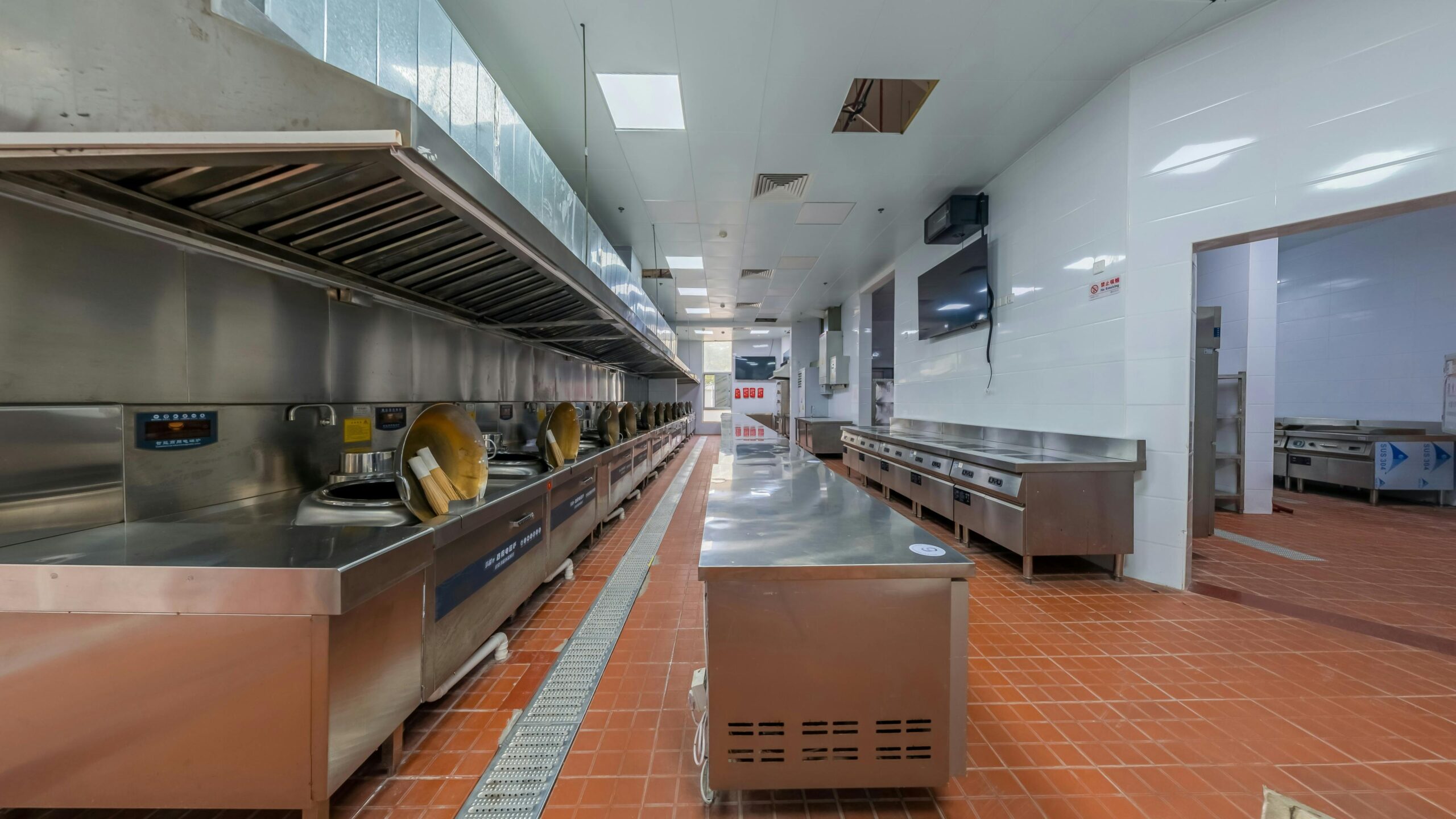
Grease is one of the biggest safety risks in restaurants. It builds up on hoods, filters, and behind equipment. Left unchecked, it becomes a fire hazard and a compliance issue.
- Clean hood filters weekly and schedule professional hood cleaning as required by local fire codes.
- Inspect grease traps monthly to prevent backups and odours.
- Degrease floor areas around fryers and cooking lines daily.
- Document hood and trap servicing for insurance and inspection purposes.
Best Products for Restaurant Cleaning (Canada)
Use products that are food-safe, effective on grease, and widely available in Canada.
Recommended products
- Ecolab degreasers – available via Loblaws/Superstore, $20 to $30 CAD.
- Diversey sanitisers – food-safe, $20 to $35 CAD per litre.
- Simple Green for multi-surface cleaning, $20 CAD at Canadian Tire.
- Method Wood Polish for tables, $8 CAD at Amazon.ca.
- Zep Grout Cleaner, $15 CAD at Home Hardware.
- Bissell Deep Clean Pro for carpets, $50 rental at Superstore.
- Ecologix sanitiser (Loblaws) – about $25 CAD per litre.
- Melt Hand salt neutraliser (Walmart Canada) – $15 CAD for winter entryways.
Product comparison by surface
| Surface | Cleaning method | Suggested product (Canada) |
|---|---|---|
| Wood tables | Damp cloth + dry wipe | Method Wood Polish ($8, Amazon.ca) |
| Tile floors | Neutral cleaner + scrub grout | Zep Grout Cleaner ($15, Home Hardware) |
| Concrete entry | Degrease + neutralise salt | Krud Kutter ($12, Canadian Tire) |
| Carpet booths | Vacuum + hot water extraction | Bissell Deep Clean Pro rental |
For stainless steel care, see cleaning stainless steel sinks like a pro.
Eco-Friendly Cleaning Options
Many restaurants prefer low-VOC, eco-friendly products to reduce odours in dining areas. Ecologix and Simple Green are good examples available in Canada. When choosing eco options, confirm they are still safe for food-contact surfaces.
Safety and Compliance Tips
- Wear PPE like nitrile gloves and non-slip shoes.
- Ventilate kitchens when using degreasers.
- Post wet-floor signs to prevent slips.
- Avoid mixing chemicals like bleach and ammonia.
Choose low-VOC, food-safe cleaners in dining areas, especially where children are present. Store chemicals away from food and away from customer access. Always follow label contact times for sanitisers so they work correctly.
Staff should also know which chemicals are approved for food-contact surfaces and which are not. Keep Safety Data Sheets accessible and ensure everyone knows where they are stored. This reduces accidents and supports inspection readiness.
Professional Tips for Restaurants
- Use colour-coded cloths to separate kitchen and dining zones.
- Schedule deep cleans off-peak to avoid service disruption.
- Keep checklists visible in staff areas for accountability.
- Train staff on contact times so sanitisers work effectively.
Restaurant Cleaning Checklist Tips and Tricks
These small habits keep kitchens and dining areas cleaner without extra labour:
- Keep spray bottles pre-labelled so staff know which product is food-safe.
- Rotate staff by zone so everyone understands every station.
- Use microfibre cloths for stainless steel to avoid streaks.
- Schedule quick mid-shift wipe-downs in busy dining rooms.
Waste Handling and Pest Prevention
Cleanliness directly affects pest control. Food waste left overnight attracts insects and rodents, especially during warmer months.
- Empty bins daily and disinfect bin interiors weekly.
- Store waste in sealed containers and keep lids closed.
- Clean floor drains weekly to prevent odours and pests.
- Check delivery areas for spills and cardboard buildup.
Preventive cleaning reduces pest risks and supports food safety compliance.
Inspection Prep Checklist
Health inspections are easier when your routine is consistent. Use this quick checklist before any inspection window:
- Verify cleaning logs for the past week.
- Check grease traps and hood filters.
- Inspect handwashing stations for soap and paper supply.
- Confirm food-safe sanitiser labels and storage practices.
- Check floors and drains for standing water or odours.
This checklist also helps managers identify weak spots before they become compliance issues.
Staff Training and Accountability
Cleaning routines only work when staff understand them. Restaurants should train new hires on cleaning checklists, chemical safety, and food-safe sanitation. A short 10-minute onboarding module reduces mistakes and improves consistency.
- Post checklists in kitchen and dish areas.
- Assign zone ownership for prep, cooking line, and dining spaces.
- Review contact times for sanitisers.
- Schedule weekly spot checks to confirm completion.
Regular training and clear logs keep teams aligned across shifts and reduce missed tasks.
Costs in Canada: DIY vs Professional
DIY cleaning costs $50 to $200 per month for supplies, but professional deep cleaning (hoods, grease traps) costs $0.10 to $0.30 per sq ft ($500 to $2,000 per month for 5,000 sq ft). Deep cleans can cost $0.50+ per sq ft.
Example monthly costs:
- 2,000 sq ft restaurant: $200 to $600 per month for routine cleaning.
- 5,000 sq ft restaurant: $500 to $2,000 per month depending on frequency.
Professional cleaning often saves staff time and reduces risk of inspection failures, which can cost far more than routine cleaning.
| Aspect | DIY | Professional |
|---|---|---|
| Routine cleaning | $50 to $200/month | $500 to $2,000/month |
| Deep cleans | Limited by staff time | Hoods, grease traps, HVAC |
For service rates in Ottawa, see cleaning prices in Ottawa.
DIY vs Professional Decision Checklist
Restaurants should consider professional cleaning when:
- Grease traps or hoods need compliance-grade service.
- Dining areas are high volume and require daily deep cleaning.
- Health inspections are frequent or strict in your area.
- Staff turnover makes routine consistency difficult.
- Fire safety requirements mandate certified cleaning.
DIY works for daily surfaces, but professional teams provide specialised equipment and documentation.
For large restaurants, a professional restaurant cleaning checklist kitchen and dining area guide service provides the consistency and compliance logs inspectors expect.
Budgeting and Cost-Saving Tips
Restaurant cleaning budgets are easier to manage when you separate routine cleaning from deep-cleaning services.
- Buy supplies in bulk from Costco Canada or Canadian Tire to reduce unit costs.
- Schedule deep cleans quarterly instead of reacting to inspections.
- Track supply usage to prevent over-ordering.
- Rotate mats and filters to extend their life.
These steps keep costs predictable while maintaining compliance.
If budgets are tight, prioritise critical areas like prep stations, floors, and grease management. Dining area cosmetics can be handled during slower periods, but kitchen sanitation should never be delayed.
Quality Control and Documentation
Restaurants should document daily and weekly cleaning. ATP swab testing under 30 RLUs is often used to confirm sanitation in kitchens. Use logs and photos to prove compliance.
- Photo logs of cleaned hoods and prep stations.
- Slip checks after floor mopping, especially in winter.
- Temperature and humidity checks for storage areas.
- Signed checklists for each shift.
Managers should review logs weekly to spot patterns, such as recurring grease buildup or missed shifts. If inspections are frequent, digital logs or simple spreadsheets make it easier to prove compliance and track improvements.
Time estimates help managers plan labour: a 1,000 sq ft kitchen often needs 2 to 3 hours daily with two staff, while a 50-seat dining area can be reset in 1 to 2 hours. Documenting those times helps with staffing and inspection readiness.
Many restaurants use simple digital logs or apps to track completion. Even a paper checklist signed by staff can prevent confusion and demonstrate due diligence during inspections.
Frequently Asked Questions
How often should restaurant kitchens be cleaned?
High-touch surfaces should be cleaned after each shift; deep cleans should be weekly and monthly for equipment.
How much does professional restaurant cleaning cost in Canada?
Expect $0.10 to $0.30 per square foot for routine cleaning and $0.50+ per square foot for deep cleans.
What are the most common cleaning mistakes?
Skipping grease traps, ignoring salt buildup on floors, and using non-food-safe chemicals.
Should I hire a professional cleaning service?
Professional services are recommended for exhaust hoods, grease traps, and deep cleans that require compliance logs. DIY works for daily surfaces.
How long does a full restaurant clean take?
A 1,000 sq ft kitchen can take 2 to 3 hours daily, while dining areas usually need 1 to 2 hours depending on seating.
What products do professionals use?
Professionals often use Ecolab degreasers, NSF-certified sanitisers, and HEPA vacuums for dining carpets.
Cleaning checklists also make onboarding easier. New staff can follow a written routine rather than guessing, which improves consistency and reduces missed steps.
Conclusion
Restaurant cleaning checklist kitchen and dining area guide keeps kitchens safe, dining areas welcoming, and inspections stress-free. Consistency is the key to hygiene and customer trust.
When routines are clear and supplies are ready, staff work faster and mistakes drop. That consistency is what keeps inspections smooth and guests returning.
Even small improvements, like better mat placement or clearer logs, can noticeably improve cleanliness and staff confidence.
Consistency protects your brand reputation.
Need professional restaurant cleaning? Contact GoodCleaner for a customised plan.