
How Often Should You Clean Your Home?
Most people do not have a problem cleaning; they have a problem deciding what to clean and when. The question of how often should you clean your home? becomes a real plan once you split the work into daily, weekly, monthly and seasonal rhythms instead of trying to do everything at once. This guide gives you a schedule you can actually keep, explains the Ottawa and Ontario realities that change the answer in winter, and shows where a professional team fits in.

Quick Summary
How often you should clean your home is not a single number; it becomes a practical plan once you split tasks into daily, weekly, monthly and seasonal rhythms. This guide explains how Ottawa's winters change that schedule, common mistakes that break a cleaning routine, and when a professional team fits in.
In this guide
The Honest Answer: It Depends on Your Home
How often you should clean your home has no single number, and anyone who promises one is oversimplifying: two identical houses can need very different schedules because the people living in them are different. The right frequency depends on a handful of household-specific factors, chief among them how many people live there, whether there are children, pets or allergies in the home, whether anyone works from home, how much daily traffic the space gets, and the season, since winter brings salt and sand while summer brings dust through open windows. Naming these factors up front is what lets a household build a schedule that actually fits, rather than copying a generic routine that does not.
The factors that move the answer most are worth listing plainly:
- How many people live there, because every extra person adds dishes, laundry, hair and footprints.
- Whether you have children or pets, because both track mess in faster than adults on their own.
- Whether anyone has allergies or asthma, which usually means more frequent dusting and vacuuming.
- Whether you work from home, because a home that is lived in all day needs more attention than one that is empty for eight hours.
- How much traffic the space gets, including guests, deliveries and the daily coming and going.
- The season, because winter brings salt and sand while summer brings dust through open windows.
A good schedule does not demand the same effort every day. It builds in light daily habits, a deeper weekly clean and a short list of monthly and seasonal tasks. That structure is what stops the question from feeling overwhelming, and it is the same structure professional teams use when they plan a visit to an Ottawa home.
Household size is usually the biggest single factor. A single person who works outside the home and cooks rarely can realistically go two weeks between full cleanings and still live comfortably. A family of five with two pets, on the other hand, will find the same gap leaves the house visibly tired within a few days. Neither household is doing it wrong; they just need different rhythms, which is exactly why a schedule should be built around the people in the home rather than copied from a neighbour or an online list.
The Daily, Weekly, Monthly and Seasonal Rhythm
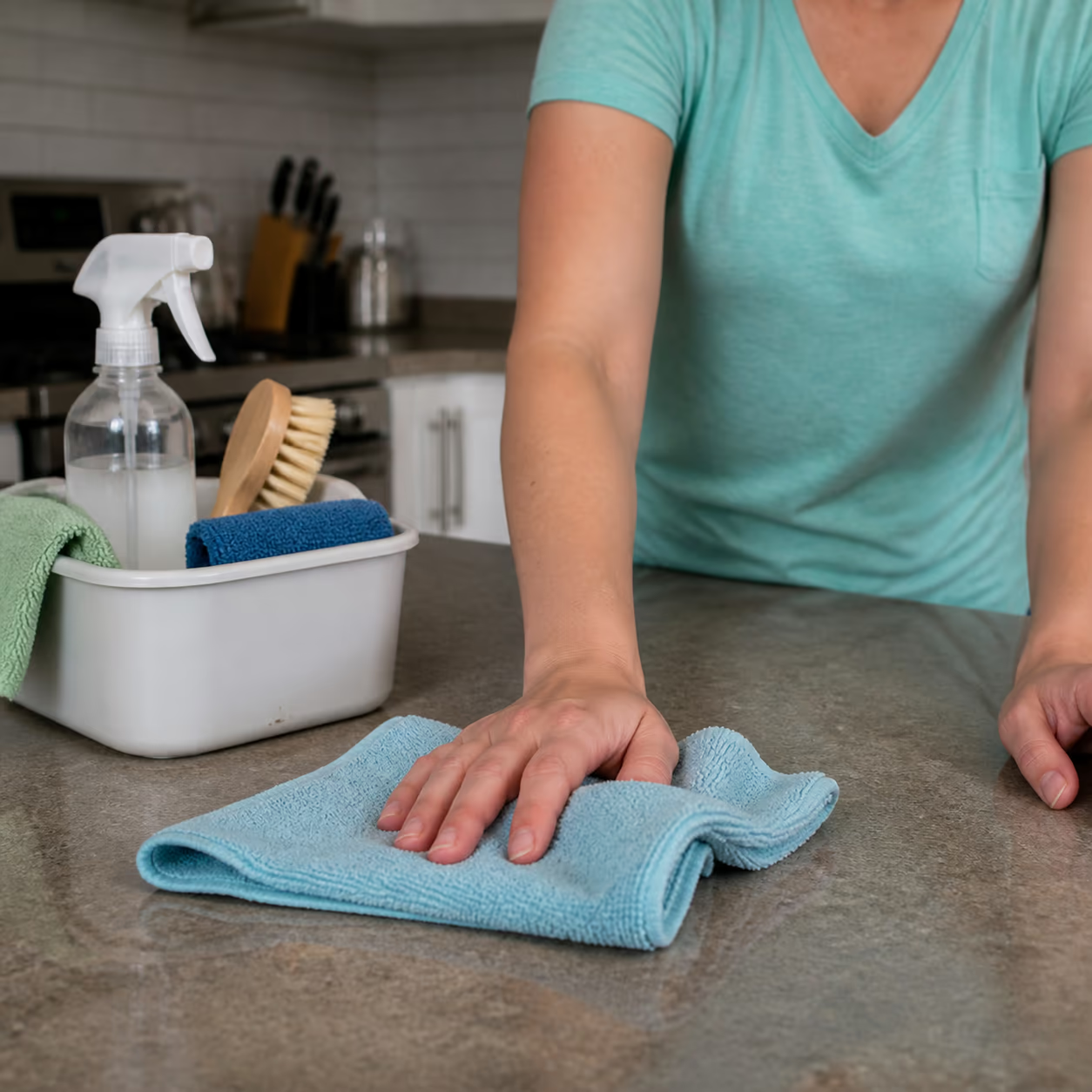
The simplest way to answer how often should you clean your home? is to divide the work into four rhythms, each with its own job. Daily tasks keep surfaces from building up, weekly tasks reset the whole home, monthly tasks catch the spots that are easy to forget, and seasonal tasks handle the deep work that nothing else reaches. Putting a task into one of these four buckets makes the whole system easier to remember and easier to defend.
- Daily
A few of these tasks are about air rather than appearance. Health Canada's ventilation advice recommends using bathroom and kitchen fans, opening windows when outside conditions permit, and cleaning or replacing HVAC filters as the manufacturer directs. The federal guidance opens with the reason it matters: “Poor indoor air quality can affect your health.”
- Weekly
Daily tasks take minutes rather than hours. Make the beds, wipe the kitchen counters after meals, sweep the entryway when the weather is messy, and run a quick five-minute reset before bed to put stray items back where they belong. None of these tasks is big on its own, but together they keep the home from sliding toward a weekend marathon, and they are small enough that they do not feel like a burden on top of a long day.
- Monthly
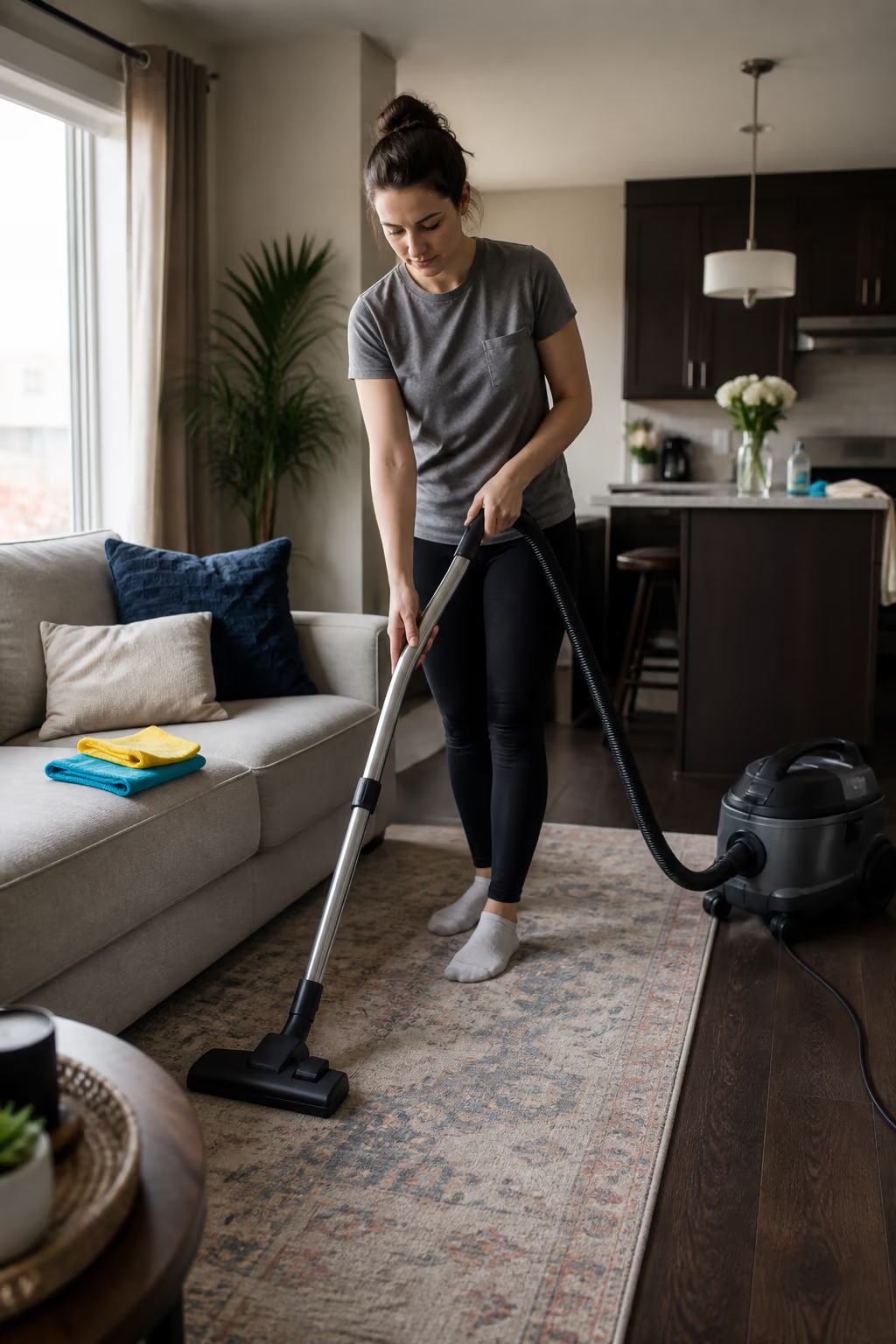
Weekly tasks are the backbone of the schedule. Vacuum and mop the main floors, clean the bathrooms, change the bedding, wipe down the kitchen surfaces and take out the bins. Most households can manage this in a single focused block, and doing it on a set day makes it a habit instead of a negotiation. Choosing the same day every week, whether that is Saturday morning or Thursday evening, removes the biggest obstacle a weekly clean faces, which is deciding when to do it.
- Seasonal
Monthly tasks are where build-up quietly happens. Dust the baseboards and window ledges, clean the inside of the microwave and fridge, wipe down light switches and door handles, and vacuum the sofa cushions. These are the tasks people say they clean "often enough," and then realise they have not touched in weeks. One monthly task each week, rotated through a simple list, keeps the deep spots from ever piling up without demanding a dedicated cleaning day.
Seasonal tasks close the loop. Wash the windows and screens in spring, deep-clean the carpets and rugs, clean the outdoor entryway furniture before summer, and give the oven and fridge a proper clean a couple of times a year. If you would rather hand the carpets to a professional, our carpet cleaning price in Ottawa page breaks down what a seasonal carpet clean typically costs. A seasonal pass also covers the tasks that winter makes impossible, like washing windows when it is minus twenty outside. Because these tasks happen only a few times a year, attaching them to a season rather than a date makes them far easier to remember.
For a busy household, how often should you clean your home? comes down to this rhythm rather than to a single number. A routine that repeats the same small tasks on the same days is far easier to keep than one that waits until the mess is visible, and it spreads the workload so no single day becomes a marathon. If you have never written your routine down, starting with these four buckets is the fastest way to make it real.
How Ottawa's Seasons Change the Answer
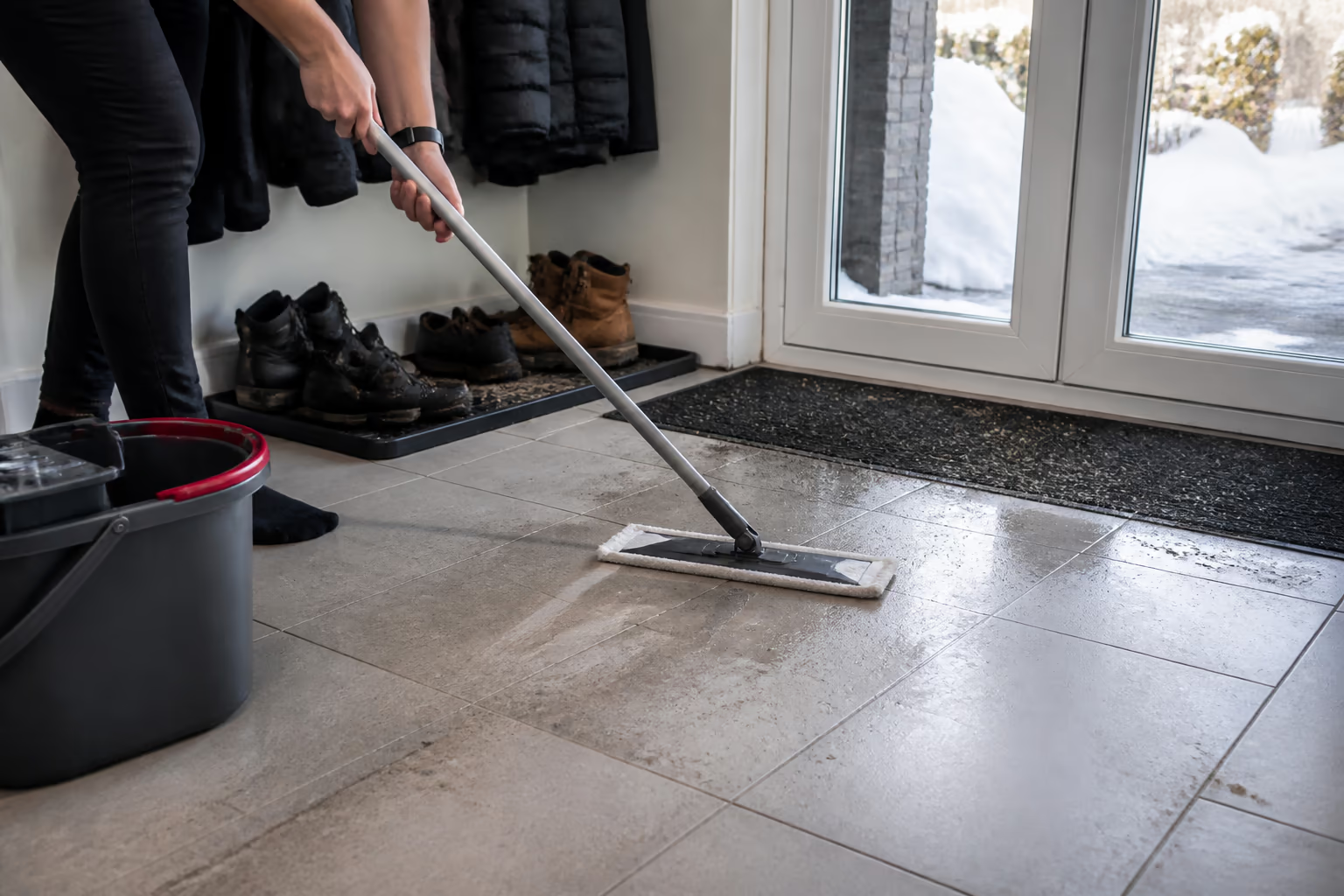
Ottawa's seasons change how often a home needs cleaning by reshaping what tracks in and what builds up. Winter is the clearest example: from late November to March, salt, sand and slush get tracked through the door every time anyone comes in, so the entryway needs attention almost every day and a damp mop near the door limits how far the grit travels. Spring is when the melt exposes the salt and sand that settled into carpets and mats all winter, so a thorough vacuum and a wash of the entry mats removes a surprising amount of it in a single afternoon. Humid summer air, by contrast, encourages mildew in bathrooms and basements, so a bathroom cleaned weekly in winter often needs a quicker pass in summer to stay ahead of soap scum and moisture.
The changing seasons also affect how often you should run the deep tasks. Curtains and window coverings collect dust all winter but are awkward to clean in cold weather, so many Ottawa households move them onto a spring list. Areas near wood stoves and fireplaces need more frequent dusting during the heating months, and pollen season pushes the vacuuming schedule up for households with allergies. A plan that ignores the season either over-works you in winter or leaves the home behind in summer.
Good Cleaner Co. schedules around these realities. The team gives entryways and high-traffic floors extra attention in winter, adjusts the depth of each visit as the year turns, and plans seasonal deep tasks at the time of year when they actually work. That kind of planning is why a regular schedule outperforms a one-off clean that has to start from zero every time.
What You Need Before You Start
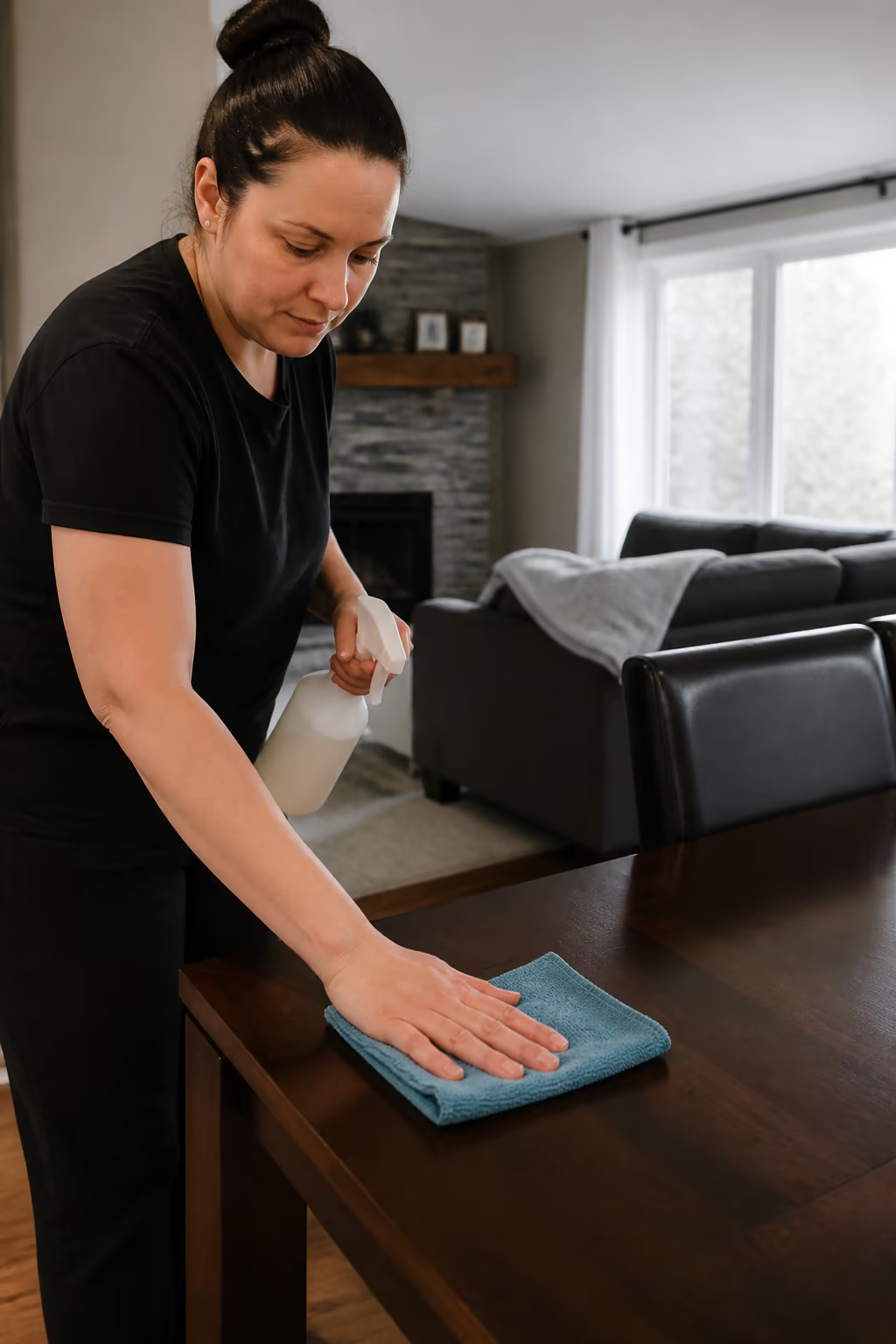
Before you start a cleaning routine, you need a small set of reliable supplies gathered ahead of time, not a cupboard full of products you never use: a good vacuum, colour-coded microfiber cloths, a mop matched to your floors, an all-purpose cleaner, a glass cleaner and a bathroom cleaner, a small caddy to carry them from room to room, and a squeegee and soft brush for glass and grout. Having the basics on hand means you are not hunting for tools halfway through a task, since nothing kills momentum faster than realising the spray bottle is empty in the other room.
- A good vacuum with attachments for floors, edges and upholstery.
- Microfiber cloths in a few colours, so the cloths used in the bathroom stay out of the kitchen.
- A mop that suits your floors, plus the right floor cleaner for the surface.
- An all-purpose cleaner, a glass cleaner and a bathroom cleaner, each matched to its job.
- A small caddy or bucket to carry supplies from room to room.
- A squeegee for mirrors and glass, and a soft brush for grout and tight corners.
It also helps to write the schedule down, even on a simple list on the fridge. Professionals work from a scope of work so nothing is left to memory, and the same habit works at home. If a task is on the list it gets done, and if it is not on the list no one has to wonder later whether it was missed.
Choosing products for a Canadian home also means paying attention to what the label claims. A product that claims to disinfect must carry a Health Canada Drug Identification Number, and a professional team checks that before it uses the product on surfaces where disinfection matters. For everyday cleaning, a product that simply removes soil is often all a home needs, which keeps the routine simple and the surfaces safe.
Common Mistakes That Break a Cleaning Schedule
A cleaning schedule usually breaks not because the household is lazy, but because the schedule itself is built to fail, most often through five recurring mistakes: starting too ambitiously, cleaning the same few visible rooms on a loop, confusing a maintenance clean with a deep clean, over-cleaning delicate surfaces with the wrong products, and trying to do everything in a single day. The most common of these is being too ambitious at the start: planning a full deep clean every single day guarantees burnout within a week, and the schedule collapses entirely instead of settling into something sustainable. A schedule that survives is one that can survive a bad week and still restart.
Another mistake is cleaning the same few rooms on a loop while the rest of the house waits. The living room and kitchen are visible, so they get attention, while baseboards, closets and the inside of appliances quietly build up for months. A good schedule lists every room and every task, not just the ones guests see, and it gives the invisible rooms their turn on the calendar.
A third mistake is ignoring the difference between a maintenance clean and a deep clean. A weekly pass keeps surfaces clean, but it will not fix months of built-up grime in the oven or a carpet that has not been washed in a year. Expecting a routine clean to do the work of a deep clean leads to frustration, and expecting a deep clean every week leads to wasted effort. Building both kinds of work into the schedule, at different frequencies, is what makes the system honest.
Over-cleaning is the quieter problem. Scrubbing granite with the wrong product, washing hardwood with too much water or hitting delicate fabrics with harsh chemicals can damage a home faster than dust ever will. Part of scheduling is knowing what not to do, which means reading labels, testing products on a hidden area first and never mixing cleaning chemicals together.
Finally, many people try to do everything in one day and then feel the whole system has failed when life gets in the way. A schedule that can flex, with daily tasks that take ten minutes and a weekly block you can move by a day, survives the real world far better than one that demands perfection. The goal is a standard you can maintain, not a standard that collapses the moment plans change.
When a Professional Team Makes Sense
A regular professional clean is not a sign that your own schedule has failed. For many Ottawa households, it is the difference between a home that is maintained and a home that is always a few steps behind. A trained team handles the weekly reset while you handle the daily habits, and the two together keep the space far cleaner than either could alone, especially in the winter months when the entryway alone feels like a part-time job.
Good Cleaner Co. builds its visits around the same daily, weekly, monthly and seasonal structure this guide describes. The team uses colour-coded cloths to keep bathrooms out of the kitchen, matches products to each surface, lets treatments dwell where they need time and inspects its own work before it leaves. In workplaces, the same crew handles cleaning chemicals under WHMIS 2015 rules, reading the labels and safety data sheets before use, and it favours products certified under programs like EcoLogo when a certified option does the job.
Choosing the right provider matters, and it is worth asking the same questions you would ask any contractor before you book. A company that can explain how it cleans is far more likely to clean well; our guide to evaluating a commercial cleaning company in Ottawa covers the same questions for a household weighing a larger service.
Formatted Step-by-Step Home Cleaning Checklist
Use this checklist to turn the rhythm above into a plan you can actually follow, with a small daily habit to protect the work between visits.
- 1Write down the daily, weekly, monthly and seasonal tasks for your home, and assign each one a day or a season rather than a vague "often."
- 2Keep the daily list short, to about ten minutes of tasks that genuinely stop build-up, like making the bed, wiping the counters and clearing the sink.
- 3Set aside one fixed weekly block for the main floors, bathrooms and bedding, and protect that time like an appointment you cannot cancel.
- 4Tackle a single monthly task each week, such as baseboards one week and inside the fridge the next, so the deep spots never pile up.
- 5Schedule the seasonal deep work, like windows and carpets, at the same time each year so it becomes part of the annual rhythm.
- 6When a trained team that follows this structure would help you stay on track, our residential cleaning visits in Ottawa are built around your schedule and standards.
FAQ
How often should you clean your home to keep it healthy?
A good baseline is daily wiping of kitchen surfaces, weekly vacuuming and mopping of the main floors, and a monthly pass at the tasks that build up slowly. Households with pets, children or allergies often need a little more, and the winter months in Ottawa usually need more attention at the entryway where salt and sand collect.
How often should you change your bedsheets?
Most people find once a week is right, and every two weeks is the outer limit for comfort. If you sweat a lot at night, or have allergies or pets that sleep on the bed, washing weekly is the safer choice and keeps the bedding feeling fresher for longer.
How often should you clean the bathroom?
A weekly clean of the toilet, sink, tub and mirror keeps most bathrooms comfortable, with a quicker wipe-down of the sink and counter as needed between visits. In humid summer months a slightly more frequent pass helps prevent mildew from getting a foothold in the shower. For the full rhythm, see how often should you clean a bathroom, and pair it with how often should you clean exterior windows for the parts of the home that are easy to forget.
How often should you vacuum?
High-traffic areas and rooms with pets or carpets benefit from vacuuming once or twice a week, while low-traffic rooms can often go weekly or every two weeks. Under beds and along baseboards, a monthly pass catches what the routine misses and keeps the dust from settling in.
How often should you mop hard floors?
Kitchens, entryways and bathrooms should be mopped weekly or more often in messy seasons, while lower-traffic hard floors can go every two weeks. Spot-cleaning spills as they happen keeps the weekly job quick and stops sticky residue from building up underfoot.
How often should a professional team clean my home?
It depends on your household size and how much maintenance you want to handle yourself. Many Ottawa families book a professional clean weekly or every two weeks and handle the small daily tasks themselves, while others use a monthly visit to reset the deep spots that routine cleaning misses.
What happens during a first professional visit?
The first visit is usually deeper than the ones that follow, because the team is learning your layout, surfaces and problem areas. After that, each visit maintains the standard, so it tends to be quicker and more consistent, and the team often spots tasks your home genuinely needs along the way.
Can I clean too often and damage my home?
Yes, in some cases. Scrubbing delicate surfaces with harsh products, soaking hardwood with too much water or washing certain fabrics aggressively can cause damage. Reading labels, using the right tool for each surface and testing unfamiliar products on a hidden area first protects your home while you clean it.
Wrapping Up
How often should you clean your home? comes down to a realistic rhythm rather than a single number: light daily habits, a weekly reset, a short list of monthly tasks and seasonal deep work, all adjusted for who lives in the home and what the season demands. A schedule like that is easier to keep and far more effective than waiting until the mess is visible. If you would like a professional team to handle the weekly reset and keep your Ottawa home on schedule, contact Good Cleaner Co. for a free quote and a cleaning plan tailored to your home.
Keep reading
More from Good Cleaner
Services that fit
- House Cleaning Services in OttawaHouse cleaning services in Ottawa for one-time, weekly, biweekly, and monthly home care, with customizable cleaning and eco-friendly options.
- Janitorial Services in OttawaRecurring janitorial services in Ottawa for offices, warehouses, retail, dealerships and schools. Eco-friendly commercial cleaning, customized plans, free quote.
About the author
Service areas
- Ottawa
- Kanata
- Nepean
- Orleans
- Barrhaven