


Gym and Fitness Centre Cleaning: 9 Easy Hygiene Best Practices
Looking for gym and fitness centre cleaning: hygiene best practices that actually work in busy Canadian facilities? This guide gives you a practical, member-safe system for daily upkeep, peak-hour touchpoint cleaning, and deep-clean routines that protect equipment and your reputation. You will get a clear schedule, cost guidance in CAD, product recommendations, and a copy-ready checklist you can hand to staff or contractors with fewer missed steps.
We also outline how to separate cleaning from disinfection, how long surfaces need to stay wet for disinfectants to work, and how to keep staff safe with proper ventilation and PPE. For a quick refresher, see cleaning vs sanitising vs disinfecting.
Why Gym Hygiene Matters More Than Most Facilities
Gyms are high-contact environments. Members touch the same handles, benches, pads, and locker surfaces all day. Sweat, body oils, and chalk build up quickly, and those soils reduce the effectiveness of disinfectants if you skip the “clean first” step. A consistent gym and fitness centre cleaning: hygiene best practices routine reduces odours, protects equipment, and keeps member confidence high.
In Canada, you also have seasonal risks: winter salt tracked onto rubber and vinyl flooring, spring allergies in ventilation filters, and summer humidity that increases mildew in showers. A clear cleaning system makes these issues manageable instead of constant emergency fixes.
Gym and Fitness Centre Cleaning: 9 Easy Hygiene Best Practices
This nine-step flow is the core of professional gym cleaning. Use it daily and during peak traffic to keep standards consistent.
- Step 1: Create zones. Split the facility into front desk, cardio, weights, studios, change rooms, and washrooms.
- Step 2: Remove soil first. Dust-mop, vacuum, and wipe visible sweat before disinfecting.
- Step 3: Use DIN-labelled disinfectants. In Canada, a DIN indicates Health Canada authorization for disinfectant use.
- Step 4: Respect dwell time. Keep surfaces wet for the label-specified time so disinfection actually occurs.
- Step 5: Target high-touch points. Handles, buttons, pins, and railings every 2–3 hours during peak times.
- Step 6: Separate cloths by zone. Colour-code cloths for washrooms vs equipment to avoid cross-contamination.
- Step 7: Log completion. Keep a simple cleaning log at the front desk or staff room.
- Step 8: Finish with floors. Wet mop last so dust does not re-settle on cleaned surfaces.
- Step 9: Ventilate. Maintain airflow during and after disinfection to reduce odours and VOC exposure.
A Professional Gym Cleaning Workflow (With Time and Difficulty)
Below is a practical, professional-grade workflow that includes time ranges and difficulty levels. Use these estimates to build staff schedules or quote services accurately.
- Pre-open walk-through (10–15 minutes, easy): Check for visible soil, stocked wipe stations, and floor hazards.
- Dry soil removal (20–45 minutes, easy): Vacuum entry mats, dust-mop training areas, and remove hair and grit.
- High-touch wipe-down (30–60 minutes, moderate): Clean and disinfect handles, buttons, pins, and railings by zone.
- Washroom and change-room reset (30–60 minutes, moderate): Clean, then disinfect sinks, taps, toilets, and benches.
- Floors and mirrors (20–40 minutes, moderate): Spot-clean glass and wet mop hard floors last.
- Midday touchpoint rotation (15–30 minutes, easy): Focus on cardio consoles and shared equipment.
- End-of-day deep clean (60–120 minutes, moderate to hard): Full equipment wipe-down, floor care, bin emptying, and log completion.
Time will increase with showers, saunas, or large studio spaces. A 10,000 sq. ft. facility typically needs 2–4 hours for a daily close and additional rotations during peak hours.
How Often Should Gyms Be Cleaned?
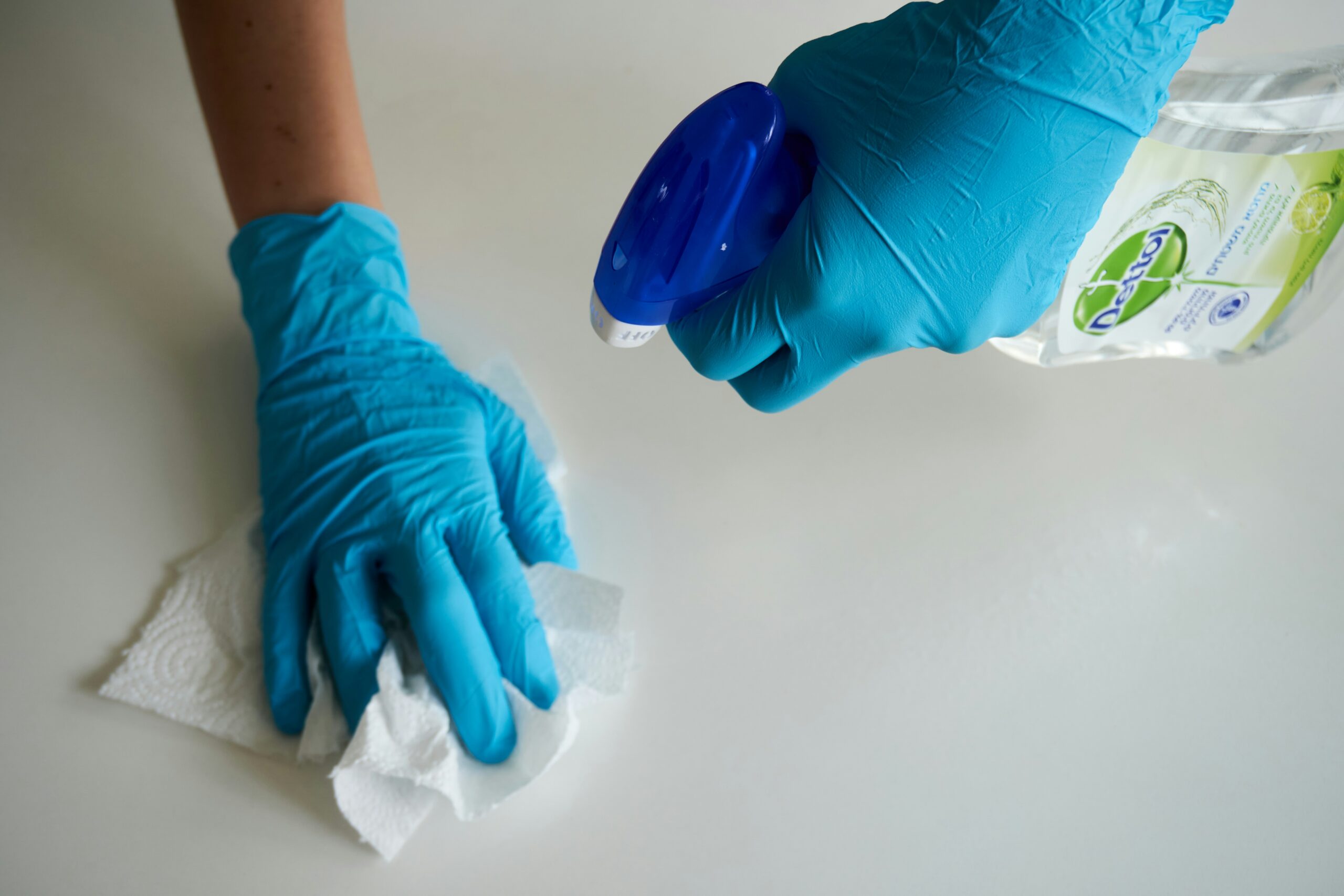
Frequency should match traffic. CCOHS recommends cleaning at least daily and increasing frequency when needed, especially for shared touchpoints. A workable schedule looks like this:
- Every 2–3 hours (busy periods): Door pulls, front desk counters, water fountain buttons, locker handles, railings, and equipment touchpoints.
- After peak rushes: Cardio consoles, benches, cable handles, and free-weight racks.
- Daily close: Full equipment wipe-down, floors, washrooms, and change rooms.
- Weekly: Detail corners, vents reachable from the floor, behind machines, and glass doors.
- Monthly or seasonal: Entry mat deep clean and salt reset; humidity checks in showers and sauna areas.
If your team struggles to keep up, professional cleaning services can provide scheduled touchpoint coverage during peak hours while your staff focuses on member care.
Sample Daily and Weekly Schedule (Copy-Ready)
This sample schedule is designed for a mid-size gym open from 6 a.m. to 10 p.m. Adjust the time blocks to fit your hours and traffic.
Daily Schedule
- Pre-open (5:30–6:00 a.m.): Entrance mats, front desk, washroom reset, quick equipment wipe.
- Mid-morning (9:00–10:00 a.m.): Cardio consoles, weight benches, water fountains, locker handles.
- Lunch rush (12:00–1:00 p.m.): Full touchpoint rotation, studio props, washrooms.
- Afternoon (3:00–4:00 p.m.): Floors in high-traffic zones, mirrors, reception desk.
- Evening peak (6:00–7:00 p.m.): Equipment touchpoints, benches, rails, change rooms.
- Close (10:00–11:00 p.m.): Deep clean, garbage removal, floor care, and logging.
Weekly Focus Areas
- Monday: Detail cleaning behind machines and in corners.
- Wednesday: Deep clean washrooms, showers, and drains.
- Friday: Glass, mirrors, and entryway floor reset.
- Weekend: Inventory of wipes, sanitiser, and PPE supplies.
Posting this schedule in staff areas reduces confusion and improves consistency. It also supports stronger gym and fitness centre cleaning: hygiene best practices compliance across shifts.
Zone-by-Zone Gym Cleaning Checklist
Use this copy-ready checklist to standardise your routine across staff and shifts.
Entrance and Front Desk
- Vacuum or shake mats; remove salt and grit in winter.
- Disinfect door pulls, sign-in kiosks, pens, and POS terminals.
- Wipe counters and membership cards; restock wipes and sanitiser.
Cardio Area
- Clean then disinfect handrails, consoles, and cup holders.
- Spot clean sweat drips under machines before they dry.
- Check for dust buildup around vents and fan housings.
Weights and Functional Training
- Disinfect dumbbell handles, benches, and selector pins.
- Wipe cable handles and suspension straps after peak blocks.
- Inspect for chalk residue and clean with a neutral cleaner.
Studios and Group Class Spaces
- Clean and disinfect shared props (blocks, straps, mats if provided).
- Sanitise light switches and AV remotes.
- Check floors for sweat spots after classes.
Locker Rooms and Change Areas
- Disinfect locker handles, bench tops, and hooks.
- Clean sinks, taps, and mirrors; remove soap scum.
- Empty bins and disinfect lids and touchpoints.
Showers and Washrooms
- Clean and disinfect sinks, taps, toilet handles, and partitions.
- Scrub shower floors and drains; inspect for mildew.
- Ventilate to reduce humidity and odours.
Equipment-Specific Cleaning Guide
Different equipment surfaces react differently to cleaners. Use the right method to avoid corrosion and premature wear.
Cardio Machines (Treadmills, Bikes, Ellipticals)
- Clean first with a neutral cleaner to remove sweat and body oil.
- Disinfect touchpoints like handrails and buttons with DIN-labelled wipes.
- Avoid overspray on screens and electronics; use damp wipes instead.
Strength Machines and Benches
- Handles and pins should be disinfected during peak rotations.
- Vinyl pads can trap sweat; use a gentle cleaner first, then disinfect.
- Check seams for cracking; moisture trapped in seams causes odours.
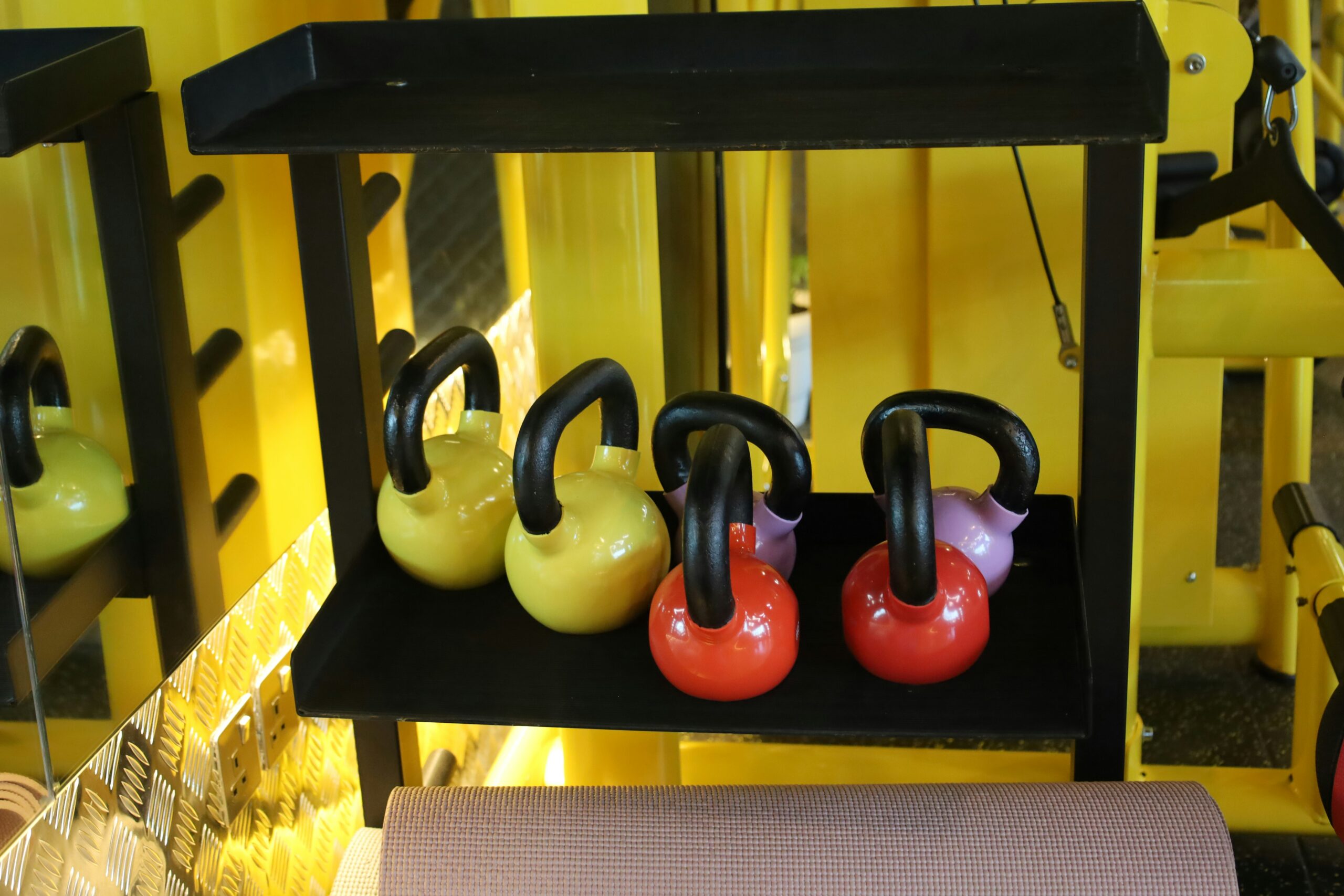
Free Weights and Kettlebells
- Metal surfaces tolerate stronger disinfectants, but avoid bleach.
- Chalk and grip residue should be wiped with a neutral cleaner before disinfection.
- Racks need weekly wipe-downs to remove dust and hand oils.
Yoga and Studio Props
- Mats and blocks should be cleaned after each class if supplied by the facility.
- Foam rollers benefit from mild cleaners to prevent material breakdown.
- Storage racks should be disinfected weekly to prevent contamination from shared items.
Showers, Saunas, and Steam Rooms
- Shower floors and drains should be scrubbed daily and checked for mildew.
- Steam rooms need frequent wipe-downs and controlled ventilation after use.
- Sauna benches should be wiped with a gentle cleaner and allowed to dry fully.
- Non-slip mats should be rinsed and disinfected to prevent odour buildup.
Electronics and Touchscreens
- Touchscreens should be cleaned with approved wipes or alcohol-based products safe for electronics.
- Keypads should be disinfected without oversaturating to avoid damage.
- Headphone jacks and buttons should be wiped daily to reduce cross-contact.
Clean First, Then Disinfect (The Most Missed Step)
Disinfectants do not work well on dirty surfaces. For true gym and fitness centre cleaning: hygiene best practices, use a neutral cleaner to remove sweat and soil first, then apply a DIN-labelled disinfectant and keep the surface wet for the contact time on the label. This is the single biggest difference between average cleaning and professional results.
For staff safety, follow label directions and guidance from Health Canada and CCOHS. Do not mix cleaners, and always wear gloves when using concentrated products.
Floor Care by Material
Gym floors take a beating. Using the wrong product can damage finishes or leave slippery residue. Match the method to the surface:
Rubber Flooring
- Dust-mop first to remove grit and salt.
- Use a neutral cleaner, then disinfect high-traffic areas.
- Rinse if needed to avoid sticky residue that attracts dirt.
Vinyl and LVT
- Spot-clean sweat drips quickly to avoid dull patches.
- Use a floor-safe disinfectant and follow dwell time.
- Schedule periodic deep cleaning to prevent buildup.
Concrete or Sealed Floors
- Vacuum and dust-mop to remove fine grit.
- Use a mild degreaser in weight areas.
- Inspect for salt damage in winter and clean promptly.
Studio Floors (Wood or Sprung)
- Use minimal moisture to protect the finish.
- Choose cleaners approved for wood or sprung systems.
- Avoid harsh disinfectants that can dull varnish.
Air Quality, Ventilation, and Odour Control
Odours and humidity are common complaints in gyms. Good ventilation reduces moisture, prevents mildew, and keeps disinfectant odours from lingering. Practical steps include:
- Replace HVAC filters on a regular schedule and log replacements.
- Run exhaust fans in change rooms and showers continuously during open hours.
- Open doors or windows during deep cleans if your facility allows it.
- Dehumidify in summer or in rooms with showers and saunas.
Ventilation is also a safety requirement when using strong disinfectants. If you are unsure about indoor air quality, consult local facility guidelines and keep SDS sheets on-site.
Towels, Laundry, and Soft Surfaces
Soft surfaces are often overlooked. Towels, fabric seating, and padded benches collect sweat and odours over time.
- Towels: Launder daily at the hottest safe temperature and dry completely.
- Fabric chairs and couches: Vacuum weekly and spot-clean spills immediately.
- Upholstered benches: Wipe with a neutral cleaner and allow to dry before disinfection.
For odour control, baking soda can help with soft surfaces, but avoid heavy fragrances that may irritate members.
Waste, Sharps, and Spill Response
Most gyms will never deal with hazardous waste, but spills and broken glass still happen. A clear procedure protects staff and members.
- Regular waste: Empty bins at least daily and disinfect lids and handles.
- Broken glass: Use a dustpan and thick gloves; never pick up by hand.
- Bodily fluids: Follow a biohazard protocol using appropriate disinfectants and PPE.
- Sharps disposal: If needles are a concern in your area, provide secure sharps containers and a removal plan.
Member Hygiene Stations and Shared Responsibility
Cleaning works best when members participate. Clearly labelled wipe stations and signage reduce staff workload and improve compliance.
- Wipe stations at entry, cardio rows, and free-weight areas.
- Hand sanitiser near doors and front desk.
- Signage reminding members to wipe equipment after use.
This shared approach complements the professional schedule and supports stronger gym and fitness centre cleaning: hygiene best practices outcomes.
Best Products for Gym Cleaning in Canada (With CAD Pricing)
These products are commonly available in Canada and fit professional gym workflows. Prices vary by retailer and pack size, but the ranges below are realistic anchors for budgeting.
- ACCEL Intervention disinfectant wipes (about $18–$20 CAD, 160 count): fast wipe option for high-touch points.
- Oxivir TB wipes (about $22.99 CAD, 160 count): another reliable commercial wipe line.
- Clorox Original Concentrated Bleach (around $7.47 CAD, 3.57 L): budget disinfectant for bleach-safe areas only.
- PSP hand sanitiser (about $26.48 CAD for 8 x 300 mL): ideal for entry and front desk stations.
- Zep degreaser (about $19.76 CAD): useful for body-oil film on vinyl and rubber surfaces.
- Microfibre cloths (price varies): colour-code by zone to control cross-contamination.
Stock these at Canadian Tire, Home Hardware, Walmart Canada, Loblaws/Superstore, Costco Canada, and Amazon.ca. For guidance on replacing tools, see cleaning tools you should replace often.
DIN Disinfectants and Contact Time Explained
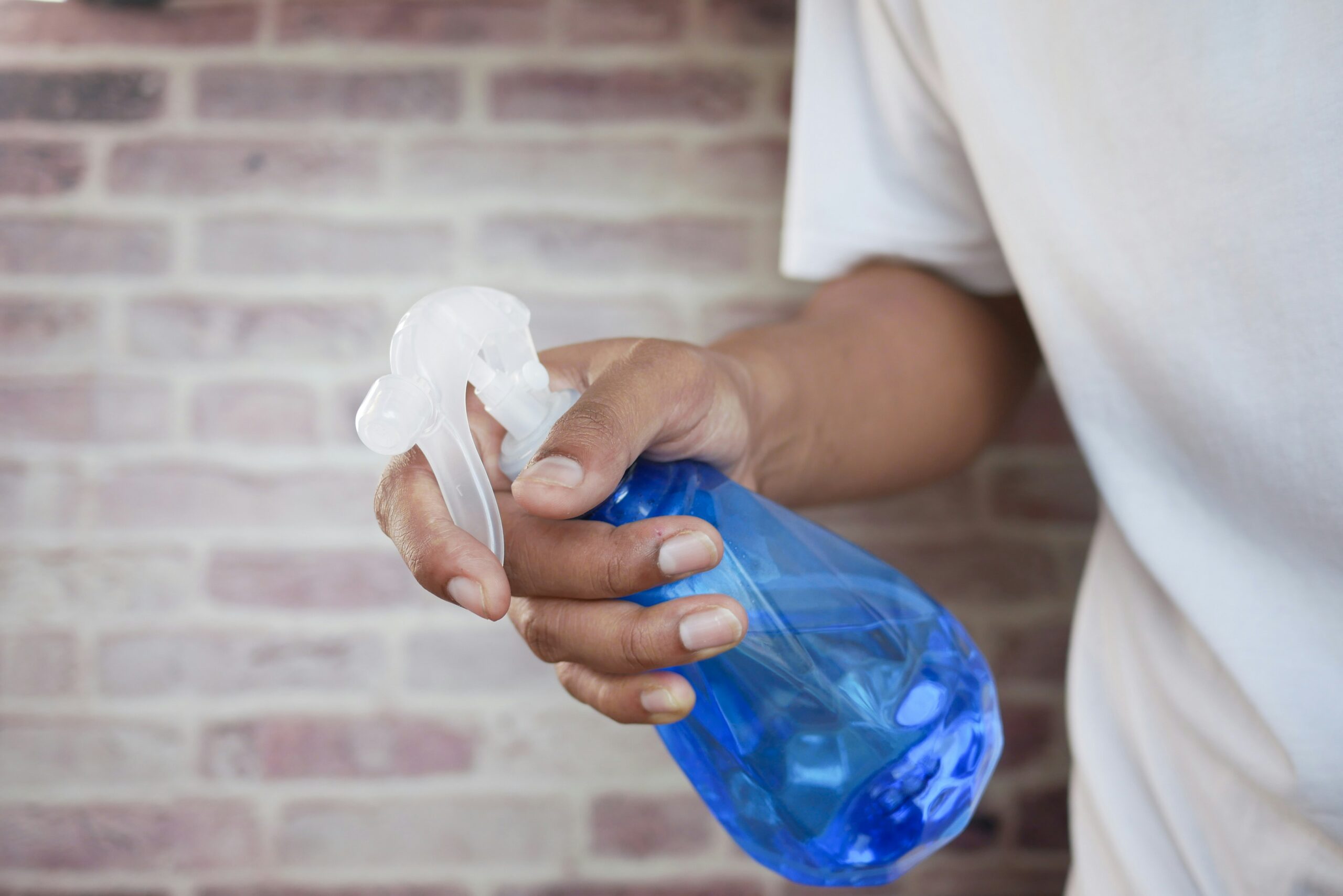
In Canada, a Drug Identification Number (DIN) indicates that a disinfectant is authorized for sale by Health Canada. When you use a DIN product, the label tells you exactly how long the surface must stay wet for the disinfectant to work. This is called “contact time” or “dwell time.”
Many facilities lose effectiveness by wiping surfaces too quickly. If the label says 3 or 5 minutes, keep the surface visibly wet for that duration. This is the reason professional teams prefer wipes or sprays that keep a thin film on surfaces rather than quick-dry products that evaporate before the contact time ends.
Safety, PPE, and Chemical Handling
Gym cleaning often involves repeated chemical exposure. CCOHS recommends training, proper PPE, and adherence to Safety Data Sheets (SDS). Key safety rules:
- Wear gloves for all disinfectants; add eye protection if splashing is possible.
- Do not mix chemicals, especially bleach with other cleaners.
- Ventilate rooms during and after disinfection.
- Refresh bleach solutions daily if used, as effectiveness drops after 24 hours.
Consider a quick staff refresher every quarter so the team stays aligned on safe use.
Cleaning Logs and Quality Control
Documentation protects your brand and helps supervisors verify that routines are being followed. A simple log can include:
- Zone checklist with time and initials for each rotation.
- Product used (especially for disinfectants requiring dwell time).
- Supply restocks and any shortages.
- Incidents such as spills, biohazards, or equipment issues.
Use a quick weekly audit to catch missed areas. Managers can spot-check door handles, bench surfaces, and washroom taps to verify consistency.
Staff Training and Onboarding Tips
Even the best checklist fails without training. Build a simple onboarding routine so new staff know which products to use, where to find supplies, and how to apply disinfectants safely. A short 30-minute walkthrough can cover the zone map, the “clean first, disinfect second” rule, and how to document work in the log.
Refresh training quarterly, especially before flu season. This keeps the team aligned on dwell time, PPE use, and proper cloth rotation between zones.
Gym Cleaning Costs in Canada (DIY vs Professional)
Canadian commercial cleaning is commonly priced by hour or by square foot. Typical ranges for gym cleaning are:
- $30–$60 per hour for standard cleaning.
- $50–$75+ per hour for deep or specialised work.
- $0.05–$0.25 per sq. ft. for routine cleaning, higher for heavy disinfection.
- $0.10–$0.50 per sq. ft. for disinfection-focused services depending on scope.
Example: a 10,000 sq. ft. gym at $0.08–$0.20 per sq. ft. can cost roughly $800–$2,000 per visit. If cleaned three times a week, that can scale quickly, so an in-person quote is best. For local pricing context, see cleaning prices in Ottawa.
DIY Supply Budget (Small to Mid-Size Gym)
DIY costs are mostly supplies and staff time. A realistic monthly range for a small or mid-size facility can include:
- Disinfectant wipes: $120–$300 CAD depending on member traffic.
- Neutral cleaners and degreasers: $40–$120 CAD.
- Microfibre cloths and mop heads: $60–$150 CAD (replacement cycles vary).
- Hand sanitiser and soap: $50–$150 CAD.
- Floor care supplies: $80–$200 CAD if you wet mop daily.
This does not include labour time. When you calculate the staff hours required to hit 2–3 hour touchpoint rotations, many gyms find a hybrid model more cost-effective.
Monthly Example for a 10,000 sq. ft. Gym
As a rough planning example, three professional visits per week at $1,200 per visit could be around $14,000–$15,000 per month. If you reduce visits to two per week and cover touchpoints in-house, you can cut costs while still maintaining strong hygiene. Use this as a starting point and request an on-site quote to confirm exact pricing.
DIY vs Professional Gym Cleaning: When to Outsource
DIY works for small studios if staff can clean before disinfecting and respect dwell times. Professional crews are a better fit when you need consistent multi-shift coverage, audits, and staff trained on SDS/WHMIS.
- DIY is best when: you have low traffic, few showers, and staff capacity for frequent touchpoints.
- Pros are best when: you have high traffic, multiple change rooms, or need log-based compliance.
- Hybrid model: staff handle hourly touchpoints; pros handle deep cleans and floor restoration.
If you are considering a service partner, review cleaning services FAQs for scope and expectation guidance. This keeps overall budgeting realistic.
Common Gym Cleaning Mistakes to Avoid
- Skipping pre-cleaning: disinfectant does not work on heavy soil.
- Ignoring dwell time: surfaces must stay wet for the label-specified time.
- Reusing dirty cloths: this spreads contamination across zones.
- Using bleach on equipment: it can corrode metal and degrade finishes.
- Forgetting logs: without documentation, consistency drops quickly.
Pro Tips for Faster, More Consistent Results
- Stage supplies by zone so staff do not backtrack.
- Use checklists posted in staff areas for each shift.
- Set peak-hour touchpoint rotations every 2–3 hours.
- Schedule floor care last to keep dust from resettling.
- Audit weekly using a quick walk-through and spot tests.
For a broader overview of cleaning best practices, see cleaning basics for commercial facilities.
Seasonal and Canadian Considerations
Seasonal issues can make gym hygiene harder. Plan for:
- Winter: aggressive entryway mat cleaning and salt residue removal.
- Spring: filter changes and pollen control in ventilation systems.
- Summer: extra attention to humidity, showers, and mildew-prone zones.
- Flu season: increase touchpoint disinfection and log checks.
Canadian winters are especially hard on rubber and vinyl floors. Salt and grit act like sandpaper, so add extra mat cleaning and wet mopping during heavy snow months.
Copy-Ready Gym Cleaning Checklist
Use this checklist for staff training and daily logs:
- Entrances and mats vacuumed; door handles disinfected.
- Front desk counters, pens, and POS terminals disinfected.
- Cardio consoles, railings, and buttons wiped with DIN disinfectant.
- Free weights, benches, and selector pins cleaned and disinfected.
- Studios and props sanitised after each class.
- Locker handles, benches, and taps disinfected.
- Washrooms and showers cleaned, disinfected, and ventilated.
- Waste bins emptied; lids and touchpoints disinfected.
- Floors dust-mopped and wet-mopped at close.
- Cleaning log updated with time and initials.
Frequently Asked Questions
How often should gym equipment be disinfected?
At minimum, disinfect high-touch points daily and more often during peak hours. Many gyms use a 2–3 hour rotation for the busiest equipment and touchpoints.
What is the best way to clean gym equipment safely?
Remove soil first with a neutral cleaner, then apply a DIN-labelled disinfectant and keep the surface wet for the label’s dwell time. Avoid bleach on sensitive equipment finishes.
How much does professional gym cleaning cost in Canada?
Professional gym cleaning is commonly quoted at $30–$60 per hour for standard cleaning and $50–$75+ for deep or specialised work. Square-foot pricing often falls between $0.05–$0.25 per sq. ft., depending on scope.
Can gym staff handle cleaning without a professional service?
Yes for small studios with light traffic, but only if staff follow a strict checklist, use DIN disinfectants properly, and maintain logs. Many facilities use a hybrid model to balance cost and consistency.
What products do professional cleaners use in gyms?
Professional teams use DIN-labelled disinfectants like ACCEL or Oxivir, plus neutral cleaners and degreasers such as Zep for body-oil film. They also use microfibre cloth systems to reduce cross-contamination.
How long should disinfectants sit on surfaces?
Contact time varies by product and must be read on the label. The key is keeping the surface visibly wet for the required duration, otherwise disinfection is incomplete.
Do gyms in Canada need DIN-labelled disinfectants?
If you are claiming disinfection, using a DIN product is the simplest way to show Health Canada authorization. It also provides clear label instructions that staff can follow for safe and effective use.
How do gyms handle winter salt and grit?
Use extra entry mats, vacuum and shake them daily, and wet mop high-traffic entry lanes. Salt residue can pit floors and create slippery spots if left untreated.
What are the most common hygiene mistakes in gyms?
The most common issues are skipping pre-cleaning, wiping disinfectant off too quickly, and using the same cloth across different zones. These mistakes reduce effectiveness and spread contamination.
Conclusion
A consistent gym and fitness centre cleaning: hygiene best practices plan protects your members and preserves your equipment. Focus on clean-first workflows, DIN disinfectants, and regular touchpoint rotations, then document the work so standards stay consistent across every shift.
When standards slip, members notice quickly. A visible, well-run cleaning programme builds trust and supports long-term membership retention. It also reduces equipment downtime and staff confusion.
Need expert help with gym cleaning? GoodCleaner commercial cleaning services can build a custom schedule for your facility. Contact GoodCleaner for a quote and hygiene plan tailored to your traffic and layout.