
Professional Cleaning Services: A Comprehensive Overview of Methods & Standards
This guide is a practical overview of how professional cleaning works, not a sales pitch. We cover the main categories of cleaning, the standards and products behind them, and the questions to ask any provider in Ottawa, Kanata, or Nepean. You can use it to compare companies and to understand exactly what you are paying for.
Quick Summary
Professional cleaning has grown into a real public health discipline, and the methods behind it matter more than the marketing. This guide explains how residential, commercial, and industrial cleaning work in Ottawa, what the words cleaning, sanitizing, and disinfecting actually mean, and how to choose a provider you can trust. You will also learn what training and product standards separate a professional team from a basic crew.
In this guide
The Scope & Evolution of Modern Cleaning Services
Professional cleaning has moved well beyond basic tidying. It is now a public health discipline focused on indoor air quality, hygiene, and the safety of the products used in occupied spaces.
Residential homes, corporate offices, medical clinics, and industrial facilities each need different equipment, different products, and different routines. A home clean and a clinic clean are not the same job, even if the basics look similar.
Understanding the difference between routine maintenance, deep cleaning, and medical-grade sanitization helps you book the right service and expect the right result. It also helps you talk to a cleaning company in the same language it uses.
The industry has also become more professional about the products it uses. EcoLogo-certified chemistry, HEPA filtration, and Health Canada DIN registered disinfectants are now part of the standard conversation, and they should be part of yours too.
Core Categories: Residential, Commercial & Industrial Sanitation
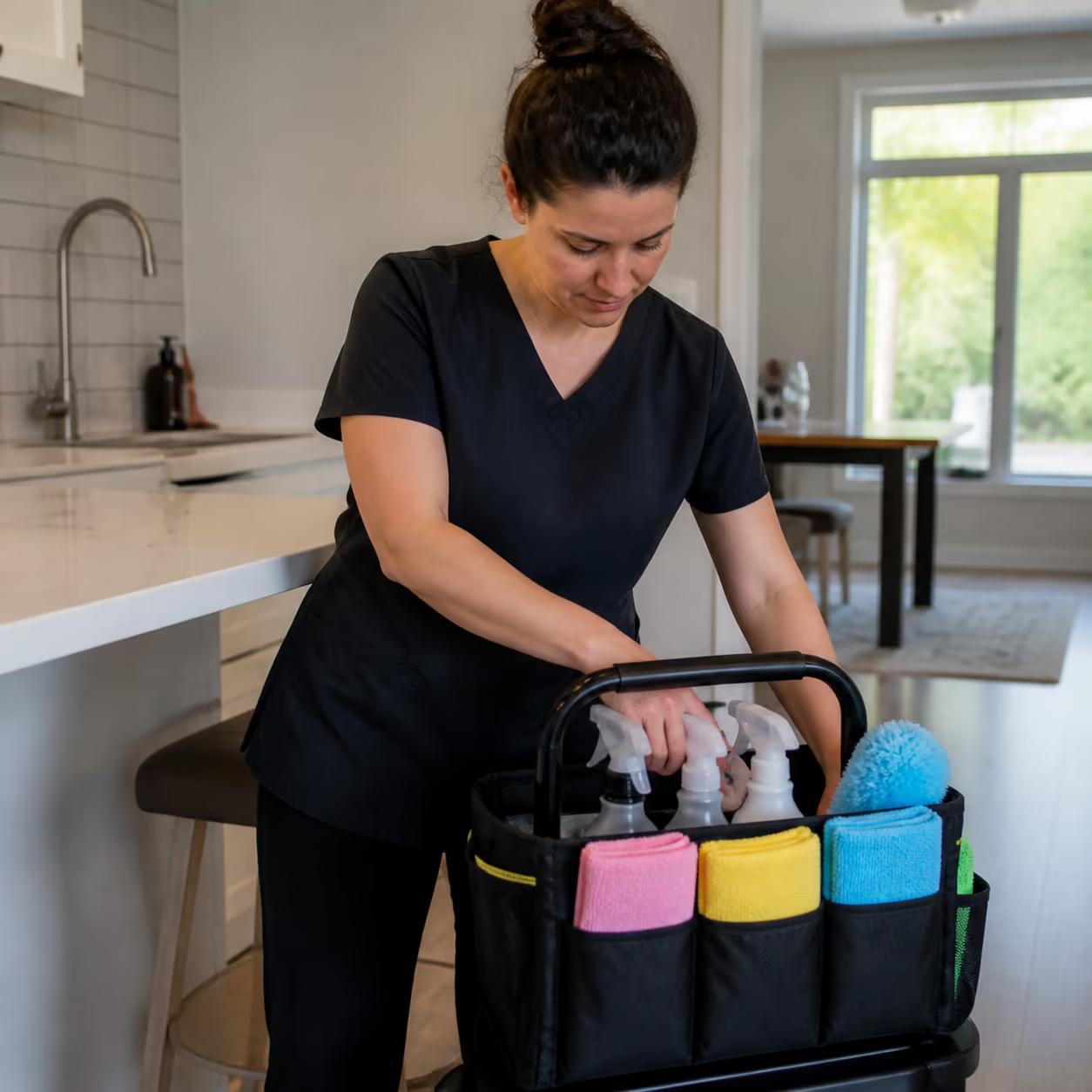
Professional cleaning splits into a few broad categories, and knowing them helps you describe what you need. The lines between these categories blur in practice, and a good company offers more than one. What matters is that the provider matches its team and its checklist to the job, rather than treating every space the same.
Cleaning, Sanitizing, and Disinfecting: What Each Word Means
The words get used interchangeably, but they are not the same thing. Cleaning removes dirt and grime from a surface. Sanitizing lowers the number of bacteria to a safe level. Disinfecting kills a broader range of germs, including viruses, and it needs a registered product to do it.
For most homes, a regular clean with the right products is enough. For washrooms, kitchens, and high-touch surfaces, sanitizing or disinfecting matters more. For medical clinics and offices, a documented disinfection routine is part of the job.
Knowing the difference also helps you read a cleaning quote. If a company says it disinfects, ask which products it uses and whether they carry a Health Canada DIN. If the product has no DIN, the disinfection claim has not been verified.
In practice, that distinction shows up in the small details. A restaurant kitchen disinfects cutting boards and counters after every shift. A daycare wipes toys and change tables throughout the day. An office increases disinfection on shared desks and door handles during cold and flu season. The right routine depends on how many people use the space and how vulnerable they are.
Green Chemistry and Indoor Air Quality in Ottawa Homes
Modern cleaning does not have to fill a home with chemical smell. EcoLogo-certified, low-VOC products clean effectively while keeping the air in your home safer to breathe, which matters most for children, pets, and anyone with allergies or asthma.
Federal guidance connects the two directly. Health Canada's indoor VOC guidance lists cleaning products and air fresheners among the household sources of volatile organic compounds, and recommends increasing ventilation to reduce exposure indoors. Health Canada defines them this way: “Volatile organic compounds (VOCs) form a large group of chemicals commonly found in both indoor and outdoor air.”
Green chemistry is not a compromise. Plant-based and low-VOC formulas handle kitchens, bathrooms, floors, and glass without the harsh fumes of older commercial products. The switch does not change how well the job gets done; it changes what is left in the air afterward.
When a company says it uses green products, ask for details. A genuine eco-friendly program uses certified chemistry, not a single token product in an otherwise conventional caddy.
Good Cleaner Co. If a company will not tell you what is in its caddy, that is a good reason to keep shopping.
Good Cleaner Co. Professional Service Pillars
Good Cleaner Co. builds every visit around four service guarantees:
Comprehensive Green Chemistry:
EcoLogo-certified non-toxic products that protect occupant health.
Advanced HEPA Equipment:
Commercial HEPA vacuums that capture fine dust, mould spores, and pet dander.
Customized Service Frequency:
Flexible daily, weekly, or bi-weekly cleaning plans.
Training, Standards, and What They Mean for You
Behind every good cleaning company is a set of standards you cannot see from the outside. The two that matter most are training and the products on the truck.
Ask for a WSIB clearance certificate before you book.
Confirm technicians are trained in WHMIS 2015 safety standards.
Ask which products the company uses and how they are diluted on site.
Check that the company stands behind its work with a quality guarantee.
Training matters because cleaning is more than wiping surfaces. A technician needs to know which product to use on which surface, how to dilute it safely, and how to handle spills and stains without damaging the material underneath. In Ontario, commercial cleaning uses the WHMIS 2015 system to keep everyone safe.
What to Expect from a Professional Home Cleaning Visit
A good residential clean follows a repeatable routine, and you should be able to see it in the results:
Every room is dusted top to bottom, including light fixtures, baseboards, and window sills.
Kitchens and bathrooms are cleaned and disinfected with colour-coded cloths.
Floors are vacuumed with HEPA filtration and washed with the right product for the surface.
High-touch points like handles and light switches are wiped and disinfected.
The team uses a checklist and reports anything unusual, like a stain or a maintenance issue.
Expect the company to be honest about what a standard visit covers and what it does not. If you need extra attention on windows, inside appliances, or specific stains, say so when you book so the team can plan the right amount of time. If your home has painted walls that need extra care, a comprehensive guide to cleaning walls effectively covers safe products and techniques for that surface separately.
Choosing the Right Cleaning Service for Your Home
Most Ottawa homes do not need the same service every week. The right plan depends on your household, your schedule, and how much ground there is to cover. Our cleaning services overview lists every specialty in one place, which makes it easier to compare options before you book.
A one-time deep clean makes sense before a move, after a renovation, or when a home has gone too long without a proper clean. Recurring visits keep the result consistent. Families with kids and pets usually book more often than couples or empty nesters.
The honest advice: start with a deep clean, then set a recurring schedule that fits your budget. A good company will review the plan with you and adjust it as your needs change. Do not pay for services you do not need, and do not expect a standard visit to do the work of a deep clean.
Also think about when you want the cleaning to happen. Many Ottawa families book during work hours so the home is ready when they get back, while others prefer evenings or weekends. A company with flexible scheduling makes this easier, and a good one will ask about your preference up front.
A good provider also tells you up front what a standard visit includes, what adds extra time, and how to prep for a deep clean. That kind of honesty makes it easy to compare quotes, because you are comparing the same scope of work rather than two different ideas of what clean means.
Formatted Step-by-Step Comprehensive Cleaning Standard Checklist
Follow this checklist for complete property hygiene:
- Step 1.Assess Property Footprint and Select Environmentally Safe Cleaning Chemistry:Choose non-toxic EcoLogo products.
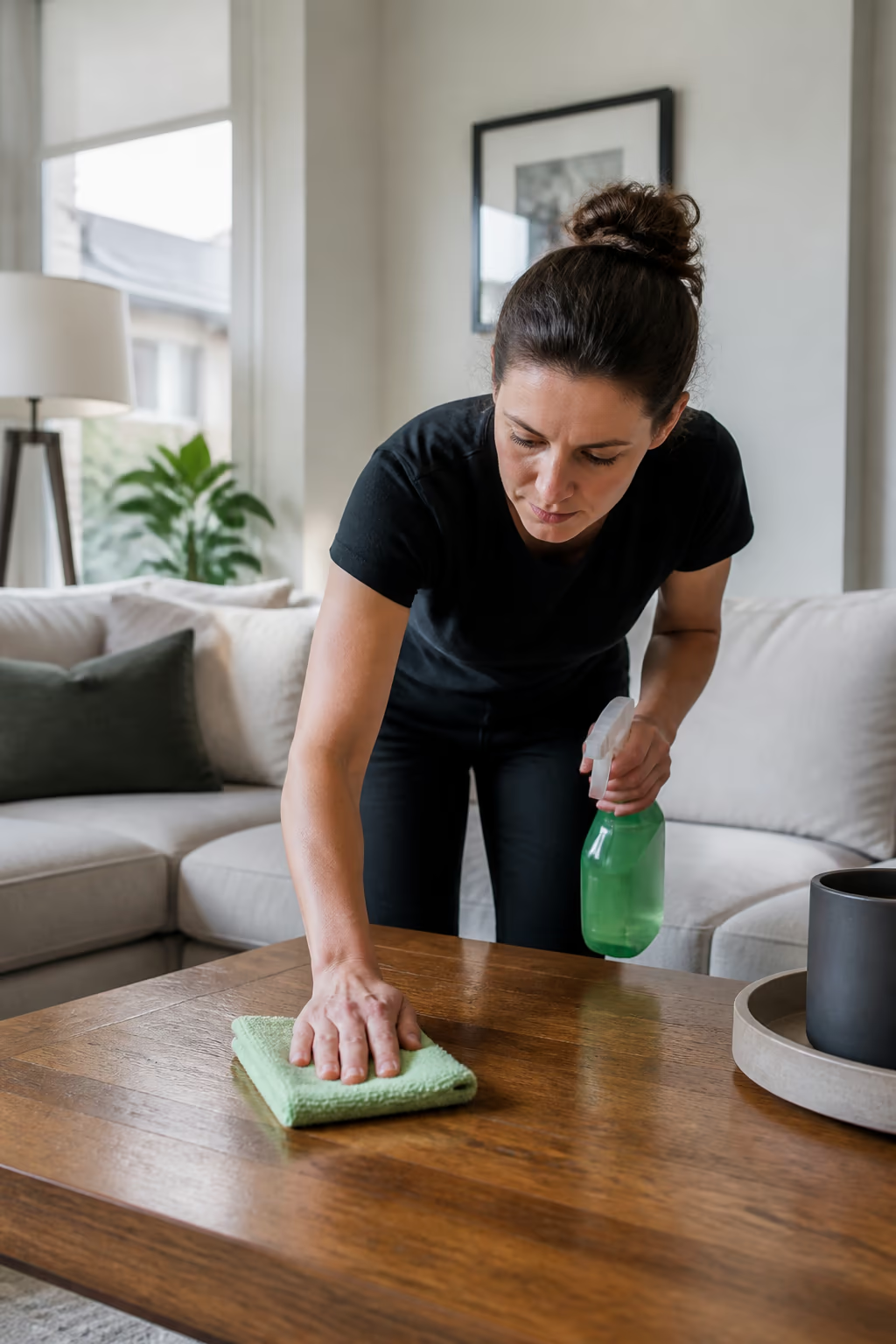
- Step 2.Execute High-Surface Dusting with Colour-Coded Microfibre Systems:Trap airborne dust without spreading particles.
- Step 3.Disinfect All High-Touch Handles, Switches, and Sanitary Touchpoints:Apply Health Canada DIN registered microbicides.
- Step 4.Deep Clean Flooring Surfaces Using HEPA Filtration Vacuums and Damp Mops:Extract salt slurry and micro-allergens.
- Step 5.Perform Post-Cleaning Supervisor Quality Audit Walkthroughs:Verify compliance with client facility checklists.
- Step 6.If you need a team or a recurring schedule, use residential home cleaning services in Ottawa to discuss scope, access, and timing before deciding whether it fits.
Serving Ottawa's Business Neighbourhoods
Good Cleaner Co. provides residential and commercial cleaning right across Ottawa, from the family suburbs of Kanata and Barrhaven to the condos downtown and the heritage homes of The Glebe and Old Ottawa South. Wherever your home or office is, the standards are the same: WHMIS-trained staff, EcoLogo chemistry, and a checklist that covers every room.
Putting this guidance into practice
For a home or workplace manager, start with the rooms, surfaces, access, and desired result before comparing providers. That keeps the conversation tied to the actual space instead of a generic promise.
Review kitchens and washrooms, floor materials, high-touch areas, belongings that must not be moved, and work outside a routine visit. A written scope should say what happens on a normal visit, what needs approval, and who should hear about a recurring issue.
Seasonal considerations in Ottawa
Salt at entrances, spring pollen on ledges, and summer humidity in poorly ventilated rooms can change what deserves attention in Ottawa.
Look at the actual condition, the number of people using the space, and the material being cleaned before changing products, equipment, or frequency.
Safe, responsible cleaning
Read labels, keep products in their labelled containers, avoid mixing them, and choose a method that suits the material.
When a surface, product, or site requirement is unclear, ask before continuing. A careful decision protects people and property better than a shortcut.
How to review this as a home or workplace manager
Before changing this routine, take a short walk through the actual space and describe what you see in ordinary language. Start with the rooms, surfaces, access, and desired result before comparing providers. That gives everyone the same starting point and prevents a broad request from quietly becoming a different job.
Ask someone who uses the space every day what creates the most friction. Their answer may be a messy entry, an awkward storage area, a surface that marks easily, or a time when work cannot happen. A useful plan respects that local knowledge instead of replacing it with a standard script.
Choose one change that can be observed over a few visits. It might be a different order of work, a clearer handover, or more attention to kitchens and washrooms, floor materials, high-touch areas, belongings that must not be moved, and work outside a routine visit. Write down the reason for the change and what would show that it is helping. That is a better test than relying on a vague impression.
Keep the discussion specific when something is not working. Name the room, surface, timing, and result you expected, then decide what should happen next. Clear feedback is fair to the people doing the work and far more useful than a blanket complaint.
Finally, revisit the plan when the building, household, or season changes. A routine should be stable enough to follow and flexible enough to respond to real conditions. That balance is what makes cleaning guidance practical.
FAQ
What is the main difference between cleaning, sanitizing, and disinfecting?
Cleaning removes visible soil and debris. Sanitizing reduces bacteria on a surface to a safe level. Disinfecting kills a broader range of pathogens, including viruses, and it uses a registered product to do it.
Why should Ottawa homes and businesses use EcoLogo-certified green cleaners?
EcoLogo-certified products keep harsh fumes out of the air, which protects your family, your staff, and anyone with allergies or asthma.
How often should a home be professionally cleaned?
Most Ottawa families book weekly, bi-weekly, or monthly cleaning depending on household size, pets, and allergies. A one-time deep clean is a good starting point. During Ottawa winters, homes often need more frequent entryway and floor care because of tracked salt and grit.
What is the difference between routine maintenance and a deep clean?
Routine maintenance keeps a space at a steady standard. A deep clean resets the whole space and targets build-up in kitchens, bathrooms, baseboards, and vents.
Are cleaning supplies included in a professional cleaning quote?
Yes. Good Cleaner Co. technicians arrive with commercial HEPA vacuums, colour-coded microfibre cloths, and EcoLogo-certified products.
Do I need to be home during a professional cleaning visit?
Not necessarily. Many Ottawa clients provide key access or a lockbox for recurring visits. You decide what is most comfortable for your home.
Will the cleaner move my furniture or appliances?
Standard visits work around furniture and do not move heavy appliances. If you want the stove pulled out or furniture shifted for a deep clean, mention it when you book so the team brings the right plan and enough time.
How do I prepare my home before the cleaning team arrives?
Nothing complicated. Put away valuables and fragile items, clear counters you want cleaned, and let the office know about any stains or spots that need extra attention. The more the team knows up front, the better the result.
Can I book a one-time clean without a recurring plan?
Yes. Many Ottawa clients start with a single deep clean for a move-in, a renovation, or a spring reset, then decide whether a regular schedule makes sense. You are never locked into a recurring plan.
How do I get a cleaning quote for my Ottawa home or business?
Contact Good Cleaner Co. by phone or online form, share your space and preferred frequency, and we will send a clear flat-rate quote.

Wrapping Up
Professional cleaning standards elevate indoor health, safety, and property value. Contact Good Cleaner Co. today to book home cleaning in Ottawa.
Keep reading
More from Good Cleaner
- Cleaning vs. Sanitizing vs. Disinfecting: The Official Hygiene Spectrum Guide
- Commercial vs Residential Cleaning: 7 Core Operational Differences Explained
- Regular Cleaning vs Deep Cleaning: Scope, Differences & Frequency Guide
- How to Choose the Right Cleaning Service for Your Business: Commercial RFP Guide
About the author
Service areas
- Ottawa
- Kanata
- Nepean
- Orleans
- Barrhaven
- Westboro