



Building Exterior Cleaning: Pressure Washing and Facade Care in Canada
Building exterior cleaning: pressure washing and facade care is one of the fastest ways to protect a Canadian property from winter salt, algae, and long-term surface damage. From brick and concrete to siding and glass, the right method keeps exteriors looking professional and prevents costly repairs.
This guide breaks down building exterior cleaning: pressure washing and facade care step by step, with safety precautions aligned to CCOHS, product recommendations available in Canada, and real cost ranges in CAD. You will also find checklists, seasonal timing advice, and when to hire a professional team for higher buildings.
For cleaning chemistry basics, see cleaning vs sanitising vs disinfecting before choosing exterior detergents.
Why Building Exterior Cleaning Matters
Canadian buildings face tough conditions: winter road salt splashes, freeze-thaw cycles, humid summers that encourage mildew, and urban pollution that stains siding. Over time, these contaminants hold moisture against the facade, accelerating erosion and corrosion.
Regular building exterior cleaning: pressure washing and facade care improves curb appeal, extends paint life, and helps avoid premature repairs. It also supports safety by removing slippery moss and salt from exterior surfaces around entrances.
For commercial properties, clean exteriors signal professionalism to tenants and customers. They also reduce long-term maintenance costs because stains and mineral deposits are easier to remove when addressed early. A scheduled exterior cleaning cycle pairs well with interior routines like cleaning checklists and keeps facilities looking consistent year-round.
Signs Your Facade Needs Cleaning
Some buildup is obvious, but early signs often show in small patches or streaks:
- Green or black patches on brick, concrete, or siding.
- White salt residue along lower walls after winter.
- Rust stains near downspouts or metal fixtures.
- Streaking or drip marks under windows and ledges.
- Flaking paint or chalky surfaces on older facades.
If you see these issues, building exterior cleaning: pressure washing and facade care should be scheduled before damage spreads.
Pre-Cleaning Checklist for Exterior Work
Use this checklist to prepare your site and reduce risk.
- Inspect materials (brick, vinyl, stucco, wood, glass).
- Check weather: dry day, 10–25°C, no wind gusts.
- Protect landscaping with tarps and pre-wet plants.
- Cover outlets, cameras, and sensitive signage.
- Confirm drainage so runoff does not enter storm drains.
Replace worn tools before the job. See cleaning tools you should replace often for maintenance tips.
Planning and Site Assessment
Before you start building exterior cleaning: pressure washing and facade care, do a quick site assessment. This prevents surface damage and reduces downtime for tenants or customers.
- Access and height: identify lifts, ladders, or rope access needs for multi-storey facades.
- Pedestrian flow: plan barriers and signage to keep walkways safe.
- Surface condition: note cracked mortar, loose siding, or worn sealant that could worsen with water pressure.
- Water and power: locate hookups and confirm hose lengths.
- Runoff route: map where water will drain and how to protect landscaping.
Commercial properties often schedule work early morning or after hours to minimise disruption. If you manage a mixed-use building, coordinate with tenants in advance.
Pressure Washing vs Soft Washing
Not every surface can handle high pressure. Professionals typically choose between pressure washing and soft washing based on material.
- Pressure washing: 1,500–3,000 PSI for durable surfaces like concrete and brick.
- Soft washing: low pressure with detergents for siding, stucco, and painted surfaces.
- Hot-water washing: best for oily grime and salt in winter climates.
Using too much pressure is a common mistake in building exterior cleaning: pressure washing and facade care. When in doubt, start low and test a small area.
Soft Wash Process for Delicate Facades
Soft washing relies on detergents and dwell time instead of high pressure. It is ideal for painted wood, stucco, EIFS, and older masonry that can crack under strong PSI. The process takes longer but reduces the risk of surface damage.
- Pre-rinse to remove loose dust and cobwebs.
- Apply solution with a pump sprayer or low-pressure injector.
- Dwell time of 10–20 minutes so the cleaner breaks down algae and grime.
- Rinse gently with a wide fan spray from top to bottom.
Soft washing is often the safest option for building exterior cleaning: pressure washing and facade care on heritage buildings or facades with aging paint and sealant.
Pressure Washer Settings, Nozzles, and Flow
PSI is only half of the equation. Flow rate (GPM) and nozzle angle affect cleaning power and surface safety. Higher flow at moderate PSI often cleans better than high PSI with low flow.
| Nozzle | Angle | Typical Use | Risk |
|---|---|---|---|
| Red | 0° | Spot cleaning only | High damage risk |
| Yellow | 15° | Concrete and tough stains | Medium risk on soft surfaces |
| Green | 25° | Brick and general facade cleaning | Low to medium risk |
| White | 40° | Siding, windows, softer surfaces | Low risk |
For most jobs, a 25° or 40° nozzle is safest. Use wide fan sprays and keep the wand 30–60 cm from the surface to reduce etching. Always test on a hidden area before full cleaning.
Decision Guide: Pressure Wash or Soft Wash?
Use this quick guide when choosing a method:
- Pressure wash for concrete, brick, and heavily soiled commercial facades.
- Soft wash for painted wood, stucco, EIFS, and older masonry.
- Hot water for oily grime near loading docks and dumpsters.
The safest path is always to start with the lowest effective pressure. If the surface resists cleaning, increase pressure gradually or switch to a stronger detergent rather than blasting the material.
Careful method selection is the foundation of long-lasting building exterior cleaning: pressure washing and facade care.
Building Exterior Cleaning: Step-by-Step Guide
This process works for most low- to mid-rise buildings and mirrors how professionals plan exterior work. Typical time: 4–8 hours for a 5,000 sq ft facade.
- Inspect and document (30 minutes). Identify cracks, loose siding, or damaged sealant.
- Protect and prep (30 minutes). Cover plants, windows, and electrical panels.
- Apply cleaner (20 minutes). Use a biodegradable exterior detergent and let it dwell 10–15 minutes.
- Wash top-down (2–5 hours). Use a 25–40° nozzle and keep the wand moving.
- Rinse thoroughly (30 minutes). Remove all cleaner to prevent residue.
- Dry and inspect (30–60 minutes). Check for missed patches or streaks.
If the building has multiple materials, split the work into zones and adjust PSI or detergents for each surface. This prevents inconsistent results and avoids damaging the most delicate sections.
Pre-wet dry masonry before applying detergents so the cleaner stays on the surface longer. Work in 2–3 metre sections to keep dwell times consistent and prevent streaks.
Safety and Environmental Precautions
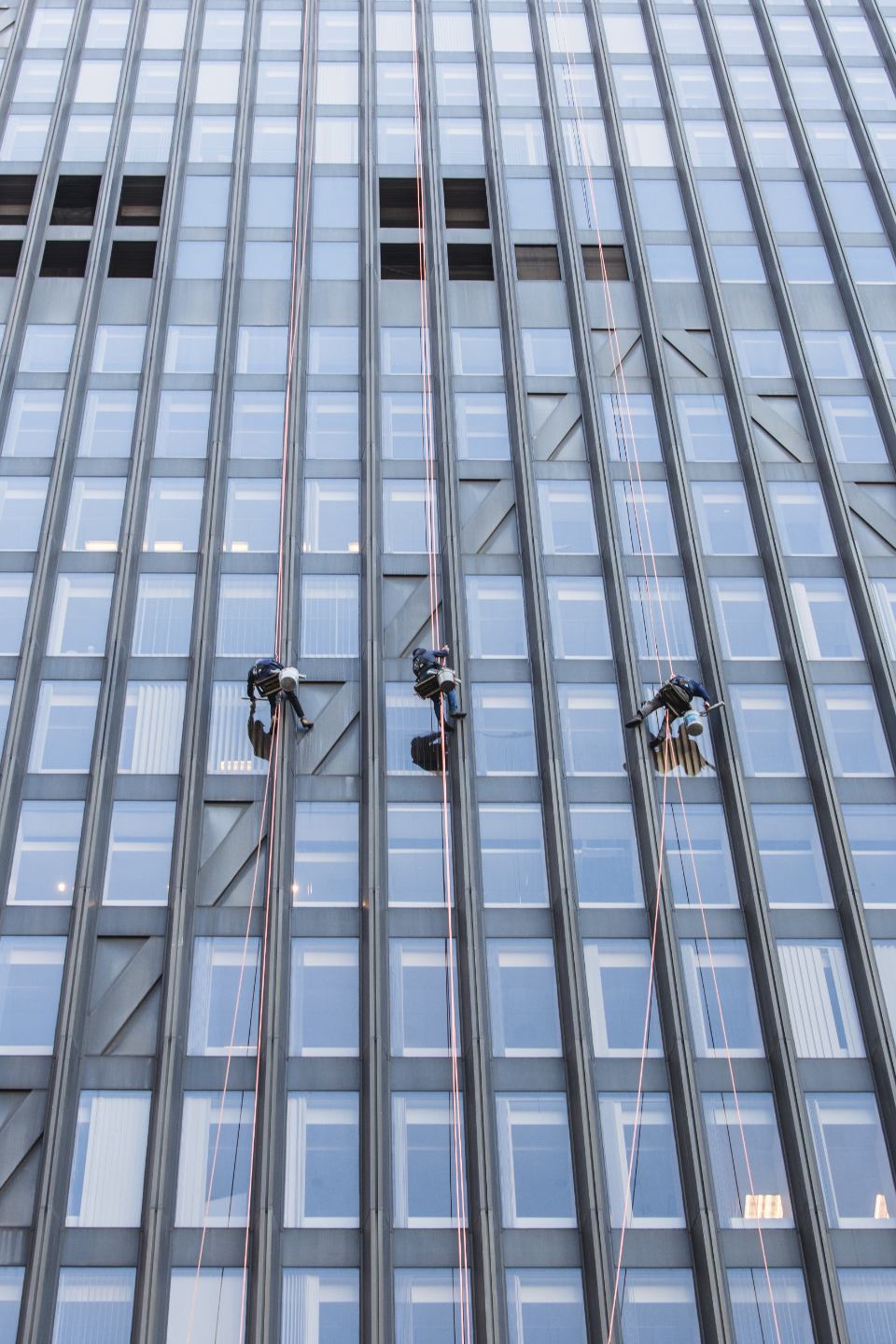
Exterior cleaning involves water pressure, ladders, and detergents. Follow CCOHS guidance for PPE and slip prevention. For chemical handling, follow Health Canada safety labels and avoid mixing products.
- Wear PPE: non-slip boots, eye protection, gloves, and hearing protection.
- Use extension wands to reduce ladder work.
- Keep pedestrians away with cones and signage.
- Control runoff to avoid storm drains and soil contamination.
For eco-focused solutions, check green cleaning practices and choose biodegradable detergents.
Weather and Temperature Limits
Temperature matters for building exterior cleaning: pressure washing and facade care. Most detergents work best between 10–25°C, and water can freeze on surfaces below 5°C. Pressure washing during freezing conditions can create hazardous ice and damage masonry.
- Best range: 10–25°C with low wind.
- Avoid: freezing temperatures, heavy rain, or strong gusts.
- Drying time: plan 2–4 hours of dry weather after cleaning.
If temperatures are borderline, delay the job or switch to soft washing with minimal runoff.
Water Use, Runoff, and Local Bylaws
Many Canadian municipalities have rules about wastewater entering storm drains. Always direct runoff to approved drains or capture it when detergents are used. For commercial properties, this can be part of the service agreement.
- Use biodegradable detergents to reduce environmental impact.
- Block storm drains if required and redirect flow to sanitary drains.
- Limit overspray to avoid water damage to neighbouring properties.
Responsible runoff control is a key part of building exterior cleaning: pressure washing and facade care, especially in dense urban areas.
For larger jobs, professionals may use berms, portable sump pumps, or wet vac systems to collect wastewater. This is common when cleaning near storefronts, loading docks, or public sidewalks.
Facade Materials and Safe Pressure Ranges
Different materials require different approaches. Using the wrong PSI or nozzle can cause permanent damage.
- Brick and concrete: 1,500–3,000 PSI, 25° nozzle, avoid concentrated spray on mortar.
- Vinyl siding: 800–1,500 PSI, soft wash recommended.
- Stucco: 1,000–1,500 PSI max, avoid direct spray at seams.
- Wood siding: soft wash only; keep pressure low to avoid etching.
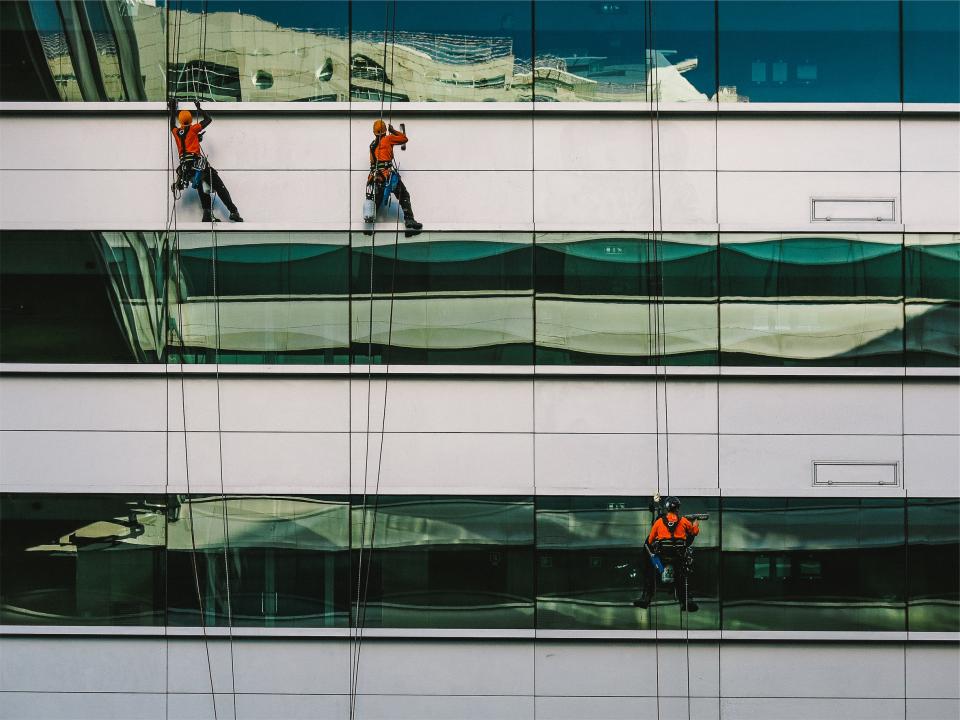
- Glass and metal panels: low pressure with gentle detergents.
Awnings, signage, and decorative trim should be treated as separate surfaces. Use low pressure and mild detergents to avoid fading or loosening adhesives.
Stain-Specific Treatments
Not all stains respond to plain water. Pair the right detergent with the right surface to avoid discolouration.
- Salt residue: mild acidic cleaners or hot water rinses work best on concrete and brick.
- Algae and mildew: use soft washing with biodegradable biocide, then rinse thoroughly.
- Rust stains: targeted rust removers; avoid overuse on painted surfaces.
- Oil and grease: hot water and degreasers for loading zones or dumpsters.
Always test cleaners on a small area first to prevent patchy colour changes.
Zone-Based Exterior Cleaning
Most buildings have “hot spots” that need extra care. Planning by zone improves results and reduces callbacks.
- Entrances and lobbies: salt, foot traffic, and splash zones create staining. Use hot water and a mild degreaser.
- Loading docks: grease and rubber marks require stronger detergents and careful rinsing.
- Dumpster areas: expect odours and organic buildup; disinfecting cleaners may be required.
- Upper facades: dust and bird droppings are common; soft wash works best.
Breaking the job into zones helps you control dwell times and avoid streaks on large facades. It also supports accurate budgeting for building exterior cleaning: pressure washing and facade care when you price by square footage.
DIY Toolkit and Rental Options
For small buildings or single-storey facades, DIY can work if you have the right equipment. Rental units are available from Canadian Tire and Home Depot Canada, usually $100–$200 per day.
- Pressure washer: 2,000–3,000 PSI for concrete and brick, 1,200 PSI for siding.
- Extension wand: reduces ladder use and improves reach.
- Surface cleaner attachment: speeds up flat wall sections.
- PPE: gloves, goggles, hearing protection, and non-slip boots.
DIY is best for low-risk surfaces. If you are unsure about material strength, professional building exterior cleaning: pressure washing and facade care reduces the risk of costly repairs.
Stop DIY work immediately if water gets behind siding, if paint flakes excessively, or if you notice structural cracks. These are signs the surface needs repair before cleaning.
If you are renting equipment, ask for nozzle sets and a surface cleaner attachment. Many rentals include these accessories and they can cut cleaning time in half on large, flat areas.
Best Products for Building Exterior Cleaning in Canada
These options are commonly available across Canadian retailers and align with building exterior cleaning: pressure washing and facade care needs.
- Kärcher K5 Pressure Washer – $400–$800 CAD (Canadian Tire, Home Depot Canada).
- Krud Kutter Pressure Washer Cleaner – $20–$35 CAD (Home Hardware, Canadian Tire).
- Simple Green Oxy Solve Outdoor Cleaner – $25–$40 CAD (Costco Canada, Walmart Canada).
- Wet & Forget Outdoor Cleaner – $30–$50 CAD (Amazon.ca, Home Depot Canada).
- DEFY Wood Cleaner – $40–$60 CAD (Rona, Home Hardware).
- CICO 215 Acid Cleaner – $185 CAD per gallon (specialty suppliers, Amazon.ca).
If you need help estimating service cost, the cleaning cost estimator provides a baseline for professional work.
Consumables and Ongoing Costs
Even with owned equipment, consumables add up over a year. Budget for detergents, nozzle replacements, hose wear, and occasional repairs. In Canadian winters, proper storage is essential to prevent frozen pumps and cracked hoses.
- Detergents: $50–$150 per season depending on surface area.
- Nozzle replacements: $10–$30 each, often yearly if used heavily.
- Hose wear: $50–$120 for replacements.
- Winter storage: drain water, add pump antifreeze, and store indoors.
Equipment Care and Winterisation
Pressure washers are sensitive to freezing temperatures. Drain all water after each job, run pump saver antifreeze through the system, and store hoses indoors. Inspect O-rings, filters, and nozzles for wear before the next season.
Proper equipment care protects your investment and keeps building exterior cleaning: pressure washing and facade care consistent from year to year.
DIY vs Professional Cost Breakdown
DIY can be affordable for small, low-rise surfaces. Professional services make more sense for multi-storey buildings, delicate materials, or when safety and insurance are a concern.
| Category | DIY Cost (CAD) | Professional Cost (CAD) |
|---|---|---|
| Equipment rental | $100–$200 per day | Included |
| Detergents and cleaners | $50–$150 | Included |
| Safety gear | $50–$150 | Included |
| Labour time | 1–3 days | 4–8 hours |
| Total estimate | $200–$450 | $0.20–$0.80 per sq ft |
Professional building exterior cleaning: pressure washing and facade care for a 5,000 sq ft commercial facade typically ranges from $1,500 to $5,000 CAD depending on access and condition.
What Affects Pricing?
Exterior cleaning quotes vary widely. These factors usually influence cost:
- Building height and access: lifts and rope access increase labour costs.
- Surface material: soft wash and specialty cleaners take more time.
- Stain severity: heavy algae or salt buildup requires pre-treatment.
- Location: urban centres often cost more due to access constraints.
- Runoff requirements: capturing wastewater adds equipment and time.
Sample Budget Scenarios
Use these rough scenarios to compare DIY and professional costs. Actual quotes depend on access and surface condition.
- Small retail storefront (1,200 sq ft): $300–$900 CAD professional service, often completed in half a day.
- Mid-size office facade (5,000 sq ft): $1,500–$5,000 CAD depending on access and staining.
- Large mixed-use building (10,000+ sq ft): $3,000–$9,000 CAD with lift access and multi-day scheduling.
How Often Should Building Exteriors Be Cleaned?
Most Canadian properties should schedule exterior cleaning every 1–2 years. In coastal or high-pollution areas, annual cleaning is recommended.
- Urban/high-pollution: every 1–2 years.
- Coastal/humid regions: annually to manage mildew.
- Rural/low-traffic: every 2–3 years.
Regular building exterior cleaning: pressure washing and facade care extends facade life and reduces repainting costs.
If the building sits near major roads, bus routes, or construction zones, increase frequency because dust and soot settle faster. Properties near oceans or lakes also need more frequent cleaning to manage salt and algae.
Maintenance Between Cleanings
Between full washes, quick maintenance keeps the facade cleaner for longer:
- Quarterly inspections for algae or salt streaks.
- Spot cleaning around entryways and high-traffic zones.
- Gutter cleaning to prevent overflow stains on siding.
- Touch-up sealing where water intrusion is visible.
These small tasks reduce the frequency of full washes and keep building exterior cleaning: pressure washing and facade care costs predictable over the year.
Best Seasonal Timing in Canada
Spring and fall are the safest windows. Spring removes winter salt and grime, while fall preps the facade before freezing weather.
- Spring (April–May): post-thaw cleaning is ideal.
- Fall (September–October): prepare for winter and prevent ice buildup.
- Avoid winter: water can freeze and damage surfaces.
Common Exterior Cleaning Mistakes
- Using too much PSI and etching siding or brick.
- Spraying upward, which forces water behind siding.
- Skipping pre-treatment, leaving salt and mildew intact.
- Ignoring runoff rules in municipal bylaws.
Avoiding these mistakes protects surfaces and reduces costly repairs.
Pro Tips for Better Results
- Work in the shade to prevent streaking and premature drying.
- Use hot water for greasy stains and winter salt residue.
- Test a small area first before full-scale washing.
- Rinse thoroughly to prevent detergent residue.

Post-Clean Inspection and Protection
After cleaning, inspect for cracks, loose caulking, or water intrusion points. Sealants and UV protectants can extend surface life, especially on wood and painted facades. Document the condition for future maintenance planning.
Preparing for Repainting or Sealing
If a building is scheduled for repainting or masonry sealing, exterior cleaning is the most important first step. Paint and sealant adhere best to clean, dry surfaces. Rushing the drying time can trap moisture behind the new coating, leading to bubbling or premature peeling.
- Allow full drying: 24–48 hours depending on humidity.
- Repair cracks: patch mortar and caulking before sealing.
- Spot-prime stains: rust or algae patches should be treated before painting.
When planned correctly, building exterior cleaning: pressure washing and facade care extends the life of coatings and improves the visual finish.
Quality Control Checklist
Use this checklist to confirm the job meets professional standards and the facade is ready for the next season:
- No streaks or detergent residue on glass.
- No damaged caulking or dislodged fixtures.
- Clean corners and ledges where grime collects.
- Uniform colour across panels and brick joints.
- Documented before/after photos for maintenance records.
Documentation and Maintenance Logs
Keeping a simple record helps property managers track exterior conditions over time. Note the date, weather, detergents used, and any repairs needed. This is especially useful if the building is under warranty or preparing for future repainting.
Documentation also helps compare vendor performance. If the facade shows rapid re-soiling, you can adjust the frequency or switch to a different cleaning method such as soft washing.
Commercial Scheduling and Tenant Communication
For offices, retail centres, and mixed-use buildings, communication is essential. Notify tenants at least 48 hours in advance, schedule work outside of peak hours, and provide clear safety signage. This reduces complaints and protects your reputation.
Insurance and Liability Considerations
Professional exterior cleaning should include liability coverage and worker safety plans. Ask for proof of insurance and confirm that subcontractors are covered. This is especially important for multi-storey buildings or properties with public walkways.
Many commercial owners also ask for evidence of safety training and fall-protection plans, which helps reduce risk and ensures compliance with workplace requirements.
How to Choose a Professional Service
Look for certified, insured providers who can show before-and-after results and understand local runoff regulations. Compare at least two quotes and ask about equipment, detergents, and safety plans.
Ask if the team uses soft washing for delicate facades, and confirm that they avoid high-pressure blasting on stucco or aged brick. A good contractor will explain PSI ranges, nozzle choices, and how they protect landscaping and signage.
For commercial property owners, GoodCleaner cleaning services can integrate exterior work with your interior maintenance schedule.
Frequently Asked Questions
How often should building exterior cleaning: pressure washing and facade care be done?
Most properties need it every 1–2 years, with annual cleaning in coastal or high-pollution areas. Winter salt and spring thaw grime are the main drivers in most Canadian cities.
What is the best way to do building exterior cleaning: pressure washing and facade care?
Start with inspection and protection, apply a biodegradable cleaner, then wash top-down using the right PSI for the surface. Use soft washing on delicate facades and keep the wand moving to avoid etching.
How much does professional building exterior cleaning cost in Canada?
Expect $0.20–$0.80 per sq ft depending on access and surface condition, or $1,500–$5,000 CAD for a 5,000 sq ft facade. Lifts, heavy staining, and runoff capture increase pricing.
Can I do building exterior cleaning: pressure washing and facade care myself?
DIY works for small, low-rise surfaces. Hire professionals for multi-storey facades, delicate materials, or when safety risks are high. Insurance and fall protection are major reasons commercial properties choose pros.
What products do professionals use for building exterior cleaning: pressure washing and facade care?
Common options include Kärcher pressure washers, Krud Kutter cleaners, Simple Green Oxy Solve, and specialty detergents for brick and wood. Many providers also use low-VOC or biodegradable solutions to reduce environmental impact.
How long does building exterior cleaning take?
A mid-size facade typically takes 4–8 hours, while larger buildings may take a full day or more. Multi-zone properties can take several days if access equipment is required.
What are the most common exterior cleaning mistakes?
Using too much pressure, spraying upward into siding seams, and skipping pre-treatment for salt or mildew. Poor runoff control is another frequent mistake that can cause complaints or fines.
Conclusion
Building exterior cleaning: pressure washing and facade care protects facades from Canada’s harsh climate, improves curb appeal, and prevents premature repairs. A consistent schedule, the right products, and safe pressure settings make the biggest difference.
Need professional help? Get a tailored quote and schedule at GoodCleaner and keep your property looking sharp year-round. A clean exterior also helps protect your building envelope for the long haul.