
Why Cleaning Businesses Are Going Green: Sustainable EcoLogo Systems
This is a practical guide for property managers, facility directors, and business owners who want to understand the green cleaning transition. The honest version: green cleaning is not a trend, it is now the professional standard for facilities that care about their occupants.
Quick Summary
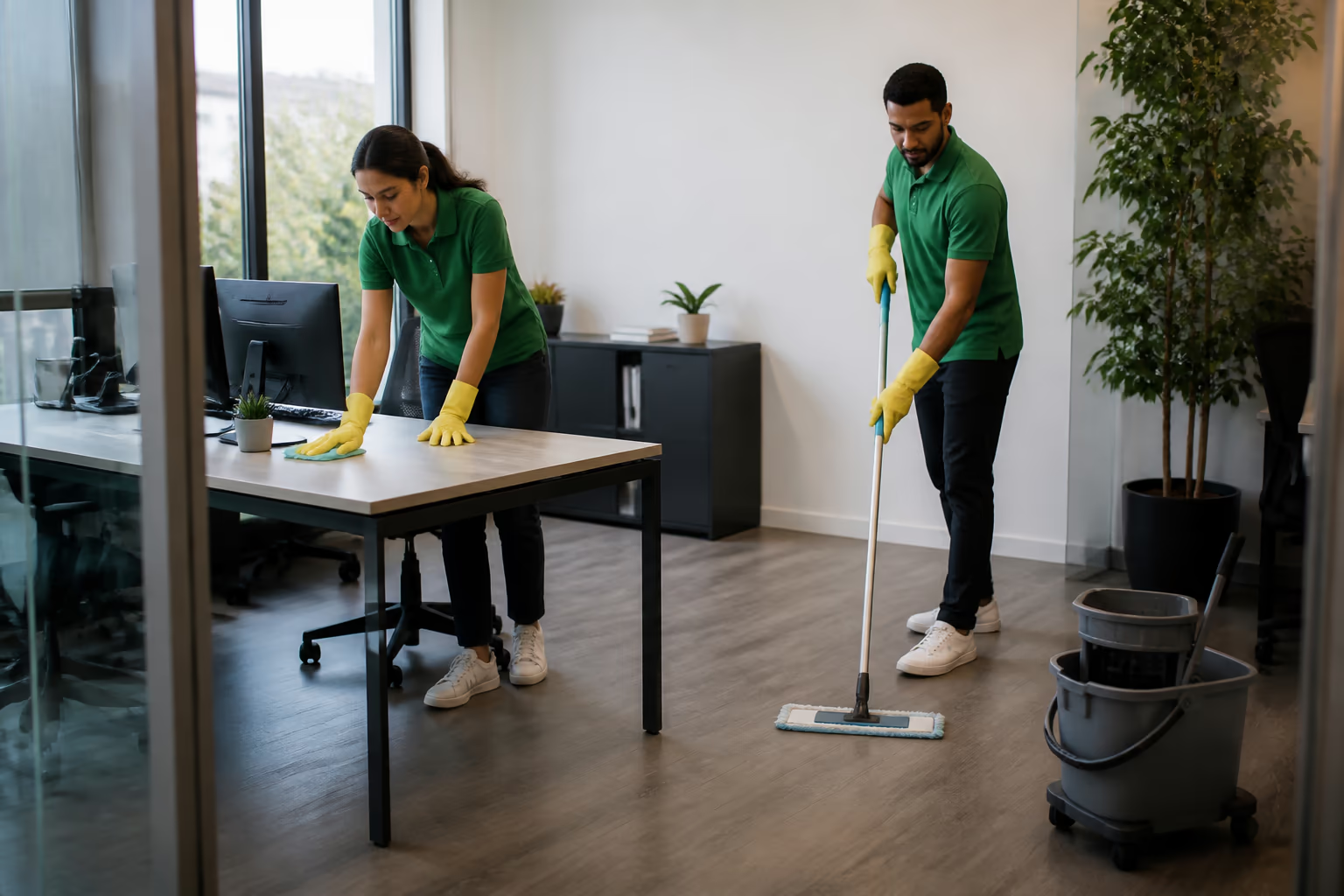
Cleaning businesses across Ottawa are going green because it protects the people in the building, the environment, and their own bottom line. Sustainable EcoLogo systems use plant-based chemistry, concentrated dilution, and washable microfibre to cut synthetic VOCs and plastic waste while still cleaning to a professional standard. This guide explains why the market is moving, what the certifications actually mean, and how to choose a green janitorial partner for your building. Good Cleaner Co. provides certified commercial janitorial services in Ottawa.
In this guide
The Market Transition Toward Eco-Friendly Commercial Cleaning
A decade ago, green cleaning was a niche offering. Today, it is the default expectation for many government, corporate, and institutional clients in Ottawa.
The drivers are practical. Traditional petroleum-based cleaners release volatile organic compounds, or VOCs, that linger in indoor air and can irritate eyes, lungs, and skin. When those chemicals are rinsed down the drain, they also end up in the local water system.
Third-party certified EcoLogo products answer both problems. They are formulated from plant-based surfactants that break down more readily in the environment, and they reduce the synthetic chemical load in the buildings where people work.
There is also a business case. Buildings pursuing LEED, BOMA BEST, or other sustainability ratings earn points for green cleaning programs, and tenants increasingly ask about them in requests for proposals.
The shift is not about marketing. It is about cleaning to a higher standard without the chemical side effects, and the market has noticed that the two can go together.
The change is visible in the products on the shelf and in the language of cleaning contracts. Clients now ask for green programs by name, and vendors that cannot supply them lose bids.
The change is not limited to big institutions either. Small offices and retail shops are asking for greener cleaning because their customers and employees expect it. Once a building moves to a green program, going back feels like a step backward. For a closer look at what full-service coverage typically includes for smaller operations, commercial cleaning services for small businesses outlines options beyond a single green product swap.
Key Benefits of EcoLogo Chemistry & Concentrated Formulas
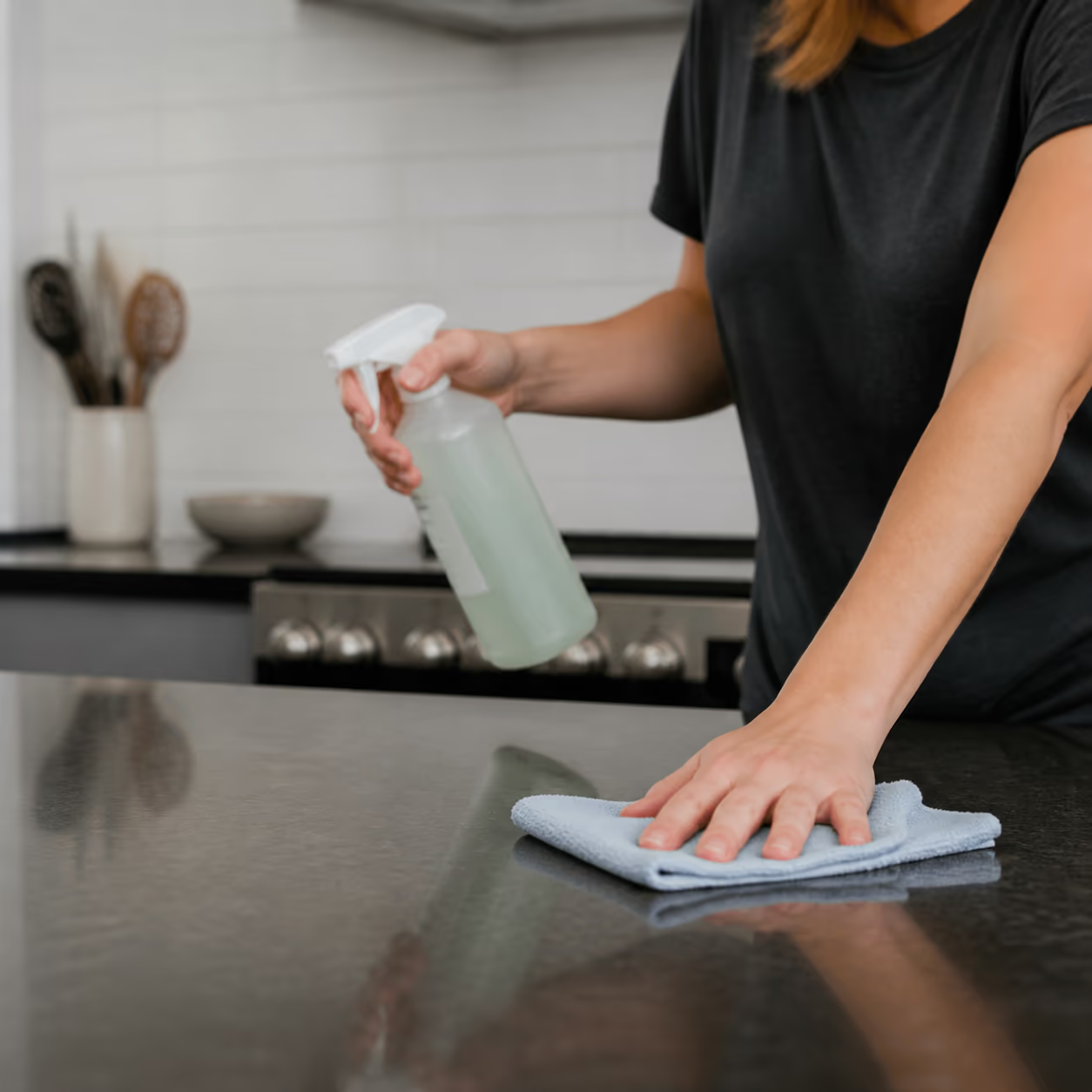
Here are the core advantages of sustainable green cleaning practices:
Each of these benefits shows up in daily operations. Staff breathe easier, waste bins fill slower, and the building's sustainability report starts to look better without any extra effort.
What EcoLogo Certification Actually Means
EcoLogo is one of North America's oldest third-party environmental certification programs. When a product carries the EcoLogo mark, an independent body has verified that it meets specific environmental standards, not just a marketing claim.
For cleaning products, EcoLogo standards typically cover things like reduced volatile organic compounds, biodegradability, and restricted toxic ingredients. The mark is a shortcut that saves you from reading a dozen Safety Data Sheets to figure out which products are genuinely greener.
The honest caveat: EcoLogo is not a claim that a product kills every germ or is perfect for every surface. It is a verified baseline for reduced environmental impact, and it pairs with Health Canada DIN registration when a disinfectant needs to make a germ-killing claim. You will see the EcoLogo mark on everything from general-purpose cleaners to floor care and glass products, which makes building a consistent green program straightforward.
How to Go Green Without Compromising on Disinfection
A common worry is that green cleaning means weaker disinfection. In practice, the two goals are separate and compatible.
General cleaning chemistry can be plant-based and EcoLogo-certified while a separate hard-surface disinfectant carries a valid Health Canada DIN. Facilities do not have to choose between a green program and a compliant one.
The practical approach is a rotation: plant-based general cleaners for most surfaces, a DIN-registered disinfectant for high-touch points and health-regulated areas, and washable microfibre for everything in between.
That combination is what most professional green cleaning programs actually run, and it is why the transition feels seamless to building occupants. The result is a program that looks and smells different from conventional cleaning, in a good way, and that occupants notice almost immediately.
The Environmental Impact of Conventional Cleaning Chemicals
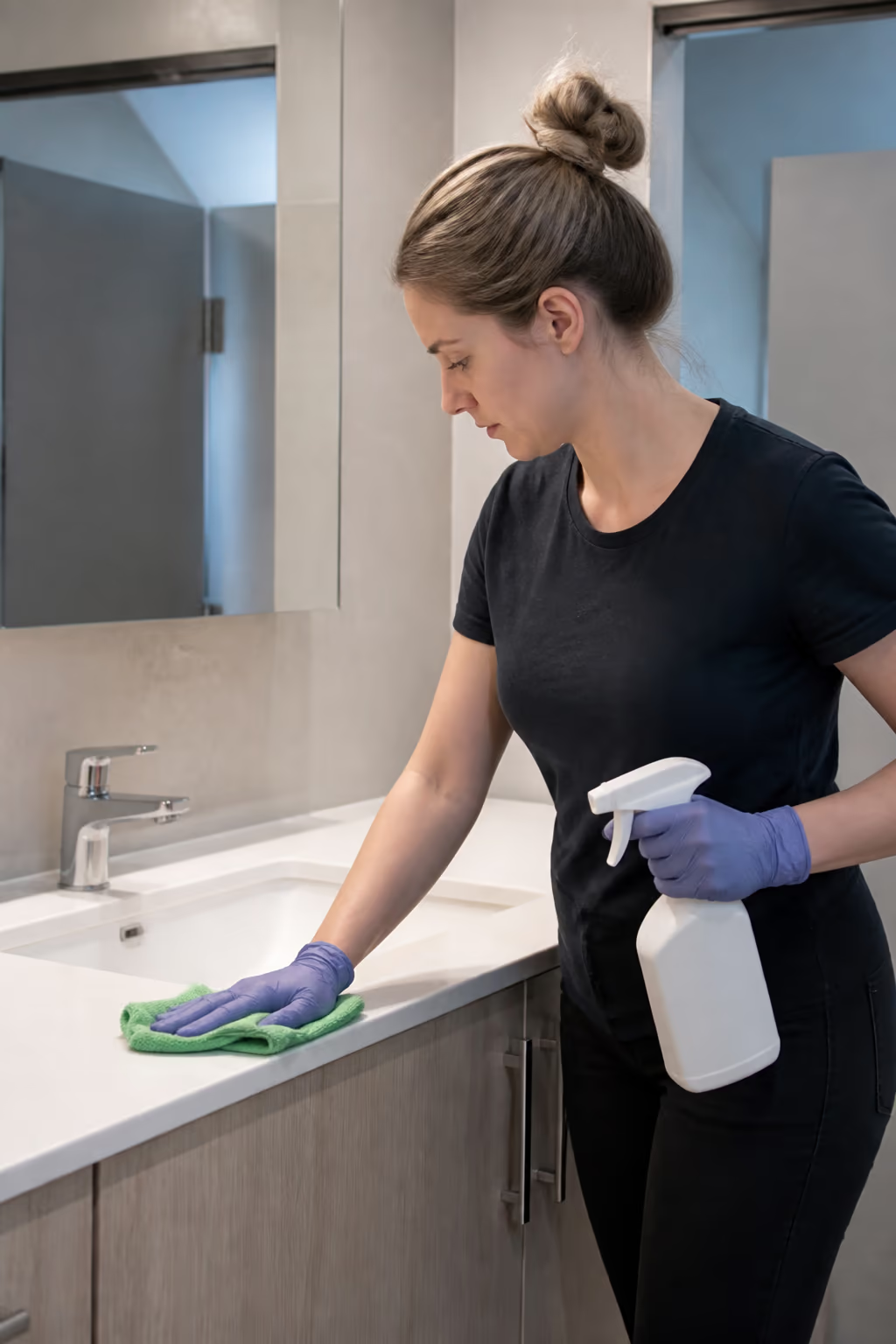
Conventional cleaning products do their job, but they carry environmental costs that are easy to overlook. Many contain petroleum-derived solvents and synthetic fragrances that linger in the air and in the waste stream.
The indoor half of that impact is well documented. Health Canada's indoor VOC guidance names cleaning products and air fresheners as sources of volatile organic compounds in indoor air, which is a different concern from what happens after the product goes down the drain. Health Canada also keeps the risk in proportion: “For most VOCs, levels found in indoor air in Canadian homes do not usually pose a significant health risk.”
VOCs contribute to indoor air pollution and can trigger headaches, eye irritation, and breathing problems for sensitive occupants. When these products are rinsed down drains, some ingredients persist and end up in local waterways.
Switching to EcoLogo-certified plant-based chemistry reduces both of those burdens. It is not a promise that every ingredient is harmless, but it is an independent check that the product meets a meaningful environmental bar.
Microfibre: The Quiet Hero of Green Cleaning
The biggest win in green cleaning is often not the chemistry at all. It is the cloth. Washable microfibre removes more dirt with water and mechanical action than a paper towel ever will.
Microfibre is made of ultra-fine synthetic fibres that create a large surface area, which picks up and traps dust, grease, and bacteria rather than pushing them around.
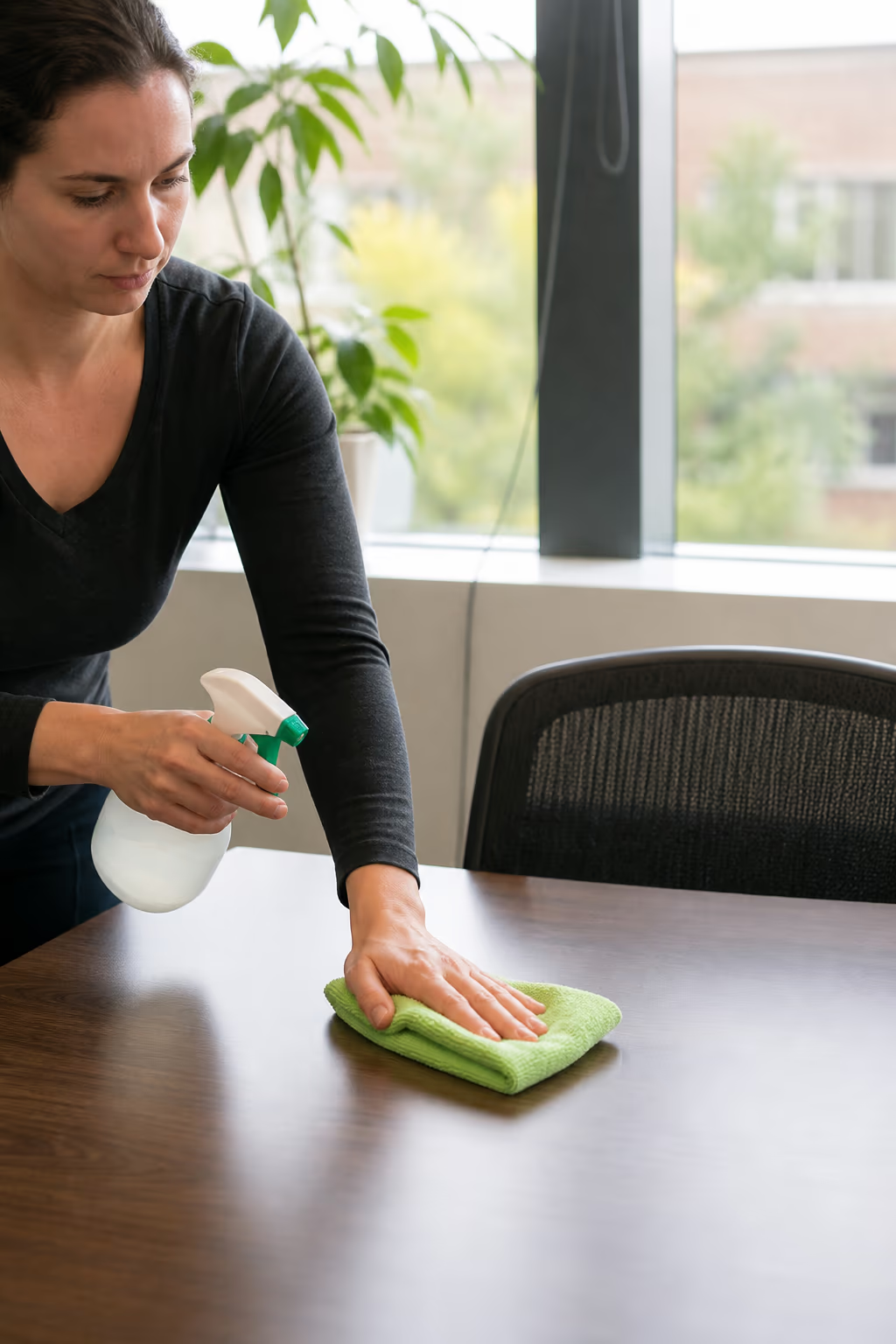
Because microfibre is washable and reusable, it cuts the steady stream of single-use paper towels that most buildings send to landfill. Colour coding the cloths by area, blue for glass, red for washrooms, green for desks, stops cross-contamination between rooms.
A green cleaning program that pairs EcoLogo chemistry with a colour-coded microfibre system is doing the two most effective things a facility can do.
Choosing a Green Janitorial Partner: What to Ask
Not every vendor that calls itself green actually runs a green program. Asking a few direct questions separates real programs from marketing.
Ask these before you sign, and listen for specific answers rather than slogans:
A genuine green vendor is happy to answer all of these and to walk you through the program on site. That openness is the best sign you are getting a real program, not a label.
Good Cleaner Co. Sustainability Standards
Good Cleaner Co. holds itself to a clear set of sustainability standards on every janitorial program:
EcoLogo Certified Chemistry:
Third-party verified plant-based formulas with lower synthetic VOCs.
Washable Microfibre Systems:
Reusable cloths and mops that cut single-use paper waste.
HEPA Filtration Equipment:
Sealed high-efficiency vacuums that capture fine dust during nightly rounds.
Corporate ESG Support:
Cleaning programs that support client LEED and BOMA BEST sustainability targets.
Formatted Step-by-Step Green Business Cleaning Transition Checklist
Follow this checklist for sustainable janitorial operations:
- Step 1.Replace Toxic Chemical Cleaners with EcoLogo Certified Formulations:Switch to plant-derived surfactants.
- Step 2.Adopt Washable Colour-Coded Microfibre Mops and Dusting Cloths:Eliminate single-use paper towels.
- Step 3.Install Automatic Dilution Dispensing Systems to Minimize Plastic Waste:Ensure precise chemical mixing ratios.
- Step 4.Upgrade Commercial Vacuums to Sealed HEPA Filtration Models:Keep fine dust out of the air you breathe.
- Step 5.Train Janitorial Staff on Green WHMIS 2015 Safety Protocols:Educate technicians on sustainable cleaning techniques.
- Step 6.If you need a team or a recurring schedule, use commercial janitorial services in Ottawa to discuss scope, access, and timing before deciding whether it fits.
Green Cleaning Coverage Across Ottawa Neighbourhoods
Good Cleaner Co. delivers certified green commercial cleaning across the Ottawa area, from a tech campus in Kanata to a heritage storefront downtown. The same plant-based chemistry and microfibre systems protect every building we service, from a small clinic to a full office tower.
Putting this guidance into practice
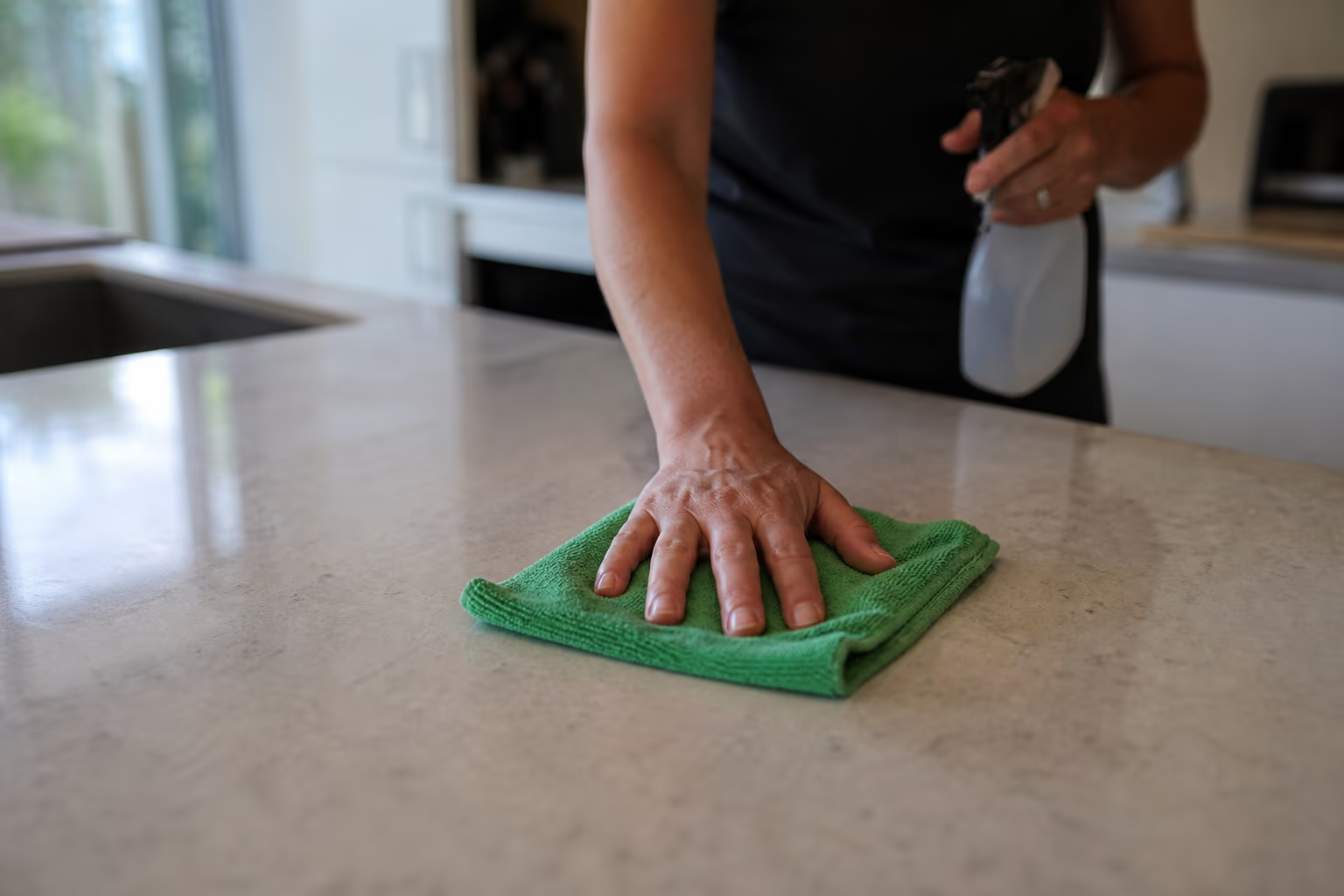
For a business reducing unnecessary waste, start with purchasing, dilution, cloth laundering, waste sorting, and refill practices instead of one green-labelled bottle. That keeps the conversation tied to the actual space instead of a generic promise.
Review disposable items, concentrates, surfaces needing a specific product, and whether the routine is easy for staff to follow. A written scope should say what happens on a normal visit, what needs approval, and who should hear about a recurring issue.
Seasonal considerations in Ottawa
Winter grit may require more entrance care, while humid weather makes ventilation and drying time more important. The method should fit the room, not a marketing label.
Look at the actual condition, the number of people using the space, and the material being cleaned before changing products, equipment, or frequency.
Safe, responsible cleaning
Environmental preference does not remove the need for clear training, safe storage, sensible ventilation, and labelled products.
When a surface, product, or site requirement is unclear, ask before continuing. A careful decision protects people and property better than a shortcut.
How to review this as a business reducing unnecessary waste
Before changing this routine, take a short walk through the actual space and describe what you see in ordinary language. Start with purchasing, dilution, cloth laundering, waste sorting, and refill practices instead of one green-labelled bottle. That gives everyone the same starting point and prevents a broad request from quietly becoming a different job.
Ask someone who uses the space every day what creates the most friction. Their answer may be a messy entry, an awkward storage area, a surface that marks easily, or a time when work cannot happen. A useful plan respects that local knowledge instead of replacing it with a standard script.
Choose one change that can be observed over a few visits. It might be a different order of work, a clearer handover, or more attention to disposable items, concentrates, surfaces needing a specific product, and whether the routine is easy for staff to follow. Write down the reason for the change and what would show that it is helping. That is a better test than relying on a vague impression.
Keep the discussion specific when something is not working. Name the room, surface, timing, and result you expected, then decide what should happen next. Clear feedback is fair to the people doing the work and far more useful than a blanket complaint.
Finally, revisit the plan when the building, household, or season changes. A routine should be stable enough to follow and flexible enough to respond to real conditions. That balance is what makes cleaning guidance practical.
Considering professional help
If you decide that this work needs help, begin with the practical details: the condition of the space, the tasks that matter, access, timing, and anything the crew should not touch.
Use commercial janitorial services in Ottawa to start that scope conversation. A clear request makes it easier to decide whether a service is suitable without relying on promises about results.
FAQ
Why are Ottawa commercial buildings switching to green cleaning vendors?
Green cleaning improves indoor air quality, supports tenant health and comfort, and helps property managers meet LEED and BOMA BEST sustainability requirements.
Are EcoLogo-certified green cleaners as effective as traditional chemical cleaners?
Yes, when the chemistry matches the task. EcoLogo plant-based surfactants and bio-enzymes handle grease, soil, and soap scum to a professional standard without the harsh fumes. In many cases, the plant-based version is gentler on surfaces and leaves less residue behind, which makes it well suited to daily maintenance rounds.
What does EcoLogo certification actually guarantee?
EcoLogo is a third-party environmental certification that verifies a product meets strict standards for reduced environmental impact, including lower synthetic VOCs and better biodegradability.
Does green cleaning cost more than traditional cleaning?
Concentrated green chemistry and reusable microfibre can offset the higher per-litre cost. Many facilities find the total program cost is comparable once supplies, waste disposal, and labour are counted, and the indoor air quality benefits come without a price premium. If you want a general sense of typical price ranges before comparing quotes, our guide to average cleaning costs in Ottawa gives a starting point for what a routine visit runs.
How does Good Cleaner Co. reduce plastic waste in janitorial care?
We use wall-mounted dilution dispensers and washable microfibre cloths, which dramatically reduces the number of plastic bottles a building goes through each year.
Are green cleaning products safe for sensitive occupants?
Green, low-VOC products are chosen by many facilities specifically to reduce chemical exposure for staff and occupants with sensitivities. Good ventilation still matters during cleaning, and the washable microfibre system means less product ends up in the air in the first place.
Can green cleaning still meet disinfection standards?
Yes. Green cleaning and disinfection are not opposites. Certified disinfectants can still be Health Canada DIN-registered while the general cleaning chemistry stays plant-based. For a clinic, school, or food service space, the certified disinfectant handles the germ-killing requirement while the rest of the program stays plant-based.
What is the difference between green cleaning and regular cleaning?
Green cleaning uses third-party certified, lower-impact products and methods, washable microfibre, and proper dilution to reduce chemicals, waste, and environmental harm while cleaning to the same standard.
Do I need to change my whole cleaning program to go green?
No. Most facilities transition gradually, swapping general cleaners first and keeping certified disinfectants where health regulations require them. A phased approach lets the team learn the new products and microfibre routines without disrupting the nightly schedule.
Wrapping Up
Going green is now the professional standard for commercial cleaning in Ottawa. It protects the people in your building, reduces environmental harm, and supports your sustainability goals without compromising on quality. Contact Good Cleaner Co. today to book janitorial cleaning teams in Ottawa.
Keep reading
More from Good Cleaner
Services that fit
- Janitorial Services in OttawaRecurring janitorial services for offices, warehouses, retail, dealerships and schools, with plant-based chemistry and customized plans.
- Professional Office Cleaning Services in OttawaNightly and after-hours office cleaning for corporate offices, clinics and professional suites, with eco-friendly products and after-hours scheduling.
About the author
Service areas
- Ottawa
- Kanata
- Nepean
- Orleans
- Downtown Ottawa
- The Glebe