

10 Essential Dental Office Cleaning Standards for Canadian Practices
Table of Contents
- Canadian Regulatory Framework for Dental Offices
- Understanding Infection Transmission in Dental Settings
- Operatory and Surface Cleaning Standards
- Sterilisation and Instrument Reprocessing
- Dental Unit Waterline Management
- Recommended Disinfectant Products for Canada
- Common Mistakes to Avoid
- Daily Cleaning Checklist for Dental Offices
- Frequently Asked Questions
Maintaining rigorous dental office cleaning standards is not merely a regulatory requirement—it’s a fundamental obligation to patient safety and professional credibility. Canadian dental offices operate under strict infection prevention and control (IPAC) standards established by provincial dental colleges, Public Health Ontario, and Health Canada. This comprehensive guide covers the essential cleaning, sterilisation, and infection control protocols required for Canadian dental practices.
Canadian Regulatory Framework for Dental Offices
Canadian dental offices operate under a multi-layered regulatory framework that establishes minimum standards for infection prevention and control (IPAC). Key regulatory bodies include:
| Authority | Jurisdiction | Key Standards |
|---|---|---|
| RCDSO | Ontario | IPAC Standard, environmental cleaning, sterilisation monitoring |
| Public Health Ontario | Ontario | PIDAC guidelines, infection control checklists |
| BC College of Dental Surgeons | British Columbia | IPAC guidelines, waterline management, sterilisation protocols |
| Health Canada | National | Approval of disinfectants and sterilisation equipment, DIN registration |
| PHAC | National | Guidelines for infection prevention, staff protection |
All cleaning agents used in dental settings must carry a Health Canada DIN (Drug Identification Number). Non-compliance with these standards can result in disciplinary action, fines, and loss of patient trust.
Understanding Infection Transmission in Dental Settings
Infections in dental offices spread through three primary mechanisms:
- Direct contact – Blood, saliva, and body fluids
- Indirect contact – Contaminated instruments, surfaces, and equipment
- Droplet transmission – Spatter from handpieces, ultrasonic scalers, and air/water syringes
Understanding these transmission routes forms the foundation of all IPAC protocols. By recognising these pathways, dental teams can implement strategies that interrupt each one—from pre-cleaning instruments to disinfecting surfaces to maintaining dental unit waterlines.
Operatory and Surface Cleaning Standards
Between Each Patient Protocol
Every patient changeover requires thorough disinfection:
- Disinfect all high-touch clinical contact surfaces using a Health Canada-approved low-level disinfectant
- Target areas: dental chair controls, light handles, handpiece holders, countertops, drawer handles, switches
- Allow contact time as specified by manufacturer (typically 1-3 minutes)
- Use fresh, wet disinfectant wipes—dried wipes are ineffective
- Wear gloves and apply disinfectant to surface, then wipe; do not spray directly onto patient care surfaces
End of Shift Cleaning
- Complete disinfection of all clinical contact surfaces
- Mop operatory floors with hospital-grade cleaners
- Empty clinical waste and sharps containers
- Document cleaning completion in IPAC log
Waiting Room and Reception Areas
Daily:
- Disinfect high-touch surfaces: chairs, armrests, reception desk, payment terminals, door handles
- Sanitise shared electronics (tablets, phones, pens)
- Vacuum or sweep floors; mop if visibly soiled
Weekly:
- Deep clean upholstered furniture
- Polish glass and mirrors
- Dust air vents and surfaces
- Clean windows and door frames
Bathroom Facilities
Daily (twice daily minimum):
- Disinfect toilet seats, handles, door knobs, light switches, sink faucets, and counters
- Ensure soap and paper towels are always available
- Keep bathrooms visibly clean and dry
Sterilisation and Instrument Reprocessing
Sterilisation is the most critical infection control procedure in a dental office. All instruments that contact blood, saliva, or mucous membranes must be sterilised between patients—not merely disinfected.
Step 1: Pre-Cleaning (Immediately After Use)
This is the most commonly overlooked and most critical step. Debris and blood shield microorganisms from sterilisation chemicals and heat.
- Transport instruments immediately to reprocessing area in puncture-resistant container
- Manually rinse heavily soiled instruments under running water
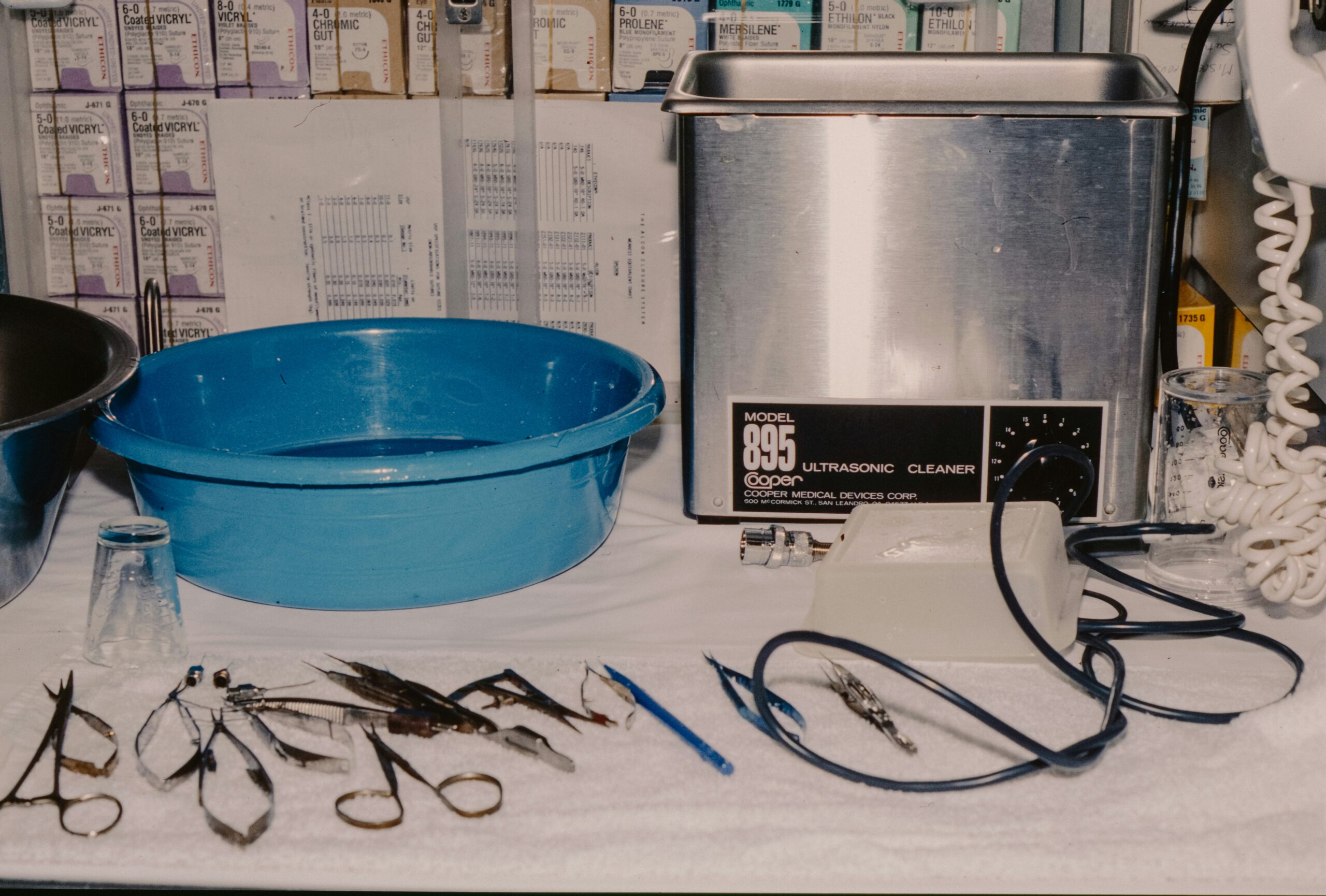
- Place instruments in ultrasonic bath with enzymatic cleaner for 5-10 minutes
- Rinse instruments thoroughly (at least 3 separate rinses)
- Air-dry completely before packaging
Step 2: Packaging and Preparation
- Assemble instruments into cassettes or sterilisation pouches
- Ensure hinged instruments are open
- Include chemical indicators (Type 4-6) inside each package
- Do not overload the autoclave—steam must penetrate all items
- Seal packages according to steriliser manufacturer instructions
Step 3: Sterilisation Method
| Method | Temperature | Cycle Time | Best For |
|---|---|---|---|
| Steam Autoclave | 121-134°C | 10-30 minutes (wrapped) | Most effective, fastest, standard choice |
| Dry Heat Oven | 160-180°C | 30-60 minutes | Unwrapped/loose items only |
Never use chemical sterilants (glutaraldehyde) for critical instruments in Canada—these are only approved for high-level disinfection of heat-sensitive items.
Step 4: Monitoring and Documentation
This is mandatory and non-negotiable:
| Monitoring Type | Frequency | Details |
|---|---|---|
| Mechanical | Every load | Temperature, pressure, time display; document in log |
| Chemical Indicators | Every load | External Type 1; internal Type 4-6 |
| Biological Indicators (Spore Tests) | Weekly minimum | B. atrophaeus spores; repeat if any load fails |
Maintain sterilisation records for minimum 10 years. If biological indicator fails, immediately quarantine steriliser, cease use, and recall all suspect instruments.
Step 5: Storage of Sterile Instruments
- Store in clean, dry, enclosed cabinets (never under sinks or exposed areas)
- Keep packages intact and protected from moisture and dust
- Inspect for tears or wetness before use—resterilise if compromised
Dental Unit Waterline Management
Dental unit waterlines (DUWLs) are a significant source of infection risk that is frequently neglected. Biofilm forms inside narrow waterlines, harbouring bacteria including Legionella.
Daily Waterline Protocol
Start of Workday:
- Run each waterline for 2-3 minutes without handpieces or tips attached
- This purges overnight stagnant water
Between Each Patient:
- Run each handpiece and air/water syringe for 20-30 seconds
Weekly:
- Flush suction lines with enzymatic cleaner solution
- Use manufacturer-recommended protocols for closed-system cleaners
Critical Understanding
Flushing alone is not sufficient to control biofilm contamination. Offices should also consider:
- Upgrading to “clean head” handpieces that prevent suck-back contamination
- Installing 0.2 μm filters on handpiece lines
- Using sterile water for invasive surgical procedures
- Testing waterlines quarterly if budget allows
Recommended Disinfectant Products for Canada
Accelerated Hydrogen Peroxide (AHP) Products
- Efficacy – Highly effective against bacteria, viruses, fungi, TB, and MRSA
- Safety – Lower respiratory irritation risk; safer for staff with asthma
- Contact Time – 1-3 minutes
- Brands – Oxivir (WipesOnline.ca, PPEOnline.ca)
- Cost – Wipes $20-$30 CAD per case; sprays $15-$30 CAD
Quaternary Ammonium Compounds (QACs)
- Efficacy – Broad-spectrum; kills bacteria, viruses, fungi
- Caution – Respiratory irritation with prolonged exposure
- Contact Time – 1-5 minutes
- Brands – Lysol Professional, Clorox, Certainty Plus
- Cost – Lysol ~$11 CAD per spray; Certainty Plus $17-$114 CAD
Enzymatic Cleaners (For Pre-Cleaning)
- Purpose – Remove blood, tissue, and protein before sterilisation
- Brands – Valuemed EnzyMed, OptiZyme, DentiZyme (dental suppliers)
- Use – Dilute 5 mL per litre for ultrasonic baths; change daily
- Cost – $30-$60 CAD per litre
Product Recommendations
| Task | Product | Cost (CAD) | Contact Time |
|---|---|---|---|
| Surface Disinfection | CaviWipes1 or Oxivir | $16-$28 | 1 minute |
| Budget Option | Lysol Professional | $11 | 3 minutes |
| Instrument Pre-Cleaning | Valuemed EnzyMed | $35-$60/L | 5-10 min soak |
| Hand Hygiene | 70-90% Alcohol Hand Rub | $8-$15 | 15-20 seconds |
Always verify Health Canada DIN number on all disinfectants—without it, regulatory compliance cannot be assured.
Common Mistakes to Avoid
1. Incomplete Pre-Cleaning of Instruments
Mistake: Sending instruments to steriliser with visible blood or tissue.
Risk: Organic matter shields bacteria from heat; sterilisation fails.
Solution: Use ultrasonic bath with enzymatic cleaner for all contaminated instruments. Inspect instruments under light—they should look visibly clean.
2. Overloading the Autoclave
Mistake: Packing too many instruments in one cycle.
Risk: Steam cannot penetrate centre of load; cool spots result in failed sterilisation.
Solution: Load autoclave to 60-70% capacity; leave space between packages.
3. Insufficient Contact Time for Disinfectants
Mistake: Spraying disinfectant and wiping immediately.
Risk: Microorganisms not fully eliminated.
Solution: Read manufacturer instructions; contact time is not negotiable. Set a timer.
4. Waterline Contamination
Mistake: Believing 2-3 minute flushing is sufficient.
Risk: Biofilm accumulates; bacterial levels exceed safe thresholds.
Solution: Flush daily plus weekly enzymatic cleaning of suction lines.
5. Reusing Single-Use Items
Mistake: Sterilising and reusing disposable saliva ejectors or suction tips.
Risk: Illegal under provincial regulations; potential infection vector.
Solution: Clearly designate single-use items; use bulk purchasing to reduce costs.
6. Inadequate Sterilisation Monitoring
Mistake: Running steriliser without documenting indicators; skipping weekly biological tests.
Risk: Sterilisation failure goes undetected; regulatory non-compliance.
Solution: Chemical indicator in every package; biological test weekly; keep logs for 10 years.
Daily Cleaning Checklist for Dental Offices
Morning (Before First Patient)
- Run dental unit waterlines for 2-3 minutes
- Inspect operatory surfaces; wipe if dusty
- Verify disinfectant wipes, hand sanitiser, and gloves are stocked
- Check steriliser temperature/pressure displays
- Review sharps containers needing replacement
Between Each Patient
- Don fresh gloves; disinfect hands
- Apply hospital-grade disinfectant to all surfaces
- Allow manufacturer’s contact time (1-3 minutes)
- Wipe with clean cloth or disposable towel
- Remove and discard all disposable barriers
- Run handpieces and syringes for 20-30 seconds
- Transport contaminated instruments to sterilisation area
End of Shift
- Disinfect all clinical contact surfaces
- Mop operatory and hallway floors
- Empty sharps containers into biohazard disposal
- Empty trash and replace liners
- Change ultrasonic cleaning solution if needed
- Run suction lines with enzymatic cleaner
- Document completion on IPAC log
Weekly Tasks
- Perform biological indicator test (spore test) on sterilisers
- Deep clean waiting room furniture
- Polish mirrors and glass; dust air vents
- Review sterilisation records for completeness
Frequently Asked Questions
How often should dental offices be professionally cleaned?
Operatory surfaces require disinfection between every patient. Waiting rooms need daily cleaning. Deep cleaning of non-clinical areas should occur weekly. Most dental offices handle clinical cleaning in-house due to the specialised requirements and turnaround time needed for instruments.
What disinfectants are approved for dental offices in Canada?
All disinfectants must carry a Health Canada DIN (Drug Identification Number). Recommended products include accelerated hydrogen peroxide (Oxivir), quaternary ammonium compounds (Lysol Professional, CaviWipes), and enzymatic cleaners for instrument pre-cleaning (Valuemed EnzyMed, OptiZyme).
How often should dental sterilisers be tested?
Chemical indicators should be used with every load. Biological indicator testing (spore tests) must be performed weekly minimum for each steriliser. Results and all sterilisation records must be maintained for at least 10 years.
Can dental instruments be reused without sterilisation?
Never. All instruments that contact blood, saliva, or mucous membranes must be sterilised between patients. Single-use items (saliva ejectors, suction tips, air-water syringe tips) cannot be sterilised and reused—this is illegal under provincial regulations.
What is the contact time for dental surface disinfectants?
Contact time varies by product: accelerated hydrogen peroxide products typically require 1 minute, while quaternary ammonium compounds require 1-5 minutes. Always follow manufacturer instructions—wiping immediately after application renders disinfection ineffective.
How much does dental office cleaning cost in Canada?
Equipment costs include autoclaves ($4,000-$7,500 CAD for entry-level) and ultrasonic cleaners ($300-$800 CAD). Monthly supplies (disinfectants, enzymatic cleaners, sterilisation pouches, biological testing) typically run $200-$400 CAD. Professional cleaning services for non-clinical areas cost $200-$400 CAD per visit.
What happens if a biological indicator test fails?
If a spore test fails, immediately quarantine the steriliser, cease use, and recall all instruments processed since the last successful test. All suspect instruments must be resterilised. Document the failure and corrective actions taken. Contact the steriliser manufacturer for service if needed.
Are dental offices required to have an IPAC coordinator?
Yes, provincial standards recommend designating one staff member as IPAC coordinator to oversee policy implementation, monitoring, and updates. This person should receive additional training in infection prevention and control procedures.
Conclusion
Maintaining proper dental office cleaning standards protects patients, staff, and your professional reputation. Canadian dental practices must comply with provincial IPAC standards, Health Canada regulations, and evidence-based sterilisation protocols. By implementing rigorous pre-cleaning, sterilisation monitoring, surface disinfection, and waterline management, dental offices can ensure the highest level of infection control.
Remember: documentation is as important as the procedures themselves. Maintain complete records of sterilisation cycles, biological testing, and cleaning protocols for regulatory compliance and patient safety.
Need professional cleaning services for your dental practice’s non-clinical areas? Contact GoodCleaner today for a consultation on maintaining your waiting room, reception, and common areas to the highest standards!