


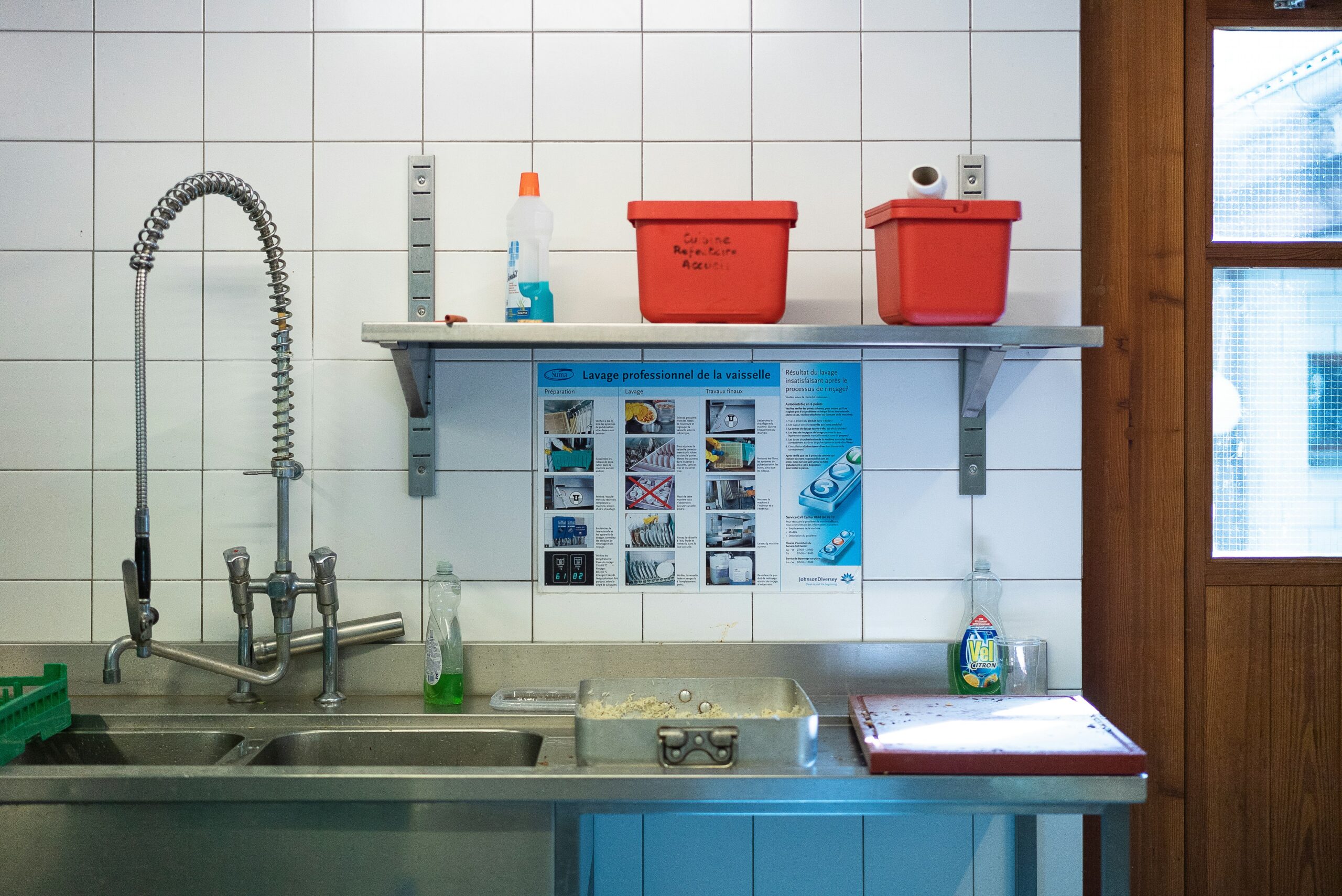
10 Essential Office Kitchen Cleaning Tips for a Spotless Break Room
Is your office kitchen cleaning routine keeping your break room truly hygienic? Research shows that 75% of break room sink faucet handles test positive for dangerous contamination levels, and microwave handles register contamination rates of 48%. In this comprehensive guide, we share professional cleaning protocols that meet Health Canada standards and create a safe, pleasant workplace environment.
Table of Contents
Canadian Food Safety Requirements for Office Kitchens
Health Canada and the Canadian Food Inspection Agency (CFIA) establish mandatory standards for food preparation and storage in workplace kitchens. Understanding these requirements is the foundation of any effective office kitchen cleaning program.
Temperature Control Requirements
- Refrigerator temperature: At or below 4°C (40°F)
- Freezer temperature: At or below -18°C (0°F)
- Hot food holding: At or above 60°C (140°F)
- Rapid cooling: Prepared foods must be cooled from 60°C to 20°C within two hours
Cross-Contamination Prevention
- Use separate cutting boards for raw meats versus ready-to-eat foods
- Store raw meats on the bottom shelf of refrigerators
- Use separate utensils for handling raw and cooked foods
- Clean and sanitise all surfaces between food preparation tasks
- Use colour-coded cutting boards when possible (red for raw meat, green for vegetables)
Cleaning vs Sanitising vs Disinfecting
These are three distinct processes, each essential for proper office kitchen cleaning:
- Cleaning: Removing visible dirt using hot water and detergent; provides 2-3 log reduction in bacteria
- Sanitising: Reducing microorganisms to safe levels using approved chemical solutions or heat
- Disinfecting: Killing 99.9% of germs on non-food-contact surfaces using registered disinfectants
Daily Break Room Cleaning Routine
Daily tasks prevent pest infestations, reduce odour accumulation, and remove high-touch surface contamination before bacteria multiplies. Time estimate: 20-30 minutes.
Morning Setup (5 minutes)
- Inspect the break room for spills or overnight issues
- Refill hand soap dispensers and paper towel holders
- Check that all cleaning supplies are accessible and stocked
Post-Meal Surface Wiping (10 minutes)
- High-touch surfaces: Wipe microwave door handles, refrigerator handles, light switches, faucet handles, and water cooler buttons with disinfectant wipes
- Countertops and tables: Wipe all surfaces with a clean microfibre cloth and disinfectant spray (allow 10 seconds dwell time)
- Sink area: Rinse and wipe down the sink basin; spray with disinfectant
- Avoid cross-contamination: Use a fresh cloth for each surface area
Appliance Spot-Cleaning (5 minutes)
- Microwave interior: If visible splatters are present, wipe with a damp cloth and mild dish soap
- Coffee machine: Wipe exterior and dispense handle
- Kettle or toaster: Wipe exterior with a dry cloth
Waste Management (10 minutes)
- Empty all trash bins daily with disposable liners—never allow trash to pile up overnight
- Replace trash liners with fresh ones
- Empty recycling bins and rinse if necessary
Weekly Deep Cleaning Tasks
Weekly deep cleaning addresses areas that accumulate grime over several days. Time estimate: 45-90 minutes.
Refrigerator Deep Clean (20 minutes)
- Remove all items and check expiration dates
- Discard expired or mouldy food
- Remove shelves and wash with hot soapy water
- Wipe interior walls with equal parts water and white vinegar
- Sanitise with food-safe disinfectant
- Place an open box of baking soda to absorb odours
- Restock items in order of expiration date
Microwave Deep Clean (10 minutes)
- Fill a microwave-safe bowl with equal parts water and white vinegar
- Microwave on high for 3-5 minutes
- Leave door closed for 2 minutes to allow steam to loosen food
- Wipe interior with a cloth
- Remove and wash turntable separately
Coffee Machine Cleaning (15 minutes)
- Use a commercial descaler or equal parts white vinegar and water
- Run the solution through the machine without coffee grounds
- Flush with several cycles of plain water
- Wipe exterior and carafe
Cabinet and Countertop Deep Clean (15 minutes)
- Wipe cabinet doors and knobs with warm soapy water
- For stubborn grease, apply a baking soda paste and let sit 5 minutes
- Clean countertop edges where grease and crumbs accumulate
- Wipe backsplash tiles with disinfectant
Drain Maintenance (5 minutes)
- Pour boiling water down the drain twice
- Sprinkle ½ cup baking soda followed by ½ cup white vinegar
- Let sit 30 minutes, then flush with boiling water
Monthly Maintenance Tasks
Monthly tasks require more intensive effort and may be best delegated to professional cleaners. Time estimate: 2-3 hours.
| Task | Procedure | Importance |
|---|---|---|
| Oven cleaning | Apply baking soda paste, leave overnight, wipe clean | Prevents grease fire hazards |
| Range hood filter | Soak in hot water with baking soda and dish soap for 20 minutes | Maintains ventilation efficiency |
| Refrigerator coils | Unplug fridge; use coil brush to remove dust | Improves efficiency |
| Behind appliances | Pull out fridge and stove; sweep and mop | Eliminates pest harborage |
| Faucet aerator | Unscrew and soak in white vinegar | Restores water pressure |
How to Clean Kitchen Appliances Properly
How to Deep Clean an Oven Without Chemicals
This natural method using baking soda and white vinegar is safe for staff and equally effective for most office kitchen cleaning needs.
Materials needed:
- 1 cup baking soda
- 3-4 tablespoons water
- White vinegar in a spray bottle
- Damp cloths
Steps:
- Remove oven racks
- Mix baking soda with water to form a thick paste
- Spread paste inside oven, avoiding heating elements
- Leave overnight (8-12 hours)
- Wipe away dried paste with damp cloths
- Spray remaining residue with vinegar (it will fizz)
- Wipe clean and dry
How to Clean Stainless Steel Appliances
Stainless steel shows fingerprints easily. Use proper techniques to avoid damage:
Do:
- Use warm water with mild dish soap
- Wipe in the direction of the grain
- Dry immediately with a microfibre cloth
- Use commercial stainless steel cleaner for stubborn marks
Avoid:
- Vinegar or citrus cleaners (acidic, can damage finish)
- Ammonia-based products (leave streaks)
- Steel wool or abrasive pads (scratch the surface)
- Paper towels (leave lint)
How to Clean Greasy Kitchen Cabinets
Grease accumulates on cabinets, especially above stoves:
- For light grease: Hot water + dish soap with a microfibre cloth
- For moderate buildup: Baking soda paste (baking soda + water), let sit 5-10 minutes
- For heavy grease: Baking soda + vegetable oil paste, let sit 10-15 minutes
- Wipe clean and dry thoroughly
Avoid Magic Erasers—they act as fine sandpaper and can remove cabinet finishes.
Common Office Kitchen Cleaning Mistakes to Avoid
1. Neglecting High-Touch Surfaces
Microwave handles, refrigerator handles, and faucets harbour the most bacteria. Create a dedicated daily checklist for these areas.
2. Using the Same Cloth for Multiple Surfaces
Cross-contamination spreads bacteria from one surface to another. Use disposable cloths or colour-coded microfibre cloths (one per area).
3. Not Cleaning Appliance Interiors
Microwave splatters become hard and bacteria-filled. Schedule weekly microwave steaming and refrigerator interior wipes.
4. Using Wrong Products on Food-Contact Surfaces
Harsh chemical residue contaminates food. Always rinse food-prep areas thoroughly and use food-safe sanitisers.
5. Ignoring Temperature Controls
Post refrigerator temperature (should read 4°C or below) on the fridge door with a daily check-off box.
6. Allowing Trash to Accumulate
Empty bins daily without exception. Odours attract pests and bacteria multiplies in accumulated waste.
7. Never Cleaning Behind Appliances
Grease accumulates behind fridges and stoves, creating fire hazards and pest harborage. Schedule monthly cleaning of these areas.
Recommended Products for Canadian Offices
All-Purpose Disinfectants
- Fantastik Original All-Purpose Cleaner – Canadian Tire, Walmart | $4.50-6.00 CAD | Cuts through grease effectively
- Lysol Advanced Disinfecting Wipes (550-count) – Costco Canada | $18-24 CAD | Kills 99.9% of germs
- No Name Disinfectant Wipes – Loblaws, Real Canadian Superstore | $2.29-3.29 CAD | Budget-friendly option
- Simple Green All-Purpose Cleaner – Home Hardware | $8-12 CAD | Biodegradable, food-safe when rinsed
Natural Alternatives
- Baking Soda (Arm & Hammer) – Any grocery store | $1.50-3.00 CAD | Oven cleaning, deodorising, drains
- White Vinegar – Any grocery store | $2-4 CAD | Final rinse, deodorising, glass cleaning
- Dawn Dish Soap – Any grocery store | $3-5 CAD | All-purpose degreasing
Microfibre Cloths
- AutoDrive Multi-Purpose Microfibre Towels (10-pack) – Walmart Canada | $5.97 CAD
- FRANK All-Purpose Microfibre Cloths (25-pack) – Canadian Tire | $12-15 CAD
Specialty Products
- Spray Nine Heavy-Duty Degreaser (2L) – PartSource Canada | $20.99 CAD | Professional-grade
- Bar Keepers Friend Soft Cleanser – Canadian Tire | $8-12 CAD | Stainless steel, sinks
- Affresh Stainless Steel Cleaner – Costco Canada | $12-18 CAD | Appliance cleaning
DIY vs Professional Cleaning: Cost Comparison
DIY In-House Cleaning Program
Monthly supplies cost:
- Disinfectant spray and wipes: $20-30
- Microfibre cloths (reusable): $15-25 (one-time purchase)
- Baking soda, vinegar, dish soap: $8-12
- Gloves, trash liners, paper towels: $15-20
- Total: $60-90/month for supplies
Add labour cost if assigning to staff (30 minutes daily at $25/hour = $300-375/month).
Professional Cleaning Service
Ontario rates:
- Hourly: $30-60/hour for standard cleaning; $50-80/hour for kitchen-specific deep cleaning
- Per square foot: $0.05-0.25/sq ft (standard); $0.15-0.30/sq ft for kitchens
- Weekly kitchen maintenance: $600-1,000/month
- Monthly deep clean only: $300-500/month
When to Choose Professional Services
- Office has 15+ employees
- Food handling is involved beyond basic break room use
- Compliance documentation is required
- Deep cleaning backlog exists
- Staff cannot guarantee consistency
Frequently Asked Questions
How often should office break rooms be cleaned?
Daily minimum for high-touch surfaces, trash removal, and basic surface wiping. Weekly deep cleaning of appliances (microwave, refrigerator, dishwasher) is essential. Monthly deep cleaning of ovens, range hoods, and areas behind appliances prevents grease fires and pest problems.
What temperature should my office refrigerator be set to?
4°C (40°F) or below. Check the temperature weekly with a refrigerator thermometer. Bacteria such as E. coli and Listeria multiply rapidly at temperatures above 4°C. Freezers should be -18°C (0°F) or below.
Can I use the same cloth to wipe counters, then the microwave, then the sink?
No. This spreads bacteria (especially E. coli from sinks) to food preparation surfaces. Use separate, disposable cloths for each task, or colour-coded reusable microfibre cloths. Wash reusable cloths in hot water after use.
Is it safe to use bleach to disinfect a kitchen?
Never mix bleach with other chemicals. Bleach is effective for disinfecting non-food surfaces but must be diluted properly (5 mL bleach to 750 mL water) and rinsed thoroughly. For food prep areas, use Health Canada-approved food-safe sanitisers instead.
How long does a professional office kitchen deep clean take?
2-3 hours for a small office kitchen (1-2 person space); 4-6 hours for a larger kitchen serving 20+ people. Time varies based on condition, appliance count, and whether oven cleaning is included.
What’s the most cost-effective cleaning product for office kitchens?
Baking soda, white vinegar, and dish soap cost approximately $6-10/month and handle 80% of cleaning tasks. Add store-brand disinfectant wipes ($2-5) for high-touch surfaces. Total monthly supply cost: $10-20 for small offices.
Can I use vinegar to clean stainless steel appliances?
No, avoid vinegar. It’s acidic and can stain or pit stainless steel finishes. Use warm water with mild dish soap and a microfibre cloth, wiping with the grain. For stubborn fingerprints, use a commercial stainless steel cleaner.
How do I prevent mould in the office dishwasher?
Run a monthly vinegar cycle (place vinegar in a cup on the top rack, run on hot) followed by a baking soda cycle. Clean the filter weekly and leave the door open after each cycle for air circulation.
Conclusion
Effective office kitchen cleaning requires a three-tier approach: daily habits for immediate cleanup, weekly deep tasks for appliance interiors and grease removal, and monthly intensive cleaning for ovens, range hoods, and behind appliances.
Success depends on clear written procedures, accessible cleaning supplies, regular training on cross-contamination and food safety, and accountability through sign-sheets or assigned responsibilities. A modest investment in proper cleaning prevents foodborne illness outbreaks, pest infestations, and reduced employee morale.
Need professional help with your office kitchen? GoodCleaner’s commercial cleaning services include thorough break room cleaning that meets Health Canada standards. Contact us today for a free quote!