
Janitorial Service KPIs: How To Measure Cleaning Performance
If you manage a building, "it looks clean" is not a measurement you can act on. This guide explains what janitorial service KPIs are, which ones matter for a commercial property in Canada, and how to track them without turning your cleaning program into a paperwork project.

Quick Summary
Janitorial service KPIs turn a vague it looks clean into something you can measure and act on, spanning operational, quality, satisfaction and cost categories. This guide explains which KPIs matter for a commercial property in Canada and how to track them without turning the program into a paperwork exercise.
In this guide
What Are Janitorial Service KPIs?
A key performance indicator is a number that tells you whether a service is working the way you expected. For janitorial work, that means measuring how often tasks are completed, how well they are done, whether occupants are satisfied and how efficiently the labour is used. A KPI turns opinions into facts you can review, compare and improve. The same KPIs are useful whether you are weighing an in-house janitor vs janitorial service decision or simply holding an existing provider to a documented standard.
The point is not to create a thick binder of reports. It is to pick a small set of numbers that actually reflect the standard you want, then check them on a regular rhythm. Most commercial buildings do well with six to ten KPIs that cover operations, quality, satisfaction and cost. Everything beyond that usually adds effort without adding insight.
The cleaning industry in Canada is shifting toward this kind of accountability. Facility managers, property owners and office managers increasingly expect a provider to show its work, not just describe it. KPIs are the common language that makes that possible, and they are one of the most practical ways to answer the question of how well a cleaning program is really performing.

Why Measuring Cleaning Performance Matters
When cleaning performance is not measured, problems tend to surface in the worst possible way: a complaint from a tenant, an inspection finding or a photo on social media. Measuring performance catches small issues before they become visible, which keeps the building presentable and the relationship calm.
There is a second reason that matters just as much. A building that is cleaned to a consistent, verifiable standard protects its floors, carpets, washrooms and fixtures. Dirt and grit that are managed on schedule do less damage than dirt that builds up and is scrubbed away later. In practical terms, measurement protects your maintenance budget as well as your reputation.
For occupants, the effect is noticeable. People feel the difference between a building that is simply serviced and one that is cared for. Cleanliness influences how staff and clients judge the space, how often people are sick and how the property is remembered. Measurement gives you a way to keep that impression consistent from week to week.
The Main Categories of Janitorial KPIs
It helps to sort KPIs into four groups so you can see the whole picture at a glance. Each group answers a different question about the service.
Operational KPIs:
did the crew show up, cover every zone and finish on time?
Quality KPIs:
did the work meet the standard when it was inspected?
Satisfaction KPIs:
how do occupants and clients feel about the space?
Cost and efficiency KPIs:
is the labour and supplies budget producing the right result?
Within those four groups you can mix and match. A small office might track completion rate, inspection scores and one satisfaction question. A large facility might add response time, supply usage and a more detailed survey. The categories stay the same; the specific numbers change to fit the building.
Operational KPIs That Keep the Routine on Track
Operational KPIs are the backbone of any janitorial program because they measure whether the basic routine is actually happening. If the crew misses zones or shows up late, no amount of polish in other areas will fix the problem.
- Task completion rate:the percentage of scheduled tasks completed on each visit.
- Zone coverage:whether every area on the plan was actually serviced.
- On-time performance:how often visits started and finished on the agreed schedule.
- Missed or rescheduled visits:how many appointments slipped and why.
- Response time:how quickly the provider reacts to a request or emergency.
These numbers are easy to gather from a simple daily log or a mobile check-in. The value comes from reviewing them weekly. A completion rate of ninety-five percent sounds good until you look at which five percent was missed, and whether it is the same washroom every week. That pattern is the real insight.
Quality KPIs That Protect the Standard
Quality KPIs answer the question nobody wants to ask directly: was it actually clean? These measures look at the result rather than the routine, and they rely on someone checking the work rather than assuming it.
A common approach is a scored inspection checklist. A supervisor walks the building and scores each zone on surfaces, fixtures, waste, floors and washroom condition. Over time the scores reveal which areas drift and which crew habits need attention. Some providers also use photo documentation so the evidence is clear.
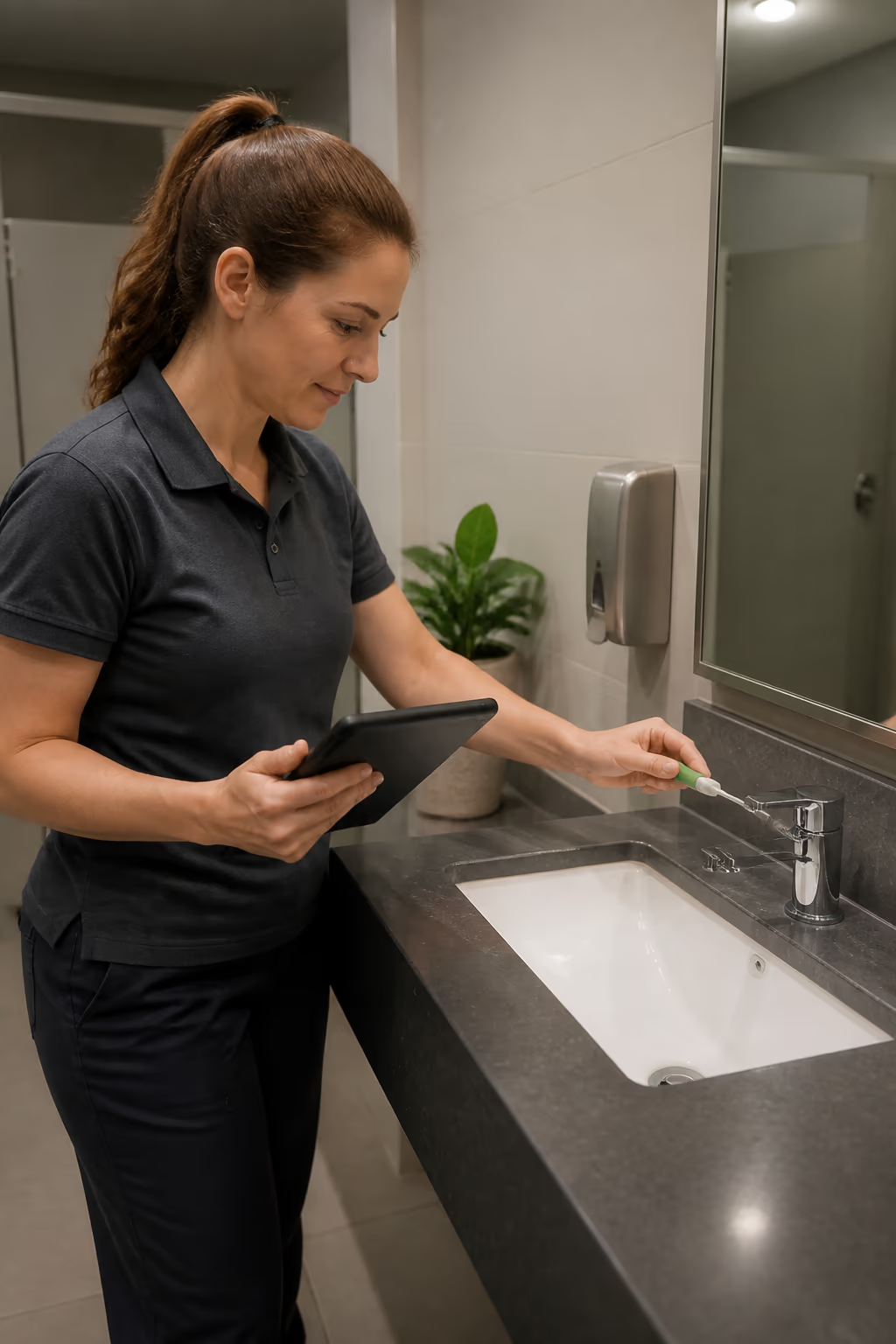
For washrooms and other high-touch spaces, ATP testing offers an objective hygiene check. ATP swabs measure the organic residue left on a surface, and a clean reading gives you confidence that disinfection actually happened. Not every building needs ATP testing every week, but it is a powerful tool for verifying hygiene where it matters most.
The key to a quality KPI is consistency. The checklist must be the same each time, scored by the same method, or the trend line means nothing. Once it is stable, an inspection score gives you an early warning long before a complaint arrives.
Customer and Occupant Satisfaction KPIs
The people who use the building have the best view of whether it feels clean. Satisfaction KPIs capture that view in a way that is simple to collect and easy to act on.
Complaint count and complaint rate per visit or per month.
Time to resolve a complaint once it is received.
Satisfaction ratings from a short survey or a simple thumbs up or down.
Renewal and retention signals, such as whether the contract continues.
The trick is to keep surveys short. One or two questions, sent occasionally, will get far more responses than a long questionnaire nobody finishes. A single question about overall satisfaction, paired with the complaint rate, gives you most of what you need.
It is also worth looking at complaints as gifts rather than failures. Every complaint is a specific instruction about what to fix. When a building tracks complaints and shows that each one led to a change, satisfaction tends to rise on its own.
Cost and Efficiency KPIs
Cost KPIs keep the budget honest. They are not about cutting the lowest possible price; they are about making sure every dollar buys the standard you agreed on.
One cost input is not negotiable. Ontario's general minimum wage is $17.60 an hour from 1 October 2025 to 30 September 2026, rising to $17.95 on 1 October 2026, so an efficiency target that assumes cheaper labour is assuming something unlawful. The provincial guide defines it in one sentence: “Minimum wage is the lowest wage rate an employer can pay an employee.”
- Labour hours per square foot, which shows how much time each zone truly needs.
- Cost per square foot for the recurring service.
- Supplies cost relative to the scope, including any billing for consumables.
- Overtime and rework, which usually signal an efficiency problem.
- Visits needed to hold the standard, tracked over the season.
These numbers expose the real trade-offs. A provider that needs excessive overtime to hit the standard may be understaffed or using the wrong methods. A provider that finishes quickly with perfect scores may have the process exactly right. Comparing the two tells you more than comparing headline prices.
Be careful not to squeeze efficiency too far. There is a floor beneath which quality and occupant health start to suffer. The goal is the smallest reasonable amount of labour that consistently holds your standard, not the smallest amount that barely passes.
How to Set Targets You Can Actually Meet
A KPI without a target is just a number. Targets give the number meaning, and they work best when they are realistic and specific to your building.
Start from your own history. If inspection scores have averaged eighty-eight over three months, set a target of ninety-five and move toward it in steps. If completion rate is already at ninety-eight, your effort is better spent on the quality or satisfaction numbers that need work.
Align the targets with the building's purpose. A medical office needs a stricter washroom and disinfection standard than a low-traffic storage area. A school needs different rules again. The targets should reflect the people who use the space, not a generic industry number.
Document the targets and review them quarterly. When a target is consistently exceeded, raise it or add a new measure. When one is missed, look at whether the target was realistic or the process is failing. This cycle of setting, measuring and adjusting is what makes a KPI program improve over time.
How to Build a Simple KPI Dashboard
You do not need expensive software to track janitorial KPIs. A spreadsheet or a shared document is enough to start, and you can move to a dedicated tool when the volume justifies it.
- Choose six to ten KPIs across operations, quality, satisfaction and cost.
- Define each one in one sentence so everyone scores it the same way.
- Decide who records the data and how often, usually the supervisor or lead.
- Set a weekly or monthly review meeting to look at the numbers together.
- Record actions taken for each change, so the dashboard drives decisions.
- Keep the dashboard simple enough that it can be read in five minutes.
The best dashboard is the one that gets used. If a report sits unopened, it is too complicated or not answering a real question. Trim it until it earns its place in your routine.
How Often to Measure and Review
Measurement frequency should match how fast the number changes. Operational numbers move daily, so they are best reviewed weekly. Quality and satisfaction move more slowly and can be reviewed monthly. Cost numbers make sense monthly or quarterly, alongside the invoice.
- Daily:completion and on-time records logged by the crew.
- Weekly:completion rate, zone coverage, complaints and response time.
- Monthly:inspection scores, satisfaction surveys and cost per square foot.
- Quarterly:trend review, target adjustment and provider performance meeting.
The rhythm matters more than the exact dates. A fixed review day keeps the program alive, while a dashboard that is only looked at when something goes wrong loses most of its value. Consistency in review builds consistency in service.
Common KPI Mistakes and How to Avoid Them
Most KPI programs fail in predictable ways. Knowing the traps helps you avoid them before they cost you months of confusing data.
- Tracking too many numbers at once, which buries the signal in noise.
- Choosing KPIs that are easy to measure but do not reflect the real standard.
- Scoring quality differently each time, so the trend line is meaningless.
- Never acting on the data, which turns measurement into theatre.
- Ignoring the story behind the number, such as which zone keeps failing.
- Measuring only the provider, and not the standard you agreed together.
The most common mistake is treating the dashboard as a scoreboard rather than a diagnostic tool. A KPI program earns its keep by telling you what to fix, not just how you are doing. When a number surprises you, the question to ask is why, and then what you are going to do about it.
Ontario and Seasonal Context for Your Targets
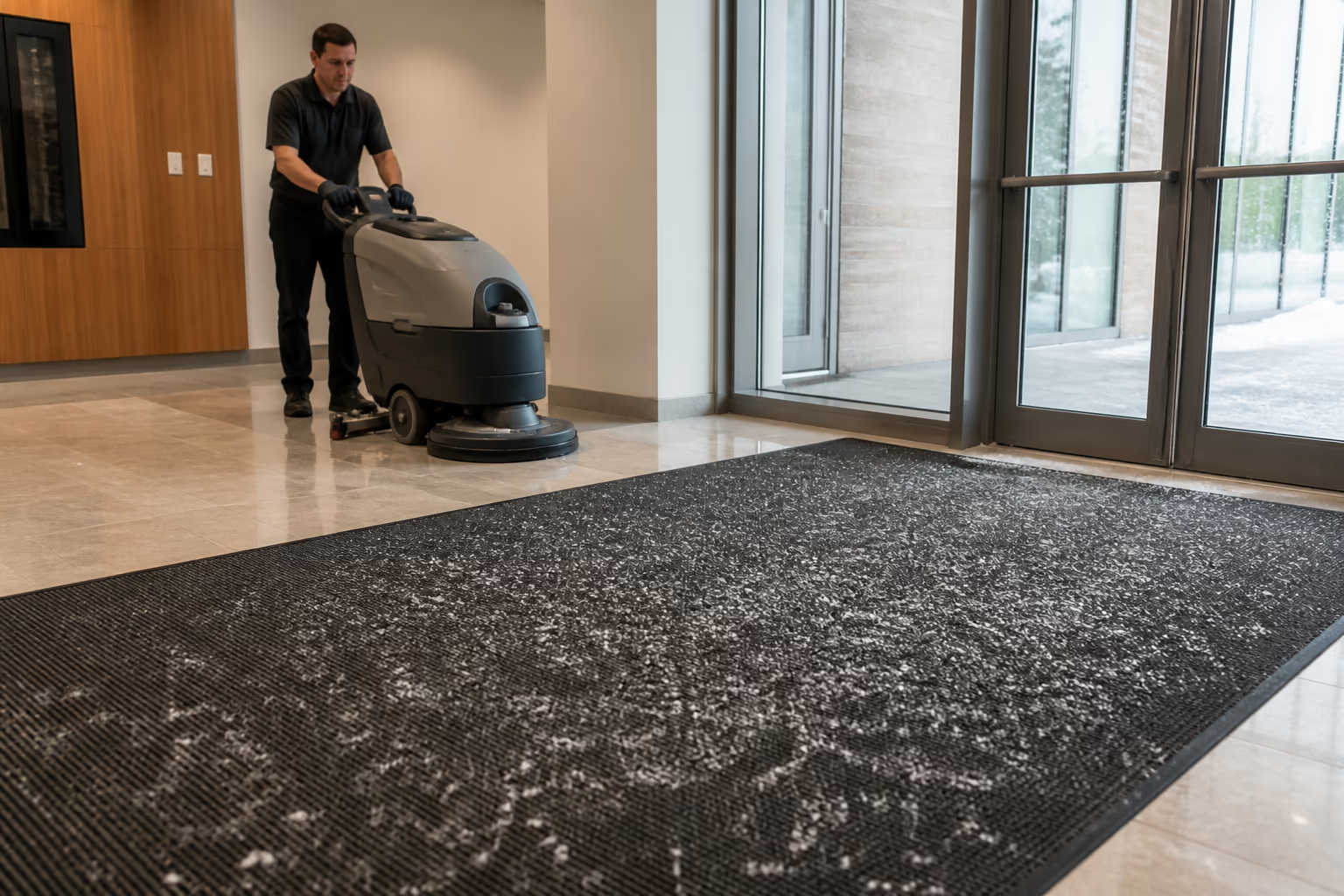
Cleaning standards in Ontario are not the same in every month. Winter brings salt and grit through every entrance, and a building that looks acceptable in September can look neglected by February if the entryways are not managed. Your targets should account for the season so the standard holds all year.
- Track entryway cleaning separately in winter months when salt is heavy.
- Adjust floor extraction frequency to handle the grit that builds up.
- Review washroom disinfection targets alongside cold and flu season.
- Watch humidity and condensation, which change what surfaces need.
- Plan for seasonal tasks in the KPI set so they are not forgotten.
A provider that builds the season into its targets shows that it understands your building rather than simply following a script. That is one of the things worth asking about when you compare providers, because a cleaning plan designed for Ontario weather will hold its standard far better than a generic one. Tracking how often a carpet cleaning service Ottawa building schedules deep extraction is one practical way to fold that seasonal work into the same KPI set.
How Good Cleaner Co. Measures Performance
Good Cleaner Co. treats measurement as part of the service, not an add-on. We agree the standard and the checklist with you up front, then track completion, inspection scores and occupant feedback against that agreed baseline. When a number drifts, we tell you and fix it rather than waiting for you to notice.
For business owners across Ottawa and the surrounding region, our commercial janitorial services in Ottawa are built around a documented routine and visible quality checks. That combination is what makes a KPI program more than a report: it makes the service accountable to the standard you actually want.
If you are comparing providers, our guide to vetting commercial cleaners walks through the questions that matter, including how a company measures, inspects and reports its own performance. It is a useful starting point for turning a vague promise of quality into something you can verify. Once you choose a provider, a janitorial service contract template helps put the agreed KPIs and reporting cadence in writing.
Formatted Step-by-Step Checklist for Building a Janitorial KPI Dashboard
Follow this five-step process to build a KPI program that improves your cleaning without overwhelming your team:
- Step1.Define the standard:write down what clean means for each zone so every score is measured against the same expectation.
- Step2.Pick six to ten KPIs across operations, quality, satisfaction and cost, and write a one-sentence definition for each.
- Step3.Set up the tracking:decide who records the data, how often, and where it lives so the numbers are consistent.
- Step4.Review on a fixed rhythm:look at weekly numbers weekly, and monthly numbers monthly, at a set time.
- Step5.Act on what you see:record a decision for every surprising number and check the next period to confirm it worked.
- Step6.For a fully managed approach, our janitorial cleaning teams in Ottawa include agreed KPIs, documented inspections and regular reporting built into the routine.
FAQ

How many janitorial KPIs should my building track?
Most commercial buildings do well with six to ten KPIs spread across operations, quality, satisfaction and cost. More than that tends to add effort without adding insight, and fewer may miss something important.
What is the easiest KPI to start with?
Task completion rate is the simplest place to begin because it is easy to log and immediately shows whether the routine is happening. Once that is stable, add quality and satisfaction measures.
How do I measure cleaning quality objectively?
A consistent scored inspection checklist is the most practical tool. A supervisor scores each zone against the same criteria, and the trend over time shows which areas drift. ATP testing adds an objective hygiene check for high-touch surfaces.
How often should I review janitorial performance?
Review operational numbers weekly, quality and satisfaction monthly, and cost quarterly. A fixed review day keeps the program alive, while waiting for problems to appear defeats the purpose.
What if my inspection scores stay low?
Low scores usually point to a process problem rather than a lazy crew, such as the wrong product, not enough time or a missed zone. Look at which zone fails and why, then adjust the plan before raising expectations.
Are KPI targets the same in every season?
No. Winter in Ontario brings salt, grit and more washroom traffic, so entryway and floor targets usually need to tighten for the season. Building the season into your targets keeps the standard consistent all year.
Do I need special software to track KPIs?
No. A spreadsheet or shared document is enough to start. Choose a dedicated tool only when the volume or the number of buildings makes a spreadsheet unmanageable.
How do I know a provider's KPIs are real?
Ask to see actual reports and the method behind them. A provider that can show you its inspection checklist, its scores and the actions it took from them is far easier to trust than one that only promises quality.
Wrapping Up
Janitorial service KPIs turn a subjective idea of clean into numbers you can review, compare and improve. By picking a small set of measures, reviewing them on a steady rhythm and acting on what they show, you protect both the standard and the budget. Contact Good Cleaner Co. for a free quote and a cleaning plan with the measurement built in, tailored to your building.
Keep reading
More from Good Cleaner
- Commercial Cleaning Quality Control Methods: Inspections & Standards
- How to Choose the Best Commercial Cleaning Company in Ottawa: Vendor Selection Guide
- Janitorial Service Contract Template: 15 Essential Terms Every Agreement Needs
- 8 Essential Duties Of A Professional Janitor: Complete Guide For Canadian Facilities
Services that fit
- Janitorial Services in OttawaRecurring janitorial services in Ottawa for offices, warehouses, retail, dealerships and schools. Eco-friendly commercial cleaning, customized plans, free quote.
- Professional Office Cleaning Services in OttawaOffice cleaning services in Ottawa for corporate offices, clinics and professional suites. After-hours scheduling, eco-friendly products and a free quote.
About the author
Service areas
- Ottawa
- Kanata
- Nepean
- Orleans
- Barrhaven