
7 Key Differences Between Janitorial Services And Cleaning Services In Canada
"Janitorial" and "cleaning" get used as if they mean the same thing, but for a Canadian business they describe two different ways of keeping a building maintained. This guide compares the seven differences that matter most, so you can pick the service that fits how your building actually operates.
Quick Summary
Janitorial and cleaning services get used interchangeably, but for a Canadian business they describe two different ways of keeping a building maintained, differing in scope, schedule, contract commitment, staff training, equipment and billing model. This guide compares these seven differences so you can pick the service that actually fits how your building operates.
In this guide
Janitorial Services and Cleaning Services: Two Different Jobs
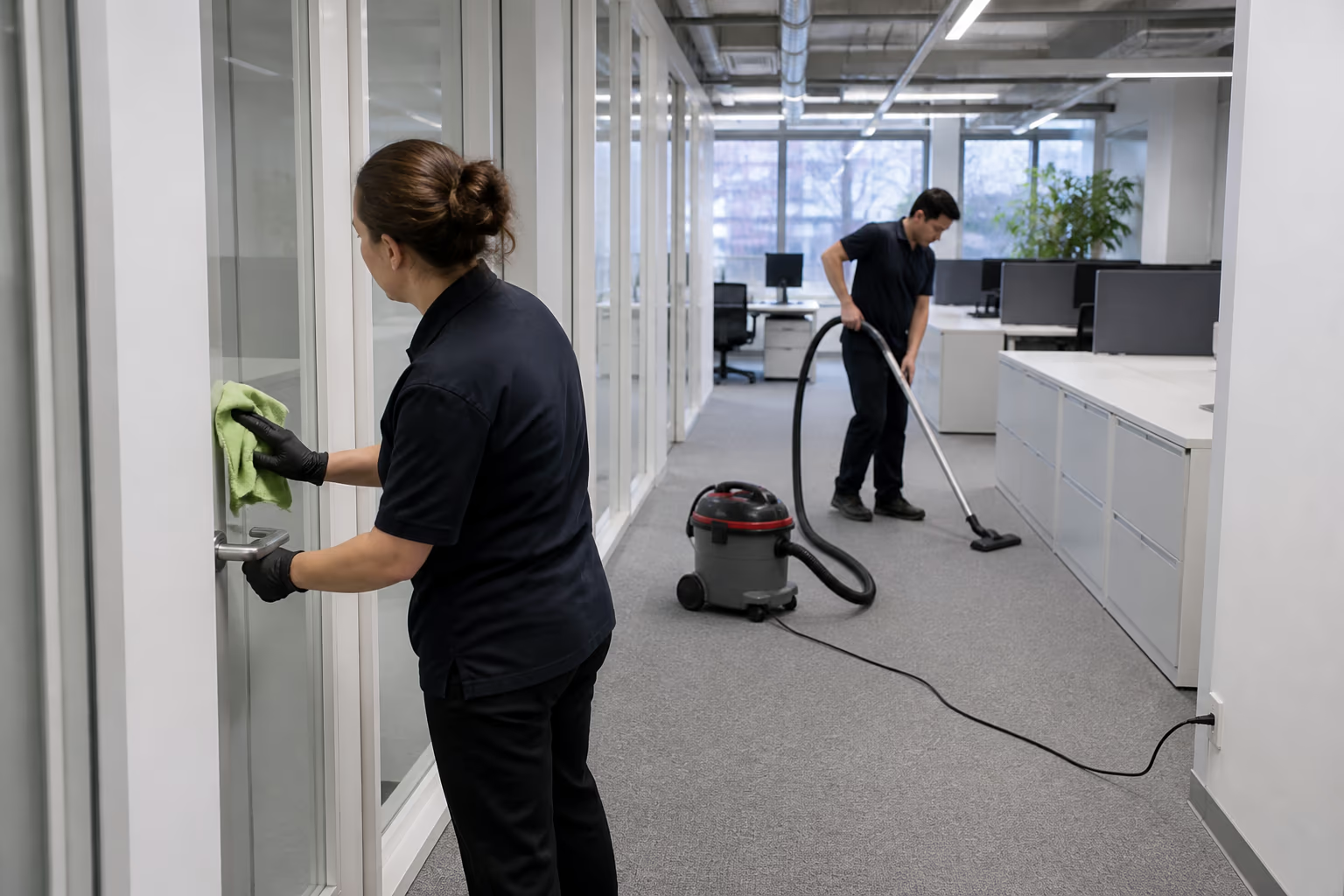
At its simplest, janitorial service is the ongoing routine that keeps a building clean and running from day to day, while cleaning service is the scheduled or one-off work that restores a space to a higher standard. Both involve cleaning, but they answer different needs.
A janitorial program is a standing arrangement. A crew comes on a fixed schedule, usually several times a week or every night, and handles the recurring tasks that keep the building presentable: washrooms, waste, floors, kitchens and high-touch surfaces. Cleaning service, by contrast, is often booked for a specific job, such as a spring deep clean, a move-in clean or carpet extraction.
Neither is better than the other. They are different tools, and many buildings use both. Understanding the distinction helps you budget, choose the right provider and avoid paying for the wrong kind of work. Our guide on how to choose a cleaning service walks through the same provider-vetting questions in more depth.

Difference 1: Scope of Work
The scope of work is the clearest difference. Janitorial service covers the recurring tasks that hold a baseline standard, while cleaning service goes deeper on a less frequent basis.
The janitorial scope is broad but routine: wipe surfaces, empty waste, clean washrooms, vacuum and mop floors, restock supplies and keep high-touch points clean. The cleaning scope is narrower but more intense: strip and wax floors, extract carpets, wash windows, deep-clean kitchens, descale washrooms and tackle accumulated grime.
That is why they sit on different schedules. A building needs janitorial work to stay presentable every week, but it only needs a deep clean a few times a year. When a business treats deep cleaning as part of the janitorial routine, it either overpays for daily intensity it does not need or under-delivers on the deep work it genuinely requires.
Difference 2: Frequency and Schedule
Frequency follows scope. Janitorial service runs on a recurring schedule tied to how the building is used, while cleaning service is scheduled as needed.
A typical janitorial program is daily or several times a week, with the cadence matched to traffic. High-use zones such as washrooms, kitchens and lobbies get the most frequent attention. Cleaning service happens less often, anywhere from monthly to annually, and is often planned around a season or an event.
The practical effect is a predictable rhythm for the business owner. Janitorial costs are a steady operating line you can budget for, while cleaning service is a periodic expense you can schedule when the work is due. Mixing the two up is how buildings end up with a spotless office every night and a carpet that has not been extracted in years, or the reverse.
A useful way to think about it is the difference between keeping a car washed and giving it a full detail. The weekly wash keeps it presentable, but it does not replace the periodic detail that restores the paint and the interior. A building works the same way, and buildings that only get one of the two are the ones that start to look neglected in a way nobody can quite name.
Difference 3: Contract and Commitment
Janitorial service is almost always a contract, because a recurring crew and schedule need a standing agreement. Cleaning service is more often a one-off booking, though it can be bundled into a maintenance program.
A janitorial contract sets out the frequency, the scope, the price and how quality is checked. It is a long-term commitment that gives both sides predictability, and it usually includes a notice period and terms for renewal. Cleaning service is booked per job, quoted on the scope, and ends when the job is done.
This changes how you buy. For janitorial work you are choosing a long-term partner and should evaluate training and quality control carefully. For cleaning service you are buying a specific result and should compare quotes against a clear scope of work. Each deserves a different kind of diligence.
Difference 4: Training and Expertise
The two services draw on different skills. Janitorial staff are trained for the recurring routine, while deep cleaning often requires specialised equipment and technique.
Whichever category you buy, the training duty follows the employment relationship. Ontario's Occupational Health and Safety Act requires an employer to instruct, inform and supervise workers to protect their health and safety and to appoint competent supervisors, so the question is less about the service label than about who is legally the crew's employer. The province lists the duty in one line: “Take every precaution reasonable in the circumstances for the protection of a worker”.
The janitorial skill set is broad but steady: proper product use, efficient routines, attention to detail and safe chemical handling, including WHMIS 2015 training for the products used. The deep-cleaning skill set is narrower but deeper: carpet extraction, floor refinishing, window cleaning and the equipment that goes with them.
A provider that does both well trains for both. When you are choosing between janitorial and cleaning service, ask the provider about the specific training behind each, because a crew that is excellent at daily cleaning is not automatically equipped to strip and refinish a vinyl floor. Matching the expertise to the task is how you protect the surfaces.
The documentation matters too. For janitorial work, look for a provider that can show WHMIS 2015 training records and a safety plan for the products it uses every day. For deep cleaning, ask about the equipment qualifications and the procedures for the heavier jobs. A provider that is transparent about its training is easier to trust with either kind of work.
Difference 5: Equipment and Supplies
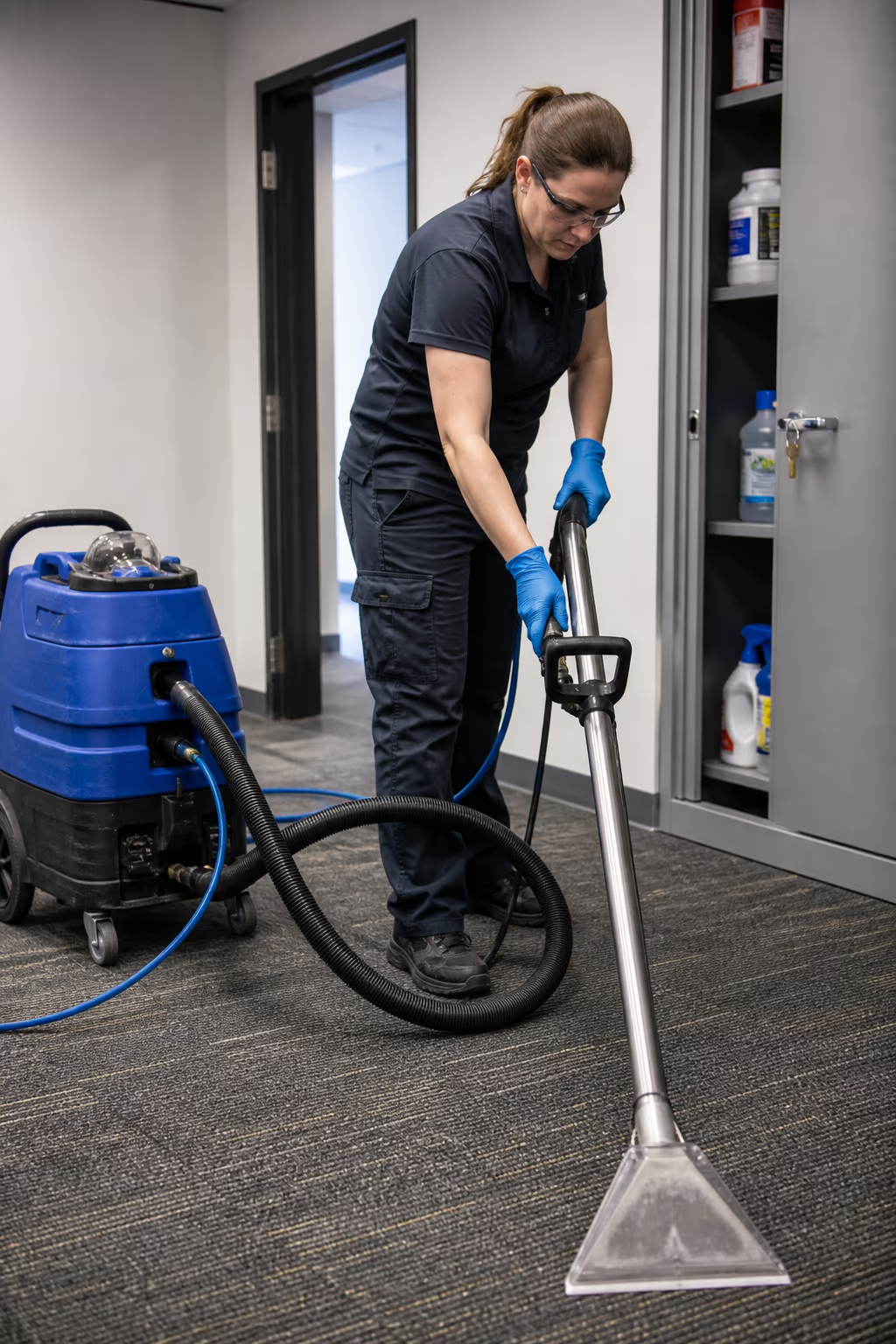
The equipment changes with the job. Janitorial service leans on the daily workhorse tools, while cleaning service brings in heavier machinery that is not practical for every visit.
Janitorial equipment includes vacuum cleaners, mops, microfibre cloths, buckets, caddies and the products for daily use. Cleaning service brings carpet extractors, floor machines, buffers, pressure washers and the specialised chemicals for deep work. Owning that equipment is part of the cost, and it is why deep cleaning is quoted differently from the daily routine.
It is also worth asking what is included in the price. Some providers supply everything, while others expect the building to supply certain consumables. For both janitorial and cleaning service, confirm the equipment and supply line in writing so the quote you compare is the cost you pay.
Difference 6: Cost and Billing Model
The money works differently. Janitorial service is billed as a recurring operating cost, usually monthly, while cleaning service is billed per job or per project.
Janitorial pricing tends to be quoted per square foot, per hour or per visit, and it recurs on the schedule. Deep cleaning is quoted on the scope: the square footage of carpet to extract, the number of windows, the condition of the floor. The two rarely use the same rate, and neither should be treated as a fixed price that applies everywhere.
Because they are different lines, it is worth keeping the budgets separate. A business that folds deep cleaning into a janitorial budget may skip it when cash is tight, and a business that expects the janitorial crew to absorb deep cleaning pays for the wrong kind of labour. Planning both lines up front keeps the building maintained and the numbers honest.
A good rule of thumb is to ask what the monthly number actually covers before you compare it. A low monthly janitorial rate that quietly excludes supplies, restocking or periodic floor care can cost more over a year than a higher rate that includes them. For both services, the price only means something when you know exactly what is inside it. Comparing a janitorial quote against affordable cleaning services Ottawa businesses use for smaller spaces can also help confirm whether the rate you are seeing fits the size of your building.
Difference 7: The Occupancy Standard
Finally, the two services operate at different standards because they are protecting different moments. Janitorial service holds the everyday baseline that occupants live with, while cleaning service restores the standard between or after events.
The everyday baseline is about consistency: the washroom is clean every day, the kitchen is wiped, the lobby looks cared for. The restored standard is about peaks: the carpet looks new, the floor shines, the windows are clear. Most buildings need a strong everyday baseline and an occasional restoration, which is another way of saying most buildings need both services.
This is the lens for deciding. If your concern is how the building looks on a normal Tuesday, you need janitorial service. If your concern is the condition beneath the routine, you need deep cleaning. Knowing which question you are asking tells you which service to book.
When You Need Janitorial Service vs Cleaning Service
A quick set of signals helps you recognise which service your building actually needs right now:
| A washroom that is serviced daily but feels tired and stained | time for a deep clean. |
|---|---|
| Carpet that looks vacuumed but has lost its bounce and colour | carpet extraction. |
| Floors that are wiped but dull and scratched | strip and refinish. |
| An office that is tidy every day but nobody remembers when it was deep-cleaned | book a deep clean on the calendar. |
| A move-in, move-out or post-renovation space | project cleaning, not a routine. |
| A building that is presentable but the occupants keep complaining | strengthen the janitorial routine first. |
These signals point to different work, and the right response is usually a mix rather than an either-or. A healthy commercial building runs a solid janitorial program and schedules deep cleaning as its periodic partner.
The season is a good reminder of why both matter. In Ontario, winter salt and grit work their way into entryways and floors all season long. The janitorial routine manages them daily, but it takes a periodic floor extraction to undo what a full winter of grit does to a finish. That is why the deep-cleaning calendar and the winter plan belong in the same conversation.

How to Decide What Your Business Needs
Start from the building, not the label. Walk the space, note which zones are being maintained and which are being neglected, and decide whether the gap is in the daily routine or in the periodic deep work.
- Audit the current state:which areas are presentable and which are deteriorating.
- Confirm the routine:is the janitorial scope and frequency holding the everyday standard?
- Identify the deep needs:which surfaces have gone too long without restoration.
- Set a budget for both lines so the deep work is not forgotten.
- Choose a provider that can deliver the service you actually need.
For many businesses the practical answer is a janitorial contract with periodic deep cleaning scheduled on the same calendar. That keeps the everyday standard high and protects the investment in floors and carpets at the same time. Our affordable cleaning pricing guide breaks down how similar cost decisions play out for smaller cleaning jobs.
For business owners across Ottawa and the surrounding region, our commercial janitorial services in Ottawa cover the recurring routine, and we can schedule the deep cleaning that keeps surfaces looking new. It is one partner managing both sides of the equation.
If you are comparing providers, our checklist for hiring a commercial cleaner walks through the questions that matter, from training to how quality is checked and reported. It is a useful starting point for deciding who should handle your building.
Formatted Step-by-Step Checklist for Choosing Between Janitorial and Cleaning Services
Use this five-step process to choose the right service for your building:
- Step 1.Assess the building:walk the space and note which zones are maintained and which are deteriorating.
- Step 2.Define the baseline:write down the janitorial scope and frequency that should hold every day.
- Step 3.List the deep work:identify the carpets, floors and windows that need periodic restoration.
- Step 4.Set two budgets:plan the recurring janitorial line and the periodic deep-cleaning line separately.
- Step 5.Shortlist providers:ask each one about its janitorial program and its deep-cleaning capability.
- Step 6.For a single partner covering both, our Ottawa janitorial cleaning crews bundle the daily routine with scheduled deep cleaning.

FAQ
What is the difference between janitorial and cleaning services?
Janitorial service is the recurring routine that keeps a building presentable day to day, while cleaning service is the scheduled or one-off work that restores a space to a higher standard. Most buildings need both at different times.
Which is cheaper, janitorial or cleaning service?
They are different lines, not cheaper versions of each other. Janitorial is a recurring operating cost, while cleaning service is a periodic project cost. Comparing them directly is like comparing a phone bill with a renovation.
How often should I get deep cleaning done?
It depends on traffic and use. Carpets and hard floors usually need periodic restoration one to a few times a year, while windows and kitchens follow their own schedules. A professional can assess your building and recommend a practical rhythm.
Can the same provider do both janitorial and deep cleaning?
Many providers offer both, but it is worth asking about the training and equipment behind each. A crew that is strong at daily cleaning is not automatically equipped for floor refinishing, so confirm the expertise matches the task.
How is janitorial service priced?
Janitorial pricing is typically quoted per square foot, per hour or per visit, and it recurs on the schedule. Rates vary by market and scope, so treat any figure as a starting point and compare itemised quotes against the same scope.
Do I need a contract for cleaning service?
Cleaning service can be booked per job without a long-term contract. Janitorial service is usually a standing agreement because it depends on a recurring crew and schedule. Both should be covered by a written scope of work.
What does a janitorial contract include?
A clear janitorial contract sets out the frequency, the scope of work, the price and how quality is checked, plus notice and renewal terms. A written agreement prevents the scope from drifting and keeps the price honest.
Can a building skip deep cleaning if the janitorial routine is good?
For a while, yes. A strong daily routine keeps a building presentable, but it cannot reverse the gradual build-up in carpets, floors and fixtures. Deep cleaning protects the investment in those surfaces and stops them from reaching the point where they need to be replaced.
How long does a typical deep clean take?
It depends on the scope and the size of the area. A single office or a small set of rooms can often be completed in a day, while a full building extraction or floor project may take several days and is usually planned outside business hours.
How do I know which service my building needs?
Walk the building and ask whether the problem is the everyday routine or the condition beneath it. If a serviced washroom still feels stained or a vacuumed carpet has lost its bounce, the gap is in deep cleaning rather than the daily standard.
Wrapping Up
Janitorial service and cleaning service are different tools, and a healthy building usually needs both: a recurring routine to hold the everyday standard and periodic deep work to protect the investment in surfaces. Understanding the seven differences helps you budget, choose and schedule each one. Contact Good Cleaner Co. for a free quote and a plan that covers both sides of your building's needs.
Keep reading
More from Good Cleaner
Services that fit
- Janitorial Services in OttawaRecurring janitorial services in Ottawa for offices, warehouses, retail, dealerships and schools. Eco-friendly commercial cleaning, customized plans, free quote.
- Professional Office Cleaning Services in OttawaOffice cleaning services in Ottawa for corporate offices, clinics and professional suites. After-hours scheduling, eco-friendly products and a free quote.
About the author
Service areas
- Ottawa
- Kanata
- Nepean
- Orléans
- Barrhaven