
How to Choose the Right Cleaning Service for Your Business: Commercial RFP Guide
This is a practical procurement guide for business owners and facility managers in Ottawa. It explains the types of cleaning services available, the criteria to evaluate in an RFP, and the contract terms that protect you after the ink dries. Good Cleaner Co. delivers top-rated commercial office cleaning services in Ottawa with transparent pricing.
Quick Summary
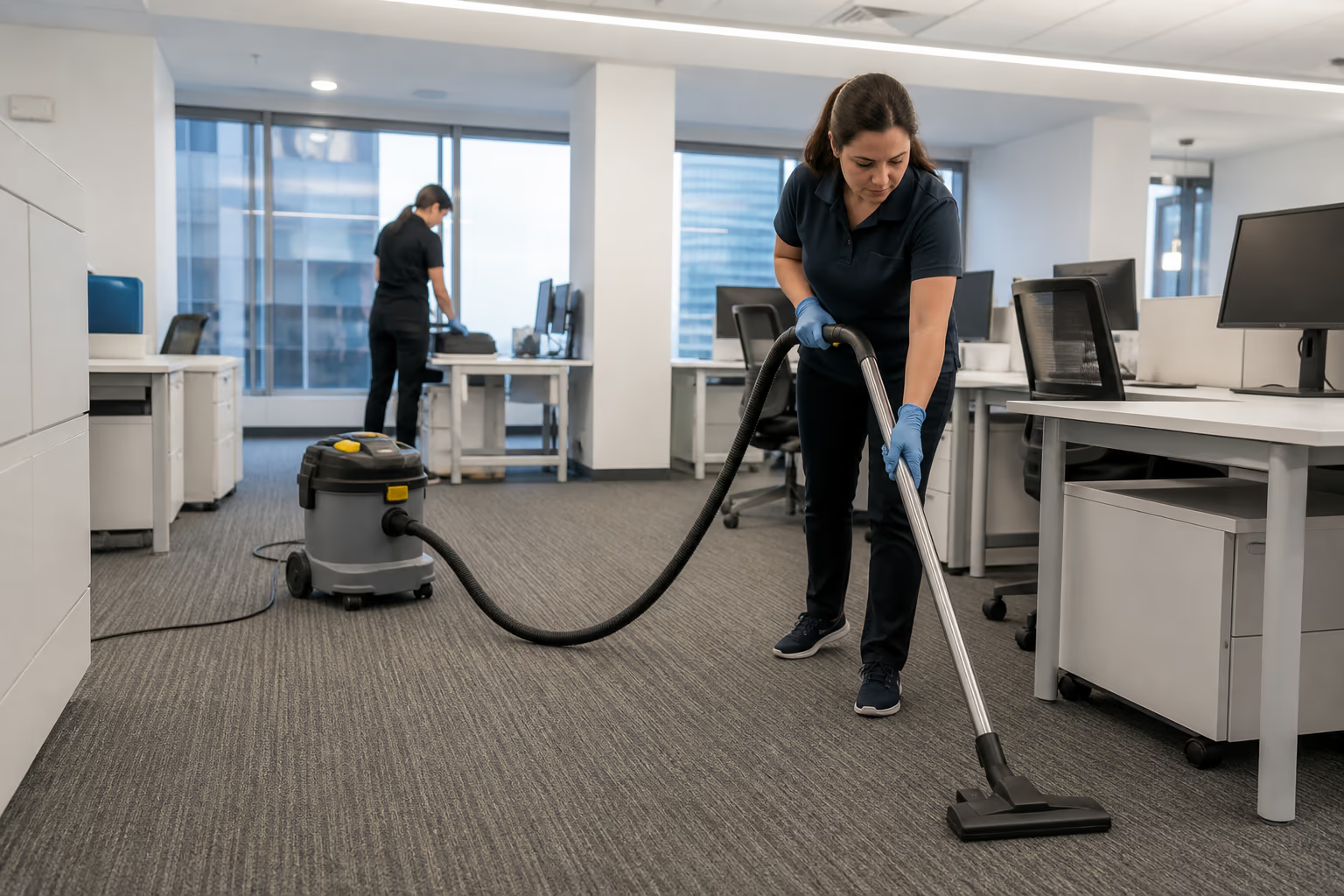
Choosing the right cleaning service for your business starts with a clear RFP, not a gut feeling. This guide walks through what to verify before you sign a janitorial contract, from WSIB coverage and WHMIS training to the questions that reveal whether a vendor actually delivers. You will also learn how to compare bid types, what to include in the contract, and how to onboard a new cleaning team smoothly.
In this guide
The Strategic Value of Professional Janitorial Procurement
Selecting a commercial cleaning vendor for your Ottawa business is an important operational decision that impacts employee health, facility safety, and brand reputation.
Low-cost cleaning vendors often use harsh uncertified chemicals or experience high staff turnover that leads to missed cleaning tasks.
Establishing a structured RFP evaluation process guarantees that your selected janitorial partner meets all WSIB, WHMIS, and environmental standards from the first site visit through every nightly shift.
Key Criteria in Commercial Cleaning RFP Proposals
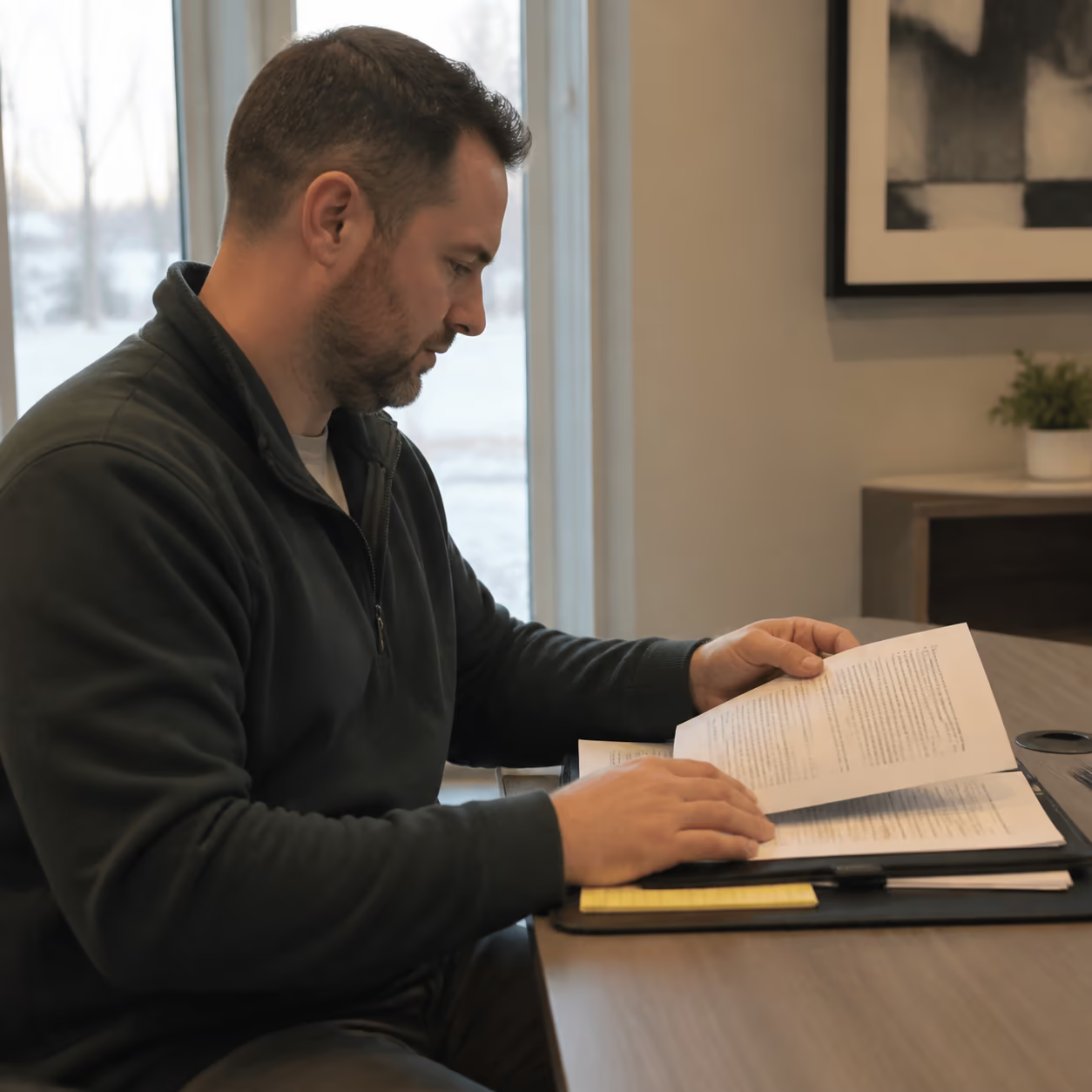
Discover 3 essential criteria when evaluating commercial cleaning proposals:
Formatted Step-by-Step Commercial RFP Evaluation Checklist
Follow this checklist when evaluating commercial cleaning bids:
- Step 1.Require Proof of Active WSIB Clearance:Verify active clearance documentation.
- Step 2.Verify WHMIS 2015 Safety Training Certificates for All On-Site Staff:Inspect employee safety training records.
- Step 3.Mandate EcoLogo Certified Non-Toxic Green Chemistry on All Surfaces:Confirm non-toxic product compliance.
- Step 4.Inspect Monthly Supervisor Quality Inspection Software Logs:Review digital inspection software reports and walkthrough frequencies.
- Step 5.Ensure Dedicated 2-Hour Response Time Local Account Management:Confirm fast account manager communication channels.
- Step 6.If you need a team or a recurring schedule, use commercial office cleaning services in Ottawa to discuss scope, access, and timing before deciding whether it fits.
Types of Cleaning Services Explained
Before you send out an RFP, it helps to be clear about what kind of cleaning your business actually needs. The terms get thrown around loosely, and the difference matters for both scope and price.
House cleaning:
Focused on homes, using residential equipment and schedules. Not what you want for an office building with washrooms and a breakroom.
Office cleaning:
Day-to-day maintenance of a workplace, usually nights or early mornings, covering desks, kitchens, washrooms, and common areas.
Janitorial services:
A broader commercial term for ongoing facility upkeep, including floors, waste, washrooms, and sometimes light maintenance duties.
Deep cleaning:
An intensive reset that targets built-up grime, behind appliances, inside vents, and on baseboards. Usually done quarterly or seasonally.
Carpet and upholstery extraction:
Hot water extraction for carpets, chairs, and cubicle panels, typically twice a year in high-traffic offices.
Most businesses end up with a combination. A nightly office cleaning for daily upkeep, plus a quarterly deep clean and a semi-annual carpet extraction, is a common and sensible pattern. If your business only needs carpets addressed occasionally, a standalone carpet cleaning service Ottawa booking can cover that without a full contract.
One common mistake is buying a residential house cleaning package for a commercial space. Residential teams are not set up for washroom disinfection schedules, overnight access, or the floor-care equipment an office needs. Match the service type to the building, and you will pay for what you actually use.
Questions to Ask Every Cleaning Company Before You Sign
A short, focused list of questions will tell you more about a cleaning company than any brochure. These are the same questions worth asking when comparing what makes for the best office cleaning service in Ottawa across different vendors. Here are the ones we'd ask, and the answers you should expect.
Are you WSIB-cleared, and can I see the certificates? A reputable company hands these over without hesitation.
Do your cleaners have background checks and, where needed, security clearances? Government-adjacent buildings should make this a hard requirement.
What chemistry do you use on washrooms and desks? You want Health Canada DIN disinfectants and EcoLogo-certified products, and you should be able to see the SDS sheets.
How do you verify the work is actually done? Digital inspection logs and scheduled supervisor walkthroughs beat a monthly invoice with no detail.
Who do I call at 2 a.m. if there's a flood or a spill? A real account manager with a 24/7 number separates a partner from a vendor.
One question is worth asking because the law already answers it. Ontario's employer duty under subsection 25(1) of the Occupational Health and Safety Act requires prescribed equipment, materials and protective devices to be provided and maintained in good condition, and prescribed measures and procedures to be carried out in the workplace. The province sets a written threshold: “In workplaces in which more than 5 workers are regularly employed, prepare a written occupational health and safety policy, review that policy at least once a year and set up and maintain a program to implement it”.
If a company hesitates on chemistry or verification, that's your answer. Move on to the next bid.
How to Onboard a New Cleaning Vendor
The first 30 days with a new cleaning vendor set the tone for the whole contract. A little structure up front prevents a lot of frustration later.
Walk the building together:
Take the account manager room by room and write down what matters, from the washroom schedule to the boardroom glass.
Hand over a clear scope of work:
List every task, its frequency, and which products and equipment you expect to be used.
Set the security protocol:
Issue keycards, log access, and agree on how cleaners sign in and out each shift.
Schedule a two-week check-in:
Review what's working and what isn't while the team is still learning the building, not six months in.
The best relationships feel like a partnership, not a transaction. A vendor that takes onboarding seriously is usually one that takes the contract seriously.
What to Include in Your Cleaning Contract
Once you've picked a vendor, the contract is where everything gets locked down. A well-written cleaning contract protects you from scope drift, surprise fees, and unclear expectations. Here's what should be in it.
The full scope of work:
Every room, every task, and how often each one happens. If it isn't written down, it isn't part of the job.
Pricing and how it's calculated:
Whether it's per square foot, per hour, or a flat monthly rate, the contract should say exactly how the number is built and what could change it.
Supplies and equipment:
Which products, which machines, and who pays for them. If EcoLogo chemistry and HEPA vacuums matter to you, they belong in writing.
WSIB proof:
The contract should require current certificates and state that coverage stays in force for the life of the agreement.
Security and access rules:
Keycards, sign-in logs, background checks, and confidentiality terms for anyone entering the building after hours.
Quality inspection and correction:
How the work gets checked, how often, and what happens when something is missed. A clear correction window beats an argument later.
Notice and exit terms:
How much notice either side needs, what happens to supplies and keys at the end, and what constitutes grounds for termination.
A contract that covers these seven points is a contract you can hold onto. The details aren't bureaucracy; they're the difference between a clear partnership and a dispute waiting to happen.
Serving Ottawa's Business Neighbourhoods
Good Cleaner Co. cleans offices, retail units, clinics and industrial space across Ottawa, from the tech campuses in Kanata to downtown professional floors, the retail strips in Orléans and the business parks in Nepean and Barrhaven. The program is built around how each building is actually used.

Practical planning for this situation
For a manager comparing proposals, the sensible starting point is choosing a cleaning service for a business. Begin with a walk-through and write down the building hours, occupied areas, floor types, washrooms, access, and the person who can answer a missed-task question. That gives the work a real boundary and avoids treating a generic package as if it already understood the space.
Use the written notes to decide what belongs in a regular routine and what needs separate time, access, or approval. The useful test is whether another person could read the scope and understand the task without being told to rely on a promise.
Seasonal considerations in Ottawa
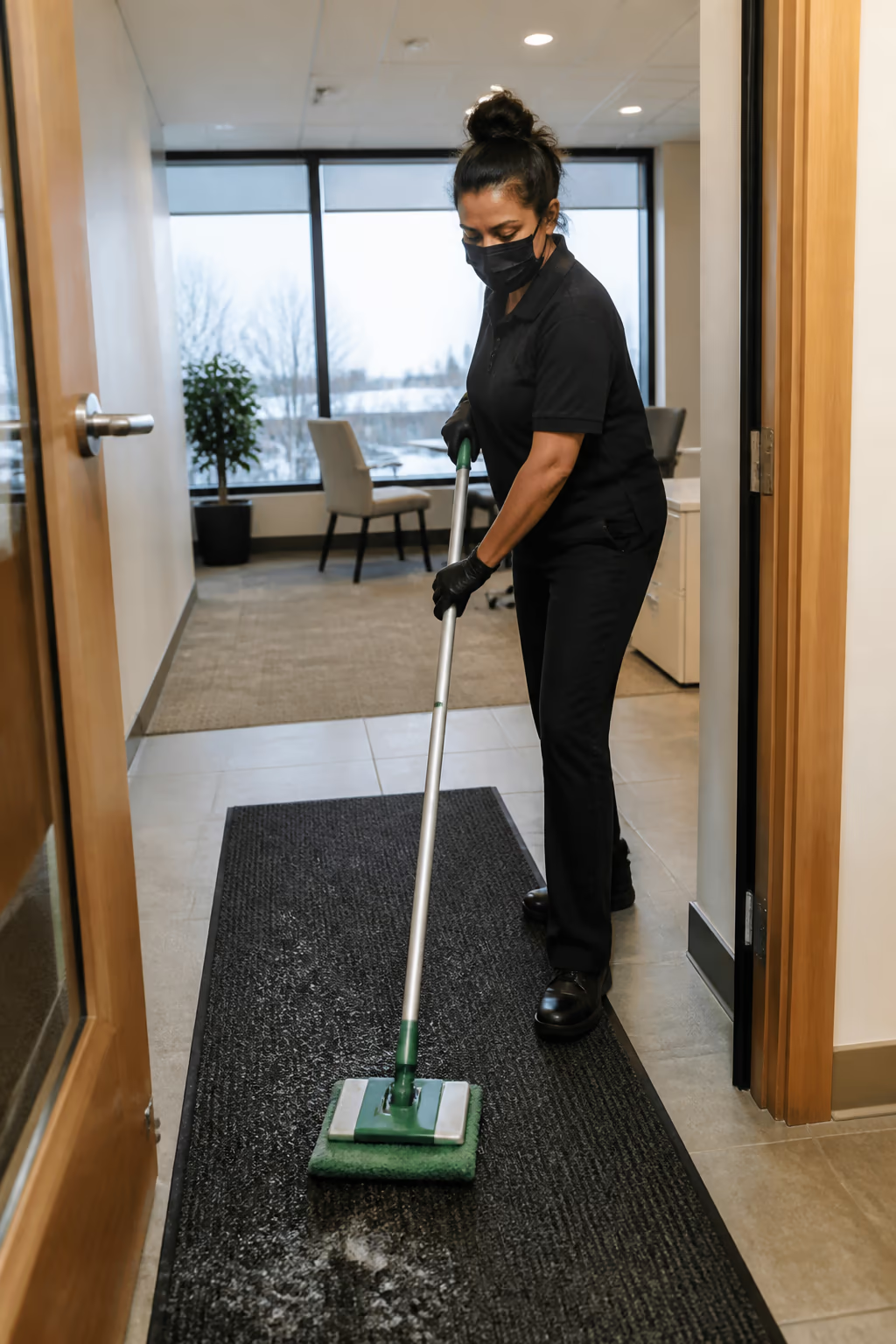
Local conditions matter, but they do not require a script. In this topic, winter salt at entrances and seasonal changes in occupancy can alter the work without changing the whole contract. Review the condition of the actual space before changing the products, equipment, or frequency.
A short seasonal review is usually enough: notice what has changed, name the affected area, and agree on the practical response. That keeps maintenance connected to the property rather than a broad list of place names.
Safe, responsible cleaning
Choose methods that suit the material and follow the product or equipment instructions. Keep people away from a wet or actively cleaned area, and stop when a surface reacts unexpectedly.
When a task involves an unfamiliar finish, access issue, or safety concern, ask before continuing. A careful pause is more useful than a confident shortcut and protects the people using the space.
Considering professional help
A service conversation should stay anchored in the space and the requested work. For choosing a cleaning service for a business, explain the building hours, occupied areas, floor types, washrooms, access, and the person who can answer a missed-task question. Ask for the proposed tasks, timing, and any limits in writing.
If you want to explore help, use office cleaning programs in Ottawa to describe the scope and decide whether it suits the situation. This is a request for information, not a promise about a result.
How to review the routine
Before changing the routine, take a few minutes to describe the present condition in plain language. Start with the building hours, occupied areas, floor types, washrooms, access, and the person who can answer a missed-task question. This makes it possible to decide what is necessary without inflating a small issue into a large project.
Ask the people who use the space what causes the most friction. Their answer may be a difficult entry, a storage gap, a time when work cannot happen, or a surface that needs a gentler method. Those details are the basis for a useful plan.
Try one visible adjustment at a time. Record why it was made, what area it affects, and what a satisfactory result looks like. That approach is easier to review than changing a whole routine at once.
Keep feedback specific: name the room, surface, timing, and expected result. Clear notes help a household, volunteer group, or service team work through a problem without blame or vague expectations.
Revisit the plan after a genuine change in use, condition, or season. A routine should be steady enough to follow and flexible enough to stay useful.

FAQ
What should a business look for in a commercial cleaning RFP response?
Look for active WSIB clearance certificates, WHMIS certified staff, EcoLogo green chemistry, and digital quality control walkthroughs.
How does Good Cleaner Co. ensure facility security during after-hours cleaning?
All cleaning technicians undergo background checks, wear branded uniforms with photo IDs, and follow strict keycard management protocols.
Can commercial cleaning contracts be customized for small business budgets?
Yes. We design customized janitorial scopes ranging from 1 to 7 visits per week based on your facility footprint and budget.
What is the difference between a day porter and a nightly janitorial crew?
Day porters provide continuous daytime maintenance such as spill response and washroom restocking, while night crews execute deep floor care and disinfection without disrupting employees.
How often should a commercial office be deep cleaned in Ottawa?
High-traffic offices should schedule a deep clean quarterly and hot water carpet extraction twice yearly, after winter salt tracking and before heavy summer use.
Do Ottawa cleaning vendors need special security clearances for government offices?
Government and defence-adjacent offices require cleaners holding verified background checks and, in some cases, higher security clearances that command specialized labour rates.
What environmental standards apply to Ottawa commercial cleaning contracts?
LEED-certified buildings require EcoLogo green chemistry, colour-coded microfibre loops, and strict waste segregation to maintain certification credits.
How do I compare two cleaning quotes that look very different?
Look at scope, not just price. The cheaper bid may cover fewer tasks, use cheaper products, or schedule fewer visits. Line the quotes up task by task, and ask each vendor to explain anything that is missing.
How do I request a commercial cleaning quote from Good Cleaner Co.?
Send a request through the booking form and we will come back to you with the scope and the price. Nothing is charged online. You can also call or text 613-664-5678, or email info@goodcleaner.ca, and the office answers between 8 AM and 8 PM every day.
How quickly can a cleaning company start service in Ottawa?
Most commercial cleaning vendors can start within one to two weeks, depending on background checks, security clearances, and equipment. Government facilities with clearance requirements take longer.
What happens if the cleaning quality slips mid-contract?
A good contract includes a quality clause: you report the issue, the vendor corrects it within a set window, and a supervisor walkthrough verifies the fix. If that process doesn't exist, the contract isn't protecting you.
Can my cleaning company clean around sensitive or confidential documents?
Yes, if you set the rules in the contract. A professional vendor signs a confidentiality agreement, background-checks its staff, and trains cleaners to dust around paperwork rather than through it.
How do I know if I'm overpaying for cleaning?
Compare your contract against the scope of work and the actual frequency of visits. If the building is consistently clean and the account manager can show inspection logs, the price is doing its job. If you are paying for tasks that never happen, renegotiate the scope. Our related guide asks the broader question: is a cleaning service worth the money.
Is it worth hiring a day porter in addition to nightly cleaning?
For busy lobbies, retail floors, and medical clinics, a day porter provides spill response and washroom upkeep during hours when a night crew isn't present. It's a worthwhile add-on for high-traffic spaces.
How do cleaning companies handle holidays and long weekends?
Most contracts define holiday coverage in advance. Core tasks still get done, and catch-up work is scheduled on the next working day. Ask your vendor to put the holiday plan in writing.
Should my cleaning quote include supplies?
It can go either way, and both are legitimate. Just be sure the contract says explicitly whether supplies are included or billed separately, so there's no surprise on the first invoice.
Does the price of commercial cleaning change with the seasons?
Frequencies can shift seasonally, such as extra carpet extraction after winter salt and more intensive summer attention to washrooms. A good contract handles these as planned work, not surprise charges.
Wrapping Up
Choose a cleaning service by testing how it will work with your building, not by comparing sales language alone. Give each provider the same written scope, then ask about site access, supervision, supply ownership, communication, and the process for reporting a missed task or damage. Check that the schedule fits staff hours and security rules. A short trial or early review meeting can reveal whether instructions are being understood before a long commitment. The right choice is the provider whose documented process matches your operations and whose limits are clear enough to manage.
Keep reading
More from Good Cleaner
About the author
Service areas
- Ottawa
- Kanata
- Nepean
- Orleans
- Barrhaven