
Cleaning Standards At Hospital - Good Cleaner
Hospital cleaning is held to the strictest standards in any building, and for good reason. Cleanliness and hygiene are paramount in hospitals to prevent infections and safeguard both patient and staff health. The methods those facilities use are not a mystery, and bringing the same rigor to an office, clinic, or home makes everyday spaces safer too.
Quick Summary
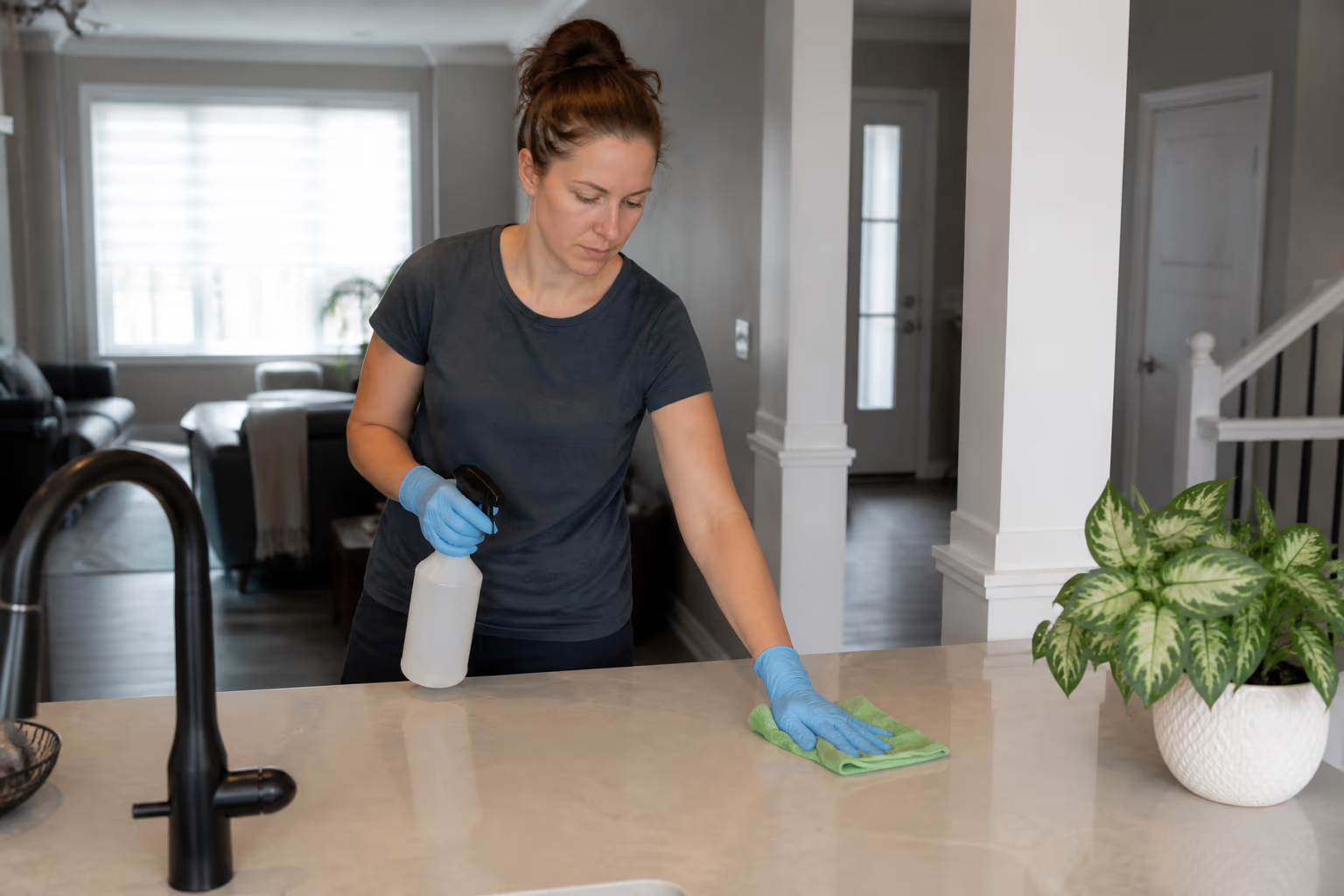
Hospital cleaning standards prioritize infection prevention through a clean, sanitize, disinfect continuum, risk-based attention to high-touch surfaces, and proper dwell time for products. Applying that same discipline to offices, clinics and homes brings hospital-level rigor to everyday spaces and helps keep people safer.
In this guide
Why Hospital Cleaning Standards Set the Bar
Cleanliness and hygiene are paramount in hospitals to prevent infections and safeguard both patient and staff health. Every surface is treated with that purpose in mind, from the operating room to the waiting area.
Hospital standards matter because the people inside are often the most vulnerable. Patients may have weakened immune systems, open wounds, or medical devices, so a germ that is harmless to a healthy adult can be serious for them.
The same logic applies outside the hospital walls. Offices, schools, gyms, and homes bring people together and share many surfaces, so borrowing hospital methods, not hospital equipment, makes everyday environments safer. In a related clinical setting, dental office cleaning standards apply many of the same disinfection principles, which shows how consistently the discipline transfers.
- Hospital cleaning is risk-based, meaning higher-risk areas get more rigorous treatment.
- Every product is used exactly as the label and the standard require.
- Cleaning, sanitizing, and disinfecting are treated as separate, ordered steps.
- The work is documented so standards can be verified and improved.
Readers often wonder whether this is realistic for a small business or a household. The answer is yes, because hospital standards are mostly about order and discipline rather than expensive equipment. A small clinic, a busy office, and a family home can all borrow the method without the institutional scale.
What Makes Hospital Cleaning Different
The difference between hospital cleaning and ordinary cleaning is not the mop; it is the discipline around every step.
Ordinary cleaning often combines all the jobs into one quick pass. Hospital cleaning separates them: clean the surface first to remove soil, then apply the right product and let it work for the time the label states.
Colour-coded cloths and equipment keep areas separate so a cloth that touched a washroom never reaches a patient room. Single-use items are common, and every task is logged.
- Cleaning happens before disinfecting, never after.
- Products are matched to the surface and the level of risk.
- Cloths and equipment are segregated by area and colour.
- Every task is checked and recorded by name and date.
The Cleaning Continuum: Clean, Sanitize, Disinfect
In healthcare, the three tiers of hygiene are treated as a strict sequence rather than interchangeable words.
Cleaning physically removes dirt and organic material with detergent, water, and friction. Sanitizing reduces germs on a surface to a safe level, and disinfecting inactivates pathogens on hard, non-porous surfaces.
The order matters because a disinfectant cannot reach a surface that is still covered in soil. Hospital protocol always cleans first, then disinfects the high-risk areas.
Clean
remove soil and organic matter from every surface.
Sanitize
reduce germs to a safe level where needed.
Disinfect
inactivate pathogens on hard surfaces, using the label's dwell time.
Never combine the steps or skip the cleaning pass.
Understanding the continuum also stops wasted effort. A product that only sanitizes will not disinfect no matter how long it sits, and a surface that was never cleaned will not be made safe by a disinfectant applied over soil. Reading the label and following the order is the whole job.
High-Touch Surfaces and Risk-Based Cleaning
Hospital cleaning is planned by risk, not by a flat list of rooms. High-touch surfaces receive the most attention because they pass the most germs between people.
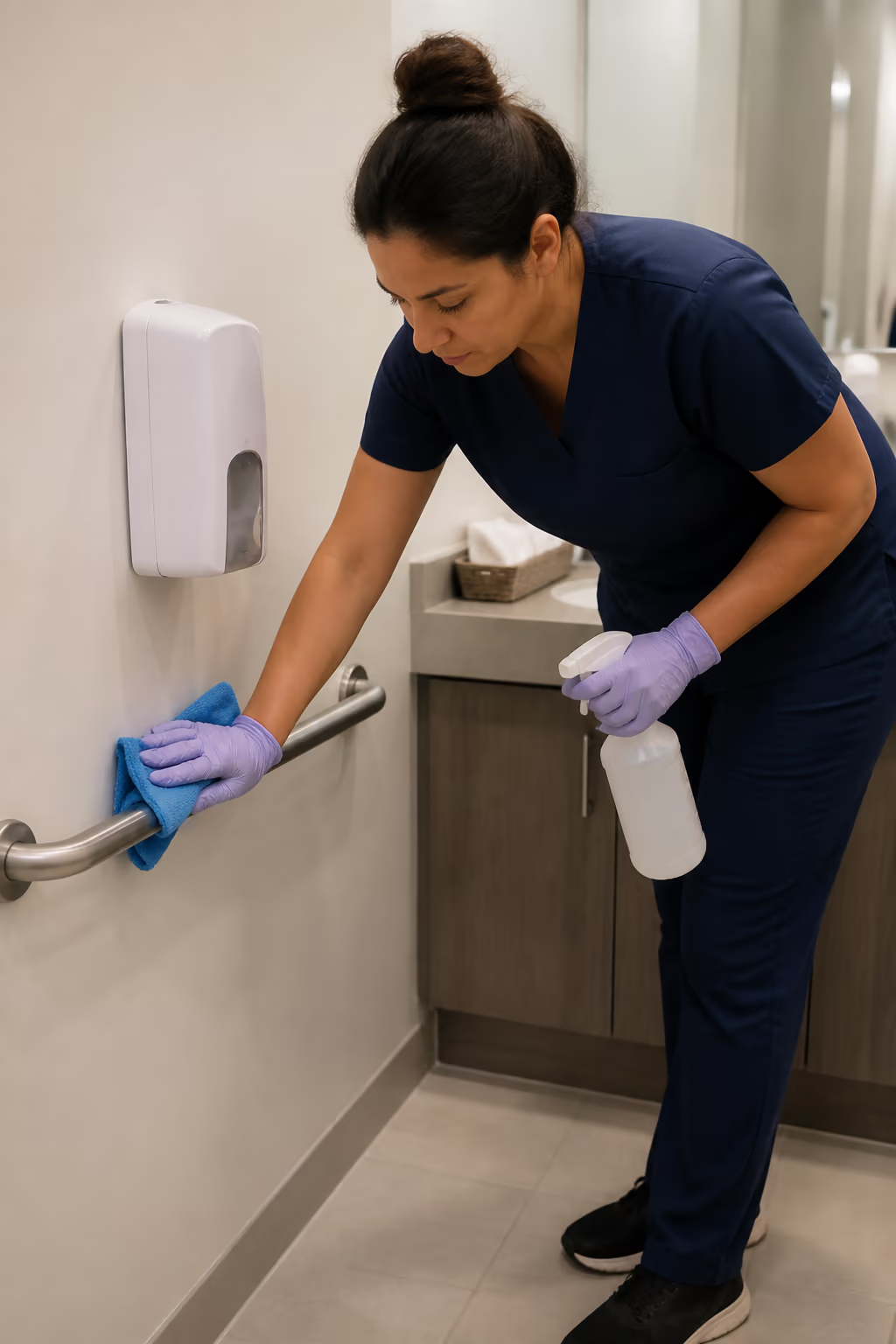
Door handles, light switches, bed rails, call buttons, taps, and handrails are cleaned and disinfected far more often than a surface that few people touch. The same reasoning works in an office, where kitchenette handles and elevator buttons see constant traffic.
A risk-based approach means the frequency follows the surface. A reception desk handled by hundreds of people deserves daily disinfection, while a rarely used storeroom only needs routine cleaning.
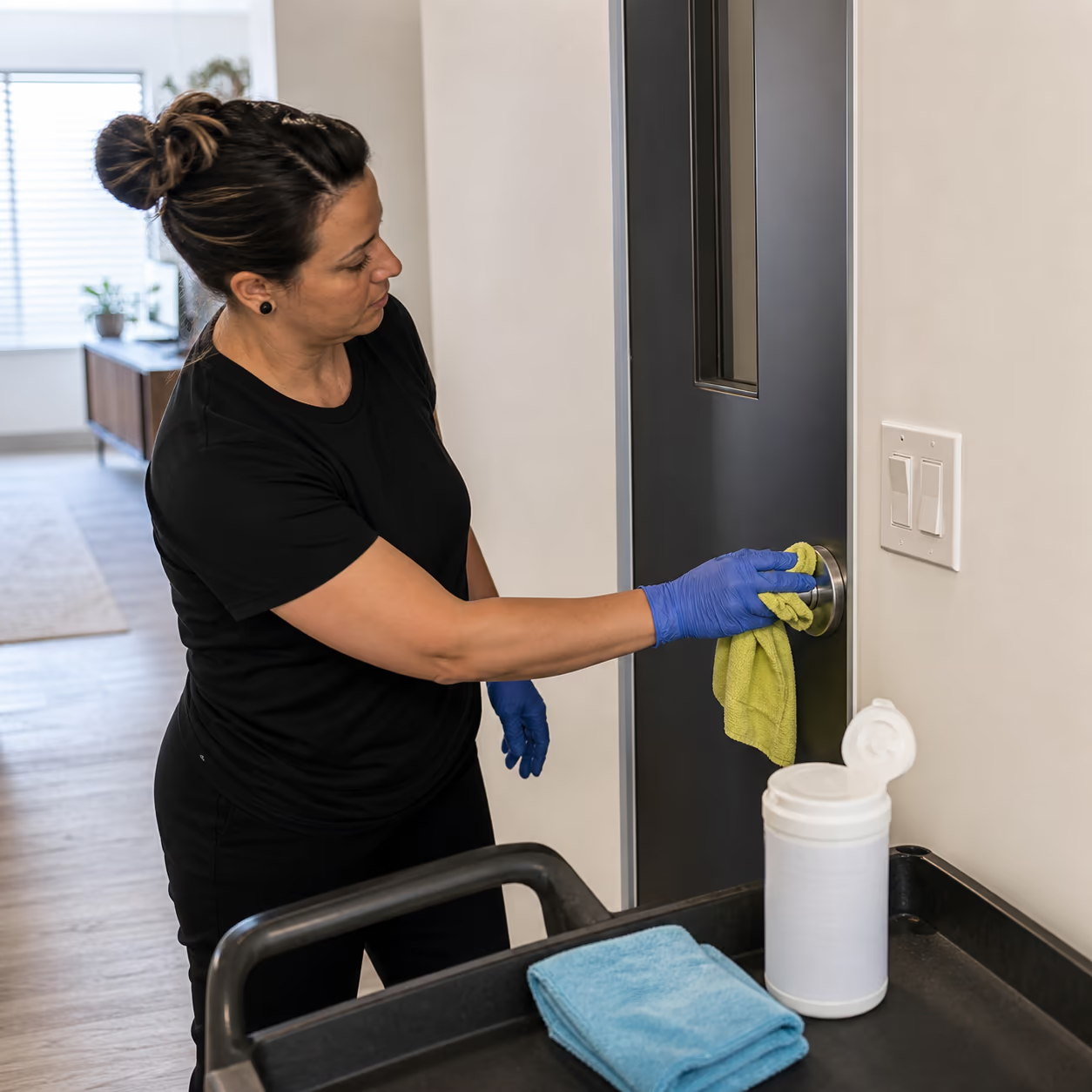
- Door handles, light switches, and handrails.
- Bed rails, call buttons, and medical device touch panels.
- Taps, sinks, and washroom fixtures.
- Counters, desks, and keyboards.
- Elevator buttons, stair rails, and entry push bars.
The same logic extends to electronics. Keyboards, phones, and touchscreens are touched constantly and cleaned rarely. A lightly dampened cloth and a product safe for electronics keeps those surfaces safer without risking damage.
Once you name the high-touch surfaces in your own space, the cleaning plan almost writes itself. Frequency follows traffic, and the product follows the surface.
Terminal Cleaning and Discharge Protocol
In a hospital, a patient room is not simply tidied when someone leaves; it is terminally cleaned.
Terminal cleaning is a systematic, top-to-bottom clean and disinfection of the entire room after discharge, including every surface the patient may have touched. The room is then checked and documented before the next patient arrives.
The same idea transfers to everyday life. After someone has been ill, a thorough clean of the bedroom, bathroom, and shared surfaces, followed by laundering of linens, resets the space so everyone else is protected.
- Work from high to low so falling dust is not redistributed.
- Clean and disinfect every horizontal and high-touch surface.
- Launder or replace linens, towels, and soft furnishings.
- Allow products their full dwell time before the room is used again.
- Document the clean so nothing is forgotten.
CSA Z317.12 and Canadian Healthcare Cleaning Standards
In Canada, healthcare facility cleaning is guided by a national standard, CSA Z317.12, which covers the cleaning and disinfection of healthcare facilities.
The standard sets out a risk-based approach, defines the roles and responsibilities of staff, and explains when cleaning, sanitizing, or disinfecting is required in each area. Following a recognised standard is how a facility proves its cleaning is not guesswork.
For a business, the value of the standard is the thinking behind it. You can borrow its principles, risk-based cleaning, documented procedures, and verified products, without needing a hospital-sized operation.
- CSA Z317.12 guides cleaning and disinfection in Canadian healthcare facilities.
- It uses a risk-based approach that prioritises high-risk areas.
- It requires documented procedures and trained, accountable staff.
- Its principles transfer directly to offices, clinics, and shared spaces.
The practical takeaway is that standards exist to make excellence repeatable. The same logic that protects a patient in an operating room protects a visitor in a clinic waiting area and a coworker at a shared desk.
Choosing Products: Health Canada DIN and Dwell Time
Product choice in hospital-grade cleaning comes down to two things: whether the product is approved for the claim, and whether it is given enough time to work.
Start with what the number on the bottle actually certifies. Health Canada's drug identification number is an eight-digit number assigned before a product may be marketed in Canada, and it signals that the formulation, the labelling and the instructions for use have been reviewed and authorized. Health Canada is blunt about what its absence means: “A drug product sold in Canada without a DIN is not in compliance with Canadian law.”
In Canada, a disinfectant that claims to kill germs must carry a valid Health Canada Drug Identification Number, or DIN. We are not quoting specific numbers here because the label on the bottle you buy is what matters, but the DIN is the signal that the claim has been reviewed.
- Confirm the product carries a valid Health Canada DIN.
- Read the dwell time on the label and follow it exactly.
- Match the product to the surface and the level of risk.
- Replace cloths between areas so products are not just pushed around.
- Store chemicals away from public reach and follow WHMIS 2015 labelling.
Most disinfectants also require a dwell time, the minutes the surface must stay visibly wet. Skipping that step is the most common reason a disinfecting pass does not actually disinfect.
Choosing the right product is the last discipline. A general cleaner for daily upkeep, a food-safe sanitizer for kitchen surfaces, and a disinfectant for high-risk points covers nearly every need in an office or home.
Bringing Hospital Standards Into Everyday Life
The point of understanding hospital standards is that most of them cost nothing extra to apply at home or in the office.
Start with the surfaces people touch most, clean before you disinfect, let products sit for their dwell time, and use separate cloths for kitchens and washrooms. Those four habits capture most of the value of a hospital protocol.
You do not need medical-grade products for a home or office. A Health Canada-registered general disinfectant, colour-coded microfibre cloths, and a simple schedule deliver most of the benefit at a fraction of the complexity.
- Clean high-touch surfaces daily, not just when they look dirty.
- Keep separate cloths for food and bathroom areas.
- Let every disinfectant sit for its full dwell time.
- Launder cloths, mop heads, and linens on a regular cycle.
- Document the routine so it is consistent rather than improvised.
In shared buildings, the routine matters even more because no single person owns the space. A front desk, elevator bank, or lunchroom used by hundreds of people deserves the same risk-based attention a hospital gives its waiting areas.
A Simple Hospital-Style Weekly Plan
Borrowing hospital discipline does not mean hiring a full-time cleaner. A simple weekly rhythm captures most of the benefit.
Daily work covers the surfaces people touch all day. High-touch points get cleaned and disinfected, entryways get mopped when the weather is wet, and the kitchen and washrooms stay tidy.
Weekly work goes deeper. Shared surfaces get a disinfecting pass, cloths and mop heads get laundered, and the corners that daily cleaning misses get their turn.
Daily
clean and disinfect high-touch surfaces, mop entryways, and keep the kitchen and washrooms tidy.
Weekly
disinfect shared points, launder cloths and mop heads, and clean the surfaces that get overlooked.
Monthly
wash down walls and doors, deep-clean the kitchen and washrooms, and inspect for damage or wear.
Monthly work handles the rest. Walls and doors get washed down, kitchens and washrooms get a deep clean, and any damage or wear gets flagged for repair. For facilities with carpeted areas, pairing this with a carpet cleaning service Ottawa visit on the same cycle keeps fibres from trapping the same soil that hard surfaces shed.
Write the plan where the team can see it. When the routine is visible, it becomes the standard, and the standard is what keeps the space safe.
Common Hospital-Standard Mistakes and How to Avoid Them
Even a well-meaning routine can drift, and a few mistakes undo most of the benefit of hospital-style cleaning.
Using one cloth for the whole building is the biggest one. A cloth that wiped a washroom counter can carry that soil to a desk or a kitchenette, which is exactly why colour-coding matters.
Skipping the dwell time is the second. A disinfectant that is wiped away before its time has run has cleaned the surface without disinfecting it, and the mistake is invisible until it matters.
- Use separate cloths for kitchens, washrooms, and general surfaces.
- Let every disinfectant sit for its full dwell time before wiping.
- Match the product to the surface and the claim you need.
- Clean before you disinfect, every time.
- Log the work so standards can be checked and improved.
Using the wrong product is the third. A general cleaner cannot do the job of a disinfectant, and a disinfectant can damage a surface it was not meant for, so reading the label is the whole discipline.
Winter and Seasonal Considerations in Canada
Canadian winters change what a cleaning routine has to manage. Salt and slush are tracked into every lobby, and they create a layer of grime that ordinary daily cleaning has to keep up with.
Entry mats, frequent mopping of entryways, and extra attention to stairwells and railings carry a facility through the season. In offices and clinics, cold-and-flu season also argues for a bit more disinfecting of shared surfaces.
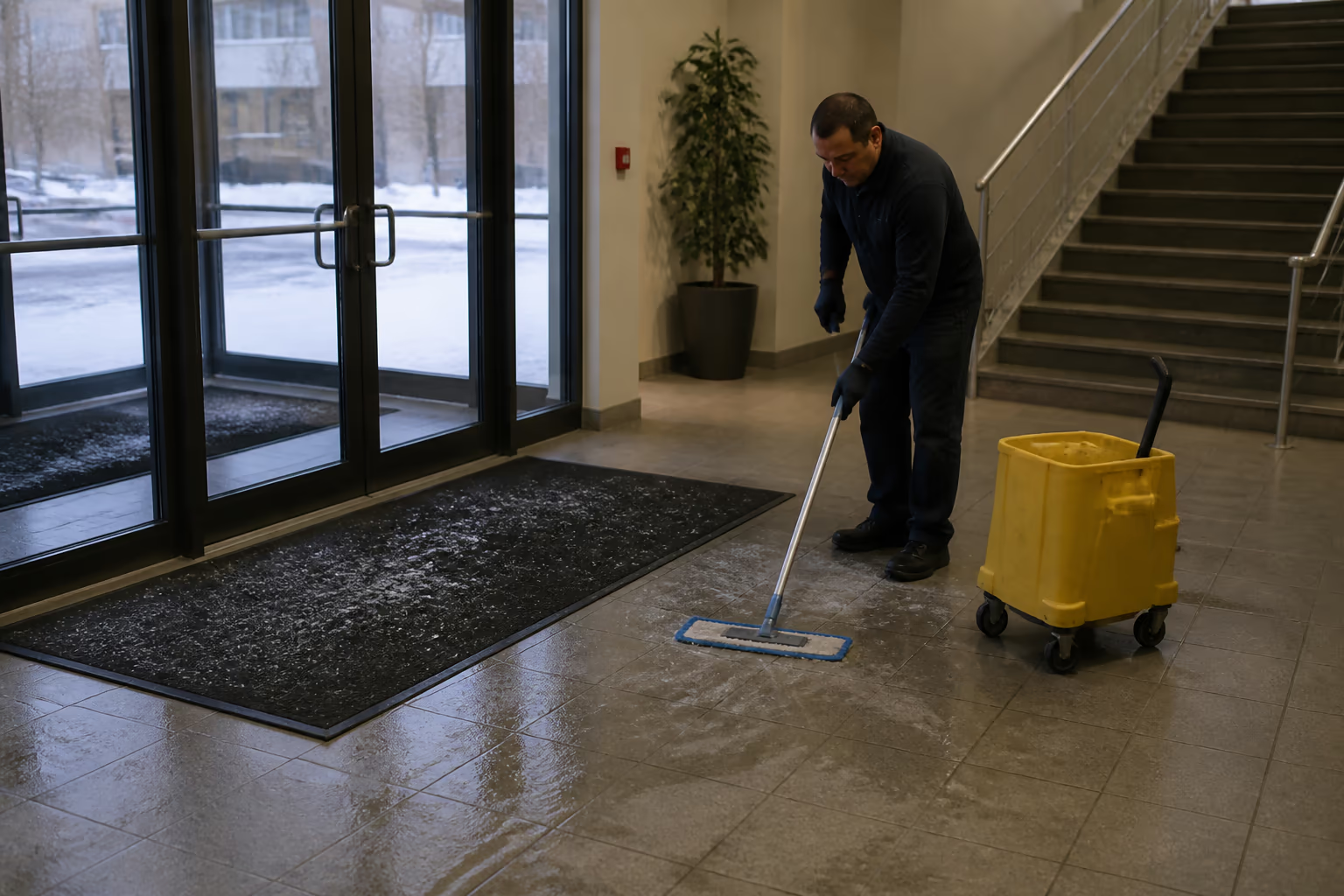
- Maintain heavy-duty entry mats and vacuum them daily in winter.
- Mop entry floors more often when salt and slush are being tracked in.
- Add disinfecting passes to shared surfaces during cold-and-flu season.
- Check ventilation and moisture in washrooms and change rooms all year.
These adjustments do not require a new programme. They are simply the same risk-based thinking applied to the conditions of the month, which is exactly how a hospital plans its cleaning across the year.
How Good Cleaner Co. Applies Hospital-Grade Rigor
At Good Cleaner Co., we borrow the discipline of hospital cleaning without the hospital footprint. Every commercial space we service starts with a walk-through that identifies high-touch surfaces and the right method for each one.
Staff are trained on the products they use and the WHMIS 2015 rules that keep chemical handling safe.
The result is a team that brings that same care to offices, clinics, and shared buildings across Ottawa and the surrounding area, with commercial office cleaning services in Ottawa built around your schedule and standards. For corporate spaces, our executive office cleaning premium standards show how the same risk-based discipline scales up to a boardroom-level finish.
When to Bring in a Professional
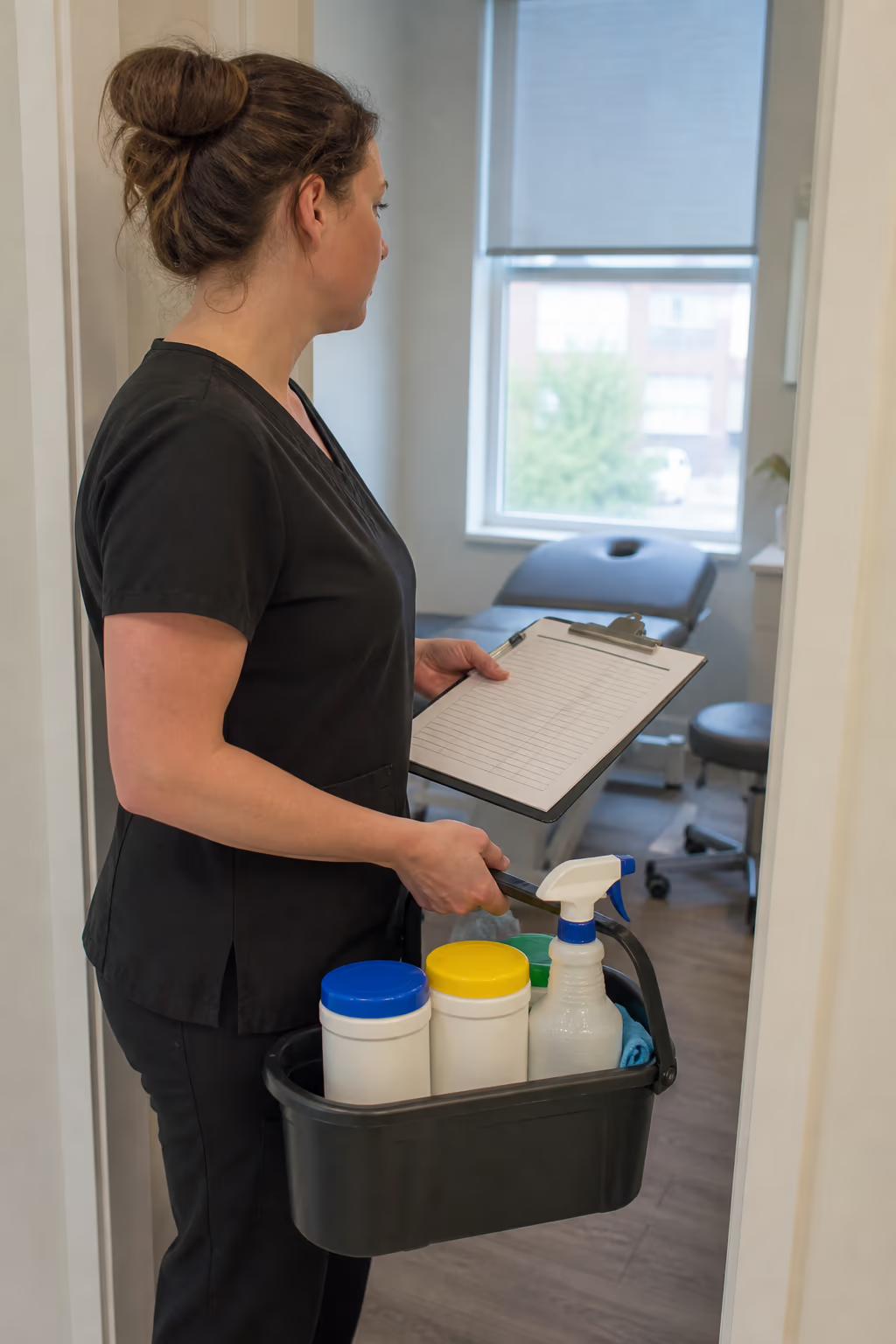
Some spaces reach a point where the routine is more than the team can handle. Clinics, medical offices, and any facility that cares for people is a clear case for a professional cleaning provider with documented standards.
A professional brings the training, the equipment, and the verification that make hospital-style cleaning repeatable. For a business, that means less guesswork and a demonstrable standard to show patients, staff, and visitors.
If you are comparing providers, our commercial cleaning company evaluation guide is a useful starting point for the questions that matter. Ask about training, documentation, and how they verify the work.
Whatever you decide, ask for a written scope and an itemised quote. An honest provider explains what is included, how often each task happens, and how they will verify the result.
Formatted Step-by-Step Hospital-Standard Cleaning Checklist
Use this checklist to bring hospital-grade discipline to your space:
- Step 1.Walk the space and identify every high-touch surface, from door handles to keyboards, and assign each one a cleaning frequency.
- Step 2.Clean every surface first with detergent, water, and a clean microfibre cloth to remove soil and organic matter.
- Step 3.Apply a Health Canada-registered disinfectant to high-risk surfaces and let it sit for the full dwell time on the label.
- Step 4.Work from clean to dirty and high to low, changing cloths between areas so soil is never moved around.
- Step 5.Inspect the finished work, launder cloths and mop heads, and log what was completed and when.
- Step 6.Reviewing our professional office cleaning teams in Ottawa provides a trained team that follows a documented, hospital-inspired cleaning standard.
FAQ
Are hospital-grade cleaning products needed at home?
No. A Health Canada-registered disinfectant, colour-coded microfibre cloths, and a consistent routine capture most of the benefit without medical-grade products.
What is the difference between cleaning and disinfecting?
Cleaning removes dirt and soil with detergent and water. Disinfecting inactivates germs on hard surfaces. You always clean first, because a disinfectant cannot work through a layer of soil.
Why does dwell time matter so much?
A disinfectant only inactivates germs while the surface stays wet for the time stated on the label. Wiping it dry early means the surface was cleaned but not truly disinfected.
How often should high-touch surfaces be cleaned in an office?
Door handles, light switches, kitchenette handles, and elevator buttons should be cleaned and disinfected daily, with extra passes during cold-and-flu season.
What should I look for when hiring a cleaning company?
Look for trained staff, documented procedures, and the right products. Our checklist for hiring a commercial cleaner lists the questions worth asking.
How do I make hospital cleaning standards part of a normal cleaning schedule?
Start with a short daily pass on high-touch surfaces, add a weekly disinfecting of shared points, and schedule a deeper clean monthly. Write it down and adjust as use and seasons change.
Wrapping Up
Hospital cleaning standards exist because they save lives, but the thinking behind them applies to every shared space. Clean before you disinfect, pay attention to high-touch surfaces, use approved products for their full dwell time, and document the work. When your office or clinic needs that level of care, contact Good Cleaner Co. for a free quote and a cleaning plan built around your space.
Keep reading
More from Good Cleaner
Services that fit
- Professional Office Cleaning Services in OttawaOffice cleaning services in Ottawa for corporate offices, clinics and professional suites. After-hours scheduling, eco-friendly products and a free quote.
- Janitorial Services in OttawaRecurring janitorial services for offices, warehouses, retail, dealerships and schools, with eco-friendly commercial cleaning and customized plans.
About the author
Service areas
- Ottawa
- Kanata
- Nepean
- Orléans
- Barrhaven