
Clean Offices & Employee Health: Reducing Sick Days Through Janitorial Hygiene
Offices are shared environments, and shared environments spread germs. The good news is that a well-run cleaning program measurably reduces that spread. In this guide we look at where germs collect in an office, how daily disinfection helps, and the schedule that keeps a workplace healthy through the whole year. We keep the advice practical, so you can talk to any cleaning company with confidence and know what to ask for. Whether you manage a small team or a large building, the same principles apply.
Quick Summary
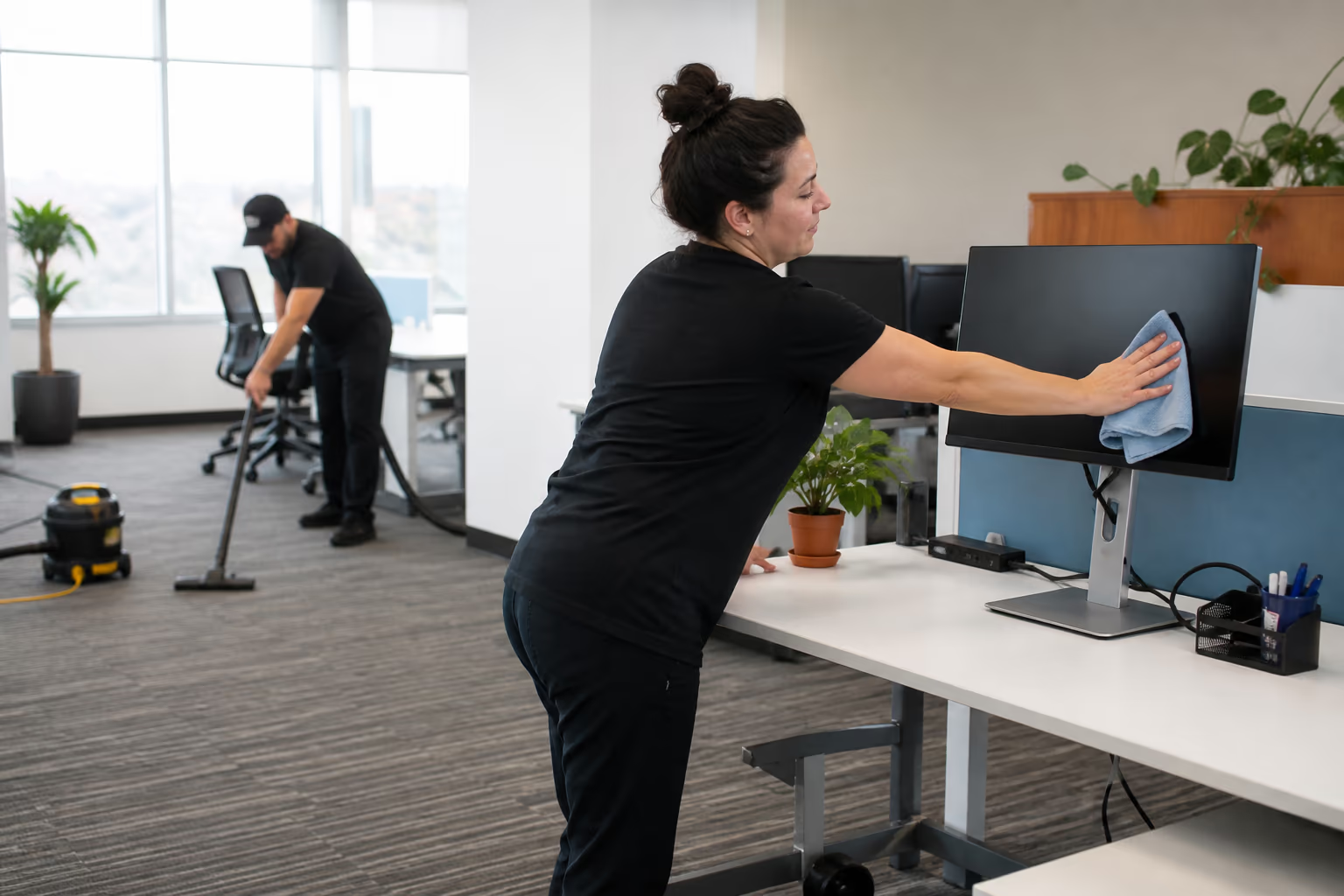
The connection between clean offices and employee health is straightforward: shared desks, kitchens, and meeting rooms collect the germs that cause seasonal colds and flu. A consistent janitorial program that disinfects high-touch surfaces, vacuums with HEPA filtration, and keeps washrooms stocked reduces the spread of illness. This guide covers the workplace hotspots that matter most, how a cleaning routine lowers transmission, and what to look for in an office cleaning partner. Good Cleaner Co. delivers certified commercial office cleaning services in Ottawa.
In this guide
The ROI of Workplace Hygiene on Sick Leave & Productivity
Commercial office spaces in Ottawa are designed for collaboration, but shared desks and meeting rooms can also move seasonal flu and cold viruses between staff. When one person comes in sick, the next round of illness often follows within days.
The exact numbers vary from workplace to workplace, but the pattern is consistent: offices that clean high-touch surfaces daily tend to report fewer respiratory illnesses and less sick leave than offices that rely on occasional cleaning. Fewer sick days also means fewer disruptions, smoother project timelines, and lower staffing costs.
The return on investment is not just about absenteeism. A clean office signals that the employer cares about the people in it. That matters for morale, retention, and how clients and visitors perceive the business. Our companion piece on how office cleaning improves employee mental health looks at that morale connection in more depth.
For a small office, the cost of a professional cleaning program is easy to compare against the cost of even one extended illness wave. When a few employees are out for a week, projects slip, deadlines move, and overtime rises. Preventing that is where the real value sits.
It is also worth remembering that healthy habits reinforce the cleaning program. Offices that pair professional disinfection with simple policies, like staying home when sick and covering coughs, see even better results. The two work together.
Identifying High-Touch Germ Hotspots in Office Environments
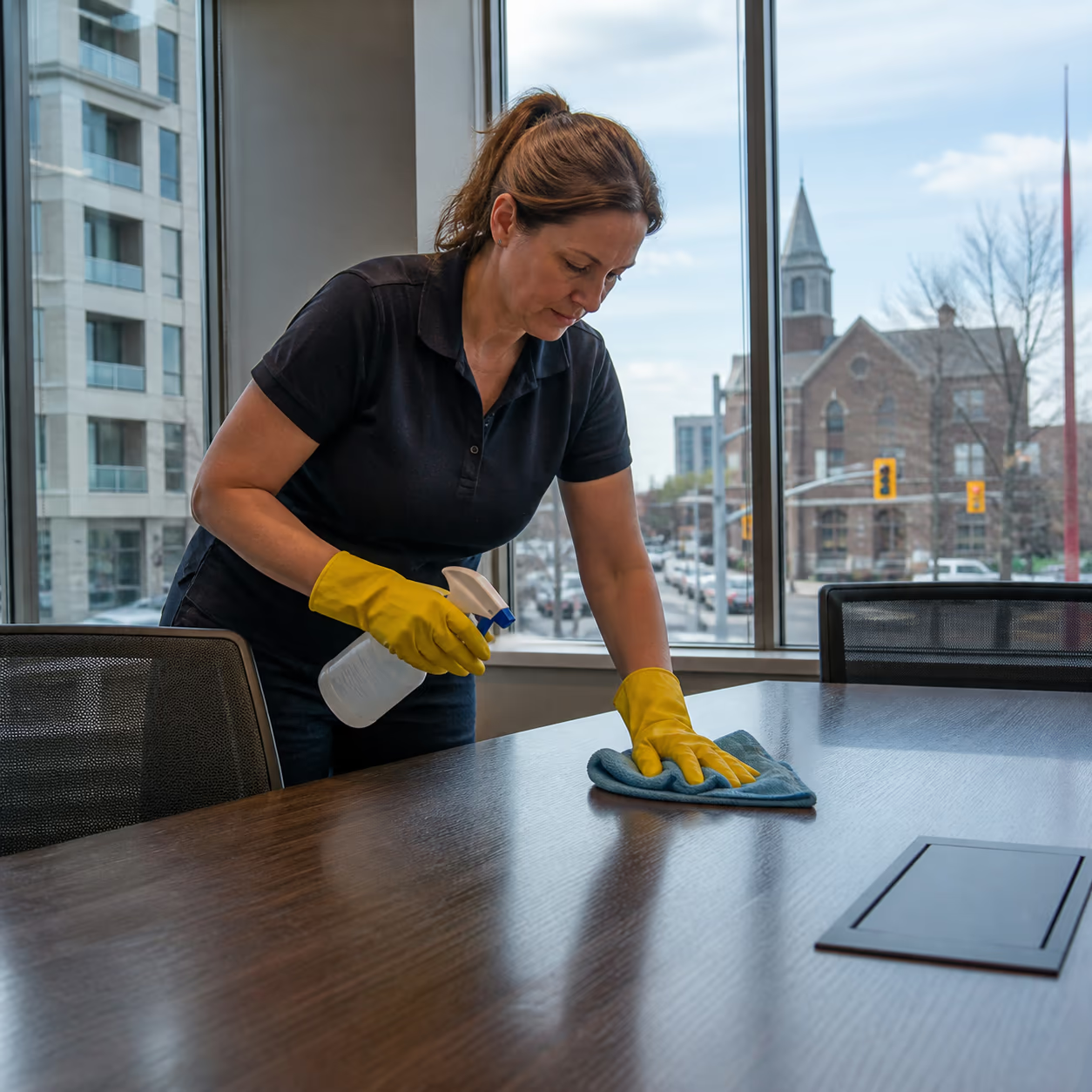
Discover 6 high-risk germ hotspots requiring daily janitorial disinfection:
- 1.
Workstation Keyboards & Mice:
Personal and shared computers collect skin oils, food crumbs, and respiratory droplets.
- 2.
Kitchenette Appliance Handles:
Refrigerator door handles, microwave buttons, and coffee pots are touched by dozens of employees daily.
- 3.
Conference Room Furniture:
Shared meeting tables and remote controls facilitate rapid cross-contamination between teams.
- 4.
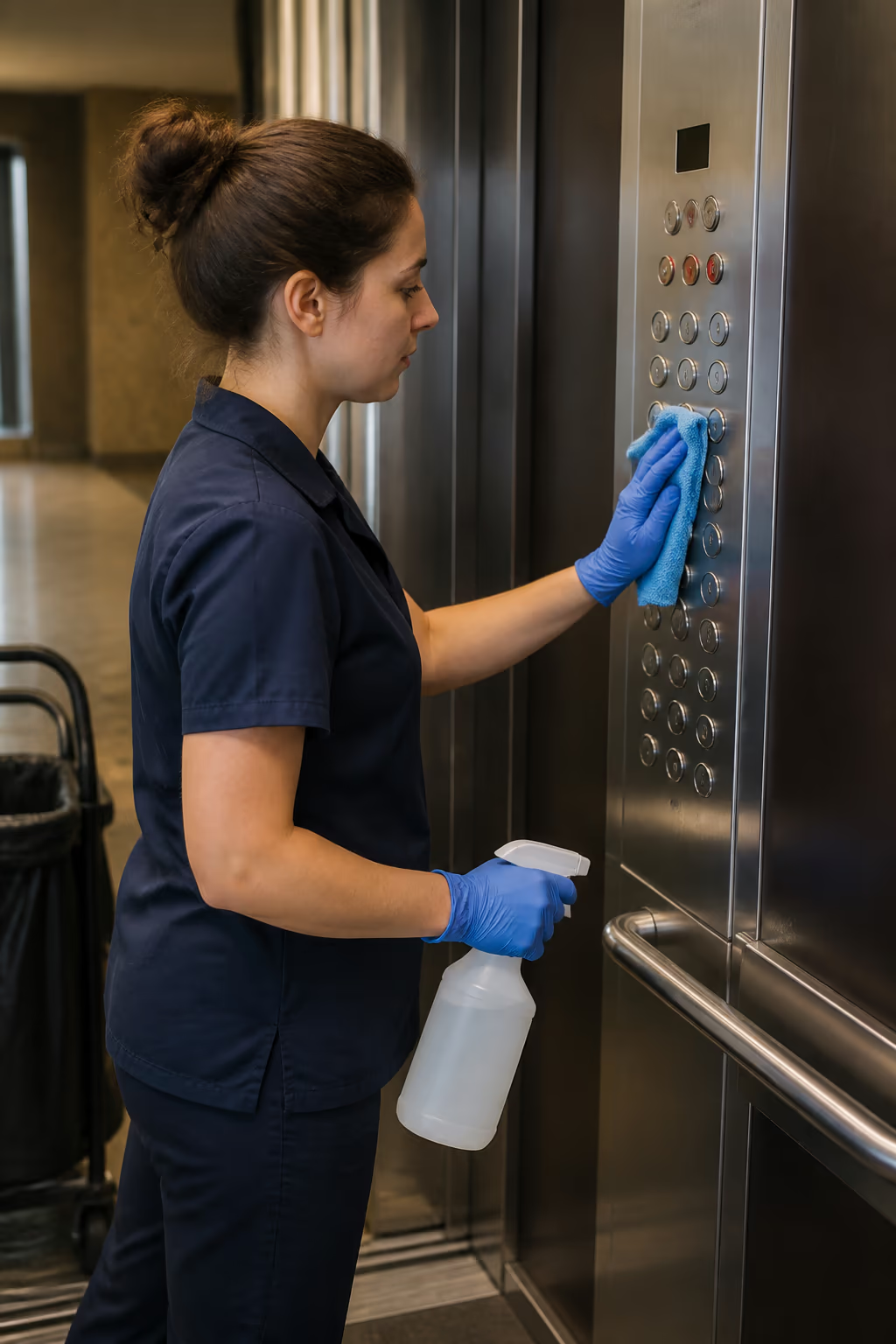
Elevator Buttons & Door Hardware:
These are touched by every visitor and employee, making them prime surfaces for daily disinfection.
- 5.
Shared Phones & Printers:
Desk phones, printer control panels, and touchscreens collect respiratory droplets and need regular wipes.
- 6.
Reviewing our DIY citrus all-purpose cleaner guide offers additional natural cleaning recipe ideas.
How Janitorial Programs Actually Reduce Illness Transmission
Germs spread in an office through a simple loop: an infected person touches a surface, the virus or bacteria survives there for hours, and the next person touches the same surface and then their face. Breaking that loop is what daily disinfection does.
The most effective programs focus on frequency and coverage. High-touch points get wiped every night, washrooms get cleaned and restocked daily, and carpets are vacuumed with sealed HEPA filtration so allergens and particles are captured rather than recirculated.
Products matter too. A disinfectant with a Health Canada Drug Identification Number (DIN) has a verified germ-killing claim. Using the right product, at the right concentration, with the right dwell time is what turns a surface wipe into real disinfection.
Coverage also includes the less obvious spots: door frames, light switches, elevator banks, handrails, and the underside of desk edges. These are touched constantly but often missed in a rushed clean, which is exactly why a written scope of work matters.
Seasonal planning matters too. Cold and flu season is the time to increase disinfection frequency and make sure washroom supplies stay fully stocked. Many offices add a targeted disinfection push in the fall and again in late winter.
Building a Daily + Weekly Office Cleaning Rhythm
A healthy office runs on a simple rhythm: nightly maintenance and periodic deeper work. Here is how the two fit together:
Every night:
Empty waste bins, disinfect workstations and high-touch surfaces, clean and restock washrooms, vacuum carpets, and mop hard floors.
Weekly:
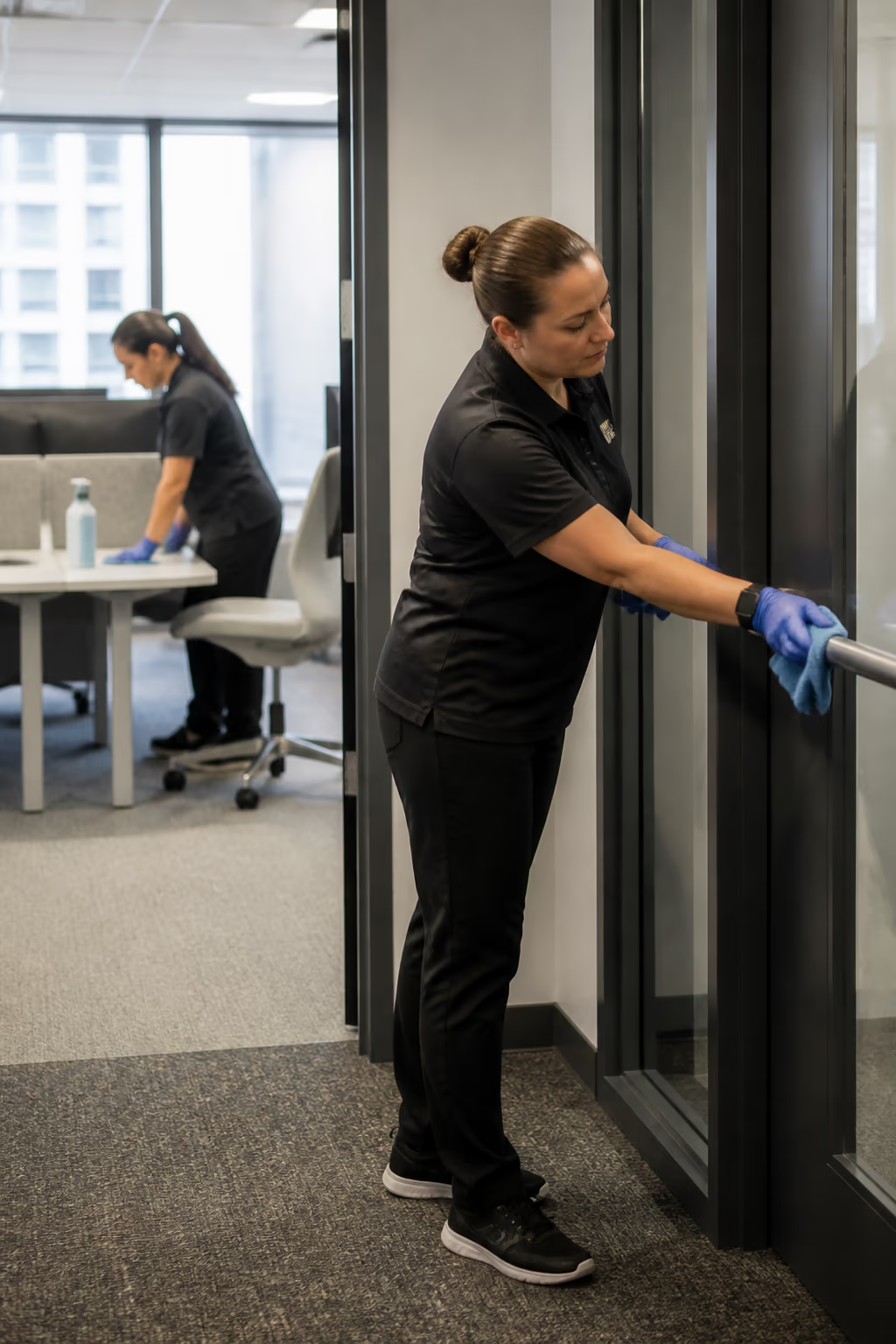
Dust and detail desks, clean interior glass and partitions, disinfect phones and shared keyboards, and spot-treat kitchen appliances.
Monthly or quarterly:
Carpet extraction, vent and baseboard detail, and a deeper kitchen and breakroom clean.
Some offices also add a seasonal refresh: a deep carpet extraction in the spring, a post-flu-season full disinfection, or a pre-holiday kitchen clean. These periodic resets keep the building from sliding below the daily standard.
How a Nightly Office Cleaning Program Runs
Most office cleaning programs run after hours. The crew arrives after staff leave, works through the building in a set sequence, and finishes by securing the space. Because the office is empty, heavy equipment and full disinfection can happen without interruption.
A nightly programme is built inside legal limits, not just operational ones. Ontario's rules on hours of work cap most employees at eight hours in a day and 48 hours in a week, and allow those maximums to be exceeded only by a written or electronic agreement. The provincial guide states the daily limit: “The maximum number of hours most employees can be required to work in a day is eight hours or the number of hours in an established regular workday, if it is longer than eight hours.”
The nightly routine follows a zone sequence: entry and reception first, then open work areas, meeting rooms, kitchens, and finally washrooms. Waste is collected throughout, and high-touch surfaces are wiped as the crew moves through each zone.
A supervisor checks the finished work, and the team logs what was done so your facilities manager has a record. In the morning, the office is simply ready.
Choosing Between Daily and Weekly Cleaning
Not every office needs a full nightly clean. A small team with light traffic might do well with two or three cleans a week, while a busy call centre or a medical office benefits from daily disinfection. For the specific hygiene demands of a shared-desk environment, call centre cleaning and high-density workspace hygiene covers the added disinfection points that come with dense seating.
The deciding factors are headcount, shared surfaces, and how the space is used. Open-plan offices with shared desks, high-traffic lobbies, and busy kitchens have more high-touch surfaces, so they need more frequent disinfection.
When you are unsure, start with a nightly clean for a month and watch what happens. If the office stays consistently clean and staff notice the difference, the schedule is working. You can adjust down or up from there.
The frequency you choose also affects cost. More visits mean more labour, so finding the minimum schedule that keeps the office healthy is the smart balance. Most offices settle on a number within the first few months and then hold it steady.
Building a Workplace Hygiene Culture
A cleaning program works best when everyone in the office supports it. Simple habits like wiping your own desk before a meeting, covering a cough, and staying home when sick cut the load that the nightly crew has to handle.
Stocking the basics helps too. Hand sanitizer at the entrance, disinfectant wipes beside shared printers and meeting rooms, and tissues at every desk give staff the tools to protect themselves between professional cleans.
Finally, communicate the schedule. When employees know the office is cleaned every night and washrooms are restocked daily, they trust the space and feel more comfortable using it. That trust is part of the health benefit.
Regular feedback makes the program better. If staff notice a frequently used door handle that is always sticky, or a meeting room that needs extra attention, pass that along. The cleaning team cannot see every habit in a building, and staff see it every day.
How to Brief Your Cleaning Partner
When you start with an office cleaning company, the quality of the program depends on how well you describe the building. Give them a floor plan or a simple room list, tell them which areas are high-traffic, and flag any sensitivities such as a staff member with allergies or a server room that needs a careful dusting schedule.
Be specific about expectations. If you want the kitchen wiped down every night, say so. If you want desks disinfected but paperwork left untouched, say that too. A written scope of work prevents the two most common problems: over-cleaning where it is not wanted and under-cleaning where it matters.
Finally, agree on how to handle problems. Ask who to call if a zone is missed, how quickly a re-clean is scheduled, and how the company follows up after a complaint. A partner that responds quickly is worth more than one that cleans perfectly on paper.
Matrix: Good Cleaner Co. Office Hygiene Benchmarks
Health Canada DIN Disinfectants:
Hard surface disinfectants carry a valid DIN, so their germ-killing claims are verified.
Sick Day Reduction Impact:
Regular disinfection of high-touch surfaces is associated with fewer respiratory illnesses and less sick leave.
EcoLogo Indoor Air Safety:
Low-VOC chemistry protects sensitive staff members.
Evening & Night Maintenance:
Off-hour janitorial cleaning prevents workday disruptions.
Formatted Step-by-Step Office Wellness Disinfection Checklist
Follow this checklist for healthy, germ-free office environments:
- Step 1.Disinfect Individual Workstation Keyboards, Mice, and Desktop Touchpoints:Wipe surfaces with Health Canada DIN microbicides.
- Step 2.Sanitize High-Touch Conference Room Tables and Audio-Visual Controllers:Disinfect shared meeting rooms between uses.
- Step 3.Clean Kitchenette Refrigerator Handles, Microwave Panels, and Coffee Stations:Sanitize communal breakroom touchpoints.
- Step 4.Vacuum Carpeted Office Floors with Sealed Commercial HEPA Filtration:Trap fine dust mites, pollen, and airborne particles.
- Step 5.Restock Washroom Soap Dispensers and Sanitize Washroom Fixtures Daily:Maintain fully stocked, disinfected washrooms.
- Step 6.If you need a team or a recurring schedule, use commercial office cleaning services in Ottawa to discuss scope, access, and timing before deciding whether it fits.
Putting this guidance into practice
For a facilities lead, start with the rooms shared most often, the overnight scope, and what staff handle between visits. That keeps the conversation tied to the actual space instead of a generic promise.
Review high-touch points, washroom supplies, break-room residue, shared equipment, and recurring concerns. A written scope should say what happens on a normal visit, what needs approval, and who should hear about a recurring issue.
Seasonal considerations in Ottawa
Winter slush at entrances and cold-and-flu season can change office priorities. Review the scope with the people using the space rather than making a health outcome promise.
Look at the actual condition, the number of people using the space, and the material being cleaned before changing products, equipment, or frequency.
Safe, responsible cleaning
Follow labels for contact time and ventilation. Keep product information and a simple issue log available so concerns can be discussed without guessing.
When a surface, product, or site requirement is unclear, ask before continuing. A careful decision protects people and property better than a shortcut.
How to review this as a facilities lead
Before changing this routine, take a short walk through the actual space and describe what you see in ordinary language. Start with the rooms shared most often, the overnight scope, and what staff handle between visits. That gives everyone the same starting point and prevents a broad request from quietly becoming a different job.
Ask someone who uses the space every day what creates the most friction. Their answer may be a messy entry, an awkward storage area, a surface that marks easily, or a time when work cannot happen. A useful plan respects that local knowledge instead of replacing it with a standard script.
Choose one change that can be observed over a few visits. It might be a different order of work, a clearer handover, or more attention to high-touch points, washroom supplies, break-room residue, shared equipment, and recurring concerns. Write down the reason for the change and what would show that it is helping. That is a better test than relying on a vague impression.
Keep the discussion specific when something is not working. Name the room, surface, timing, and result you expected, then decide what should happen next. Clear feedback is fair to the people doing the work and far more useful than a blanket complaint.
Finally, revisit the plan when the building, household, or season changes. A routine should be stable enough to follow and flexible enough to respond to real conditions. That balance is what makes cleaning guidance practical.
Considering professional help
If you decide that this work needs help, begin with the practical details: the condition of the space, the tasks that matter, access, timing, and anything the crew should not touch.
Use commercial office cleaning services in Ottawa to start that scope conversation. A clear request makes it easier to decide whether a service is suitable without relying on promises about results.
FAQ
Does daily office cleaning actually reduce sick days?
Results vary by workplace, but offices that disinfect high-touch surfaces daily tend to see fewer respiratory illnesses and less sick leave than those that clean occasionally.
What do you use to clean keyboards and monitors?
We use isopropyl alcohol microfibre wipes designed to disinfect keyboards and monitors without moisture damage.
Can you clean our office overnight?
Yes. We offer after-hours, overnight, and weekend commercial cleaning schedules to accommodate your business hours.
Which surfaces should be disinfected most often?
Door handles, light switches, elevator buttons, keyboards, mice, phones, meeting tables, and kitchen appliances are touched most often and matter most.
Do your disinfectants have Health Canada approval?
Yes. Hard surface disinfectants carry a valid 8-digit Health Canada DIN, so the germ-killing claims are verified.
Does HEPA vacuuming really improve office air?
Sealed HEPA filtration captures fine dust, pollen, and allergens rather than recirculating them, which reduces allergy triggers for staff.
How often should office washrooms be cleaned?
Daily cleaning and restocking is the standard for a busy office, with extra attention when the workplace is at full capacity.
Can you work around our office hours?
Yes. We build the schedule around your operating hours, including evening, overnight, and weekend options.
What is the difference between cleaning and disinfecting?
Cleaning removes dirt and grime; disinfecting kills germs on the surface. A healthy office program does both, in that order.
How do I get an office cleaning quote?
Contact Good Cleaner Co. with your square footage, layout, and cleaning frequency to receive a transparent quote for commercial office cleaning services in Ottawa.
Wrapping Up
Daily office disinfection protects employee health and enhances business productivity. Contact Good Cleaner Co. today to book professional office cleaning teams in Ottawa.
Keep reading
More from Good Cleaner
About the author
Service areas
- Ottawa
- Kanata
- Nepean
- Orleans
- Barrhaven
- Downtown Ottawa