
Janitorial Services For Schools: Safety, Compliance, And Best Practices In Canada
A school is not an office with chalkboards. The cleaning program has to protect children, meet health and safety requirements and keep a busy building presentable at the same time. This guide covers the safety standards, compliance considerations and best practices that shape school janitorial services in Canada.
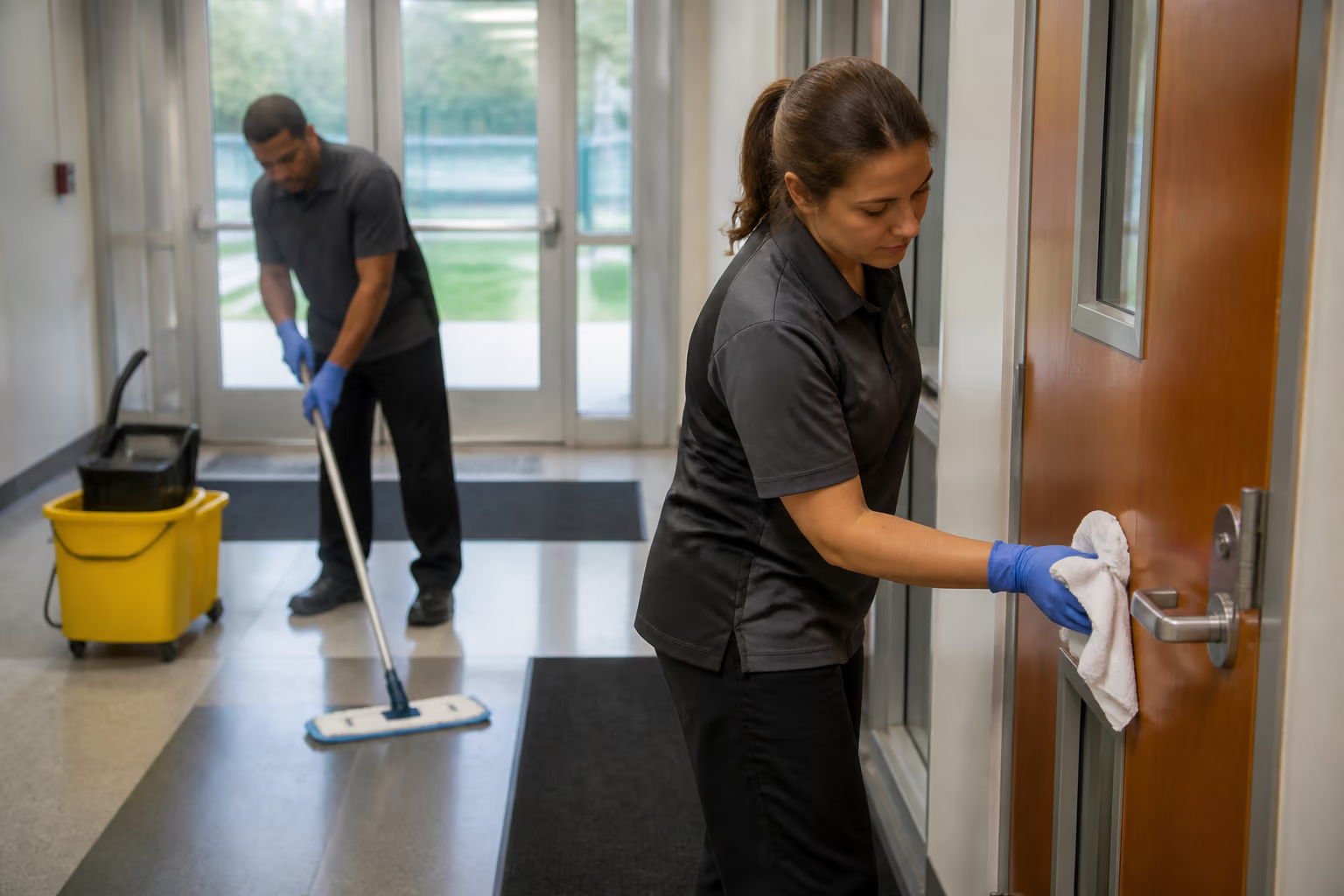
Quick Summary
School janitorial services in Canada must protect children, meet health and safety requirements and keep a busy building presentable, all at once, unlike cleaning a typical office. This guide covers the safety standards, compliance considerations and best practices that shape professional school cleaning programs.
In this guide
Why School Cleaning Is Different From Other Buildings
Children spend a large part of their day in close contact with the same surfaces, which makes schools higher-traffic and higher-risk than most commercial buildings. Desks, door handles, washroom fixtures and shared supplies are touched constantly, and young occupants are more vulnerable to illness and more likely to touch surfaces they should not. The comparison matters because standard office cleaning services Ottawa businesses use are built around adult occupants and a lighter touch schedule, which is not enough for a school.
That changes the standard. School cleaning is about more than appearances; it is part of the health and hygiene strategy that keeps staff and students in the building and learning. A plan that works for a low-traffic office will not protect a classroom that sees thirty children a day.
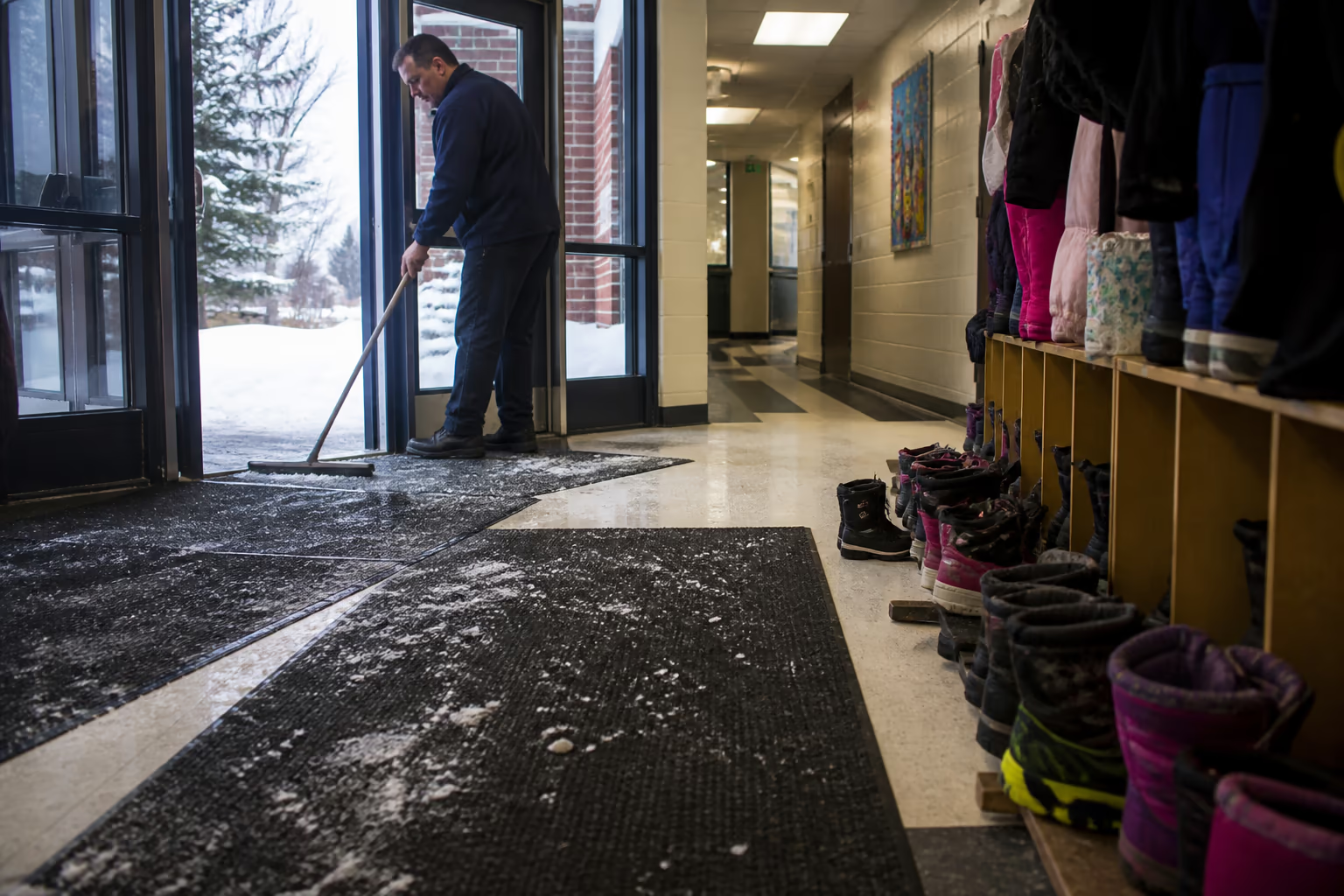
The season makes the job harder. Canadian winters bring salt and slush through every entrance, and the same period is when colds and flu spread most quickly. A school cleaning program that is designed for the country's actual climate, and for the way children actually use a building, is the only kind that holds its standard all year.
Safety Standards for School Custodial Work
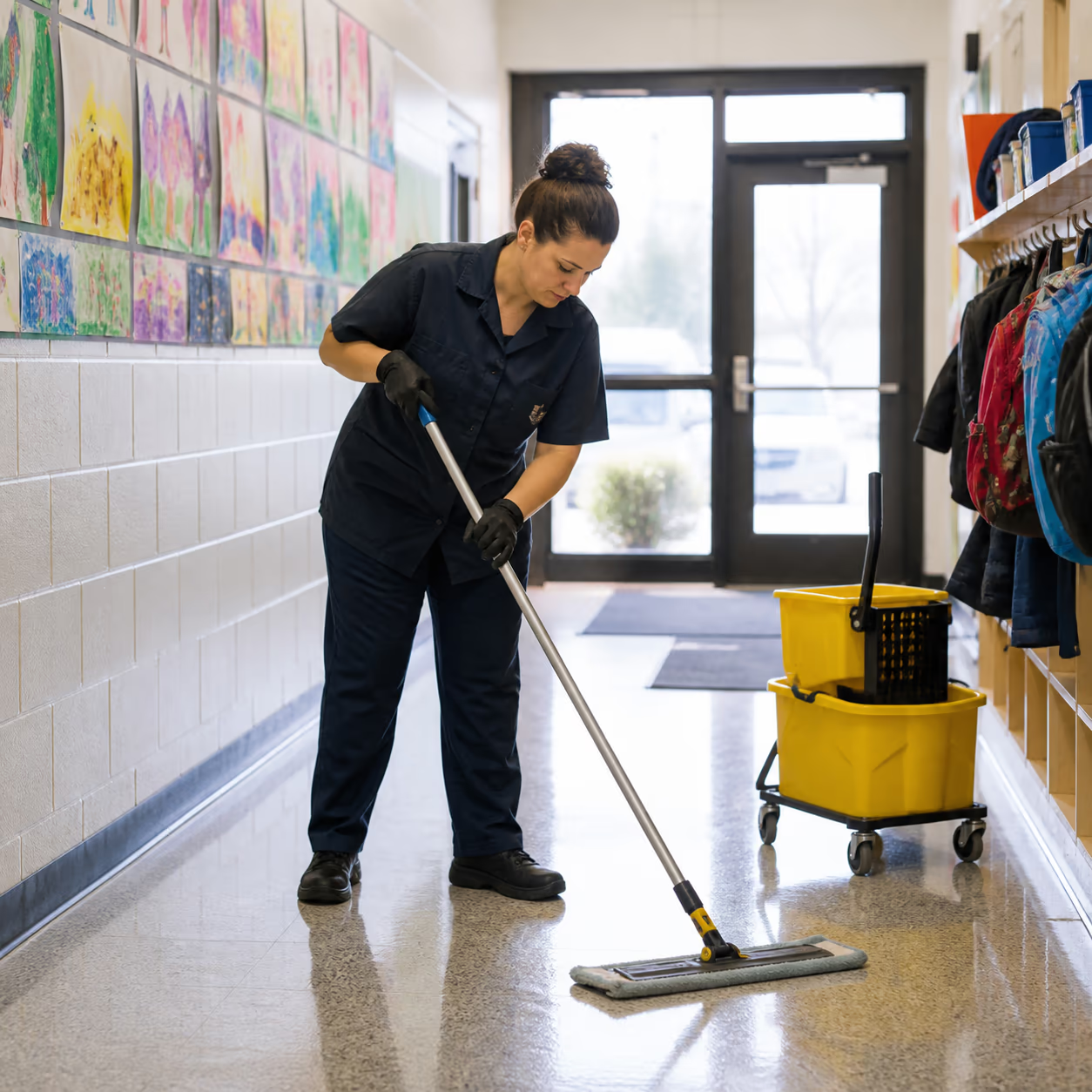
The safety of the people doing the work is part of the quality of the service. Custodial staff work with chemicals, wet floors, ladders and machinery, and each of those carries risk that a responsible provider manages on your behalf.
In Ontario, workplace health and safety is governed by the Occupational Health and Safety Act, and cleaning staff have the same protections as any other workers. That means proper training, safe equipment and the right personal protective equipment for the task. A provider that skips these to save money is putting both its staff and your school at risk.
Safety also extends to the people using the building. Wet floor signs go up while floors dry, chemicals are never left where children can reach them and work is scheduled so that hazards are managed before students arrive. These small habits are what separate a professional operation from a crew that is simply moving through the building.
A written safety plan ties all of this together. It should name the tasks, the products, the personal protective equipment and the person responsible for each step, and it should be reviewed whenever a product or a procedure changes. When a school can point to a written plan and a trained crew that follows it, safety stops being a promise and becomes something it can verify.
Cleaning and Disinfection Frequencies by Area
Different areas of a school need different frequencies, and the schedule should follow the traffic and the risk rather than a one-size-fits-all routine.
- Washroomscleaned and disinfected daily, with high-touch fixtures checked more than once a day.
- Classroomsdusted, floors cleaned and surfaces wiped on a regular weekly rhythm, with desks touched up as needed.
- Cafeterias and kitchenscleaned daily to food-service standards, with surfaces and floors sanitized after each service.
- Hallways and entrancesswept or mopped frequently, and watched closely in winter for salt and slush.
- Gyms and change roomscleaned and deodorized on a daily to several-times-a-week schedule depending on use.
- Offices, libraries and low-traffic spacesserviced on a lighter weekly schedule.
The frequency list should be written down and agreed with the school, not improvised. A documented schedule makes the standard clear to the crew, the school and the provider alike.
High-Touch Surfaces and Infection Control
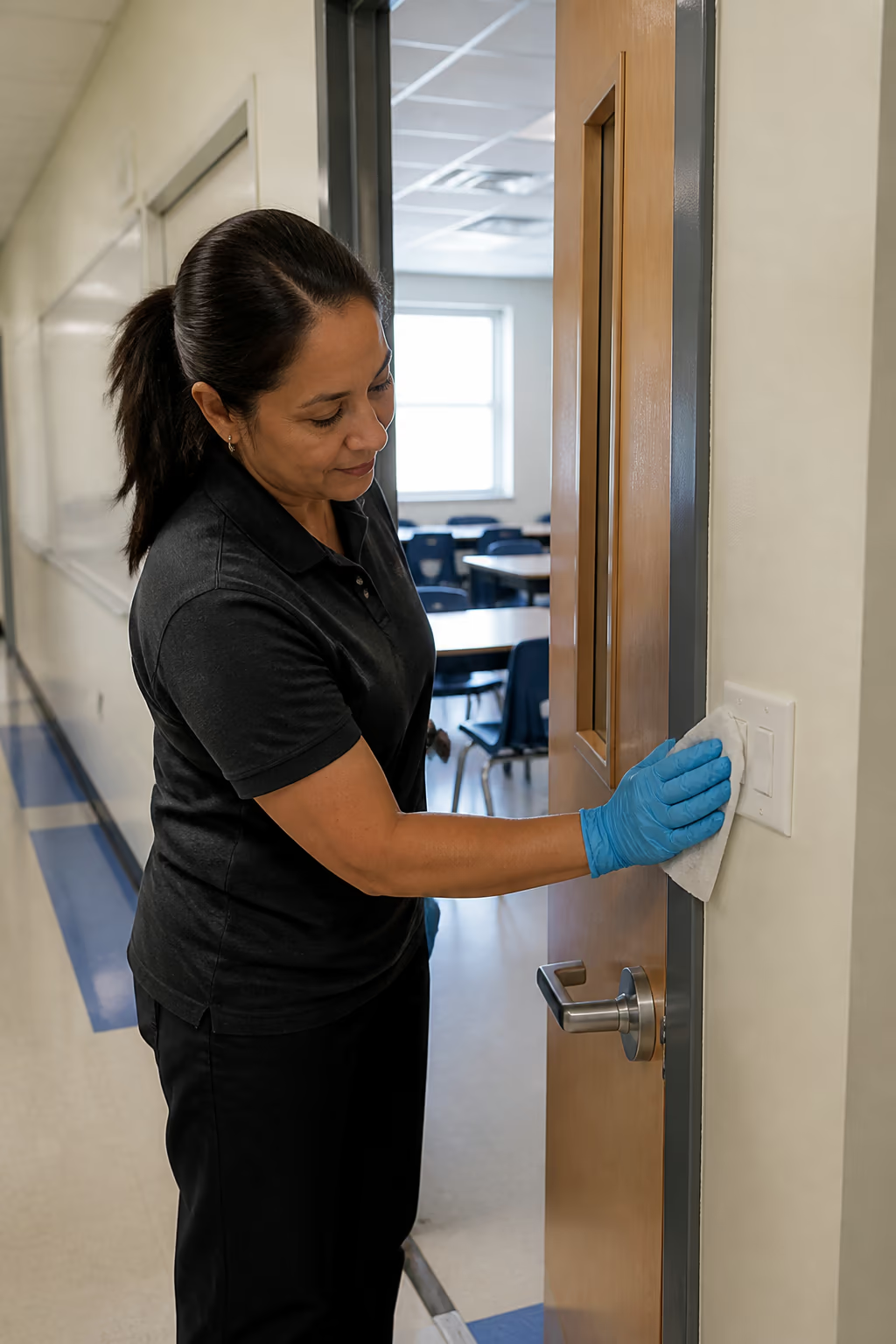
The surfaces that everyone touches are where illness spreads, and school cleaning has to give them priority. Door handles, light switches, railings, taps, toilet flush plates, desks and shared keyboards all need regular cleaning and disinfection.
A practical rule is to clean high-touch surfaces more often than the surrounding area. Daily disinfection is the baseline for the busiest touchpoints during cold and flu season, and the products used should be appropriate for the surface and safe around children.
A simple rotation keeps high-touch cleaning consistent without anyone having to remember every surface. Assign each zone a short list of touchpoints and make sure the list is the same every time, so nothing is skipped because it was overlooked rather than because it was not important. Schools that post a small checklist for each washroom and entryway rarely miss the surfaces that matter most.
Hand hygiene goes hand in hand with surface cleaning. If the school provides hand sanitiser at entrances and in common areas, the cleaning program should keep those stations stocked and visible. The combination of clean hands and cleaned surfaces does more to control illness than either alone.
Chemical Safety and WHMIS 2015 in Schools
Cleaning products are a normal part of school maintenance, but they need to be handled with care in a building full of children. WHMIS 2015, Canada's workplace hazard communication standard, sets out how controlled products are labelled, documented and understood.
Every product used in the school should have a clear label, a safety data sheet available to staff and a safe place for storage that children cannot reach. Staff who handle the products need current WHMIS training so they know what they are using, what it can do and how to react if something spills.
Storage matters as much as training. Chemicals should be locked away, clearly labelled and separated from food and cleaning equipment in a way that prevents confusion. A small, organised supply room prevents the majority of accidental exposures before they start.
Choosing Low-Fume, Certified Products for Classrooms
The products themselves should match the setting. Classrooms are occupied spaces, and a strong-fume cleaner that is fine in an empty office is the wrong choice where children are breathing the air all day.
Look for low-fume and low-residue products where they are available. Many manufacturers offer certified eco-labels such as EcoLogo, and a school can ask its provider to use products that carry those certifications for everyday cleaning. Green-certified products are not a compromise on cleanliness; they are a sensible fit for an occupied building. Schools weighing this choice can look at how green janitorial services apply the same certified, low-fume approach across other occupied buildings.
For disinfection, use products that are registered for the job in Canada. Disinfectants sold in this country carry a Drug Identification Number from Health Canada, and the label states what the product is proven to do. Choosing the right registered product and letting it dwell for the time the label requires is what makes disinfection actually work.
Scheduling Cleaning Around the School Day
A school is only truly available for cleaning when students are not in the building, and the schedule has to fit the school day rather than the other way around. Daytime work in occupied spaces must be quiet, unobtrusive and never disruptive to learning.
School timetables have to fit inside employment limits too. Ontario's rules on hours of work cap most employees at eight hours in a day and 48 hours in a week without a written or electronic agreement, which shapes what a custodial team can cover between the last bell and the next morning. The provincial guide states the daily limit: “The maximum number of hours most employees can be required to work in a day is eight hours or the number of hours in an established regular workday, if it is longer than eight hours.”
Most schools run their main cleaning after hours, when the building is empty and the crew can work without interruption. High-touch touch-ups and washroom checks may happen during the day, done quickly and quietly so class is not disturbed. The balance depends on the school, the budget and how the building is used.
Communication is the foundation of a good schedule. The head custodian or facilities lead should know exactly what is being cleaned, when and with what products, so the school and the provider are working from the same plan. A simple shared schedule prevents the surprises that happen when either side assumes the other is handling something.
Seasonal Considerations for Schools in Canada
School janitorial work changes with the Canadian calendar, and a plan that does not account for the season will struggle every winter.
- Wintermanage salt and slush at entrances, keep floor mats rotated and increase washroom disinfection during flu season.
- Springhandle the mud and melt-off from wet weather and refresh entryways after the snow is gone.
- Summeruse the quieter months for deep cleaning, floor care and maintenance that cannot happen during the school year.
- Fallclean up from summer projects, reset the building for occupancy and prepare entryways for the cold to come.
Planning the season into the cleaning calendar protects the floors and carpets, which are expensive to repair, and keeps the standard even when the weather is working against it. It also gives the school a chance to schedule deep work at the only time it is possible.
One practical way to plan is to agree a seasonal checklist with the provider in advance. In winter the checklist adds entryway care, mat rotation and floor management; in summer it shifts to deep cleaning and maintenance. Because both sides know what the checklist contains before the season starts, the work happens on schedule instead of being decided on the spot.
Compliance and Documentation for School Cleaning
Compliance is not a single certificate; it is a set of records that prove the program is running the way it should. For a school, the most useful documents are the ones that would stand up to a review from the school board or the health unit, and that protect the building every day.
The core records include the schedule, the product list with safety data sheets, the staff training file, the inspection checklist and the log of anything that was found and fixed. When these are kept current, a school can show exactly what was cleaned, with what product and by whom. When they are not kept, a claim of quality is just a claim.
These documents are also the practical link between the school and the provider. A shared inspection report gives the facilities lead something concrete to review each month, and a training file proves the crew is ready for the chemicals it uses. For schools that report to a board or a parent community, that documentation turns cleanliness into something they can see.
Good documentation also protects the school when things change. When a product is switched, a new staff member is hired or a new requirement arrives, the plan is updated and the change is recorded. That keeps the cleaning program current without relying on anyone's memory, which matters in a building where a gap in a safety record can have real consequences.
Working With a Professional Janitorial Partner
The choice between an in-house crew and a contracted janitorial service depends on the school's size, budget and needs. A professional provider brings trained staff, documented procedures and the equipment and products ready to go, which is a strong fit for schools that do not want to manage those details internally. Other institutional buildings face a similar choice: church janitorial services follow the same in-house-versus-contracted decision, weighed against the size and schedule of the congregation.
What matters most is that the provider understands the building. Ask about its experience with educational facilities, its approach to disinfection and high-touch surfaces, and how it handles safety and compliance. The answers should be specific and backed by written procedures, not general assurances.
It is a partnership built on the kind of documentation a school can rely on.
If you are comparing providers, our commercial cleaning company vetting guide walks through the questions that matter, from training to how quality is checked and reported. It is a practical starting point for any facility manager making this decision.
Formatted Step-by-Step Checklist for Planning School Cleaning
Use this five-step process to plan a school cleaning program that protects students and staff:
- Step 1.Map the building:list every zone and how it is used so the schedule follows the traffic and the risk.
- Step 2.Set the frequencies:agree the cleaning and disinfection rhythm for washrooms, classrooms, cafeterias, hallways and gyms.
- Step 3.Choose the products:select low-fume, certified products for everyday cleaning and registered disinfectants for high-touch surfaces.
- Step 4.Lock down safety:confirm WHMIS 2015 training, secure chemical storage and the wet-floor and hazard routines.
- Step 5.Plan the calendar:schedule after-hours cleaning, daytime touch-ups and seasonal deep work across the school year.
- Step 6.For a partner that runs this plan for you, our janitorial cleaning teams in Ottawa bring trained staff and documented procedures built for schools.
FAQ
How often should a school washroom be cleaned?
Washrooms should be cleaned and disinfected daily, with high-touch fixtures such as taps and flush plates checked more than once a day. During cold and flu season, some schools increase the frequency further.
Are the cleaning products safe for children?
Reputable providers use low-fume, certified products in occupied spaces and registered disinfectants for high-touch surfaces. Products are stored where children cannot reach them, and staff are trained to use them correctly.
What is WHMIS and why does it matter for schools?
WHMIS 2015 is Canada's hazard communication standard for controlled products. It governs how cleaning chemicals are labelled, documented and understood, and it protects both the custodial staff and the students in the building.
How is a school schedule different from an office schedule?
Schools are only freely available for cleaning after hours, so the main work happens when students are gone. Daytime touch-ups must be quiet and quick, which requires a schedule built around the school day rather than a generic routine.
What should be cleaned most in cold and flu season?
High-touch surfaces deserve the most attention: door handles, light switches, railings, taps, flush plates, desks and shared keyboards. Daily disinfection of the busiest touchpoints is the baseline during illness season.
Do schools need a professional janitorial service or an in-house crew?
Both can work. A professional provider brings trained staff, documented procedures and ready equipment, which suits schools that do not want to manage those details internally. The right choice depends on size, budget and how the school prefers to run things.
What should I ask a janitorial provider about school experience?
Ask about its work with educational facilities, its approach to disinfection and high-touch surfaces, and how it handles WHMIS training, chemical storage and safety. Look for specific, documented answers rather than general promises.
When is the best time for deep cleaning a school?
The summer months are the natural window for deep cleaning, floor care and maintenance that cannot happen during the school year. Plan that work into the summer calendar before the year ends.
How does a provider protect floors and carpets during winter?
A winter plan manages salt and slush at the entrance with frequent mopping, mat rotation and periodic floor extraction. Protecting the entryway stops grit from spreading through the building, which is far cheaper than repairing or replacing damaged floors.
Can a school use green-certified cleaning products?
Yes. Low-fume, certified products such as those carrying EcoLogo are a good fit for occupied school spaces, and they do not compromise on cleanliness. Pair them with registered disinfectants for high-touch surfaces where disinfection is required.
Wrapping Up
School janitorial services are about protecting the people in the building as much as keeping it presentable. With the right frequencies, the right products and a safety plan built for the setting, a school can hold a standard that lasts all year. Contact Good Cleaner Co. for a free quote and a school cleaning plan designed around your facility.
Keep reading
More from Good Cleaner
Services that fit
- Janitorial Services in OttawaRecurring janitorial services in Ottawa for offices, warehouses, retail, dealerships and schools. Eco-friendly commercial cleaning, customized plans, free quote.
- Professional Office Cleaning Services in OttawaOffice cleaning services in Ottawa for corporate offices, clinics and professional suites. After-hours scheduling, eco-friendly products and a free quote.
About the author
Service areas
- Ottawa
- Kanata
- Nepean
- Orléans
- Barrhaven