
Daily Responsibilities of a Janitor: Scope of Work & Shift Checklist
When a building owner understands exactly what a janitor does on a daily shift, the cleaning contract becomes clearer, the expectations become fairer, and the results become more consistent. This guide breaks down the daily responsibilities of a janitor, walks through a complete shift checklist, and explains how Good Cleaner Co. structures professional janitorial staffing for commercial buildings across the capital region.
Quick Summary
A professional janitor's day is far more than sweeping and emptying bins. The role covers waste management, floor care, washroom sanitation, chemical safety, and building security, and understanding that scope of work helps property managers write better cleaning contracts and hire better crews.
In this guide
The Vital Role of Commercial Janitors in Building Management
Professional janitors are the frontline guardians of commercial facility health and safety. They are often the first people in the building in the morning and the last ones out at night, and the state of the building when everyone else arrives is largely their work.
Beyond basic sweeping and trash removal, commercial janitors oversee floor maintenance machines, manage chemical safety, and maintain building security during off-hours. A good janitor is part cleaner, part equipment operator, part safety coordinator, and part building caretaker.
Understanding a janitor's daily scope of work helps property managers structure effective cleaning contracts. When the contract reflects the real work involved, the budget is realistic, the crew is adequate for the building, and the standard is something everyone can agree on. Property managers comparing options can also browse our cleaning services overview for the full range of programs we offer beyond janitorial staffing.
There is also a professional standard at stake. Commercial janitorial work is a skilled trade with its own training, tools, and safety requirements, and buildings get noticeably better results when that skill is respected and paid for accordingly. The buildings that stay the cleanest are usually the ones that treat their janitorial team as part of the facility team rather than an afterthought. For a broader look at the role, our guide to janitor duties and responsibilities covers how these expectations are typically defined.
Core Shift Duties: Trash Removal, Floor Care & Washroom Sanitization
The daily shift revolves around three core responsibilities that keep a commercial building running. Each one has its own rhythm, its own equipment, and its own importance.
Those routines carry a legal weight most shift lists never mention. Ontario's Occupational Health and Safety Act obliges an employer to take every precaution reasonable in the circumstances for the protection of a worker, so wet-floor signage, safe chemical handling and correct waste segregation are duties under the Act rather than optional habits. The province lists the duty in one line: “Instruct, inform and supervise workers to protect their health and safety”.
Waste and recycling management comes first in most shifts. A janitor collects office trash, separates organic waste, and manages blue-bin recycling, making sure nothing sits overnight to create odours or attract pests. In buildings with green programs, this also means sorting materials correctly so the building meets its diversion targets.
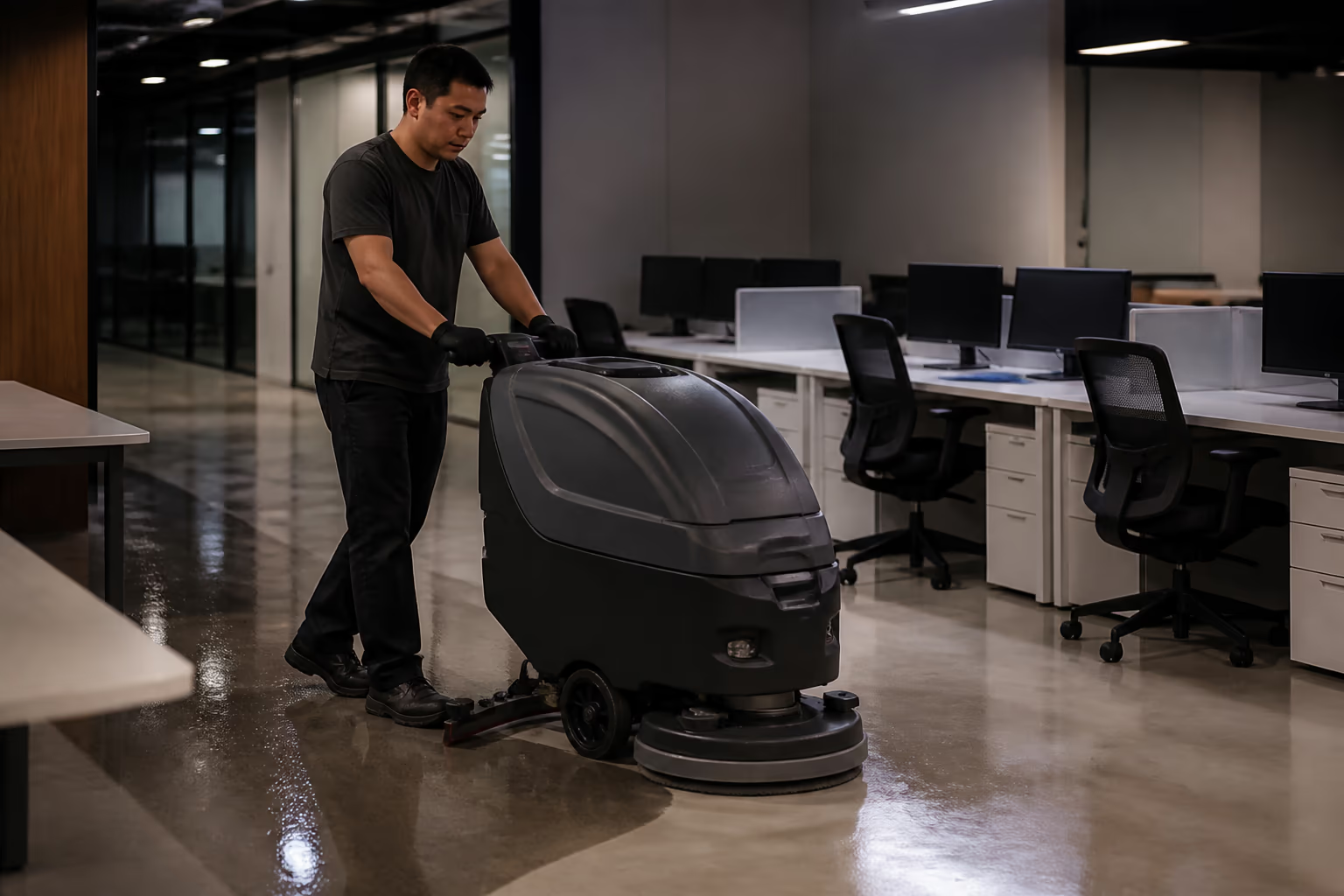
Floor care is the most physically demanding part of the role. Hard floors need auto-scrubbing or damp-mopping, and carpeted areas need vacuuming with a backpack HEPA vacuum that reaches efficiently across large open spaces. Floors take the heaviest punishment of any surface in a building, and they show it faster than anything else when maintenance slips.
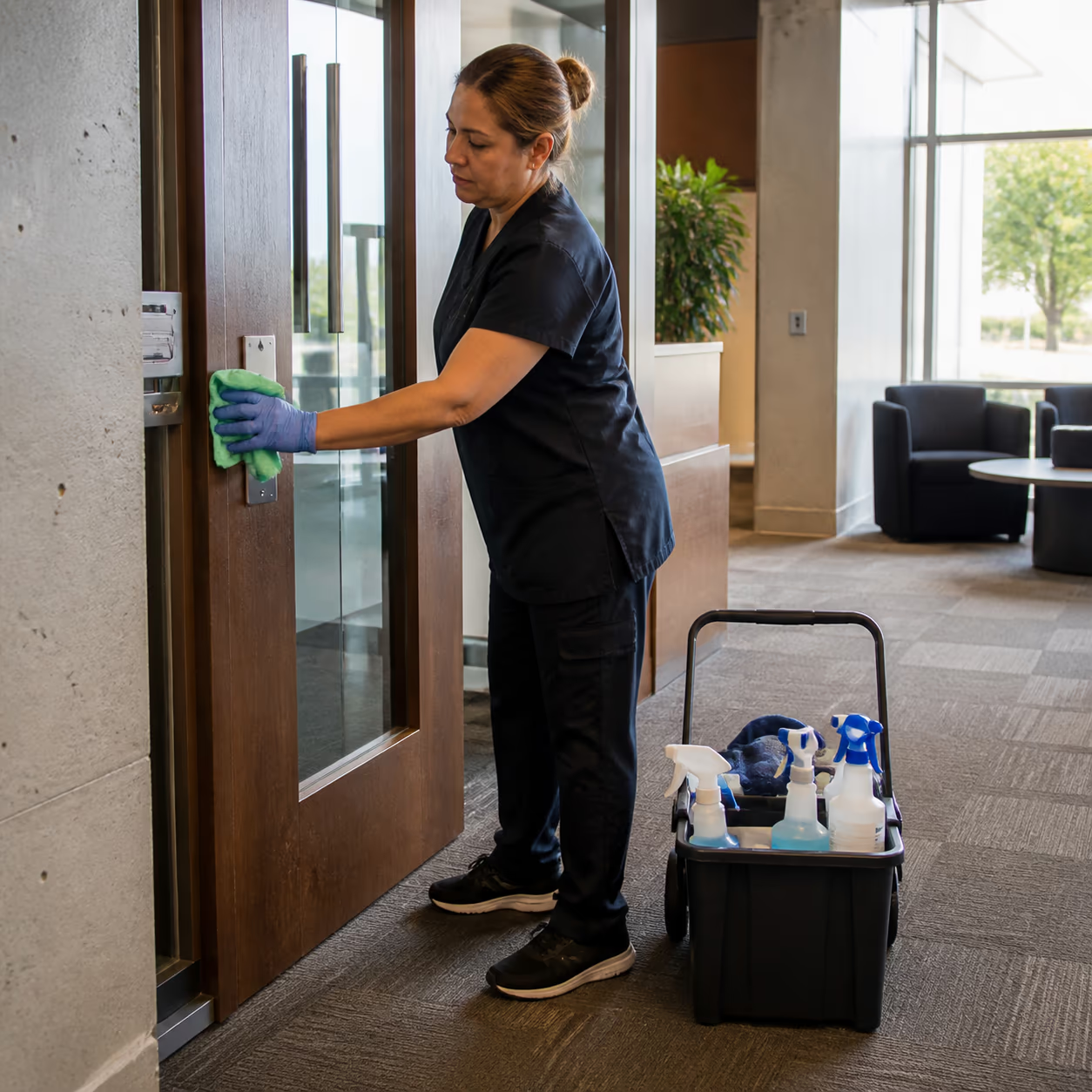
Washroom sanitization closes out the trio. Scrubbing toilets and sinks, wiping fixtures, and replenishing paper consumables every shift keeps the washroom safe and presentable for the people who use it all day. Because washrooms are shared by the whole building, they are also the room where tenants notice quality most quickly.
Beyond Cleaning: The Janitor as Building Caretaker
A great janitor does more than follow a cleaning list. They notice the building itself, and they report the small problems that would otherwise become expensive ones.
That means watching for leaking faucets, squeaky doors, burnt-out lights, and stained carpets, and logging those observations for the facility manager. A janitor who reports maintenance issues early can save a building real money, because a small leak caught in time never becomes water damage.
Janitors also manage supplies. Knowing when paper products, soap, and cleaning chemicals are running low, and ordering or requesting restock before the building runs out, is part of the job. Building security is another responsibility, especially on evening shifts, where the janitor is often the last person on site and is expected to lock doors and arm the alarm.
All of these responsibilities point to the same conclusion: a professional janitor is a trained member of the facility team, and the daily list they follow is what keeps the building healthy, presentable, and safe for everyone in it.
Morning Shift vs. Evening Shift Responsibilities
Janitorial work splits into morning and evening shifts, and the responsibilities differ with the time of day.
Morning shifts focus on preparing the building for people. Waste bins are emptied, washrooms are checked and stocked, floors are spot-cleaned, and spills from the night before are removed. The goal is to present a clean, ready building when the first employee walks in, which means the morning crew is often judged by how invisible their work is.
Evening shifts are the deep-cleaning shift. With the building empty, janitors can run floor scrubbers, do a thorough vacuum of carpeted areas, deep-clean washrooms, and complete the heavier tasks that would be disruptive during business hours. Evening crews also carry the security responsibility of locking up.
Knowing which tasks belong to which shift keeps the workload balanced and makes the coverage complete. Many buildings run a small morning crew and a larger evening crew, with the evening shift doing the heavy lifting and the morning shift handling touch-ups.
The transition between the two shifts matters more than most people think. A clear handover, written down or passed on in a brief note, ensures that a spill spotted in the evening gets cleaned in the morning and that a low supply order does not slip through the gap. Good communication between shifts is what turns two separate teams into one dependable daily service.
Equipment and Chemical Safety on the Job
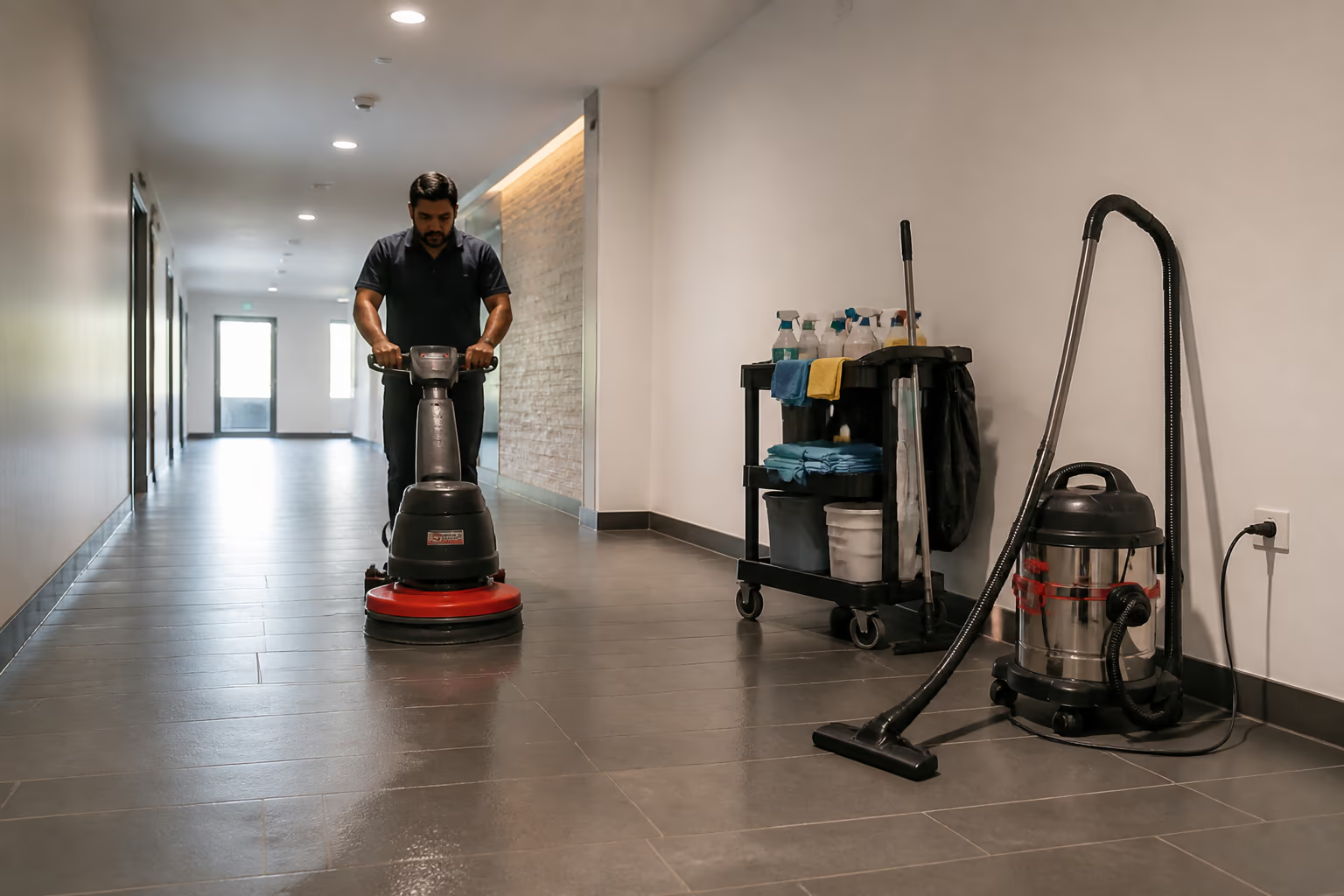
Commercial janitorial work runs on specialised equipment, and using it safely is a core responsibility. Auto-scrubbers, backpack vacuums, floor buffers, and pressure washers all require training, because each one has its own safe operating procedures.
Chemical safety is just as important. Janitors work with disinfectants, degreasers, and floor care products that need correct dilution, proper labelling, and safe storage. Under WHMIS 2015, every product carries a hazard label and a Safety Data Sheet, and a professional janitor knows how to read both and how to respond if something goes wrong.
This is why professional janitorial staffing is not just about hiring someone to clean. It is about hiring someone trained in equipment operation, chemical handling, and workplace safety, and supporting them with the right tools and products for the job.
A well-stocked janitorial cart is a small investment that pays off in efficiency. When the right mop heads, cloths, concentrates, and paper products are on hand, the janitor spends the shift cleaning rather than hunting for supplies. Colour-coded cloths, for example, keep washroom cleaning separate from desk cleaning and stop cross-contamination without slowing the crew down.
For everyday spot maintenance between professional visits, our guide to making a citrus cleaner offers simple natural cleaning formulas that are handy for a quick surface wipe-down.
What a Professional Janitor Does Not Do
Part of defining a scope of work is being clear about boundaries. A janitor keeps the building clean and safe, but they are not a maintenance technician, and they should not be expected to repair HVAC systems, fix plumbing, or do electrical work.
Moving furniture, major renovations, and hazardous waste removal are also outside the standard janitorial scope. When these tasks come up, they should be handled by the right trade or service, and the janitorial contract should be clear about where the line is.
Clarity about boundaries protects everyone. The janitor is not asked to do work they are not trained for, and the building owner is not surprised by tasks that fall outside the cleaning contract. A well-written scope of work saves money and prevents friction on both sides.
How to Structure a Janitorial Staffing Plan
Building a janitorial staffing plan starts with measuring the building. The square footage, the number of floors, the size of the washrooms, and the amount of carpet versus hard floor all determine how many hours of cleaning the building needs each night.
Occupancy matters just as much. A building with a small professional staff needs far less cleaning than a busy medical clinic or a school, because the volume of use drives the volume of soil. High-traffic washrooms, kitchens, and entrances need more frequent attention than low-use areas.
Once the hours are known, the work splits into a realistic schedule. Routine tasks like emptying bins and wiping touchpoints happen every night, while heavier tasks like floor stripping and carpet extraction run on a periodic cycle. A good staffing plan makes both visible, so the nightly crew knows exactly what is expected and the building owner can see where the budget goes.

Formatted Step-by-Step Janitorial Shift Checklist
Follow this checklist for a complete janitorial shift execution:
- Step 1.Inspect Facility Entrances and Mop Entry Foyer Flooring:Maintain entrance presentation and catch spills early.
- Step 2.Empty Centralized Waste and Recycling Bins Across Workstation Wings:Prevent waste accumulation and odours overnight.
- Step 3.Deep Sanitize Washroom Fixtures and Restock Paper Products:Ensure clean washroom amenities for the next day.
- Step 4.Auto-Scrub High-Traffic Tile Corridors and HEPA Vacuum Carpet Paths:Protect commercial flooring and indoor air quality.
- Step 5.Lock Exterior Facility Doors and Secure Building Alarm Systems:Safeguard property security at the end of the shift.
- Step 6.If you need a team or a recurring schedule, use commercial janitorial services in Ottawa to discuss scope, access, and timing before deciding whether it fits.
Serving Ottawa's Business Neighbourhoods
Professional janitors keep buildings running across the capital region, from the office towers of downtown Ottawa to the business parks of Kanata, Nepean, Orleans, and beyond. The scope of work is the same everywhere, and the standard never drops based on location.
Putting this guidance into practice
For a supervisor or new janitorial worker, start with starting with site priorities and ending with a clear handover, planned work, safe responses, and useful notes. That keeps the conversation tied to the actual space instead of a generic promise.
Review opening condition, washrooms, waste, entryways, touchpoints, supplies, restricted areas, and work needing follow-up. A written scope should say what happens on a normal visit, what needs approval, and who should hear about a recurring issue.
Seasonal considerations in Ottawa
Snow and water at an entrance, pollen on sills, or a humid washroom can move a task up the list. Every shift need not look identical.
Look at the actual condition, the number of people using the space, and the material being cleaned before changing products, equipment, or frequency.
Safe, responsible cleaning
Know labels, site procedures, emergency contacts, and job limits. Report a hazard, damaged equipment, or maintenance issue instead of improvising.
When a surface, product, or site requirement is unclear, ask before continuing. A careful decision protects people and property better than a shortcut.
How to review this as a supervisor or new janitorial worker
Before changing this routine, take a short walk through the actual space and describe what you see in ordinary language. Start with starting with site priorities and ending with a clear handover, planned work, safe responses, and useful notes. That gives everyone the same starting point and prevents a broad request from quietly becoming a different job.
Ask someone who uses the space every day what creates the most friction. Their answer may be a messy entry, an awkward storage area, a surface that marks easily, or a time when work cannot happen. A useful plan respects that local knowledge instead of replacing it with a standard script.
Choose one change that can be observed over a few visits. It might be a different order of work, a clearer handover, or more attention to opening condition, washrooms, waste, entryways, touchpoints, supplies, restricted areas, and work needing follow-up. Write down the reason for the change and what would show that it is helping. That is a better test than relying on a vague impression.
Keep the discussion specific when something is not working. Name the room, surface, timing, and result you expected, then decide what should happen next. Clear feedback is fair to the people doing the work and far more useful than a blanket complaint.
Finally, revisit the plan when the building, household, or season changes. A routine should be stable enough to follow and flexible enough to respond to real conditions. That balance is what makes cleaning guidance practical.
Free Janitorial Shift Checklist to Print
The shift duties from this guide on paper: a step-by-step shift list, morning and evening shift logs to sign off, notes for the building caretaker, and the equipment and chemical safety reminders.
Keep a copy where the team starts each shift so everyone works from the same list. There is no form and no email address to hand over.
Letter size, print-ready. No email address, no sign-up.
FAQ
What is the difference between a day porter and an evening janitor in Ottawa?
Day porters clean continuously during operating hours, handling restocking, spills, and high-visibility areas, while evening janitors perform intensive floor care, trash hauling, and deep sanitization overnight.
What WHMIS safety training do professional janitors receive in Ontario?
Janitors receive WHMIS 2015 training on hazard symbols, Safety Data Sheets (SDS), personal protective equipment (PPE), and safe chemical dilution before they work with commercial cleaning products.
Do commercial janitors in Ottawa handle building security tasks?
Yes. Evening janitors ensure all windows and doors are secured, lights are turned off, and building alarms are armed before exiting, especially when they are the last people on site.
How many cleaning hours does a typical office building need per night?
It depends on the building's size, occupancy, and use patterns, so the right answer comes from a walk-through and a staffing plan rather than a one-size-fits-all number.
What equipment does a professional janitor use on a daily shift?
A professional janitor typically uses a commercial vacuum, microfibre mops, auto-scrubbers for hard floors, and a cart stocked with the right disinfectants, degreasers, and paper products.
Do janitors supply their own cleaning products and equipment?
In a professional contract, the cleaning company supplies the equipment and products, so the building owner does not need to buy or store commercial chemicals.
How does a janitor know which areas need attention on a given night?
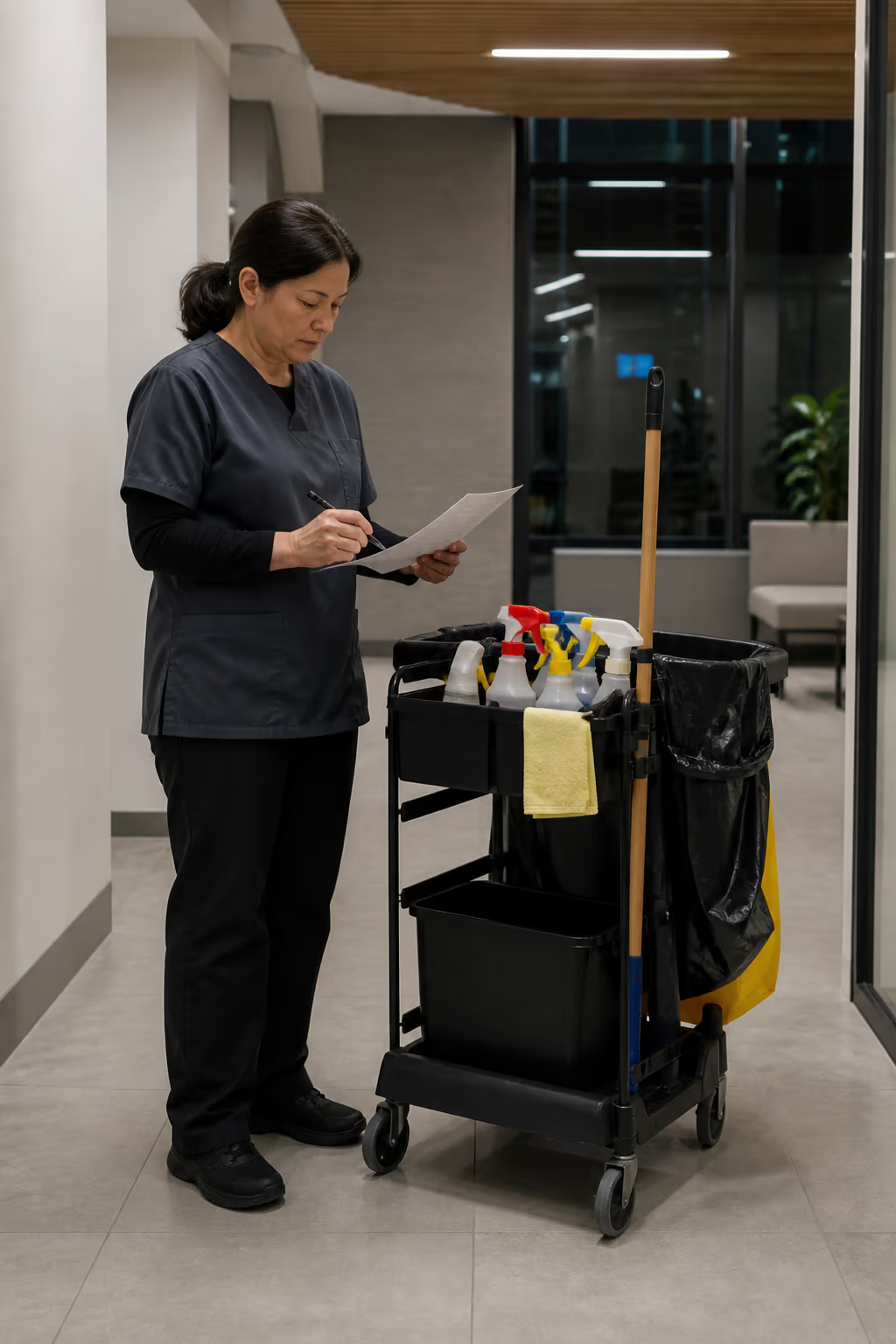
Professional janitors follow a written shift checklist and report anything unusual in a daily log, so nothing is left to memory and issues are tracked for the facility manager.
Can a janitor be expected to move heavy furniture during a shift?
No. Heavy furniture moves are outside the standard janitorial scope and should be handled by movers or the building's maintenance team to avoid injury and damage.
Are janitorial services available on weekends and holidays?
Many contracts include weekend and holiday coverage for lobbies, washrooms, and common areas, depending on how the building is used during those times.
How do I get a professional janitorial program set up for my building?
Contact Good Cleaner Co. for a facility walk-through, and we will build a staffing plan and shift checklist matched to your building's size and schedule.
Wrapping Up
Professional janitorial care protects facility assets and maintains a clean working environment. Contact Good Cleaner Co. today to book janitorial cleaning teams in Ottawa.
Keep reading
More from Good Cleaner
- 8 Essential Duties of a Professional Janitor Every Facility Owner Should Know
- After-Hours Janitorial Services in Ottawa: Benefits of Evening Office Cleaning
- Church Janitorial Services: Reverent & Detailed House of Worship Maintenance
- Top Commercial Cleaning Company in Ottawa: Corporate Office Maintenance
About the author
Service areas
- Ottawa
- Kanata
- Nepean
- Orleans
- Barrhaven