
Good Cleaner Co.'s Commitment to Breast Cancer Awareness & Safe Non-Toxic Products
Every October, Breast Cancer Awareness Month turns a spotlight on prevention and research, but our commitment is a year-round one. We believe a cleaning company should be able to say plainly what is in its products, why it chose them, and how it supports the community it works in. This guide walks through our health-first cleaning standard, the ingredients we avoid and why, and the ways we give back to breast cancer awareness in Ottawa and Ontario.
Quick Summary
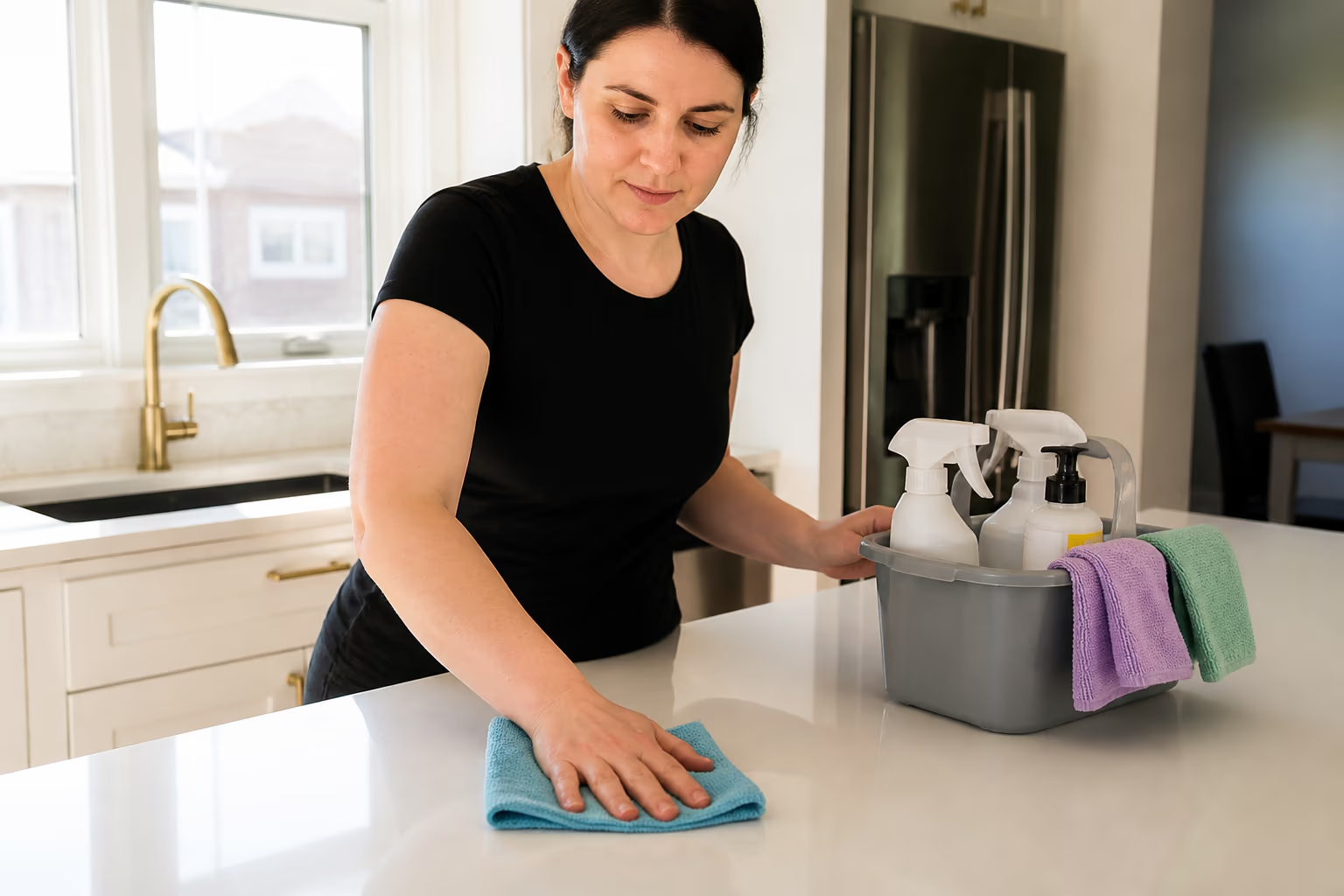
Good Cleaner Co. supports breast cancer awareness in two practical ways: we choose cleaning products that avoid the ingredients researchers have flagged for long-term health concerns, and we support community breast cancer initiatives in Ottawa. This page explains our product standards, what third-party certification actually means, and what we do not claim, because honesty matters as much as the products.
In this guide
Why We Look at the Chemicals in Cleaning Products
The average home now contains more cleaning products than it did a generation ago, and most of those products spend their lives indoors, where the air does not change as quickly as it does outside. Researchers have spent decades studying whether long-term, low-level exposure to some of the chemicals in everyday products is linked to health effects, and several of those chemicals have been identified as ingredients of concern for hormone disruption.
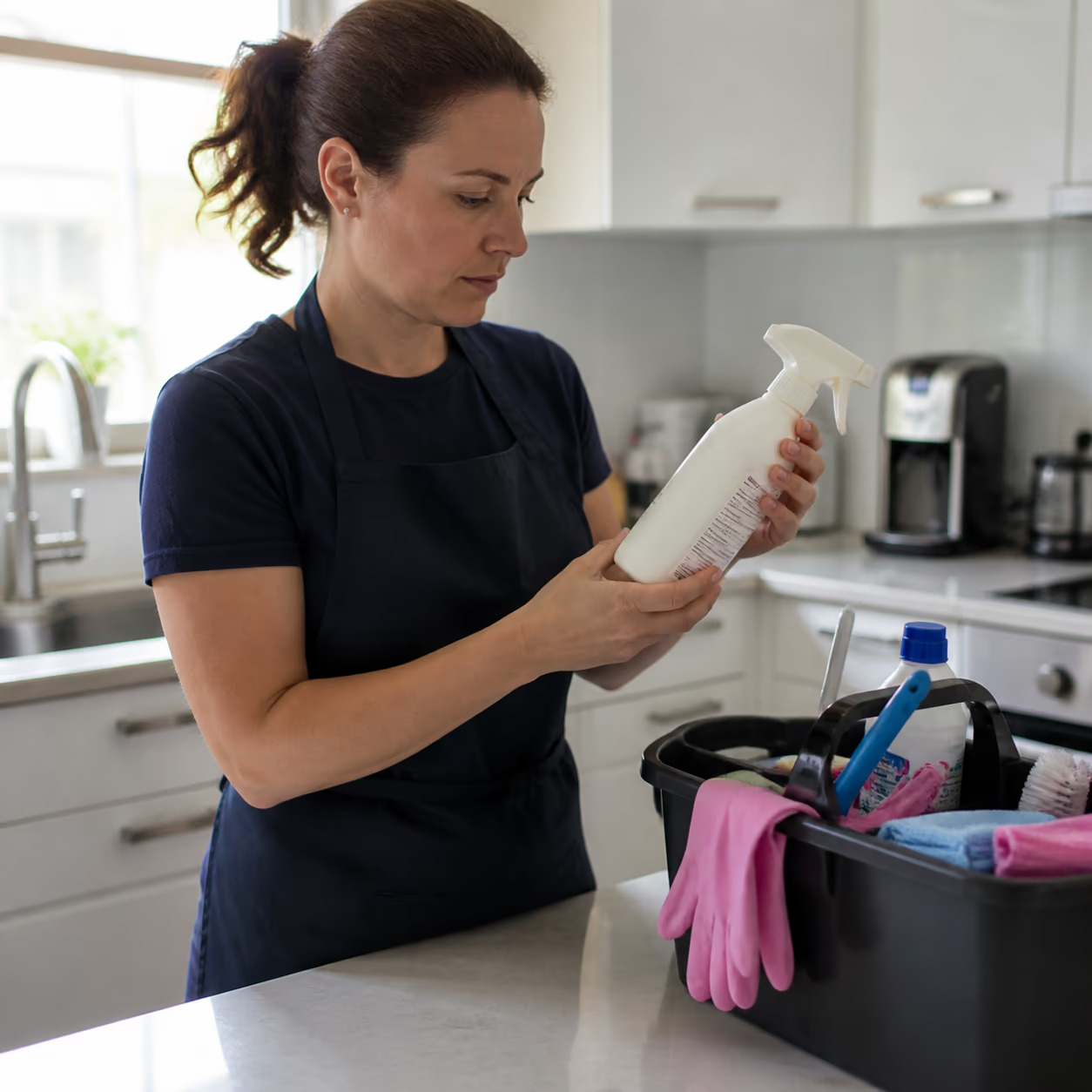
Public guidance sets a practical floor for anyone handling these products. Health Canada's household chemical safety tips recommend reading the label for ingredients and handling instructions, understanding the hazard symbols on the front, and never mixing products together. The federal advice starts at the shelf: “When you are buying a household chemical product, read the label to determine its ingredients and any special handling instructions.”
We are not scientists, and we do not claim that a cleaning product causes or prevents any disease, including breast cancer. What we can do is follow the precautionary principle: where the science is still being studied, choose products that do not contain the ingredients of concern in the first place. That is the standard we apply to every product we bring into a client's home.
The Ingredients We Avoid and Why
Our product list is built around a simple rule: if an ingredient is flagged by health agencies as a known or suspected carcinogen, reproductive toxin, or endocrine disruptor, we find a way to clean without it. These are the categories we screen for when we choose chemistry:
| Ingredient we avoid | Why we avoid it |
|---|---|
| Synthetic Fragrance | Fragrance blends can contain phthalates and other undisclosed ingredients, so we choose fragrance-free or clearly disclosed plant-based scents. |
| Phthalates | A group of chemicals used to make fragrance last longer; some phthalates are studied as endocrine disruptors, so we avoid them. |
| Parabens | Preservatives that some studies have linked to hormone disruption; we avoid them in the products we use. |
| Chlorine Bleach | Effective but harsh, so we use it only where a specific disinfection standard demands it, and never as a default cleaner. |
| Ammonia | A strong irritant that can be harsh on the lungs; we use gentler alternatives for glass and surfaces. |
| Alkylphenol Ethoxylates | A class of surfactants that can persist in the environment; we avoid them in favour of plant-based alternatives. |
| Formaldehyde-Releasing Preservatives | Some products slowly release small amounts of formaldehyde as they age; we avoid them as a precaution. |
What "Non-Toxic" and "Carcinogen-Free" Actually Mean
The honest catch is that words like "non-toxic" and "carcinogen-free" are not legally defined labels in Canada the way a medical claim is. A manufacturer can print "non-toxic" on a bottle without any third party checking it, which is why we lean on actual certification and full ingredient disclosure instead of marketing words.
When we say our standard is to avoid known and suspected carcinogens, we mean it as a working commitment: our product list excludes those ingredients, our suppliers sign off on the list, and we review it whenever a product changes. It is a higher bar than the law requires, and we are happy to show clients the Safety Data Sheets to prove it.
What EcoLogo and Other Third-Party Certification Actually Mean
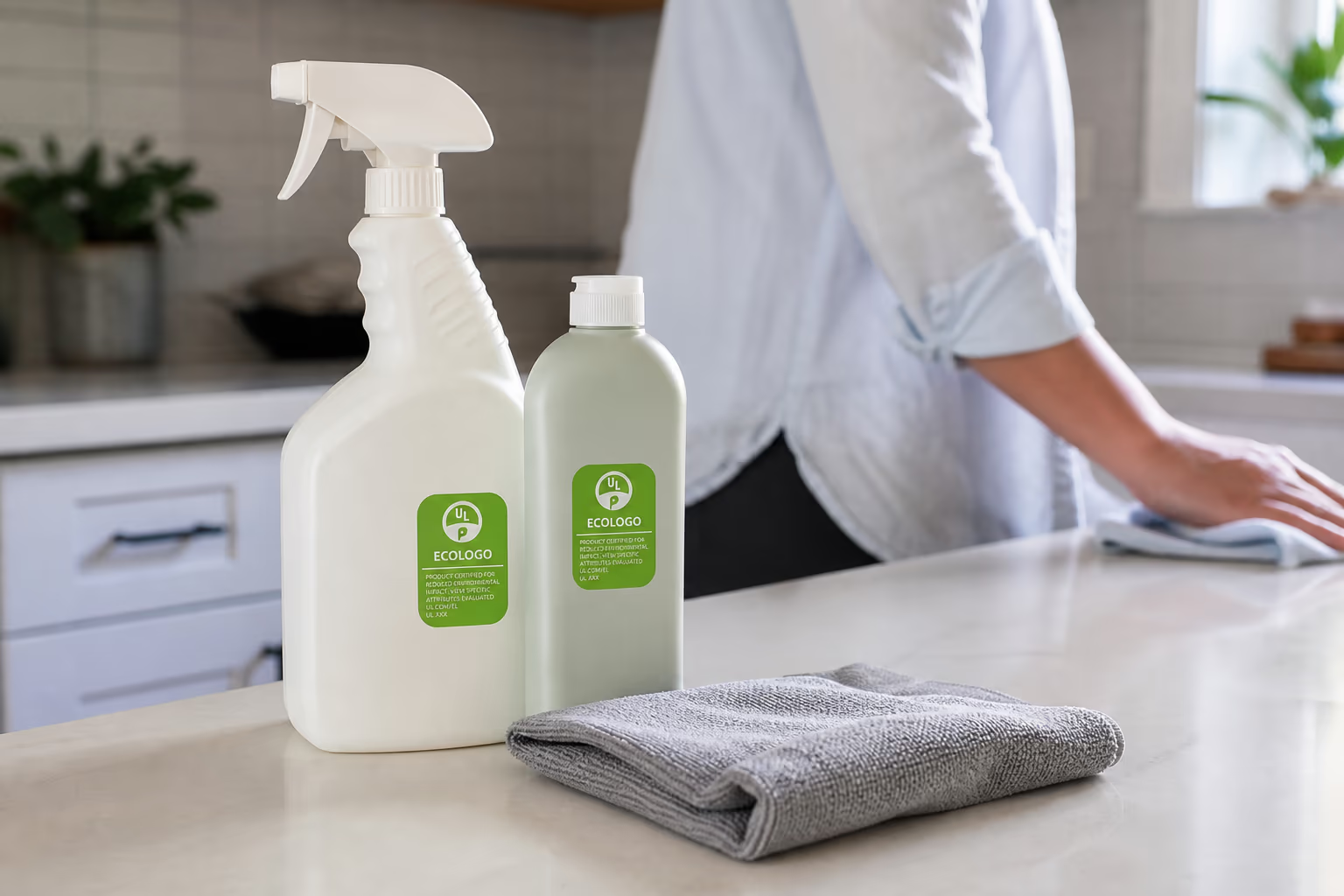
EcoLogo, now part of the UL verification system, is a third-party environmental certification used across Canada. When a product carries the EcoLogo mark, an independent body has verified that it meets a set of environmental standards, which typically include limits on certain toxic ingredients, biodegradability, and reduced volatile organic compounds.
It is worth being precise about what certification does not do. EcoLogo verifies environmental criteria and restrictions on certain ingredients; it is not a medical claim and not a guarantee that a product is risk-free for every person.
Why Indoor Air Quality Matters in Canadian Homes
Canadian homes are built to keep the cold out, which also means they keep air in. In winter, when windows stay shut for months, indoor air can carry more dust, mould spores, and chemical residue than the air outside, and that is the air a family breathes the most. Because we spend so much of our time indoors, the products we clean with become part of the indoor environment.
For a company like Good Cleaner Co., that changes the job from a visual one to a health one. A surface can look clean while the air still carries the residue of a strong solvent. Our health-first standard is about the air as much as the shine, which is why we pair gentle chemistry with sealed HEPA filtration and proper humidity control.
How We Clean for Health-Sensitive Homes
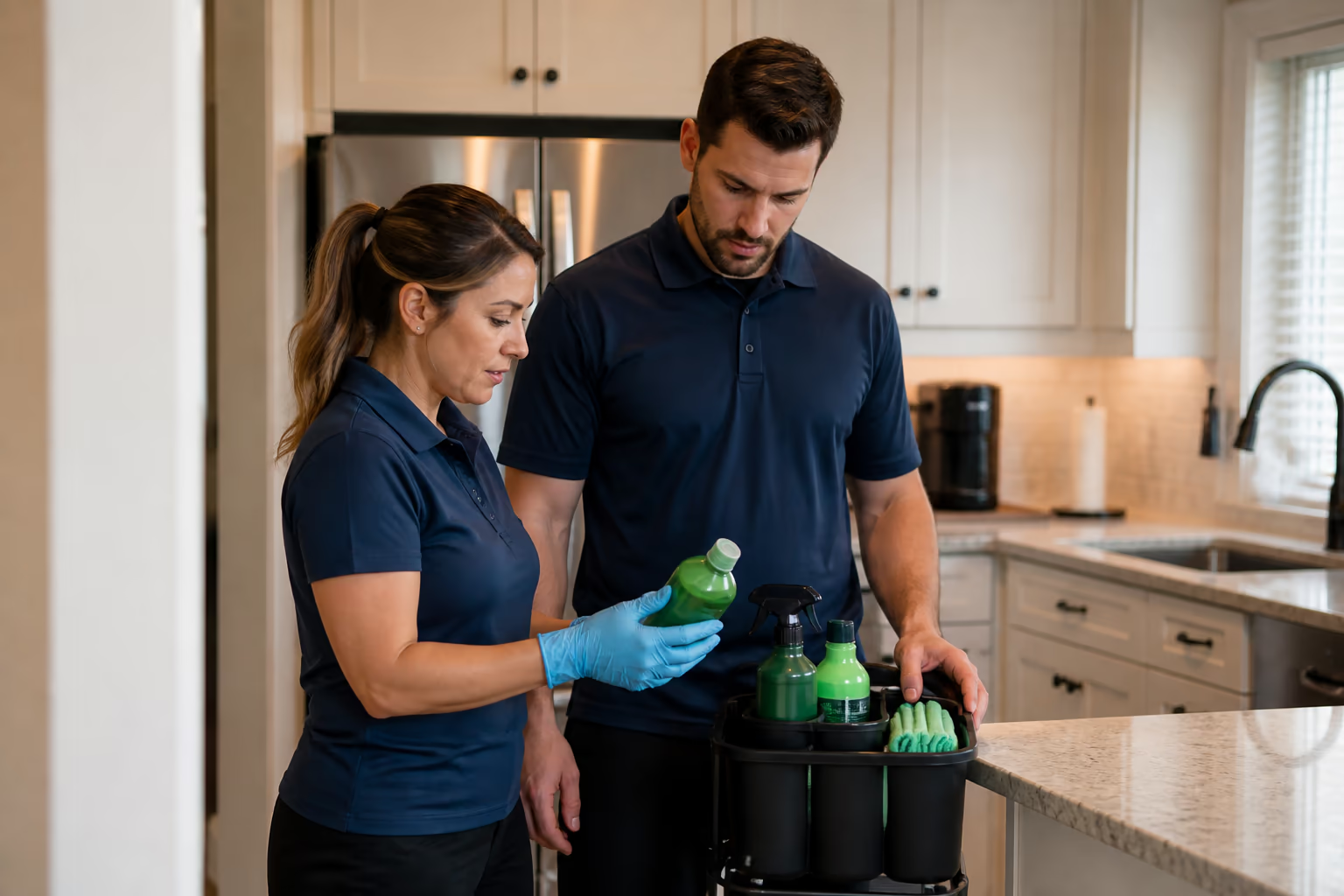
For families going through treatment, or households with young children, asthma, or chemical sensitivities, we adapt the routine so the home is cleaned well without introducing new irritants. Before we start, we ask about sensitivities, confirm the product list, and agree on any rooms you would prefer we leave untouched. The goal is the same clean result with fewer variables in the air.
Supporting Breast Cancer Awareness and Community Outreach
Good Cleaner Co. supports breast cancer awareness through donations, sponsored events, and practical help for families in treatment. During Breast Cancer Awareness Month, a share of proceeds from our cleaning services goes to local Ottawa cancer charities, and we support community walks and fundraisers in the National Capital Region.
We also give back in a less visible way: for clients going through treatment, we offer flexible scheduling and health-first cleaning so their home stays clean without adding stress or chemical exposure. If you are coordinating care for a loved one and want help keeping their home safe, our team will work around your schedule.
Getting involved does not have to mean a big campaign. A cleaning company supports awareness every time it keeps a home healthy, every time it offers a fragrance-free option to a family in treatment, and every time it shows up to a community walk with staff in pink shirts. We are proud to be part of that effort in the Ottawa region, and we invite our clients and neighbours to join us.
Formatted Step-by-Step Health-First Cleaning Checklist
Here is the checklist our crews follow for a health-first clean:
- Step 1.Choose Fragrance-Free, EcoLogo-Certified Products:Start from a product list that excludes the ingredients of concern.
- Step 2.Read the Safety Data Sheet:Know what you are using, how to handle it, and what to do in an emergency.
- Step 3.Use Colour-Coded Microfibre:Keep kitchen, bath, and bedroom cloths separate to avoid cross-contamination.
- Step 4.Ventilate and Control Humidity:Open a window when practical and keep indoor humidity in check to reduce mould and dust mites.
- Step 5.Document the Product List:Share with the client exactly what was used in their home so they can make informed choices.
- Step 6.Reviewing our residential home cleaning services in Ottawa shows how we bring this health-first standard into weekly and deep cleans.
Bringing This Standard to Every Ottawa Neighbourhood
The same health-first standard applies in every home we clean, from the family houses of Barrhaven and Orleans to the older apartment buildings of Centretown and Sandy Hill, where indoor air quality and gentle chemistry matter most. If you are comparing cleaning companies on health and safety, our commercial cleaning company evaluation guide covers the questions to ask before you book.
Good Cleaner Co. Professional Service Introductions & Specializations
Good Cleaner Co. has been cleaning Ottawa homes and businesses for years, and the same health-first product standard runs through every service we offer. Here is what we do:
Our crews use the same steam-and-degreaser method described in our five tips to clean your oven like a good cleaner guide during every deep clean and turnover.
Seasonal Maintenance & Local Environmental Factors in Ontario
Property maintenance across Ottawa and the National Capital Region means adapting your cleaning routine to serious seasonal weather shifts:
Quality Assurance & Health Canada Disinfection Compliance
Commercial facilities and homes in Ontario have to work within a clear set of safety and health rules:
FAQ
What does "non-toxic" actually mean when a company says it?
Not much on its own. "Non-toxic" is not a regulated term in Canada, so anyone can print it on a bottle. The reliable way to evaluate a product is to read the ingredient list and the Safety Data Sheet and to look for third-party certification like EcoLogo. If you want a broader checklist for vetting any provider, see our guide on how to review a cleaning company in Ottawa.
Are your cleaning products safe for someone going through chemotherapy?
We cannot make a medical guarantee for any individual, and you should always check with the care team. What we can do is clean with fragrance-free, low-VOC products, provide a written product list, and adjust the routine to reduce chemical exposure and dust in the home.
Do you use bleach?
Only where a specific disinfection standard requires it, such as certain commercial or health-care settings, and never as a default.
What is EcoLogo certification?
EcoLogo is a third-party environmental certification used across Canada. A product with the EcoLogo mark has been independently verified against environmental standards, typically including limits on certain toxic ingredients, biodegradability, and reduced volatile organic compounds. It is a useful, audited baseline, though it is still worth reading the ingredient list yourself.
Why do some cleaning products give me headaches?
Often it is the volatile organic compounds in conventional cleaners, the synthetic fragrance, or poor ventilation. When a product off-gasses solvents into a closed room, it can trigger headaches and irritation. Low-VOC, fragrance-free products and open windows both help.
Can cleaning products really affect long-term health?
Researchers continue to study long-term, low-level exposure to certain chemicals in cleaning products, and some ingredients have been flagged as endocrine disruptors or carcinogens of concern. The honest position is that the science is still developing, which is exactly why we follow the precautionary principle and avoid those ingredients where we can.
Do you donate to breast cancer charities?
Yes. During Breast Cancer Awareness Month, a share of proceeds from our cleaning services goes to local Ottawa cancer charities, and we support community walks and fundraisers in the National Capital Region through the year. Our cleaning services faq covers the other common questions about booking and scheduling.
How do I request fragrance-free cleaning in my home?
Just ask. Mention it when you book, and we will schedule a fragrance-free, low-VOC clean end to end, including the kitchen and bathroom, and leave a written list of everything we used.
Do your products contain phthalates or parabens?
No. Both are on the screen list we apply to every product we bring into a home, along with the other categories of concern described in this guide. We choose fragrance-free and clearly disclosed plant-based formulations instead.
Where does Good Cleaner Co. donate its breast cancer support?
Our donations go to established Ottawa and regional cancer charities and community fundraisers, including awareness walks. If you are organizing an event and would like Good Cleaner Co. involved, contact us and our team will do what it can to support it, whether that means a donation, a sponsored clean, or helping spread the word.
Wrapping Up
Good Cleaner Co.'s commitment to breast cancer awareness is built on two honest actions: cleaning with products that avoid the ingredients of concern, and supporting the community through donations and practical help. We do not overstate what a cleaning product can do, but we do stand behind what we put in your home. Contact Good Cleaner Co. today, or review our recurring home cleaning services in Ottawa to see our health-first standard in action.
Keep Health Information and Support Claims Specific
A cleaning article should not imply that a product, scent, or service prevents or treats cancer. People making health decisions deserve advice from their care team and reliable health sources. Community support is meaningful when it is described with the recipient, timing, and amount or activity verified by the organization. Until those details are approved, this page should focus on practical, fragrance-aware home-care choices rather than broad promises.
Keep reading
More from Good Cleaner
Services that fit
- Home Cleaning Services in OttawaRecurring weekly, bi-weekly and monthly house cleaning built around your family's routine, with a health-first, fragrance-free product standard and background-checked staff.
- Professional Office Cleaning Services in OttawaNightly and after-hours office cleaning for corporate offices, clinics and professional suites, with green chemistry and after-hours scheduling.
About the author
Service areas
- Ottawa
- Kanata
- Nepean
- Orléans
- Barrhaven