
How to Review a Cleaning Company in Ottawa Before You Hire
This article is a company-review guide, not a ranking. It gives you a practical way to evaluate Good Cleaner Co. or any other provider you are considering. Use it to turn a vague enquiry into specific questions about the visit, the quote, access, products, and what happens when your needs change.

Quick Summary
Hiring a cleaning company is easier when you assess the way it works, not just the way it advertises. Ask for a clear scope, understand who will communicate with you, and make sure the booking details reflect your actual home or workplace. Those checks are more useful than a broad claim that a company is “the best.”
In this guide
Review the Company Through Its Process
A cleaning company is a service business, so its process is the thing you will experience. A polished website may help you find a provider, but the important part begins when you explain your space and receive a response. Does the company ask enough questions to understand the job? Does it explain what happens next? Can you tell what has been agreed before someone arrives at your door or office?
Start with the first conversation. A useful enquiry process makes room for practical detail: the type of space, number of rooms, condition, access, pets, building rules, scheduling limits, and priorities. A provider does not need to overwhelm you with forms, but it should not pretend that every home or office is identical either. The right amount of detail helps both sides prepare.
Look for a distinction between information and promises. A company can tell you what it normally includes, what it needs to confirm, and what is available as an extra. That is more helpful than a broad assurance that every request will be handled perfectly. Honest limits are a sign that the company is thinking about the work rather than trying to close the conversation quickly.
When comparing providers, use the same short brief for each one. Include the rooms, the desired frequency, the condition of the space, and the tasks you care about most. A company that asks sensible follow-up questions may be giving you a more useful response, even if its first reply is not the flashiest.

Read a Quote as a Work Plan
People often read a quote as a number and skip the words around it. Those words are where the useful information lives. A good quote or written confirmation should help you understand the work being offered: which rooms are covered, what tasks are expected, how long the appointment is likely to take, and what may require a separate conversation.
Check whether the price is tied to a defined scope, a time allowance, a visit type, or an estimate that may change after a walk-through. Each model can be reasonable. What matters is that you know which model applies. If the scope says “deep clean,” ask which deeper tasks are included. If the quote is time-based, ask how priorities will be handled when time runs short.
Watch for language that can mean different things to different people. “Kitchen cleaning” may cover counters, sink, exterior appliance surfaces, and floors, while the inside of the oven or refrigerator may be separate. “Office cleaning” may include washrooms, floors, bins, and shared spaces but not paper records, personal desks, or specialized equipment. Ask for a plain-English explanation before you book.
It is reasonable to ask what happens when conditions differ from the description. Perhaps a move-out unit has more residue than expected, an office has a large event the night before, or a bathroom needs work beyond normal maintenance. A clear company will tell you how it contacts you, whether it reprioritizes the visit, and when extra work needs approval.

Assess How the Company Handles Your Space
Cleaning brings people into personal and professional spaces, so access deserves its own conversation. For a house, ask how entry will work if you are away. For a condominium, confirm elevator and visitor rules. For an office, clarify keys, access cards, alarm instructions, secure areas, and the person to contact after hours. Do not wait until the first appointment to sort these things out.
You can also ask how the company records special instructions. A short arrival note may cover a fragile table, a room that is off limits, a pet that needs a closed door, or a floor that needs a particular product. For a business, the note may cover confidential material, waste procedures, or areas with restricted access. The important point is not to create a complicated rulebook; it is to avoid relying on verbal memory.
Pay attention to the company’s questions about surfaces. Natural stone, unfinished wood, newer flooring, specialty appliances, and some upholstery need more care than a generic cleaner can offer. Describe the surface and ask how the company would approach it. If you have the manufacturer’s care instructions, share them. A careful answer may include a request for more information or a recommendation to avoid a particular treatment.
Products are another practical topic. Tell the company if fragrance, ingredients, a pet, a child, or a particular material affects your choice. Ask what it can provide and what you should supply yourself. Do not assume a phrase such as “green” or “non-toxic” tells you everything you need to know; discuss the actual use case and follow product directions.
Look for a Useful Communication Pattern
The best communication is usually calm and specific. Before a visit, you should know the date, arrival window, scope, access plan, and point of contact. During a recurring arrangement, you should know how to request a change and how much notice is helpful. After a visit, you should have a straightforward way to raise a question while the details are still fresh.
Consider how the company responds when you ask a normal follow-up. Does it answer the question directly? Does it put an important update in writing? Does it explain when it needs more detail? These are small signs, but they often predict whether a change in schedule or scope will be manageable later.
For a workplace, communication may involve more than one person. A facilities contact, office manager, building manager, and staff members can all have information the cleaner needs. Decide who is allowed to change the scope, who receives invoices or notices, and who can answer an access question. This avoids conflicting instructions on the day of service.
For a home, make a single list of priorities for the first visit. You might care most about the kitchen, washrooms, entryway, and floors, while another room can wait. Sharing that list helps the company understand your standard without expecting someone to guess it from a tidy-looking room.
Compare Fit for Homes and Workplaces Separately
Some companies offer both residential and commercial cleaning, but your review should still reflect the kind of space you have. A home review is personal: routine, privacy, pets, children, belongings, and the way each room is used. A workplace review is operational: access, staff schedules, bins, washrooms, common areas, and the effect of cleaning on the next business day. If your priority is a commercial contract, our guide to the best commercial cleaning company in Ottawa builds on these same questions with sector-specific checks.
For a home, ask whether the company can work with the rhythm of your household. Is there a sensible way to describe priorities? Can you adjust the frequency after the first few visits? What should be cleared or put away? If you are looking into home cleaning services in Ottawa, these questions are more valuable than a generic list of every task a cleaner might do.
For an office, ask for a scope that names the spaces and the timing. A compact ByWard Market office and a larger Kanata workplace will have different access and foot-traffic patterns. A clinic, retail shop, or shared studio may also have special cleaning or privacy needs that a general office checklist does not address. Tell the company about the environment instead of assuming a one-size-fits-all plan. Comparing office cleaning services Ottawa providers with the same brief keeps the review consistent from one workplace to the next.
The company you choose does not need to be everything to everyone. It needs to understand the work you are asking it to do and communicate honestly about whether it is a fit. If the answer is unclear, it is fine to keep comparing.
Use a Trial Mindset for the First Visit
The first visit is a chance to see whether the written plan works in the real space. Treat it as an observation point, not as a test where someone is expected to read your mind. Before the appointment, confirm the priorities, access, and any off-limit areas. After the appointment, walk through the agreed scope while the details are easy to remember.
Notice concrete things: were the priority rooms addressed, did the visit match the confirmed scope, and did the communication make sense? If something was missed, describe the area and the original expectation without jumping to a broad conclusion. A specific question is easier to resolve than “the clean was not good.”
Use what you learn to improve the next visit. You may decide the kitchen needs more attention than bedrooms, that a seasonal task should be added, or that the frequency is too high or low. A service relationship should be able to adapt through clear conversation, not through silent frustration.
Do not judge a company by a task that was never included. If you hoped for inside-cabinet cleaning, wall washing, or a detailed appliance clean, check whether that was in the scope. The review is fairest when you compare the completed work with the agreed work.
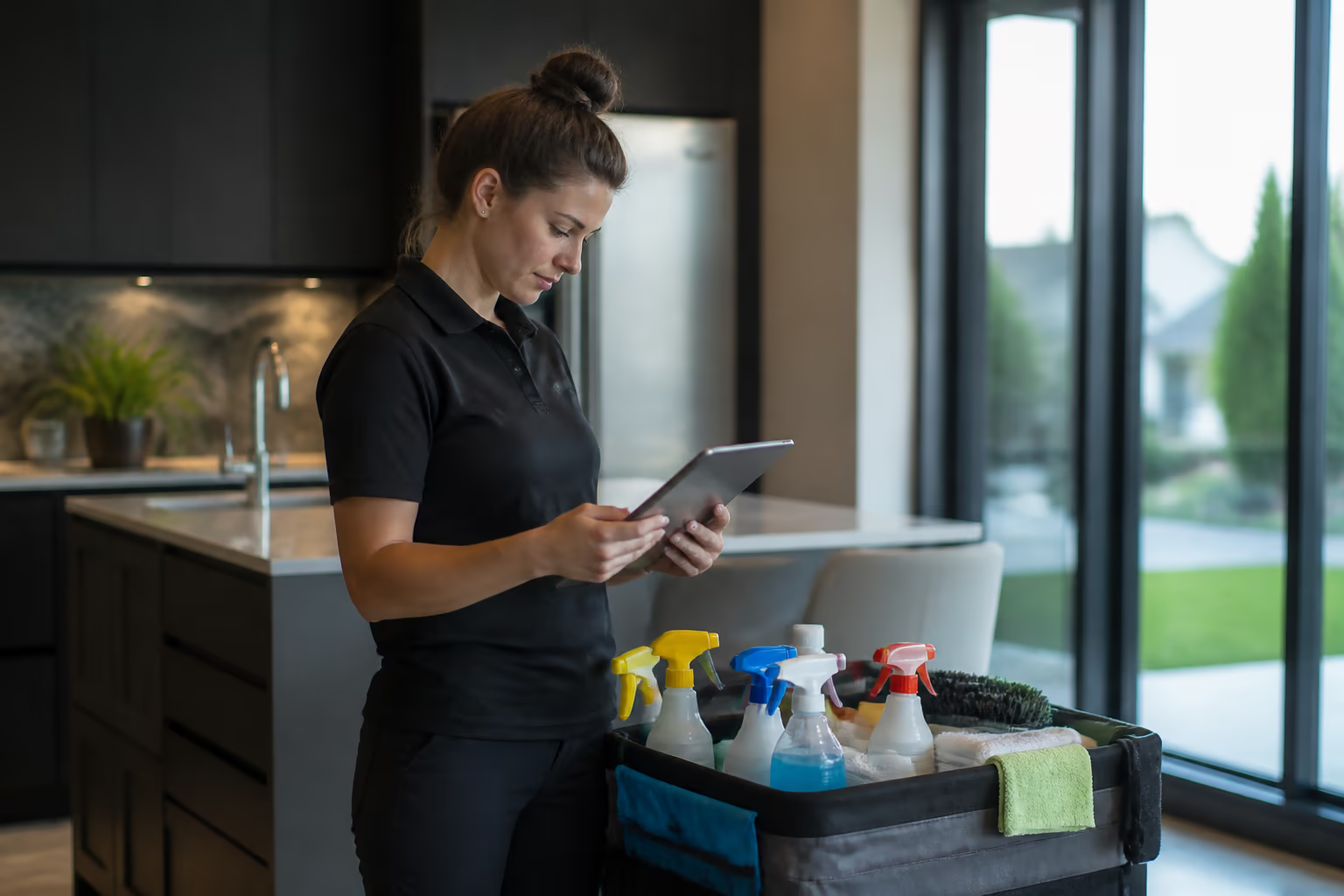
Formatted Step-by-Step Company Review Checklist
Use these steps before you hire a cleaning company.
| Ask | Check |
|---|---|
| Send the same brief to each provider | Include the space, priorities, condition, access, and preferred schedule. |
| Read the scope line by line | Confirm rooms, tasks, optional work, exclusions, and any assumptions about the first visit. |
| Ask about the working process | Find out how booking, changes, access instructions, and questions after a visit are handled. |
| Discuss surfaces and practical needs | Mention pets, sensitive materials, building rules, privacy concerns, or product preferences. |
| Keep a written confirmation | Check that the date, contact, arrival plan, and scope match what you discussed. |
| Use this checklist when you consider Good Cleaner Co. for a home cleaning visit in Ottawa or when you compare another local provider. | |
Plan for Ottawa Conditions and Building Rules
Local context is useful when it changes the work. Ottawa winters can make entryways harder to maintain, particularly where wet footwear and grit are brought indoors. Mention the entryway, mats, and flooring type if that area is a priority. In spring, windows, ledges, and less-used rooms may need more attention after a long indoor season. These are details to add to a scope, not reasons to assume every service needs the same package.
Building rules can be just as important as weather. A downtown Ottawa condo may require an elevator booking. A workplace in Nepean may have a specific loading entrance or after-hours access procedure. If the provider needs a parking pass, access card, or a contact who can answer the phone, put that in the first confirmation. Good logistics protect the time reserved for actual cleaning.
Seasonal habits also affect frequency. More cooking, guests, or indoor time can change the rooms that need attention. Review your priorities every few months instead of keeping a schedule that no longer suits the space. A small adjustment is often more effective than letting several chores accumulate into a rushed, oversized visit.
Keep Everyday Expectations Realistic
Professional cleaning works best alongside ordinary daily habits. Dishes put away, counters cleared, food waste emptied, and personal items removed from floors make it easier to spend a visit on real cleaning rather than sorting belongings. That does not mean you need to clean before a cleaner comes; it means you decide which work needs professional time.
For a quick between-visit routine, choose gentle methods that suit the surface. The DIY citrus all-purpose cleaner guide may be useful for thinking through simple daily wiping, but it is not a replacement for manufacturer directions or for a product chosen for a particular material. Never mix household products, and test a new method in an unobtrusive spot where appropriate.
In a shared office, establish a few simple responsibilities. Staff can clear dishes, remove personal food, and keep desk materials together. The cleaning plan can then focus on floors, washrooms, common areas, and the tasks that need scheduled access. Clear expectations reduce tension between staff and a service provider.

FAQ
How can I tell whether a cleaning company understands my needs?
Look at the questions it asks and the details it confirms. A company does not have to know everything immediately, but it should turn your information into a clear scope and explain what it still needs to confirm.
What should a written cleaning scope include?
It should identify the rooms, main tasks, optional work, exclusions, schedule, access assumptions, and the next step if the condition or priorities differ from the original description.
Should I ask a cleaning company about its products?
Yes, especially when you have a surface-specific requirement, fragrance sensitivity, pet, child, or product preference. Describe the practical concern and ask what the company can accommodate.
How do I compare companies when their quotes are different?
Put the scope beside each price. Check whether the quotes cover the same rooms, depth of work, timing, and first-visit condition. A comparison is only useful when the underlying work is similar.
What should I do if I am unhappy after the first appointment?
Refer to the agreed scope and describe the specific area or task you want clarified. Contact the company promptly, keep the conversation factual, and ask what information it needs to review the issue.
Can a recurring cleaning plan change over time?
It should be discussed when your routines change. You may need a different frequency, a revised priority list, or occasional extra tasks. Put the change in writing so the next visit reflects it.
Do I need a separate plan for a move-out or post-renovation clean?
Usually, yes. Those conditions can involve different tasks and more intensive work than normal maintenance. Describe the condition early so the provider can recommend an appropriate scope.
Wrapping Up
Review a cleaning company the way you would review any ongoing service: look for a clear process, a written work plan, sensible questions, and communication you can use. A thoughtful comparison gives you a better chance of choosing a provider that fits your space, whether that provider is Good Cleaner Co. or another Ottawa company. Our broader guide to best cleaning services also compares scope, price, and frequency across providers in Ottawa.
Keep reading
More from Good Cleaner
Services that fit
- Home Cleaning Services in OttawaRecurring weekly, bi-weekly and monthly house cleaning built around your family's routine, with non-toxic chemistry and background-checked staff.
- Professional Office Cleaning Services in OttawaNightly and after-hours office cleaning for corporate offices, clinics and professional suites, with after-hours scheduling and eco-friendly products.
About the author
Service areas
- Ottawa
- Kanata
- Nepean
- Orleans
- Barrhaven