
Why Airbnb Cleaning May Not Be Ideal For Your Business
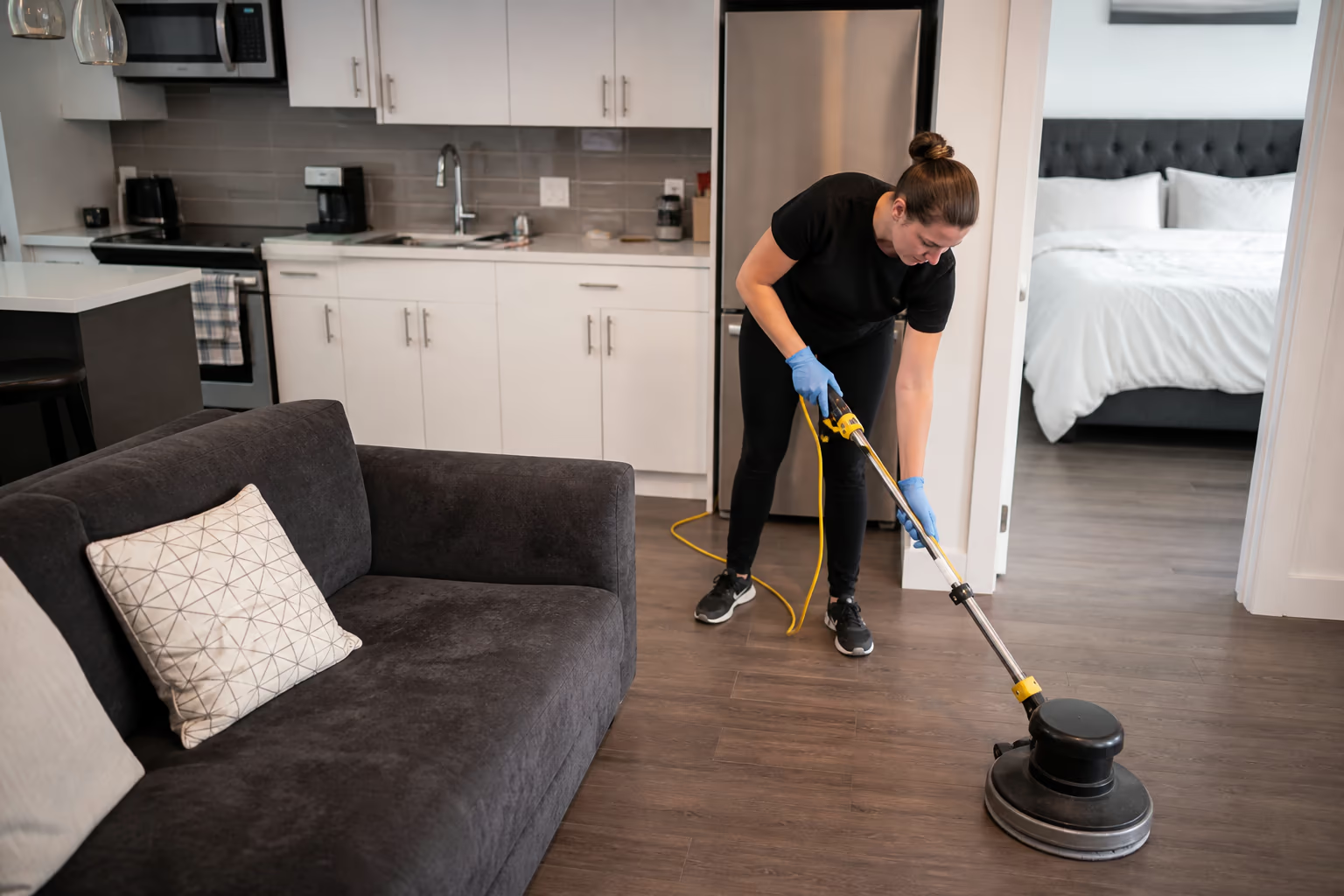
Starting a cleaning business that focuses on Airbnb turnover is an exciting venture, and on paper it looks like a dream. The bookings feel steady, the properties are compact and the demand never seems to stop. But the reality behind short-term rental cleaning is more demanding than the marketing suggests: tight turnaround windows, schedules that change at the last minute and costs that quietly eat your margin. This guide walks through why Airbnb cleaning may not be ideal for your business and what a more balanced, sustainable model looks like.
Quick Summary
Airbnb turnover cleaning looks appealing on paper, but tight turnaround windows, unpredictable income, hidden costs and constantly changing property condition make it more demanding than the marketing suggests. A more sustainable cleaning business balances short-term rental work with steadier, better-planned clients.
In this guide
The Appeal: Why Airbnb Cleaning Looks So Attractive
It is easy to see why so many cleaners are drawn to Airbnb work. The numbers on the surface are appealing, and the day-to-day seems straightforward compared with hunting for monthly clients.
The comparison with long-term rentals is instructive. In a residential tenancy, section 33 of the Residential Tenancies Act puts ordinary cleanliness on the tenant, so a full turnover clean happens once. Short-term hosting moves that entire burden onto the host and repeats it after every guest, which is the part a headline nightly rate rarely reflects. The Act states its own purpose: “The purposes of this Act are to provide protection for residential tenants from unlawful rent increases and unlawful evictions, to establish a framework for the regulation of residential rents, to balance the rights and responsibilities of residential landlords and tenants and to provide for the adjudication of disputes and for other processes to informally resolve disputes.”
- 01The properties are usually small, so each clean feels quick and contained.
- 02Bookings repeat throughout the year, so there is always work on the calendar.
- 03Hosts often pay promptly because the next guest depends on the clean.
- 04There is no long-term contract to chase, just a stream of short, concrete jobs.
- 05New hosts are constantly entering the market, so demand keeps growing.
The promise is a cleaner who drops in, turns a unit over and moves on, with a steady rhythm of paid work. Before you commit to that model, it is worth looking at what the rhythm actually demands of your time, your income and your equipment.
The Turnaround Trap: Cleaning on Someone Else's Clock
The single biggest difference between Airbnb cleaning and ordinary residential work is the turnaround window. Guests check out in the morning and the next guest checks in that same afternoon, often within a few hours. That means the clean is not finished when it is done well; it is finished when the clock says it must be.
That pressure changes how you work. You cannot drift between rooms, take an extra pass at a stubborn mark or fit the unit in between other jobs when it is convenient. The booking is the boss, and when a guest is delayed at checkout or a host confirms late, the tight window only gets tighter. During peak seasons, weekends and holidays, the same window repeats over and over, and your whole day bends around someone else's schedule.
The result is that Airbnb cleaning is less flexible, not more, than the steady weekly work it is often compared with. For a solo cleaner or a small team, that rigidity is one of the quiet reasons the model disappoints.
The Unpredictable Income Problem
The second surprise is the income itself. Airbnb bookings swing with the seasons, the weather and local events, so the volume of cleaning work swings with them. A holiday weekend may leave you scrambling, while a quiet stretch of the off-season leaves the calendar empty.
- 01Some weeks are packed and some are nearly empty, with little middle ground.
- 02Cancelations and double-bookings change the schedule at short notice.
- 03A single bad review can dry up a host's bookings, and your work with them.
- 04Hosts may switch cleaners between seasons to chase the cheapest rate.
Building a business on that rhythm means building a business on someone else's occupancy rate. Recurring residential clients, by contrast, book the same clean on the same day every week or two, and that predictability is what pays the bills when the rental market slows down.
Property Condition Is a Moving Target
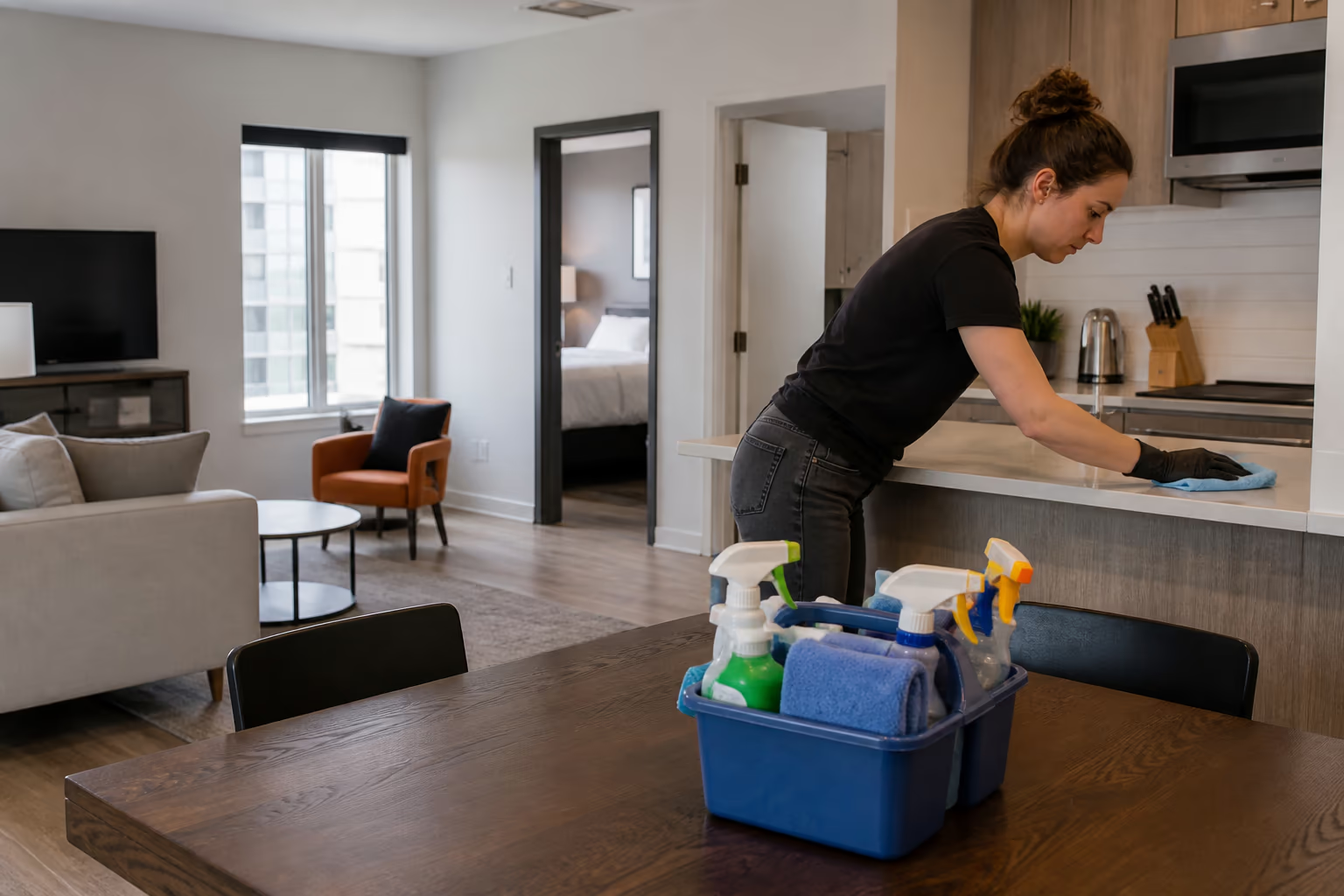
Every short-term rental is different, and so is the state a guest leaves it in. One group checks out with the unit neat and tidy. The next leaves a kitchen that looks like a party happened, or a bathroom that needs serious attention, or stains you were not expecting.
Because you are booking on short timelines, you rarely have time to scope the job properly before you arrive. You walk in, see what you see and clean to the standard the next guest expects, whatever that takes. That variability is exactly why a fixed per-turnover price is so often wrong: the same unit can take two hours one visit and four the next.
Professionals handle this by quoting on scope and condition rather than on a flat rate, and by having clear policies for the extra work a guest leaves behind. Without those guardrails, the cleaner absorbs the difference.
The Communication and Scheduling Load
A surprising amount of Airbnb cleaning is coordination, not cleaning. Hosts confirm bookings late, change check-in times, swap lock codes and message about keys, guests and last-minute extras. Someone has to answer those messages, fit the job into the day and keep the host calm when a guest is on the way.
- 01Keys and lock codes change constantly and must be tracked securely.
- 02A host's message can arrive an hour before the window opens.
- 03Guest complaints after the clean can pull you back to a property you already finished.
- 04The coordination rarely shows up on the invoice, but it uses real time.
For a solo cleaner this load is heavy, because there is no one else to absorb it. A team or an agency that specialises in short-term rentals builds systems for it; an individual trying to run the whole thing alone often finds the admin outweighs the income.
When Airbnb Cleaning Does Fit
None of this means Airbnb cleaning is bad work. It can be a strong part of a balanced cleaning business, especially when the trade-offs are understood and priced in. For the other side of the story, airbnb success the power of airbnb cleaning looks at how this same work can become a genuine strength when it fits your business.
- 01It is useful as supplemental income on top of a stable base of recurring clients.
- 02It keeps the schedule full during slow stretches if the host's bookings are reliable.
- 03It builds your reputation with hosts who refer you to other property owners.
- 04It gives a new cleaner a way to build experience and references quickly.
The key is positioning it as one stream of work rather than the whole business. When Airbnb turnover is the occasional extra, its unpredictability is manageable; when it is the entire model, the same unpredictability becomes the thing that breaks the business.
How Hosts and Cleaners Can Work Well Together
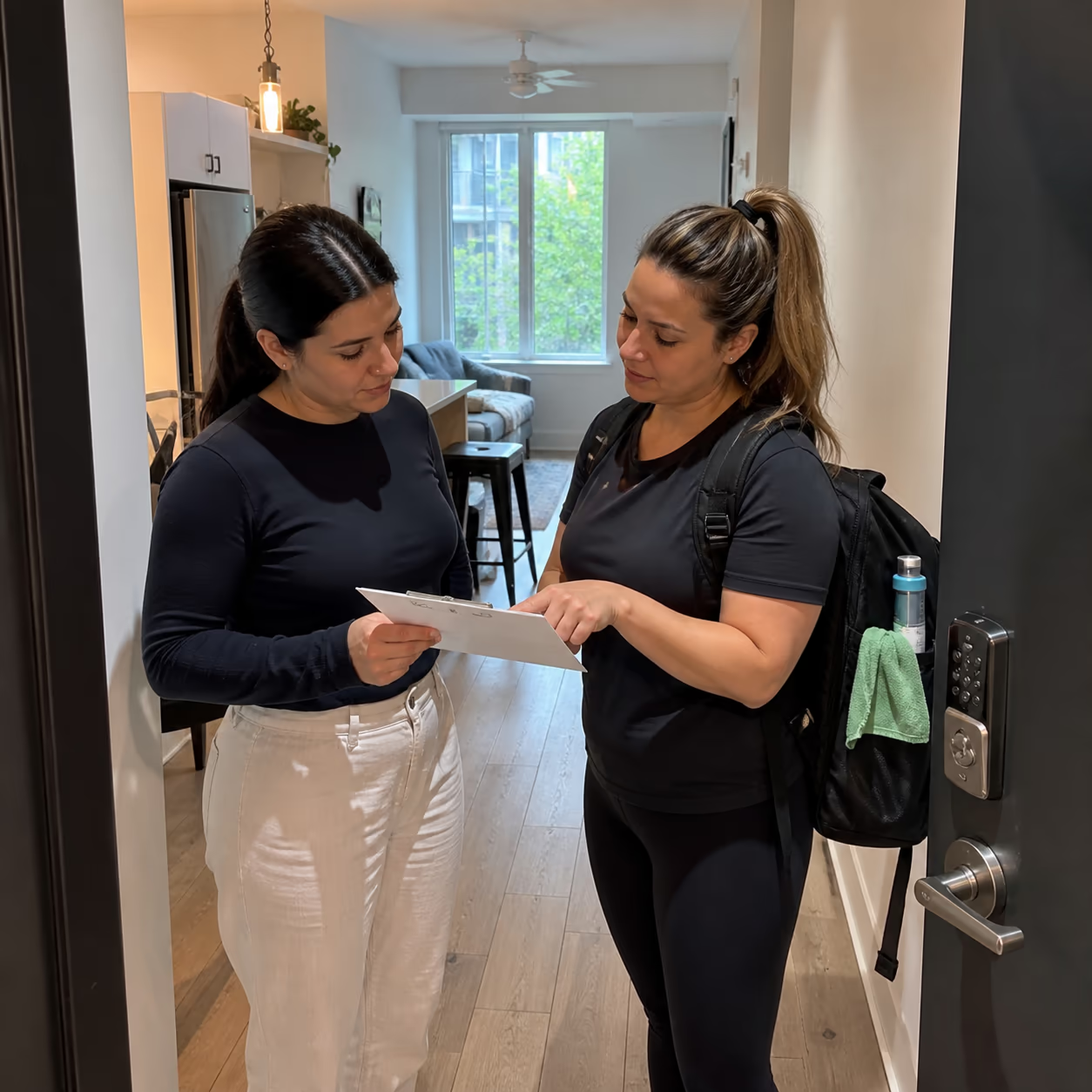
The problems in Airbnb cleaning rarely come from the cleaning itself; they come from unclear expectations between the host and the cleaner. A host who confirms check-in and check-out times, keeps the lock code current and messages early about a guest change makes the work far easier. A cleaner who confirms scope, timeline and the price for extra work up front protects both sides.
- 01Agree on a clear scope of what a standard turnover includes before the first job.
- 02Set a written price for the extra work a messy guest leaves behind.
- 03Agree on how restocking supplies and laundry are handled and charged.
- 04Confirm the check-out and check-in windows with the host every time.
- 05Build in a small buffer between bookings so the schedule is not always on the edge.
When both sides treat the relationship as a partnership, the turnaround runs smoothly and the cleaner is paid fairly for the real work.
Building a More Sustainable Cleaning Business
A more sustainable model mixes recurring residential clients with selective short-term work, and adds commercial accounts as the business grows. Recurring clients give you the predictable base that pays the regular bills. Commercial work brings scale, larger invoices and longer relationships. Short-term rentals fill in the gaps and keep the team busy. High-density commercial contracts, such as call centre cleaning high density workspace hygiene work, offer the kind of steady, scheduled volume that Airbnb turnover cannot match.
This is the approach Good Cleaner Co. takes to the market. Rather than betting the whole business on any single type of turnover, we build a balanced portfolio of homes and workplaces, with trained staff, certified products and a documented process for every job. That balance is what keeps quality consistent and income reliable across the seasons, in Ottawa and across Ontario.
Ontario and Canadian Considerations
Cleaning work in Canada carries obligations that shape whether any model is sustainable, and Airbnb work has its own wrinkles. Income from cleaning, including short-term rental turnover, is business income that must be reported to the Canada Revenue Agency, and once earnings pass the registration threshold you need a GST or HST number and must charge tax on your services. Whether you hire staff as employees or contract with them affects your responsibilities for deductions and workplace coverage, and in Ontario, WSIB registration may apply depending on how your business is structured.
There is also a practical question of how the property is classified. A cleaner working on a short-term rental is not the property owner, so liability and damage sit with the host or the property management arrangement. A good accountant and a clear contract settle these questions before they become problems, rather than after.
What You Need Before You Start
If you are weighing Airbnb cleaning, take the same care you would with any new line of work before you commit.
- 01Price the job on scope and condition, not on a flat per-unit rate.
- 02Set a clear policy for the extra cleaning a guest leaves behind.
- 03Confirm the timeline, the key handoff and the scope with the host before you arrive.
- 04Account for travel, supplies and laundry in your true hourly rate.
- 05Keep GST or HST and contractor arrangements in order from the first invoice.
- 06Start with a few hosts as a trial before you build your schedule around the work.
Common Mistakes and How to Avoid Them
The cleaners who struggle with Airbnb work usually repeat the same few mistakes.
- 01Pricing every unit the same, then absorbing the cost of the messier guests.
- 02Booking back-to-back turnarounds with no buffer for the unexpected.
- 03Forgetting to charge for travel, supplies or the coordination time.
- 04Relying on a single host, then losing the schedule when the host switches cleaners.
- 05Treating short-term turnover as a full-time model instead of a stream of work.
- 06Leaving tax obligations until the business is already running.
The fix for most of these is the same: price honestly, keep a buffer, diversify the clients and build the model on recurring work with Airbnb as the supplement.
Costs, Timing and When to Call a Professional
The real cost of Airbnb cleaning depends on your market, the size of the properties and the standards the hosts expect, so typical ranges vary widely and no fixed price holds everywhere. What is predictable is that the true cost includes your time, your travel, your equipment and your coordination, and that a price that ignores those is a price that loses money. Build your rates from the actual scope and condition of each unit, and review them as the seasons change.
When the coordination and turnaround pressure grow beyond what you want to manage, a professional team changes the equation. Good Cleaner Co. If you are comparing providers, our commercial cleaning company vetting guide is a useful starting point for the questions that matter, and the same standards of transparency, training and equipment apply to residential home care.
Formatted Step-by-Step Airbnb Cleaning Decision Checklist
Use this checklist to decide honestly whether short-term rental cleaning fits your business.
- 1.Calculate your true hourly rate including travel, supplies, laundry and coordination.
- 2.Price each unit on its actual scope and condition, never on a flat average.
- 3.Confirm the window, the key handoff and the scope with the host before you accept the job.
- 4.Keep a buffer between turnarounds and a backup plan for the last-minute change.
- 5.Review the mix monthly and let recurring clients stay the backbone of the schedule.
- 6.When the pressure of turnaround cleaning outgrows what a solo cleaner can manage, reviewing our professional home cleaning services in Ottawa provides a trained team for steady, professional upkeep.
FAQ
Is Airbnb cleaning profitable?
It can be, when the true cost of travel, supplies and coordination is built into the price. The margin disappears quickly if you charge a flat rate that does not reflect the scope and condition of each unit.
Why is Airbnb cleaning so unpredictable?
Because it follows the host's occupancy, which swings with seasons, weather and local events. Bookings cluster and cancel, so the volume of work is hard to plan and the income varies from week to week.
Should I do only Airbnb cleaning?
A business built on only short-term turnover carries real risk, because the income swings with someone else's bookings. Most cleaners find a mix of recurring residential clients, selective short-term work and commercial accounts more sustainable.
How should I price a turnover clean?
Price on the actual scope and condition of the unit, add travel and supplies, and set a clear policy for the extra work a guest leaves behind. A flat per-unit rate almost always undercharges on the messy jobs.
Is Airbnb cleaning the same as house cleaning?
No. Turnover cleaning runs on a strict schedule, restocks the unit, often includes laundry and carries more coordination with hosts. House cleaning is more predictable and less driven by the check-in clock.
How do I find Airbnb cleaning clients?
Hosts and property managers are the direct path, and reliable hosts refer you to others. Start with a few hosts as a trial, deliver a consistent standard and use the referrals to grow at a controlled pace.
How do I keep Airbnb work from taking over my whole schedule?
Set a clear limit on how many turnarounds you take per day and keep recurring clients booked first. Use the short-term work to fill genuine gaps, not to crowd out the stable base your business depends on.
Wrapping Up
Airbnb cleaning looks like an easy entry into the cleaning business, but the turnaround pressure, unpredictable income and hidden costs make it a demanding model to build a whole business around. The cleaners who thrive treat it as one stream of work alongside a stable base of recurring residential clients, and they price it honestly on scope and condition rather than on a flat rate. If the coordination and pressure grow beyond what you want to manage, a professional team brings the systems, staff and balance that make the work sustainable. Contact Good Cleaner Co. for a free quote and a cleaning plan tailored to your home or business. Hosts reading this from the other side of the arrangement can see what a booked changeover covers under short-term rental turnover cleaning in Ottawa.
Keep reading
More from Good Cleaner
Services that fit
- Residential Home Cleaning Services in OttawaRecurring home cleaning services in Ottawa for one-time, weekly, biweekly and monthly care, built around your schedule and your standards.
- Janitorial Services in OttawaRecurring janitorial services for offices, warehouses, retail, dealerships and schools, with eco-friendly commercial cleaning and customized plans.
About the author
Service areas
- Ottawa
- Kanata
- Nepean
- Orléans
- Barrhaven