
What Indicates A Good House Cleaner?
A good house cleaner is not hard to recognise once you know what to look for. This guide covers the traits, skills and practical signs that separate a reliable professional from a gamble, and how to find a fit for your Ottawa home.
Quick Summary
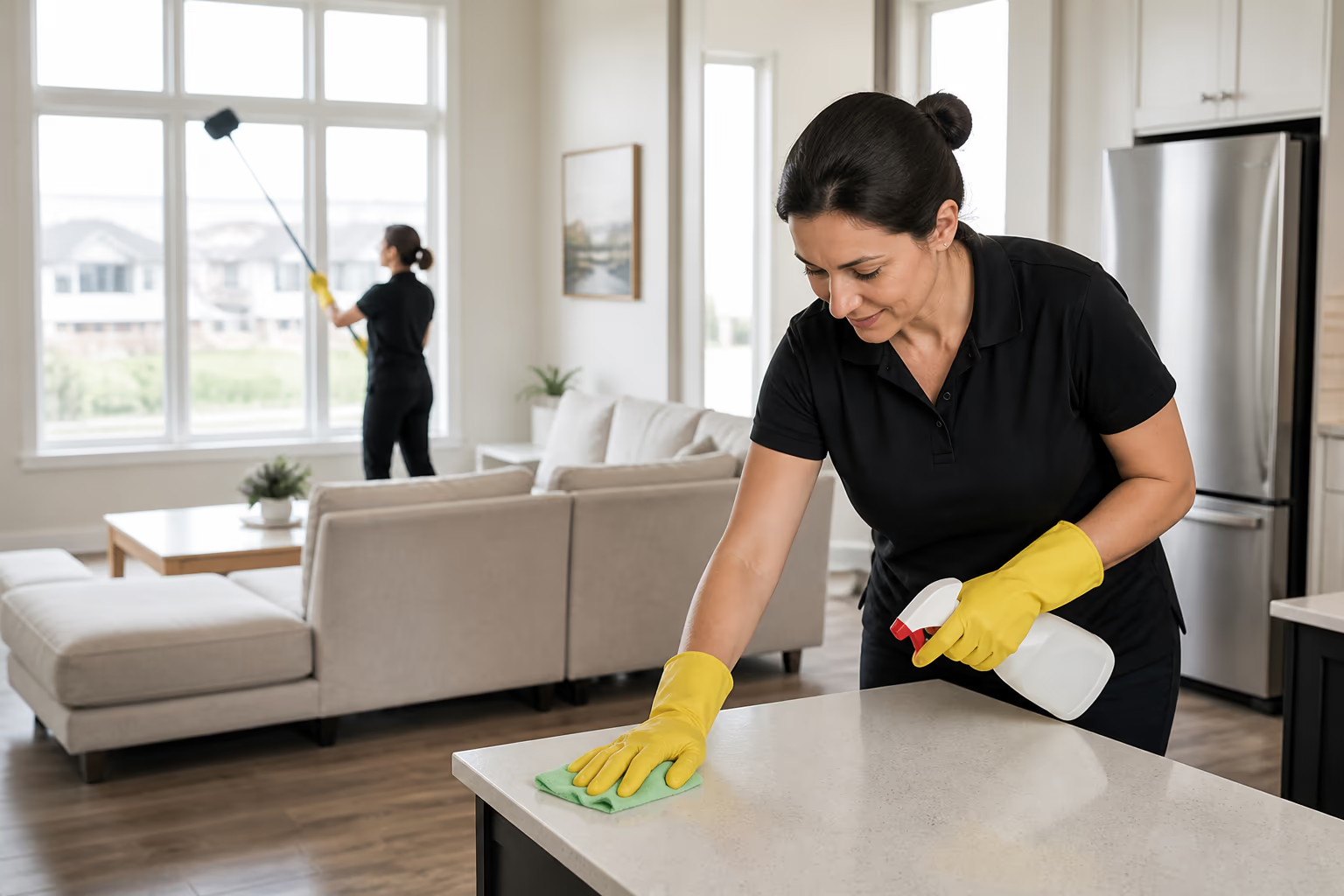
A good house cleaner is reliable, skilled and honest, arrives prepared, works consistently visit to visit, and pays attention to details like high-touch surfaces and tidy finishing touches. Look for training, background checks and clear communication before hiring someone for your Ottawa home.
In this guide
What a Good House Cleaner Looks Like
A good house cleaner is someone you can hand a key to and trust to leave the home better than they found it. That trust is built on three things: skill, reliability and honesty. The skill shows in the work, the reliability shows in the schedule, and the honesty shows in how they handle your home and your questions.
The first impression often comes from the process. A professional arrives prepared, with a plan for the visit and the supplies needed to do the job. They ask about the surfaces and the products you prefer before they start, and they listen rather than assuming every home is the same.
A good cleaner is also consistent. The second visit should look like the first, and the standard should hold week after week. Consistency is what separates a professional routine from a one-off effort, and it is the reason most families prefer a regular schedule over a single deep clean.
Finally, a good cleaner leaves the space feeling cared for. The details, the tidy counter, the folded towels, the bins that were not just emptied but relined, are the signals that the person doing the work takes pride in it.
The practical test is simple: after the visit, does the home feel cleaner in the ways that matter to you? Different families value different things, some want the kitchen spotless, some want the floors done properly, some want the washrooms detailed. A good cleaner matches the effort to the home and the family, rather than running the same routine everywhere.
Traits and Skills That Show Up in the Work
Some signs of a good house cleaner are visible in the finished home, and some show up in how the work happens. Learn to read both, and choosing a cleaner becomes much easier.
- 01The home is clean top to bottom, not just at eye level.
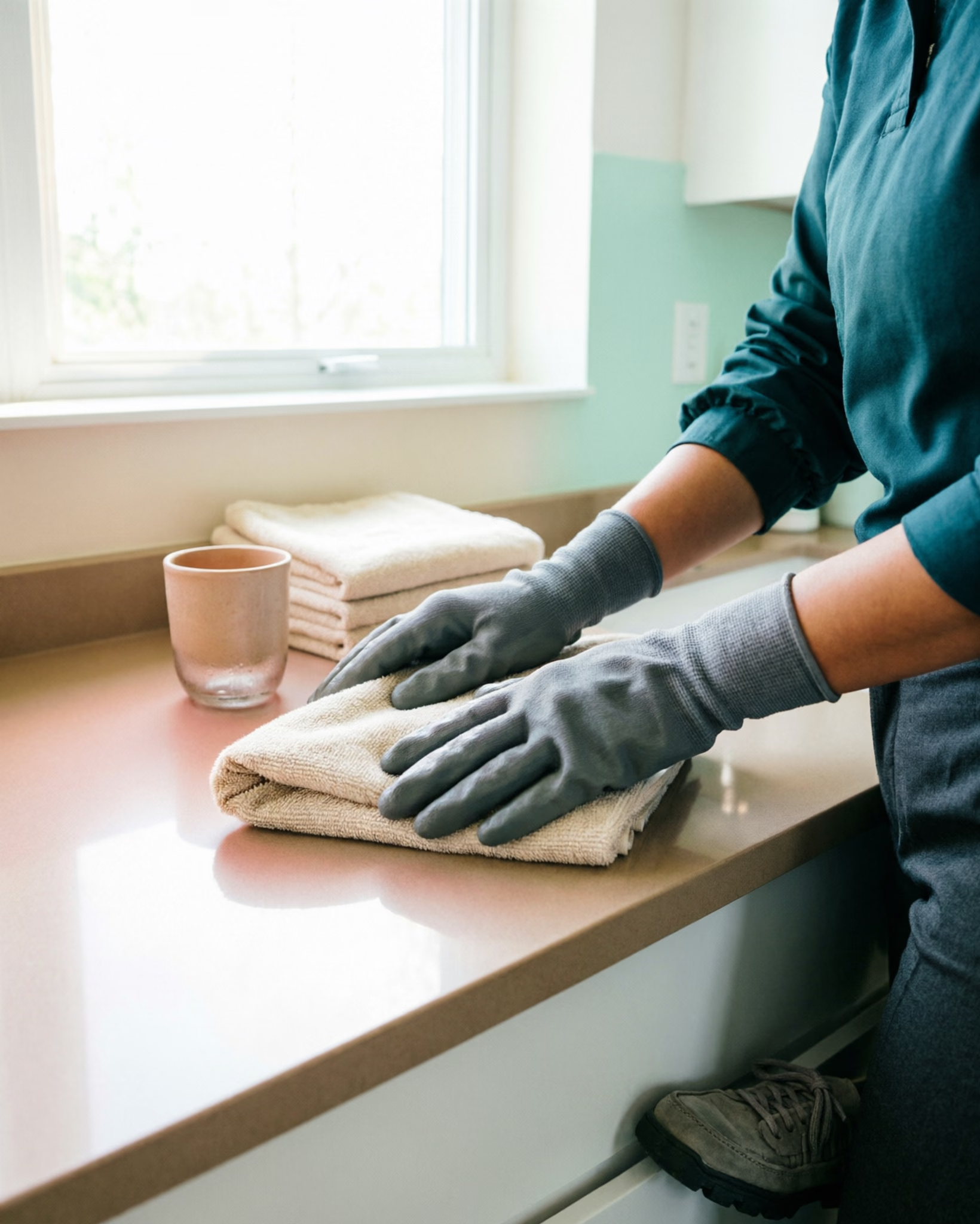
- 02High-touch surfaces such as handles, switches and remotes are wiped.
- 03Washrooms and kitchens get attention, not just a sweep over the top.
- 04Floors are actually cleaned, including under furniture and in corners.
- 05The cleaner works efficiently without cutting corners.
- 06Supplies are used correctly and left tidy when the visit is done.
Beyond the checklist, watch how the cleaner handles a tricky surface. Do they reach for the right product, or do they guess? Do they know when a cloth should be changed, or when a streak means they should slow down? The small decisions reveal the training behind the work.
A good cleaner also knows what not to do. They do not drag a vacuum across a wet area, do not use an abrasive on a soft finish, and do not leave a chemical where a child or pet could reach it. Judgement is part of the skill set, and it is hard to fake.
There is also a rhythm to watch for. A good cleaner moves in a sensible order, working from high to low so dust does not settle on finished surfaces, and from the dirtiest to the cleanest so the water and cloths stay usable. Watching the order of work tells you whether someone is trained or just quick.
Training, Experience and the Professional Difference
There is a real difference between someone who cleans as a favour and someone who cleans as a profession. Experience matters because every home has its surprises, the limescale in the shower, the grease on the stove, the pet hair in the corners, and a good cleaner has seen most of them before.
Professional cleaners usually carry some form of training, whether that is on-the-job experience, product safety training, or a certification in a specific method. WHMIS 2015 training, for example, teaches staff how to handle cleaning chemicals safely, how to read labels and Safety Data Sheets, and what to do if a product is misused.
That training protects you as much as it protects the cleaner. A team that understands products can choose them properly, use them at the right strength, and keep your family safe while the work is done. When a company invests in training, the quality of the work tends to follow. The same trained-team standard shows up in janitorial services for offices and other commercial spaces, even though the day-to-day tasks look different from a private home.
Experience also shows up in the details that make a home feel clean rather than just tidy. Knowing how to treat a mineral deposit on glass, how to lift a coffee stain from a carpet, and how to freshen a kitchen without leaving streaks are skills that come with time. Our guide on how to clean your oven like a good cleaner is a good example of that kind of learned technique.
Training matters for safety as much as for results. When staff understand how to dilute a concentrate, how long a disinfectant must stay wet to work, and how to store chemicals away from children and pets, the home is safer after the visit than before it. That is a quiet but important part of the professional difference.
Background Checks and the Paperwork That Protects You
When someone works inside your home, the paperwork matters as much as the cleaning. Background checks and clear terms protect you if something goes wrong, and a legitimate company welcomes the questions.
- 01Background-checked staff give you confidence about who is entering your space.
- 02A written service agreement sets out the scope, the schedule and the expectations.
- 03Clear policies for missed visits, damage and complaints protect both sides.
- 04Proof of training and product safety practices show a company is professional.
Background checks are equally practical. You are giving someone access to your home, your belongings and your family's routine, and knowing that staff are screened is a reasonable expectation. A company that is proud of its hiring process will tell you about it.
Finally, read the agreement before you sign. A good company puts the scope in writing, what gets cleaned, how often, what products are used and what happens if something needs fixing. Written terms are the mark of a professional relationship.
Supplies and Products: What a Good Cleaner Carries
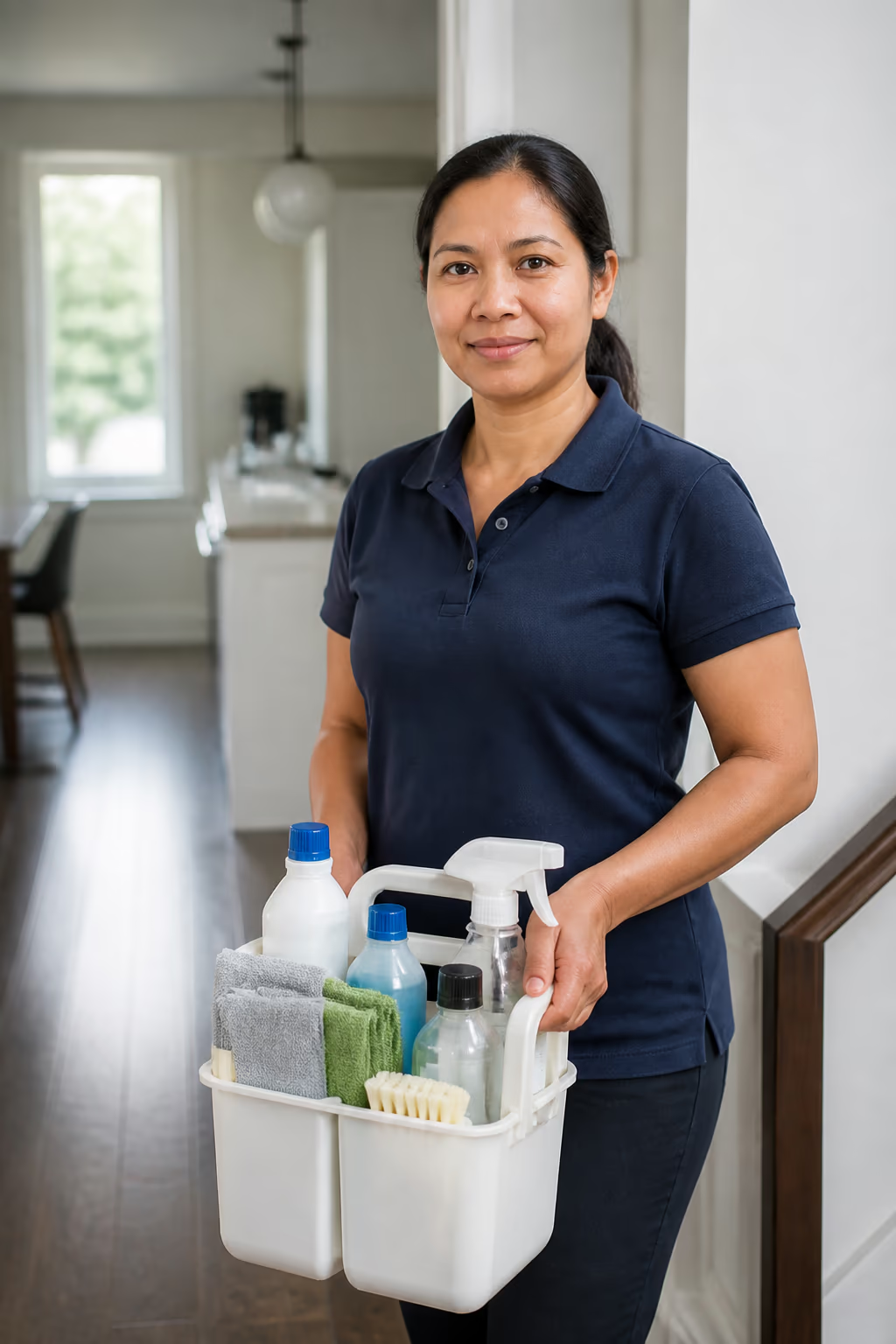
The products a cleaner brings say a lot about how they work. A good cleaner arrives with a kit that covers the surfaces in your home, and they choose products that are effective without being harmful.
What is on the label matters as much as what is in the caddy. Health Canada's drug identification number is an eight-digit number assigned before a product can be marketed in Canada, and it indicates the product has passed a review of its formulation and its instructions for use. Health Canada defines the number this way: “A Drug Identification Number (DIN) is a computer-generated eight digit number assigned by Health Canada to a drug product prior to being marketed in Canada.”
In Canada, the products used for cleaning are part of the story. Disinfectants and sanitizers are regulated, and a professional company selects products that carry Health Canada approval, with a Drug Identification Number or DIN registered for their intended use. Products are chosen for the surface and the household, including low-fume and EcoLogo-certified options where a family prefers them.
A good cleaner also knows the difference between a cleaner and a disinfectant, and when each is needed. They use the right tool for the surface, a microfibre cloth on glass, a soft brush on grout, a damp mop on hardwood, and they respect the care instructions on your furniture and floors.
If you have sensitivities, allergies or pets, tell the cleaner in advance. A professional will adjust the products and the routine to suit, which is exactly the kind of flexibility that separates a good fit from a generic service.
The way a cleaner treats your belongings is another signal. Do they move your things carefully, put them back in the right place, and respect the items that are precious to you? Care for your possessions is part of the service, and it is easy to see in the finished home.
Communication and Consistency Over Time
The quality of a cleaner is not only about the first visit; it is about how the relationship holds up over months. Communication is the thread that keeps a service working, and a good cleaner makes it easy.
Good cleaners check in. They tell you what they found, ask about anything that needs attention, and flag problems before they become expensive. That habit of communication is a sign of a partner who is thinking about your home rather than just completing a checklist.
Consistency shows up in the schedule. A cleaner who arrives on the agreed day, stays for the agreed time and finishes the agreed scope is a cleaner you can build a routine around. When visits start to slip, quality usually slips with them.
A good cleaner also welcomes feedback. If you ask for a change, they adjust without making it difficult. The relationship should feel like a partnership, where your preferences are the standard and the cleaner's job is to meet them.
A small but telling habit is the note or the message after the visit. Some cleaners leave a short summary of what they did and anything they noticed, which keeps the communication going between visits. That small gesture turns a service into a relationship.
Red Flags When You Are Choosing a Cleaner
Knowing what to avoid is half of choosing well. A few warning signs should give you pause before you hand over a key or a payment.
- 01Vague answers about training, products or background checks.
- 02Cash-only requests that avoid a paper trail.
- 03Prices that seem too good to be true.
- 04A refusal to put the scope in writing.
- 05No clear process for damage, complaints or missed visits.
A common red flag is a price that sounds unrealistically low. Good cleaning takes time and equipment, and a price well below the market usually means corners are being cut somewhere, in the products, the hours or the depth of the work.
Another red flag is pressure. A cleaner who pushes you to commit before you have had a chance to ask questions is a cleaner who may not want the questions answered. A professional is comfortable with a careful customer.
Finally, trust your instincts about your home. If something feels off during the first conversation, it is worth listening to that feeling. There are plenty of good cleaners, and there is no reason to settle for one that makes you uneasy.
Also watch how the cleaner handles a question they cannot answer. A professional says so honestly and offers to find out, while an amateur makes something up. Honesty about limits is a good sign, and confidence without substance is a warning.
How to Test a Cleaner Before You Commit
The safest way to choose a cleaner is to try one before you commit to a long arrangement. A single trial visit, or a first clean on a smaller scope, tells you more than any advertisement.
Start with a smaller job. Book a first visit for the rooms that matter most, or ask for a trial clean, and use the result to judge whether the cleaner matches your standard. A good cleaner will be happy to prove their work.
Watch the visit itself. Does the cleaner arrive on time, prepared and polite? Do they ask about the surfaces and the products? Do they leave the space the way you asked? The answers come from watching, not from asking.
- 01Check the details after the visit, the corners, the high-touch surfaces, the tops.
- 02Confirm the cleaner used safe products and followed your preferences.
- 03Ask for a reference from another client if you want extra confidence.
- 04Compare the result against your standard, not against what was promised.
Keep the trial simple and fair. Explain the scope, let the cleaner work, and judge the result against the standard you set. If the first visit is excellent and the communication is easy, you have likely found the right fit.
If the trial goes well, you have found your cleaner. If not, you have learned something without a long-term commitment, which is exactly the point of testing first. When you are weighing a professional company against the alternatives, our commercial cleaning provider checklist is a useful starting point for the questions that matter. Our broader roundup of the best cleaning services in Ottawa applies the same trial-and-compare approach to residential providers.
The Seasonal Difference in an Ottawa Home
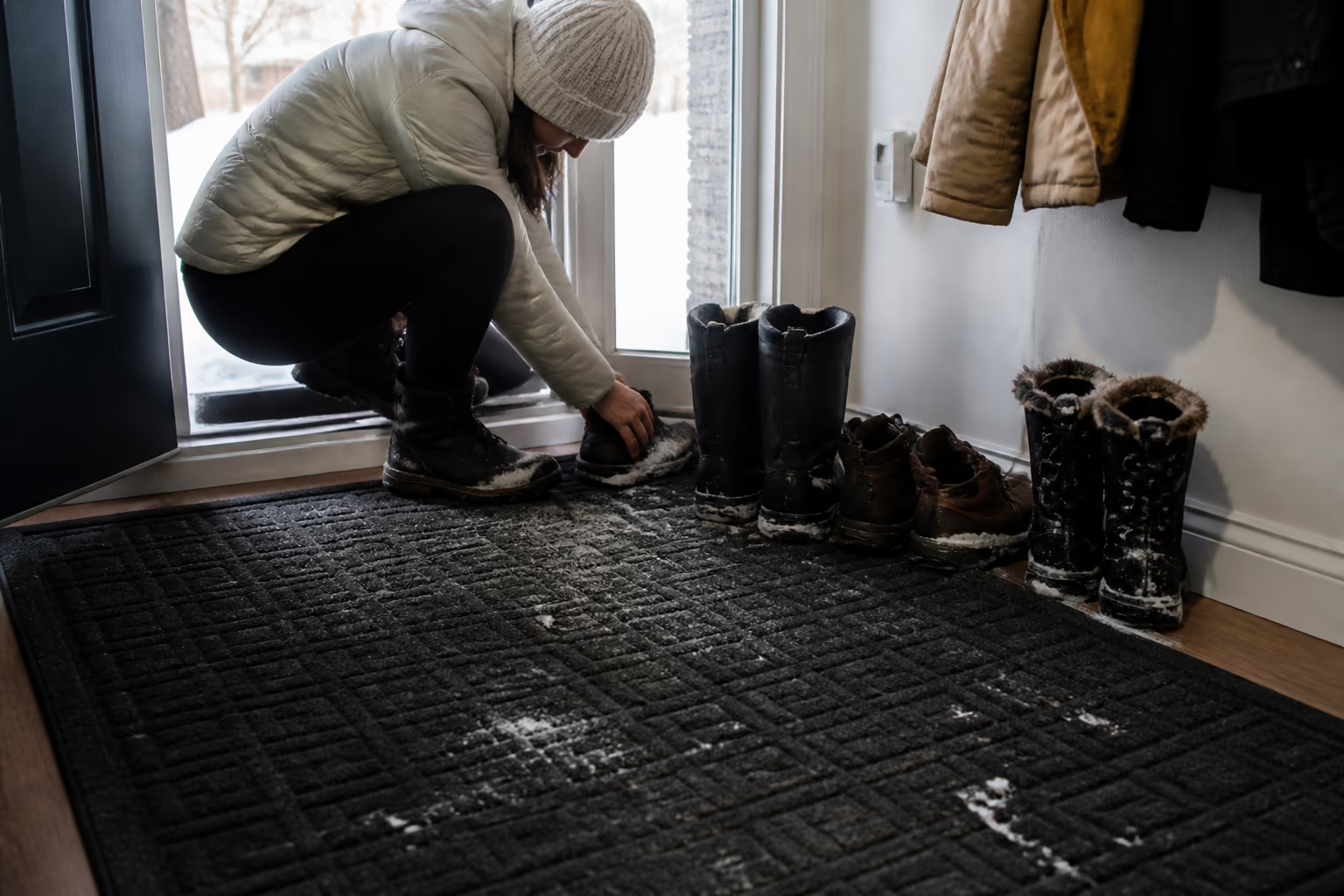
Homes in Ottawa face a rhythm that other cities do not. Winter brings salt, sand and melted snow into the entryway and across the floors, spring brings pollen through the doors and windows, and the changing seasons change what a clean home needs. A good cleaner plans for this, protecting entry mats, washing the residue off floors before it settles, and adjusting the routine as the year turns.
The same rhythm applies to the air. In winter, the home is sealed against the cold, so dust and indoor air stay in longer. A good cleaner keeps surfaces and vents free of build-up, which helps the whole household breathe easier through the heating season.
A local cleaner understands this without being told. That local knowledge is one of the quiet advantages of choosing a dependable home cleaning team in Ottawa that works in the area and sees the same conditions year after year.
Formatted Step-by-Step House Cleaner Checklist
Use these five steps to find a house cleaner who is worth keeping.
- 1.List the tasks your home actually needs, from the daily tidying to the deep work, so you know the scope before you start.
- 2.Ask the screening questions, background checks, training and products, before you book a single visit.
- 3.Arrange a trial clean on a smaller scope and judge the result against your own standard.
- 4.Watch the details, the corners, the high-touch surfaces and the communication, not just the visible result.
- 5.Set a clear schedule and a clear scope in writing, and adjust both as your home and your seasons change.
FAQ
What should I look for in a house cleaner?
Look for a combination of skill, reliability and trust: a clean result, a consistent schedule, clear communication and the paperwork that protects you, background checks and a written scope.
Is it normal for a cleaner to ask questions about my home?
Yes, and it is a good sign. A professional asks about surfaces, products and preferences because a clean result depends on matching the approach to your home.
Do I need to be home during the cleaning?
Not necessarily. Many families give a trusted cleaner a key or arrange access, and a background-checked team makes that comfortable. It is your call, and a good cleaner will work either way.
Are cleaning products safe for my family and pets?
Reputable companies use certified products and trained staff, and they can switch to low-fume or EcoLogo-certified options on request. Tell them about sensitivities in advance and they will adjust.
How often should a house cleaner visit?
Most homes work well on a weekly, biweekly or monthly schedule, depending on size, household members and how much deep work is needed. A cleaner can recommend a frequency after seeing the space.
What if the cleaner damages something?
A professional company has a clear process for damage claims. Ask about that process before you book, so you know what happens if something goes wrong.
How much should a house cleaner cost?
Costs vary with the size of the home, the scope and the frequency, so compare itemised quotes rather than a single price. The cheapest option is rarely the best value once training and reliability are factored in.
Can I change my cleaner if it is not a good fit?
Yes. The best arrangements are flexible, and a good company will match you with someone who suits your home. If it is not working, say so early and adjust.
Wrapping Up
A good house cleaner is someone you can trust with your home, your time and your peace of mind: skilled at the work, reliable on the schedule, honest about the details and backed by the training that protects you. Look for the traits that show up in the finished home, test a cleaner on a small job before you commit, and keep the communication open as the relationship grows. Contact Good Cleaner Co. for a free quote and a cleaning plan tailored to your home.
Keep reading
More from Good Cleaner
Services that fit
- Residential Home Cleaning Services in OttawaRecurring residential home cleaning services in Ottawa for families, busy households and regular upkeep, with eco-friendly products and a trained, background-checked team.
- Carpet Cleaning Services in OttawaProfessional carpet cleaning in Ottawa with extraction and shampooing options, available as an add-on when a home needs carpets refreshed between visits.
About the author
Service areas
- Ottawa
- Kanata
- Nepean
- Orléans
- Barrhaven