
Complete Janitorial Supplies Checklist: Essential Products For Commercial Cleaning
Every commercial cleaning job, whether it is an office, a clinic, or a lobby, depends on the same foundation: the right supplies in the right place. A complete janitorial supplies checklist keeps a team efficient, keeps a building consistent, and keeps costs under control, because the right product used the right way does the job with less waste. This guide covers the categories of supplies every commercial cleaning program needs, how to stock them, and how a professional team manages the details.
Quick Summary
A complete janitorial supplies checklist gives commercial cleaning teams the right products in the right place, keeping results consistent, protecting people through correct dilution and colour-coded tools, and controlling costs by avoiding waste and emergency purchases. This guide covers the supply categories every program needs.
In this guide
Why the Right Janitorial Supplies Matter
The tools and products a cleaner uses decide the quality of the result before the first wipe. Good supplies make the job faster, safer, and more consistent, while the wrong ones damage surfaces, waste time, and cost more in the end.
A supply list is also how a building meets a legal requirement. Ontario's industrial establishments regulation requires a floor or other surface used by any worker to be kept free of obstructions and hazards, so wet-floor signage, entrance matting and the right floor pads earn their place on the checklist for compliance reasons, not only for tidiness. The same regulation covers lighting: “Where natural lighting is inadequate to ensure the safety of any worker, artificial lighting shall be provided and shadows and glare shall be reduced to a minimum.”
Supplies also protect people. Certified products used at the correct dilution keep chemicals out of the air and off surfaces, gloves and signage prevent injuries, and colour-coded cloths stop cross-contamination between washrooms and kitchens.
Finally, the right checklist saves money. When a team knows what it uses, it can buy in sensible quantities, avoid expired or mismatched products, and stop improvising with whatever happens to be on the shelf.
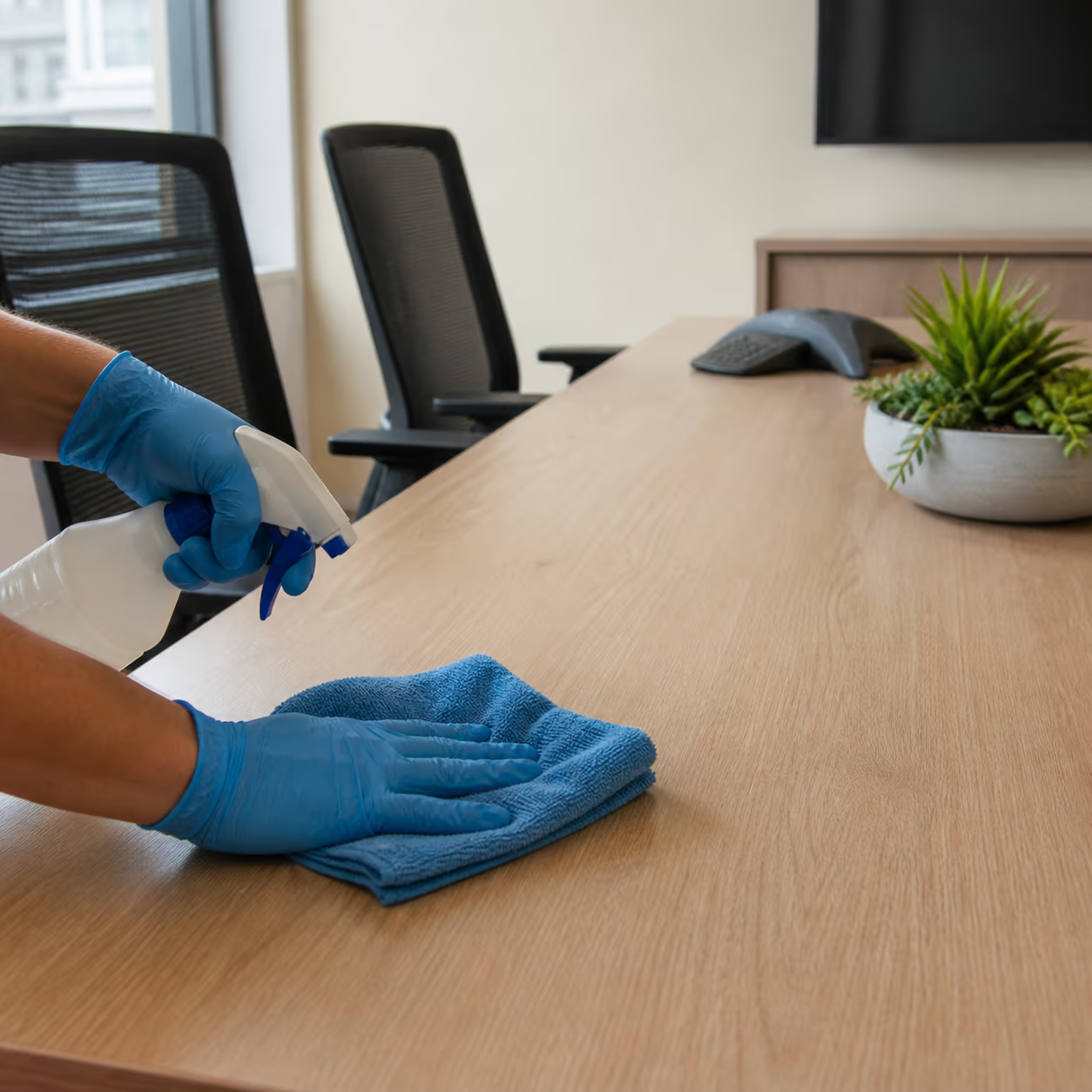
- The right product protects surfaces and finishes.
- Correct dilution and certified chemistry protect people.
- A planned stock list reduces waste and emergency purchases.
- Consistency comes from the same supplies on every shift.
The right supplies also make the team's job more professional. A cleaner who has the right cloth, the right product, and the right machine can work confidently and quickly, while a team that has to make do sends a message in the finished result that clients notice.
Good supplies are also a matter of trust. Clients notice when a team uses the right products for their surfaces, and they notice when a cleaner improvises with a scouring pad on a polished countertop. A professional supplies list is one of the quiet signals that a building is being looked after properly.
How to Think About a Supplies Checklist
A good checklist is organised by category rather than a jumbled list, because categories make it easy to spot what is missing and to keep storage tidy.
- Cleaning chemicals and solutions for every surface type.
- Equipment and machines for floors, carpets, and windows.
- Hand tools, cloths, and consumables for daily detail work.
- Safety and personal protective equipment for the team.
Most programs group supplies into four baskets: chemicals and solutions, equipment and machines, hand tools and consumables, and safety items. Each basket has a clear job, and together they cover every task a cleaning team performs.
Cleaning Chemicals and Solutions
Chemicals are the heart of the checklist, and they need to be chosen for the surfaces and the occupants of the building.
- General-purpose cleaner for everyday surfaces.
- Glass cleaner for windows, mirrors, and glass partitions.
- Disinfectant for high-touch points in washrooms and kitchens.
- Degreaser for kitchens and food areas.
- Floor cleaner matched to the floor type.
- Carpet care products for daily and periodic cleaning.
The basics include a general-purpose cleaner, a glass cleaner, a disinfectant, and a degreaser. Beyond that, a facility may need a neutral floor cleaner, a carpet care product, and a bathroom-specific product that handles soap scum and hard water.
Every product on the list should be appropriate for the surfaces it will touch and compatible with the others. Mixing the wrong products can damage surfaces or release dangerous fumes, which is why labels and safety data sheets matter.
Dilution is where most chemical mistakes happen. Concentrates are cheaper to ship and store, but they only work when they are mixed correctly, so a measuring cup, a clearly written dilution chart, and training on the products belong with the chemical list.
Equipment and Machines
Machines do the heavy lifting in a commercial program, and the list should match the building's floors and finishes.
A commercial vacuum with a filter suitable for the building is a baseline. Wet or dry floor machines, autoscrubbers, and carpet extractors come into play for larger facilities, and each machine needs the right pads, brushes, and solutions. Facilities that would rather outsource this equipment entirely can compare it against typical carpet cleaning price Ottawa providers charge for extraction, since renting or maintaining an extractor only pays off above a certain square footage.
Machines are also a safety item. The team needs the training to operate them, the cords and outlets to run them safely, and the maintenance schedule to keep them working, because a machine that fails mid-shift stops the whole job.
Whatever the machine, it is only as good as its upkeep. Pads need replacing, filters need emptying, and cord and plug checks keep the equipment safe, so the checklist should include the maintenance tasks that keep machines working.
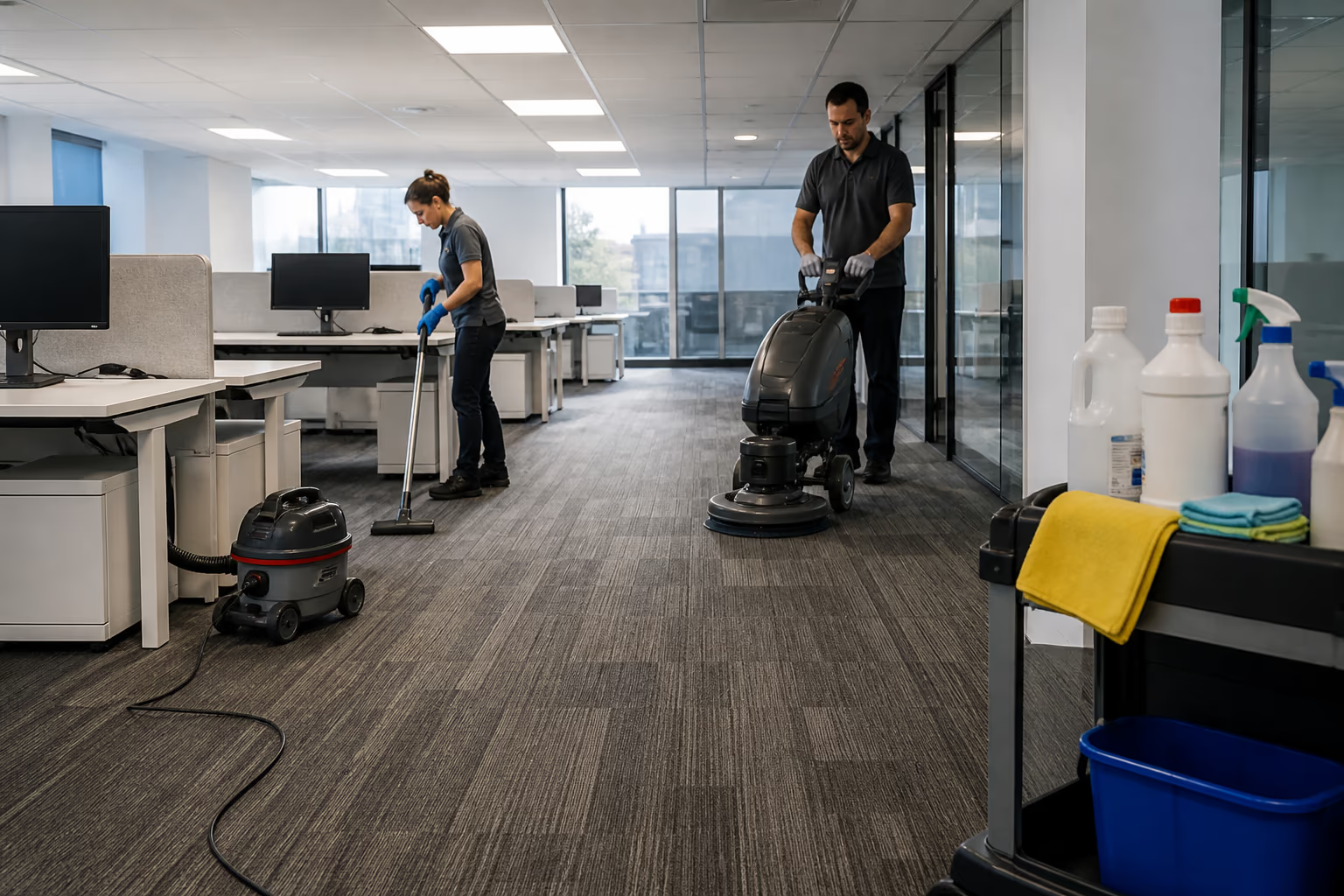
- Commercial vacuum with the right filtration.
- Floor machine or autoscrubber for large floor areas.
- Carpet extractor for periodic deep cleaning.
- Microfibre mops and flat mops for daily floors.
- Replacement pads, brushes, and machine parts.
The right machines also save money over time. A well-maintained floor machine extends the life of the finish, a good vacuum protects carpets, and reliable equipment means fewer emergency repairs and fewer days when the team has to work around a broken tool.
Hand Tools and Everyday Supplies
The daily details live in the hand tools and consumables a team carries from room to room.
- Colour-coded microfibre cloths for each area.
- Brooms, dustpans, and dusters for quick tidy-ups.
- Squeegees, scrapers, and detail tools.
- Soap, paper, sanitiser, and bin liners for washrooms and kitchens.
- Sponges and scrubbing tools for stubborn build-up.
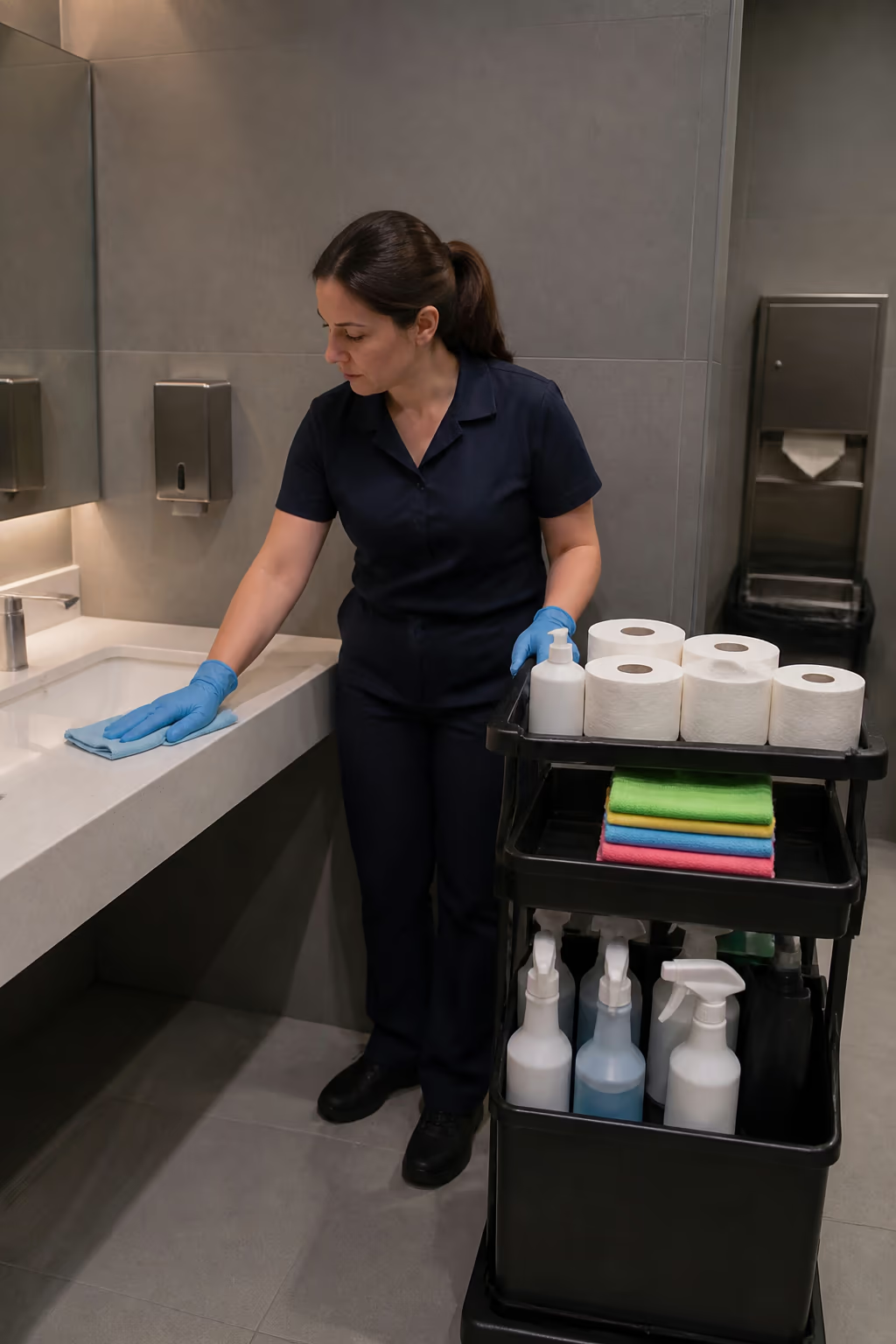
Microfibre cloths are the workhorse, and colour-coding them is a simple way to stop cross-contamination: one colour for washrooms, another for kitchens, another for general surfaces. Brooms, dustpans, squeegees, scrapers, and sponges cover the rest.
Consumables round out the list: toilet paper, paper towels, soap, sanitiser, and bin liners. These are the items people notice most, and running out of them is the fastest way to make a clean building feel neglected.
Safety, PPE, and WHMIS Supplies
Safety supplies are not optional extras; they are part of a professional checklist.
- Gloves, goggles, and aprons for chemical handling.
- Slip-resistant footwear for wet and polished floors.
- Wet floor signs and caution markers.
- Sharps and biohazard containers where needed.
- Labelled chemical storage and current safety data sheets.
Gloves, eye protection, aprons, and slip-resistant footwear protect the cleaner, while wet floor signs, caution tape, and waste handling supplies protect everyone else. In Canada, WHMIS 2015 also means labels, safety data sheets, and storage that keeps chemicals secure.
Where the situation allows, choose certified, lower-impact products with a recognised certification such as EcoLogo. They do the job with a smaller environmental load and are easier on the team that uses them daily.
Training connects the supplies to the people who use them. A glove that is never worn, a spill kit no one knows how to open, or a wet floor sign left folded in the cupboard offers no protection, so the checklist should come with the habits and training that put it to work.
Stocking for Canadian Seasons
Canadian buildings change with the seasons, and so should the supplies list.
- Heavy-duty entry mats for winter months.
- Ice melter and de-icing supplies for walkways.
- A floor cleaner that handles salt and slush residue.
- Seasonal review of the checklist before each change.
Winter brings salt, slush, and ice into every entryway. Heavy-duty entrance mats, ice melter for walkways, and a floor cleaner formulated for the residue salt leaves behind belong on the list from late autumn through spring.
Other seasons bring their own needs: more dust and pollen in spring, more foot traffic in the warmer months, and more germs around flu season. Reviewing the checklist a couple of times a year keeps the team prepared rather than improvising.
Planning ahead is what makes seasonal stocking work. Ordering the winter supplies in the autumn, when demand and shipping are predictable, beats scrambling for ice melter during the first snowstorm, when every supplier in the city is sold out.
Managing Inventory and Storage
A checklist only works if the supplies are actually on hand, which makes inventory management part of the job.
- Track usage and reorder on a regular rhythm.
- Store chemicals securely, labelled and away from the public.
- Check expiry dates and rotate stock.
- Keep a spill kit and absorbents accessible.
Count what is used over a month and order to that rhythm, keeping a sensible stock of the essentials so a busy week never leaves a team short. Store chemicals in labelled containers away from food, washrooms, and the public, and keep an eye on expiry dates.
Storage also protects the team and the building. Spills happen, so keep absorbents and a spill kit nearby, and make sure new staff know where supplies live and how to restock as they go.
A simple storage system pays for itself. Shelves that are labelled, chemicals that are grouped by type, and a clear place for clean tools mean less time hunting and less chance of grabbing the wrong product in a hurry.
Inventory is also a chance to spot problems early. A product that is being used faster than expected may mean the dilution is wrong or the team is using too much, while a product no one touches may be the wrong choice for the building.
How Good Cleaner Co. Stocks Its Teams
At Good Cleaner Co., the checklist is a working document, not a poster on a wall.
- Certified products matched to the surfaces in your building.
- Colour-coded cloths and tools that prevent cross-contamination.
- Machines appropriate to the size of the space.
- Safety and WHMIS supplies as standard equipment.
- Regular review so the list stays current.
We review the list with each client so it matches the real scope of work, and we train staff on the products they carry.
Our commercial janitorial services in Ottawa bring that equipment to every visit, which is why the results are consistent from one week to the next.
Common Mistakes to Avoid
Even well-run teams make a few recurring supply mistakes, and each one is easy to fix once you know it.
- Match every chemical to the surface it will clean.
- Order to usage, not to habit.
- Never run the team without safety supplies.
- Check labels, dilutions, and expiry dates regularly.
The biggest is buying the wrong chemical for a surface. A product that works on tile can dull polished floors or leave streaks on glass, so every purchase should match the finish it is meant to clean.
Stockpiling is another. Ordering too much means expired products, wasted money, and shelf clutter, while ordering too little means improvised substitutes on the busiest days.
Overlooking safety supplies is the most serious. A missing wet floor sign or a bare pair of hands on a strong chemical turns a routine task into an incident.
Buying on price alone is a final trap. The cheapest chemical often needs more product to work, damages surfaces faster, or lacks the certification that keeps a building healthy, so value, not sticker price, should guide the purchase.
Costs, Timing and When to Call a Professional
Supply costs vary with the size of the building and the level of service, and honest providers quote ranges rather than a fixed price.
Small offices might spend modestly on basic chemicals, cloths, and paper goods, while larger or sensitive facilities invest in machines, certified chemistry, and a bigger safety kit. The goal is not the cheapest list but the right one for the space.
The bigger cost is hidden: damaged surfaces from the wrong product, waste from expired stock, and time lost improvising. A planned checklist reduces all three.
Timing the purchases matters too. Ordering at regular intervals and before the seasons change keeps costs predictable and stock fresh, while emergency buys, whether from a big box store or an express delivery, are almost always the most expensive way to get supplies.
Many businesses choose a professional provider precisely to avoid managing supplies at all. A janitorial company arrives with its own equipment, products, and safety supplies, which removes the inventory work from the client's plate.
If you are comparing providers, our commercial cleaning provider checklist is a useful starting point for the questions that matter. Ask what products they use, how they train their team on them, and how they manage safety data sheets and storage.
Formatted Step-by-Step Supplies Checklist
Use this checklist to build or review a supplies list for your facility:
- Step 1.Walk the building and list every surface and space the team will clean.
- Step 2.Match a certified cleaning product to each surface, noting dilution and safety data sheets.
- Step 3.Add the machines, hand tools, and consumables each task requires.
- Step 4.Stock the safety and PPE supplies, including WHMIS storage and signage.
- Step 5.Set a reorder rhythm based on real usage and review the list with the seasons.
- Step 6.Choosing Ottawa janitorial cleaning crews means the equipment, products, and safety supplies are handled for you.
Free Janitorial Supplies Checklist to Print or Edit
The supplies from this guide as an inventory sheet: cleaning chemicals, equipment and machines, hand tools, and safety, PPE and WHMIS supplies, each with columns for what is on hand and when to reorder.
Print it for the storage room, or open the Word file and edit it to match your building and products. There is no form and no email address to hand over.
Letter size, print-ready. No email address, no sign-up.
FAQ
What are the most essential janitorial supplies?
Start with general-purpose and glass cleaners, a disinfectant, microfibre cloths, a vacuum, mopping equipment, and washroom consumables. Add floor and carpet products as the building requires.
How often should I restock cleaning supplies?
Track usage over a month and reorder to that rhythm, keeping a sensible stock of the essentials so a busy week never leaves the team short.
Are EcoLogo products as effective as standard ones?
Recognised certifications such as EcoLogo point to products that meet performance and environmental standards, and they are a practical choice where the situation allows.
What does WHMIS 2015 mean for supplies?
Every hazardous product needs a label and an available safety data sheet, and the team must be trained on the products they use, so storage and records are part of the checklist.
How do I stop cross-contamination between areas?
Colour-code your microfibre cloths and tools by area, for example one colour for washrooms and another for kitchens, and train the team to keep them separate.
Do I need a floor machine for a small office?
Not necessarily. A small space may be well served by a good vacuum and microfibre mopping, while larger or high-traffic facilities benefit from machines.
What supplies do I need for Canadian winters?
Heavy-duty entry mats, ice melter for walkways, and a floor cleaner that handles the salt and slush residue tracked into the building.
Should I buy cleaning supplies myself or let the company supply them?
Both work. Managing your own list gives control over products, while a professional provider that supplies its own equipment removes the inventory work entirely.
Wrapping Up
A complete janitorial supplies checklist is the quiet foundation of every clean, safe building. The right chemicals, equipment, tools, and safety items make the work faster, safer, and more consistent, and a planned stock list keeps costs down. If you would rather leave the supplies and the management to a team that already has it in place, contact Good Cleaner Co. for a free quote and a janitorial plan built around your facility.
Keep reading
More from Good Cleaner
Services that fit
- Janitorial Services in OttawaRecurring janitorial services in Ottawa for offices, warehouses, retail, dealerships and schools. Eco-friendly commercial cleaning, customized plans, free quote.
- Professional Office Cleaning Services in OttawaOffice cleaning services in Ottawa for corporate offices, clinics and professional suites. After-hours scheduling, eco-friendly products, free quote on 613-664-5678.
About the author
Service areas
- Ottawa
- Kanata
- Nepean
- Orleans
- Barrhaven