
6 Key Differences Between In-House Janitor And Janitorial Service
Every office, clinic, or shop that needs cleaning faces the same fork in the road: hire your own janitor, or bring in a janitorial service. Both can keep a space clean, but they are very different decisions with very different costs, responsibilities, and results. In this guide we walk through the key differences between in-house janitor and janitorial service, so you can see which model fits your building, your budget, and your standards.
Quick Summary
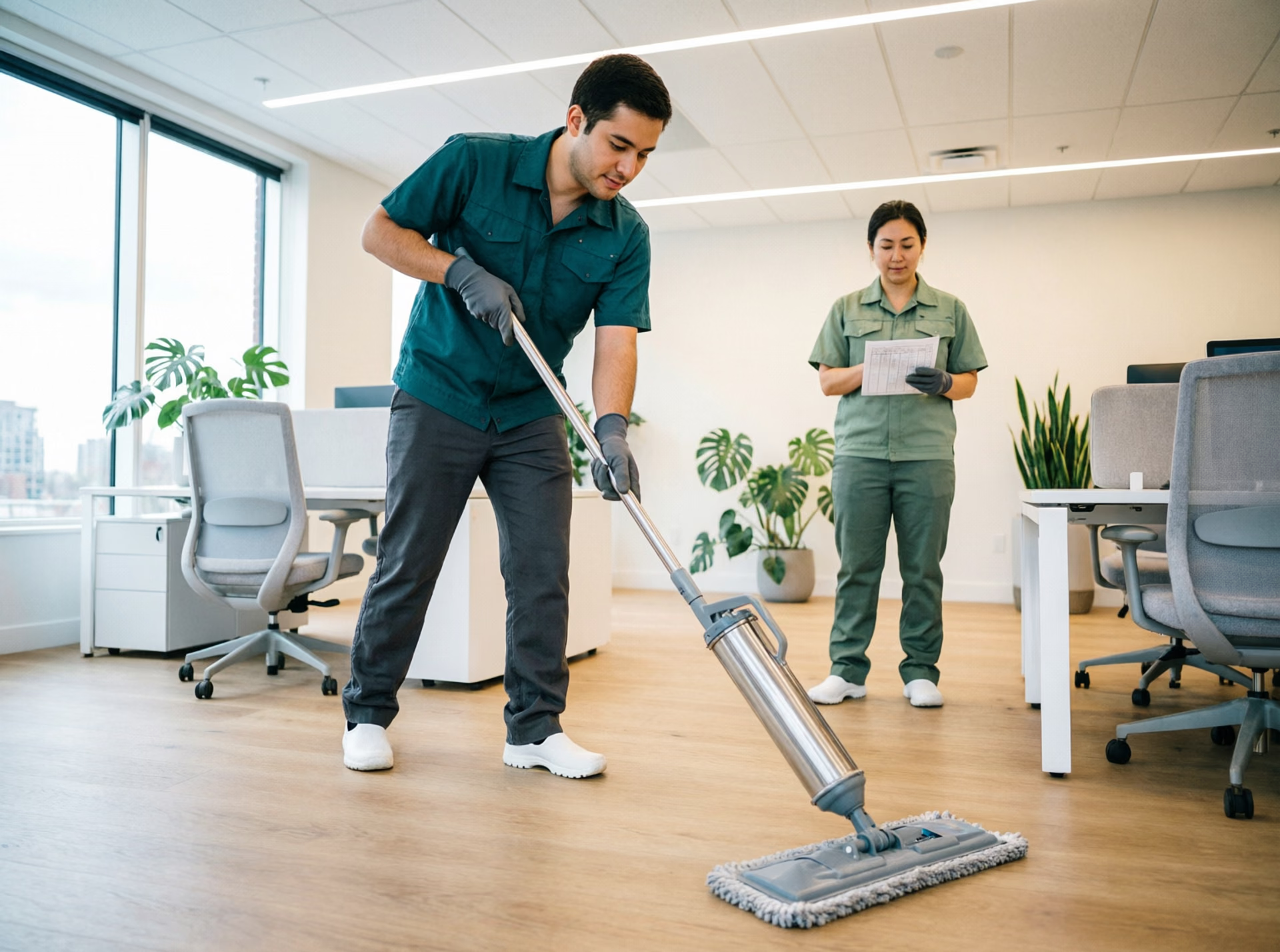
Choosing between an in-house janitor and a janitorial service means choosing between managing an employee directly or buying a cleaning outcome from a contractor who handles staff and training. Six key differences, including cost structure and supervision, determine which model fits a building's size and budget.
In this guide
Why the Choice Matters
Cleaning is a recurring need, not a one-time purchase. Whatever you decide, you are making a commitment that plays out every week, year after year. Get the structure right and your building stays clean with a minimum of fuss. Get it wrong and you pay too much, see inconsistent results, or carry risks you did not expect.
The two options look similar on the surface, but they are built differently. An in-house janitor is an employee: you manage the person, the schedule, the supplies, and the risk. A janitorial service is a contractor: you buy an outcome, and the company manages the people, training, and equipment.
Neither is universally better. The right choice depends on the size of your space, how often it needs cleaning, how much oversight you can give, and how you value cost versus convenience. Understanding the six key differences makes that decision much easier.
The Six Key Differences at a Glance
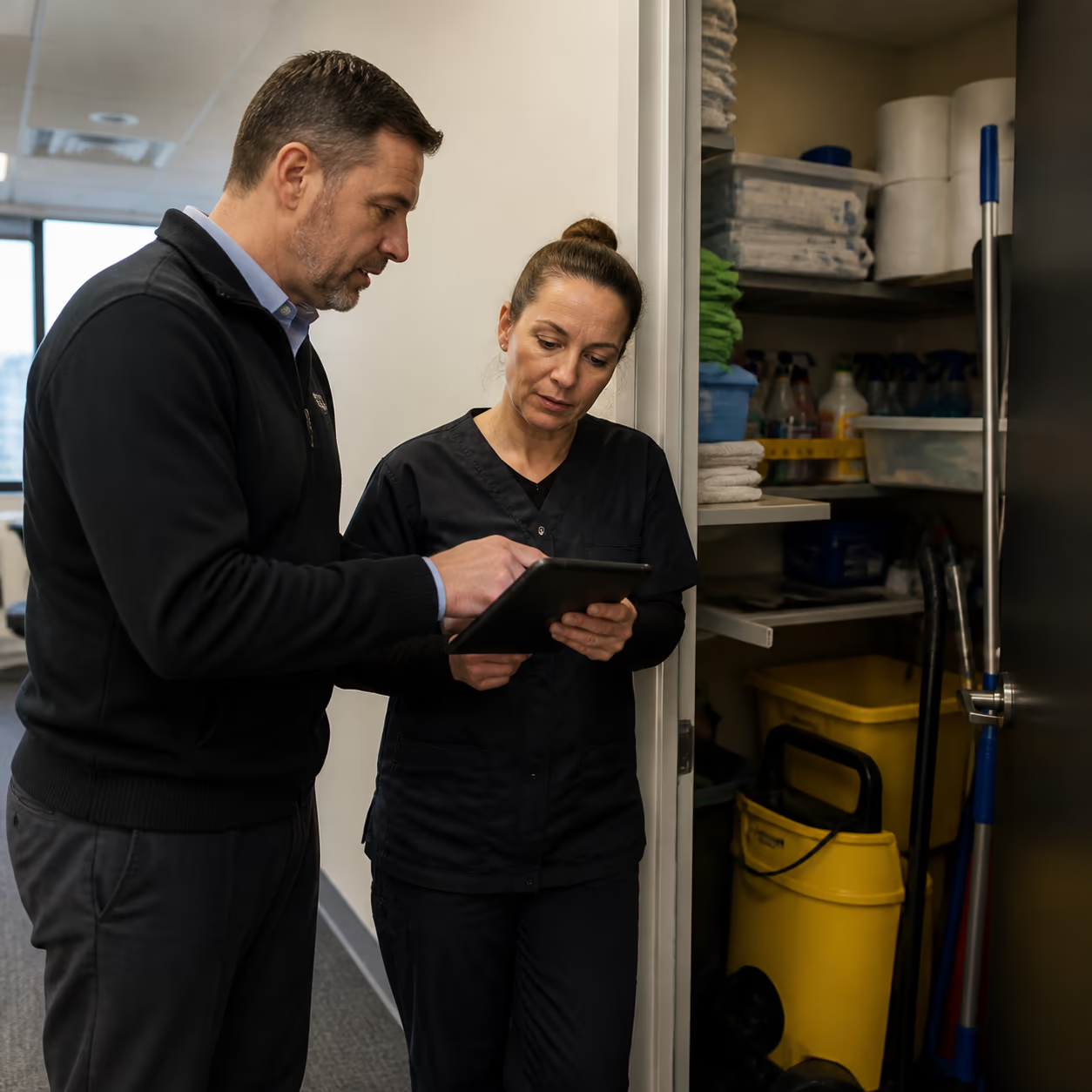
Here is the short version of what separates the two models. Each one is worth thinking through before you decide.
| Cost structure | a salary plus supplies and equipment versus a flat service contract. |
|---|---|
| Training and supervision | your responsibility versus the company's. |
| Equipment and products | what you buy and maintain versus what the provider brings. |
| Coverage when someone is away | a single point of failure versus a team that fills in. |
| Liability | your risk versus the provider's. |
| Depth of service | daily basics versus scheduled deep cleaning built in. |
Difference One: Cost Structure
Cost is where most people start, and it is also where the two models are easiest to misunderstand.
An in-house janitor is more than a salary. You pay benefits, payroll taxes, WSIB premiums, and holiday pay, and you supply cleaning products, equipment, and a uniform. There are also hidden costs: the manager's time to hire, train, schedule, and inspect, and the cost of replacing the person when they leave.
A janitorial service is a single contract price that bundles labour, products, and equipment. The number can look higher than one salary on its own, but it usually includes the overhead that an in-house hire never shows on a payslip.
The honest comparison is total cost of ownership. Add up everything an in-house arrangement really costs before you compare it to a contract price, and the gap is usually smaller than it looks.
A useful way to think about it is to compare the full in-house number against the contract, task by task. Factor in the supplies and equipment, the management hours, and the likely replacement cost, and you will often find the two models are closer than the sticker prices suggest. The right decision then often comes down to reliability and control rather than price alone.
Difference Two: Training and Supervision
With an in-house janitor, the training is yours. You are responsible for teaching the person how to handle the products, follow WHMIS 2015 rules for workplace chemicals, use the equipment safely, and cover the surfaces your building needs.
That responsibility has a statutory name. If the janitor is your employee, Ontario's Occupational Health and Safety Act makes you the employer who must instruct, inform and supervise them to protect their health and safety, and appoint a competent supervisor. Contracting the work moves those specific duties to the contractor as that worker's employer. The province sets a written threshold: “In workplaces in which more than 5 workers are regularly employed, prepare a written occupational health and safety policy, review that policy at least once a year and set up and maintain a program to implement it”.
That is a real time commitment. A professional janitorial company, by contrast, already has trained, background-checked staff and a supervisor who checks the work. The training burden, the retraining when someone leaves, and the day-to-day oversight sit with the provider.
If you have the time and expertise to train and supervise, in-house can work well. If you would rather buy a clean result than manage a cleaning operation, a service takes that off your plate.
Difference Three: Equipment and Products
Cleaning well requires the right tools, and someone has to buy and maintain them.
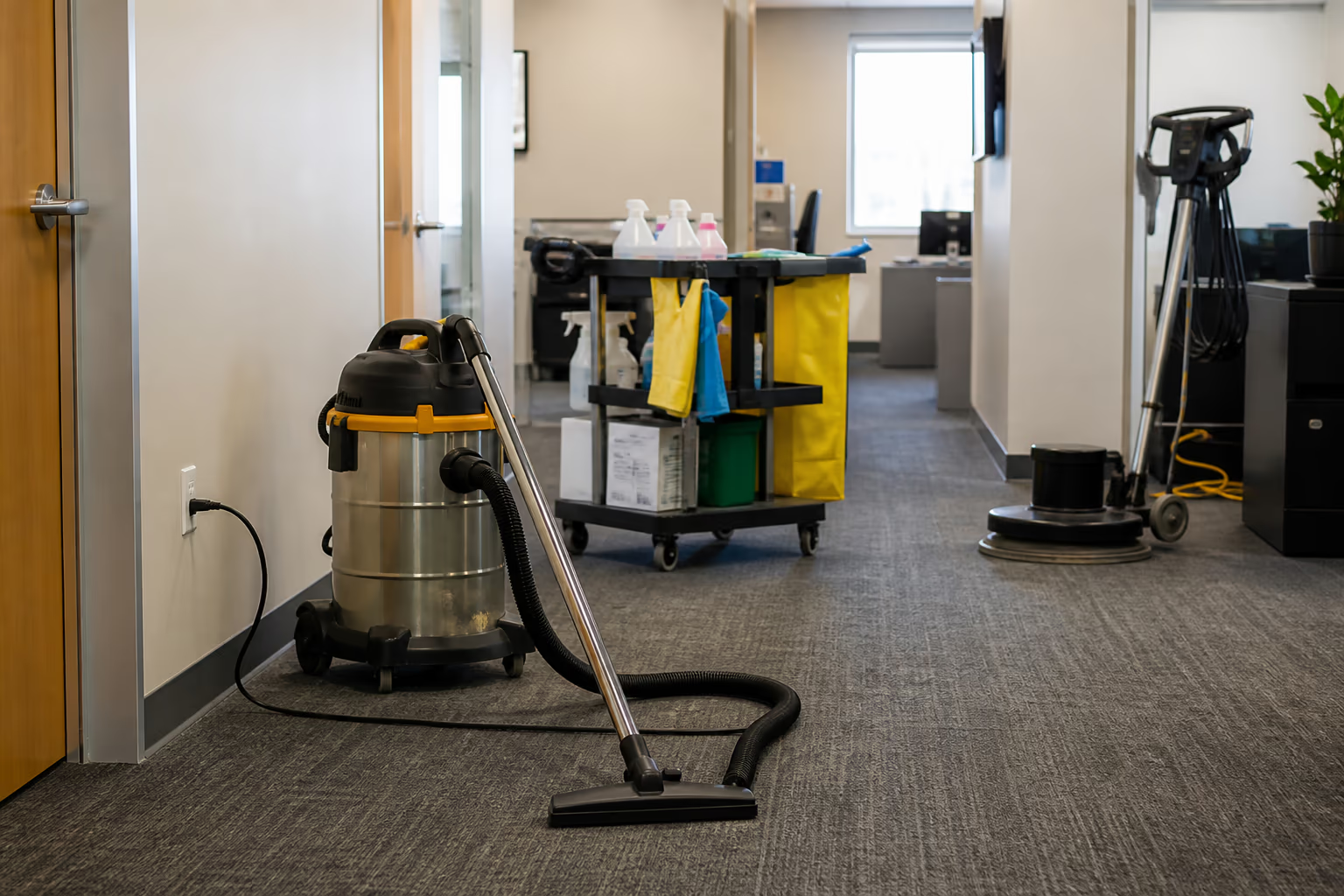
An in-house arrangement means you invest in vacuums, mops, floor machines, and a chemical inventory, and you keep them repaired and restocked. You also decide which products to buy, which means you carry the responsibility for choosing things that are safe and effective.
A janitorial service brings its own equipment and supplies and replaces them when they wear out. Professional providers use colour-coded microfibre cloths, HEPA vacuums, and certified products, and they have the buying power to keep the inventory current. You stop managing a janitorial closet and start paying for results.
Difference Four: Coverage When Someone Is Away
This is the difference that surprises most people.
When your only janitor is off sick, on holiday, or has resigned, the cleaning does not happen. Someone else has to cover it, and in a small facility that often means the manager or a reluctant staff member doing the job in between everything else.
A janitorial service has a team. If the regular cleaner is unavailable, the company sends a replacement, so the building is cleaned on schedule without you coordinating cover. For facilities where a missed cleaning matters, that reliability is one of the strongest arguments for outsourcing.
Difference Five: Liability and Risk
Cleaning involves risk, and someone has to carry it.
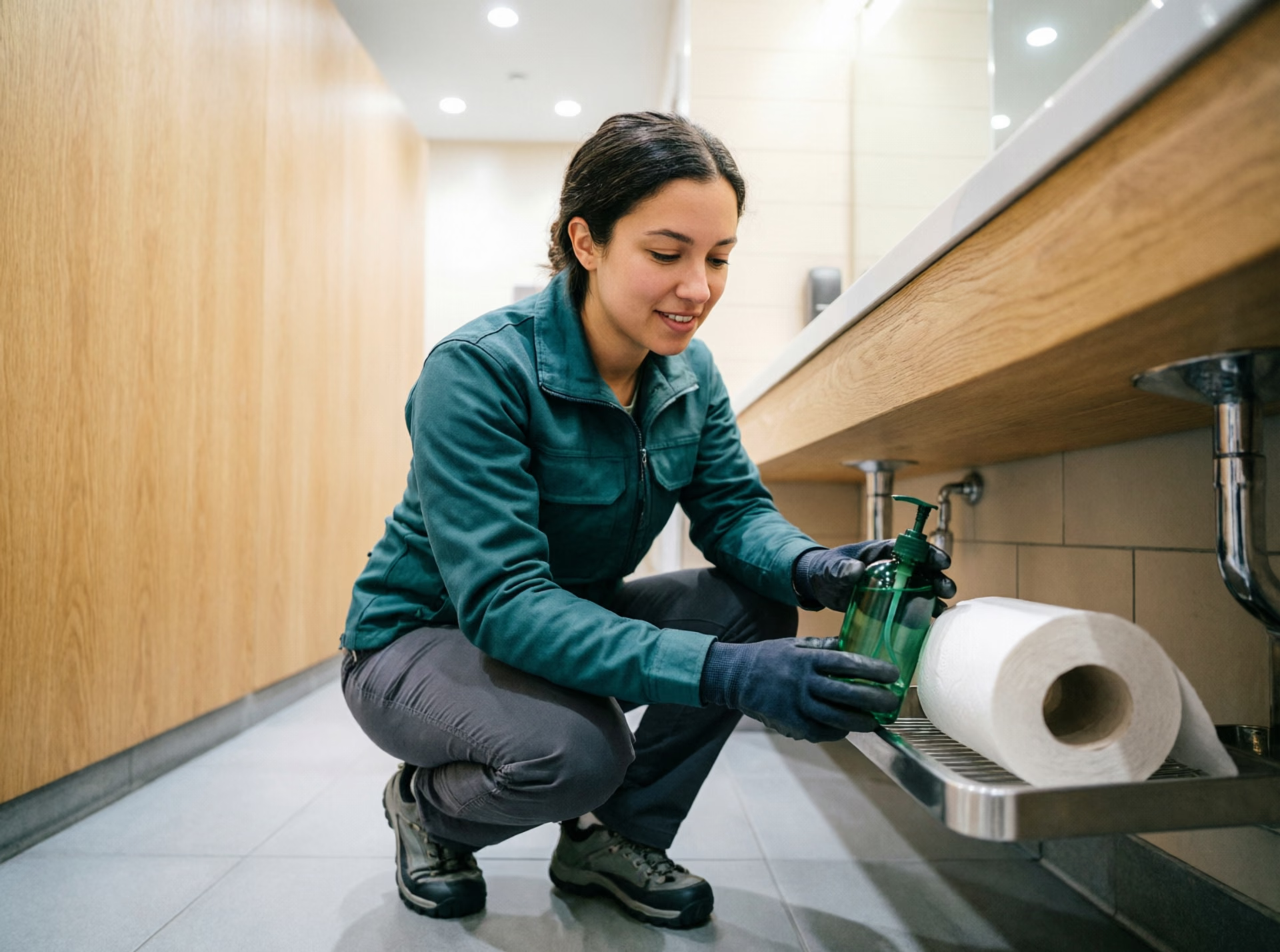
If an in-house janitor is injured on the job, you handle the WSIB claim and the disruption. If they damage equipment, spill chemicals, or accidentally let someone into a space they should not be in, the responsibility lands on you.
A professional janitorial company screens its staff and trains them on safety and confidentiality. When you hire the service, the provider takes responsibility for its people and their work, which is a meaningful transfer of risk.
Difference Six: Depth of Service
An in-house janitor typically covers the daily essentials: bins, washrooms, floors, and high-touch surfaces. The deeper work, like carpet extraction, stripping and waxing floors, or cleaning the vents, often never gets scheduled because there is no one to do it. A dedicated carpet cleaning service Ottawa businesses can call on separately is one way to fill that gap without changing your main arrangement.
A janitorial service builds that depth into the contract. Deep cleaning tasks are scheduled on rotation so they actually happen, and the price reflects a complete program rather than a daily wipe-down.
Think about what your building really needs over a full year. If it is daily basics only, in-house can be enough. If you want floors, carpets, and interiors properly maintained, a service that plans for it is usually the better fit.
Pros and Cons of an In-House Janitor
To weigh the two models fairly, it helps to see the tradeoffs side by side.
- Familiar face who knows your building and routines.
- Direct control over the schedule and priorities.
- You carry training, equipment, absences, and liability.
- Limited capacity for deep cleaning and big projects.
- Full replacement cost and effort when the person leaves.
An in-house janitor can be a great fit for a smaller building where one person can cover everything. You get a familiar face who knows the building, you control the schedule directly, and you can respond quickly to a request without a contract.
The downsides are the ones already covered: you carry the training, the equipment, the absences, and the risk. And one person can only do so much, so deep cleaning often slips.
Pros and Cons of a Janitorial Service
A janitorial service brings a whole organisation to your building instead of one person.
- Predictable monthly cost with training and equipment included.
- A team that covers absences and fills in reliably.
- Built-in deep cleaning and documented processes.
- Less direct control over the individual cleaner.
- Results depend on picking a provider you can trust.
The strengths are coverage, training, and equipment, all of which come as a package. You pay one predictable price and you are not managing people or supplies. The provider brings a documented process and a supervisor to check the work. Many providers track janitorial service KPIs like inspection scores and response times so you can see the standard of work over time.
The tradeoffs are different. You have less day-to-day control over exactly who is in the building, and you need a good contract and communication to keep standards where you want them. Quality depends on choosing the right provider.
How Good Cleaner Co. Approaches Both Models
At Good Cleaner Co., we have seen both arrangements work, and we are honest about the fact that the right choice depends on the building.
We build the schedule around your building rather than a template, and we account for the realities of cleaning in Ontario, from winter salt and slush in the entryways to the safety rules for the products we use. If you are comparing providers, our commercial cleaning company evaluation guide is a useful starting point for the questions that matter.

A Canadian Business Perspective
There are a few specifically Canadian considerations that shape this decision.
- Factor payroll, benefits, and WSIB into the in-house cost.
- WHMIS 2015 training applies to whoever handles chemicals.
- Winter conditions affect the cleaning schedule in both models.
- Professional services bundle compliance with the service.
An in-house employee brings payroll obligations: employer contributions, statutory holidays, vacation pay, and WSIB coverage in Ontario. Those are real costs that belong in any comparison, and they are easy to forget when you are looking at a salary number alone.
The products are regulated too. Anything your cleaner uses at work falls under WHMIS 2015, so labels, safety data sheets, and training are required whoever does the job. A professional service brings that compliance with it; an in-house hire means you put it in place yourself.
When to Switch from In-House to a Service
Many facilities start in-house and reach a point where the arrangement stops working.
The common triggers are absences that leave the building uncleaned, deep cleaning that never happens, a cleaning person leaving and leaving you to start over, or the discovery that the real cost of managing the person is higher than the contract price of a service.
There is no shame in either direction. What matters is noticing the signs early and making a deliberate choice instead of drifting. A trial period with a service lets you compare standards directly before you commit.
How to Choose
Whichever way you lean, the decision comes down to a few questions you can answer honestly.
Start with the size and traffic of your building, then the frequency and depth of cleaning it needs, then the time you actually have to manage people and supplies, and finally the risk you are willing to carry. Write the answers down and compare the two options against them.
A good provider helps you think this through rather than pushing a contract. If the answers point to a service, ask for an assessment of the space and an itemised proposal. If they point in-house, budget for the full cost of employment, not just the wage. A janitorial service contract template can help you compare proposals on the same terms before you sign.
What Running In-House Really Takes
Before you rule the in-house option in or out, it is worth being precise about what it demands of you.
- Hiring, training, scheduling, and inspection fall to you.
- Payroll, benefits, WSIB, and paperwork are your responsibility.
- Equipment and chemicals must be bought, stored, and maintained.
- WHMIS 2015 training and safety data sheets must be in place.
- Cleaning technique and product knowledge depend on one person.
The person is only part of the arrangement. Behind one janitor stands a manager who hires, trains, schedules, and inspects; a buyer who keeps products and equipment in stock; and an administrator who handles payroll, benefits, and the paperwork of employment. In a large facility that work is spread across roles. In a small one it lands on whoever is already doing too much.
The equipment list is longer than most people expect. A proper cleaning program needs a commercial vacuum, microfibre cloths and mops, a floor machine or two, signage, and a chemical inventory stored safely and labelled under WHMIS 2015. Someone has to buy it, maintain it, and replace it on a cycle.
Then there is the knowledge. Doing a genuinely clean job means knowing the right product for each surface, the right dilution, the right dwell time, and the right technique for glass, hard floors, carpets, and washrooms. That knowledge is built into a professional service; in-house, you are betting on one person's training and habits.
Formatted Step-by-Step Janitorial Staffing Checklist
Use this checklist to decide between the two models:
- Step 1.Define the scope:list the daily tasks and the deep cleaning your building needs across a full year.
- Step 2.Cost both options honestly, including payroll, benefits, WSIB, supplies, and management time for in-house.
- Step 3.Assess your capacity to train and supervise, including WHMIS 2015 requirements and product handling.
- Step 4.Plan for absences and risk, and confirm who covers illness, holidays, and liability.
- Step 5.Compare depth of service and reliability, and get an itemised proposal from any provider you shortlist.
- Step 6.Reviewing our commercial janitorial services in Ottawa gives you a team that bundles training, equipment, and coverage.
FAQ
Is it cheaper to hire an in-house janitor or use a janitorial service?
It depends on the full cost of employment. Once you add payroll, benefits, WSIB, supplies, and management time, an in-house hire is often closer to a service contract than the salary alone suggests. Compare total cost, not just the wage.
What are the biggest risks of hiring an in-house janitor?
The main ones are absences that leave the building uncleaned, the burden of training and supervision, the cost of equipment and supplies, and the liability you carry for injuries and damage.
How does a janitorial service handle staff absences?
A professional service sends a replacement from its team, so the building is cleaned on schedule. That coverage is one of the main reasons facilities switch from a single in-house cleaner.
Do I need to provide chemicals and equipment to a janitorial service?
No. A service brings its own certified products and equipment and maintains them. With an in-house hire, you supply and maintain everything yourself.
Is WHMIS 2015 training required for cleaning staff in Canada?
Yes. Anyone who handles workplace chemicals needs to be trained on labels, safety data sheets, and safe handling. A professional service includes that training; an in-house hire means you arrange it.
How long does it take to switch from an in-house janitor to a service?
Once you choose a provider, a handover usually takes a few days to a couple of weeks, depending on the size of the space and the depth of the cleaning program.
What should I look for when comparing janitorial companies?
Look for trained, background-checked staff, a documented process, proper equipment, and references. Our guide to choosing a commercial cleaning company lists the questions worth asking.
Wrapping Up
The key differences between in-house janitor and janitorial service come down to cost, training, equipment, coverage, liability, and depth of service. Neither model is right for every building, so the best answer is the one that fits your space and your time. When you want to see what a professional team can do, contact Good Cleaner Co. for a free quote and a janitorial plan built around your building.
Keep reading
More from Good Cleaner
Services that fit
- Janitorial Services in OttawaRecurring janitorial services for offices, warehouses, retail, dealerships and schools, with eco-friendly commercial cleaning and customized plans.
- Professional Office Cleaning Services in OttawaOffice cleaning services in Ottawa for corporate offices, clinics and professional suites. After-hours scheduling, eco-friendly products and a free quote.
About the author
Service areas
- Ottawa
- Kanata
- Nepean
- Orleans
- Barrhaven