
Commercial Cleaning Frequency Guide: Setting Nightly vs Weekly Schedules
Commercial cleaning frequency is not one-size-fits-all. A busy medical clinic, a quiet professional office, and a high-traffic retail store all need different schedules, and the right answer changes with your headcount, your visitors, and the season. In this guide we break down how to decide on a cleaning cadence for a commercial facility in Ottawa, what each frequency is best for, and how to adjust as your building changes.
Quick Summary
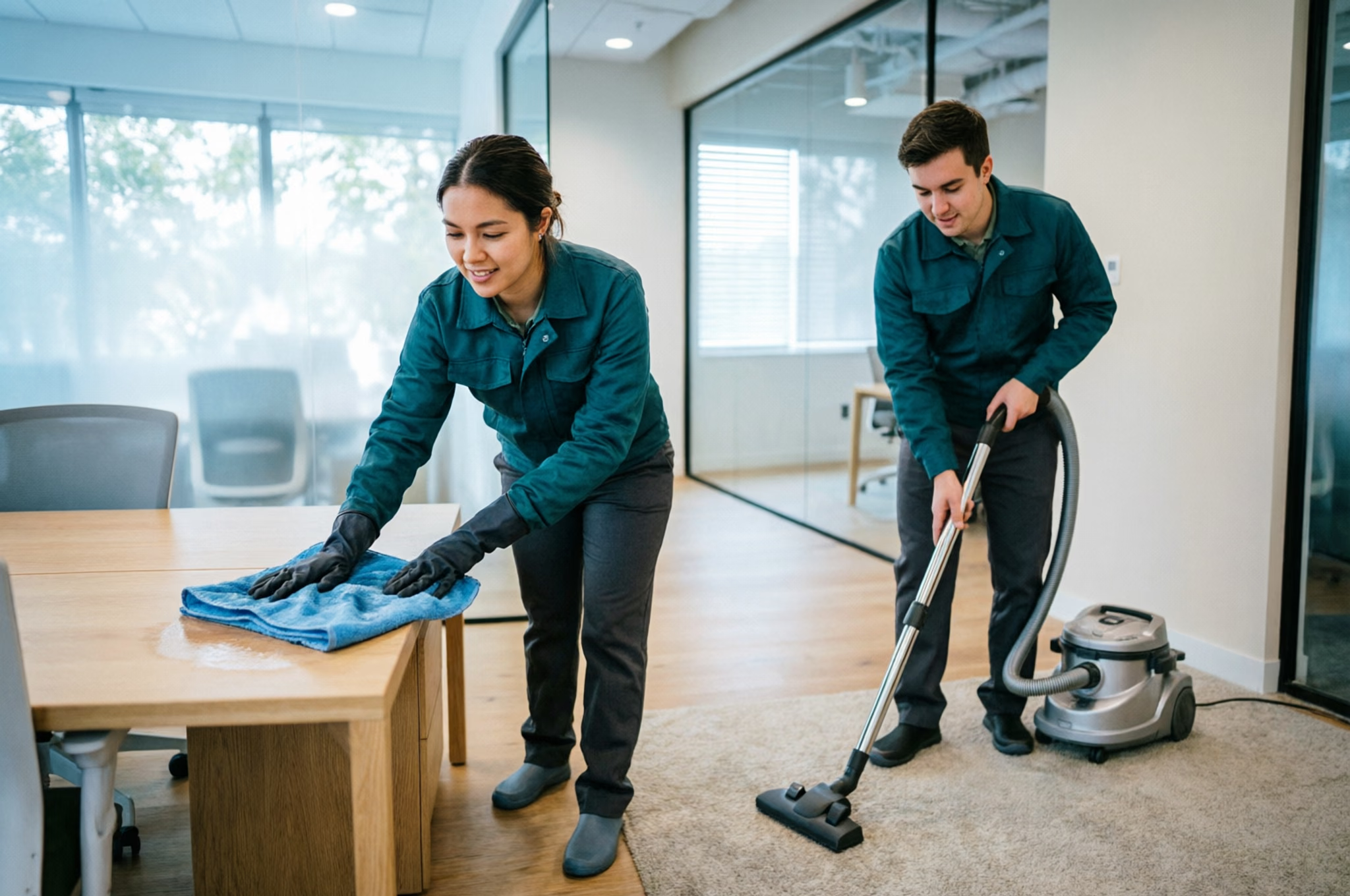
If you run a commercial building, how often the cleaners come through matters as much as how well they clean. Set the frequency too low and the building looks neglected; set it too high and you pay for visits that add no value. This guide helps you match a janitorial schedule to your actual usage, from nightly care for busy spaces to lighter weekly service for quiet ones.
In this guide
Analyzing Office Occupancy, Foot Traffic & Washroom Demands
Determining how often to clean a commercial facility in Ottawa depends on daily employee headcount, public visitor volume, and office layout. These three signals tell you how quickly a space becomes dirty and how much it will be noticed.
High-density call centres and medical clinics generate constant traffic, so they need daily or even twice-daily sanitization of high-touch areas. Small professional offices, by contrast, may only need two or three visits per week because the same handful of people use the space every day.
Washrooms are the clearest signal. The more people share a washroom, the more often it needs attention, regardless of the overall office size. A building with two heavily used washrooms needs nightly service even if the total square footage is modest.
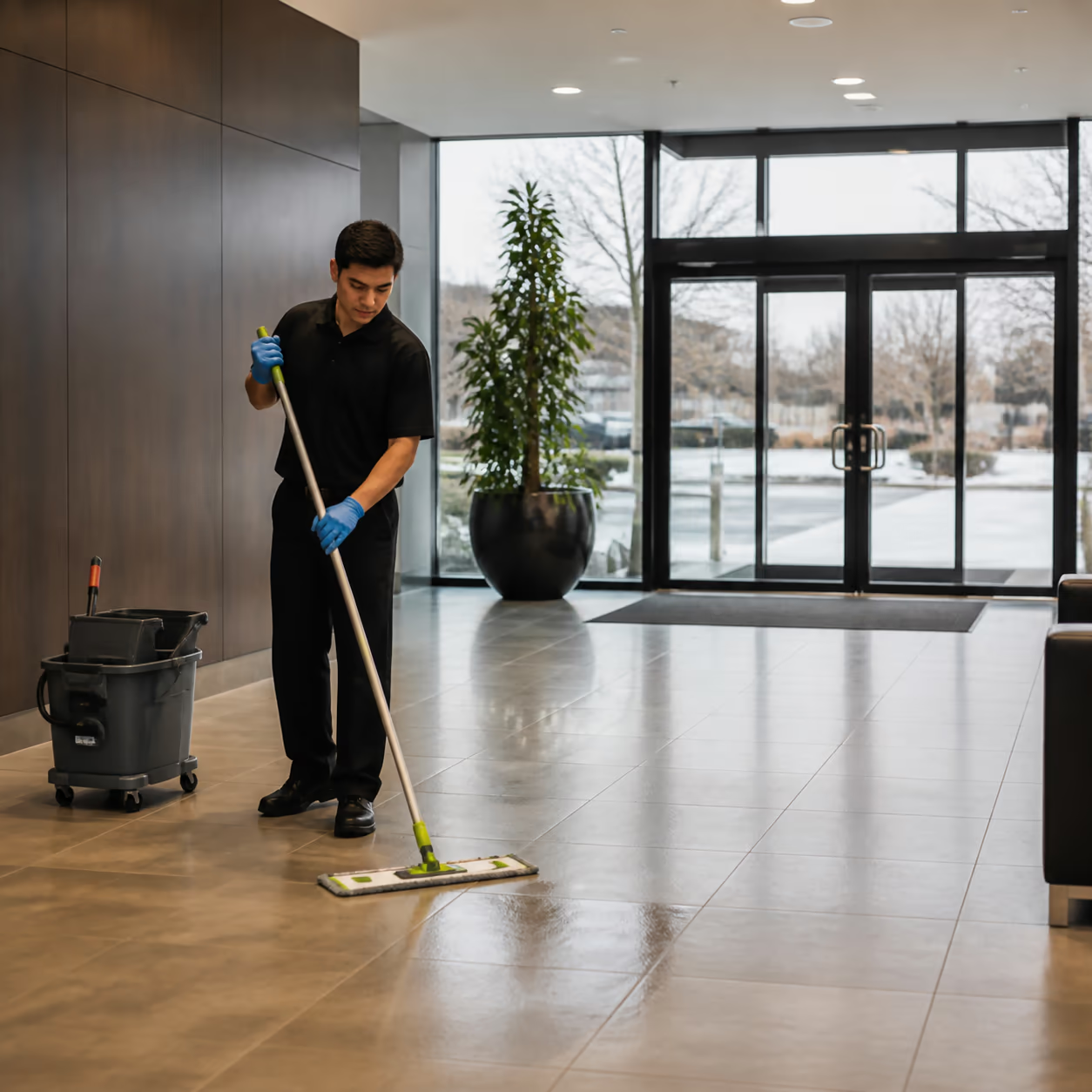
Establishing an optimal cleaning cadence prevents grime from accumulating while avoiding unnecessary labour expense. The goal is a schedule that keeps the building presentable every day someone walks in, without paying for visits that do not add real value.
Determining Nightly, 3x Weekly, or Bi-Weekly Janitorial Schedules
Here are the key guidelines for matching facility needs to cleaning frequencies:
Recommended Cleaning Frequencies by Space Type
If you are starting from scratch, a practical baseline helps you build a schedule. These are general starting points, not rules, because every building is different:
| Entryways and lobbies | daily, because they make the first impression and take the most tracked-in soil. |
|---|---|
| Washrooms | daily in most commercial buildings, with periodic deep cleaning of fixtures and grout. |
| Kitchens and break rooms | daily in offices with a staff kitchen, plus a weekly deep clean of appliances. |
| Open workstations | two to three vacuum and dust passes per week for carpeted areas. |
| Private offices | weekly vacuuming and dusting, more often if the occupant receives frequent visitors. |
| Meeting rooms | after each use when possible, or at least daily, because they are the most visible shared space. |
| Hard-surface floors in corridors | daily dust mopping and periodic auto-scrubbing. |
| Building lobbies with stone or terrazzo floors | weekly buffing to keep the gloss consistent. |
Use these baselines to build a first schedule, then adjust based on what your inspection finds. If a zone looks clean two days after service, you may be able to stretch that frequency. If it does not, tighten it. The right cadence is the one that keeps every zone presentable at the moment it is used.
How Hybrid Work Changed Cleaning Frequency
Hybrid schedules have reshaped how offices need to be cleaned. When attendance fluctuates day to day, a fixed nightly schedule can waste money on empty floors, while a schedule that ignores actual usage leaves the office dirty on the days it is full.
The modern approach is flexible: clean based on who is in the building. Washrooms and kitchens still need daily care when occupied, but a hybrid office may only need full-service cleaning on the days most staff are present, with a lighter refresh in between.
Good cleaning providers now build schedules around occupancy data. If your office is busiest Tuesday through Thursday, the contract can concentrate the heavier cleaning on those days and scale back on Mondays and Fridays. This keeps the building presentable for everyone who walks in and avoids paying for a full crew on days the office is nearly empty.
The same logic applies to seasonal changes. Winter entryways need more frequent attention, summer humidity demands more frequent washroom checks, and spring pollen means more dusting. A schedule that can flex with your building is worth more than a rigid one. A commercial cleaning guide for property managers covers how to build that kind of flexibility into a portfolio of buildings, not just one.
Signs Your Office Needs More or Less Frequent Cleaning
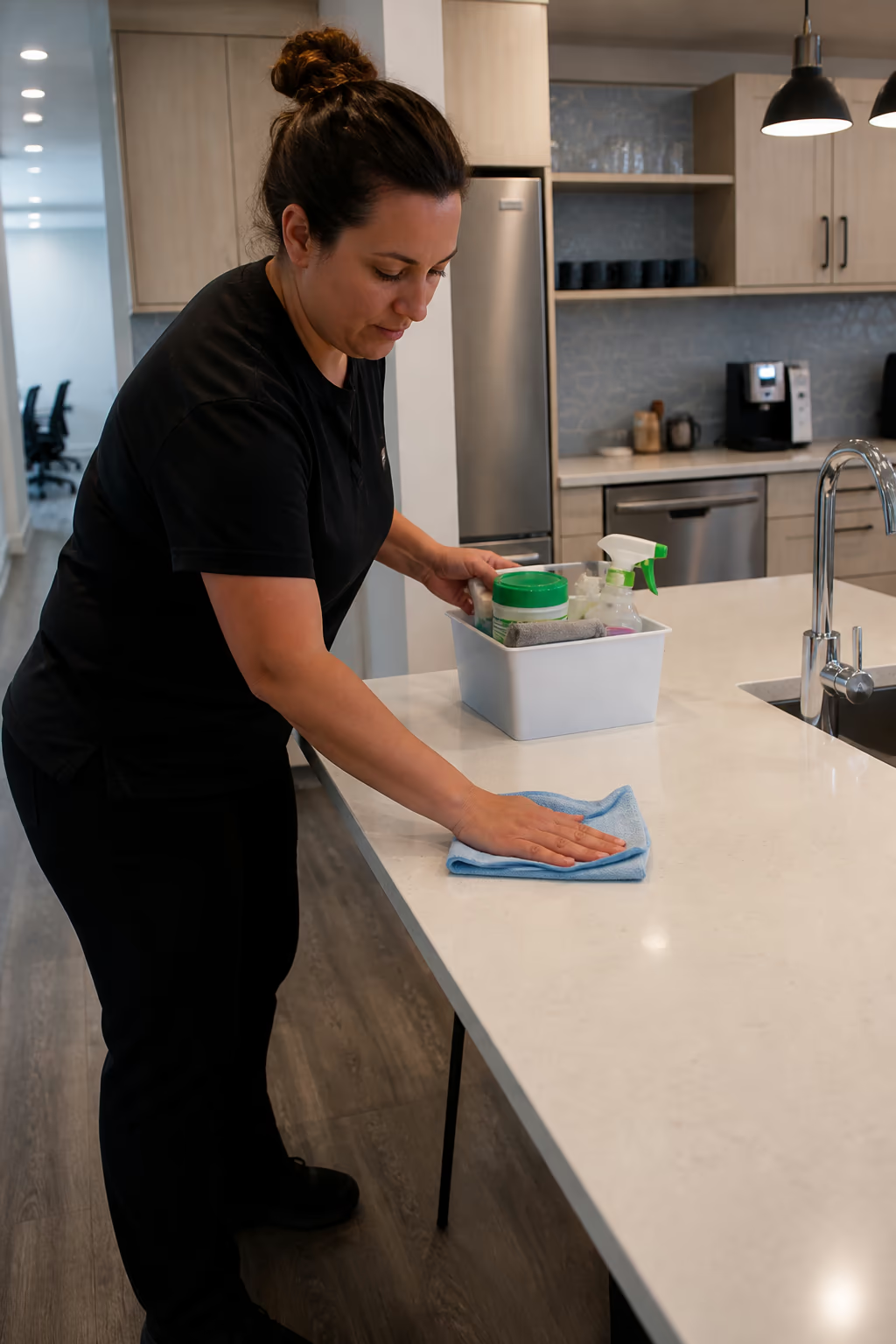
Your schedule should never be a set-and-forget decision. Facilities change, and the cleaning frequency needs to keep up. Here are the signals that point in each direction:
- Dust visible on desks and surfaces within a day or two of service means the space needs more visits or a better daily routine.
- Washrooms that smell or run out of supplies between visits are the clearest sign the schedule is too light.
- Entryways that show tracked-in salt, mud, or sand within hours of being cleaned need more frequent attention, especially in winter.
- If a zone still looks clean two days after service and no one uses it much, you may be able to stretch that frequency and save money.
- If complaints about the building's appearance have dropped to zero for months and inspection logs look good, the current frequency is probably right.
The trick is to review the schedule on a regular cadence, not just when something goes wrong. A quarterly check-in with your cleaning provider, using inspection logs and staff feedback, keeps the frequency aligned with reality.
Building a Cleaning Schedule That Fits Your Budget
Frequency decisions are really budget decisions in disguise. Every additional visit per week adds cost, so the goal is to spend cleaning dollars where they matter most. Checking current commercial cleaning pricing in Ottawa helps you see how much each additional visit actually adds to the monthly total.
Budget is not the only constraint on frequency. Ontario's rules on hours of work cap most employees at eight hours a day and 48 hours a week absent a written or electronic agreement, so a schedule that stretches a small crew further is bounded by statute as well as by cost. The provincial guide states the ceiling: “The maximum number of hours most employees can be required to work in a week is 48 hours.”
Start by protecting the high-risk, high-visibility spaces. Nightly washroom and kitchen service, daily entryway care, and regular vacuuming of open work areas deliver the biggest return on the money you spend. These are the spaces people notice and the ones that affect health.
Then decide what can be stretched. Low-traffic storage areas, private offices used rarely, and back corridors can run on a lighter schedule without anyone noticing. Moving those to weekly service frees budget for the spaces that need daily care.
Consider what the schedule is for. A building that hosts clients every day needs a higher standard than a back-office space that employees use among themselves. Match the frequency to the impression you need to make, not to a generic template.
Finally, remember that a good contract lets you adjust. Your needs will change with your headcount, your lease, and the season, and a provider that can flex the frequency up or down is more valuable than one locked into a fixed plan. Flexibility is not a luxury; it is how a cleaning schedule stays efficient over the life of a tenancy. A commercial cleaning ROI and investment guide looks at how these scheduling choices add up over a full budget year.
Formatted Step-by-Step Cleaning Frequency Assessment Checklist
Follow this checklist to set a cleaning schedule that fits your facility:
- Step 1.Audit Daily Employee Headcount and Visitor Foot-Traffic Patterns:Determine the actual usage and risk levels of every zone.
- Step 2.Assign Nightly Disinfection Frequencies for Shared Washrooms and Lunchrooms:Guarantee daily washroom hygiene where people share facilities.
- Step 3.Schedule 3x Weekly Vacuuming for Carpeted Open Office Areas:Keep office carpets free of tracked dust and surface soil.
- Step 4.Plan Monthly High-Surface Dusting of Ceiling Vents, Blinds, and Door Frames:Eliminate airborne dust reservoirs that settle out of sight.
- Step 5.Establish Quarterly Deep Extraction for Entrance Mats and High-Traffic Tile:Maintain entrance lobby appearance and extend the life of mats.
- Step 6.If you need a team or a recurring schedule, use commercial office cleaning services in Ottawa to discuss scope, access, and timing before deciding whether it fits.
Serving Ottawa's Business Neighbourhoods
Good Cleaner Co. builds cleaning schedules to match the rhythm of each building across Ottawa, from the busy call centres of Kanata to the professional offices downtown and the retail strips of Orleans and Nepean. Whether your property is in Barrhaven, the ByWard Market, or the suburbs of Stittsville, we tune the frequency to how your space is actually used.

Putting this guidance into practice
For a manager setting a realistic schedule, start with traffic and use rather than a generic weekly or nightly label. That keeps the conversation tied to the actual space instead of a generic promise.
Review occupancy, food and washroom use, public traffic, shared desks, entrances, floors, and workable service times. A written scope should say what happens on a normal visit, what needs approval, and who should hear about a recurring issue.
Seasonal considerations in Ottawa
Winter can justify more entrance care, while pollen or humidity can affect other areas. Review the schedule after use or season changes.
Look at the actual condition, the number of people using the space, and the material being cleaned before changing products, equipment, or frequency.
Safe, responsible cleaning
Leave enough time for products to be used as directed and for floors to dry before people return. Rushed work is not a standard.
When a surface, product, or site requirement is unclear, ask before continuing. A careful decision protects people and property better than a shortcut.
How to review this as a manager setting a realistic schedule
Before changing this routine, take a short walk through the actual space and describe what you see in ordinary language. Start with traffic and use rather than a generic weekly or nightly label. That gives everyone the same starting point and prevents a broad request from quietly becoming a different job.
Ask someone who uses the space every day what creates the most friction. Their answer may be a messy entry, an awkward storage area, a surface that marks easily, or a time when work cannot happen. A useful plan respects that local knowledge instead of replacing it with a standard script.
Choose one change that can be observed over a few visits. It might be a different order of work, a clearer handover, or more attention to occupancy, food and washroom use, public traffic, shared desks, entrances, floors, and workable service times. Write down the reason for the change and what would show that it is helping. That is a better test than relying on a vague impression.
Keep the discussion specific when something is not working. Name the room, surface, timing, and result you expected, then decide what should happen next. Clear feedback is fair to the people doing the work and far more useful than a blanket complaint.
Finally, revisit the plan when the building, household, or season changes. A routine should be stable enough to follow and flexible enough to respond to real conditions. That balance is what makes cleaning guidance practical.
For a frequency decision, record the busiest day and the quietest day before changing the schedule. Comparing those two conditions helps a manager avoid paying for a pattern that the building does not actually need.
FAQ
How often should commercial office washrooms be disinfected in Ottawa?
High-touch commercial washrooms should be disinfected at least once every day, ideally overnight, to prevent bacterial and viral buildup between uses and keep the space fresh for the next morning.
Can cleaning frequencies be increased during winter months in Ottawa?
Yes. Many Ottawa companies add entryway and floor-scrubbing visits in winter to manage the salt, sand, and slush that get tracked in every day.
What cleaning frequency is recommended for a 2,000 sq ft office with 10 employees?
A two or three times weekly schedule is usually ideal for a 2,000 sq ft office with moderate staff presence, with nightly care for the washroom and kitchen.
Is it cheaper to clean less often but deeper?
Not usually. Light, frequent care is generally more cost-effective than letting soil build up and paying for intensive deep cleans. The exception is carpets, which still need periodic hot water extraction.
How do I know if my cleaning frequency is too low?
Look for signs the building is not holding up: dust on surfaces between visits, washrooms running out of supplies or smelling, and visible soil in entryways. Any of these means the schedule is too light.
Do hybrid offices really need different cleaning schedules?
Yes. A schedule that matches the days staff are actually in the building keeps the space presentable and avoids paying for full service on empty floors. In practice, that often means concentrating the heavier cleaning on the busiest days of the week.
How often should building lobbies and entrance mats be deep cleaned?
Plan for quarterly deep extraction of entrance mats and high-traffic tile. The mats catch the worst of the soil, so they need regular deep cleaning to keep working.
How do I get a cleaning schedule recommendation for my Ottawa office?
Contact Good Cleaner Co. with your square footage, headcount, and office hours, and we will recommend a frequency that fits your building and budget.
How many cleaning visits per week do most commercial offices need?
Most offices land somewhere between three and five visits per week. The exact number depends on headcount, washrooms, and how much the space is seen by visitors, so it is worth building the schedule around your usage rather than copying a neighbour's.
Can I change my cleaning frequency after the contract is signed?
In most cases, yes. Good cleaning contracts allow the frequency to flex as your needs change, and many providers review the schedule with you quarterly. Ask about how adjustments are handled before you sign.
Wrapping Up
Setting the right commercial cleaning frequency balances facility hygiene and operational budget. Start with your usage data, protect the high-traffic spaces, and keep the schedule flexible enough to change with your building. Done well, the result is an office that looks cared for every day someone walks in, at a price that makes sense. Contact Good Cleaner Co. today to book commercial office cleaning in Ottawa.
Keep reading
More from Good Cleaner
About the author
Service areas
- Ottawa
- Kanata
- Nepean
- Orleans
- Barrhaven
- Stittsville