
How to Choose a Cleaning Service in Ottawa: A Practical Comparison Guide
This guide is for people who want to make that comparison without getting lost in sales language. It focuses on questions you can ask, details you can see in writing, and small decisions that prevent a disappointing first visit. It does not rank companies or promise a result; it helps you choose with clearer information.
Quick Summary
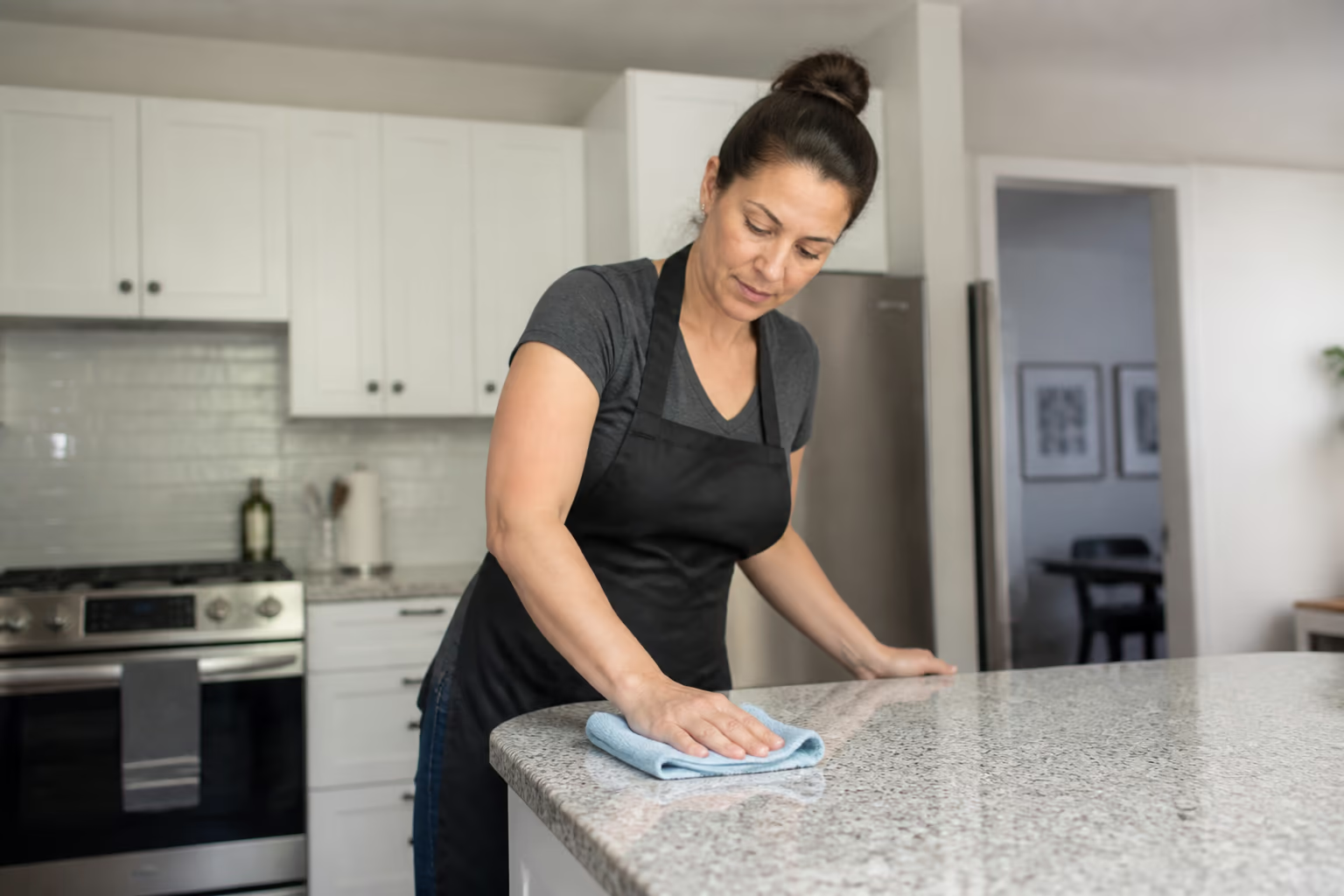
A good cleaning service is not simply the one with the lowest number on a quote. It is the one whose scope, timing, communication, and approach fit the way you use your home or workplace. Start by defining the job, then compare what each provider says they will actually do.
In this guide
Start With the Job You Need Done
“Cleaning service” can mean a weekly kitchen-and-bathroom reset, a deep clean before family arrives, a move-out appointment, or an after-hours routine for an office. Those jobs need different amounts of time, equipment, access, and planning. A useful comparison begins before you contact anyone: write down what you need cleaned, what matters most, and what cannot be disturbed.
For a home, think about how the space is used rather than how it looks on a quiet day. A busy entryway, a dog that sheds, a toddler’s high chair, a home office, or a downstairs bathroom used by guests can all change the priority list. For a workplace, map the public areas, washrooms, lunch room, shared desks, and spaces that must stay private. A simple room-by-room note gives every provider the same starting point.
Be specific about the outcome you want. “Make the kitchen clean” can mean wiping visible surfaces, cleaning inside appliances, removing grease from cabinet fronts, or dealing with hard-water marks. Those are not interchangeable tasks. If you can name the result, you can ask whether it is included, optional, or outside the normal scope.
It also helps to distinguish cleaning from organizing. A cleaner may be able to wipe a clear counter efficiently, but sorting papers, deciding what to donate, or moving a large amount of clutter can take the visit in a different direction. Put away important documents, medication, jewellery, and anything that requires a personal decision before the appointment. That is not about making the job easier for someone else; it lets the time you are paying for go to the work you actually value.

Compare the Scope Before You Compare the Price
Two estimates can look similar while covering very different work. One may describe a recurring maintenance visit, while another assumes a first-time reset. One may include the kitchen floor but not the inside of the oven. Another may allow a set amount of time for each room rather than a fixed checklist. Neither approach is automatically wrong, but you need to know which one you are comparing.
Ask for the scope in plain language. A useful document names the rooms, the main tasks, the optional tasks, and the things that are excluded. It should make it easy to see whether bathroom fixtures, baseboards, interior windows, appliances, carpet care, or laundry are part of the visit. If the scope only says “standard clean,” ask what that means in practice.
Read the wording around condition carefully. A first visit in a home that has not been cleaned recently can require more work than a regular visit after the space is established. The same is true after a renovation, a move, a long illness, or a busy season at work. Rather than assuming a quote covers every possible condition, ask how the provider handles extra time or a task that turns out to be larger than expected.
Keep the comparison fair. Give each provider the same information, including the number of bathrooms, pets, parking constraints, access instructions, and the areas that matter most. If one company sees only a short form and another receives a detailed walk-through, their estimates are not measuring the same job. A consistent brief produces a more useful decision.
Look for Clear Communication, Not Perfect-Sounding Language
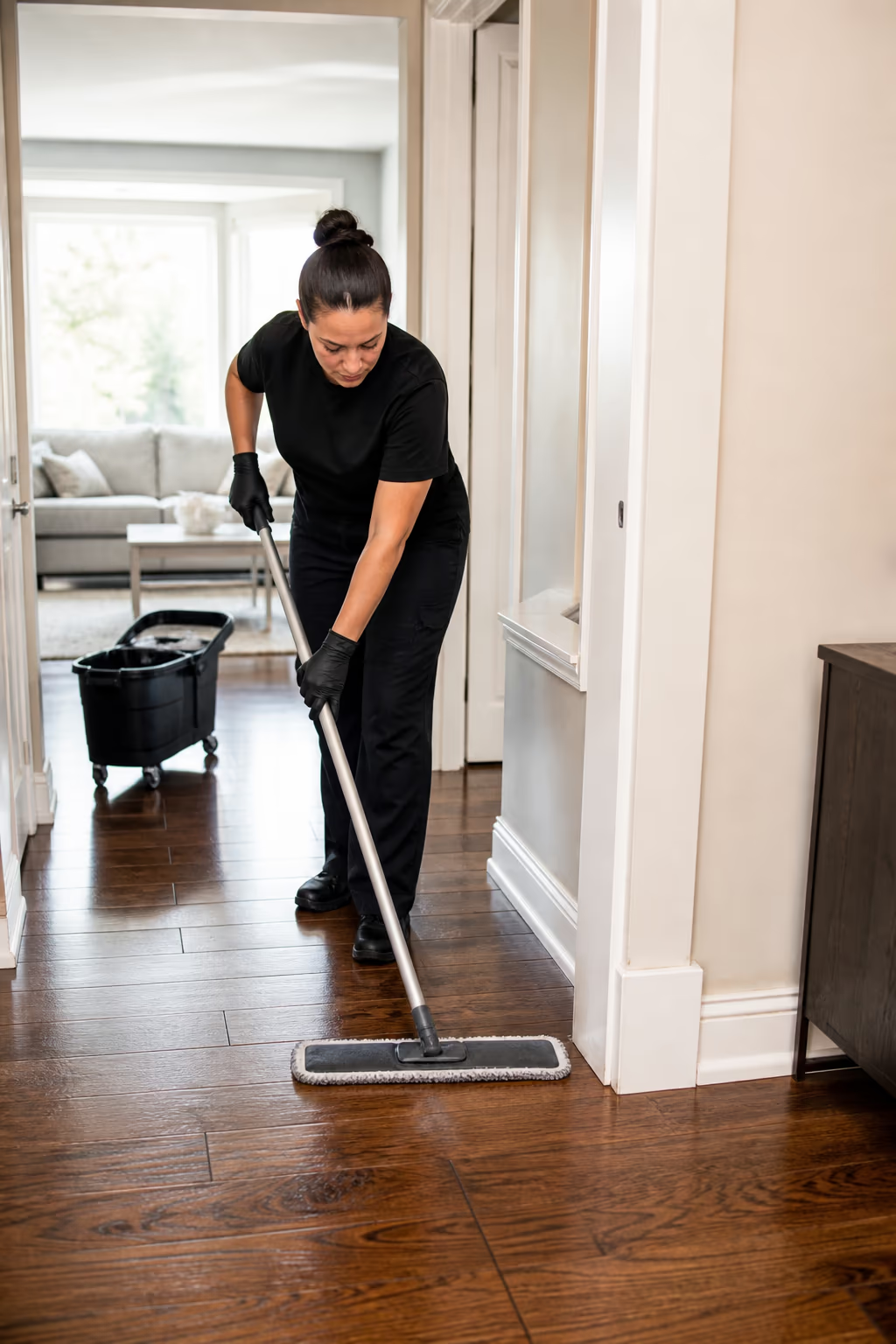
You do not need a long sales presentation. You need answers that make sense. A provider should be able to explain how a booking works, what information is useful before the visit, how changes are handled, and who you contact if something is unclear. A short, direct answer is often more helpful than a page of polished promises.
Pay attention to whether the provider separates facts from assumptions. For example, an office cleaning request may depend on building access, alarm instructions, waste handling, or the hours when cleaning is allowed. A home appointment may depend on whether someone will be present, where supplies can be placed, or how a pet should be handled. These details are ordinary, but they matter because they affect the visit from the start. When you compare office cleaning services Ottawa providers, the same access and waste-handling questions apply before the first visit.
Written confirmation is useful for both sides. It gives you a record of the date, arrival window, scope, price basis, and any special instructions. If you request a change, ask for the revised scope in writing too. That is not an accusation or a legal exercise; it simply gives everyone the same reference point.
Good communication also includes the ability to say “we do not know yet.” A thoughtful provider may need to see photos, visit the site, or ask more questions before describing a task. That is preferable to a confident answer that does not match the condition of the space. The goal is a realistic plan, not the fastest reply.
Questions That Help You Understand a Provider
Use a conversation to learn how the work is planned, not to collect buzzwords. The following questions work for a house, condo, small office, or shared commercial space.
- What is included in the first visit, and what changes on later visits?
- Which tasks are optional, and how do I request them?
- How do you handle access, keys, parking, pets, alarms, or building rules?
- Will I receive a written scope or confirmation before the visit?
- What should I clear or prepare so the visit can focus on cleaning?
- If the condition is different from what we discussed, how will you check with me before changing the plan?
- Who should I contact if I have a question after the appointment?
One question separates a serious provider from a cheap one. Ontario's employer duty under subsection 25(1) of the Occupational Health and Safety Act requires prescribed equipment, materials and protective devices to be provided and maintained in good condition, so ask how the crew is equipped and how that equipment is kept. The province lists the duty in one line: “Instruct, inform and supervise workers to protect their health and safety”.
You may also want to ask about products or equipment when a surface, scent, or household sensitivity matters to you. Explain the practical need rather than using a label alone. For instance, tell the provider that a room has unfinished wood, a stone counter, a new baby, a pet, or a strong fragrance sensitivity. Then ask what approach they would propose and whether you should provide a preferred product.
Be wary of answers that stay vague after a reasonable follow-up. “We clean everything” does not tell you whether the inside of cupboards, ceiling fans, or stained grout are included. “No problem” is not a plan for a delicate surface. You are not being difficult by asking for detail; you are making the eventual visit easier to judge fairly.
Choose the Right Frequency for Your Space
Frequency is about how quickly the space returns to a level you do not enjoy maintaining yourself. A household with several people, pets, frequent cooking, or a lot of winter footwear may need attention more often than a lightly used flat. An office with daily visitors has different needs from a small studio used by one person a few days a week.
Weekly service can make sense when high-use rooms need regular attention. Every two weeks can suit many households that keep up with light tasks between visits. Monthly cleaning may work where the space stays fairly tidy and the visit focuses on a more thorough reset. These are starting points, not rules. A good schedule is one you can adjust after you see what accumulates.
One-time cleaning has its own purpose. It can be useful before a move, after construction dust, before a major event, or when routine maintenance has fallen behind. Describe the trigger and the condition honestly. A provider can then decide whether the task needs an extended appointment, a different checklist, or a staged approach.
If you are considering home cleaning services in Ottawa, ask how the company distinguishes a first visit from a recurring visit. That single question usually reveals whether the scope has been thought through. It also helps you avoid expecting a maintenance appointment to solve a backlog that needs a separate plan.
Consider Access, Privacy, and Everyday Logistics
Cleaning is practical work, so practical logistics matter. In a home, decide whether you will be present, how someone enters, where they can park, and which rooms are off limits. In a condo, check elevator reservations, visitor parking, loading rules, and building hours. In a workplace, clarify access cards, alarm procedures, waste rooms, secure files, and spaces that require an escort.
Make a small arrival note. Include the correct unit or suite number, entrance, parking directions, contact number, pet information, and anything that could delay the start. If the location is in a dense downtown building, a Kanata business park, or a quieter area near Manotick, the travel and access details can be quite different. A clear note avoids spending the first part of the appointment solving preventable problems.
Privacy is also worth addressing directly. Tell the provider which surfaces, drawers, rooms, devices, or documents should not be touched. Remove valuables rather than relying on memory. For an office, put confidential files away and identify any materials that need a designated disposal process. Clear boundaries make the arrangement more comfortable for everyone.
Formatted Step-by-Step Cleaning Service Comparison Checklist
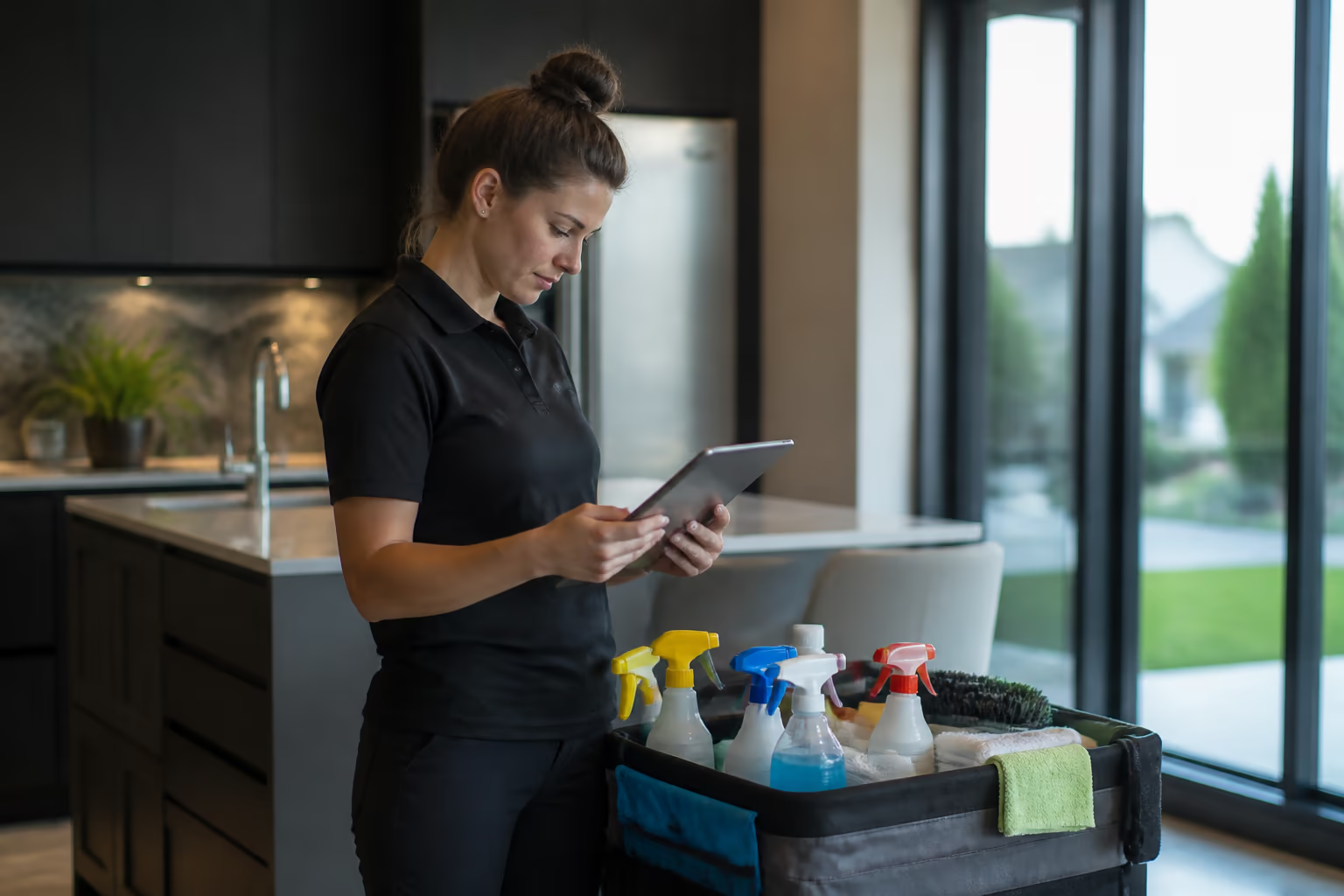
Use this short checklist when you are deciding between services.
| Ask | Check |
|---|---|
| Define the result you need | List the rooms, priorities, condition, and any tasks that must be included. |
| Request a written scope | Compare inclusions, exclusions, optional tasks, and how the first visit differs from a recurring visit. |
| Check the practical fit | Confirm scheduling, access, parking, pets, building rules, and the point of contact. |
| Ask how changes are handled | Find out what happens if the space needs more work or your priorities change. |
| Read the confirmation before the visit | Make sure the date, scope, and instructions match what you discussed. |
| If you are looking for a home cleaning provider in Ottawa, use the same checklist when you speak with Good Cleaner Co. or another provider. | |
Ottawa Seasons Change What Gets Dirty
Ottawa homes and workplaces do not stay the same through the year. In winter, entryways collect moisture, grit, and residue from footwear. A mat system, a place for boots, and regular attention to the first few metres inside the door can make the rest of the floor easier to maintain. Do not assume every floor material should be treated the same way; ask what is appropriate for the finish in your space.
Spring can bring open windows, tracked-in debris, and the urge to reset a home after months indoors. It is a practical time to look at ledges, vents, storage areas, and the rooms that get less day-to-day attention. In summer, cooking, guests, pets, and open doors can change the rhythm again. In autumn, a modest reset before indoor routines become busier can keep the workload from piling up.
Seasonal conditions are a reason to review your priorities, not a reason to buy a generic package. A short list that reflects your actual entryway, kitchen, washroom, or office reception area will be more useful than a long list of tasks you do not need.
Small Tasks You Can Keep Between Visits
A cleaning service does not have to replace every household routine. A few simple habits can make each visit more effective and keep the space comfortable in between. Put away items that do not belong in the room, wipe a spill before it hardens, and empty food waste regularly. These are low-effort tasks with a noticeable effect on the time available for deeper cleaning.
For everyday surfaces, choose methods that suit the material and follow the product directions. Avoid mixing products or assuming that a stronger smell means a better clean. If you enjoy making your own simple everyday cleaner, the DIY citrus all-purpose cleaner guide can help you think through a small between-visit routine; test any homemade solution in an inconspicuous area and keep it away from surfaces that need a manufacturer-approved product.
In a workplace, agree on what staff handle during the day. A simple shared expectation around dishes, food storage, recycling, and desk clutter prevents the cleaning plan from becoming an argument about personal habits. The cleaner can then focus on the work that needs dedicated time and access.
FAQ
What should I ask for in a cleaning quote?
Ask for the rooms, tasks, exclusions, optional work, timing, and any assumptions about the condition of the space. You should also understand how the provider will contact you if the work needs to change.
Is the lowest quote usually the best choice?
Not necessarily. A low quote may be a good fit, but first check whether it covers the same scope, time, and practical needs as the other options. Compare the work, not just the total. Our guide to affordable cleaning services looks at how to balance price against scope in more detail.
Do I need to be home during a cleaning visit?
That depends on your comfort level and the access arrangement. Decide in advance how entry works, what rooms are off limits, and how the cleaner can reach you if a question comes up.
How often should a home be cleaned professionally?
Choose a frequency based on use, not on a rule of thumb. Notice how quickly the kitchen, washrooms, floors, and entryway become difficult to manage, then adjust the schedule after a few visits.
What if my home is much messier than usual?
Mention that before the appointment. A clear description, photos if requested, and an honest list of priorities help the provider suggest a realistic scope instead of discovering the issue after arrival.
Can I ask for fragrance-free or surface-specific products?
You can ask. Explain the surface or sensitivity and ask what the provider can accommodate. If you have a product you want used, discuss that before the visit rather than leaving an unlabelled bottle out.
How do I prepare for a cleaner without cleaning first?
Clear loose items from the areas you want cleaned, secure private or fragile belongings, and leave access information. You do not need to scrub the space beforehand; you are simply making the priorities visible.
Wrapping Up
The best cleaning service for you is the one you can describe clearly: the right tasks, a realistic schedule, straightforward communication, and a scope you understand. Use the same questions with every provider, keep the comparison fair, and choose the arrangement that fits your space rather than the one with the loudest promise. For a deeper walkthrough, our guide on how to review a cleaning company in Ottawa covers the same checks in more detail.
Keep reading
More from Good Cleaner
Services that fit
- Home Cleaning Services in OttawaRecurring weekly, bi-weekly and monthly house cleaning built around your family's routine, with non-toxic chemistry and background-checked staff.
- Professional Office Cleaning Services in OttawaNightly and after-hours office cleaning for corporate offices, clinics and professional suites, with after-hours scheduling and eco-friendly products.
About the author
Service areas
- Ottawa
- Kanata
- Nepean
- Orleans
- Barrhaven