
Why Commercial Cleaning Costs More Vs. Residential Cleaning
At first glance, the tasks involved in cleaning commercial spaces and residential homes look the same. Both involve dusting, vacuuming and wiping surfaces, yet the hourly rate for a commercial job almost always comes in higher. That gap is not a mark-up; it reflects real differences in scale, equipment, labour and the standards a workplace has to meet. This guide breaks down why commercial cleaning costs more per hour and how to read a commercial quote with confidence.
Quick Summary
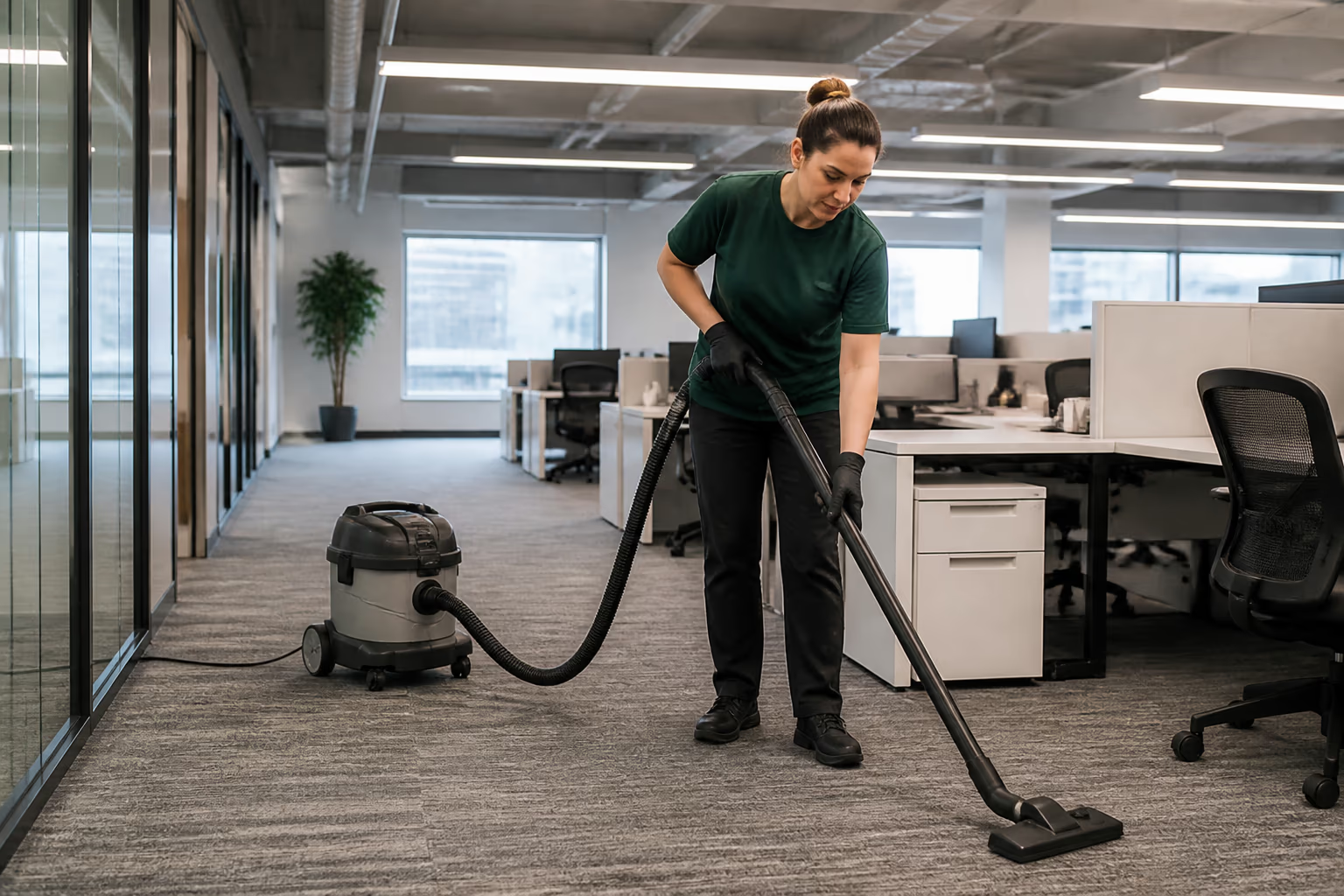
Commercial cleaning costs more per hour than residential cleaning because the same tasks come with larger spaces, off-hours scheduling, contract-level standards and accountability to employees and regulators. Higher equipment, labour and training requirements, not a mark-up, explain the gap in a commercial quote.
In this guide
Why the Same Tasks Cost More in a Commercial Setting
When you compare a house clean with an office clean, the visible work looks familiar, but the conditions around that work are completely different. Every one of those differences adds cost to the hourly rate, because each one requires more planning, more equipment, more training and more accountability than a residential clean. A residential cleaner serves one household with a known routine. A commercial cleaner serves a business that must stay presentable every working day, often with people already inside the building.
The labour floor is identical in both settings, which is what makes the gap informative. Ontario's general minimum wage is $17.60 an hour from 1 October 2025 to 30 September 2026, rising to $17.95 on 1 October 2026, so a higher commercial rate reflects the added conditions around the work, not a different starting wage. The provincial guide is broad about who it covers: “Most employees are eligible for minimum wage, whether they are full-time, part-time, casual employees, or are paid an hourly rate, commission, piece rate, flat rate or salary.”
- 01Commercial spaces are larger and laid out for many people, not one family.
- 02The work happens around a business schedule, often early morning, evening or overnight.
- 03The expectations are set by a contract, a service level agreement and an inspection, not by a casual arrangement.
- 04The client is accountable to employees, visitors, customers and sometimes regulators.
- 05The job repeats on a fixed frequency, so the provider builds capacity for it.
A Side-by-Side View of Residential and Commercial Cleaning
When you see residential and commercial cleaning side by side, the higher commercial rate is not a mystery. It is the cost of a deeper, wider, more accountable version of the same work. Putting the two side by side makes the price difference much clearer.
| Residential | Commercial |
|---|---|
| A residential clean serves one household on a flexible schedule; | a commercial clean serves a whole building on a fixed one. |
| A home has a few rooms and a modest list of tasks; | an office has many rooms, washrooms and common areas all held to one standard. |
| A residential cleaner carries a vacuum and a mop; | a commercial team brings scrubbers, burnishers and commercial equipment. |
| A home is cleaned with the household's routine in mind; | a workplace is cleaned around employees, customers and business hours. |
| A residential client expects a tidy home; | a commercial client expects a standard written into a contract. |
| A home clean is priced on the job; | a commercial clean is priced on a contract built from scope, frequency and compliance. |
The Scale and Scope Difference
Square footage is the first reason the rate climbs. A typical home is a few thousand square feet with a handful of rooms. A commercial facility can span tens of thousands of square feet across offices, corridors, washrooms, kitchens, meeting rooms and common areas, and all of it has to meet a consistent standard on the same night.
Scale changes how the work is planned. More surfaces mean more time, more people and more scheduling. It also changes the tools: a cleaner moving through a large office block cannot rely on a household mop and bucket alone, and the equipment that covers big floors fast is expensive to buy, maintain and operate. That cost is built into the hourly rate.
Specialised Equipment and Techniques
Residential cleaning leans on familiar tools: a vacuum, a mop, cloths and a handful of products. Commercial cleaning leans on machines, because the volume demands them.
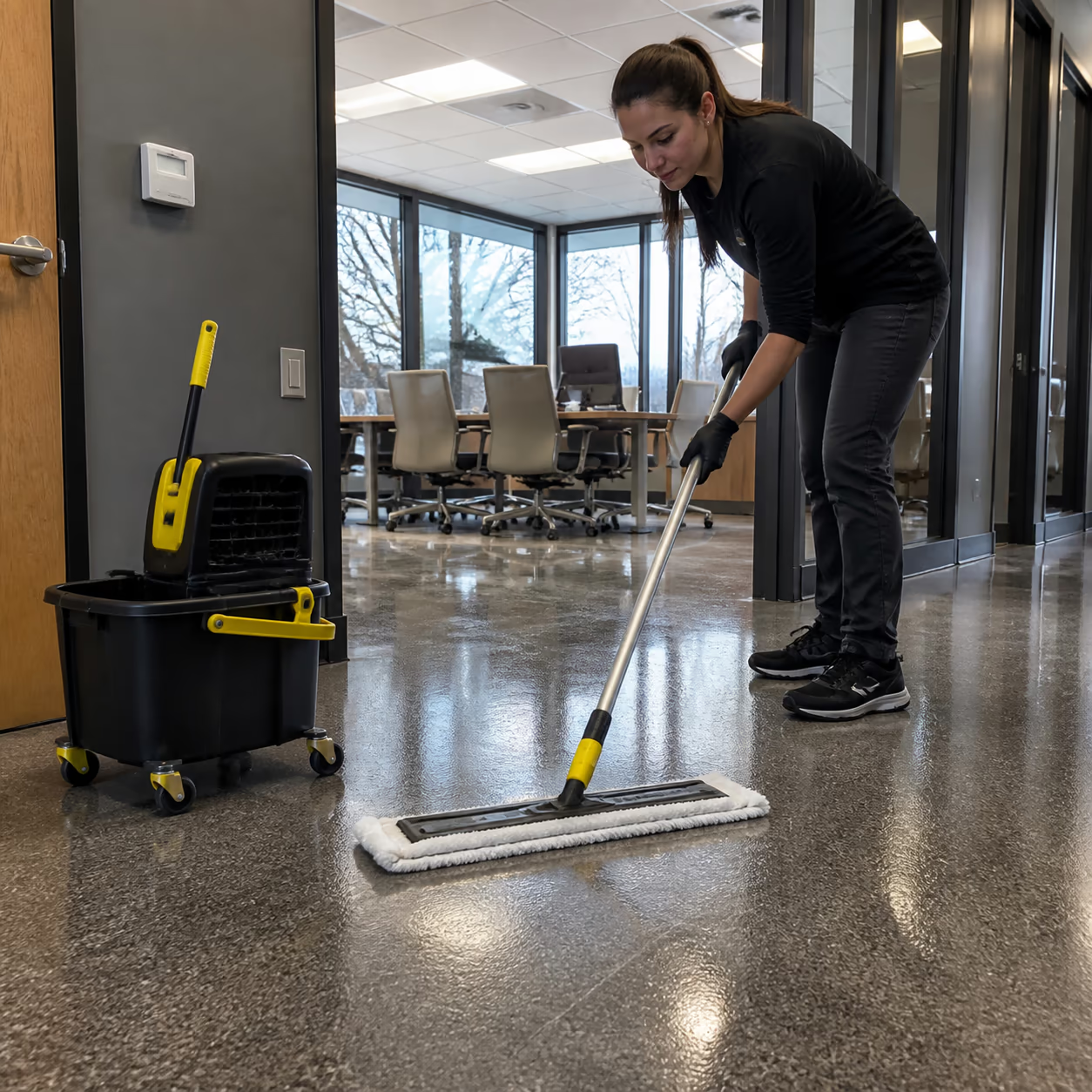
- 01Auto scrubbers and floor buffers cover large hard floors quickly and evenly.
- 02Burnishers bring a high-gloss finish to sealed and treated floors.
- 03Commercial vacuums and backpack units reach large carpeted areas and high surfaces.
- 04Industrial equipment for stripping and waxing keeps floors in contract-standard condition.
- 05Pressure washing and high-level dusting serve lobbies, entryways and exteriors.
Each machine has a purchase price, maintenance costs, and a trained operator behind it. The training and the machinery both show up in the hourly rate, and they are the reason a commercial clean can be done to a repeatable standard that a household mop cannot match.
Labour, Training and After-Hours Work
Labour is the biggest share of any cleaning rate, and commercial labour costs more per hour for reasons beyond the wage itself.
- 01Cleaners on commercial sites are typically trained, background-checked and supervised.
- 02Teams follow documented procedures and are held to a service level agreement.
- 03After-hours and overnight work carries premium wage expectations.
- 04Holiday and weekend coverage for businesses that operate seven days adds to the cost.
- 05Supervisors, inspections and re-work when a standard is missed are part of the model.
A residential cleaner may work alone and manage their own schedule. A commercial team is a coordinated operation with accountability at every step, and that coordination is priced into the rate.
Compliance and Accountability
Commercial cleaning carries a heavier compliance and liability load than residential work, and that load is another reason for the higher hourly rate.
- 01Staff handle products under the hazard communication rules, including WHMIS 2015 where they apply.
- 02Occupancy and safety mean products are chosen and applied so people can return to the space safely.
- 03Some workplaces require background checks, safety orientations and site-specific training.
- 04Contractors answer to a contract with defined standards, inspection rights and penalties.
None of this is optional overhead; it is the cost of being allowed to clean a workplace at all. A provider who skips it is cheaper precisely because they are carrying less responsibility, and the difference is the biggest risk in the lowest quote.
What Affects the Hourly Rate
The rate for any commercial clean is built from a handful of factors, and understanding them helps you read a quote honestly.
- 01The size of the space and the frequency of the service.
- 02The type of surfaces, from carpet and tile to glass and high ceilings.
- 03The hours the work can happen, and whether it is day, evening or overnight.
- 04The number of washrooms, kitchens and high-traffic areas.
- 05The standard required, from routine upkeep to a detailed service level agreement.
- 06Whether the provider supplies equipment, products and supervision.
- 07Local wage rates and overhead in your market.
Because these vary from building to building and market to market, no single hourly price applies everywhere. The honest way to compare is on the total scope and standard, not on the number on the invoice alone. Our commercial cleaning checklist by industry breaks down how scope typically differs across sectors.
Typical Cost Ranges and How They Vary
Commercial cleaning rates are quoted per hour, per square foot or per visit, and the numbers depend heavily on scope, location and contract terms. In many Canadian markets, routine commercial cleaning sits in a range that varies with the building, with higher rates for detailed, after-hours or specialised work such as stripping and waxing, window cleaning and deep disinfection. Smaller offices at the low end of the range differ from large, high-standard facilities at the higher end, and one-time deep cleans are priced differently from recurring contracts. For Ottawa-specific figures, see our commercial cleaning cost in Ottawa breakdown.
The right figure for your space comes from a site-specific assessment, not from a published number. A provider who quotes after seeing the building, the surfaces and the frequency is pricing real work; a provider who quotes on the phone without a walk-through is guessing. Ask what a typical range for your building looks like, and compare itemised scopes rather than bare prices.
How to Read a Commercial Cleaning Quote
A commercial quote is only as good as your ability to compare it honestly. The headline hourly rate tells you little on its own; what matters is what sits behind it.
- 01Look for the scope:exactly which areas are cleaned, at which frequency, to what standard.
- 02Check whether equipment, products and supervision are included or billed separately.
- 03Confirm whether after-hours or overnight work carries a premium and how it is applied.
- 04Ask about how quality is measured and how missed standards are corrected.
- 05Check the compliance coverage rather than assuming it is there.
- 06Compare the total cost of the contract, not the single number that looks cheapest.
A quote that lists all of these is easy to compare. A quote that gives you one number and nothing else is hiding the parts that will surface later.
When Commercial Cleaning Is Worth the Higher Rate
A higher hourly rate is easy to understand once you see what it buys: a trained team, reliable equipment, consistent standards and accountability. For a business that needs its space presentable every morning, that reliability is worth more than the difference in price.
- 01Consistent quality protects your employees' experience and your clients' first impression.
- 02A documented standard makes it clear what is being delivered and what is not.
- 03Compliance and safety protect people and reduce your own liability.
- 04A provider with capacity can absorb sickness, holidays and peak demand.
- 05The service is scheduled around your operations, not the other way around.
The value of commercial cleaning is measured in the standard it holds every single visit, and that is exactly what the higher rate pays for.
Businesses that shop purely on price often discover the real cost later, in missed standards, staff turnover and the burden of managing the work themselves. The better conversation is about what the rate includes, because the gap between a professional standard and a casual clean is exactly what the higher rate closes.
What You Need Before You Start
Whether you are buying commercial cleaning or pricing it, a little preparation makes the difference between a good contract and a frustrating one.
- 01Map the square footage, the surfaces and the areas that need the most attention.
- 02Define the frequency, the hours and the standard you need to maintain.
- 03Ask for an itemised scope covering equipment, products and supervision.
- 04Confirm background checks and compliance requirements up front.
- 05Agree on how quality is measured and how issues are escalated.
- 06Compare a few providers on the full scope, not on the headline rate alone.
Common Mistakes and How to Avoid Them
Both buyers and providers repeat a few mistakes when it comes to commercial cleaning rates. The fix is the same in every case: compare the full scope, question what is included and verify the provider's accountability before you sign.
- 01Choosing on the lowest hourly rate without comparing the scope and standard.
- 02Ignoring the cost of after-hours work, specialised equipment and supervision.
- 03Assuming every provider carries the same compliance coverage.
- 04Paying for a routine clean when the space actually needs stripping, waxing or disinfection.
- 05Skipping the walk-through and accepting a phone quote for a building the provider has not seen.
- 06Letting a contract drift without reviewing it as the space or the occupancy changes.
Costs, Timing and When to Call a Professional
The real cost of commercial cleaning depends on your building, your standard and your market, so it always varies and no fixed price holds across every space. Timing shapes it too: day work during business hours is usually priced differently from after-hours or overnight work, and one-time deep cleans differ from recurring contracts. The honest approach is to get a site-specific assessment and compare itemised scopes, then review the arrangement as your space and occupancy change. For a wider view of pricing patterns nationally, see our commercial cleaning cost canada guide.
When you are ready for a partner rather than a one-off crew, Good Cleaner Co. combines local experience, background-checked staff and certified products to keep Ottawa and area workplaces clean and healthy. Our commercial office cleaning services in Ottawa are built around your schedule and your standards. If you are comparing providers, our checklist for hiring a commercial cleaner is a useful starting point for the questions that matter, and the same standards of transparency, training and equipment apply to workplaces of every size.
Formatted Step-by-Step Commercial Cleaning Rate Checklist
Use this checklist to compare commercial cleaning rates with confidence.
- 1.Map your square footage, surfaces and the areas that need the most attention.
- 2.Define the frequency, the working hours and the standard you need to maintain.
- 3.Ask for an itemised scope covering equipment, products and supervision.
- 4.Verify background checks and compliance requirements in writing.
- 5.Compare a few providers on the full scope and standard, not on the headline rate.
- 6.For a workplace that needs a trained team and a consistent standard every visit, reviewing our office cleaning programs in Ottawa provides a partner who plans the work around your schedule.
Free Office Cleaning Checklist to Print
An hourly rate only means something next to the work it buys. This printable checklist lays out the daily, weekly, monthly and quarterly tasks a workplace actually needs, so you can see what a scope should contain before you compare two numbers.
Mark the lines your building needs and bring the sheet to the walkthrough. There is no form and no email address to hand over.
Letter size, print-ready. No email address, no sign-up.
FAQ
Why is commercial cleaning more expensive than residential?
Commercial cleaning covers larger spaces, uses specialised equipment, works around a business schedule and carries heavier compliance costs. Those differences, not a mark-up, are what push the hourly rate above residential work.
Is a higher commercial rate worth it?
It is worth it when it buys a trained team, reliable equipment, consistent standards and accountability. For a business that must be presentable every day, that reliability protects employees, clients and the value of the space.
How are commercial cleaning rates calculated?
Rates are built from the size of the space, the type of surfaces, the frequency, the working hours and the standard required, plus local wages and overhead. Because these vary, no single price applies to every building.
Why do after-hours cleanings cost more?
After-hours and overnight work usually carries premium wage expectations, and the provider is working around your operations rather than during them. That premium is a real cost, not an add-on to inflate the bill.
What should I compare when getting quotes?
Compare the full scope, the standard, the equipment and the compliance coverage, not just the hourly rate. Ask for an itemised scope and a site-specific assessment so you are comparing the same work.
How often should a commercial space be cleaned?
It depends on the type of business, the traffic and the standard you need. Washrooms and kitchens often need daily attention, while other areas may be on a weekly or deeper cycle. A provider can recommend a schedule from a site assessment.
Do I need specialised cleaning for my floors?
That depends on the floor. High-traffic hard floors often need stripping and waxing on a cycle, while carpeted areas may need extraction cleaning. A walk-through reveals what your surfaces actually need.
How do I know if I am being overcharged?
Compare itemised scopes from a few providers for the same building and standard, and question what is included in the rate. A price that skips supervision or compliance is not cheaper; it is simply carrying less.
How can I reduce my commercial cleaning costs?
Set a clear frequency and scope, keep the space tidy between visits and agree a contract that reflects what you actually need. The goal is to pay for the right standard, not to trim the rate and lose it.
Do commercial cleaners bring their own equipment?
Most professional commercial providers supply the equipment, products and supervision, and that is part of what the rate covers. Confirm what is included in your scope so you are comparing like with like.
What are commercial cleaning services rates based on?
Rates are built from the occupied area, the surfaces, the visit frequency, the hours the work happens in and the standard the building has to hold, plus local wages and overhead. That is why the same square footage can carry two very different quotes, and why the unit alone never tells you whether a price is fair.
Are office cleaning rates lower for a small office?
A small office costs less in total but often more per square foot, because setup, travel and supervision do not shrink with the floor area. Ask for the total for your building and the scope behind it rather than judging a rate per square foot on its own.
Does a longer contract lower the hourly rate?
A steady schedule makes the work predictable, and that shows up in the plan rather than as an automatic discount. Frequency is a scope decision: cleaning often enough that the building never falls behind is usually what protects both the standard and the budget.
How do I get a rate for my own building?
Send the square footage, the rooms and washrooms, the frequency you want and any access rules, then book a walkthrough. That conversation turns a general rate question into a written scope and an estimate for your building.
Wrapping Up
Commercial cleaning costs more per hour than residential work because it delivers something fundamentally different: larger scale, specialised equipment, trained and accountable teams, and the compliance that lets a provider work in a workplace at all. The gap in the rate is the cost of a consistent, reliable standard, and it is worth understanding rather than resenting. Read quotes on the full scope, verify what is included and compare a few providers before you commit. Contact Good Cleaner Co. for a free quote and a cleaning plan tailored to your office or business.
Keep reading
More from Good Cleaner
Services that fit
- Office Cleaning Services in OttawaRecurring office cleaning services in Ottawa for nightly, weekly and monthly care, built around your schedule and your standards.
- Janitorial Services in OttawaRecurring janitorial services for offices, warehouses, retail, dealerships and schools, with eco-friendly commercial cleaning and customized plans.
About the author
Service areas
- Ottawa
- Kanata
- Nepean
- Orléans
- Barrhaven