
Become A Janitor: Skills And Knowledge Required
Becoming a janitor is a real trade that takes more skill than most people expect. The work is not just mopping and emptying bins; it involves knowing surfaces and products, handling equipment safely and working with people across a building. This guide walks through the skills and knowledge a janitor needs, how they are built and how to start out on the right foot.
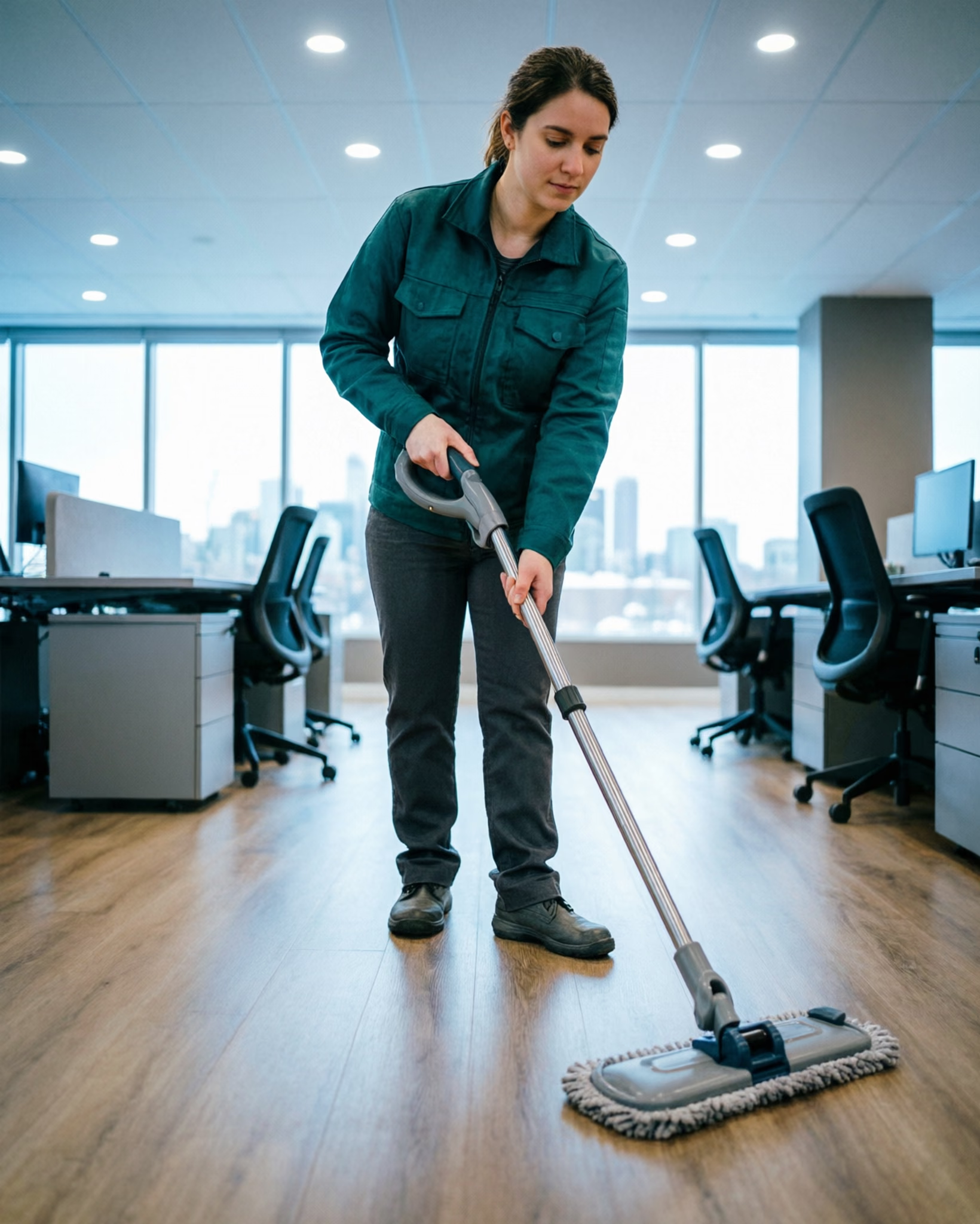
Quick Summary
Becoming a janitor requires more than mopping; it takes knowledge of surfaces and cleaning products, safe equipment handling, and people skills for working across a building. This guide covers the core technical skills, safety knowledge and practical steps for starting out and building experience in the trade.
In this guide
What a Janitor Actually Does Day to Day
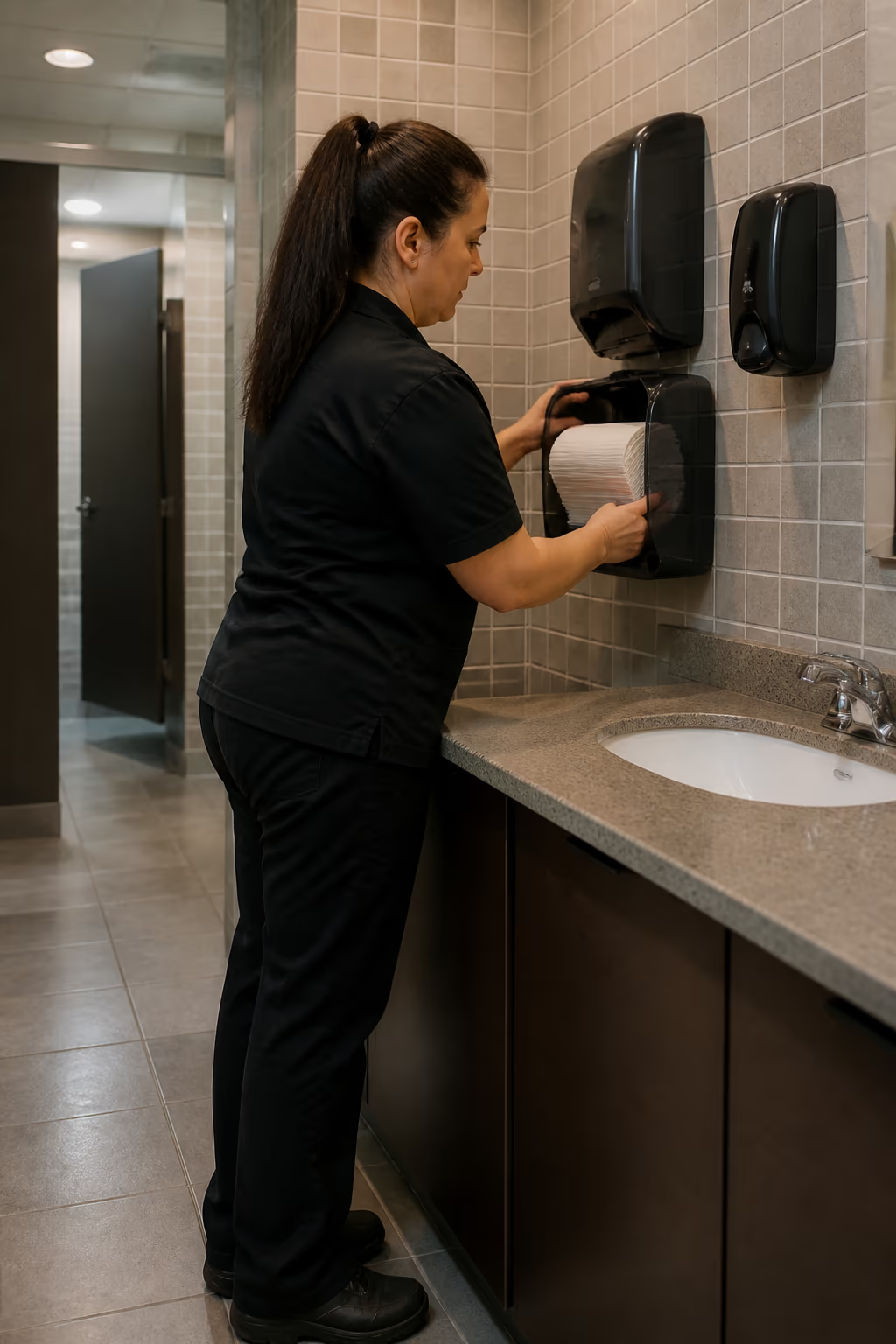
A janitor keeps a building clean, safe and running for the people who use it. The daily work is broader than most people assume, and it changes with the type of building and the time of year.
- 01Cleaning and restocking washrooms, kitchens and break rooms on a dependable schedule.
- 02Emptying bins and keeping waste and recycling under control.
- 03Vacuuming, mopping and caring for hard floors and carpets.
- 04Wiping and disinfecting high-touch points such as doors, taps and counters.
- 05Handling spills and responding to the messes that happen during the day.
- 06Reporting issues that need repair or attention before they become problems.
The job also includes the quieter tasks: ordering supplies, keeping the equipment working and following a documented routine so the standard holds from visit to visit. A janitor is often the person who notices a building's problems first, which makes the role a practical front line for maintenance as well as cleaning.
The work also varies by building. An office, a school, a medical clinic and a retail space each have their own rhythms, standards and priorities, and a janitor who understands the setting knows what to focus on. Learning to read a building and match the work to it is part of becoming a skilled janitor.
The Core Technical Skills
Cleaning is a skill, not just an effort. A janitor who knows how to clean properly gets better results in less time and does less damage along the way.
Some of that knowledge is required by law rather than by preference. Ontario's Occupational Health and Safety Act makes an employer responsible for instructing, informing and supervising workers to protect their health and safety, and defines a competent supervisor as someone qualified by knowledge, training and experience to organize the work. Chemical and equipment competence is the practical shape of that requirement. The province lists the duty in one line: “Instruct, inform and supervise workers to protect their health and safety”.
- 01Working from high to low so falling dust does not land on finished surfaces.
- 02Matching the right product and tool to each surface, so nothing is scratched or stained.
- 03Applying product, letting it dwell and agitating where the build-up needs it.
- 04Using the right technique for different floor types, from polished hard floors to carpet.
- 05Recognising when a stain needs treatment, a mark needs patience and a surface needs a professional.
- 06Working systematically through a space so nothing is missed and nothing is re-done.
These skills are learned on the job and refined with practice. What looks simple from the outside, such as mopping a floor properly, actually takes technique: the right dilution, the right wetness, the right strokes and the right rinse. A janitor who masters these fundamentals can clean more effectively in less time.
There is also an order to good work. Experienced janitors tackle the dirtiest and most time-sensitive tasks early, let products dwell while they move to the next task, and finish with the details that make a space feel genuinely cared for. That flow is a skill in itself, and it is what separates a busy job from an efficient one.
The Tools of the Trade
A janitor works with more than a mop and a bucket. Understanding the equipment is part of the skill set, because the right tool used correctly does better work in less time.
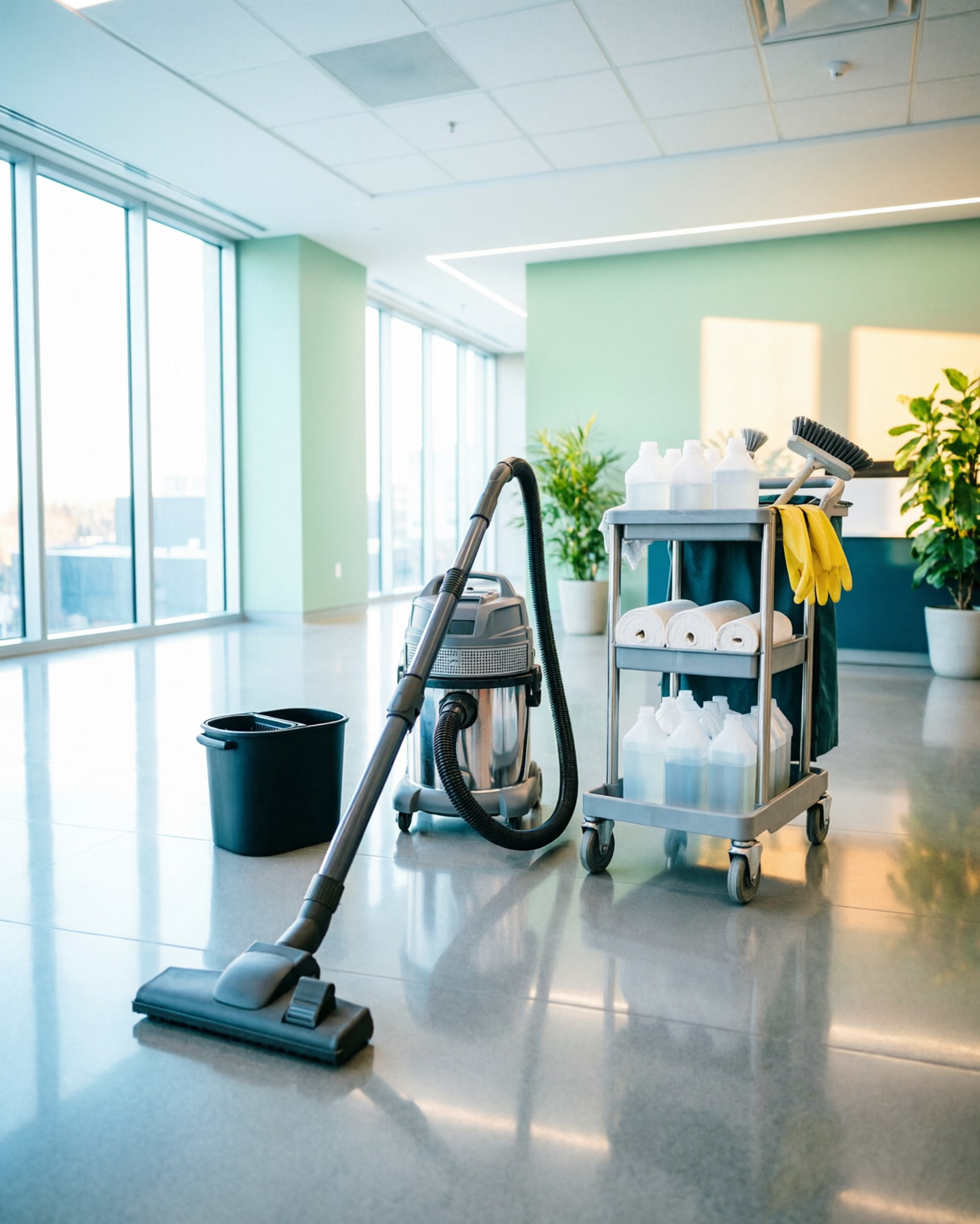
- 01Vacuum cleaners and the different attachments for carpets, edges and upholstery.
- 02Mops, buckets and the flat-mop systems that are common in commercial cleaning.
- 03Floor machines for burnishing, stripping and scrubbing hard floors.
- 04Microfiber cloths and colour-coding that keeps products and surfaces from being crossed.
- 05Carts that organise supplies and tools so a janitor works efficiently.
- 06Signs, barriers and personal protection used to keep people and staff safe.
Knowing how to use and maintain the equipment is as important as owning it. A well-kept vacuum, a clean mop head and a properly maintained floor machine all do better work and last longer, which is why equipment care is part of the job.
Product and Chemical Knowledge
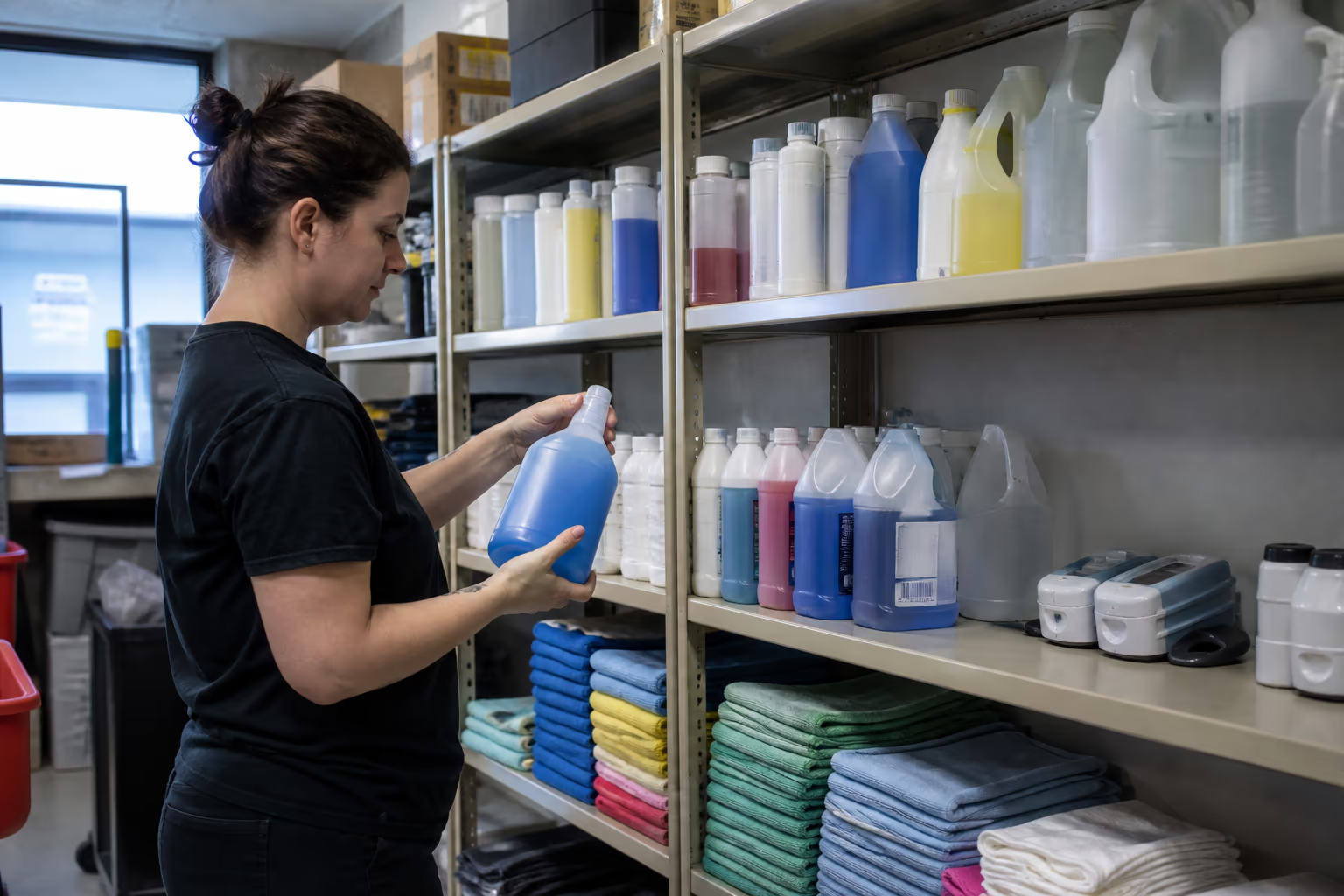
A large part of janitorial work is knowing what you are using. Cleaning products are not interchangeable, and using the wrong one can damage a surface, create fumes or simply not do the job.
A janitor needs to understand the basic categories: general cleaners, degreasers, disinfectants and the specialised products for glass, metal and specific floor types. Knowing which product fits which task, and how to dilute it correctly, is a core part of the job. Stronger is not better; following the label is how products work as intended and stay safe.
Where disinfection is part of the work, the products should carry a Health Canada DIN and be applied according to the label, with the dwell time they need to work. A disinfectant only works when it stays wet on the surface for the time the label specifies, and that detail is exactly the kind of knowledge that separates a professional from a quick wipe.
In Canada, the safe handling of products falls under WHMIS 2015, which sets out how products are labelled and how workers know what they are using. Understanding safety data, the labels on containers and the safe handling steps for each product is part of working properly. It protects the janitor, the people in the building and the surfaces being cleaned.
Eco-friendly options are increasingly part of the picture too. Certified low-fume and EcoLogo-cleaning products are common in Canadian facilities that want effective cleaning with less impact on the people and the environment. Knowing how these products differ, and when they are appropriate, is a useful part of a janitor's knowledge.
The People Skills That Matter
Janitorial work is technical, but it is also deeply human. A janitor works in spaces that belong to other people, often while those people are present, and the way they handle that shapes the whole experience.
Reliability is the foundation. Buildings depend on a routine being done, and a janitor who shows up, does the work and holds the standard is building trust in a way that no skill can replace. Communication matters too, both with the people in the building and with the team or supervisor, so issues are flagged early rather than discovered later.
There is also judgement. A janitor decides what needs immediate attention, what can wait and what should be reported, and those decisions affect the building every day. Knowing how to work around people, when to pause, and how to handle a sensitive space with care is a real part of the skill set.
Discretion and respect round it out. A janitor is trusted with offices, homes and facilities, often including private areas, and handling that trust well is what makes a janitor not just competent but valued.
Flexibility is part of the people side as well. Buildings change, schedules shift and unexpected situations come up, and a janitor who adapts calmly and keeps the standard steady is someone an employer can count on. That reliability under changing conditions is one of the qualities that turns a job into a career.
Safety and Workplace Knowledge
Safety is not a separate part of the job; it is built into it. A janitor works with products, equipment, ladders, wet floors and heavy lifting, and each of these carries risks that are managed with training and care.
- 01Knowing how to handle and store products safely, including understanding WHMIS 2015 labels.
- 02Using equipment properly, from the vacuum to the floor machine, and reporting faults.
- 03Managing wet floors with the right signage so people are not hurt.
- 04Lifting and moving objects with safe technique to avoid injury.
- 05Knowing what to do in an emergency, from a spill to a safety incident.
- 06Working within the building's safety rules and the employer's documented procedures.
The workplace knowledge also includes the practical stuff that keeps a building running: knowing where the supplies are, how the equipment is maintained and what the routine expects. A janitor who works safely protects themselves, the people in the building and the employer.
Working in Different Types of Buildings
The skills transfer across buildings, but each setting brings its own demands, and a janitor who adapts well is more valuable.
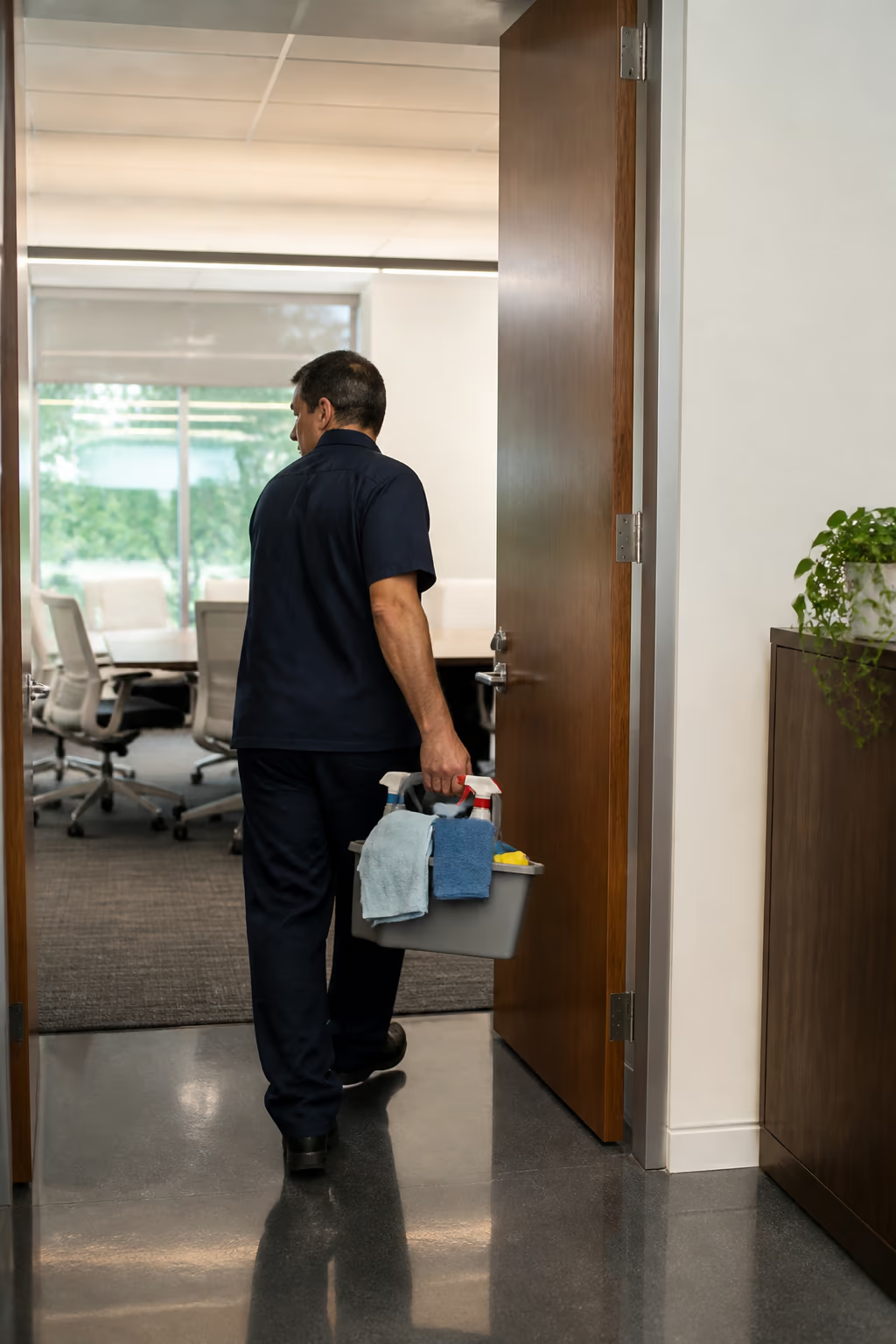
- 01Offices need a dependable routine that keeps shared spaces and washrooms at a professional standard.
- 02Schools need flexibility, safety awareness and an eye for the messes that large groups leave behind.
- 03Medical buildings need a careful approach to hygiene and a focus on the surfaces that matter for infection control.
- 04Retail spaces need speed, visibility and an ability to work around customers and hours of operation.
- 05Industrial and facility spaces bring their own equipment, floors and hazards to manage.
The point is not to learn one building perfectly; it is to learn how to read a space and adjust. A janitor who understands what a building needs, and matches the work to it, becomes someone a facility can rely on. Many businesses that manage their own front-of-house staff still turn to dedicated office cleaning services Ottawa providers to keep shared spaces consistently maintained between in-house shifts.
Starting Out and Building Experience
No one starts out knowing everything, and the good news is that most of the skills are learned on the job. The usual path begins with entry-level work where a janitor learns the fundamentals, builds speed and technique, and earns the trust that leads to more responsibility. Many new janitors get this start by joining an established janitorial services provider in Ottawa, where the training, equipment and building variety are already in place.
Experience is the real teacher. The more buildings and situations a janitor works in, the more surfaces, products and challenges they know how to handle. Working across different types of facilities, from offices to schools to medical buildings, builds a breadth of knowledge that makes a janitor more capable and more valued.
Certification and training matter too. Training in WHMIS 2015, basic first aid and the specific products and equipment in use are practical assets, and many employers support their staff in building these. A janitor who keeps learning is a janitor who keeps improving.
Practical advice also helps. New janitors learn quickly by paying attention to how experienced staff organise their day, asking questions about products and surfaces, and keeping a simple system so nothing is forgotten. Small habits like a written checklist, a consistent order of work and a clean, organised cart make a new janitor noticeably more effective within the first few weeks.
Common Mistakes and How to Avoid Them
A few common mistakes trip up janitors early in their careers.
- 01Using products without checking the surface, the label or the correct dilution.
- 02Rushing the job so surfaces are wiped but not properly cleaned.
- 03Missing the high-touch points and the small details that define a good clean.
- 04Handling products unsafely and skipping the personal protection the label calls for.
- 05Ignoring a problem in the building instead of reporting it.
- 06Stopping the learning once the basics are mastered.
The most useful habit is care: care for the surfaces, the products, the people and the building. A janitor who works with care builds the trust and the skill that a good career is made of.
Formatted Step-by-Step Checklist for Becoming a Janitor
Use this checklist to build the skills and knowledge the work requires.
- Step 1.Master the fundamentals:surfaces, techniques and working systematically through a space.
- Step 2.Learn the products and chemicals you use, including correct dilution and WHMIS 2015 handling.
- Step 3.Build safety habits:equipment, wet floors, lifting and the building's documented procedures.
- Step 4.Earn trust with reliability, communication and discretion in the spaces you are given.
- Step 5.Keep learning through experience, training and the variety of buildings you work in.
FAQ
Do I need experience to become a janitor?
Not necessarily. Most janitorial roles are entry level and provide on-the-job training, so the important thing is reliability and a willingness to learn. Experience helps and builds quickly, but it is not the gate that many people expect.
What qualifications do I need to work as a janitor in Canada?
There is no single licence for most janitorial work, but practical training matters. WHMIS 2015 training, basic first aid and training on the specific products and equipment you use are the usual building blocks, and many employers provide or support this training.
Is janitorial work physically demanding?
It involves standing, walking, lifting, bending and working with equipment, so a reasonable level of physical fitness helps. Safe technique, the right equipment and good habits reduce the strain, which is why safety knowledge is such an important part of the job.
What is the difference between a janitor and a housekeeper?
There is a lot of overlap, but the roles are usually framed differently. Janitorial work tends to focus on commercial buildings, public spaces and maintenance-related tasks, while housekeeping leans toward the ongoing care of homes, hotels or similar settings. Many skills carry across both.
How can I tell if a janitorial employer takes training seriously?
Ask about the training they provide, the products and equipment they use and how new staff are brought up to speed. If you are comparing companies, our guide to choosing a commercial cleaning company is a useful starting point for the questions that matter.
What surfaces and products should a new janitor learn first?
Start with the everyday ones: general cleaners, glass cleaner, degreasers and disinfectants, and the hard floors and washroom surfaces you will work with most. Mastering those basics well is more useful than a shallow familiarity with many products.
Is janitorial work a stable career?
For many people, yes. Buildings always need cleaning, and a dependable janitor who works safely and well is valuable in any market. The skills transfer across buildings and employers, which makes the role a solid base for a working life.
Do janitors need to be certified in disinfection?
Not by a single national certificate, but the knowledge matters. Where disinfection is part of the work, understanding Health Canada DIN products and applying them according to the label, including dwell time, is essential. Employers train staff in the standards they expect.
How much does a janitor earn?
Pay varies by market, experience and the type of building, so there is no single number that fits everyone. It is worth comparing roles and asking about the full picture, including training, hours and opportunities to grow, rather than focusing on the hourly rate alone.
What makes a janitor a good hire?
Reliability, a willingness to learn and attention to detail matter most. Many employers would rather train a dependable person who cares about the work than someone with experience who is not reliable. Showing up, doing the job well and communicating are the qualities that build a career.
Can I move up from a janitorial role over time?
Yes. Janitors who work safely, learn the trade and show reliability are often the first considered for supervisor roles, specialised work and more responsible positions. Building a reputation for dependable work is the most direct path forward in this industry.
Wrapping Up
Becoming a janitor is about building a real set of skills: the technical fundamentals, the product knowledge, the safety habits and the people skills that make the work dependable and valued. None of it requires starting out knowing everything, and most of it is learned with experience and care. The people who do well are the ones who stay curious, work safely and take pride in keeping a building clean and running. If you are looking for a team that trains its people properly, contact Good Cleaner Co. to learn how we build and support our janitorial teams.
Keep reading
More from Good Cleaner
Services that fit
- Janitorial Services in OttawaRecurring janitorial services for offices, warehouses, retail, dealerships and schools in Ottawa, built around trained, background-checked people and eco-friendly commercial cleaning.
- Commercial Office Cleaning Services in OttawaRecurring office cleaning services in Ottawa for corporate offices, clinics and professional suites, with after-hours scheduling, trained staff and a written quality standard.
About the author
Service areas
- Ottawa
- Kanata
- Nepean
- Orléans
- Barrhaven