
10 Critical Medical Office Cleaning Requirements In Canada
A medical office is not an ordinary workplace. The people who walk through its doors are often already unwell, some with weakened immune systems, and the surfaces in the waiting room are touched by everyone who visits. That is why medical office cleaning follows a higher standard, one built on infection control, careful product selection, and a documented routine. This guide covers the critical medical office cleaning requirements in Canada, from infection control basics to the practical steps a cleaning team follows.
Quick Summary
Medical office cleaning follows a higher standard than ordinary workplaces because vulnerable patients and heavily touched surfaces raise infection control stakes. Ten Canadian requirements, from IPAC-based infection control and proper disinfectant dwell time to WHMIS chemical training and documented deep-cleaning schedules, keep clinics safe and trustworthy.
In this guide
Why Medical Office Cleaning Has Higher Stakes
The stakes are higher because the people are more vulnerable. A waiting room may hold a parent with a sick child, an older patient with a chronic condition, or someone whose treatment has made them more susceptible to infection. In that setting, a surface that is only wiped with a dry cloth can carry germs from one patient to the next. Infection control is not a luxury in a medical office; it is the point of the job.
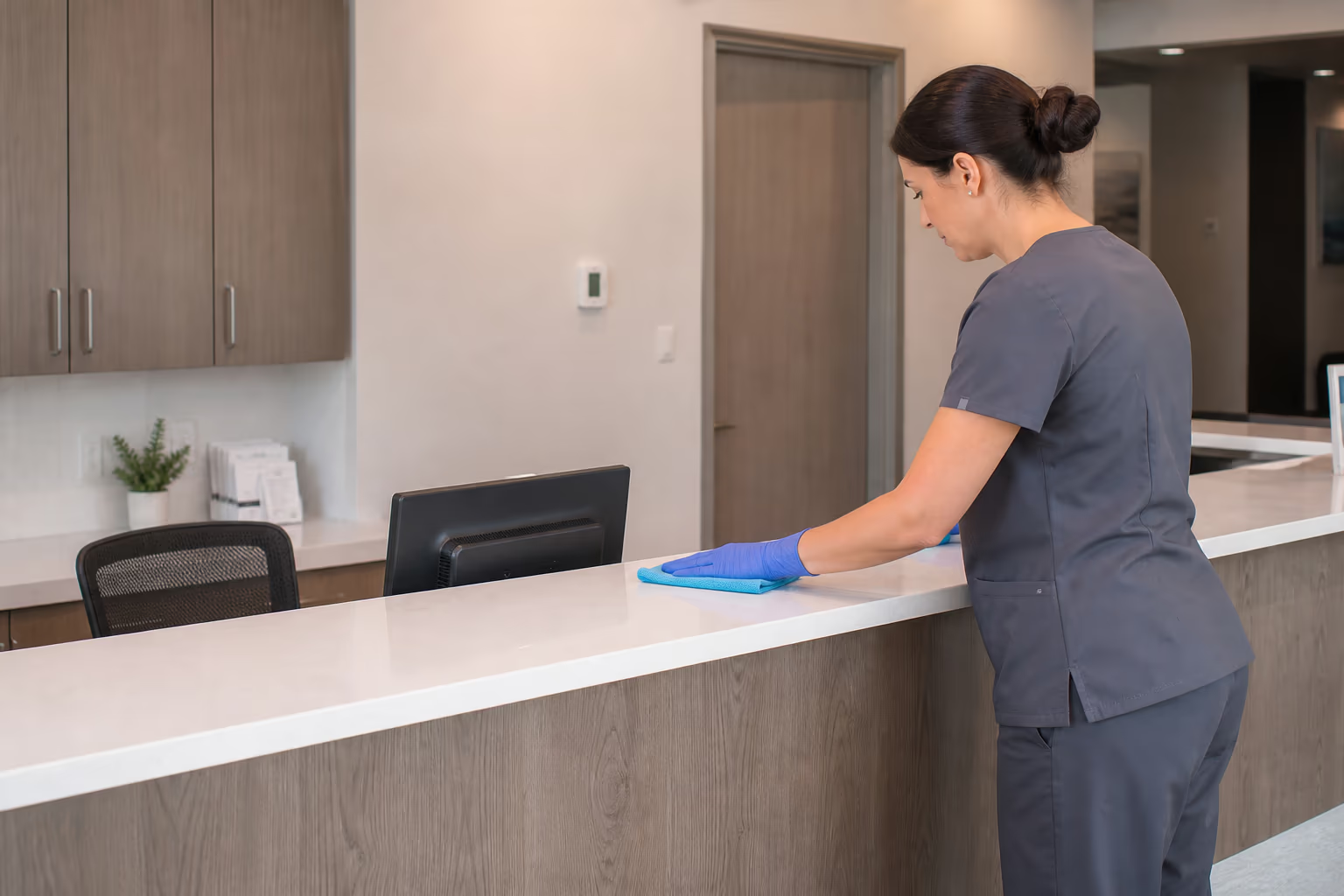
The rooms themselves push the same message. Exam tables, door handles, light switches, counters, and the washroom are touched by patients and staff throughout the day, and each touch is a chance for something to transfer. Good cleaning reduces those surfaces to a state where they do not pass illness along. That is why a medical office needs a plan, not just a habit.
There is also a practical and professional reason. A medical office that is visibly unclean loses the confidence of its patients, and a clinic that cannot keep its own environment clean struggles to be trusted with anyone's care. Following a documented infection control routine protects patients, protects staff, and protects the reputation of the practice. The same reputation logic applies to office cleaning in Ottawa generally, though a medical office carries the added weight of patient safety on top of appearances.
The 10 Critical Medical Office Cleaning Requirements
Ten requirements cover the essentials of medical office cleaning in Canada. They are meant to work together, and each one supports the others.
- 1.Follow an infection control plan based on recognized principles. Build the routine around the infection prevention and control practices used in Canadian healthcare, such as those reflected in IPAC guidance and provincial standards.
- 2.Clean before you disinfect. Remove visible soil from a surface first, because disinfectants work on a clean surface and are less effective when dirt is in the way.
- 3.Use disinfectants that are approved for the intended use and apply them as directed. Choose products that are licensed for the claims they make, and read the label for the surfaces they can be used on.
- 4.Respect the dwell time. A disinfectant needs to stay wet on the surface for the time stated on the label to do its job, so let it sit rather than wiping it away immediately.
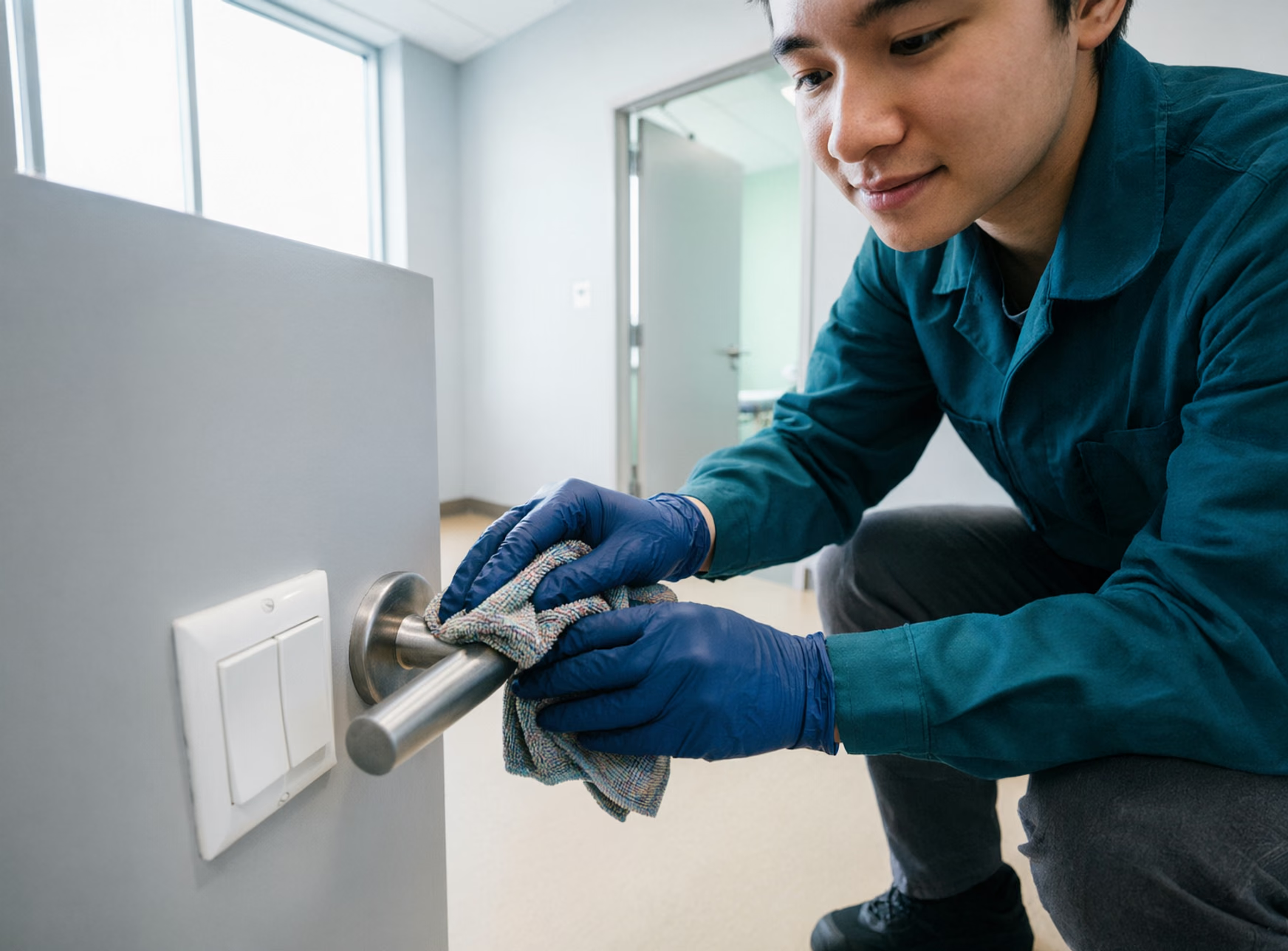
- 5.Pay attention to high-touch surfaces. Door handles, counters, light switches, chairs, and the washroom fixtures are touched constantly, and they need more frequent attention than the surfaces people rarely touch.
- 6.Keep cleaning tools and supplies separate. Use a colour-coded system so the tools used in washrooms and clinical areas never cross over to clean zones.
- 7.Manage medical waste correctly. Follow the regulations that apply in your province for medical waste, sharps, and any potentially infectious material, and make sure disposal is handled properly.
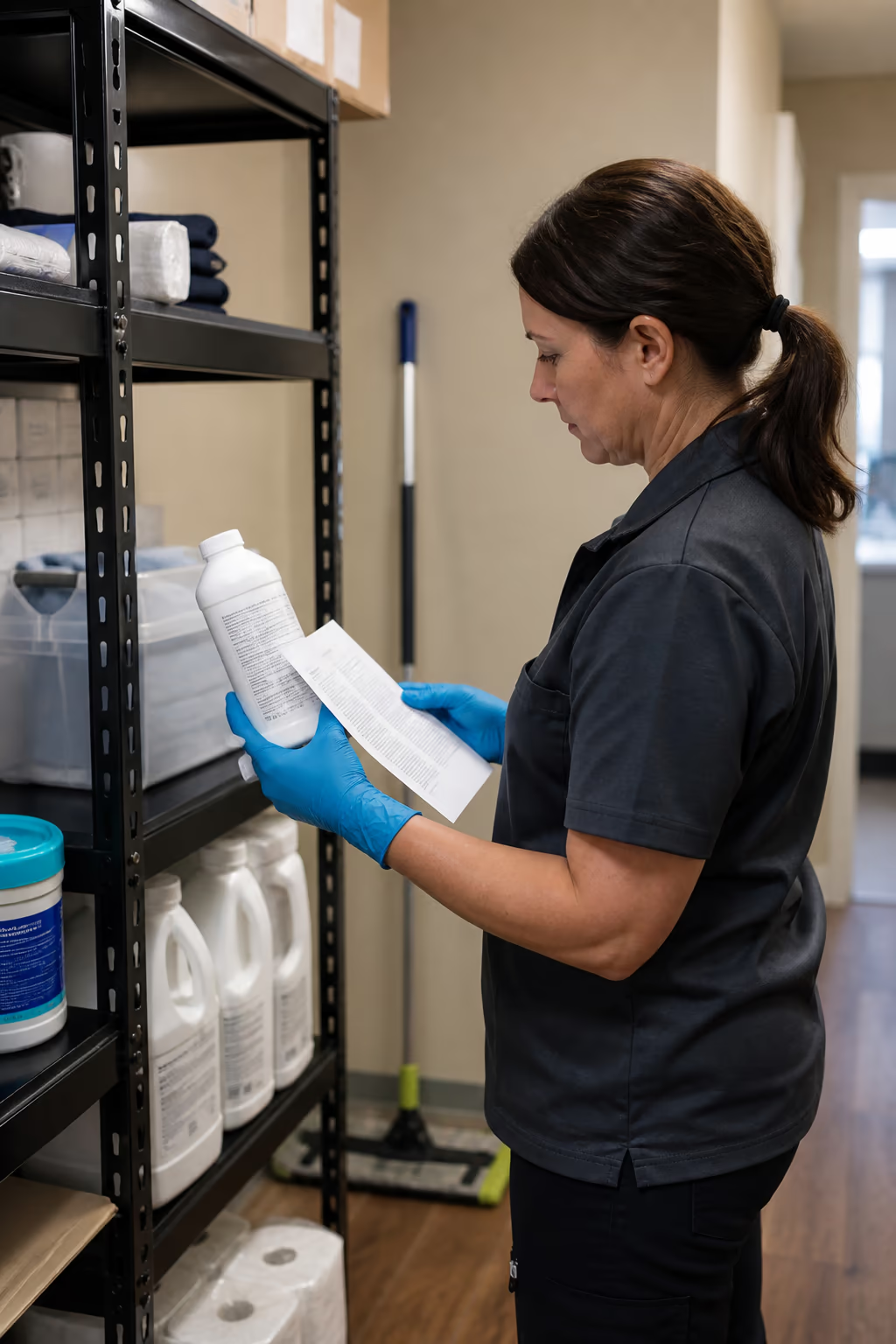
- 8.Train staff on safe chemical handling. Under WHMIS 2015, workers must understand the labels, safety data sheets, and correct handling of the products they use.
- 9.Use appropriate personal protective equipment. Gloves and other protective gear should be worn where the task calls for them, and changed or discarded as directed.
- 10.Document the routine and schedule deep cleaning. Keep a record of what was cleaned and when, and schedule periodic deep or terminal cleaning for the spaces that need a full reset.
Together, these requirements turn a cleaning task into an infection control routine. Each step depends on the others: a great disinfectant is wasted on a dirty surface, and a great routine is wasted if the waste is not handled correctly.
Cleaning, Sanitizing, and Disinfecting: What Each Means
The words are often used as if they mean the same thing, but in a medical office the difference matters. Cleaning removes dirt, dust, and soil from a surface using a detergent or soap and water. Sanitizing reduces the number of germs on a surface to a safer level. Disinfecting destroys a broader range of germs, which is why disinfecting is the standard for many surfaces in a healthcare setting.
The practical sequence is clean, then disinfect. A disinfectant applied to a visibly dirty surface has to work around the soil, and it may not reach the germs underneath. When a surface is cleaned first, the disinfectant can contact the surface directly and do what the label promises. That order is one of the most important habits in medical office cleaning.
Dwell time, also called contact time, is the amount of time a disinfectant must stay wet on a surface to reach its stated effectiveness. It is printed on the product label, and it varies from product to product and from one claim to another. The practical takeaway is simple: follow the label, and do not rush the product off the surface before the time has passed. For high-touch surfaces, that pause is part of the job.
Different areas of the office call for different levels of care. A washroom and an exam room usually need disinfecting on a regular basis, while some public areas may be kept with cleaning and sanitizing. The plan should match the level of care to the risk, which is exactly what an infection control routine is designed to do.
Products, Chemical Safety, and the People Who Use Them
Product selection in a medical office is not a casual choice. Disinfectants that make infection-control claims in Canada must be licensed for those claims, and a disinfectant carries a DIN when it is approved as a drug in the disinfection sense. The label tells you the intended use, the surfaces it can be applied to, and the dwell time required. The rule is to choose a product suited to the surface and the job, and to use it as directed, rather than reaching for the strongest bottle in the cupboard.
Chemical safety is part of the requirement. Under WHMIS 2015, every worker who handles a cleaning chemical must have access to the safety data sheet and understand the label, including any hazard symbols and precautions. A professional cleaning company trains its staff on the products they use, correct dilution, and safe handling, and it keeps the paperwork that goes with the products available to the people who need it.
Choosing lower-fume or certified products, such as those carrying an EcoLogo or a similar third-party mark, helps keep the air in the office comfortable for patients and staff. Many cleaning teams also use colour-coded microfibre systems, so the cloth used on the toilet is never the cloth used on the counter. These details feel small, but they are the difference between a cleaning company that knows the setting and one that is just wiping down surfaces.
Storage is part of the same discipline. Cleaning chemicals should be stored according to the manufacturer's guidance, out of the reach of patients, and clearly labelled, with products that must not be mixed kept apart. Correct storage protects everyone who handles the supplies and keeps the products ready to use when the routine calls for them.
Waste Handling and Spill Response
A medical office produces waste that needs to be handled with care. Sharps, medical waste, and any material that could carry infection are not household trash, and disposal must follow the regulations that apply in your province. A cleaning company that works in medical settings understands how waste is segregated, labelled, and removed, and it never treats medical waste like an ordinary bin.
Spills are a test of the routine. A blood or body fluid spill calls for a defined response: contain the spill, clean it, disinfect the area with a product suited to the task, and handle any waste and PPE according to the same rules that govern the rest of the office. Spill kits and clear staff training make the difference between a contained incident and one that spreads.
The same discipline applies to the cleaning tools themselves. Cloths, mops, and buckets used in a clinical area should be cleaned and dried after use, and tools dedicated to washrooms should stay in that zone. A routine that separates the tools protects the spaces that need to stay clean from the ones that are most likely to carry germs.
Scheduling and Documentation
A medical office cleaning plan is only as good as the schedule behind it. High-touch surfaces and the washrooms need frequent attention, usually daily and often several times a day during busy periods. The exam rooms are cleaned between patients as needed, the floors are kept on a regular cycle, and the deeper tasks, such as vents, fixtures, and a full reset of the rooms, are scheduled less often.
Scheduling sits inside employment law as well as clinical practice. Ontario's rules on hours of work limit most employees to eight hours a day and 48 hours a week unless a written or electronic agreement is in place, which affects how terminal cleans and daily passes are staffed. The provincial guide states the daily limit: “The maximum number of hours most employees can be required to work in a day is eight hours or the number of hours in an established regular workday, if it is longer than eight hours.”
Documentation is part of the standard. A checklist or log that records what was cleaned and when gives the office a way to see that the routine is actually being followed, and it gives the cleaning team a shared expectation. When something is missed, the record makes it visible and easy to correct. That is how a good routine stays good instead of slowly drifting.
Quality checks complete the loop. A regular inspection of the office against the cleaning checklist catches the details that slip, and a way for the clinic to raise a concern means the standard can be corrected quickly. For Good Cleaner Co., the medical office plan is built on this kind of structure: documented, scheduled, and reviewed, so the routine holds up under real clinic traffic.
Flexibility matters in a clinic because the schedule is not a set of fixed moments. A morning rush, a booked-out afternoon, and a quiet evening each change what the office needs, and a cleaning plan that can flex with the clinic's rhythm keeps the standard consistent instead of pretending that every day looks the same.
When to Use a Professional Medical Office Cleaning Team
Some clinics keep cleaning in-house, and others bring in a team that specialises in medical settings. The advantage of a professional team is training and consistency: staff who understand infection control principles, who are background-checked, and who follow a documented process rather than improvising from memory. A professional team also brings the equipment and the product knowledge that a busy clinic may not have in-house. That level of training is different from what a standard Ottawa home cleaning services visit provides, since a clinic needs infection control rather than a general tidy-up.
Costs vary by the size of the office, the frequency of cleaning, and the scope of the work, so there is no single number that applies to every clinic. What matters is an itemised quote for the tasks you need, a clear description of the infection control steps that are included, and a provider that can show how it trains its staff. If you are comparing providers, our guide to comparing commercial cleaners is a useful starting point for the questions that matter, from infection control training to quality checks. A cleaning partner that understands medical offices is a partner that helps you protect your patients. The general factors that determine office cleaning cost, such as square footage and frequency, apply here too, layered on top of the extra infection control steps a clinic requires.
Formatted Step-by-Step Medical Office Cleaning Checklist
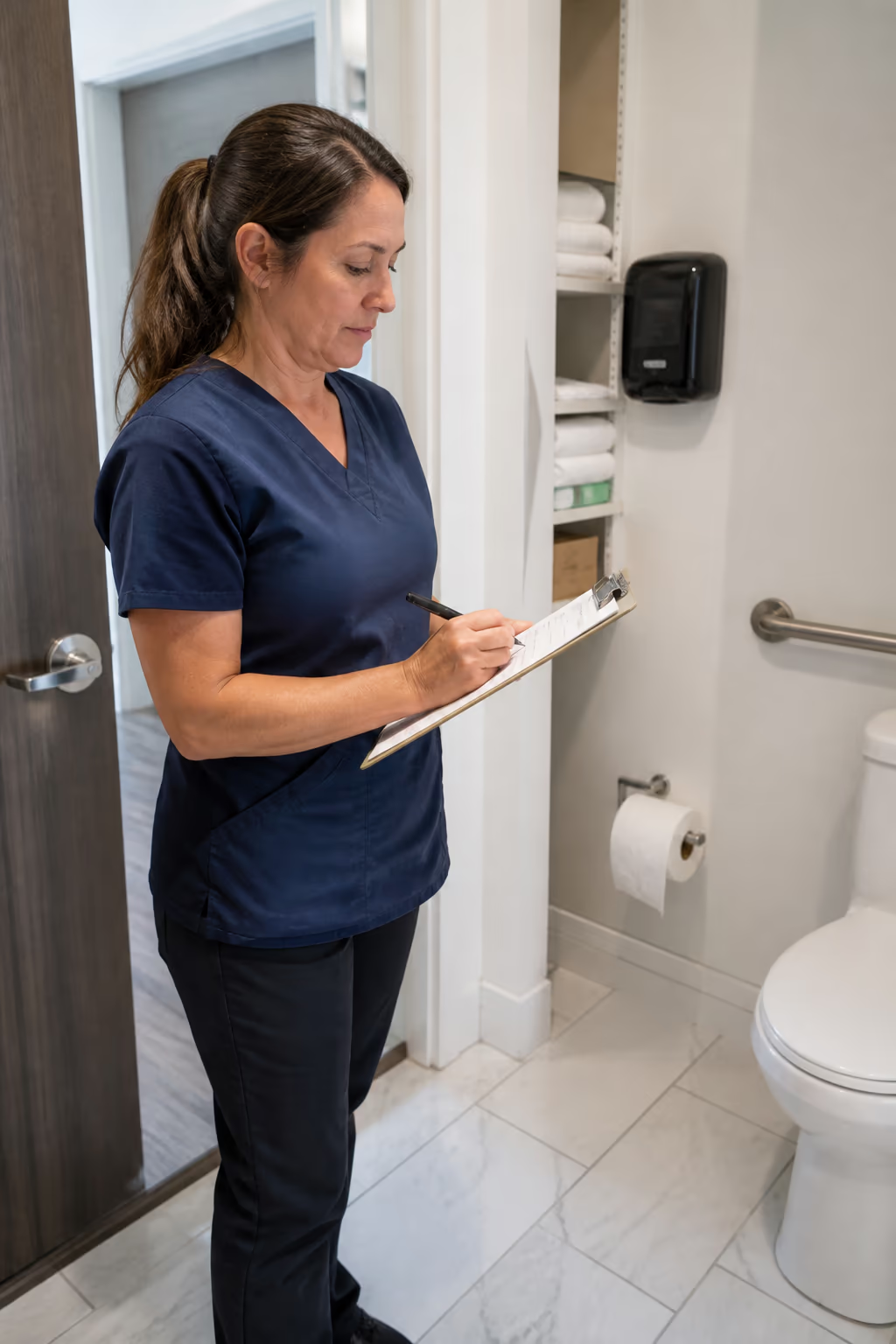
A regular medical office clean follows a clear sequence. Use this five-step checklist for a routine pass through an exam room, waiting area, or washroom.
- 1.Clear and prepare the room. Remove waste, empty the bins, and gather the tools and products you need, including any personal protective equipment the task calls for.
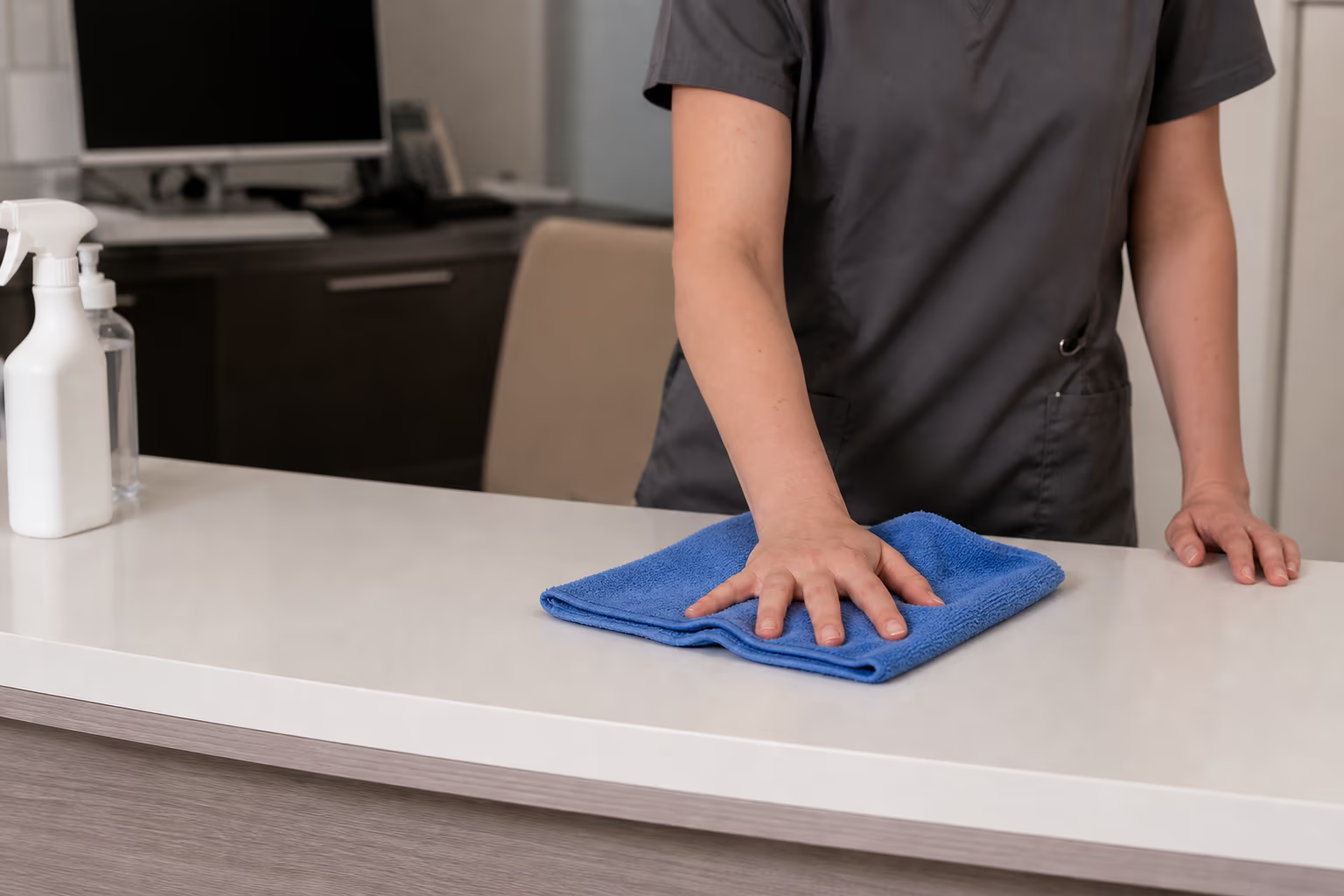
- 2.Clean high-touch surfaces first. Wipe counters, door handles, light switches, and the surfaces patients touch, using a product that removes soil from the surface.
- 3.Apply disinfectant and respect the dwell time. Follow the label for the right product, the right surfaces, and the time it must stay wet, then let it work.
- 4.Clean the washroom with dedicated tools. Use the colour-coded cloths and products kept for that zone, and keep them separate from the rest of the office.
- 5.Restock, remove waste, and document. Replace supplies such as soap and paper towel, remove waste according to the rules that apply, and note the clean in the log.
- 6.For clinics that want this standard kept every day, our professional office cleaning teams in Ottawa provide trained teams, documented routines, and a plan built around your practice.
FAQ
What is the difference between cleaning, sanitizing, and disinfecting a medical office?
Cleaning removes dirt and soil with a detergent, sanitizing lowers the number of germs to a safer level, and disinfecting destroys a broader range of germs. In a medical office, surfaces are usually cleaned first and then disinfected where the risk calls for it.
How often should a medical office be cleaned?
It depends on the office and the traffic. High-touch surfaces and washrooms typically need daily attention, often several times during busy periods, while exam rooms are cleaned between patients as needed and deeper tasks are scheduled weekly or periodically. A written plan keeps the frequency consistent.
What disinfectant should I use in a medical office?
Choose a product that is licensed for the intended use and suited to the surfaces you are cleaning, and apply it as the label directs. Check the label for the surfaces it can be used on and the dwell time it needs, and use it after cleaning the surface.
What is dwell time and why does it matter?
Dwell time, or contact time, is how long a disinfectant must stay wet on a surface to reach its stated effectiveness. It is printed on the label and differs by product. Rushing the product off the surface before the time passes means the job is not finished.
Are medical office cleaning products safe for patients?
Used correctly, approved products are safe for the spaces they are meant for. The key is to follow the label, apply the right product to the right surface, allow it to do its job, and keep the office ventilated where the product calls for it. Rinsing or drying as directed completes the safe use.
Do cleaners need special training for medical offices?
Yes, and that training is part of what a professional medical cleaning team provides. Staff need to understand infection control principles, safe handling of chemicals under WHMIS 2015, the correct use of disinfectants and dwell times, and how medical waste is handled.
How is medical waste handled during cleaning?
Medical waste, sharps, and potentially infectious material are segregated, labelled, and removed according to the regulations that apply in the province. A medical cleaning team treats these items separately from ordinary waste and follows the same rules for any PPE used to handle them.
When should I hire a professional medical office cleaning team?
Consider professional help when you want the consistency of a documented infection control routine, when the office is busy and hard to keep up with in-house, or when you want staff who are specifically trained for healthcare settings. A clear scope and an itemised quote help set expectations.
Wrapping Up
Medical office cleaning in Canada comes down to a plan: clean before you disinfect, follow the labels and the dwell times, keep the tools and the waste separate, and document the routine so it holds up under real clinic traffic. The ten requirements work together to protect patients, staff, and the reputation of the practice. When the standard is more than your team can carry, a professional cleaning partner who understands medical settings can keep it on track. Contact Good Cleaner Co. for a free quote and a cleaning plan built around your practice and your schedule.
Keep reading
More from Good Cleaner
Services that fit
- Professional Office Cleaning Services in OttawaOffice cleaning services in Ottawa for corporate offices, clinics and professional suites. After-hours scheduling, eco-friendly products and a free quote.
- Janitorial Services in OttawaRecurring janitorial services for offices, warehouses, retail, dealerships and schools, with eco-friendly commercial cleaning and customized plans.
About the author
Service areas
- Ottawa
- Kanata
- Nepean
- Orléans
- Barrhaven