
Can I Disinfect an Entire Office Using Regular Disinfectant? DIN & Dwell Time Guide
It is a common thought during cold and flu season: grab a few bottles of household disinfectant, walk around the office, and spray everything down. The intent is good, but the reality is that disinfecting an entire office takes more than a trigger bottle and good intentions. Surfaces need to be cleaned first, the disinfectant needs to stay wet long enough to work, and the product needs the right approval for the job. This guide walks through what actually goes into office-wide disinfection and how to get it right.
Quick Summary
Retail household disinfectant sprays have their place, but disinfecting a whole office with them is slow, expensive, and easy to get wrong. This guide explains why a commercial approach matters, what a Health Canada DIN really means, how dwell time works, and when a professional office cleaning service in Ottawa is the smarter call.
In this guide
Why Household Disinfectant Falls Short for a Whole Office
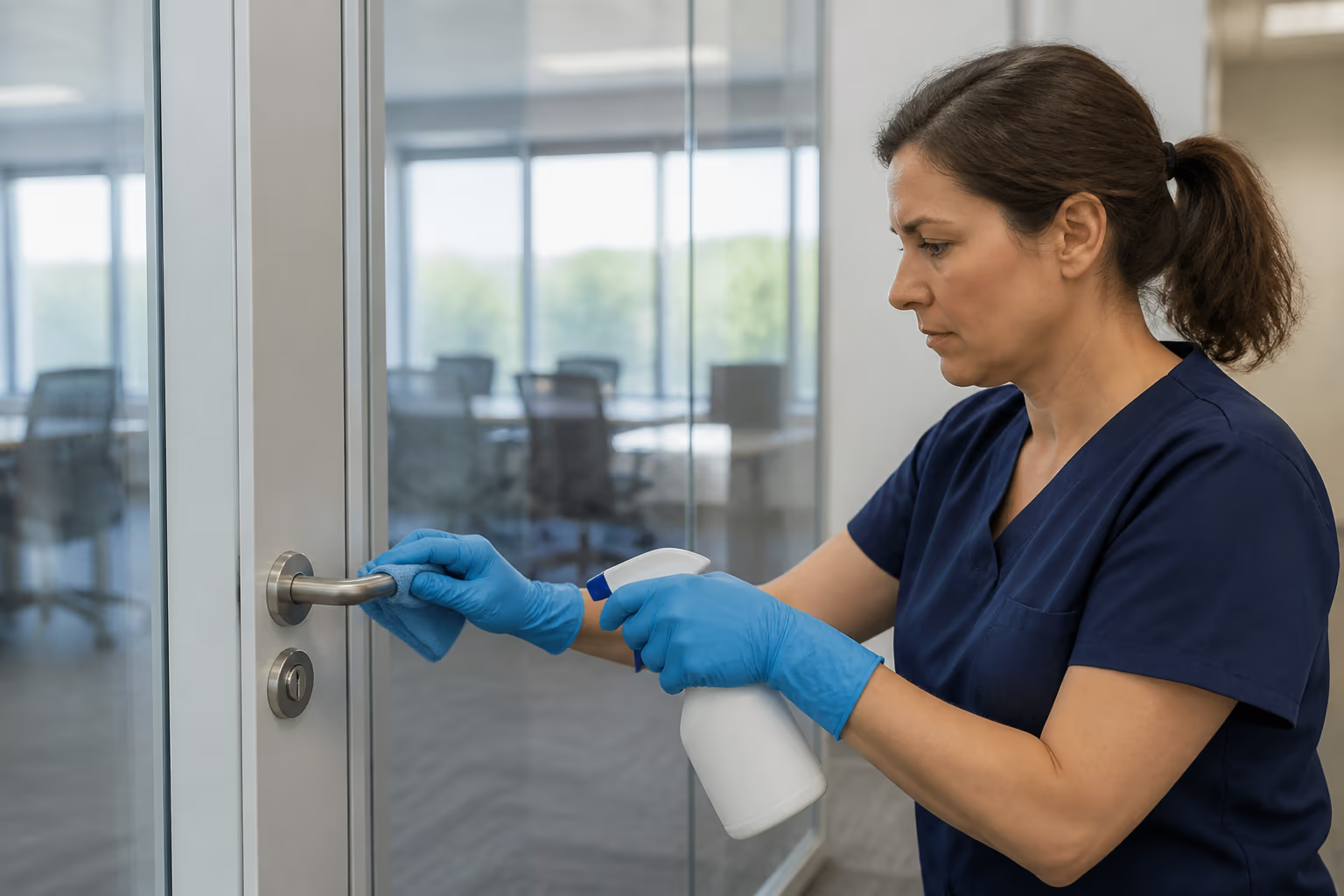
Household disinfectant sprays work well for spot cleaning, which is exactly what they are designed for. Wiping down a kitchen counter or a light switch at home is a reasonable use. Applying that same product across hundreds of workstations, meeting-room tables, door handles, and light switches is a different challenge entirely.
The first problem is time. Most retail disinfectants need to stay visibly wet on a surface for several minutes to meet their label claim. Keeping a surface wet for that long across an entire office, while people are trying to work, is not realistic. The product dries out, the dwell time is not met, and the disinfection never really happens.
The second problem is coverage. A spray bottle delivers an uneven mist and makes it easy to miss the spots people actually touch, like the undersides of desk edges, keyboard gaps, and door push bars. A professional team using the right equipment can cover those surfaces consistently.
The third problem is cost. Buying enough household product to treat a large office, plus the labour to apply it correctly, quickly adds up to more than a professional service that does it right the first time.
What a Health Canada DIN Actually Means
In Canada, a product that claims to disinfect must carry a Drug Identification Number, or DIN, issued by Health Canada. That number is not a decoration; it means Health Canada reviewed the product's formulation and the scientific evidence behind the label claims before it could be sold for that purpose.
The definition is worth quoting precisely. Health Canada's drug identification number is a computer-generated eight-digit number assigned before a product can be marketed in Canada, printed on the label, and it tells the user the product has passed a review of its formulation, labelling and instructions for use. Health Canada is blunt about what its absence means: “A drug product sold in Canada without a DIN is not in compliance with Canadian law.”
When you see a DIN on a disinfectant label, you know the claim has been assessed. When a product does not have a DIN, it may clean and sanitize, but it is not approved to make disinfection claims in Canada.
For an office, using DIN-registered products matters because it gives you documented assurance that the product is doing what the label says. That documentation is also important if you need to show cleaning logs to a landlord, a regulator, or your own staff.
Why Dwell Time Matters More Than People Think
Every disinfectant label includes a contact time, which is how long the surface needs to stay visibly wet for the product to work. It is usually printed in small text on the back of the bottle, and it is the step most people skip.
If the product needs two minutes of contact and you wipe it away after ten seconds, you have not disinfected the surface; you have only cleaned it. The germs that the product was supposed to kill are still there.
This is the heart of the problem with spraying a whole office by hand. It is genuinely hard to keep thousands of touchpoints wet for the full label time while working around people and furniture. A professional crew plans for dwell time, works in a sequence that keeps surfaces wet, and records what was done.
Cleaning Before Disinfecting: The Order That Matters
Disinfectants do not work well on dirty surfaces. Organic matter such as dust, food residue, and skin oils can shield germs from the disinfectant, which is why the cleaning step comes first.
The right sequence is always the same: clean the surface with a detergent or multi-surface cleaner to remove soil, then apply the disinfectant and let it sit for the required contact time, then let it dry. Trying to combine the two, or skipping the cleaning step, leaves results that look fine but are not.
For most offices, that means the nightly routine includes both steps. Surfaces are cleaned and then disinfected, with special attention to the high-touch points that everyone shares.
Better Tools for Large Spaces: Electrostatic Spraying and Fogging
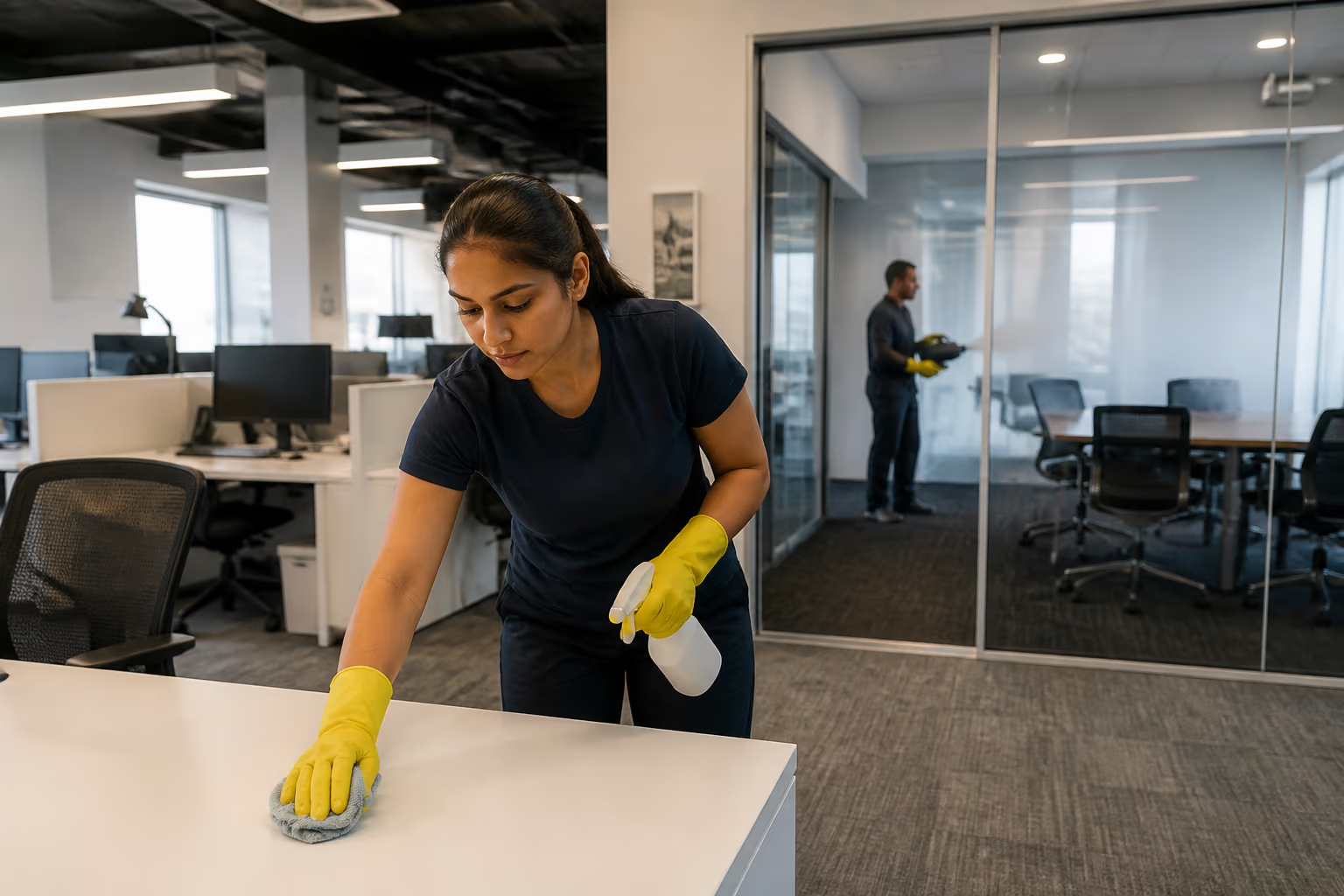
For large offices, professionals have access to equipment that changes the math. Electrostatic sprayers give the disinfectant a positive charge, so the droplets wrap around surfaces and coat the sides and undersides of objects instead of just the front face. Cold fogging machines turn a disinfectant into a fine mist that settles over a whole room.
These tools still require the same fundamentals: the surface must be cleaned first, the product must carry the right approval, and the dwell time must be respected. What they add is coverage and speed, which is what makes office-wide disinfection practical in the first place.
Whichever method you use, the fundamentals do not change. The product must be approved for the surface, the surface must be clean, and the dwell time must be respected. Equipment simply makes it possible to do all of that at the scale of a whole office, which is what turns a good idea into a practical routine.
It is also worth remembering that disinfectant is only part of the picture. Regular handwashing, good ventilation, and staying home when sick all do more to reduce the spread of illness in an office than any single spray.
Before you hire a vendor, our commercial cleaning company evaluation guide walks through the questions to ask about products, training, and quality control.
Building a Year-Round Disinfection Routine
Disinfection works best when it is part of a regular routine rather than an emergency response. A simple, repeatable schedule keeps high-touch surfaces in good shape and makes a full-office pass easier when flu season arrives.
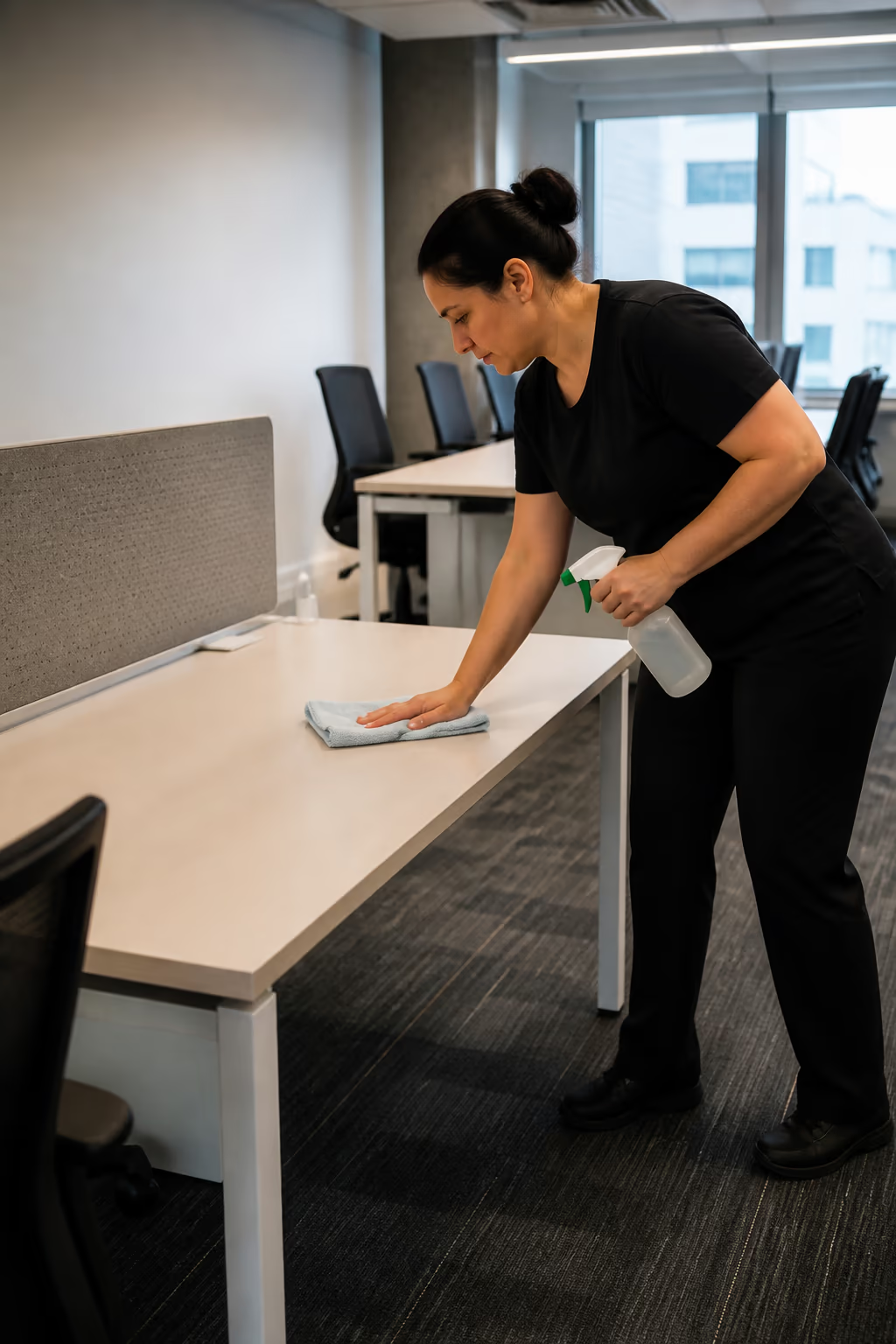
For most offices, that means a daily routine for the surfaces everyone touches: door handles, light switches, shared keyboards, elevator buttons, and the push bars on washroom doors. A nightly clean-and-disinfect pass by the janitorial team covers the whole floor while the office is empty.
Weekly, add the deeper touchpoints that are easy to miss, such as meeting-room tables, conference phones, fridge handles, and shared kitchen counters. Monthly or seasonally, consider a full-office disinfection pass that includes walls, cubicle panels, and other larger surfaces. Carpeted areas usually follow a separate schedule, and our carpet cleaning price Ottawa guide breaks down typical rates if you want to budget for that separately.
Documenting the routine is just as important as doing it. A simple log that records what was cleaned, when, and with which product gives you a paper trail for audits, lease requirements, and staff peace of mind.
Choosing the right frequency comes down to how your office is used. A busy call centre or a clinic with many visitors may need nightly disinfection, while a low-traffic back office might be fine with a thorough pass a few times a week. Start with the obvious high-touch surfaces, then adjust based on what you see and what your team reports. If you need a single deep reset rather than an ongoing contract, one-time deep office cleaning services cover a full disinfection pass on their own.
Formatted Step-by-Step Commercial Disinfection Checklist
Use this checklist when your office needs a full disinfection pass:
- Step 1.Clean All Surfaces First:Remove dust, crumbs, and visible soil with a neutral detergent so the disinfectant can actually reach the surface.
- Step 2.Choose DIN-Registered Products:Verify that every disinfectant used in your office carries a valid Health Canada Drug Identification Number for the claim being made.
- Step 3.Apply and Respect Dwell Time:Keep the disinfectant visibly wet on high-touch surfaces for the full contact time stated on the label.
- Step 4.Cover the High-Touch Points:Prioritize door handles, light switches, elevator buttons, keyboards, phones, and meeting-room tables.
- Step 5.Ventilate and Document:Open windows or run fresh-air cycles after disinfecting, and keep a simple log of what was cleaned and when.
- Step 6.For consistent, well-documented disinfection, office cleaning services in Ottawa through Good Cleaner Co. use DIN-registered products and trained crews that follow dwell times correctly.
Office Disinfection Across Ottawa's Business Districts
Offices across Ottawa share the same need for reliable disinfection, whether you are in a government building downtown, a tech office in Kanata, a clinic in the Glebe, or a business park in Nepean or Orleans. The buildings differ, but the rules for effective disinfection, clean first, use approved products, respect dwell time, cover the touchpoints, are the same.
Practical Next Steps for Disinfect an entire office using regular one
Turn this guide into a short task list for the actual rooms, materials, and people involved. Name the visible result you need, the surface limits to respect, and the access or timing that changes the order of work. That gives the next person clear decisions instead of a broad catalogue of services.
Keep the list with the supplies or site notes, then revise it when the space or its use changes.
When the Routine Needs to Change
Review disinfect an entire office using regular one when use, materials, or conditions change instead of following a generic seasonal script. A spill, event, occupancy change, construction dust, new equipment, or recurring mark may need a specific adjustment. Inspect the affected area, record what changed, and update the task rather than adding unrelated products or extra steps.
Canadian weather can change the moisture or grit arriving at an entrance, but the right response still depends on the flooring, access, and actual condition. Check mats, floors, storage, and drying areas regularly. Treat a recurring issue as a maintenance question, not as dirt that must be scrubbed harder.
Check Results and Escalate the Right Problems
A useful review asks whether the agreed task is complete, whether the surface was treated appropriately, and whether anything needs follow-up. Walk the area in normal light, compare it with the written scope, and note what remains. It is better to record a limitation honestly than to promise a perfect result.
Pause when a request involves product-specific, safety, plumbing, electrical, damage, infection-control, or health concerns. Use the responsible organisation's instructions or a qualified specialist where appropriate. Cleaning advice cannot replace a repair assessment, product label, workplace policy, or professional health guidance.
Partnering with Good Cleaner Co. for Facility Disinfection
Good Cleaner Co. combines years of local experience, background-checked technicians, EcoLogo green chemistry, and commercial HEPA equipment to deliver consistent results across Ottawa.
Our account managers work directly with office managers and building owners to build schedules that fit your budget and timeline. Contact Good Cleaner Co. today to request a facility audit or a disinfection quote.
A Practical Note on Disinfect an entire office using regular one
The strongest routine is one people can understand, carry out, and review without adding unnecessary products or hidden assumptions. Keep a dated note of what changed, what was observed, and which surface or room needs attention next. That record helps a household, site manager, or service provider decide whether to adjust the task, arrange maintenance, or simply keep the current routine. It also stops a one-off problem from becoming a vague instruction that is passed from person to person.
FAQ
Can I use household disinfectant spray on my whole office?
You can, but it is rarely practical. Household sprays have long dwell times, cover surfaces unevenly, and are slow to apply across an entire office. For a full-building pass, professional equipment and trained crews are more effective and often cheaper overall.
What is a DIN number and why does it matter?
A Drug Identification Number is a code issued by Health Canada for products that make drug-like claims, including disinfectants. It confirms that the label claim was reviewed, which is the only way a disinfectant can be legally sold in Canada.
How long do disinfectants need to stay on a surface?
It depends on the product. Check the label for the contact time, which is usually between one and ten minutes. The surface must stay visibly wet for the entire time for the product to work as claimed.
Is cleaning the same as disinfecting?
No. Cleaning removes soil and some germs with detergent and water. Disinfecting uses a registered product to kill germs on hard surfaces. In an office, you usually need to clean first and then disinfect the high-touch points.
Does electrostatic spraying work on electronics and keyboards?
Electrostatic sprayers are designed to coat surfaces evenly with a fine mist, and trained technicians use the right technique around electronics. Surfaces should still be cleaned first, and any sensitive equipment should be handled with care or covered.
Is it safe to use bleach in an office?
Bleach is a strong disinfectant, but it can damage finishes, corrode metal, and leave a strong smell in an enclosed space. Many offices prefer hydrogen-peroxide-based or other low-odour disinfectants that are registered for the same job.
How often should an office be disinfected?
High-touch points benefit from daily disinfection, especially during flu season, while full-floor disinfection can be scheduled nightly or as needed. The right frequency depends on how many people share the space and how it is used.
Do I need to show cleaning logs for my office?
Many leases and building policies now ask for a cleaning log, and it is a simple way to document that surfaces were cleaned and disinfected on schedule. A professional service should be able to provide this as part of the contract.
Can a cleaning crew work after hours?
Yes. Most commercial disinfection is scheduled after hours so the office is ready in the morning, and the products have time to dry without people working around them.
How do I get an office disinfection quote in Ottawa?
Contact Good Cleaner Co. with your floor plan size, the number of workstations, and how often you want a disinfection pass, and we will build a schedule that fits your office.
Wrapping Up
Household disinfectant has a place in every office, but office-wide disinfection is a job for trained crews, approved products, and the right equipment. Contact Good Cleaner Co. today to book an office cleaning visit in Ottawa and get disinfection done properly.
Keep reading
More from Good Cleaner
About the author
Service areas
- Ottawa
- Kanata
- Nepean
- Orleans
- The Glebe