
Commercial Cleaning Quality Control: 8 Essential Quality Assurance Methods
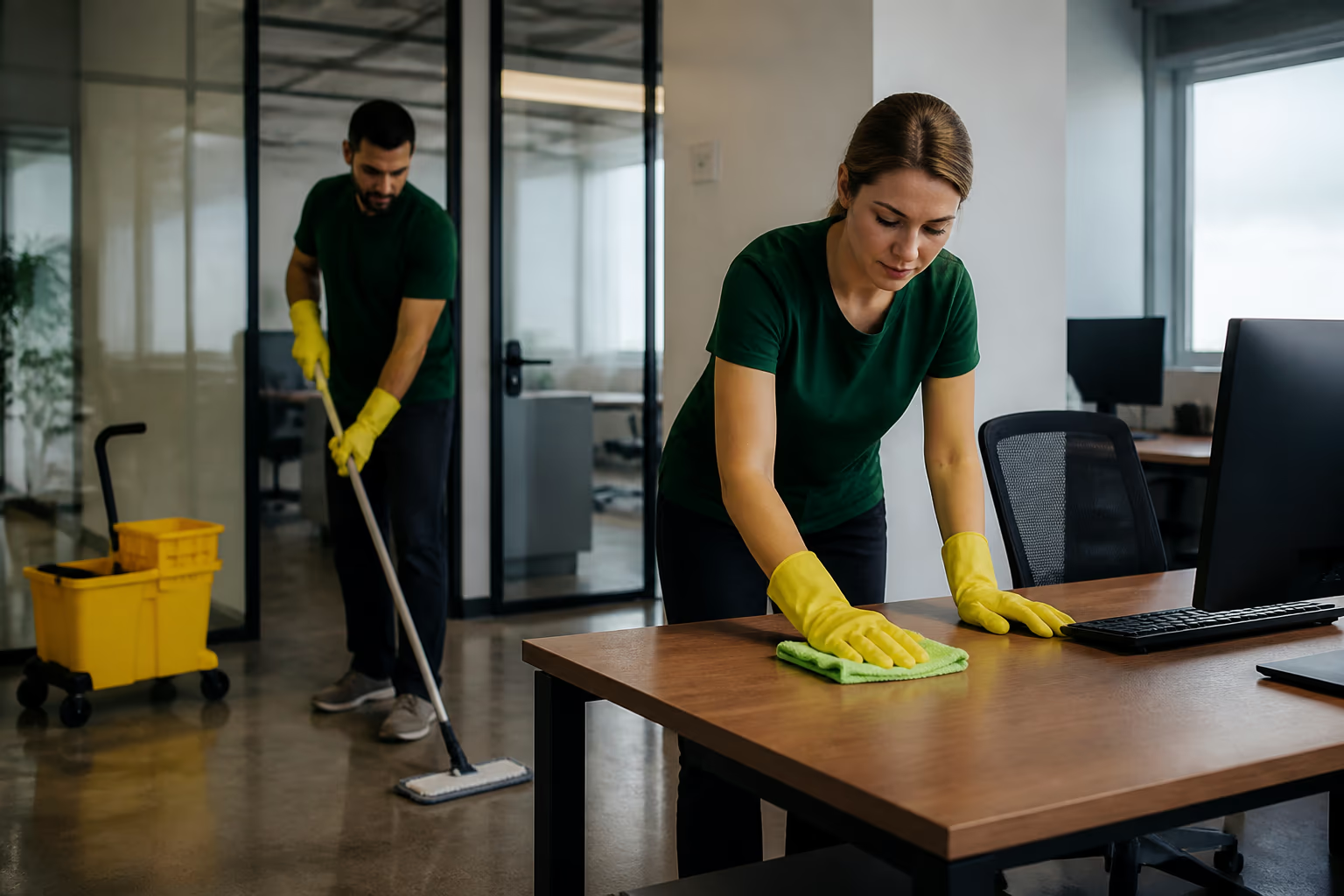
Professional cleaning only counts when it happens correctly, every single visit. A janitorial quality control system turns cleaning from a hopeful promise into a measurable, verifiable standard that building owners, property managers, and tenants can trust across a commercial facility.
Quick Summary
If you manage a commercial property, the last thing you want is to discover a substandard clean by walking into a messy washroom during a site visit. This guide walks through eight quality control methods that keep janitorial work consistent, from mobile digital scorecards and ATP surface testing to unannounced supervisor audits, and it explains how to build a practical quality assurance routine your cleaning team will actually follow.
In this guide
Why Structured Quality Assurance Matters for Commercial Properties
Quality control is the difference between a cleaning company that talks a good game and one that delivers a reliably clean building night after night.
Quality assurance and legal compliance overlap more than they look. Ontario's Occupational Health and Safety Act requires an employer to appoint competent supervisors, defined as people qualified by knowledge, training and experience to organize the work, so a documented inspection regime is also evidence that supervision is real. The province sets a written threshold: “In workplaces in which more than 5 workers are regularly employed, prepare a written occupational health and safety policy, review that policy at least once a year and set up and maintain a program to implement it”.
Cleaning quality tends to drift without oversight. A technician might skip a corner one night, miss a touchpoint the next, and before long the washrooms, kitchens, and boardrooms quietly decline while nobody notices until a tenant complains. Structured quality assurance methods catch those small slips early, before they become tenant complaints, health risks, or expensive restoration work.
For building owners, a documented quality control program also provides accountability. If a tenant raises an issue, you can pull up the inspection log, see what was checked and when, and respond with facts rather than arguments. That transparency protects your relationship with tenants and your reputation as a building manager, and it makes it far easier to hold a contractor to the standard you agreed on. A guide to identifying the best commercial cleaning company Ottawa has to offer covers what documented quality control should look like before you sign a contract.
The Eight Essential Commercial Cleaning Quality Control Methods
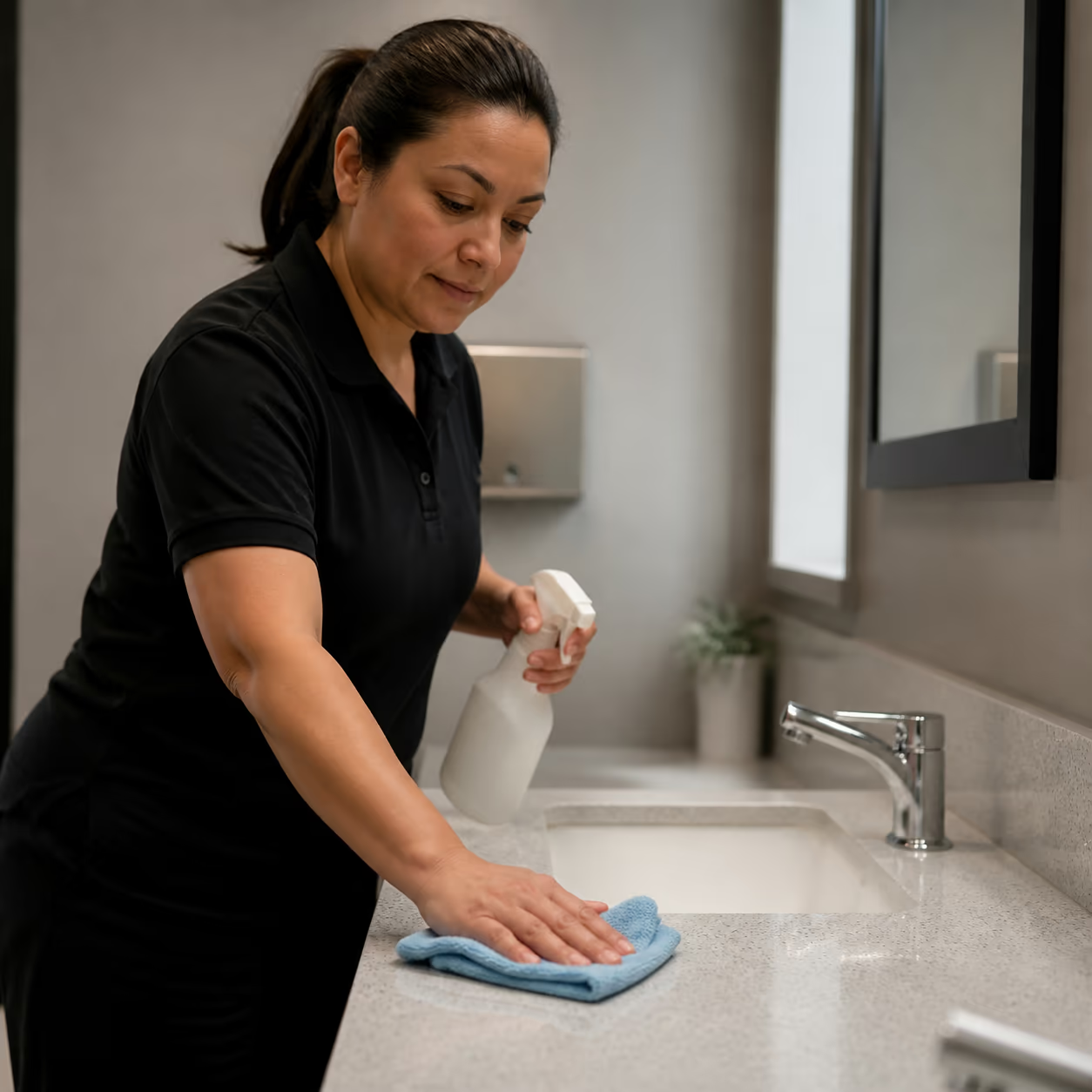
Here are eight quality control methods used by professional janitorial contractors, with the honest detail on how each one works and where it earns its keep:
For lighter touch-ups between professional visits, reviewing our homemade citrus all-purpose cleaner recipe offers a natural, budget-friendly option for spot cleaning without pulling out the full commercial kit.
How to Build a Quality Control Routine That Actually Sticks
A quality control system only works if the people doing the work accept it. The best checklists in the world fail when technicians see them as surveillance rather than support.
Start by making inspections about coaching, not punishment. When a supervisor finds a missed corner, the conversation should be about the technique that prevents it next time, not just the failure. Technicians who feel supported by quality assurance tend to treat the checklist as a map of the job rather than a trap, and they are more honest about flagging areas that need extra time.
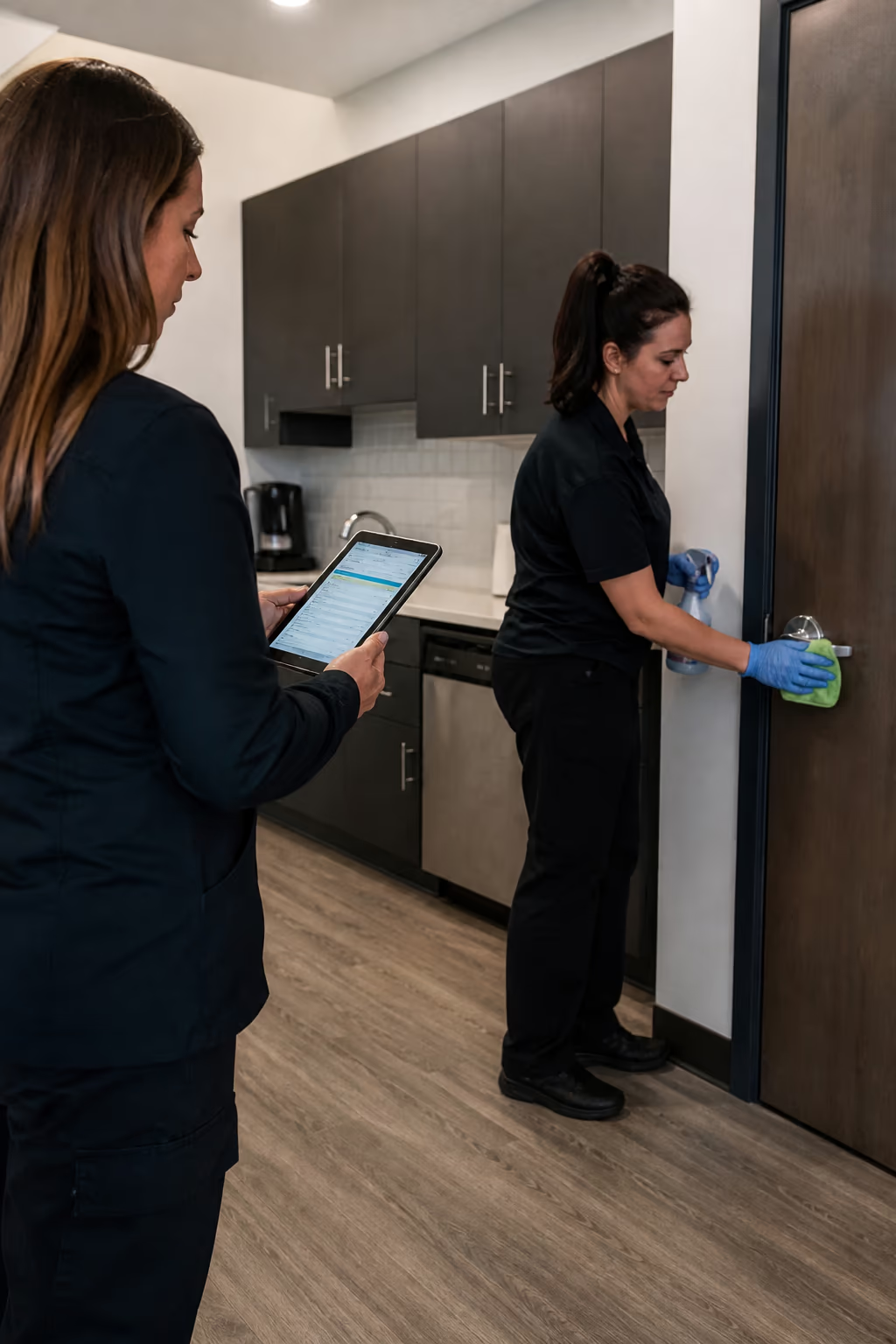
Keep the tools simple. A mobile scorecard that takes thirty seconds per zone gets filled out faithfully; a form that requires ten minutes of typing gets faked. Choose checklists with a handful of meaningful fields per room and a photo slot, and review the data weekly while it is still fresh enough to act on.
Finally, connect the dots for your team. Show technicians the monthly score trends and celebrate zones that improved. When a cleaner sees that their work produced a measurable score, quality control stops being a chore and starts being a craft that they take pride in.
What a Good Inspection Checklist Should Cover
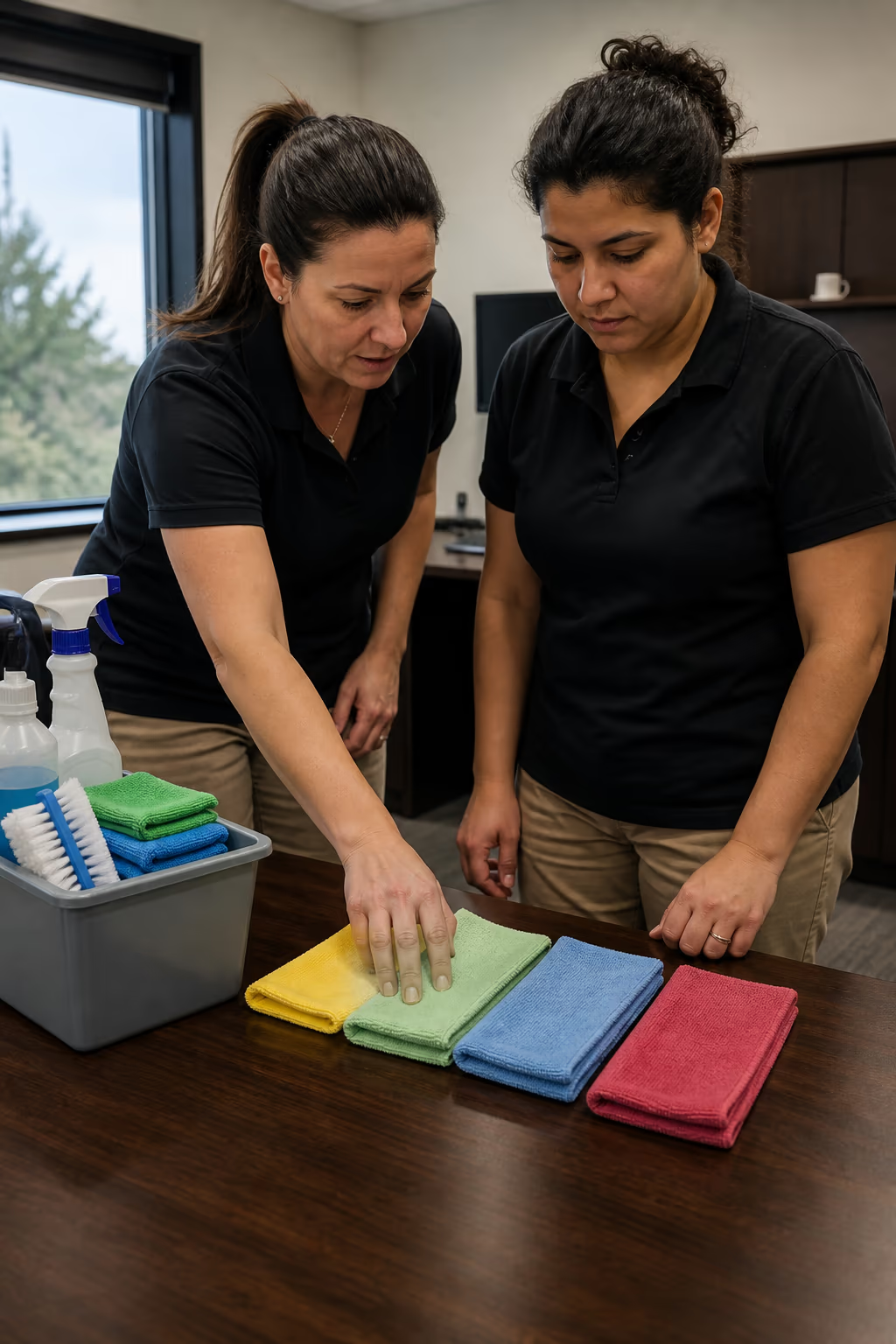
A useful inspection checklist is short enough to be practical and specific enough to be meaningful. For most commercial zones, it should answer a few honest questions:
- 01Are all visible surfaces clean and free of dust, smudges, and residue?
- 02Are high-touch points such as door handles, light switches, and tap levers properly cleaned and disinfected?
- 03Are waste bins emptied and liners replaced, with no overflow, odour, or debris left behind?
- 04Are floors clean, dry, and free of salt, stains, and trip hazards?
- 05Are washroom supplies stocked, including soap, paper towels, and toilet tissue?
- 06Does the zone meet the agreed completion standard, with photos attached as proof?
Score each answer on a simple scale, attach a photo for anything below standard, and file the result in the digital logbook. Over a month, those small data points become a reliable picture of the building's true condition, which makes budget and schedule decisions far easier. A commercial cleaning checklist by industry can help you tailor these questions to the specific risks of your sector before building the inspection form.
Common Quality Control Failures and How to Avoid Them
Even well-intentioned quality programs fail in predictable ways. Knowing the common failure points helps you design a system that survives contact with real life.
The first failure is checklist fatigue. When every zone requires a long form, supervisors rush through the scores and the data becomes meaningless. The fix is to keep the checklist tight and rotate deeper inspections rather than trying to capture everything every night.
The second failure is score inflation. Supervisors who only ever audit the same friendly team tend to hand out high marks, which hides real problems. The fix is to rotate auditors across buildings and to do at least some unannounced visits so the score reflects an ordinary shift.
The third failure is no follow-up. A score below benchmark means nothing if nobody re-cleans the zone and documents the correction. The fix is a clear escalation path: a low score triggers a prompt callback, a re-clean, and a logged resolution that the building manager can review.
How to Use Quality Data to Improve the Service
The point of collecting inspection data is to act on it, and the buildings that get the most from quality control are the ones that review the numbers on a regular rhythm.
A simple monthly review works well. Pull the scores for each zone, look for the areas that keep scoring below the benchmark, and ask why. Is the washroom being rushed because the visit is too short? Is the kitchen missed because the checklist is unclear? Is the entryway salt staining because the wrong chemistry is being used? Each pattern points to a fix, and each fix makes the next month better.
Share the results with everyone who needs them. The building manager sees the scorecard and understands what they are paying for. The supervisor sees which zones need more coaching. The technicians see their own progress and get the credit for improvement. When the data flows to the people who can act on it, quality control stops being an after-the-fact report and becomes part of how the building is managed.
It also helps to keep the benchmark realistic. A perfect score on every zone, every night, may not be attainable or even necessary for every building. The goal is a standard that protects health, satisfies tenants, and holds the crew accountable, with an honest measure of when it is being met.
Formatted Step-by-Step Quality Assurance Audit Checklist
Follow this checklist to implement a practical janitorial quality control program:
- Step 1.Run Weekly Digital Inspection Audits Using Mobile Scorecards:Score every zone, attach photos, and store results in the cloud so nothing is lost.
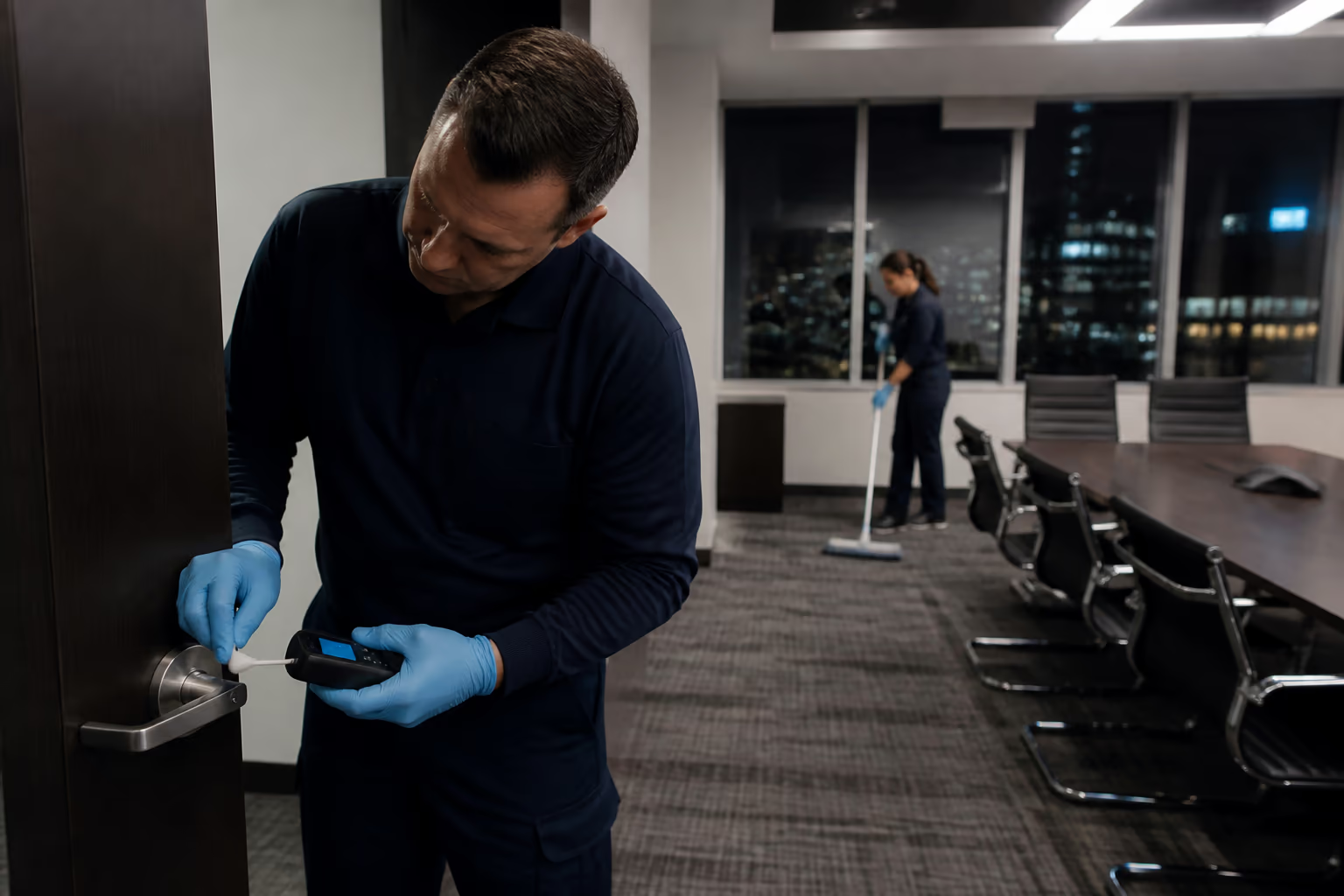
- Step 2.Take ATP Surface Samples in High-Touch Areas:Swab door handles, taps, and shared desks to verify sanitation with a number rather than a glance.
- Step 3.Schedule Unannounced Supervisor Spot Checks:Mix surprise audits into the routine so every shift operates as if it could be reviewed.
- Step 4.Log Client Feedback and Track Callback Resolution:Give tenants an easy way to report issues and confirm each one is fixed within your promised window.
- Step 5.Review Monthly Score Trends with Your Property Manager:Turn inspection data into schedule and technique adjustments before problems take root.
- Step 6.If you need a team or a recurring schedule, use commercial janitorial services in Ottawa to discuss scope, access, and timing before deciding whether it fits.
Serving Ottawa's Business Neighbourhoods
A good quality control standard should not depend on which side of the city your building sits on. Whether your office is a Kanata tech campus, a Nepean medical clinic, an Orleans retail strip, or a downtown tower, the same inspection rigour, the same digital scorecards, and the same rapid callback promise apply.
Good Cleaner Co. applies its quality control framework consistently across the capital region. That matters for multi-site businesses, which can expect the same measurable standard at every location instead of a patchwork of approaches.
Practical planning for this situation
For a facilities lead, the sensible starting point is checking commercial cleaning quality. Begin with a walk-through and write down the expected result in each zone, timing, visible defects, feedback route, and how a repeat concern is recorded. That gives the work a real boundary and avoids treating a generic package as if it already understood the space.
Use the written notes to decide what belongs in a regular routine and what needs separate time, access, or approval. The useful test is whether another person could read the scope and understand the task without being told to rely on a promise.
Seasonal considerations in Ottawa
Local conditions matter, but they do not require a script. In this topic, weather, traffic, and special events can change a building's condition, so quality checks need current context. Review the condition of the actual space before changing the products, equipment, or frequency.
A short seasonal review is usually enough: notice what has changed, name the affected area, and agree on the practical response. That keeps maintenance connected to the property rather than a broad list of place names.
Safe, responsible cleaning
Choose methods that suit the material and follow the product or equipment instructions. Keep people away from a wet or actively cleaned area, and stop when a surface reacts unexpectedly.
When a task involves an unfamiliar finish, access issue, or safety concern, ask before continuing. A careful pause is more useful than a confident shortcut and protects the people using the space.
How to review the routine
Before changing the routine, take a few minutes to describe the present condition in plain language. Start with the expected result in each zone, timing, visible defects, feedback route, and how a repeat concern is recorded. This makes it possible to decide what is necessary without inflating a small issue into a large project.
Ask the people who use the space what causes the most friction. Their answer may be a difficult entry, a storage gap, a time when work cannot happen, or a surface that needs a gentler method. Those details are the basis for a useful plan.
Try one visible adjustment at a time. Record why it was made, what area it affects, and what a satisfactory result looks like. That approach is easier to review than changing a whole routine at once.
Keep feedback specific: name the room, surface, timing, and expected result. Clear notes help a household, volunteer group, or service team work through a problem without blame or vague expectations.
Revisit the plan after a genuine change in use, condition, or season. A routine should be steady enough to follow and flexible enough to stay useful.
FAQ
What is an ATP meter and how is it used in commercial cleaning?
An ATP meter measures adenosine triphosphate, the energy molecule found in bacteria, viruses, and organic residue, on a surface. A quick swab gives an instant numerical reading, which lets a supervisor verify that a high-touch surface is genuinely clean rather than just visually tidy.
How often should property managers receive cleaning inspection reports?
Most buildings benefit from a monthly digital summary of inspection scores, plus real-time access to the logbook for anything urgent. If an issue comes up between reviews, the report trail should be available immediately rather than at the next monthly meeting.
What happens if a cleaning task falls below the quality benchmark?
A responsible contractor re-cleans the area promptly and documents the correction. The digital logbook records the original score, the follow-up, and the improved result, so the building manager has a clear record of how the issue was resolved.
Are unannounced audits really necessary if we already have scheduled inspections?
Scheduled inspections are important, but unannounced audits catch the gap between cleaning because someone is watching and cleaning because it is the standard. A surprise check shows what a normal shift actually looks like.
What should I look for in a janitorial quality control report?
Look for three things: a score or rating for each zone, photo evidence of completed work, and a clear record of any issues plus how they were fixed. A report without photos or follow-up is just a form.
How do digital scorecards improve cleaning accountability?
Digital scorecards store every inspection in the cloud with timestamps and photos, so nothing is lost and nothing can be argued after the fact. Over time they build a reliable history of each zone's condition that both sides can review.
Do quality control methods add extra cost to a cleaning contract?
A well-run quality assurance program can reduce long-term costs by catching small problems before they become expensive restoration jobs, chemical overuse, or tenant turnover. The inspection time is a modest investment compared with the cost of a failing clean. Checking current commercial cleaning pricing in Ottawa can help you see whether that inspection time is already built into your existing contract.
Can quality control work for a small office with just a few rooms?
Yes. The same principles apply at any size: a simple checklist, photo proof, and a reliable response to feedback. A small office needs less formality but the same honesty about what was done.
How does Good Cleaner Co. use quality control across its cleaning teams?
Every Good Cleaner Co. crew works from the same documented standard, with supervisor inspections, digital logs, and a rapid response to any reported concern, so the quality you get on night one is the quality you get all year.
Wrapping Up
Structured quality control turns commercial cleaning from a hopeful promise into a measurable, dependable standard. Contact Good Cleaner Co. today to book janitorial cleaning teams in Ottawa and see the quality routine in action.
Keep reading
More from Good Cleaner
About the author
Service areas
- Ottawa
- Kanata
- Nepean
- Orleans
- Barrhaven
- Downtown Ottawa