
Essential Office Cleaning Supplies: Checklist for Commercial Facilities
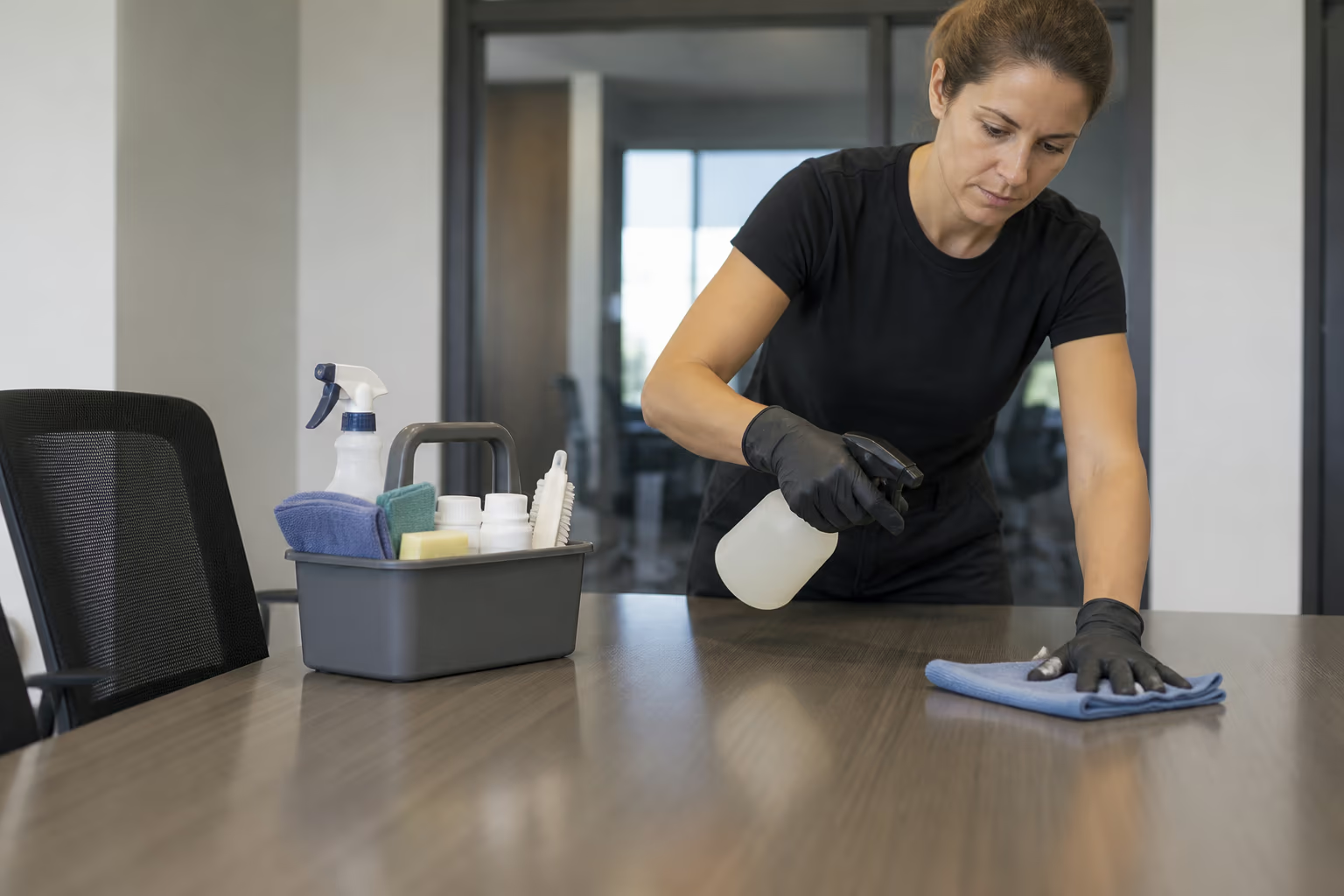
Walk into a supply closet and you can usually tell a lot about a cleaning program. Unlabelled spray bottles, household vacuums, and a single shared cloth are signs of a casual approach. A professional operation stocks commercial chemicals, colour-coded microfibre, sealed HEPA vacuums, and the safety documentation to back it up. Here is what that complete checklist looks like.
Quick Summary
The right supplies are the difference between cleaning that looks good and cleaning that is genuinely hygienic. This guide covers the essential office cleaning supplies every commercial facility should stock, why commercial-grade equipment beats retail gear, and how to keep your supply room safe, organized, and WHMIS compliant.
In this guide
Why Professional Supplies Matter for Your Facility
Cleaning supplies are easy to treat as an afterthought, but they drive most of the results your facility sees. The right chemical removes the right soil, the right cloth traps it, and the right vacuum captures the dust rather than blowing it around. When any link in that chain is missing, the whole clean suffers.
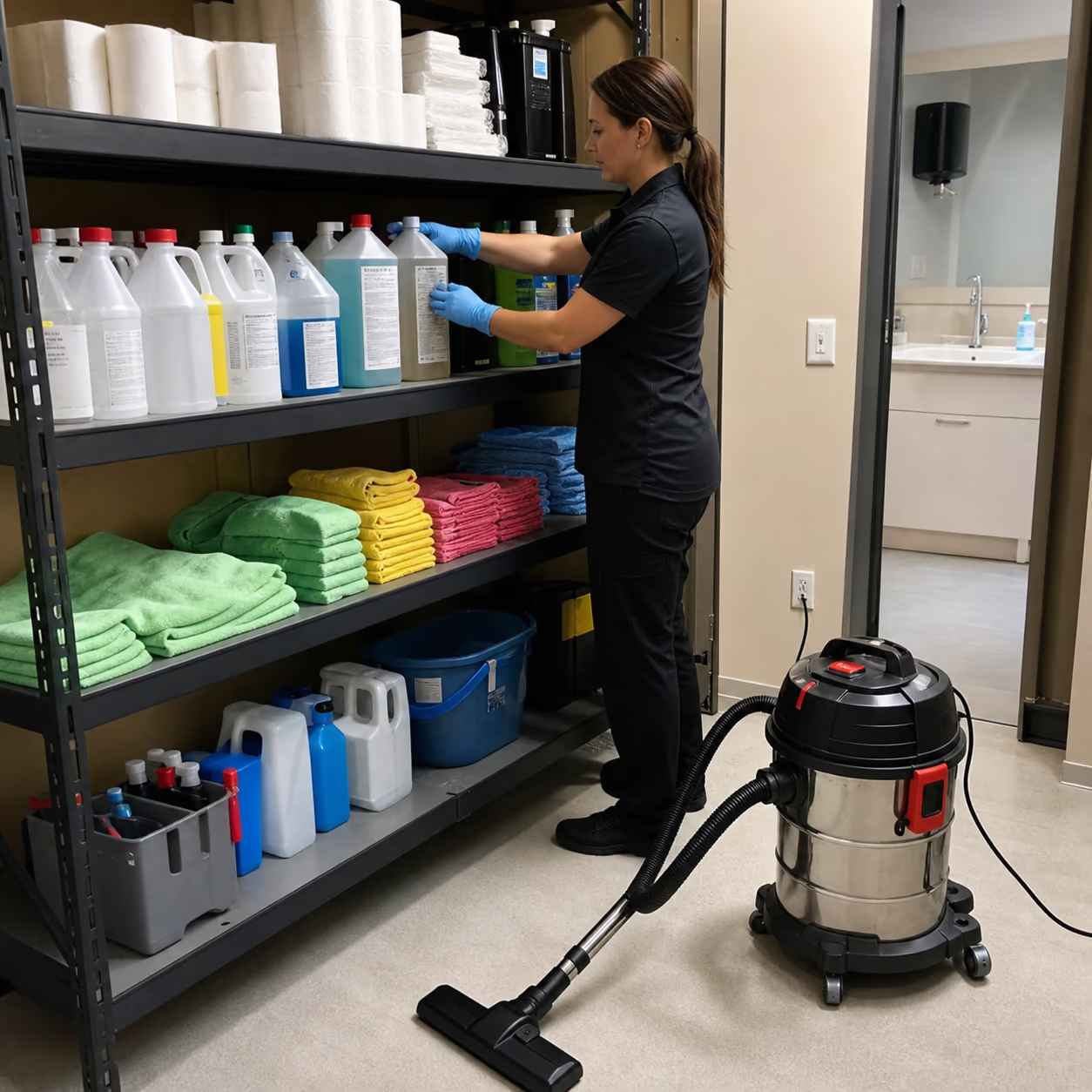
Professional-grade equipment also protects the building. Retail vacuums often leak exhaust air back into the room, while commercial sealed HEPA vacuums trap fine particles. Commercial chemistry is formulated to work on institutional surfaces, and concentrates reduce packaging and storage costs.
There is a safety dimension too. Every chemical in a professional supply room has a hazard label and a Safety Data Sheet under WHMIS 2015. That documentation protects the people using the products and the occupants of the building.
There is also a financial angle. Commercial concentrates dilute further than ready-to-use household products, so the cost per square metre cleaned is usually lower. Durable commercial equipment lasts longer, and fewer chemical spills mean fewer ruined surfaces and less waste to dispose of. For the full service picture beyond the supply room, see our guide to essential office cleaning services covering scheduling, scope, and quality standards.
The Essential Office Cleaning Supplies Checklist
Here is the supply list a commercial facility needs, organized by category:
Choosing the Right Chemicals and Equipment
When you pick products for a facility, start with the surfaces you actually have. A glass-heavy lobby, a carpeted open plan, and a hard-floor kitchen each need different chemistry and different tools. Buying one all-purpose bottle and one vacuum rarely covers the real workload.
Chemical choices carry a paperwork obligation as well as a performance one. Ontario's WHMIS legislation requires suppliers to label hazardous products and provide safety data sheets before sale, and requires employers to give workers an education program on them. The province states the employer duty: “Employers must pass the information about workplace hazardous products on to their employees and provide worker education programs.”
Read the label before you buy. Check that disinfectants carry a Health Canada DIN, that general cleaners are certified by an independent program such as EcoLogo if that matters to you, and that concentrates are compatible with your dilution equipment. The Safety Data Sheet tells you about handling, storage, and PPE requirements.
Equipment deserves the same attention. A commercial vacuum should be sealed HEPA, floor machines should match your hard floor type, and your microfibre inventory should be large enough to rotate through the day without reusing dirty cloths. Quality equipment fails less often and cleans better for years.
- Match Chemistry to Surface: Glass, hard floors, carpet, and stainless steel each have a proper product.
- Verify Claims: DIN for disinfectants, EcoLogo or similar for environmental claims.
- Right-Size Equipment: Commercial, sealed HEPA, and matched to your floor types.
WHMIS 2015 Safety Labelling & Colour-Coded Supply Separation
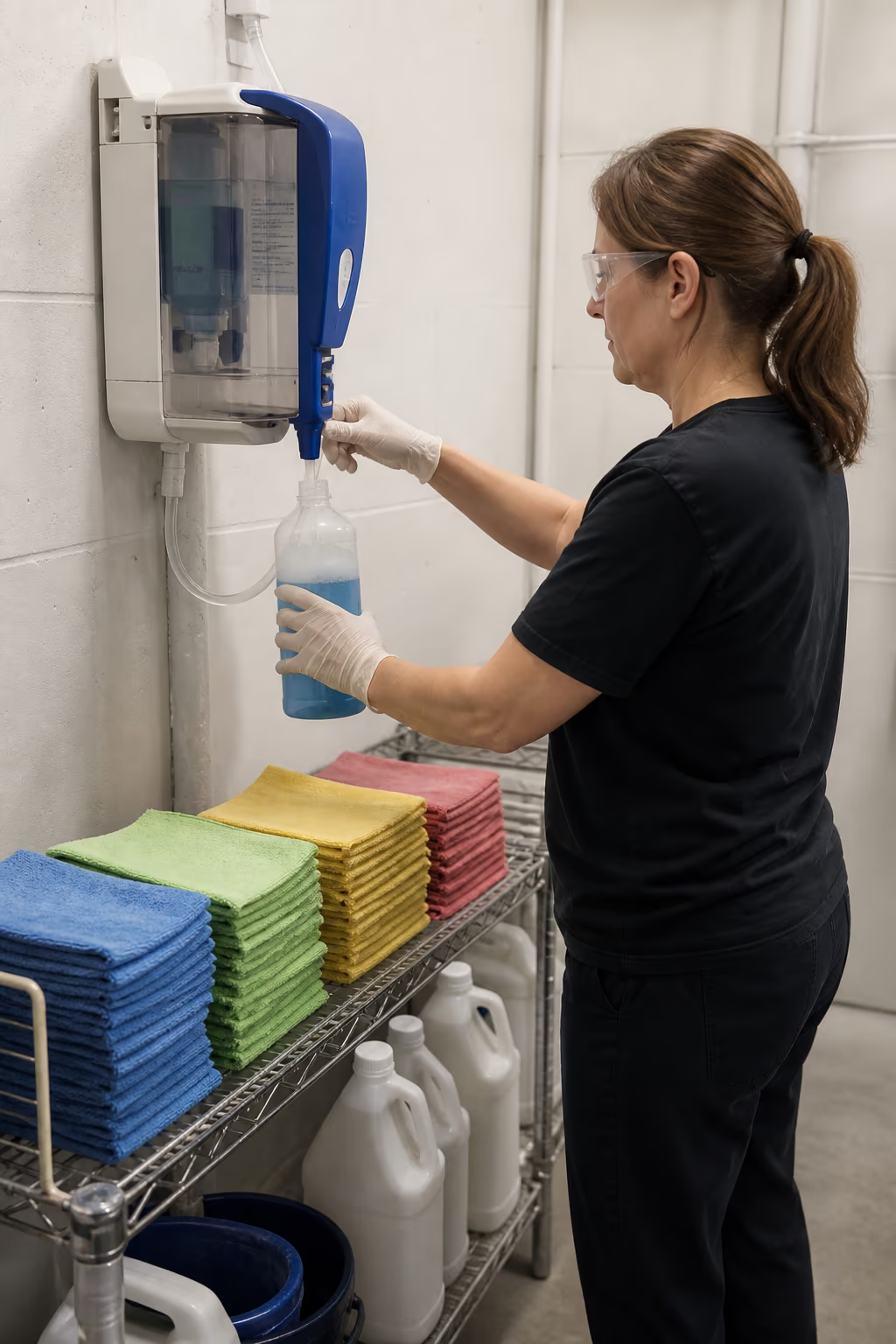
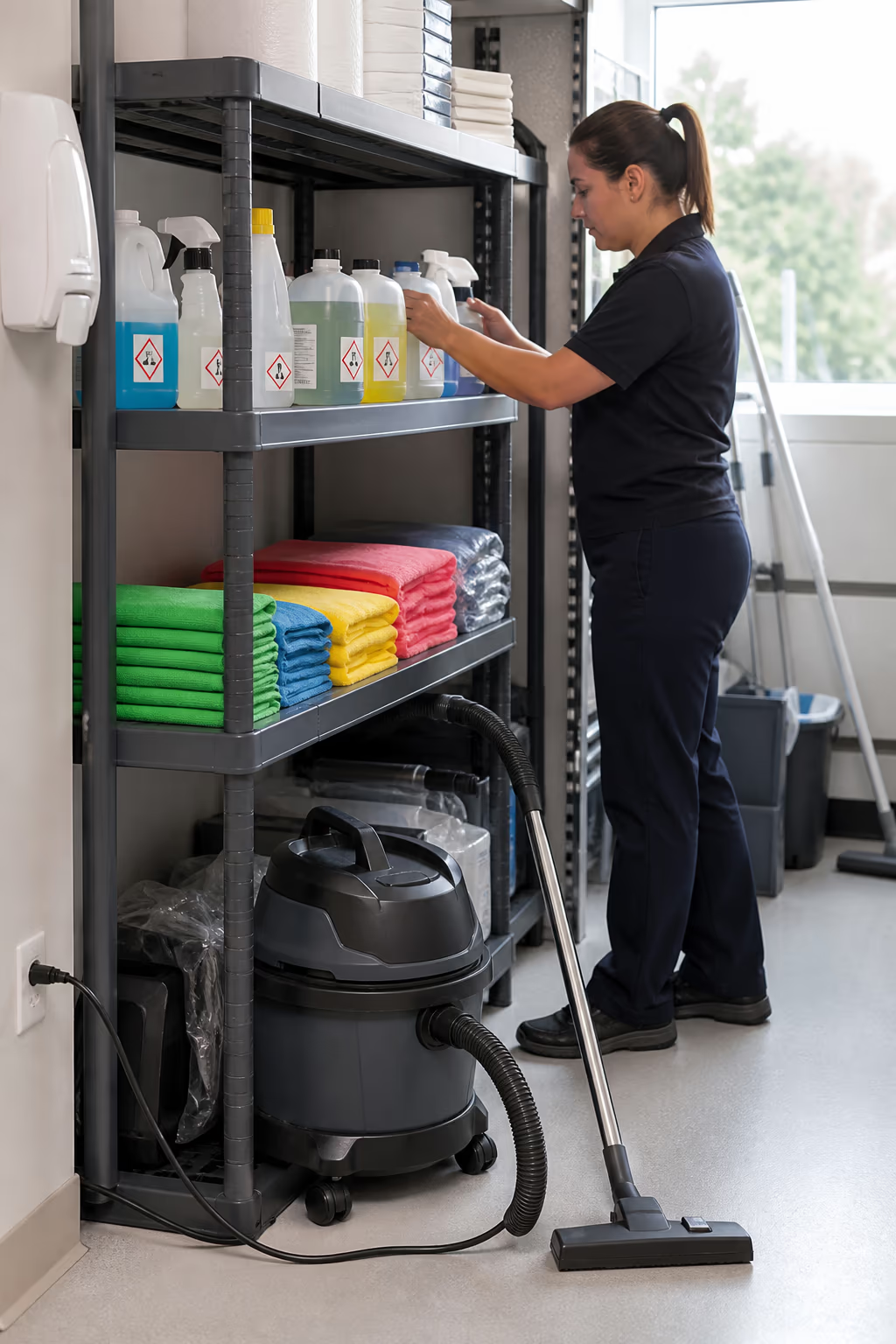
A professional supply room is organized for safety. Under WHMIS 2015, every cleaning chemical container must carry a hazard label, and the corresponding Safety Data Sheets must be available to anyone who handles the products. Diluted solutions should be labelled with what they are, not stored in unmarked bottles.
Original Containers & Labels:
Keep concentrates in their original containers or clearly relabel any working solutions.
Colour-Coded Zones:
Assign cloth and tool colours by area, and wash them separately after use.
SDS Binder:
Keep current Safety Data Sheets accessible and show staff where they live.
Storage & Ventilation:
Store chemicals away from food, heat, and occupied spaces, and keep the area ventilated.
Colour-coded microfibre is one of the simplest safety tools in the industry. Washroom cloths are kept apart from kitchen and workstation cloths so germs never travel from one zone to another. Many facilities use a simple rule: one colour per zone, and a different colour for toilets and sinks.
Good labelling does more than keep you compliant. It also speeds up training. When every bottle clearly says what it is, new staff can find the right product quickly, and there is less chance of someone grabbing the wrong chemical for a surface. That keeps finishes safe and results consistent.
Formatted Step-by-Step Supply & Stocking Checklist
Keep your supply room and cleaning program running smoothly with this checklist:
- Step 1.Audit What You Have:Inventory current supplies, note what is expired or unlabelled, and identify the surfaces you actually need to clean.
- Step 2.Buy Commercial-Grade, Not Retail:Choose commercial chemicals and sealed HEPA equipment designed for daily institutional use.
- Step 3.Set Up Colour-Coded Separation:Assign cloths, mops, and tools by zone, and label everything clearly.
- Step 4.Prepare the Safety Documentation:Collect Safety Data Sheets, train staff under WHMIS 2015, and store chemicals safely.
- Step 5.Schedule Reordering and Deep Tasks:Track usage, reorder before you run out, and rotate through the periodic deep-cleaning supplies.
- Step 6.Letting professional office cleaning services in Ottawa handle your facility means the right supplies, the right equipment, and the right training are already in place.
Serving Ottawa's Commercial Neighbourhoods
Good Cleaner Co. equips and supplies professional cleaning programs for facilities across Ottawa, from the towers downtown to office parks in Kanata and Nepean, retail centres in Orleans and Barrhaven, and the institutional buildings of the Glebe and Old Ottawa South. Wherever your facility is, the supply standard is the same.
Whether you manage a single floor, a multi-tenant building, or several sites across the city, the supply list stays the same. We keep our own inventory of certified chemistry and commercial equipment so your facility never runs short on what a proper clean requires.
Start With the Actual Situation
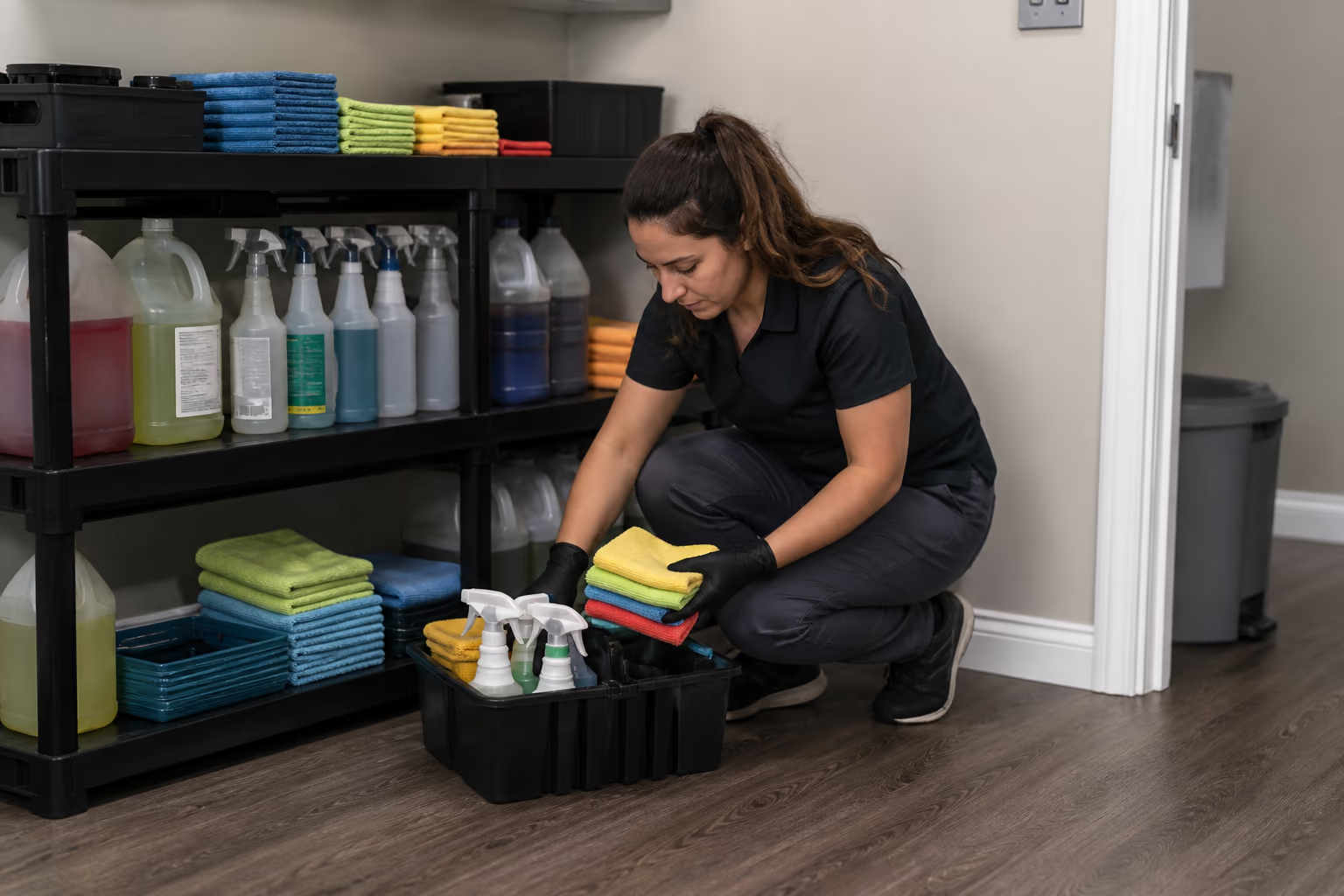
Before setting expectations for a supply cupboard, look at the surfaces present, storage space, and who will use the supplies. A plan copied from another workplace can miss the issue that people deal with every day, such as access at closing time, a crowded kitchenette, or a fragile finish.
Focus on a few concrete outcomes. A screen, hard floor, washroom fixture, or lunchroom counter may need its own timing, tool, or care instruction. A useful routine makes the next person’s work easier and avoids asking anyone to guess what “clean enough” means.
Put the agreed tasks, timing, and limits in plain language. A short list can be checked and improved; a sweeping promise about quality, safety, or service cannot.
- Identify the surface or behaviour that needs attention before choosing a response.
- Set a clear order so routine work does not create extra work later.
- Keep tools, messages, and handover notes where the right person can find them.
Use a Deliberate, Low-Drama Process
The best way to avoid duplicate purchases and unsafe substitutions is usually preparation, not more force. Read labels and care instructions, use the mildest compatible method, and give the task the time it needs. If the condition is unclear, test a small inconspicuous area or ask the responsible contact before continuing.
Separate ordinary upkeep from problems that require another decision. A leak, damaged surface, missing access card, unsafe spill, or conflict between coworkers is not fixed by working faster. Record what you observed and route it to the person who can act on it.
In Ottawa, the details often change through the year: wet entryways, salt, pollen, and dry indoor air can alter the workload. Adjust the task list to the condition of the space rather than relying on a generic seasonal script.
- Use a small, labelled set of suitable supplies or agreed communication channels.
- Change a cloth, pad, or approach when it is no longer appropriate for the job.
- Stop and escalate when a surface, safety issue, or workplace concern falls outside the agreed scope.
Review What Happened and Update the Next Step
After the first few attempts, review what was used and what needs replacing. Ask what helped, what was missed, and whether the timing created a new problem. Specific feedback such as a missed handle, unclear job duty, or crowded area at lunch is more useful than an abstract complaint.
Keep the review factual and brief. Notes, photographs where appropriate, or a simple checklist can show whether a concern repeats. They also help distinguish routine work from a maintenance issue, a staffing problem, or a conversation that needs a manager or qualified professional.
When the process changes, update the written scope or shared expectation before the next visit or shift. That makes the improvement repeatable and fair, and it is more trustworthy than claiming a guaranteed result.
- Check the outcome at the time the room or task is normally used.
- Escalate damage, persistent moisture, hazards, or unresolved conduct concerns promptly.
- Keep the revised instruction short enough that a new person can follow it without guessing.
FAQ
What are the most important office cleaning supplies to buy first?
Start with the basics: commercial-grade all-purpose cleaner, a disinfectant with a Health Canada DIN, glass cleaner, colour-coded microfibre cloths, and a sealed HEPA vacuum. From there, add floor care, washroom supplies, and the protective gear your chemicals require. For a broader starting point beyond office facilities, see what essential cleaning supplies you need for any space.
Why is a HEPA vacuum better than a regular vacuum for offices?
A sealed HEPA vacuum captures fine dust, allergens, and particles in a filter instead of releasing them back into the room. That matters in offices where people spend hours breathing recirculated air, and it is especially helpful during allergy season.
Do I need commercial chemicals, or are household products fine?
Commercial chemistry is formulated for institutional surfaces, dilutes further, and is often certified under EcoLogo or similar programs. Household products can work in a pinch, but they cost more per use, lack the safety documentation you want on site, and are not designed for daily professional cleaning.
What does WHMIS 2015 mean for my cleaning supplies?
WHMIS 2015 is Canada's workplace hazard communication standard. Under it, every cleaning chemical must have a hazard label and a Safety Data Sheet, and staff must be trained to understand both. It is the framework that keeps chemical handling safe in commercial facilities.
How should I store cleaning chemicals safely?
Keep concentrates in their original labelled containers, store them away from food, heat, and occupied spaces, and keep the storage area ventilated. Diluted working solutions should be clearly labelled. The Safety Data Sheet binder should live where staff can reach it quickly.
Why are microfibre cloths colour-coded?
Colour-coding separates cloths by zone so germs never travel from a washroom to a workstation or kitchen. A common system uses one colour for general surfaces, another for kitchens, and another strictly for washrooms. It is simple, cheap, and one of the best cross-contamination controls you can buy.
How often should I replace microfibre cloths and mop heads?
Microfibre wears out with washing and use. Cloths that stop picking up soil or start leaving streaks should be retired, and mop heads should be replaced when they look frayed or stop absorbing. Most commercial programs rotate in fresh cloths on a schedule rather than waiting for visible wear.
Do I need a disinfectant with a Health Canada DIN?
If your facility wants a product that is proven to kill germs on hard surfaces, yes. A Drug Identification Number from Health Canada means the product's claims have been reviewed and registered. Without a DIN, the product should not be relied on as a disinfectant.
What is the difference between cleaning, sanitizing, and disinfecting?
Cleaning removes visible dirt and some germs. Sanitizing reduces germs to a safe level. Disinfecting kills a wider range of pathogens on hard surfaces, and it requires the right product, the right concentration, and the label's contact time to work properly.
Where can I buy commercial cleaning supplies in Ottawa?
Commercial janitorial suppliers stock institutional chemicals, equipment, and microfibre systems across Ottawa and Ontario. Many facilities also buy through their cleaning provider, which keeps responsibility for the right chemistry and equipment with the company doing the work. For a structured way to compare providers, our commercial cleaning company evaluation guide is a practical starting point.
How do I know if my cleaning company brings its own supplies?
Just ask. A professional provider should be able to list the chemicals, equipment, and safety documentation they use on your site. Many contracts specify that supplies are included, which simplifies your inventory and keeps the standard consistent.
How do I keep a supply inventory without overordering?
Track usage for a few weeks, set reorder points for the items you actually go through, and buy concentrates that dilute further so storage stays small. Review the inventory quarterly and adjust for seasonal needs like winter salt, spring pollen, and summer humidity.
What is the best floor cleaner for commercial offices?
It depends on your floor. Neutral-pH cleaners protect sealed hard floors like VCT, laminate, and polished concrete, while carpeted areas need regular vacuuming and periodic hot water extraction. A commercial supplier or your cleaning provider can match the right chemistry to your surfaces. For deeper carpet care beyond routine vacuuming, our carpet cleaning services in Ottawa provide scheduled hot water extraction.
Should I buy concentrates or ready-to-use cleaners?
Concentrates cost less per use and take up less storage, which makes them the usual choice for commercial facilities. You need accurate dilution equipment and clear labelling so staff mix them correctly every time.
How do I dispose of old cleaning chemicals safely?
Check the Safety Data Sheet and your municipal guidelines. Many cities in Ontario offer household hazardous waste or small-business collection events for chemicals that should not go down the drain. Never pour unlabelled or expired chemicals into sinks or storm drains.
Can I use the same supplies for a small office and a large facility?
The categories are the same, but scale changes the choice. A small office can manage with concentrates, a few colour-coded cloths, and one commercial vacuum. Larger facilities benefit from auto-scrubbers, more microfibre inventory, and dilution systems to keep the workload efficient.
Wrapping Up
Stocking the right office cleaning supplies is a small investment with a large payoff: better results, safer chemical handling, and a facility that stays clean through every season. If you would rather leave the supplies, equipment, and training to the experts, contact Good Cleaner Co. today about a professional office cleaning visit in Ottawa.
Keep reading
More from Good Cleaner
Services that fit
- Professional Office Cleaning Services in OttawaNightly and after-hours office cleaning for corporate offices, clinics and professional suites, with the right commercial chemistry, sealed HEPA equipment and trained staff.
- Janitorial Services in OttawaComplete facility hygiene for multi-tenant buildings, retail spaces and clinics, stocked with certified chemistry and commercial equipment.
About the author
Service areas
- Ottawa
- Kanata
- Nepean
- Orleans
- Barrhaven