
Essential Office Cleaning Services for a Pristine & Productive Workspace
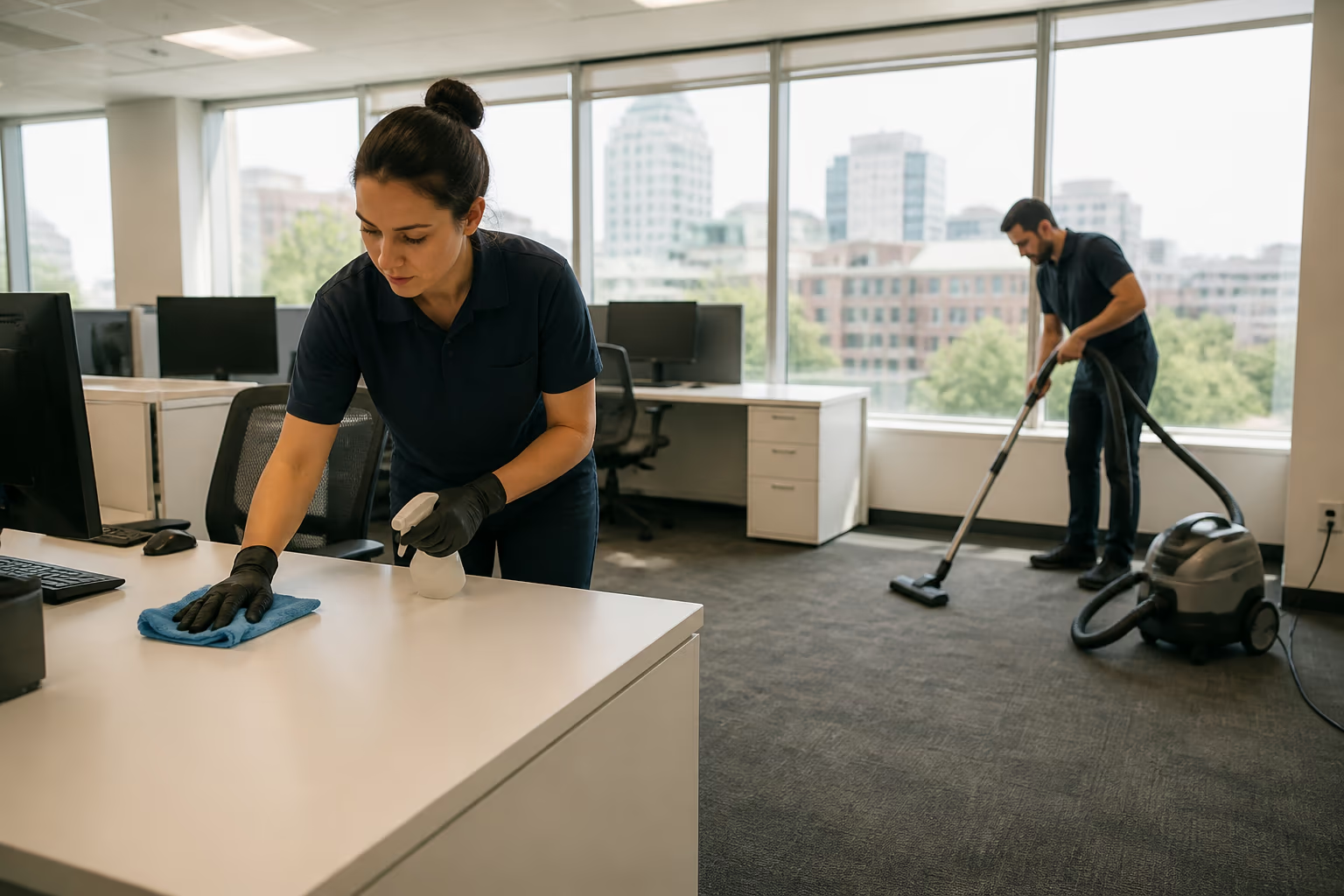
Office cleaning is easy to underestimate and easy to get wrong. A few bins emptied and a quick vacuum is not the same as a proper program that keeps workstations hygienic, washrooms safe, and shared kitchens pleasant to use. Here is what essential office cleaning really covers and how to build a schedule that fits your space.
Quick Summary
A clean office is not just about appearances. It shapes employee health, first impressions for clients, and how long your furniture and floors last. This guide breaks down the essential office cleaning services every workspace needs, how often each one should happen, and what a professional scope of work should include.
In this guide
Why Essential Office Cleaning Services Drive Business Success
Employees notice the state of their workspace even when they do not talk about it. A clean office supports focus, reduces the spread of seasonal illness, and shows people that the company cares about where they spend eight hours a day. For visitors and clients, the first impression often comes down to how the lobby and washrooms look.
Regular professional cleaning also protects your investment. Dust and grit act like sandpaper on floors, carpets trap allergens that make people uncomfortable, and neglected kitchens become a magnet for odours and pests. A consistent schedule prevents small problems from turning into expensive repairs.
In Ottawa, the job is bigger than it looks because of the seasons. Winter salt gets dragged into entryways, spring pollen settles on every surface, and summer humidity creates conditions where mould can take hold. A professional office cleaning program adapts to those conditions all year round.
The connection between a clean workspace and employee wellbeing is well understood. People who work in tidy, hygienic spaces report feeling more comfortable and more professional, and they are less likely to pick up the illnesses that travel through touchpoints and shared kitchens. That translates into fewer sick days and steadier productivity.
The Core Service Modules Every Office Needs
A complete office cleaning scope covers more than desks and bins. These are the modules a professional crew works through on a regular basis:
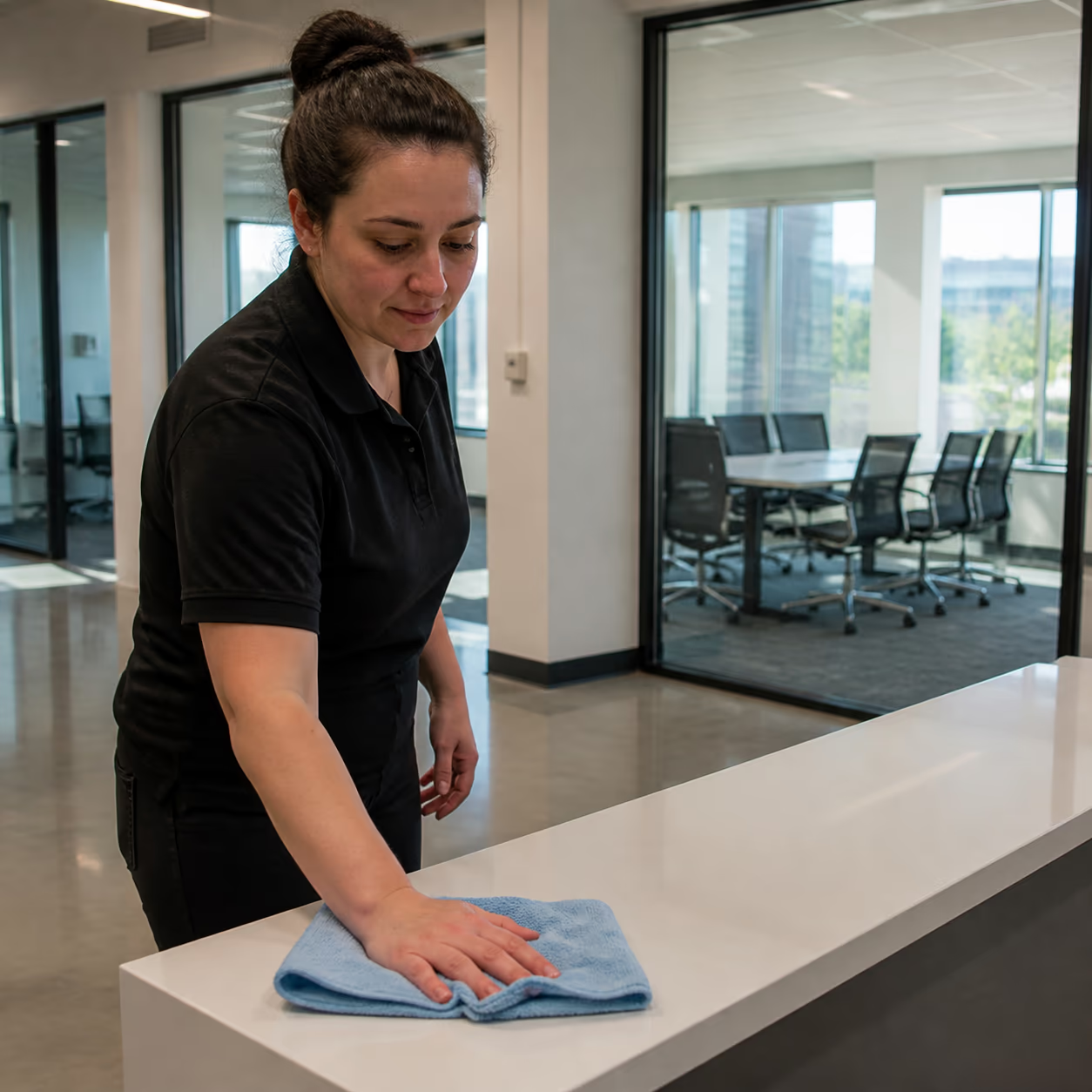
Workstations & Desks:
Wiping down surfaces, removing crumbs and dust, and keeping monitors, keyboards, and phones reasonably clean without damaging electronics.
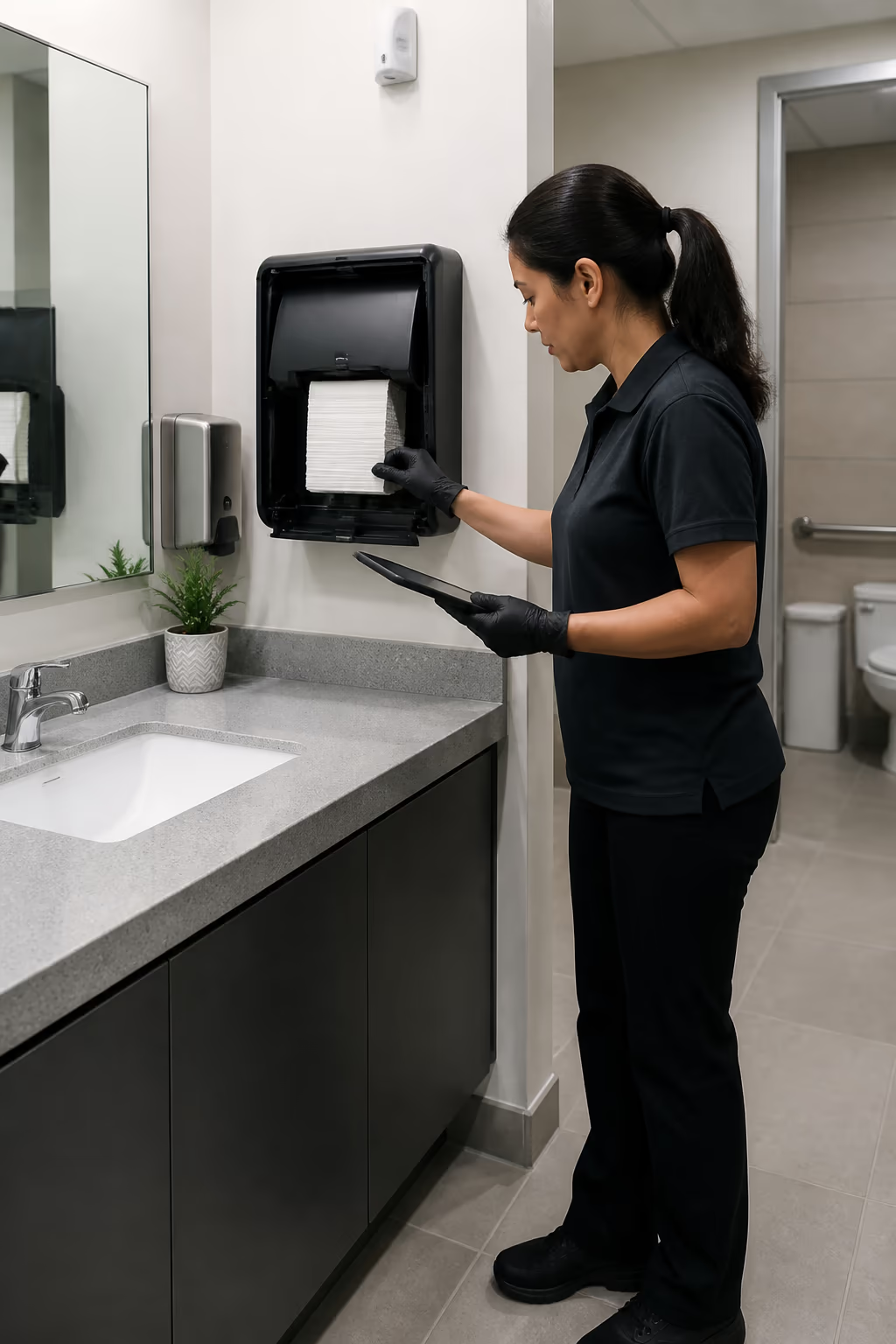
Washrooms:
Cleaning and disinfecting toilets, sinks, mirrors, and high-touch fixtures, plus restocking soap, paper towel, and toilet paper.
Kitchenettes & Break Rooms:
Degreasing counters and appliances, cleaning the inside and outside of the microwave and fridge, and keeping sinks and drains fresh.
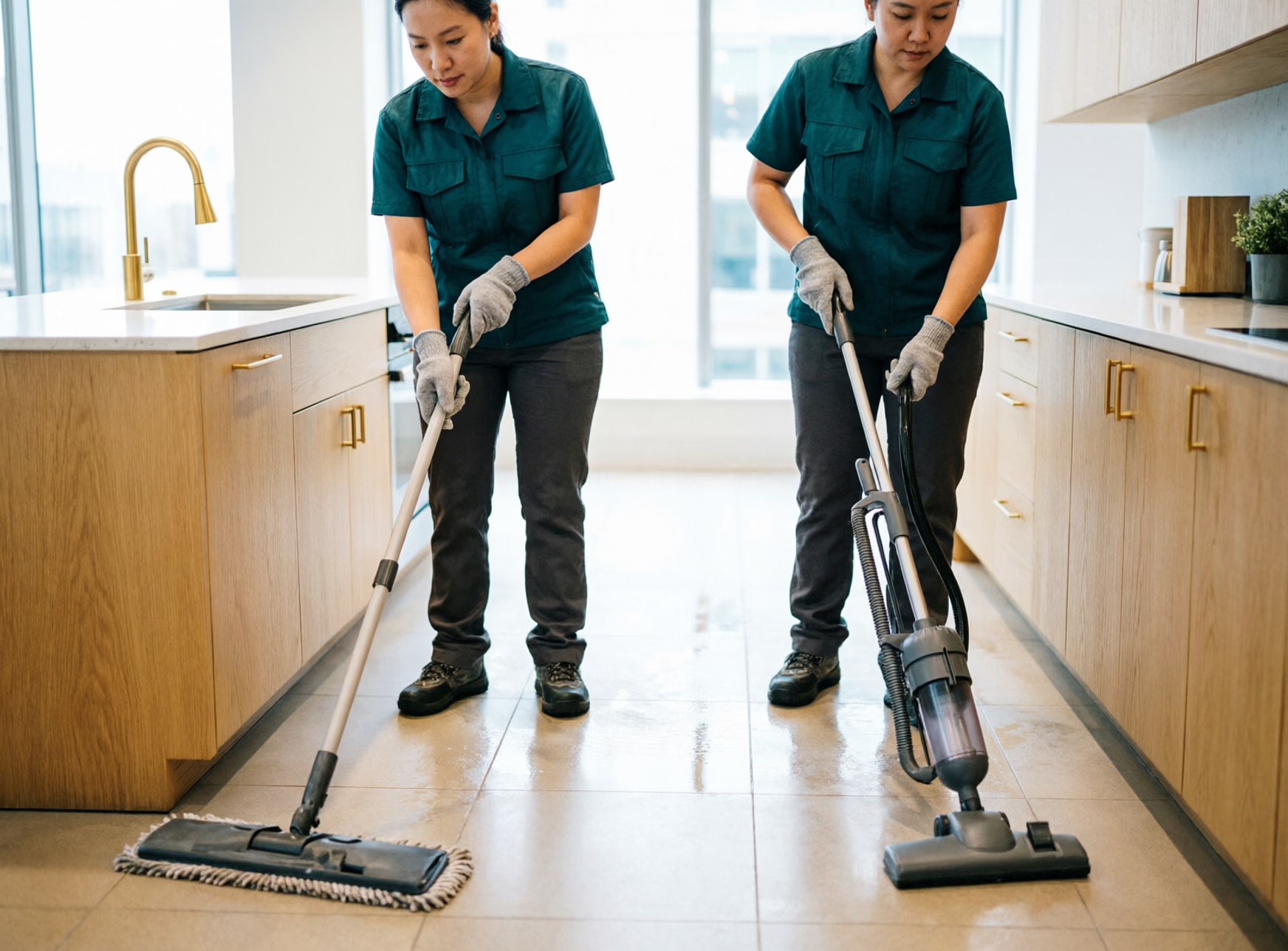
Floors & Carpets:
Vacuuming carpeted areas, mopping hard floors, and spot-cleaning spills and salt stains before they set.
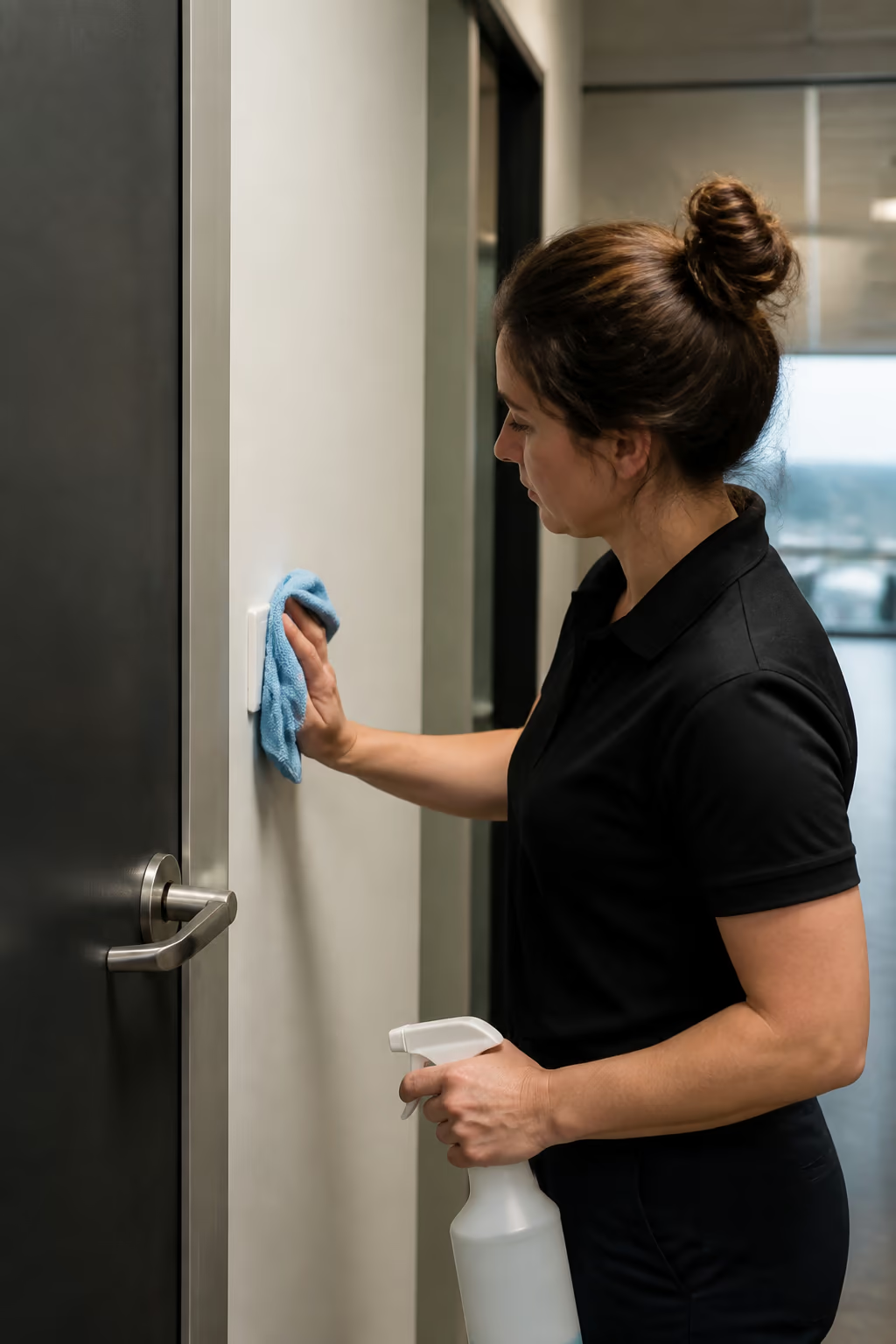
High-Touch Common Areas:
Door handles, light switches, elevator buttons, and railings that carry the most germs through the day.
Waste & Recycling:
Emptying bins, replacing liners, and keeping waste and recycling areas tidy and odour-free.
Window Sills & Glass:
Dusting ledges and cleaning interior glass so the space feels bright and well cared for.
Periodic Deep Tasks:
Baseboards, vents, light fixtures, and other details handled on a rotation rather than every visit.
Matching Service Frequency to Your Office
The right frequency depends on how many people use the space and how it is laid out. A busy open-plan office with a large team and a shared kitchen needs more frequent attention than a small suite with a handful of staff.
Frequency is bounded by employment law as well as by need. Ontario's rules on hours of work limit most employees to eight hours a day and 48 hours a week without a written or electronic agreement, which is why a bigger scope usually arrives as a bigger crew. The provincial guide states the daily limit: “The maximum number of hours most employees can be required to work in a day is eight hours or the number of hours in an established regular workday, if it is longer than eight hours.”
Many offices do well with nightly service five days a week: full cleaning in the evening, so the space is ready and presentable by morning. Smaller teams can stretch to three nights a week, while high-traffic areas such as washrooms and lobbies may need a mid-day tidy on top of the nightly clean.
A good provider will walk your space and build a schedule around your real usage, rather than selling you a one-size-fits-all package. That walk-through should also surface any special needs, such as sensitive surfaces, security hours, or materials you want the crew to use.
Beyond the regular schedule, most offices need periodic deep cleaning. Quarterly carpet extraction, vent and baseboard cleaning, and a top-to-bottom clean before a busy season keep the space from slowly accumulating what daily service cannot reach.
Think of office cleaning as a budget line with a clear return. The cost of a professional crew is usually far smaller than the cost of replacing stained carpets, repairing damaged floors, or managing avoidable staff illness. A written quote makes that trade-off easy to see. For a broader look at pricing across service types, our guide to affordable cleaning services in Ottawa covers what budget-conscious options typically include.
How a Professional Crew Works: Products, Equipment and Safety
A professional office cleaning crew does not improvise. Each visit follows a documented routine that starts with the right tools: commercial vacuums with sealed HEPA filtration, colour-coded microfibre cloths, and certified cleaning chemistry matched to each surface. Our essential office cleaning supplies list breaks down that toolkit item by item for anyone building their own scope of work.
Colour-coded microfibre is a simple but important detail. A cloth used in a washroom never touches a workstation or kitchen counter, which stops germs from moving around the office as you clean. The same logic applies to mops and buckets, which are changed between zones.
Safety is built into the process. Under WHMIS 2015, every product has a hazard label and a Safety Data Sheet, and crews are trained to handle, dilute, and store chemicals properly. That protects your employees and the cleaning team alike.
Most offices also appreciate a consistent crew. The same technicians visit your space regularly, learn where everything goes, and build a working rhythm. When the team knows the building, the results are steadier and small details are less likely to be missed.
Formatted Step-by-Step Office Cleaning Service Checklist
Use this checklist when you review a provider or build a scope of work for your office:
- Step 1.Audit the Space:Walk every zone, note the surfaces and traffic levels, and list the tasks that need to happen daily, weekly, and monthly.
- Step 2.Set a Schedule That Matches Usage:Match cleaning frequency to headcount and layout, and agree on the working hours that cause the least disruption.
- Step 3.Confirm Products and Equipment:Make sure the chemistry is certified and safe for occupied spaces, and that the crew brings commercial-grade tools.
- Step 4.Define the Quality Standard:Agree on what clean looks like, including how touchpoints, washrooms, and kitchens are checked.
- Step 5.Agree on Reporting and Issues:Decide how the crew logs completed work, reports damage, and responds to your requests between visits.
- Step 6.Scheduling regular office cleaning services in Ottawa through Good Cleaner Co. gives your workspace a trained crew, certified products, and a supervisor who checks the work.
Serving Ottawa's Office Neighbourhoods
Good Cleaner Co. serves offices across the capital, from downtown high-rises to the business parks of Kanata and Nepean, the government-adjacent offices in Sandy Hill and the Glebe, and the commercial strips in Orleans and Barrhaven. The service standard is the same wherever your office sits.
We also work with property managers and landlords who need consistent cleaning across several suites or buildings. A single contract can cover multiple locations with the same standard, the same reporting, and one point of contact.
Start With the Actual Situation
Before setting expectations for an office, look at the number of people, open hours, shared amenities, and access rules. A plan copied from another workplace can miss the issue that people deal with every day, such as access at closing time, a crowded kitchenette, or a fragile finish.
Focus on a few concrete outcomes. A washroom, kitchenette, reception area, or meeting room may need its own timing, tool, or care instruction. A useful routine makes the next person’s work easier and avoids asking anyone to guess what “clean enough” means.
Put the agreed tasks, timing, and limits in plain language. A short list can be checked and improved; a sweeping promise about quality, safety, or service cannot.
- Identify the surface or behaviour that needs attention before choosing a response.
- Set a clear order so routine work does not create extra work later.
- Keep tools, messages, and handover notes where the right person can find them.
Use a Deliberate, Low-Drama Process
The best way to match visit frequency to visible soil and occupancy is usually preparation, not more force. Read labels and care instructions, use the mildest compatible method, and give the task the time it needs. If the condition is unclear, test a small inconspicuous area or ask the responsible contact before continuing.
Separate ordinary upkeep from problems that require another decision. A leak, damaged surface, missing access card, unsafe spill, or conflict between coworkers is not fixed by working faster. Record what you observed and route it to the person who can act on it.
In Ottawa, the details often change through the year: wet entryways, salt, pollen, and dry indoor air can alter the workload. Adjust the task list to the condition of the space rather than relying on a generic seasonal script.
- Use a small, labelled set of suitable supplies or agreed communication channels.
- Change a cloth, pad, or approach when it is no longer appropriate for the job.
- Stop and escalate when a surface, safety issue, or workplace concern falls outside the agreed scope.
Review What Happened and Update the Next Step
After the first few attempts, check the scope with the office contact. Ask what helped, what was missed, and whether the timing created a new problem. Specific feedback such as a missed handle, unclear job duty, or crowded area at lunch is more useful than an abstract complaint.
Keep the review factual and brief. Notes, photographs where appropriate, or a simple checklist can show whether a concern repeats. They also help distinguish routine work from a maintenance issue, a staffing problem, or a conversation that needs a manager or qualified professional.
When the process changes, update the written scope or shared expectation before the next visit or shift. That makes the improvement repeatable and fair, and it is more trustworthy than claiming a guaranteed result.
- Check the outcome at the time the room or task is normally used.
- Escalate damage, persistent moisture, hazards, or unresolved conduct concerns promptly.
- Keep the revised instruction short enough that a new person can follow it without guessing.
FAQ
How often should an office be professionally cleaned?
Most offices do well with nightly service on working days, so the space is fresh each morning. Lower-traffic suites can often manage three nights a week, while busy washrooms and kitchens may need an additional mid-day tidy. A walk-through helps set the right cadence.
What is included in a standard office cleaning service?
A standard scope covers workstations, washrooms, kitchenettes, floors, waste removal, and high-touch common areas. Periodic tasks such as baseboards, vents, and interior glass are usually included on a rotation. Ask for the full list in writing so you know what is and is not covered.
Are the cleaning products used in offices safe for employees?
Yes, when a reputable provider is used. Good companies rely on EcoLogo-certified, low-VOC chemistry, train their staff under WHMIS 2015, and follow label instructions. If your team is sensitive to fragrances, ask for fragrance-free products and ventilation during cleaning.
Can the cleaning crew work after hours or before the office opens?
Yes. After-hours cleaning is the most common arrangement because it avoids disrupting the workday. The crew follows your building's access and lockup procedures so the office stays secure.
How do you clean shared kitchens and break rooms?
The crew degreases counters and appliance exteriors, wipes down the microwave and fridge, cleans sinks, and removes food waste so the space stays pleasant. This is one of the areas people notice most, so it is usually scheduled daily.
Do I need to provide supplies or equipment?
No. Professional office cleaning providers bring their own commercial equipment and certified products. If you prefer a specific chemical line, that can usually be accommodated in the scope of work.
How do you handle sensitive or confidential areas?
Discretion is standard. Cleaners are trained not to read or handle paperwork, and reputable providers use background-checked staff. You can also agree on restricted areas or locked rooms in the contract.
What should an office cleaning contract include?
A good contract states the frequency, the detailed scope, the hours, the products and equipment, the price, and how quality and issues are handled. For a step-by-step way to compare options, our commercial cleaning company evaluation guide is a practical starting point.
How quickly can I get a quote for my office?
Contact Good Cleaner Co. online or by phone. We arrange an onsite assessment of your space and deliver a proposal, usually within a day or two, so you can plan without delay.
Do office cleaning services cover carpet and floor care?
Yes. Regular vacuuming and mopping are included, and many contracts add periodic hot water extraction for carpets and deep cleaning for hard floors. Winter salt and spring pollen make scheduled floor care especially valuable in Ottawa.
What happens if something is damaged during cleaning?
Professional providers carry WSIB coverage. Report any damage promptly with a photo, and the provider will make it right.
Can you scale service up for events or peak periods?
Yes. Many providers can add one-time cleans, extra visits, or coverage for events and busy seasons. A flexible contract lets you adjust frequency when your needs change.
How do I know my office is being cleaned to the agreed standard?
Ask about supervision and reporting. Many providers use digital checklists, supervisor walkthroughs, and photo logs so you can see what was done at each visit. You are also welcome to do your own spot checks at any time.
Are your office cleaning services available across Ottawa?
Yes. Good Cleaner Co. provides office cleaning across the city and surrounding areas, with consistent service in the downtown core, Kanata, Nepean, Orleans, Barrhaven, and other business districts. Travel is factored into the plan so there are no surprise surcharges.
Do you provide green or eco-friendly office cleaning options?
Yes. Just specify your preference in the scope of work. Our dedicated guide to eco-friendly office cleaning in Ottawa walks through what that greener program includes.
What is the difference between office cleaning and a deep clean?
Daily and weekly office cleaning keeps surfaces, floors, and washrooms in good shape on an ongoing basis. A deep clean is a more thorough, periodic service that reaches baseboards, vents, light fixtures, interior glass, and other details that regular visits do not cover.
Do you handle special requests like event setup or post-event cleanup?
Yes. Many offices ask for help before and after client events, open houses, and internal gatherings. We can add extra visits or a one-time clean around your event schedule so the space always looks its best.
Wrapping Up
Essential office cleaning is a system, not a single service. It covers the right tasks at the right frequency, with certified products, trained staff, and a clear quality standard. Contact Good Cleaner Co. today for a walk-through and a cleaning plan built around your Ottawa office.
Keep reading
More from Good Cleaner
About the author
Service areas
- Ottawa
- Kanata
- Nepean
- Orleans
- Barrhaven