
8 Questions To Ask Before Hiring A Commercial Cleaning Company
Signing a commercial cleaning contract is a decision you will live with for months or years, and the questions you ask beforehand decide whether that time feels easy or stressful. The right questions reveal how a company actually works, what it will charge for and how it behaves when something goes wrong. This guide lays out eight questions worth asking, what a strong answer sounds like and how to use the answers to choose a partner you trust.

Quick Summary
Before hiring a commercial cleaning company, ask eight key questions covering scope, scheduling, the team assigned to your building, products and quality control. Their answers reveal how the company actually operates, what it charges for and how it responds when something goes wrong, helping you spot red flags and choose a partner you trust.
In this guide
Why These Eight Questions Are the Right Place to Start
A cleaning company can promise the moon in a sales meeting, but its real character shows up in how it answers specific, practical questions.

- The questions cover the areas where contracts most often go wrong: scope, people, products, price and accountability.
- They give you a fair way to compare providers who otherwise all sound similar on paper.
- They put the important details in writing, which protects you later.
- They quickly reveal which companies are confident and which are hoping you will not ask.
For any facility, what are the most important questions to ask before hiring a commercial cleaning company? comes down to what happens in your building every night. The eight questions below turn that broad concern into specific things you can check.
You do not have to ask all eight in a single call. Spread them over a quote meeting, a site visit and a follow-up, and note the answers. The provider's patience with the questions is itself a useful signal, because a company that welcomes a thorough buyer is a company with something to stand behind.
Some buyers worry that asking so many questions will annoy a busy provider. In practice, the opposite is true: the companies worth hiring expect to be asked, because they have nothing to hide. A provider that gets impatient with genuine questions is telling you how it will treat your complaints later.
Questions About Scope and Scheduling
The first three questions settle what the contract actually covers, because scope is where most surprises are born.
- Question 1What exactly is included, and how often is each task done?
- Question 2What is not included, and what would be billed as an extra?
- Question 3How flexible is the schedule, and who handles evenings and holidays?
A strong answer to the first question lists the rooms, the tasks and the frequency in writing. The second question matters just as much, because every contract has limits. Carpet shampooing, stripping and waxing, window washing and after-hours work are commonly separate. Knowing the list in advance prevents the first invoice from becoming a surprise.
Flexibility matters for a working building. Ask how the provider handles schedule changes, building closures and extra work around events or a busy season. The company that plans for change is the company that keeps your office running smoothly when life does not go to plan.
It is also worth asking how often the scope is reviewed. A good provider revisits the plan as your building changes, whether you add space, change shifts or take on new staff. A contract that never changes is a contract slowly falling out of step with the building it serves.
Scope questions also protect you from the most common complaint in commercial cleaning: the gap between what was assumed and what was agreed. Write the list of included tasks into the contract itself, not just the conversation, so both sides are working from the same page. That single habit prevents more disputes than any other step you can take. Our commercial cleaning checklist by industry is a useful starting point for what that list should include for your type of building.
Questions About the Team in Your Building
The next three questions are about the people who will actually be in your space every night.
- Question 4Who cleans the building, and are they employees or subcontracted staff?
- Question 5Are staff background-checked, trained and supervised?
- Question 6What happens if a team member is absent or a task is missed?
The difference between employees and subcontracted staff is worth understanding. Employees of the company are trained, supervised and accountable through one provider. Subcontracted teams can change from visit to visit, which makes consistency and accountability harder to guarantee.
Ask how training works and whether it is refreshed. A team that follows a documented process, checks its work and has a supervisor who responds to feedback is far more reliable than one that simply shows up. And ask the accountability question directly: if something is missed, who fixes it, and how quickly?
Consistency matters for security as well as quality. When the same trained people come to your building each visit, they learn where things go and how to handle the space. When faces change constantly, that knowledge resets every time, and the risk of small mistakes rises with it.
Ask how the team handles turnover as well. Every company loses staff from time to time, but a good provider has trained backups ready rather than sending whoever happens to be free. The strength of the backup plan tells you how stable the service will stay through a year of staffing changes.
Questions About Products and Quality
The middle questions protect your people, your building and your peace of mind.
- Question 7What products and chemicals are used, and are they safe for my staff?
- Question 8How does the company handle quality checks and your feedback?
Ontario's Occupational Health and Safety Act gives those questions their weight: an employer must instruct, inform and supervise workers to protect their health and safety, and take every precaution reasonable in the circumstances for their protection. A contractor who cannot describe how it does that is describing a gap, not a style of working. The province lists the duty in one line: “Take every precaution reasonable in the circumstances for the protection of a worker”.
Product questions are serious in Canada. A responsible provider uses certified low-fume or EcoLogo products, trains staff under WHMIS 2015 to read labels and handle chemicals safely, and uses a Health Canada DIN-registered disinfectant only where a surface genuinely needs one, respecting its contact time. These details matter because the products affect the air your people breathe.
Quality control is the final piece of this set. Ask how often the work is checked, how you report a problem and how it is resolved. A company that welcomes feedback, tracks complaints and corrects missed tasks is a company that improves rather than defends.
Ask for a copy of the product list if you can. A provider that is proud of its products shares the list freely, and seeing the actual products helps you check they match the safe, certified standards described on the call.
What a Strong Answer Sounds Like
A good answer is specific, and it is usually put in writing without hesitation.
- Strong answers name the exact tasks, frequencies and products involved.
- They come with documents you can review: a scope list and a proposal.
- They describe a process for training, supervision and resolving problems.
- They treat your questions as normal, not as an inconvenience.
If you are comparing options, our guide to comparing commercial cleaners is a useful starting point for the questions that matter. The guide walks through the same territory in more detail, so you can prepare before you call.
We should also be transparent about our own approach. Good Cleaner Co. answers these eight questions plainly, employs and trains its staff, prefers EcoLogo-certified, low-fume cleaners, respects Health Canada DIN-registered product labels and follows WHMIS 2015 safe-handling training. We treat a thorough site visit and an honest proposal as the start of a good relationship, not a hurdle.
The best answers are also consistent. The same story told over a call, in a proposal and on a walkthrough means the process is real. When the answers drift between conversations, it usually means the process is being improvised as you go.
Red Flags When You Get the Answers
Knowing what a strong answer looks like makes it easier to spot the opposite.
- Vague answers that cannot be pinned down in writing.
- Reluctance to share requested documents or references.
- A list of included tasks that keeps changing as you talk.
- Prices that seem too good to cover real staff, training and products.
- No clear process for complaints, missed tasks or quality checks.
A provider that dodges the details is usually hiding something in the contract. The questions are not a formality; they are a screen that separates companies with a real process from those that rely on goodwill alone. Our commercial cleaning cost canada guide explains what typically drives a fair price, which makes an unrealistically low quote easier to spot.
Use the answers together. A single weak answer is not a deal-breaker, but a pattern of vague replies, missing documents and defensiveness should be. The way a company responds to your questions is a preview of how it will respond to your concerns later.
One more flag is worth naming: pressure. A provider that pushes you to sign quickly, offers a discount that expires tonight or downplays the importance of reading the contract is managing your decision rather than serving it. Good providers are happy to let you read and think.
Canadian Context for Ottawa Facilities
Ottawa buildings have their own cleaning reality, and a provider who knows it can plan properly.
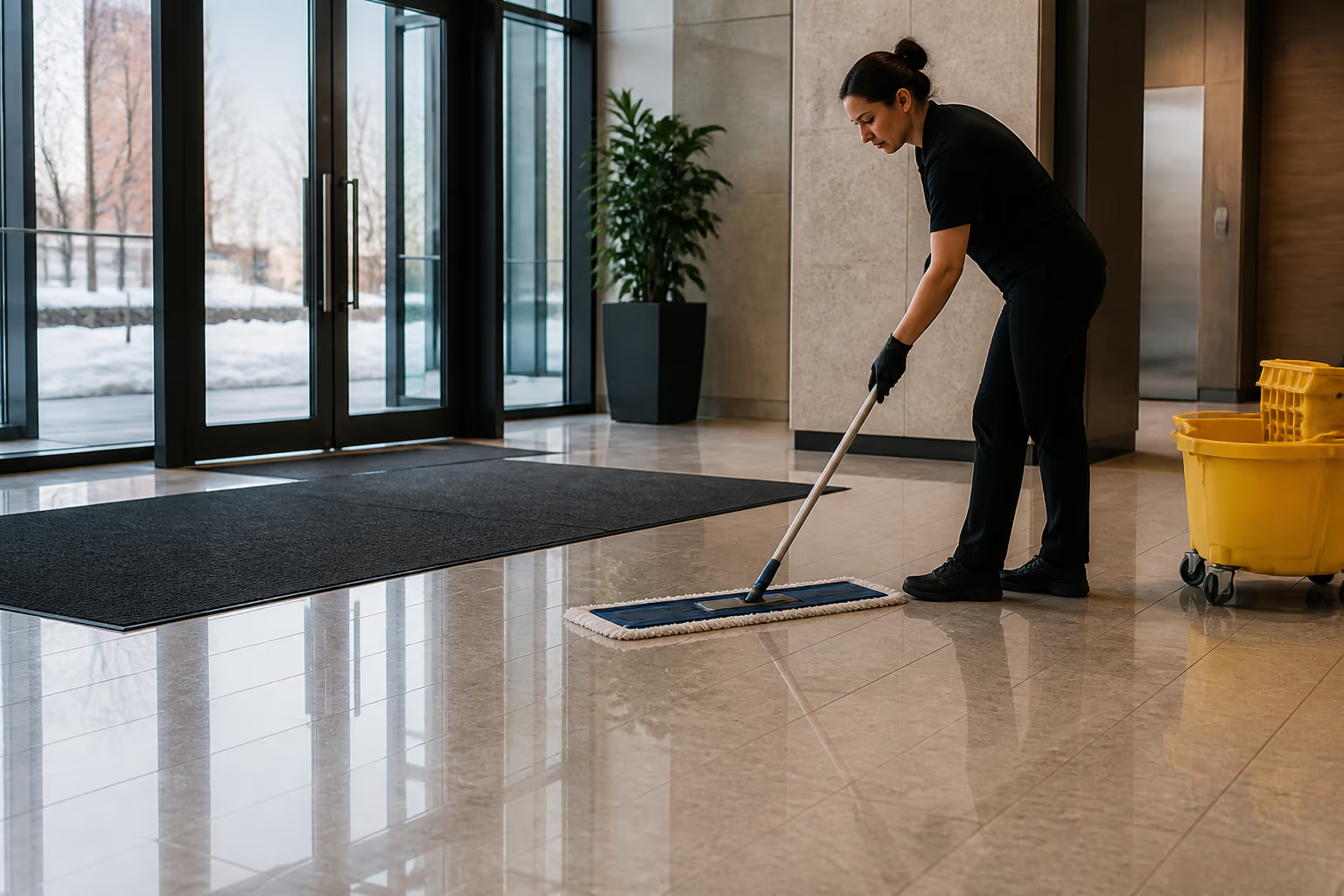
- Winter salt and slush make entryways and lobby floors the priority through the cold months.
- Forced-air heating stirs up dust, so hard surfaces need more frequent wiping.
- Older buildings and heritage spaces often need gentler products and careful handling.
- Weather closures and long weekends shift schedules, so flexibility matters.
A local provider plans for these realities in the proposal. The schedule, the products and the equipment are chosen for the building and the season rather than applied from a template.
That local knowledge is also visible in the questions the company asks you. A provider that wants to know about your traffic, your surfaces and your expectations is preparing to do the job, not just to sign the contract.
How to Make the Most of a Site Visit
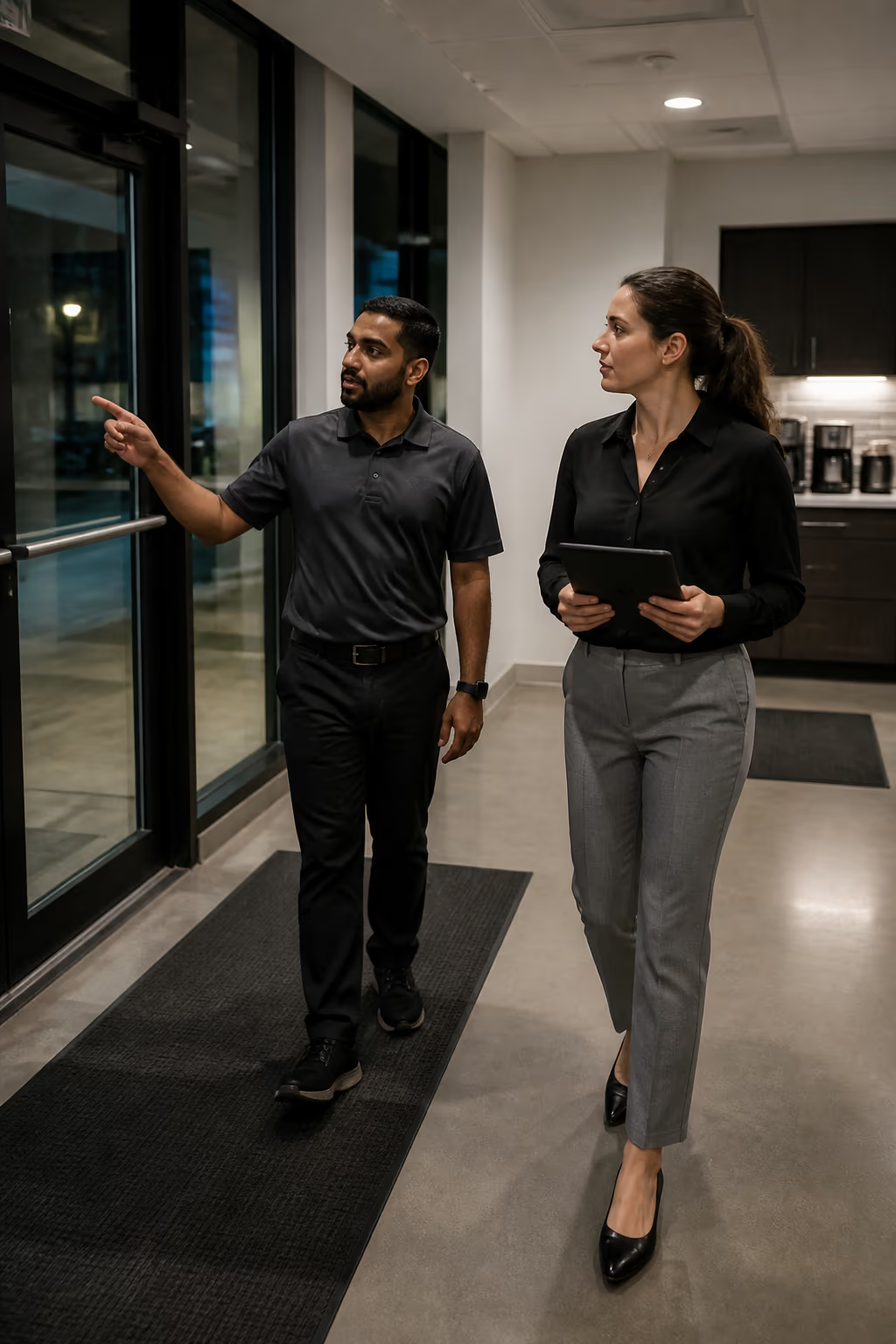
A site visit is where the written answers come to life, and it is worth preparing for properly.
- 01
Walk the whole space and confirm which areas are part of the quote.
- 02
Ask the site manager to show you how tasks would be done on a typical night.
- 03
Point out the trouble spots, like high-traffic entrances, shared kitchens and sensitive surfaces.
- 04
Meet the supervisor who would be responsible for your account.
The visit is also a chance to watch how the company treats the building and its people. A team that is organised, respectful and prepared on a walkthrough is usually the same on a normal shift.
Bring your written answers with you and check them against what you see. If the walkthrough contradicts the proposal, that is worth a direct conversation before you sign.
Ask who keys the building at night and how access and alarms are handled, where supplies are stored and how waste is removed. A good walkthrough should feel like watching the plan in action, with the company pointing to its equipment, products and tasks without hunting for answers.
Take a colleague with you if you can. A second set of eyes catches details you miss, and a conversation with another decision-maker helps you agree on the standard you both expect.
Formatted Step-by-Step Checklist for Evaluating a Commercial Cleaning Company
Use this checklist to get from a shortlist to a signed contract you feel good about.
- Step 1.Write down your scope, your tasks and your schedule so every provider quotes on the same basis.
- Step 2.Ask the eight questions in this guide and keep the answers in writing.
- Step 3.Compare the proposals on scope, people, products and price, not just the headline number.
- Step 4.Check references and read the contract's renewal and notice terms.
- Step 5.Book a site visit so you can see how the provider works and ask the remaining questions in person.
- Step 6.When you are ready to compare scope and scheduling, review our professional office cleaning teams in Ottawa and put these eight questions to us.

FAQ
How many questions should I ask before hiring a cleaning company?
The eight questions in this guide cover scope, people, products, quality and price. Asking them all, in writing, gives you a fair basis to compare providers.
What should I do if a provider will not answer my questions?
Treat it as a red flag. If a company cannot explain its process in plain language, it is probably not confident in the work it will deliver.
How do I compare quotes that look different?
Compare them on the same scope first. Ask each provider to price the same list of tasks, then weigh the people, products and accountability behind each number. Our page on typical commercial cleaning costs in Ottawa is a useful benchmark before you start comparing quotes.
What is the most important question to ask a cleaning company?
The scope question, what is included and what costs extra, because it decides whether the price you are quoted is the price you pay.
Should I sign a long-term cleaning contract right away?
Not necessarily. A shorter initial term or a trial period lets you judge the service before a long commitment. Ask what terms are available.
Can a cleaning company work around my office hours?
Most can. Ask about evening, weekend and holiday coverage, and how schedule changes are handled, before you sign.
Do commercial cleaners bring their own supplies?
Most full-service companies do. Ask what products and equipment are included so you know what to expect in the invoice.
What happens if a cleaner damages something in my office?
A professional company has a clear process for incidents. Ask how damage is reported and resolved before you sign.
How often should I review the cleaning contract?
Review it at least once a year, and revisit the scope whenever your space changes. A good provider is open to a regular review.
Do I need a site visit before signing?
A site visit is strongly recommended. It lets you see the space, meet the supervisor and confirm the written answers match the real building before you commit.
Wrapping Up
The eight questions in this guide cover the territory where cleaning contracts succeed or fail: scope, people, products, quality and price. Ask them plainly, keep the answers in writing and compare providers on the same basis. The right company welcomes the questions, because a confident provider has nothing to hide. Take your time, check the details and choose the partner who makes your office feel like a better place to work.
Keep reading
More from Good Cleaner
Services that fit
- Professional Office Cleaning Services in OttawaOffice cleaning services in Ottawa for corporate offices, clinics and professional suites. After-hours scheduling, eco-friendly products and a free quote.
- Janitorial Services in OttawaRecurring janitorial services in Ottawa for offices, warehouses, retail, dealerships and schools, with eco-friendly commercial cleaning and customized plans.
About the author
Service areas
- Ottawa
- Kanata
- Nepean
- Orleans
- Barrhaven