
Commercial Cleaning Cost in Canada: Benchmark Rates Across Provinces
Commercial cleaning pricing in Canada is not one flat number. It shifts with your building's size, how often the crew comes through, what kind of business operates inside, and which city you are in. In this guide we walk through realistic hourly and square-footage benchmarks, explain what most quotes include and what they quietly leave out, and give you a practical checklist for comparing janitorial proposals for your Ottawa property.
Quick Summary
If you manage or own a commercial property in Canada, cleaning should be a predictable operating cost once you understand how janitorial pricing actually works. This guide breaks down the two main pricing models, the factors that move your rate up or down, and how to read a quote so you never overpay for office or facility cleaning.
In this guide
National Janitorial Benchmarks: Hourly vs. Square Footage Formulas
Commercial cleaning pricing in Canada is built on two dominant models: hourly rates for smaller or irregular jobs, and per-square-foot rates for recurring contracts. Hourly rates are simple, you pay for the time a cleaner spends in your building, which suits short projects, one-off deep cleans and buildings where the scope changes from visit to visit, though an hourly quote alone tells you nothing about productivity, since a slow crew can cost you more than a fast one. Square-footage pricing flips that around: the provider estimates how many hours your building needs based on its size and use, then bundles those hours into a predictable monthly rate that stays steady whether the crew spent three hours or four on a given night, which is usually easier to budget for office buildings, retail space and clinics. A national average is a useful starting point, not a rule, because the number that matters is the one on your own quote, which already reflects your building's layout, hours and standards.
Whichever model a provider uses, the same statutory floor sits underneath it in Ontario, where the general minimum wage is $17.60 an hour from 1 October 2025 to 30 September 2026 and rises to $17.95 on 1 October 2026. Converting a per-square-foot quote back into an implied hourly figure and testing it against that floor is a quick way to see whether a bid is realistic. The provincial guide states how it is measured: “Compliance with the minimum wage requirements is determined on a pay period basis.”
Factors Influencing Commercial Rates: Frequency, Security & Specialization
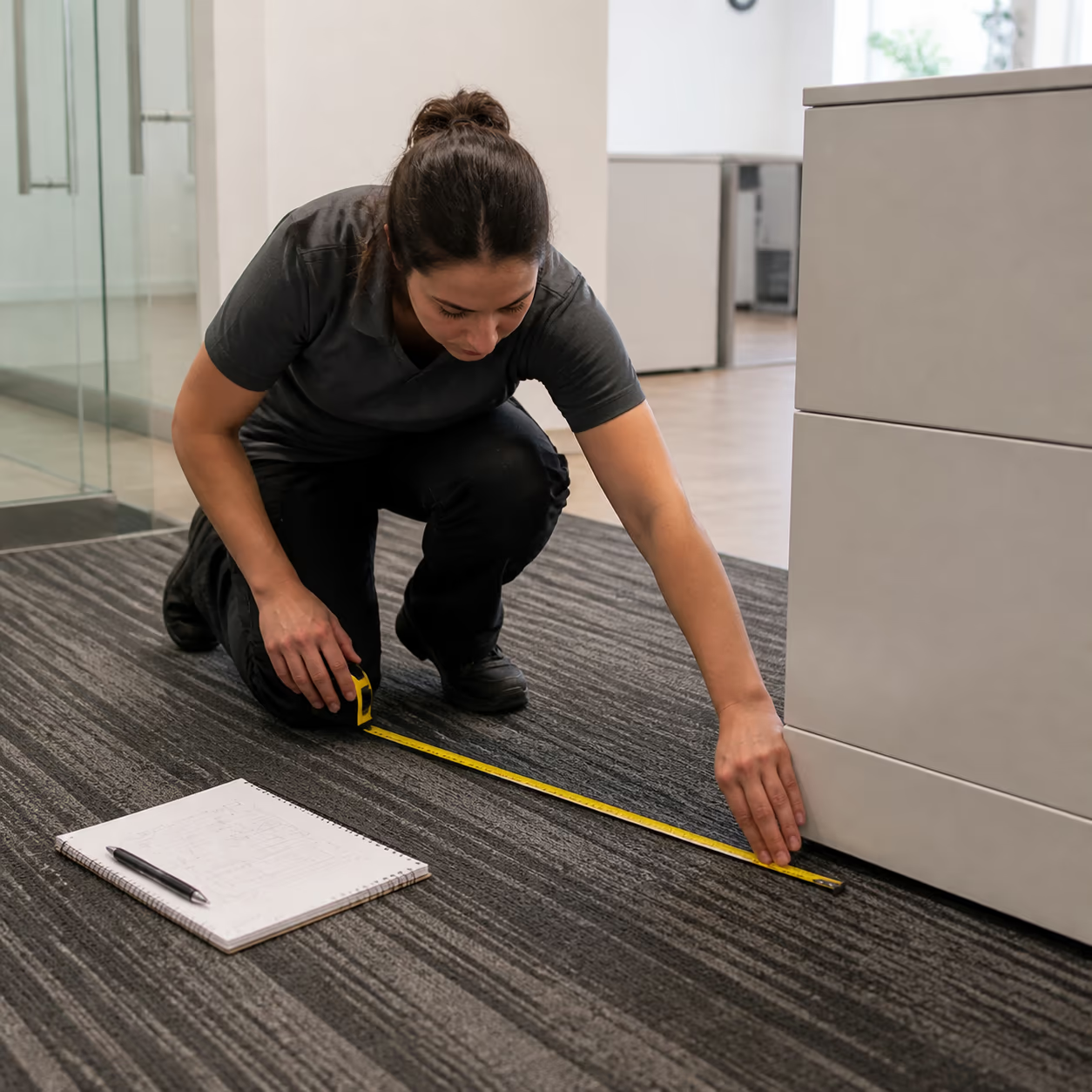
Commercial cleaning rates in Ontario move up or down mainly on three factors: facility square footage and layout, cleaning frequency, and specialized sector requirements. Open offices with long sight lines clean faster than partitioned floor plans or clinics with many small exam rooms, so a denser layout raises the rate per square foot. A building cleaned five nights a week earns a better per-visit rate than one cleaned once a month, because the crew develops a rhythm and the space never falls behind. Medical clinics, labs and food service facilities need higher-grade disinfectants, more training and stricter documentation, and that expertise shows up in the rate. Most property managers are surprised by how much the final price moves once these details are adjusted.
| 1. Facility Square Footage & Layout | Open offices with long sight lines clean faster than partitioned floor plans or clinics with many small exam rooms. A dense layout means more walls, more corners, and more time, so the rate per square foot climbs accordingly. |
|---|---|
| 2. Cleaning Frequency | A building cleaned five nights a week earns a better per-visit rate than the same building cleaned once a month, because the crew develops a rhythm and the space never falls behind. Frequent care costs less per visit and keeps the building consistently presentable. |
| 3. Specialized Sector Requirements | Medical clinics, labs, and food service facilities need higher-grade disinfectants, more training, and stricter documentation. That expertise is worth paying for, and it shows up in the rate. |
| 4. Reviewing our guide to making a citrus cleaner offers natural cleaning cost management tips for the light maintenance you can handle between professional visits. |
What Most Commercial Cleaning Quotes Include and Leave Out
A transparent commercial cleaning quote should make clear what it includes and what it leaves out, since that clarity is the single best protection against surprise invoices. Most janitorial proposals include the labour for scheduled visits, basic cleaning chemicals and the equipment the crew brings with them; some providers bundle supplies like paper products, soap and trash liners into the monthly rate, while others itemize them at wholesale cost, and the quote should say clearly which one you are getting. A separate look at eco-friendly commercial cleaning products in Canada can help you evaluate whether the chemistry included in a quote fits your sustainability goals, and if a number is fuzzy, ask, since a reputable company will walk you through its pricing model line by line. Watch for the line items that quietly inflate a contract:
- Floor care extras: stripping, waxing, and buffing are usually quoted separately from nightly cleaning.
- Security or background-check surcharges for crews working in sensitive buildings.
- Restocking fees that only appear after the first month of service.
- After-hours premiums for buildings cleaned outside normal business hours.
How to Compare Commercial Cleaning Quotes Without Getting Burned
Comparing commercial cleaning quotes fairly starts with recognizing that price alone rarely gives the full picture: two quotes for the same building can differ by hundreds of dollars a month and both still be honest, because the scope inside each one is different. Start by standardizing the scope, giving every bidder the same square footage, the same cleaning frequency and the same list of washrooms, kitchens and floor-care expectations, since the more detail you provide, the more directly you can compare the numbers that come back. Then compare what is included rather than just the total, because one provider may quote lower by skipping the entrance mat service or using a cheaper supply line, while another quotes higher for a dedicated supervisor who visits monthly, so lower is not automatically better.
Finally, ask about the quality-control system. A price that looks great on paper matters less if the building never looks clean. Confirm how the provider inspects its own work, how quickly it responds to complaints, and whether a single account manager owns the relationship.

Budgeting for a Commercial Cleaning Contract Across Provinces
Provincial differences matter more than most buyers expect when budgeting for a commercial cleaning contract: labour costs, commercial cleaning rates and even the price of supplies vary between cities, so a rate that is normal in one province can be out of line in another. Ontario, and the Greater Toronto and Ottawa areas in particular, tends to sit in the middle of the national range, with larger urban centres and higher commercial rents often seeing rates near the top of the range while smaller communities see more moderate pricing, a distinction driven by what it costs to run a crew in that city rather than by quality. A closer breakdown of commercial cleaning pricing in Ottawa specifically can help you see where your own quote lands within that range.
Plan for the four seasons:
floor care costs more in winter because of salt and moisture, and interior dusting picks up in spring.
Build in a supply line:
paper products, soap, and trash liners are recurring costs, whether the quote includes them or not.
Reserve a small contingency for emergency work, such as a flood or a post-event clean, so a surprise does not blow the monthly budget.
Revisit the contract once a year:
as your headcount and layout change, the scope of work should change with them.
A few practical budgeting habits will serve you in any province:
When you compare providers, ask each one how their pricing reflects your province and city. A company that can explain regional differences is usually one that prices honestly, and that willingness to be open is itself a sign that you are dealing with a vendor who sees you as a long-term client rather than a one-time invoice.
Formatted Step-by-Step Commercial Cost Benchmark Audit Checklist
Follow this checklist whenever you audit a commercial cleaning contract or compare new proposals:
- Step 1.Calculate Facility Square Footage and Assign Zone Usage Frequencies:Establish a baseline by mapping every zone, its size, and how often each one actually needs attention.
- Step 2.Compare Quotes Against Ontario Regional Averages:Use local benchmarks as a sanity check rather than a rule, and ask why a quote sits far above or below the range you see in the market.
- Step 3.Verify Inclusion of EcoLogo Cleaning Chemistry and Commercial HEPA Equipment:Confirm the chemistry and equipment are part of the rate, not a separate supply charge that appears later.
- Step 4.Audit Security Clearance and WHMIS Certification Upcharges:Understand what background screening and safety training cost so labour rates stay fair and honest.
- Step 5.Request All-Inclusive Monthly Pricing Without Unlisted Supply Fees:Lock in predictable invoices by asking for a rate that includes the supplies the crew actually uses.
- Step 6.If you need a team or a recurring schedule, use commercial janitorial services in Ottawa to discuss scope, access, and timing before deciding whether it fits.
Serving Ottawa's Business Neighbourhoods
Good Cleaner Co. cleans offices, retail, and clinics across Ottawa, from the tech parks of Kanata to the glass towers downtown and the commercial strips of Orleans and Nepean. The pricing principles in this guide apply the same way in every neighbourhood, whether your building sits in Barrhaven or along the main streets of Old Ottawa South. Wherever you operate, you should expect the same transparency from a cleaning partner.
Putting this guidance into practice
For a Canadian business comparing proposals, start with what the price covers in this building, including frequency, access, washrooms, floors, waste, timing, and special tasks. That keeps the conversation tied to the actual space instead of a generic promise.
Review defined tasks, excluded work, supply responsibility, site constraints, communication, and review conditions. A written scope should say what happens on a normal visit, what needs approval, and who should hear about a recurring issue.
Seasonal considerations in Ottawa
Weather and occupancy can move the workload. Track salt management, extra entryway care, or deep-clean requests as visible scope items.
Look at the actual condition, the number of people using the space, and the material being cleaned before changing products, equipment, or frequency.
Safe, responsible cleaning
Describe sensitive flooring, food areas, ventilation limits, and access rules so no one makes unsafe assumptions on site.
When a surface, product, or site requirement is unclear, ask before continuing. A careful decision protects people and property better than a shortcut.
How to review this as a Canadian business comparing proposals
Before changing this routine, take a short walk through the actual space and describe what you see in ordinary language. Start with what the price covers in this building, including frequency, access, washrooms, floors, waste, timing, and special tasks. That gives everyone the same starting point and prevents a broad request from quietly becoming a different job.
Ask someone who uses the space every day what creates the most friction. Their answer may be a messy entry, an awkward storage area, a surface that marks easily, or a time when work cannot happen. A useful plan respects that local knowledge instead of replacing it with a standard script.
Choose one change that can be observed over a few visits. It might be a different order of work, a clearer handover, or more attention to defined tasks, excluded work, supply responsibility, site constraints, communication, and review conditions. Write down the reason for the change and what would show that it is helping. That is a better test than relying on a vague impression.
Keep the discussion specific when something is not working. Name the room, surface, timing, and result you expected, then decide what should happen next. Clear feedback is fair to the people doing the work and far more useful than a blanket complaint.
Finally, revisit the plan when the building, household, or season changes. A routine should be stable enough to follow and flexible enough to respond to real conditions. That balance is what makes cleaning guidance practical.
Free Office Cleaning Checklist to Print
The scope behind a commercial quote is a task list, so it helps to read one before comparing prices. This printable checklist sets out the daily, weekly, monthly and quarterly work an office actually needs, with the product-handling rules and the seasonal adjustments an Ottawa building asks for.
Take it into the walkthrough and mark what your building needs. There is no form and no email address to hand over.
Letter size, print-ready. No email address, no sign-up.

FAQ
What is the average monthly cost for a 5,000 sq ft office in Canada?
A 5,000 sq ft office cleaned several nights a week typically falls within a moderate monthly range, but the exact number depends on washroom count, kitchen use, floor type, and how much you want included in the supplies. Ask for a square-footage quote and compare it against an hourly estimate to see which model is fairer for your building. A broader office cleaning cost guide for Canada can help you see how that range compares across other cities and building types.
Why do square footage rates decrease for larger commercial facilities?
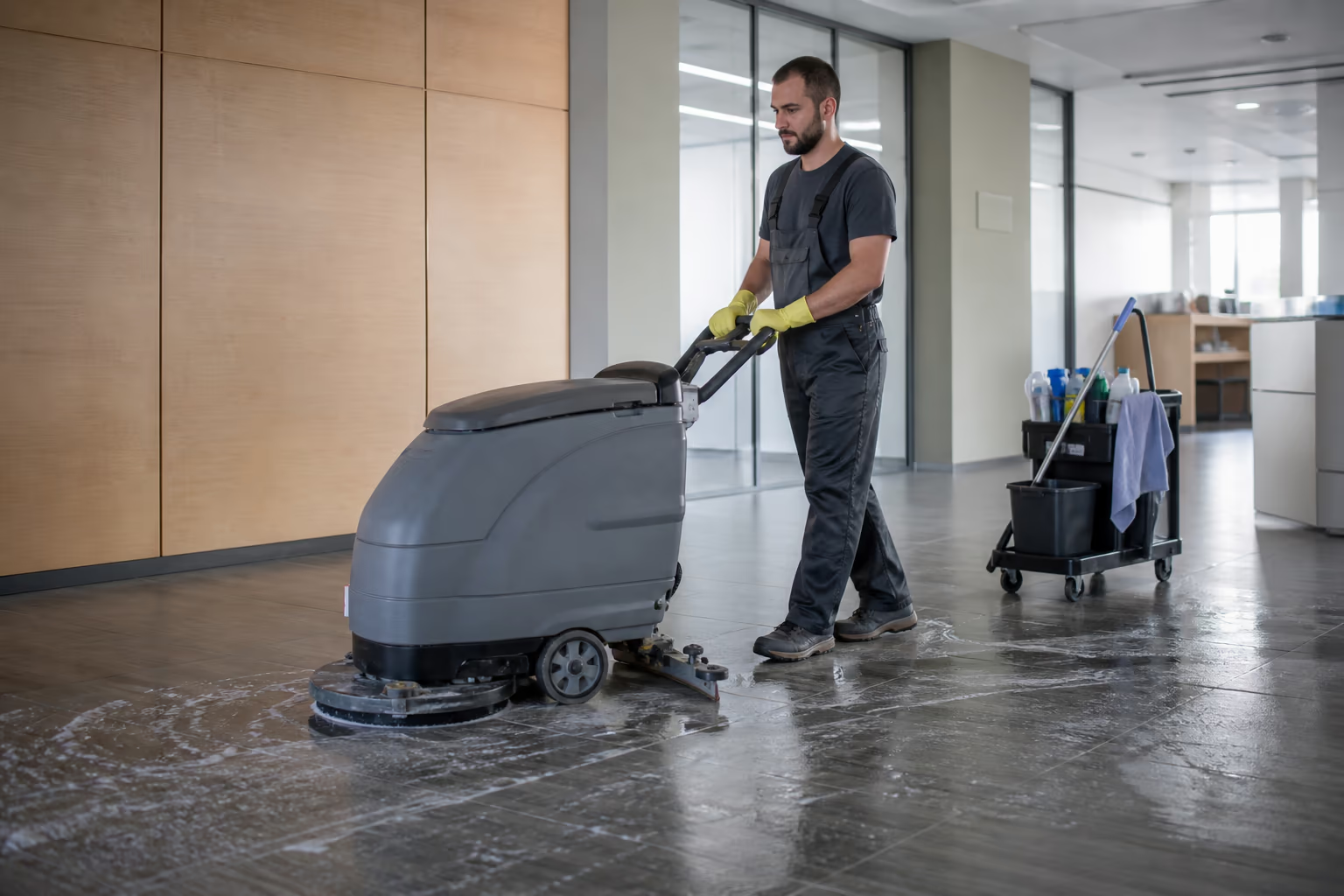
Larger open facilities let janitorial teams use automated floor scrubbers and efficient workflow patterns, which lowers the labour cost per square foot. The rate drops because the work becomes more productive, not because the building matters less.
Are janitorial supplies like trash liners included in Canadian commercial quotes?
Reputable janitorial contractors include basic cleaning chemicals and equipment in their rate, but trash liners and paper products are often itemized separately or billed at wholesale cost. Confirm which model your quote uses before you sign.
How often should a commercial office be cleaned to stay cost-effective?
Most offices settle on three to five visits per week. High-traffic washrooms and kitchens need nightly attention, while open workstations can be vacuumed three times a week. Matching frequency to actual use keeps the space clean without paying for visits that add no value.
Does a higher cleaning frequency mean a higher total monthly cost?
Not always. Frequent visits cost less per visit because the building never falls behind, so the monthly total can land close to a lighter schedule with deeper cleans. Compare the full monthly price rather than the per-visit rate.
Why do medical clinics and labs pay more for commercial cleaning?
They need higher-grade disinfectants, more training, stricter documentation, and often after-hours access. That expertise and accountability is a real cost, and it protects patients, staff, and your liability as the property owner.
How can I reduce my commercial cleaning costs without cutting quality?
Simplify the scope. Standardize trash and recycling points, protect entrances with quality matting, and report small problems quickly so they never turn into deep cleans. A well-run building needs less emergency work.
What should I look for in a transparent janitorial quote?
Every line should be explained: visits per week, what is included in supplies, how floor care is billed, and who supervises the work. If a provider hesitates to walk you through the numbers, treat that as a warning sign.
How do I get a commercial cleaning quote for my Ottawa building?
Contact Good Cleaner Co. with your square footage, cleaning frequency, and any special requirements, and we will prepare a transparent commercial cleaning estimate for your facility.
Does commercial cleaning cost more for buildings with cafeterias or kitchens?
Kitchens and break rooms add real work: grease on appliances, food debris in sinks, and high-touch surfaces that need daily attention. Expect a modest increase in the rate for any building with a staff kitchen, and a larger one for a full cafeteria.
How much does commercial cleaning cost in Canada?
There is no single national number, because a quote is built from the occupied area, the surfaces, the visit frequency, the standard you need and the local wage floor. Ask every provider to price the same written scope, then compare the totals against what each one actually includes. Good Cleaner Co. prices a building after a walkthrough rather than from a table.
How are commercial cleaning services rates usually quoted?
Most Canadian providers quote per square foot, per cleaner hour, per visit or as a monthly contract figure. The unit matters less than the scope attached to it, so ask for the areas, the visit frequency, the task list, the consumables and the exclusions in writing beside whichever unit is used.
Why do two providers quote different rates for the same office?
Usually because they are not quoting the same work. Visit frequency, washroom count, floor care, consumables, supervision and after-hours access all move the number. Once the scope reads identically on paper, the quotes become comparable.
What should I ask for before accepting an office cleaning price?
Ask for the pricing unit, the itemised scope, what is excluded, how periodic work such as floor care is billed, who supervises the visits and how issues are escalated. A provider who will not put those in writing is quoting a number rather than a service.
Wrapping Up
Auditing commercial cleaning benchmarks ensures fair-market pricing and a higher standard of service. Contact Good Cleaner Co. today to book janitorial cleaning teams in Ottawa.
Keep reading
More from Good Cleaner
- How Much Does Commercial Cleaning Cost in Ottawa? 2026 Commercial Pricing & Rate Guide
- Understanding Professional Office Cleaning Rates in Ontario
- Top Commercial Cleaning Company in Ottawa: Corporate Office Maintenance
- How to Choose the Best Commercial Cleaning Company in Ottawa: Vendor Selection Guide
Services that fit
- Professional Office Cleaning Services in OttawaNightly and after-hours office cleaning for corporate offices, clinics and professional suites, with after-hours scheduling and eco-friendly products.
- Janitorial Services in OttawaRecurring janitorial services in Ottawa for offices, warehouses, retail, dealerships and schools, with customized plans and eco-friendly chemistry.
About the author
Service areas
- Ottawa
- Downtown Ottawa
- Kanata
- Nepean
- Orleans
- Barrhaven