
Day Porter Services: What They Are & When Your Building Needs Continuous Care
Most buildings think of cleaning as an overnight job, but a building that is only cleaned at night looks tired by mid-afternoon. Day porter services fill that gap with a dedicated daytime cleaner who handles the constant small messes that foot traffic creates. This guide explains how the service works, when your building needs it, and what to expect from a professional day porter programme.
Quick Summary
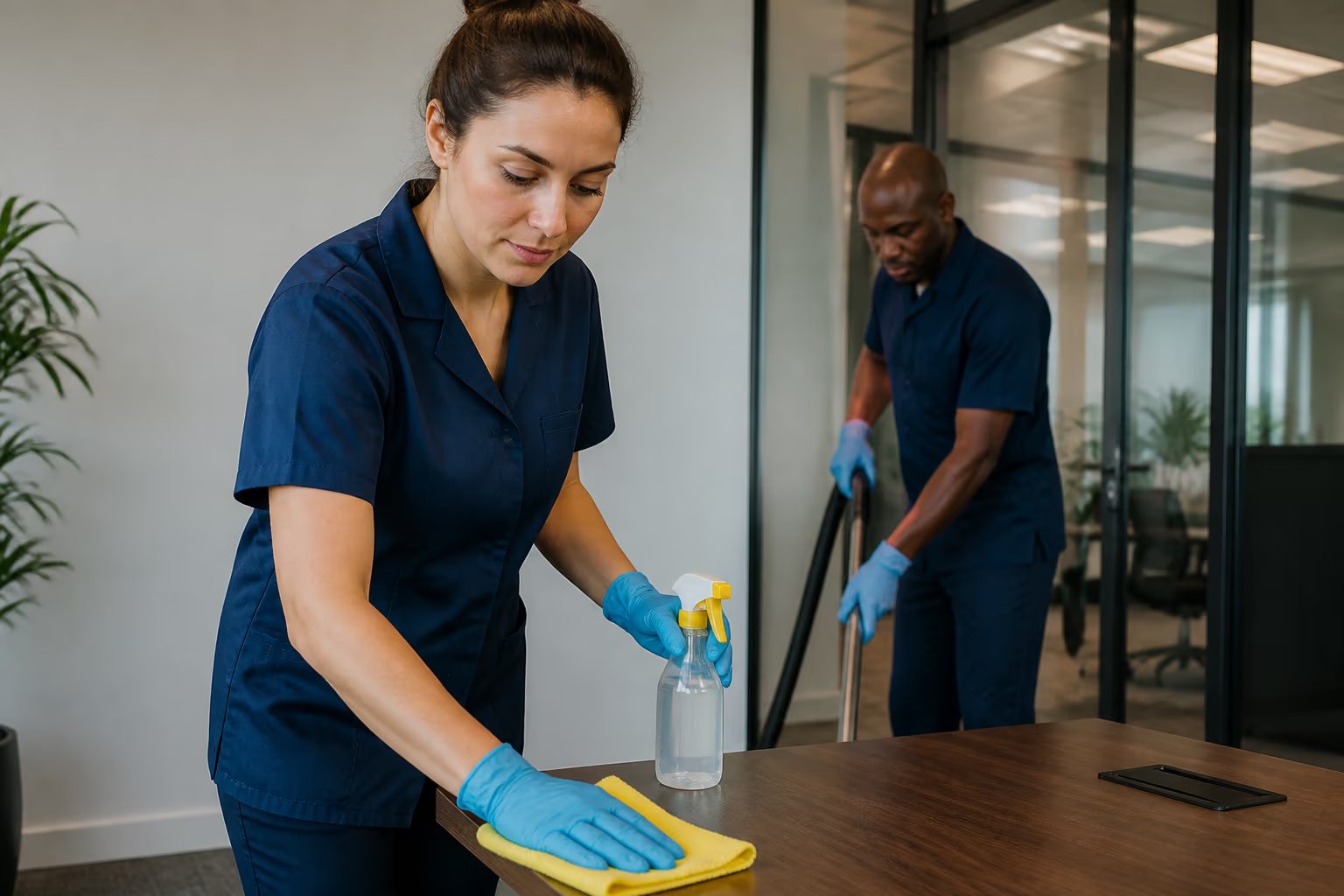
Day porter services put a uniformed cleaner in your building during business hours so the lobby stays presentable, washrooms stay stocked, and spills get cleaned the moment they happen. This guide explains what day porter services are, which buildings actually need them, and how to put a daytime care programme in place.
In this guide
When Does a Commercial Facility Need Day Porter Services?
High-density commercial buildings, medical centres, corporate headquarters, and retail spaces experience constant foot traffic during business hours. While nightly janitorial services handle heavy deep cleaning, daytime occupancy generates continuous mess: dirty entrance glass, depleted washroom paper, cafeteria spills, and overflowing trash cans.
A commercial property needs a day porter when daytime foot traffic exceeds the capacity of nightly cleaning alone. Buildings with heavy daily occupancy, multi-tenant corporate towers, and healthcare facilities all benefit from having an on-site cleaner who can respond while the building is awake.
The clearest test is to walk through your building at two in the afternoon. If the washrooms are running low, the lobby glass is smudged, and trash cans are overflowing, nightly cleaning is not keeping up, and that gap is exactly what day porter services are designed to close.
Essential Day Porter Operational Duties
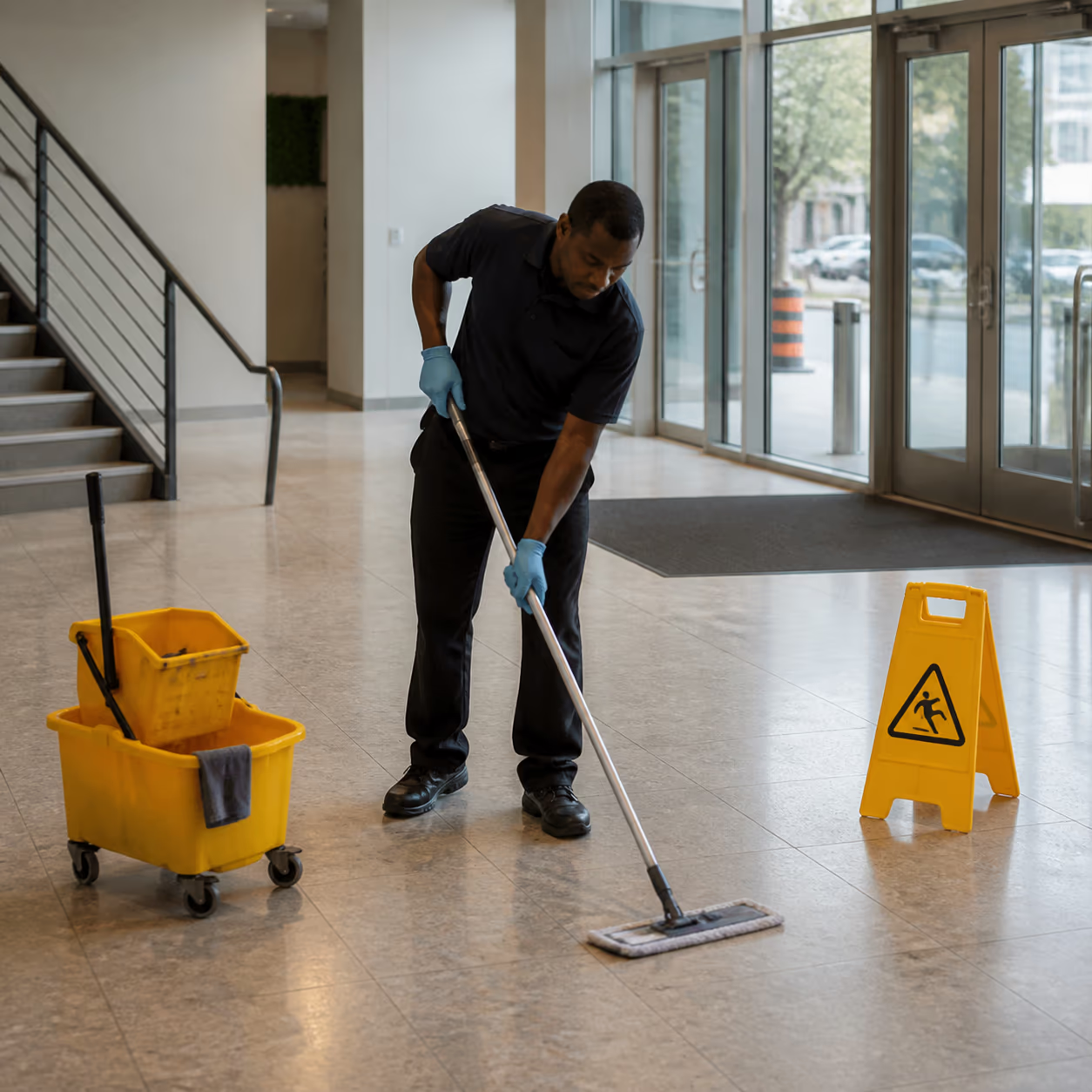
A professional day porter acts as an on-site facility ambassador during regular business hours, executing key operational tasks:
Which Buildings Benefit Most From a Day Porter
Day porter services are not a one-size-fits-all product, but several building types get clear value from daytime coverage.
Multi-tenant office towers are the classic fit. With many companies sharing lobbies, elevators, and washrooms, the building's public spaces see constant use, and a day porter keeps those shared areas presentable for everyone. Medical and dental clinics also benefit, because waiting rooms and washrooms need regular attention and bio-hazard spills need a quick response from someone trained to handle them safely.
Schools and retail centres round out the list. Cafeteria spills, high washroom volume, and heavy entrance traffic are exactly the problems a day porter solves, whether the space is a school hallway or a food court. In every case, the value comes from having a cleaner present when the mess is being made, not the morning after. For a private residence rather than a commercial building, our residential cleaning services in Ottawa follow a similar occupied-space philosophy.
Both roles carry the same statutory duties around products. Ontario's WHMIS legislation requires hazardous-product information to reach workers through container labels, safety data sheets and worker education programs, whichever job title they hold. The province states the employer duty: “Employers must pass the information about workplace hazardous products on to their employees and provide worker education programs.”
The common thread in all of these buildings is simple: the mess happens during the day, so the cleaning has to happen during the day too. Any facility where the public, patients, students, or tenants are moving through common areas for hours at a time should at least evaluate whether a day porter makes sense.
What to Look For in a Day Porter Provider
Choosing the right day porter provider is about more than finding someone who can mop a floor. The provider should bring trained, uniformed staff who know how to work politely in an occupied building and who can follow a written scope of work.
Background checks should be non-negotiable. A day porter works in your building during business hours, around your tenants and clients, so the provider should be able to show that staff are screened and trained.
Communication and reporting matter just as much. A good provider keeps a daily log of what the porter did, flags maintenance issues they notice, and has an account manager who responds quickly when the building's needs change. Those systems turn a day porter from a nice-to-have into a dependable part of building operations.
How Day Porter Services Protect Tenants and Property Value
A clean building is not just a matter of pride; it has real effects on the people inside it and the value of the property. Tenants notice how common areas are maintained, and a building that stays clean through the day tends to hold tenants longer and draw better prospects.
Day porters also protect the building itself. Salt slurry and grit tracked into a lobby grind away at flooring, and spills left to sit can stain carpet and marble. Responding to these problems in real time keeps the building's finishes in better shape and reduces the need for costly repairs and replacements.
Safety is the third layer of value. Dry floors, clear walkways, and clean washrooms reduce the slip-and-fall hazards that create liability for building owners. A day porter who keeps the building safe through the day is protecting the property and the people in it at the same time.
Budgeting for Day Porter Services
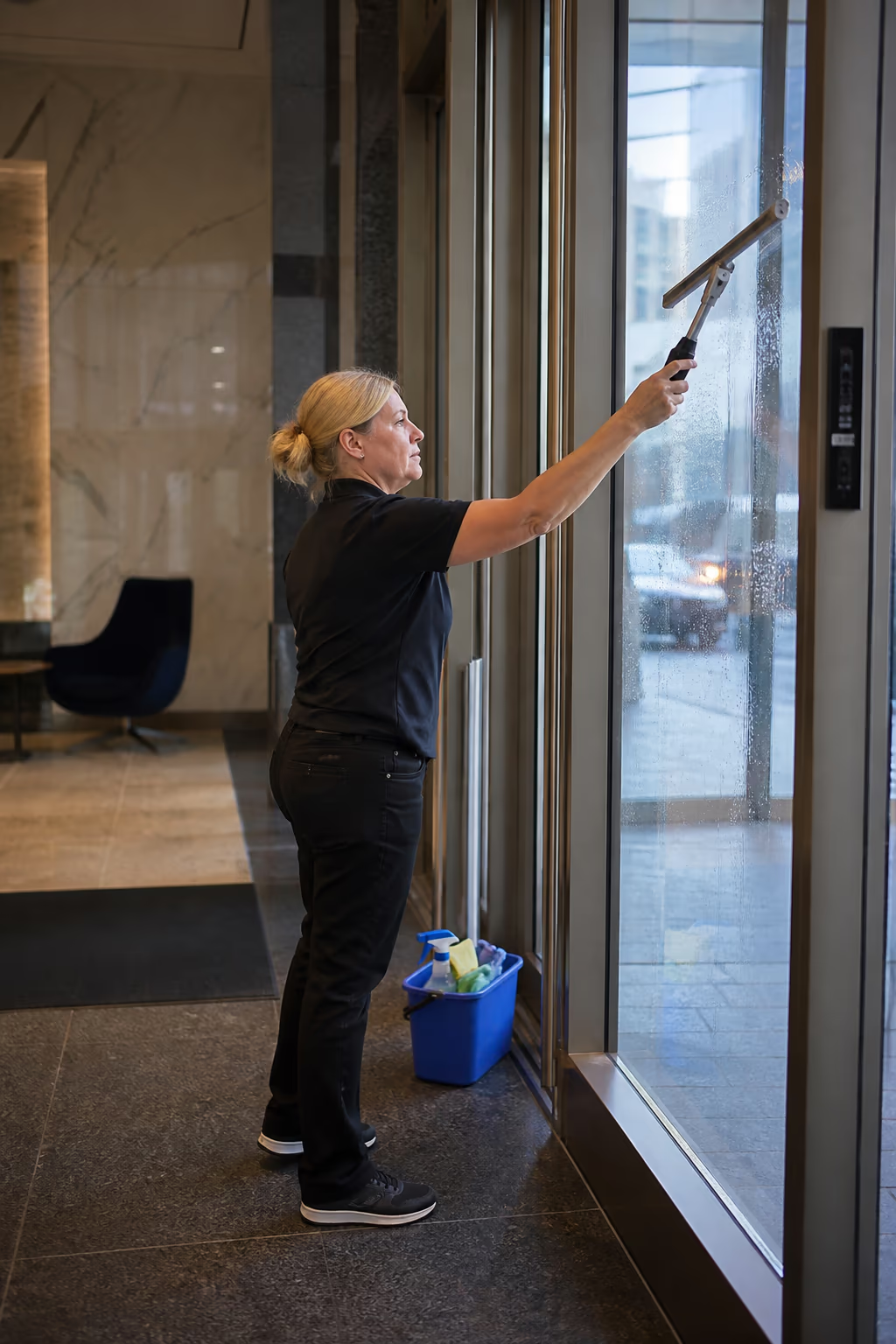
Day porter services are an ongoing operating cost, so it pays to structure them around what the building actually needs rather than an assumption. The three variables that drive the price are the number of hours, the scope of duties, and the frequency of service.
Buildings just starting out often begin with a small program: a few peak hours a day, a defined route, and a limited scope. That approach keeps the budget predictable and gives the facility manager data on whether more hours would pay off. As traffic patterns become clearer, the program can grow into full-day coverage or expand into additional buildings.
It is also worth comparing the cost against what it replaces. A day porter that prevents one slip-and-fall claim, protects a lobby floor from salt damage, or helps retain a single tenant can pay for itself many times over. Looking at day porter services as protection rather than pure expense makes the budget decision much easier to justify.
Setting Your Day Porter Up for Success
A day porter is most effective when the building gives them a clear start. On the first day, introduce the porter to the facility manager and the reception team, walk the route together, and confirm the written list of duties so there is no ambiguity about what is covered.
The right tools make the job possible. A day porter needs access to a service closet with microfibre cloths, a quiet vacuum, a mop, spill response supplies, and the cleaning chemistry the building has approved. Running out of supplies is one of the most common reasons daytime cleaning stalls.
Finally, set expectations about reporting. Ask the porter to log what they did each day and to flag anything unusual, from a leaking faucet to a broken light. That daily log becomes the shared record that keeps the facility manager informed and the programme accountable.
Building a First-Week Day Porter Plan
The first week of a day porter program is about establishing a rhythm. Start by mapping the building's busiest hours and aligning the porter's route to match, so the highest-traffic areas get the most frequent attention.
Keep the first week focused on the core duties: lobbies, washrooms, and spill response. Once those are running smoothly, expand into meeting room resets, entrance upkeep, and the deeper daytime tasks that add value. A staged rollout lets the porter master each area before taking on more.
At the end of the first week, review the daily logs together. Look for patterns in where and when messes accumulate, and adjust the route and hours accordingly. A day porter program that is tuned in its first week quickly becomes a dependable part of how the building operates.
Formatted Step-by-Step Day Porter Implementation Checklist
Implement an effective day porter program for your commercial building by following this 5-step checklist:
- Step 1.Assess Daily Building Foot-Traffic & Washroom Usage Volume:Measure daily visitor counts and washroom use to calculate the porter hours your building needs.
- Step 2.Define Day Porter Shift Schedules (Full-Day vs Part-Time Coverage):Determine whether your property needs full 8-hour coverage or peak mid-day support.
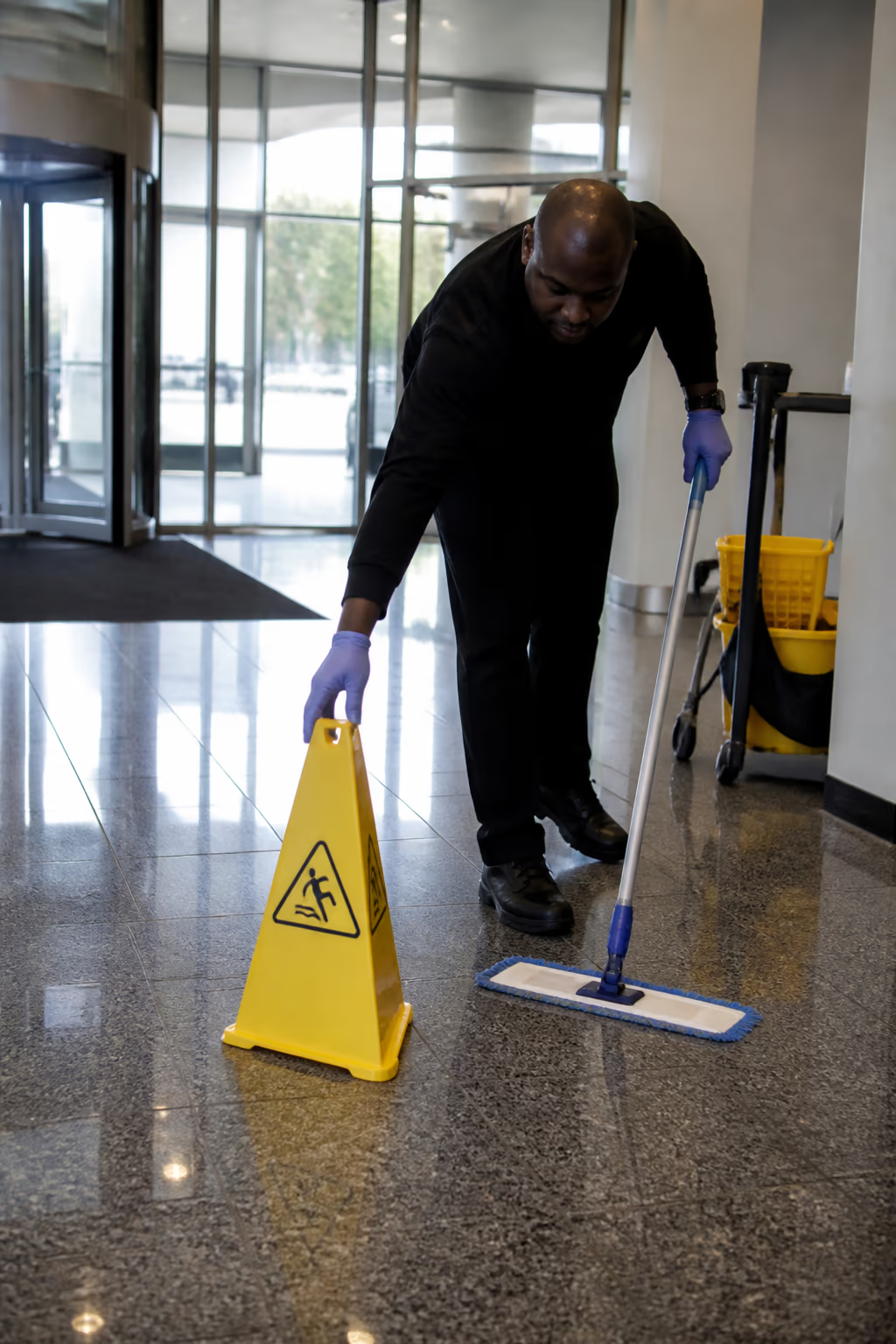
- Step 3.Establish Daytime Spill Response & Caution Protocol:Equip porters with yellow caution cones, microfibre mops, and fast-acting EcoLogo absorbents.
- Step 4.Provision Low-Noise Quiet Cleaning Equipment & EcoLogo Chemistry:Select ultra-quiet battery-powered vacuums and low-VOC green cleaning chemistry.
- Step 5.Set Up Daily Communication Logs with Facility Managers:Establish a digital shift log for porters to report facility maintenance issues to building managers.
- Step 6.If you need a team or a recurring schedule, use commercial janitorial services in Ottawa to discuss scope, access, and timing before deciding whether it fits.
Serving Ottawa's Business Neighbourhoods
Good Cleaner Co. delivers day porter coverage across the capital region, from downtown Ottawa towers to the business districts of Kanata, Nepean, Orleans, and the Glebe. Whatever your building's neighbourhood, the daytime care standard is the same. Facilities that also want lower-impact products day to day can pair day porter coverage with our eco-friendly cleaning services in Ottawa.
Putting this guidance into practice
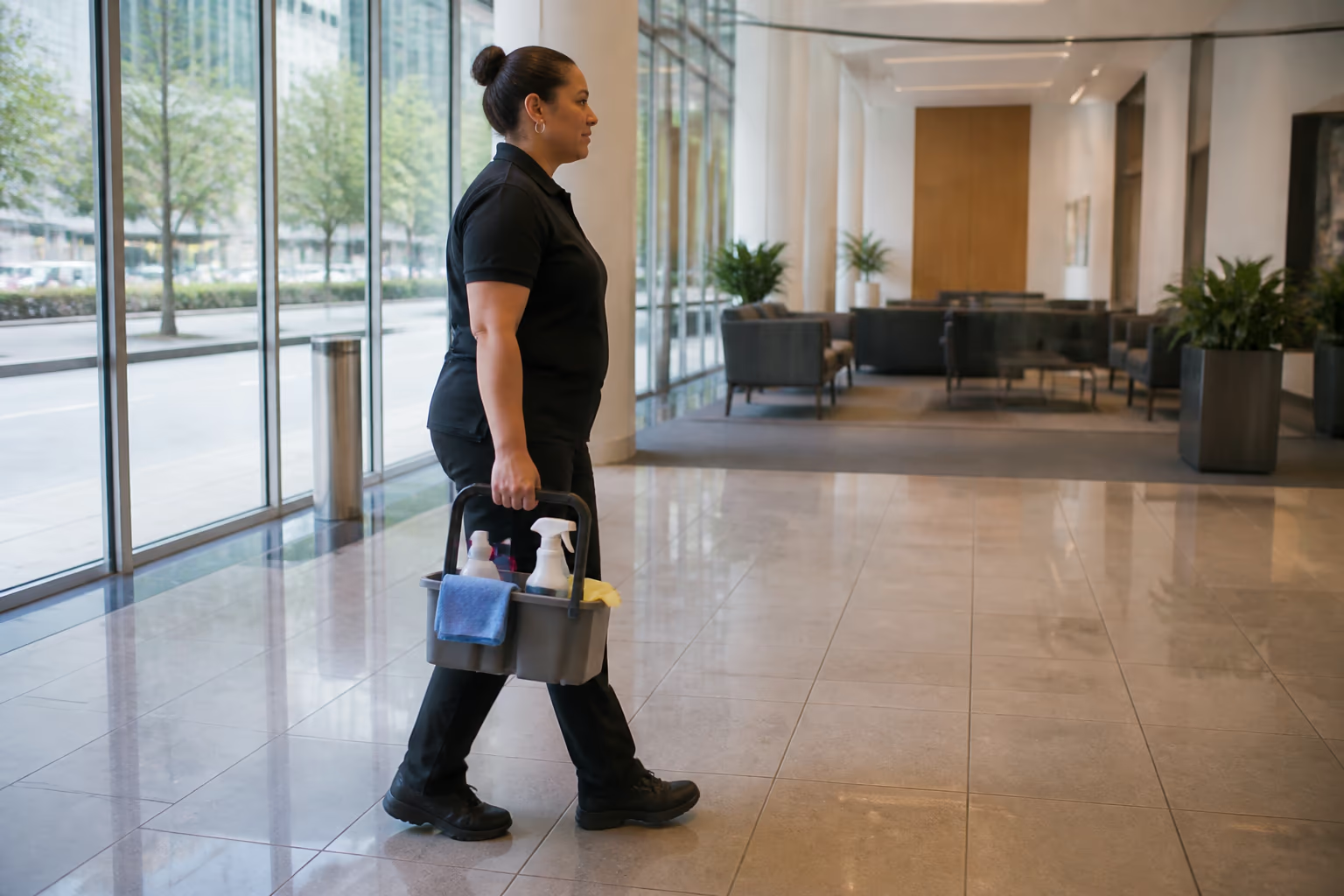
For a property manager or business with daytime traffic, start with visible attention while people use the space: spills, shared areas, supplies, and issues that could become interruptions. That keeps the conversation tied to the actual space instead of a generic promise.
Review traffic peaks, public washrooms, entrances, food areas, meeting spaces, events, storage, and the line between porter and maintenance tasks. A written scope should say what happens on a normal visit, what needs approval, and who should hear about a recurring issue.
Seasonal considerations in Ottawa
Snow, rain, or salt can change daytime priorities quickly in Ottawa. A porter plan should shift without making every routine task urgent.
Look at the actual condition, the number of people using the space, and the material being cleaned before changing products, equipment, or frequency.
Safe, responsible cleaning
Use clear procedures for spills, wet floors, products, waste, and escalation. Visible work should never block a path or create an unsafe surface.
When a surface, product, or site requirement is unclear, ask before continuing. A careful decision protects people and property better than a shortcut.
How to review this a property manager or business with daytime traffic
Before changing this routine, take a short walk through the actual space and describe what you see in ordinary language. Start with visible attention while people use the space: spills, shared areas, supplies, and issues that could become interruptions. That gives everyone the same starting point and prevents a broad request from quietly becoming a different job.
Ask someone who uses the space every day what creates the most friction. Their answer may be a messy entry, an awkward storage area, a surface that marks easily, or a time when work cannot happen. A useful plan respects that local knowledge instead of replacing it with a standard script.
Choose one change that can be observed over a few visits. It might be a different order of work, a clearer handover, or more attention to traffic peaks, public washrooms, entrances, food areas, meeting spaces, events, storage, and the line between porter and maintenance tasks. Write down the reason for the change and what would show that it is helping. That is a better test than relying on a vague impression.
Keep the discussion specific when something is not working. Name the room, surface, timing, and result you expected, then decide what should happen next. Clear feedback is fair to the people doing the work and far more useful than a blanket complaint.
Finally, revisit the plan when the building, household, or season changes. A routine should be stable enough to follow and flexible enough to respond to real conditions. That balance is what makes cleaning guidance practical.
FAQ
What is the difference between a day porter and a regular janitor?
A day porter operates during business hours in high-visibility customer areas, while a regular janitor typically works night shifts performing heavy floor scrubbing and carpet vacuuming.
Can day porters handle outdoor entrance cleaning?
Yes. Day porters routinely sweep building entrance aprons, clear litter from outdoor entryways, and clean glass entrance vestibules as part of their daytime rounds.
How do day porters reduce slip-and-fall lawsuits for commercial properties?
By providing real-time response to liquid spills and tracking winter slush, day porters place caution signs and dry wet floors immediately, removing the hazards that lead to slip-and-fall incidents.
How often does a day porter check the washrooms?
Most day porter programs check washrooms every couple of hours, wiping sinks, sanitizing door handles, and restocking paper and soap so the rooms never run out.
Do day porter services include meeting room resets?
Yes. Between meetings, a day porter clears whiteboards, wipes conference tables, and resets chairs so each group starts with a clean room.
Is a day porter the same as a concierge?
No. A concierge handles building services and requests, while a day porter is focused on cleaning and maintenance tasks such as restocking, spill response, and lobby care.
What hours do day porter services usually run?
Day porter shifts typically run during business hours, from early morning to late afternoon, and can be full-day or scheduled around the building's peak traffic windows.
Do I need both a day porter and a nightly janitorial crew?
Most buildings that use day porters also keep a nightly crew, because the night team handles deep cleaning and floor care that cannot happen during business hours.
How do I get a day porter quote for my building?
Contact Good Cleaner Co. with your building's square footage, foot traffic, and washroom count, and we will recommend a daytime coverage plan and provide a quote.
Wrapping Up
Investing in professional day porter services elevates commercial building standards, protects physical assets, and enhances tenant satisfaction. Contact Good Cleaner Co. today to book a day porter consultation in Ottawa.
Keep reading
More from Good Cleaner
About the author
Service areas
- Ottawa
- Kanata
- Nepean
- Orleans
- Glebe