
Night Vs Day Office Cleaning: 7 Key Factors For Choosing The Best Schedule
Every office manager has wondered whether the cleaners should come in after hours or during the day. The answer depends on your team, your building, and your budget, and there is no single right schedule for every business. This guide compares night and day office cleaning across seven practical factors so you can choose the schedule that genuinely fits how your office works.
Quick Summary
Whether office cleaning should happen at night or during the day depends on your team, your building and your budget, not a single universal answer. This guide compares night and day schedules across seven practical factors, from staff disruption and building access to cost and Ottawa's short winter days.
In this guide
Why Night Vs Day Matters
Night vs day office cleaning is a comparison every Canadian business makes at some point, and the choice affects more than the cleaning bill. It changes how your staff experience the workspace, how secure the building is after hours, and how the place looks when everyone arrives in the morning. Getting it right means cleaner offices without disrupting the work that pays the bills.
There is a legal dimension to the choice as well. Ontario's rules on hours of work limit most employees to eight hours a day and 48 hours a week unless there is a written or electronic agreement, which shapes how a night shift and a day shift can realistically be staffed. The provincial guide states the ceiling: “The maximum number of hours most employees can be required to work in a week is 48 hours.”
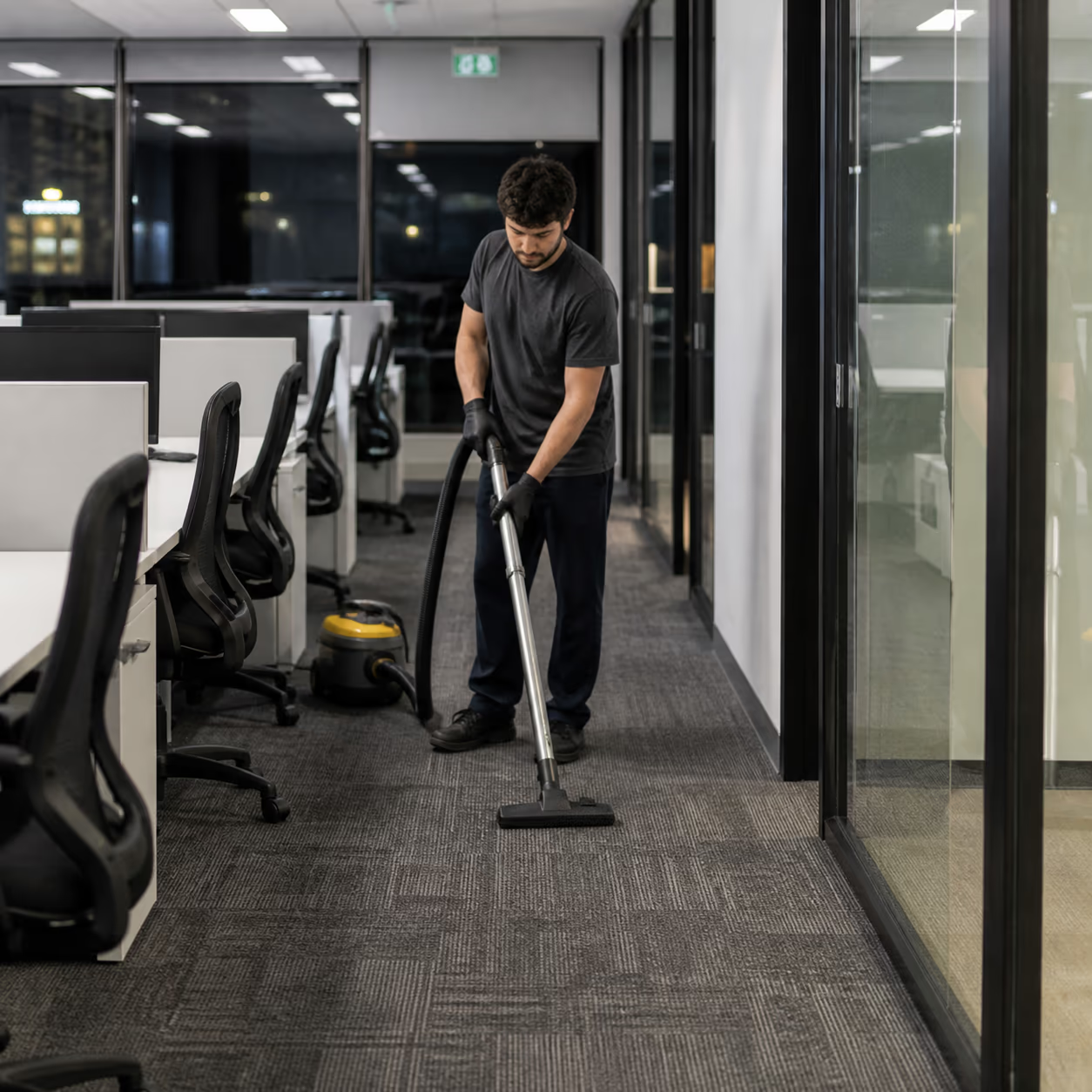
Day cleaning happens while people are in the building, which means shorter, quieter passes that avoid interrupting work. Night cleaning happens after hours, which allows deeper work with fewer people around but adds access, security, and staffing considerations. Many Ottawa offices now run a hybrid mix of the two, and understanding the trade-offs is the first step toward a schedule that works.
- Day cleaning keeps the space tidy while people are present but never looks freshly finished.
- Night cleaning delivers a finished office each morning but needs reliable building access.
- A hybrid approach pairs a light daily tidy with a deeper night or weekend clean.
The two schedules trade off in a few obvious ways:
A cleaner office also supports the health of the people who work there. Regularly emptied bins, wiped surfaces, and maintained washrooms cut down on dust and keep shared spaces more comfortable during cold and flu season. Whatever schedule you choose, consistency matters more than the time of day.
The 7 Key Factors At A Glance
These are the seven factors worth weighing before you choose a schedule. None of them decides the answer on its own; together they give you a clear picture of what fits your office.
- 01Factor 1Disruption to your team during working hours.
- 02Factor 2How clean the space looks when staff arrive.
- 03Factor 3Building access and security after hours.
- 04Factor 4The depth of cleaning each schedule allows.
- 05Factor 5The cost of each schedule and how it is billed.
- 06Factor 6Energy use, lighting, and equipment considerations.
- 07Factor 7Seasonal factors such as Ottawa's short winter days.
Factor 1: Disruption to Your Team's Work
The most immediate difference between the schedules is who else is in the building. Day cleaning means vacuums, cloths, and carts moving through the office while your team is trying to concentrate on calls, reports, and meetings. For open-plan offices, even a quiet vacuum can be a distraction, and cleaning near desks while people work is never ideal.
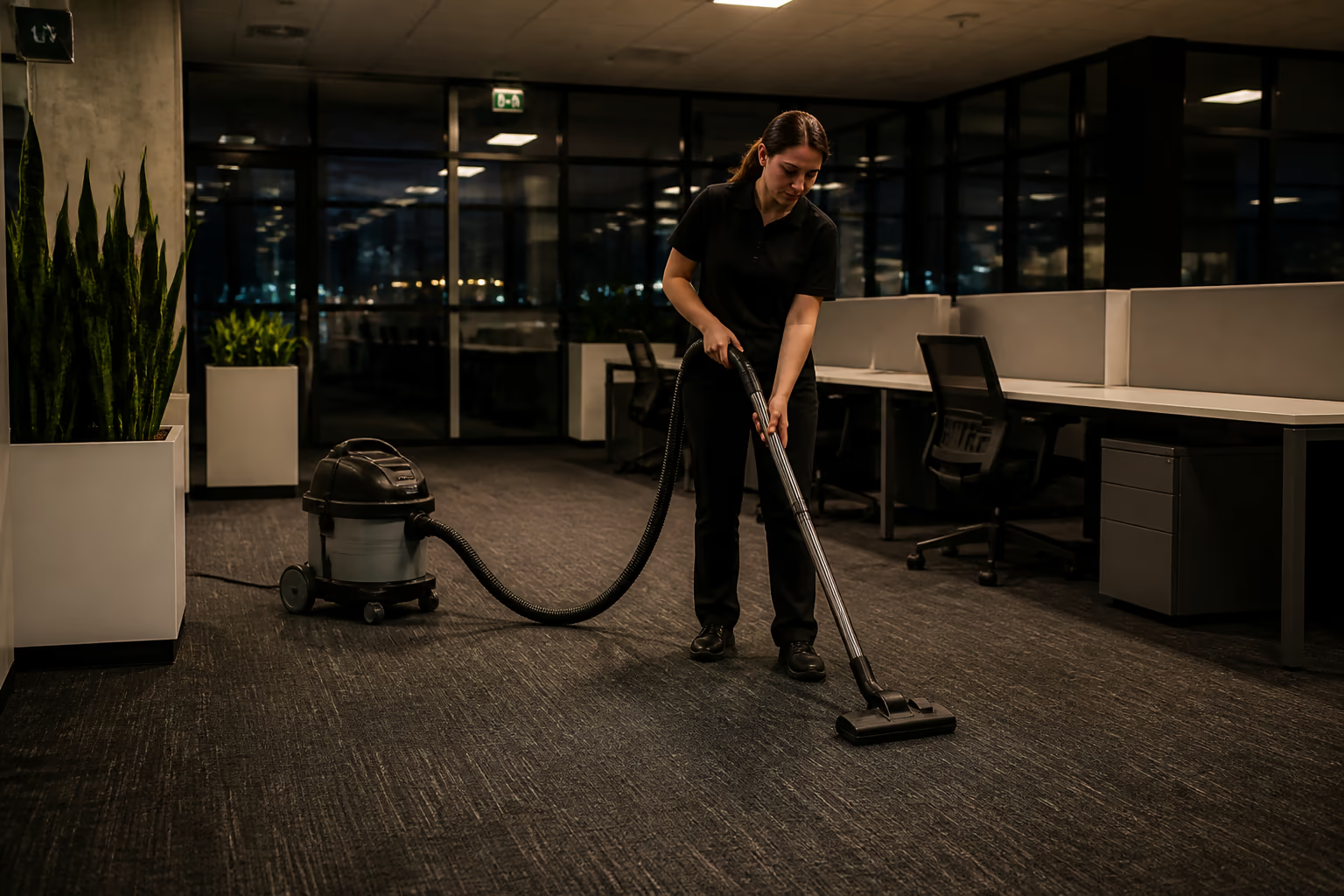
Night cleaning removes that disruption almost entirely. The building is empty, so the crew can move freely, and the office is restored by the time the first person arrives. For teams that run on deep focus, the quiet of an empty office is a real advantage, and it is one of the main reasons managers choose after-hours work.
If your team regularly stays late, the picture shifts again. A "night" clean that starts after a 9pm close is less convenient for the crew and may carry different rates, so check when your people actually leave before you commit to a schedule.
Whatever the schedule, agree on the quiet hours in advance. A night crew that arrives early can still overlap with your evening staff, so confirm the start time and the rooms to tackle first. A few minutes of planning prevents a schedule designed to avoid disruption from creating some.
Factor 2: How Clean the Space Looks When Staff Arrive
Perception matters as much as the work itself. When cleaning happens overnight, the office is at its best the moment everyone walks in, which sets a positive tone for the whole day. Desks are wiped, bins are empty, and the washrooms look fresh before the first meeting begins.
With day cleaning, the office rarely looks its finished best. A room cleaned at noon has already seen coffee spills, lunch, and foot traffic by the end of the day. That does not mean day cleaning is worse; it means the visible result fades faster, and you may need a second pass to keep the space looking cared for.
A clean, well-presented office also makes an impression on visitors and clients. If your office receives frequent guests, the morning condition that night cleaning provides can be worth more than the added logistics.
Employee surveys often reflect the same split. Staff rarely mind day cleaning as long as it does not interrupt them, but they notice a freshly cleaned office on Monday morning. If morale and first impressions matter to your business, that morning standard is a strong argument for after-hours work.

Factor 3: Building Access and Security
After-hours cleaning raises two practical questions: how does the crew get in, and who is in the building? Your office needs a reliable access plan, whether that is a key, a fob, an alarm code, or a security pass. A reputable cleaning company will agree on the access procedure in advance and follow it every visit.
Day cleaning avoids most of these concerns because the building is already open. On the other hand, daytime access means cleaners are moving through a building full of staff, which some offices prefer and others find intrusive. Weigh your security policy and your comfort level before you decide.
Whichever schedule you choose, ask the company how they vet their staff. Background checks, consistent crews, and a clear sign-in process give you peace of mind, and they are reasonable questions to put to any provider you are considering.
Factor 4: The Depth of Cleaning Each Schedule Allows
Time changes what a crew can actually accomplish. With the building empty at night, cleaners can pull out chairs, reach into corners, run the vacuum over a full floor, and finish tasks that are difficult with people present. They can also take longer on kitchens and washrooms without worrying about getting in the way.
Day cleaning is usually structured as a lighter maintenance pass. It keeps surfaces tidy and bins empty, but it is harder to do the deep work that a weekly or monthly schedule calls for. If you want both, many offices pair a daily daytime tidy with a deeper night or weekend clean, which gives you the best of both worlds.
The depth of cleaning also affects equipment. Powered floor machines and carpet equipment are far easier to use in an empty building, both because of the noise they make and because they need clear space. If your office has a lot of carpet or hard floor, factor the equipment into your schedule decision.
A good way to think about it is to separate daily upkeep from periodic deep work. Bins, surfaces, and washrooms need attention every day; carpets, baseboards, and detailed kitchens can be scheduled weekly or monthly. Which schedule you choose largely decides how you divide those two sets of tasks.
Factor 5: The Cost of Each Schedule
The cost of office cleaning depends on the size of the space, the scope of work, and the frequency of visits, and it varies with the market and the provider. Night schedules can carry different rates than daytime work, and those differences change from one cleaning company to the next. The best way to compare is to ask for an itemised quote for each schedule rather than assuming one is cheaper.
Factor 6: Energy Use, Lighting, and Equipment
An empty building changes how cleaning runs. At night, the crew needs the lights on to work, and in a large office that means the whole floor is lit for the duration of the clean. Some buildings also adjust heating or cooling outside working hours, so the team works in whatever temperature the building is set to.
Day cleaning shares the lighting that is already in use, so there is little extra energy cost from the clean itself. The trade-off is that some equipment, such as powered floor machines, is better used when the space is empty, both for noise and for safety. Consider the energy and equipment implications alongside the schedule.
Building rules can settle this factor for you. Some properties restrict after-hours access, control the heating schedule, or limit the use of certain equipment at night. Check your lease and your building management before you plan around a night schedule.
For buildings with environmental goals, ask about the products the crew uses. Certified options such as EcoLogo point to formulas that are gentler on the environment while still handling everyday office grime, and they are a reasonable request for any cleaning contract.
Factor 7: Ottawa's Short Winter Days
Seasonal light makes this a real factor for Ottawa businesses. In winter, the sun can be down before 5pm, which means a day clean that starts in the afternoon may already be working in the dark. That blurs the practical difference between day and night cleaning during the darkest months.
Winter also brings salt, slush, and grit through the lobby and entryways all day long. A daytime maintenance pass helps keep those entryways presentable, while a deeper night or weekend clean deals with the residue that builds up. Many Ottawa offices adjust their schedule by season, adding passes in winter and trimming them back in summer.
The pattern is the same across Canadian winters, from the National Capital Region to southern Ontario. Whatever your building, a schedule that flexes with the seasons will stay realistic all year round.
One more seasonal note: holiday schedules matter too. December is a quiet month in many offices, which makes it an ideal time for a deep clean, while a summer shutdown offers a rare chance for a full floor treatment without any disruption at all.
How Good Cleaner Co. Approaches Office Scheduling
At Good Cleaner Co., we do not sell a one-size-fits-all schedule. We ask about your team's hours, your building's access rules, your budget, and the parts of the office that matter most to you, then recommend a schedule that fits. That may be night cleaning, day cleaning, or a hybrid built around your week.
The goal is the same in every case: an office that looks cared for, runs without disruption, and reflects well on your business.

Formatted Step-by-Step Office Cleaning Schedule Checklist
Use this checklist when you are choosing between night and day cleaning for your office:
- 1.List the rooms and tasks your office really needs, from washrooms and kitchens to floors and bins.
- 2.Map your team's working hours and identify when disruption matters most.
- 3.Check your building's access rules and decide who can enter after hours.
- 4.Compare itemised quotes for day and night cleaning, checking what each includes.
- 5.Test the schedule for a few weeks and review how the office looks and how staff feel.
- 6.For a schedule built around your building, commercial office cleaning services in Ottawa provide experienced teams that adapt to your hours and standards.

FAQ
Is night cleaning more expensive than day cleaning?
It varies by provider and market, so there is no fixed answer. Night schedules may carry different rates, and what is included in each quote can differ. Ask for an itemised quote for both schedules and compare like for like.
Can I have a mix of night and day cleaning?
Yes. Many offices run a daily daytime tidy plus a deeper night or weekend clean. A hybrid schedule gives you a tidy space during the day and a thorough clean when the building is empty.
How do I know if night cleaning is safe for my building?
Work with a cleaning company you trust and agree on the access procedure in advance. Keys, fobs, alarm codes, and security passes should all be handled carefully and documented, and staff should be background-checked.
Will day cleaning disturb my employees?
It can, especially in open-plan offices. If you choose day cleaning, talk to your team and schedule noisy tasks for quieter times. Many offices find a lightweight daytime pass is a small trade-off for visible cleanliness.
What should I look for in a cleaning company either way?
Ask about training, background checks, and how they handle products safely under WHMIS 2015. Read reviews, ask for references, and confirm the schedule and scope in writing before you commit.
How often should the office be cleaned?
Most offices benefit from a daily tidy of high-traffic areas, with deeper tasks on a weekly or monthly cycle. The right frequency depends on foot traffic, the number of staff, and how the space is used.
Does winter change the cleaning schedule?
For many Ottawa businesses, yes. Salt and slush tracked in during winter call for more frequent entryway and floor passes, while the short daylight hours blur the line between day and night cleaning.
Should I review my cleaning schedule regularly?
Yes. Revisit the schedule at least once a year, and again if your team's hours change. A schedule that fitted the office last year may no longer be the right fit, so treat it as a decision you manage rather than one you make once.
Wrapping Up
Choosing between night and day office cleaning comes down to the seven factors in this guide: disruption, appearance, access, depth, cost, energy, and the seasons. There is no universal right answer, but there is a right answer for your office, and it comes from weighing those factors against your team's needs and your building's realities.
A schedule that fits your business keeps the office clean without slowing anyone down. Review the factors, compare quotes, and test the schedule before you commit. If you are still weighing your options, our commercial cleaning company evaluation guide is a useful starting point for the questions that matter.
When you need a partner to put the plan in place, Good Cleaner Co. is ready to help you build a cleaning schedule that works for your Ottawa office, day or night.
Keep reading
More from Good Cleaner
About the author
Service areas
- Ottawa
- Kanata
- Nepean
- Orléans
- Barrhaven